Brutalist Helping Hands Base
Created 4 months ago
Description
This monolithic, heavy-duty foundation anchors your helping hands firmly to the workbench, putting an end to tipped tools and scattered parts. Carved deep into its chunky, anvil-like profile are sweeping catchment pockets designed to corral loose screws, resistors, and wandering components before they can roll off the desk.
Station Features
- Secure Anchor: A central 10mm-diameter socket descends 30mm directly into the core, grabbing the main post of your helping hands assembly.
- Quick-Scoop Pits: Generously filleted component cutouts mean tiny fasteners and delicate parts can be easily swept up with a fingertip.
- Anti-Tip Footprint: Its wide, brutalist base provides the low center of gravity required for wrestling with stubborn wire joints.
Images
More like this
Explore more in Workshop & Tools →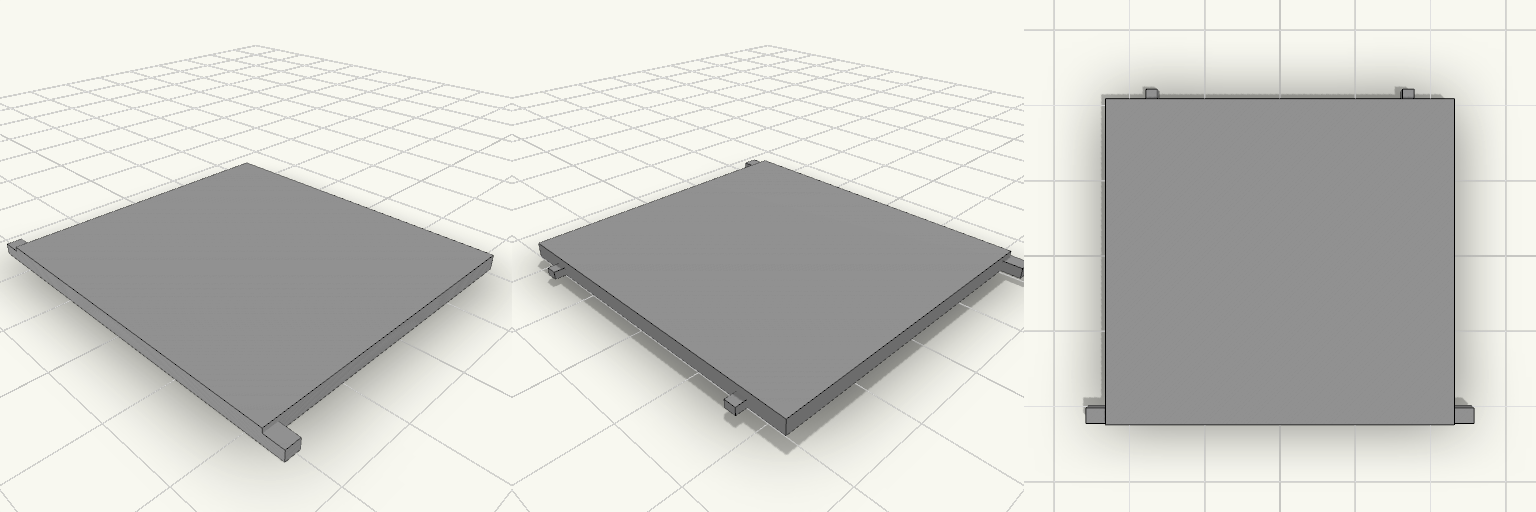
Flat Ground Plate 45x42x2 mm with Tabs
Flat 45 × 42 × 2 mm ground plate with two side tabs on the front 45 mm edge and two small blocks on the back edge. Overall width across the tabs is 50.4 mm. Plate: 45 × 42 × 2 mm, sharp edges Side tabs: 1.4 mm thick, flush with the underside, 50.4 mm overall span Back blocks: 1.5 mm wide, 1 mm thick, 1.5 mm protrusion, 5 mm from each side edge Print flat, no supports needed
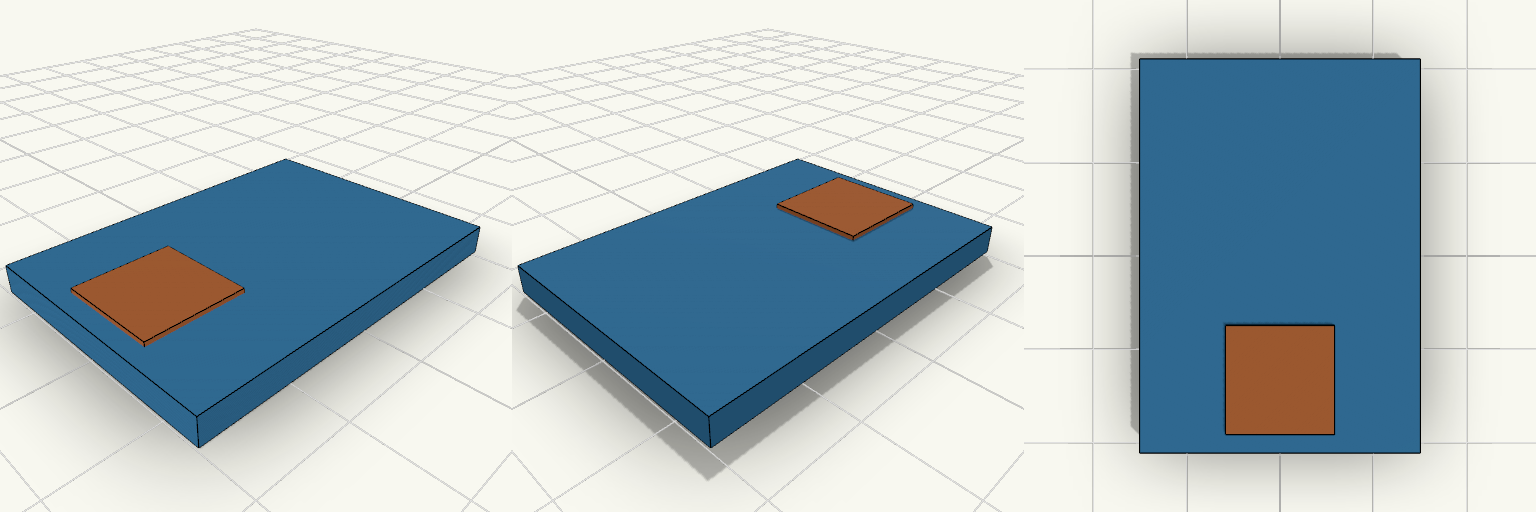
Plate With Offset Square Pad
A flat 28.5 × 40 × 3 mm plate with an 11 × 11 mm raised square pad, 0.5 mm thick, centered in X and set 2 mm from the Y- edge. Remix hooks Pad thickness (0.5 mm): a multiple of your layer height keeps the pad clean. 0.5 mm is about 2 or 3 layers. Pad offset (2 mm from the Y- edge): move it along Y to centre it or push it to the other edge. Plate length (40 mm): the pad is 11 mm, so any length above roughly 15 mm still holds it. Pairs with: a label, a sticker, or a second pad in a different colour for a multi-colour swap.
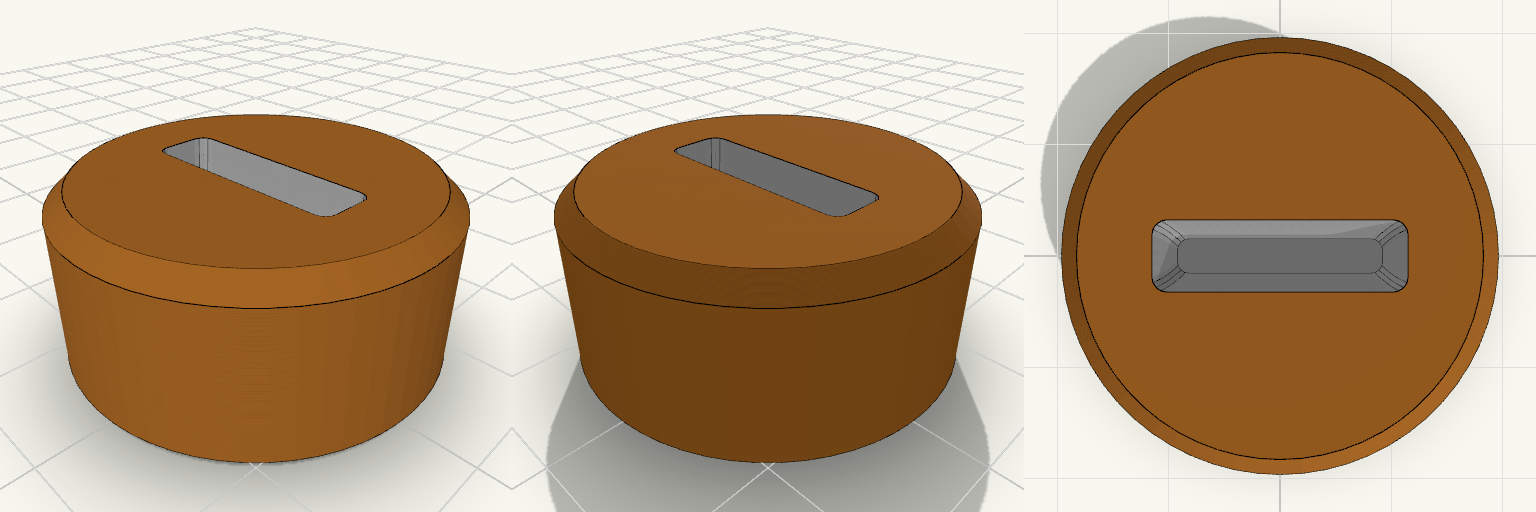
サーボソケット
A servo can't turn a valve knob without a socket that grips it, and a loose fit slips under torque. This cylindrical socket slides onto the knob from the bottom and keeps the top face flat and closed for a future servo horn. Key numbers Body: 30 mm diameter, 14 mm tall, chamfered edges Cavity depth: 10 mm, opening only on the bottom face Opening at the bottom: 2.6 mm × 16.7 mm, widening to 4.5 mm × 16.7 mm at the inner end Clearance: 0.15 mm per side, with rounded corners and slightly bowed long walls Top wall: 4 mm solid, with no screw or mounting holes Printing: open face down on the bed, no supports needed; the wall slope is about 5° from vertical Cavity size, taper, corner radius and clearance are all adjustable parameters
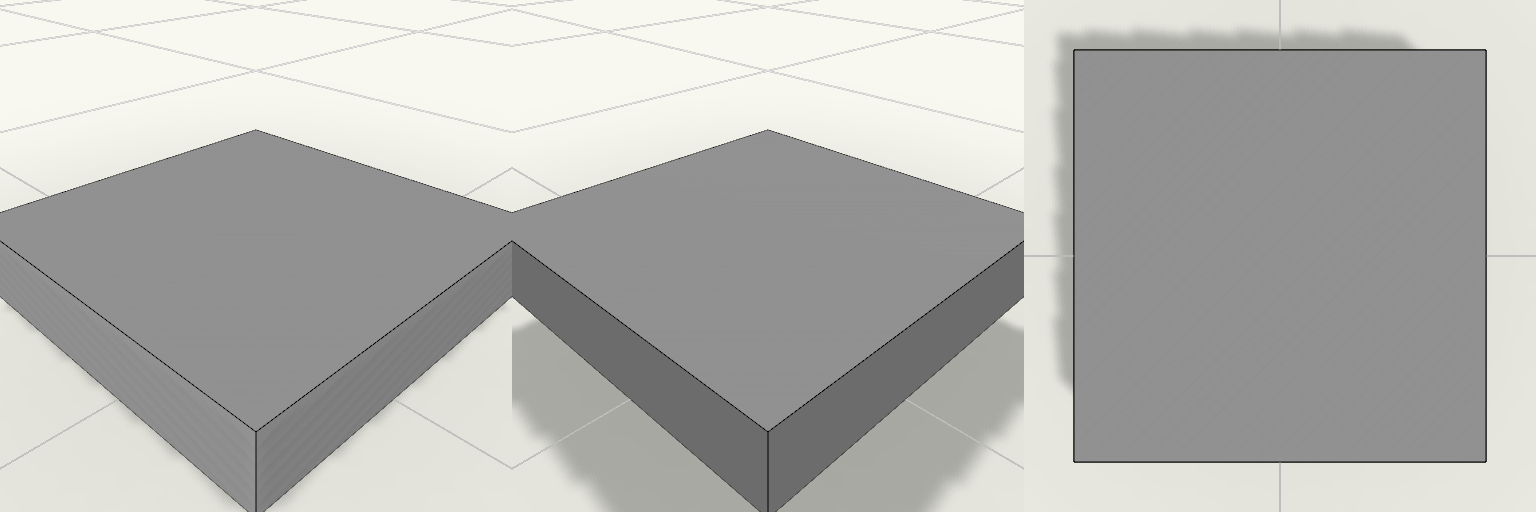
5 x 5 x 1 mm Square Block
A plain square block measuring 5 mm by 5 mm by 1 mm, flat on the bed and ready to print. Remix hooks Footprint: 5 x 5 mm is the starting value. Change it to make a tile, spacer or shim. Thickness: 1 mm is about five layers at 0.2 mm. Raise it for a sturdier piece. Edges: Add a small chamfer or rounding for a softer look. Keep it under 0.5 mm at this size. Pairs with: Use it as a test cube for tolerance checks, or as a base for a hole, text or a peg.
Flat L Bracket 15mm Strap
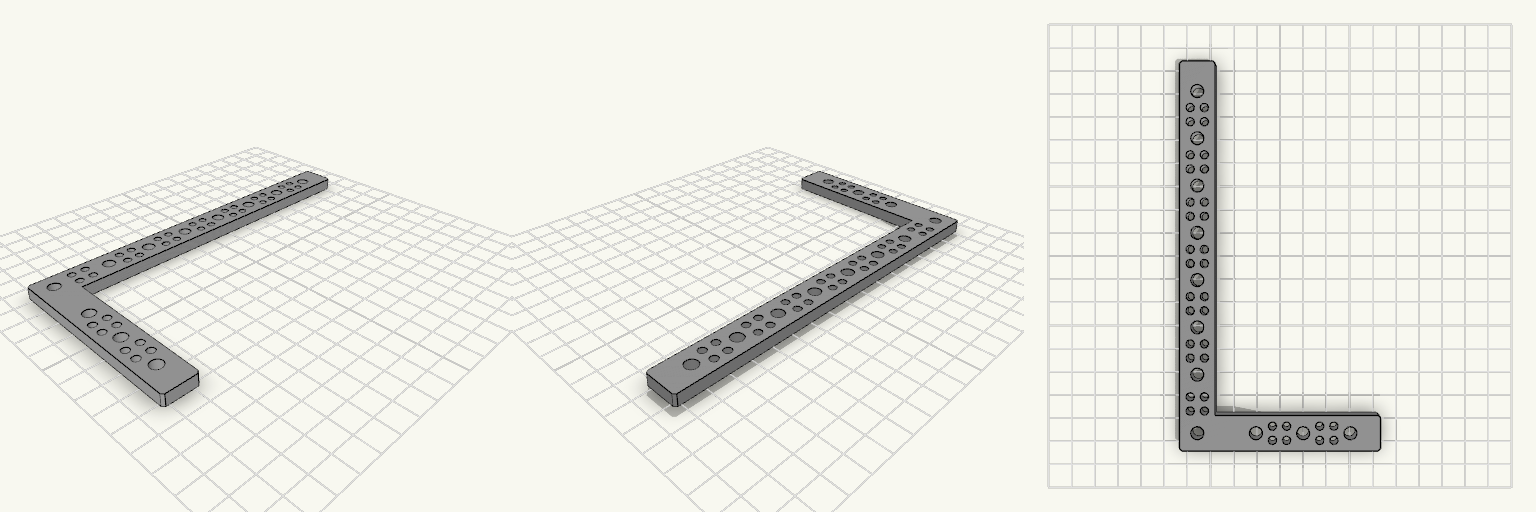
A flat L-shaped strap bracket with a 15 mm wide, 5 mm thick strap. Inside edges measure 70 mm along X and 65 mm along Y, giving an overall footprint of 85 × 80 mm. Five 5.5 mm holes suit M5 screws in 2020 extrusion slots. Remix hooks Arm lengths: the inside lengths (70 mm X, 65 mm Y) are the main parameters to change. Strap width: 15 mm now. Widening it allows holes offset from the centreline. Hole pitch: pairs are 20 mm apart, with the first hole 12.7 mm from the free end. Change the pitch for other slot spacings. Hole size: 5.5 mm clearance. Go up for counterbores or down for M4. Pairs with: 2020 extrusion, M5 T-nuts and button-head screws.
Apothecary Drawer Hex Key Rack
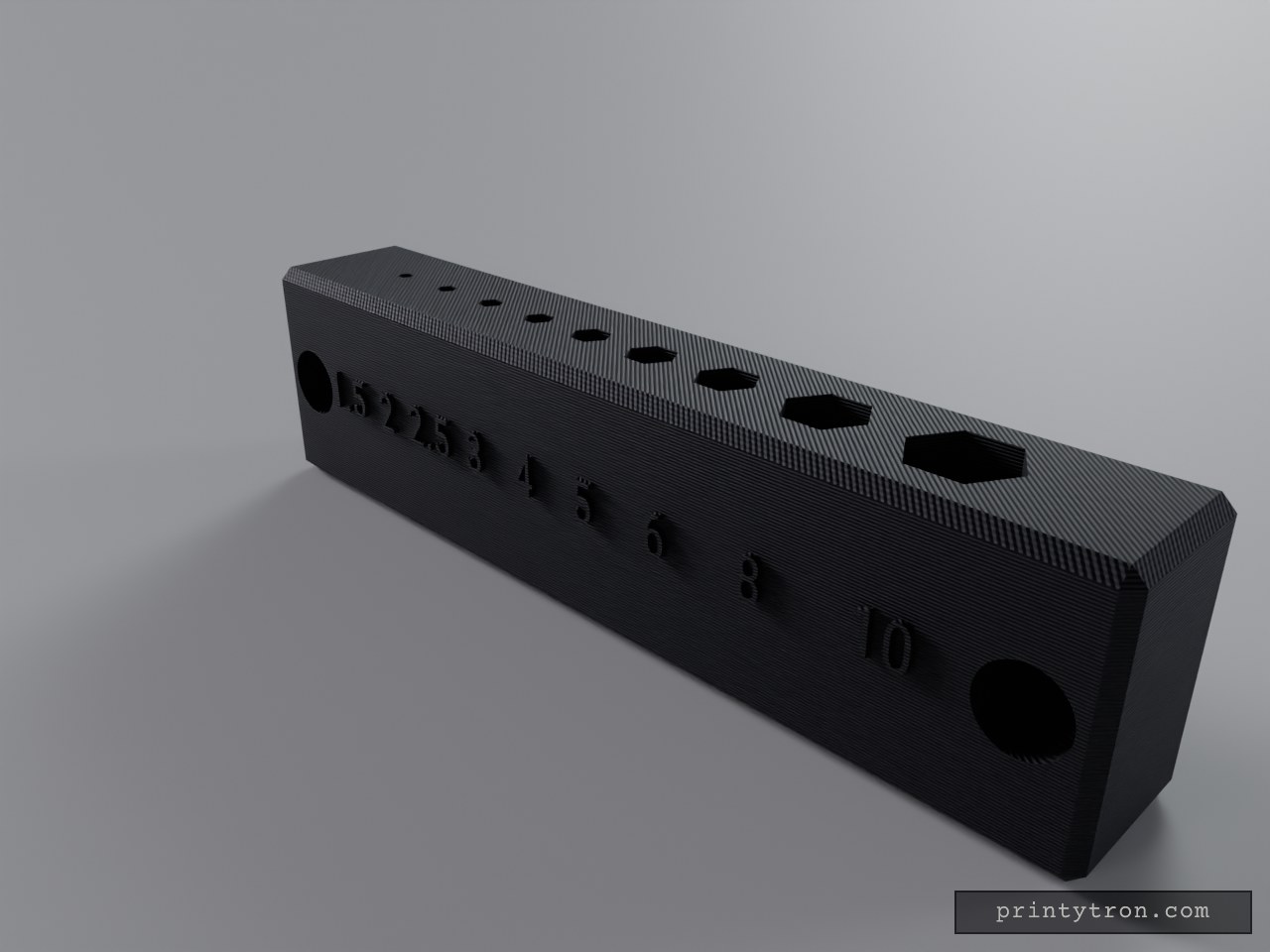
A row of nine upright hex pockets, like a pharmacist's labelled vial rack, scaled down for the workshop wall. Each long-arm Allen key stands in its own slot, sorted from 1.5 mm up to 10 mm, with the metric size embossed on the front face beside it so the right key is readable at a glance. Every pocket is a hex cut to its key's across-flats size plus 0.3 mm of clearance, 22 mm deep, so keys drop in and lift out without wobbling loose. Two counterbored screw holes near the ends let the rack mount flat to a wall. Design notes Fits the standard metric set: 1.5, 2, 2.5, 3, 4, 5, 6, 8 and 10 mm Overall size about 120 mm wide, 20 mm deep, 30 mm tall Embossed labels are a separate colour region for multi-colour prints or a filament swap Chamfered outer edges for a cleaner print and a softer look The 1.5 mm slot is the tightest fit, so check it on a first print Remix hooks: change pocket depth, enlarge the label text, or add more slots for imperial sizes