Cwmlech Manor Steampunk Horseless Carriage
Created 18 days ago
Description
A miniature Victorian steampunk horseless carriage in the spirit of The Ghost of Cwmlech Manor, arranged in three clear zones from front to back. Up front sits the cylindrical boiler with two round brass headlights and a tall black smokestack, banded in brass with a flared cap. In the middle, the brown padded seat and backrest ride on the black frame with the steering column just ahead of them, open to the air. Behind, a short horizontal tank with ring bands carries a brass gear on each side and copper piping that runs along its upper flanks and forward to the engine, passing overhead on its way. Thin-spoked wheels with dark rims roll on straight through-axles, and the whole thing keeps a low, mechanically believable silhouette with a vintage industrial finish.
Built in three zones
- Front: cylindrical boiler, tall banded smokestack with flared cap, two round brass headlights on posts, and the engine housing
- Middle: brown padded seat and backrest on the frame, with the steering column, ring and cross grip just ahead
- Rear: short horizontal tank on saddle supports, a brass gear on each side, and copper pipes along its upper sides
- Four round, thin-spoked wheels with dark rims, all the same size, on straight through-axles
Print notes
The carriage prints as one connected solid with thick, simple shapes and no floating parts, so it suits a beginner-friendly print. The wheels sit level on the plate. The viewer colours show the intended finish: black body, brown seat, copper pipes, brass fittings, wheel spokes and rims — the part runs roughly 86 mm long, making it a desk-scale piece. The forward pipes pass above the seat, so check their clearance before you slice.
Images
More like this
Explore more in Decor & Display →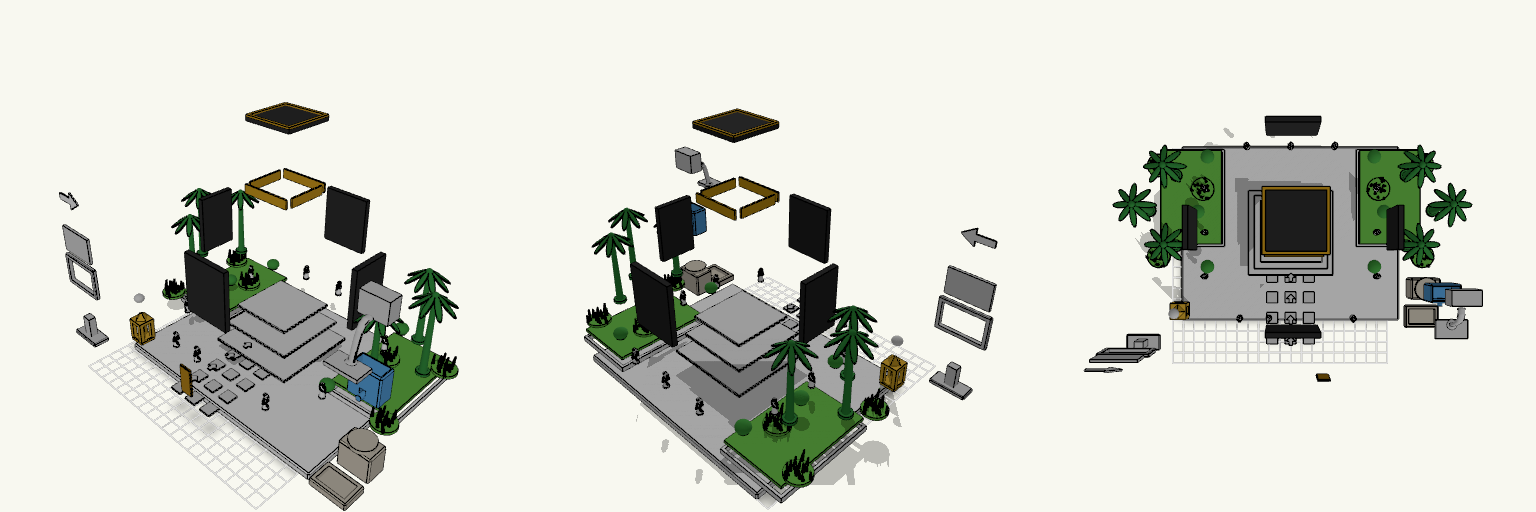
55كعبة مجزءة
Exploded miniature of a masjid scene with every component spread apart with visible gaps. Parts: white base, platform tiers, four black Kaaba walls, roof, door, gold bands, walkway tiles, arrows, palms, bushes, grass, pilgrims, Zamzam station, Maqam Ibrahim and blue sign parts. Layout: exploded only, no assembled copy. Export: the download is one file; separating individual parts happens outside this model.
Miniature Suitcase with Handle, Wheels and Weight Display
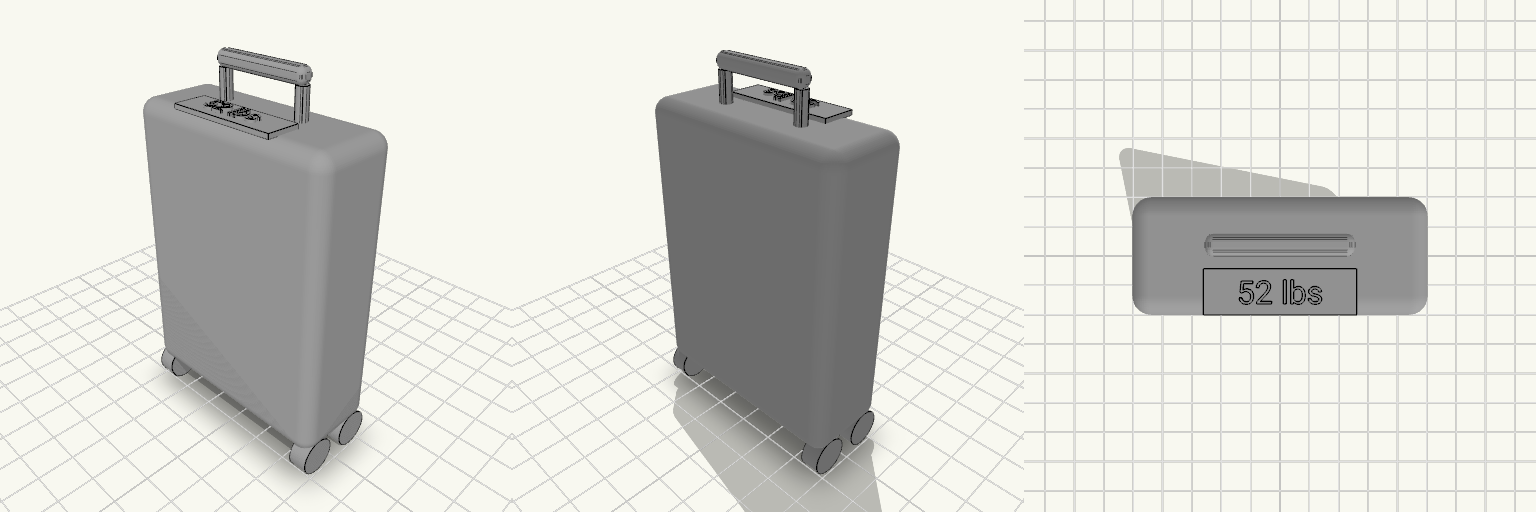
What it's for A miniature suitcase standing upright on four sideways-mounted wheels, with a pull handle on top and a small thin scale plate set into the top face just in front of the handle. The plate carries a raised readout of 52 lbs, so the piece reads as a luggage scale at a glance. It works as a small desk ornament, a travel-themed display piece, or a scale prop for a dollhouse or diorama. The whole thing is one plain neutral finish, with no colour coding or recessed front screen. Dimensions Overall footprint: 60 × 24 × 100 mm (width × depth × height, as it sits on the print plate) Wheels: mounted sideways, axles running across the width of the case, so the body rests on them Weight plate: a small thin panel on the top face, in front of the handle Readout: raised 52 lbs lettering, picked as a believable airline-limit weight — say if you want a different figure Print notes The model prints as a single piece lying on its wheels, so no supports are needed under the body. The raised readout is small — a 0.4 mm nozzle with fine layer heights keeps the digits and the "lbs" legible, and a 0.25 mm nozzle gives crisper text. The thin top plate is shallow, so check that your bridging over that area is clean. Remix ideas Change the readout to a different weight, or leave the plate blank for a custom label. Swap the handle for a telescoping version, or add corner guards to the body. Scale the case up to hold small items, or down to keyring size. Finish A single neutral colour suits the plain, serious look — the design relies on shape and the raised text rather than colour contrast, so any filament works.
Fara — Uproszczony Model Kościoła
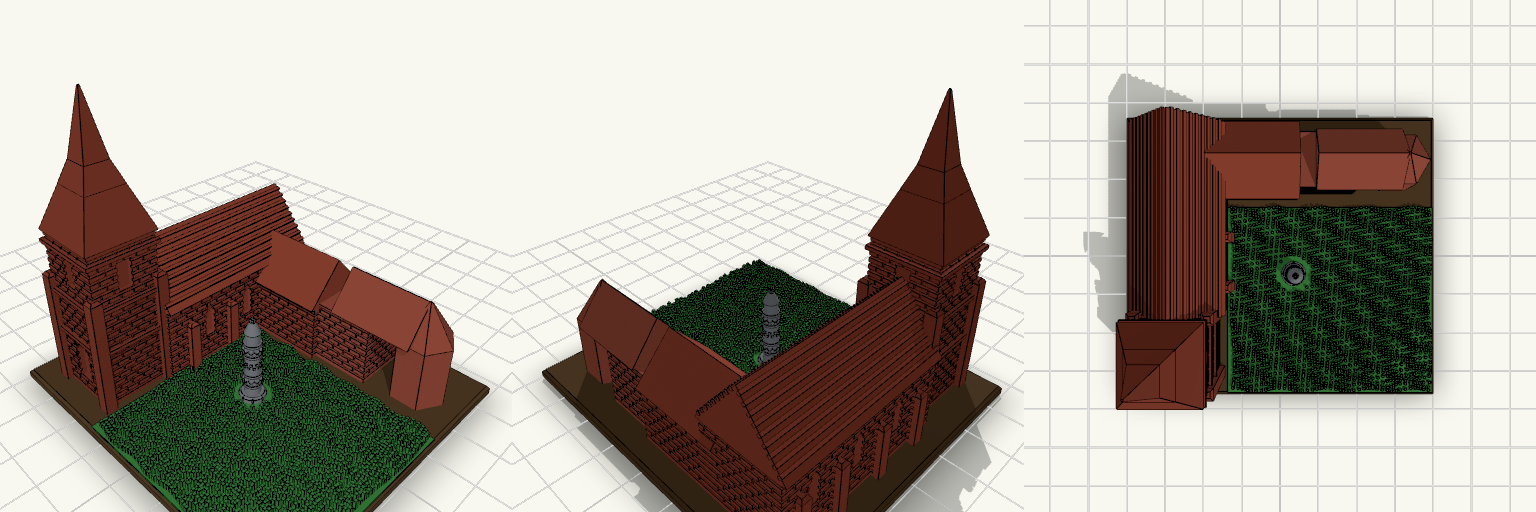
Fara to miniaturowa świątynia w duchu gotyku ceglanego, rozplanowana na literę L. Nawa biegnie wzdłuż jednej osi, a od jej tylnego końca odchodzi w bok skrzydło z dachem dwuspadowym; na jego końcu zamyka całość wieloboczne prezbiterium. Przy froncie wznosi się smukła wieża z ostrym hełmem. W środku wewnętrznego narożnika litery L, odsunięty od ściany nawy i od frontu skrzydła, stoi Słup Koniński — walcowaty trzon na szerszej podstawie ze stożkowym zwieńczeniem i kulką na szczycie. Ściany nawy, wieży i prezbiterium mają ceglaną czerwień oraz relief prawdziwego muru: poziome fugi i przesunięte w co drugiej warstwie pionowe spoiny. Słup zachowuje własny, kamienny charakter i odrębny zestaw ornamentów. Całość stoi na wspólnej, brązowej płycie o lekko ściętej krawędzi. Plac wokół słupa ma zieloną nawierzchnię i porasta go gęsta trawa — źdźbła o różnej wysokości, rozsiane w rozstawie około 1 mm, z wolnym miejscem tuż przy podstawie słupa. Model dobrze czyta się jako dekoracyjna miniatura na półkę, element makiety miasteczka albo pamiątka związana z Koninem. Proporcje są przybliżone — oparte na ogólnym układzie świątyni, a nie na planach budynku — więc detale wieży czy liczba okien mogą odbiegać od oryginału. Słup jest wyraźnie wyższy względem kościoła, niż byłby w skali: prawdziwy jest dużo niższy i przy tej skali wyszedłby zbyt cienki do druku. Wymiary Szerokość × głębokość × wysokość poszczególnych części: Płyta: 79 × 71 × 2 mm, z lekko ściętą krawędzią Trawa (zielony plac ze słupem): 52,6 × 47,8 × 2,3 mm Nawa (ze skrzydłem): 39,8 × 45,2 × 32 mm Wieża: 18,6 × 18,6 × 67 mm Prezbiterium: 30,9 × 14 × 24 mm Słup koniński: 6,1 × 6,1 × 21 mm Wieża jest najwyższym elementem całości — o tym warto pamiętać przy planowaniu wysokości druku. Cechy Plan litery L: nawa i odchodzące od jej tylnego końca skrzydło z dachem dwuspadowym, a na jego końcu wieloboczne prezbiterium Stromy dach nawy, przypory i ostrołukowe okna — czytelny gotycki charakter bryły Mur z cegieł na nawie, wieży i prezbiterium: poziome fugi co około 1,6 mm oraz pionowe spoiny co około 3 mm, przesunięte o pół cegły w co drugiej warstwie Żebra imitujące dachówki na obu połaciach dachu nawy Trzy poziome gzymsy i rząd drobnych rombów pod hełmem wieży Słup ustawiony w środku placu przy wewnętrznym narożniku litery L, odsunięty od kościoła, z podstawą i stożkowym zwieńczeniem z kulką, ozdobiony pierścieniami, dwoma rzędami rombów, zygzakiem i bruzdami na cokole Wspólna płyta pod całością, z zieloną nawierzchnią i trawą na placu wokół słupa — model stoi stabilnie i zaczyna się od płaskiego spodu Uwagi o druku Model nie ma delikatnych, ażurowych detali — okna i przypory są płaskorzeźbione w bryle — więc dobrze znosi typowe ustawienia druku. Fugi mają około 0,4 mm głębokości, a pionowe spoiny rozstawione co 3 mm mogą przy standardowej dyszy 0,4 mm wyjść ledwo widoczne; jeśli drukarka je zaleje, warto zmniejszyć warstwę lub nieco pogłębić rowki w slicerze. Źdźbła trawy mają 0,6 mm szerokości i rozstaw około 1 mm — gęściej nie ma sensu przy dyszy 0,4 mm, bo źdźbła zleją się w jedną plamę. Największą uwagę warto poświęcić wieży z hełmem, która sięga 67 mm, oraz cienkiemu trzonowi słupa o średnicy 6,1 mm. Cały model jest jednym elementem na wspólnej płycie — nie wymaga sklejania.
Moldura retangular para botão com ímã
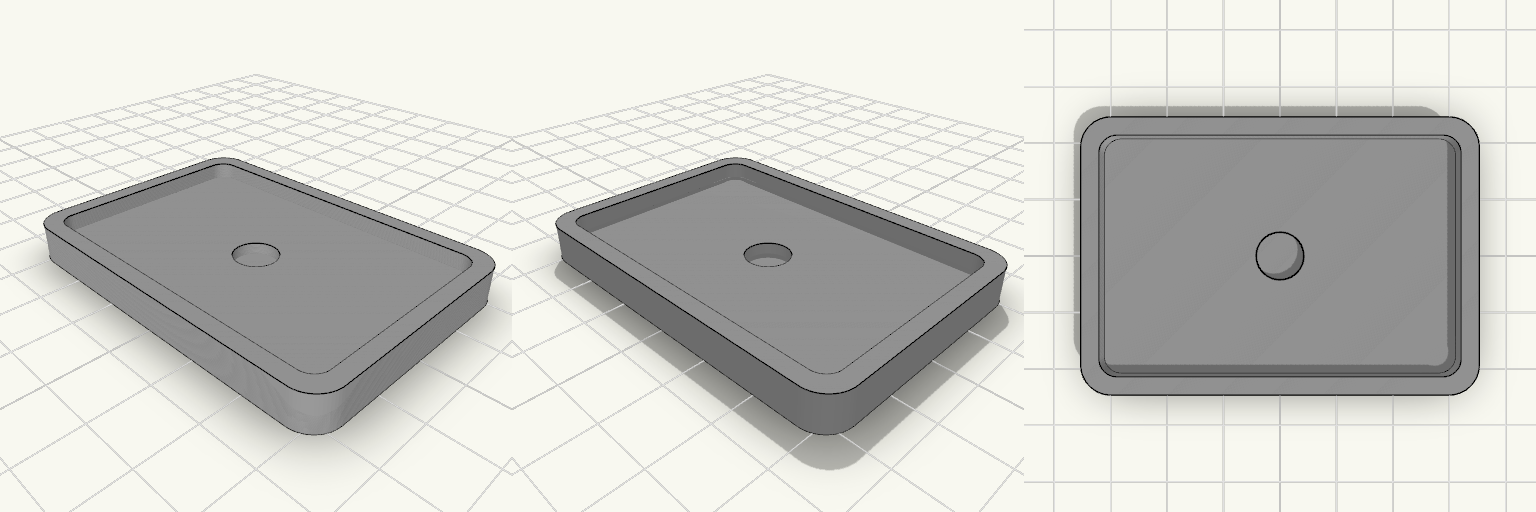
Moldura retangular para um botão de 60 × 40 mm, com encaixe de 3 mm de profundidade e cantos arredondados. A parede ao redor do encaixe tem 3 mm, resultando em 66,1 × 46,1 mm por fora e 6,5 mm de altura. Um furo para ímã de 8×2 mm fica centralizado no fundo do encaixe; na face inferior há quatro furos para ímãs de 5×2 mm, próximos aos cantos. A peça imprime em uma única parte, apoiada na face inferior, com o encaixe voltado para cima. Encaixe: 60,1 × 40,1 mm (botão de 60 × 40 mm com folga de 0,1 mm), cantos arredondados, 3 mm de profundidade Dimensão externa: 66,1 × 46,1 mm; altura: 6,5 mm Parede ao redor do encaixe: 3 mm Ímã central: furo de 8,2 mm de diâmetro × 2,1 mm de profundidade no fundo do encaixe (ímã de 8×2 mm) Quatro furos na face inferior para ímãs de 5×2 mm: 5,2 mm de diâmetro × 2,1 mm de profundidade, em X ±25 mm e Y ±15 mm Folga dos furos: 0,2 mm no diâmetro e 0,1 mm na profundidade Impressão: uma peça única, deitada sobre a face inferior, sem suportes nos furos
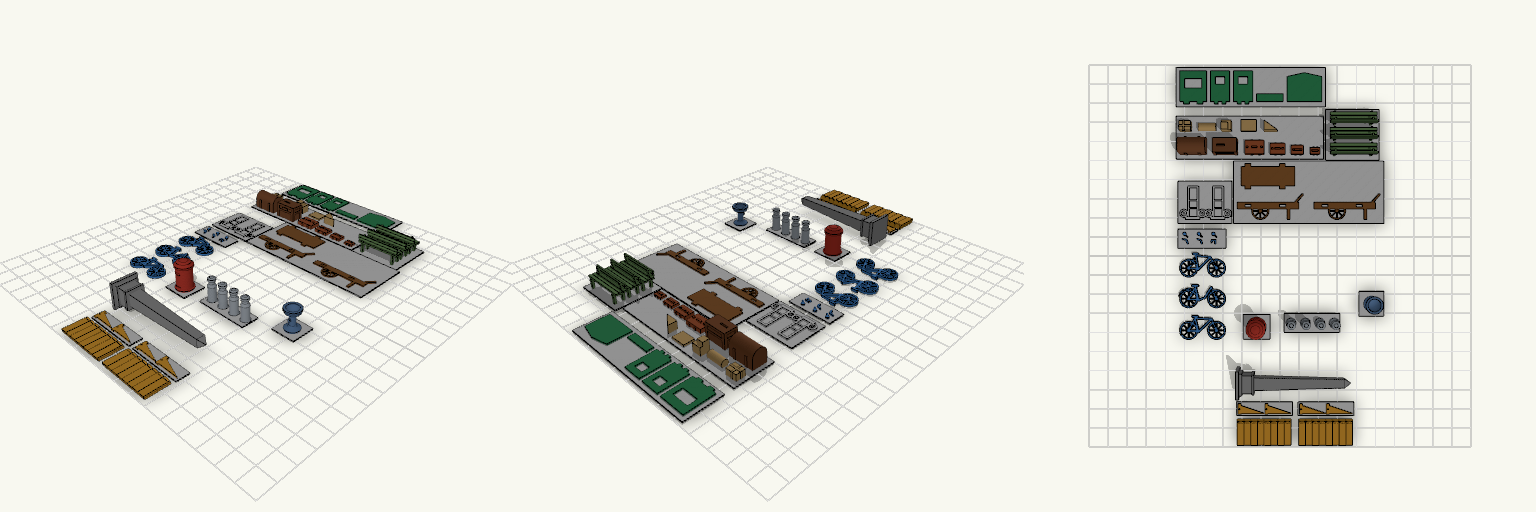
OO Scale Station Set with Sack Trucks
An OO-scale railway station accessory set printed on one plate, with webs joining the grouped items. The set includes bicycles, a postbox, an obelisk, shop canopies with brackets, a flat-pack barrow, milk churns, luggage, a newspaper kiosk, benches, a drinking fountain and two sack trucks. Sack trucks: two flat 1.2 mm silhouettes, each about 10 mm wide and 17 mm tall, with a toe plate, crossbars and two wheels. Web: 0.4 mm sheet shared by both trucks, left of the barrow. Printing: thin parts need a fine FDM or resin printer.
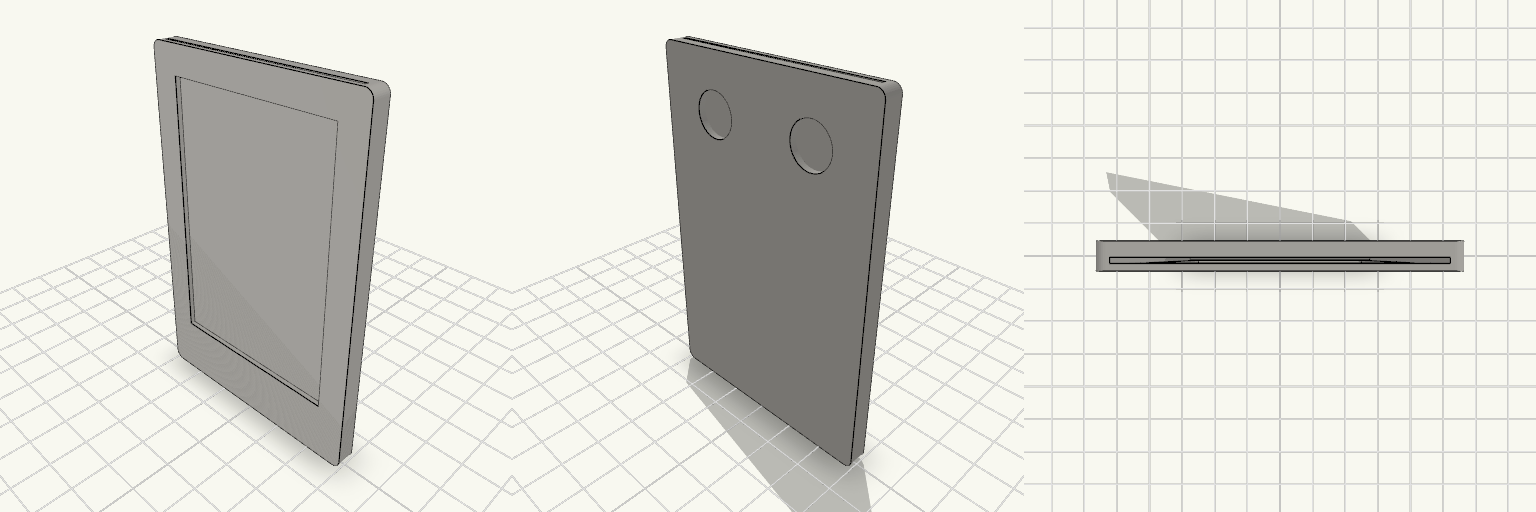
Marco para fotos Instax Mini con imanes
El marco para fotos Instax Mini evita que la foto se caiga de la nevera, se doble por una esquina o acabe pegada con cinta que deja residuo. La foto entra deslizándola por la abertura superior y queda en un bolsillo cerrado por abajo y por los lados; la trasera es una placa sólida, así que la ventana no la atraviesa y no se ve la foto por detrás. Dos imanes de neodimio en la cara trasera, en la parte superior, lo sujetan sin chinchetas ni cinta. El marco va en vertical y mide 60 × 90 mm en total, con 4,8 mm de grosor. La ventana deja un borde frontal inferior de 15 mm y uno superior de 7 mm: el inferior sigue siendo el ancho de una polaroid, pero el de arriba queda corto y la ventana se pasa 6 mm de la zona de imagen de la Instax (62 mm). Por ahí se verá algo más de la foto o de su borde blanco. Medidas que deciden el montaje Marco: 60 × 90 mm, 4,8 mm de grosor. Ventana frontal: 46 × 68 mm, centrada a lo ancho, a 15 mm del borde inferior y a 7 mm del superior. Bolsillo para la foto: cerrado, abierto solo por el borde superior; la foto de 53 × 86 mm entra deslizándola desde arriba. El bolsillo mide 54,6 mm de ancho. Paredes laterales: unos 2,7 mm. Trasera: placa sólida de 2,6 mm; la ventana no la atraviesa. Alojamientos de imán: 11 mm de diámetro y 1,8 mm de profundidad, separados 28 mm entre centros, con el centro a 14 mm del borde superior, en la cara trasera detrás de la zona de la ventana. Dejan 0,8 mm de plástico entre el imán y la foto. Para imprimir Necesitas dos imanes de neodimio de 8 × 1,5 mm y una gota de cianoacrilato para fijarlos. Con alojamientos de 11 mm, cada imán de 8 mm queda con 1,5 mm de holgura por lado; hay que pegarlo para que no se mueva. La holgura del bolsillo está calculada para que la foto entre deslizando; si la impresora aprieta las paredes, puede que entre justa. El marco se imprime como una sola pieza; los imanes se pegan después.