Dished Lattice Dashboard Pad
Created 1 months ago
Description
A low-profile grip pad designed to keep items secure on the dashboard during sharp turns and sudden stops. Built with a gentle center depression, it encourages phones, sunglasses, and loose change to settle inward rather than spilling off the edges into the footwell when navigating roundabouts or braking.
- Diamond lattice surface: Provides fine-grained traction for smooth items.
- Dished profile: Recessed center counteracts momentum to keep items contained.
- Solid rim: Encloses the textured grid and maintains the structure of the 120x80mm footprint.
For optimal performance, print this part in a flexible filament like TPU to maximize surface grip against both the dashboard and the stored items.
Images
More like this
Explore more in Automotive, RC & Hobby →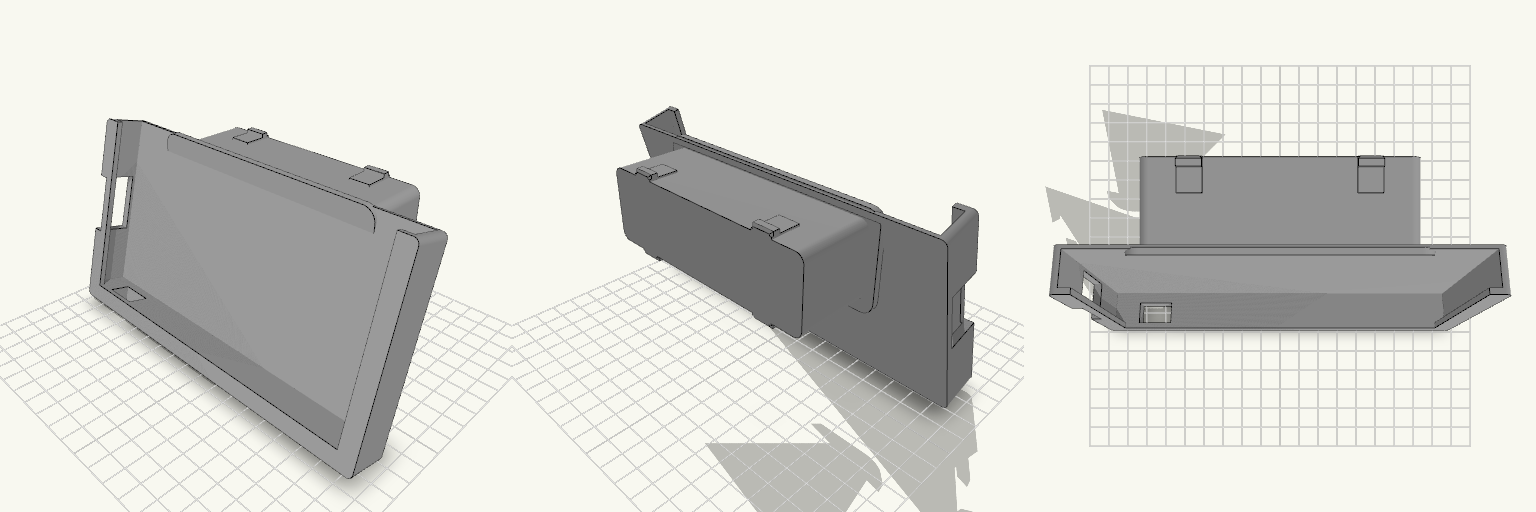
Saipa Pride 111 Clock Bezel Phone Cradle
Preliminary replacement for the Saipa Pride 111 (2011 / 1390) dashboard clock bezel, with a landscape cradle for the Samsung Galaxy A54 5G. All bezel dimensions are placeholders and not taken from the car. Fit status Host: Saipa Pride 111 clock opening. Bezel size, spigot depth and clip positions are placeholders. Phone: Galaxy A54 5G, 158.2 × 76.7 × 8.2 mm, plus 3 mm case allowance and 1 mm clearance per side. Does not fit other Pride trims or other phones. Measure before printing Dash opening width, height, depth, corner radius and clip or screw positions. Notes The cradle is wider than the clock opening, so it projects forward of the dash. Open-top slide-in loading, side lips, a bottom ledge and a USB-C side slot. Tilt is 15° back. Check it against the dash and your sight line. Print in ASA or PC-CF. PETG softens in a hot parked car.
Drone Frame For 8mm Motors
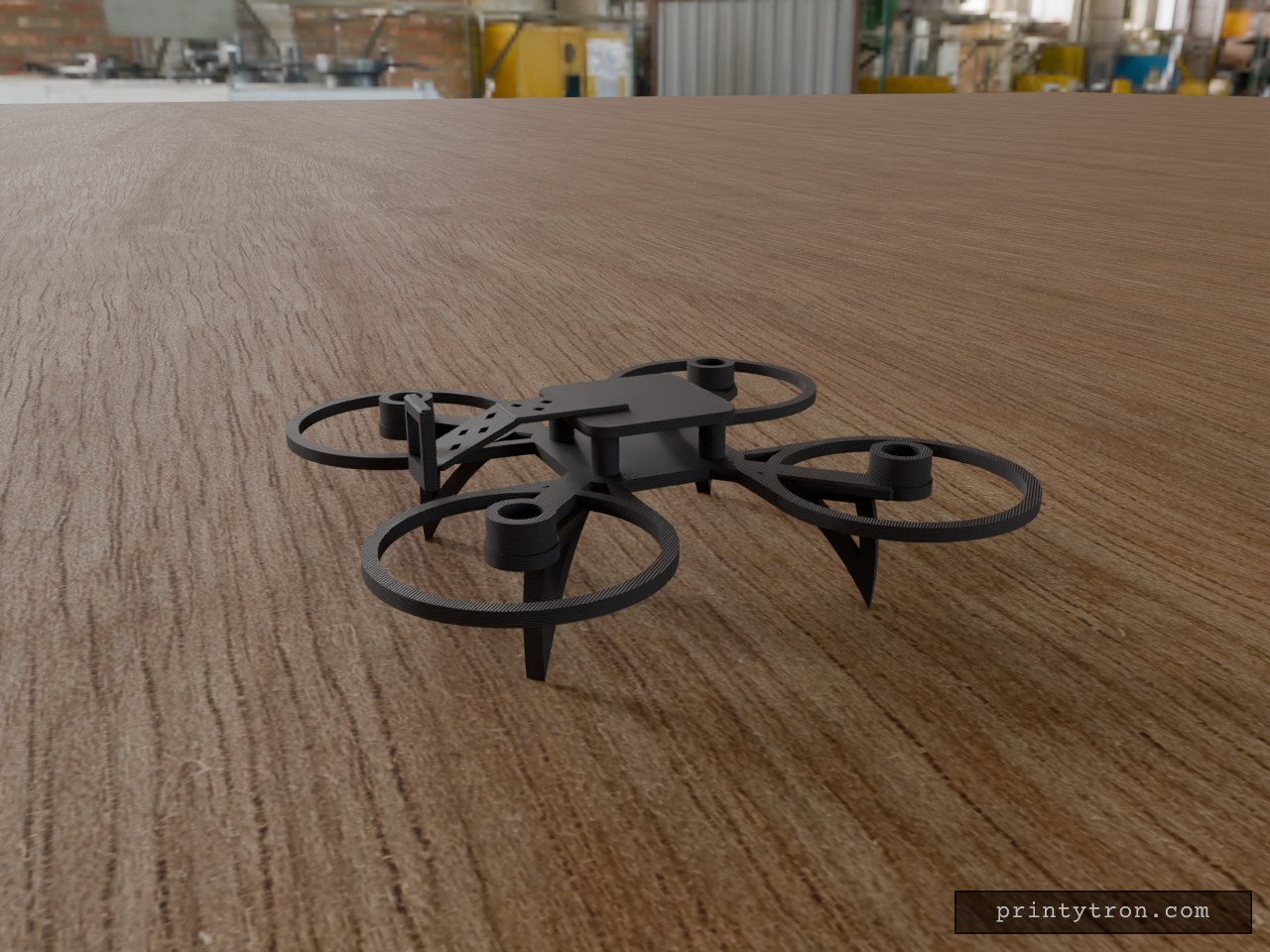
A quad frame for 8 mm motors with a 14 mm wide, lattice-cut camera mount on the top deck. Fitment Motors: 8 mm, in 8.4 mm bore cups. Does not fit 7 mm or 11xx motors without resizing. Camera mount: 14 mm wide extender and slanted plate, with a single vertical wall at the low end and a 7 mm lens hole. Frame: 4 arms, 58 mm guard rings with two curved sticks each, raised deck, hollow pointed legs. Check before printing Measure the camera body width. The 14 mm wall suits only nano-size FPV cameras. Known limits No flight-controller holes in the deck. The camera has no retaining feature. Use a strap or glue.
25mm Tactical Tabletop Tokens
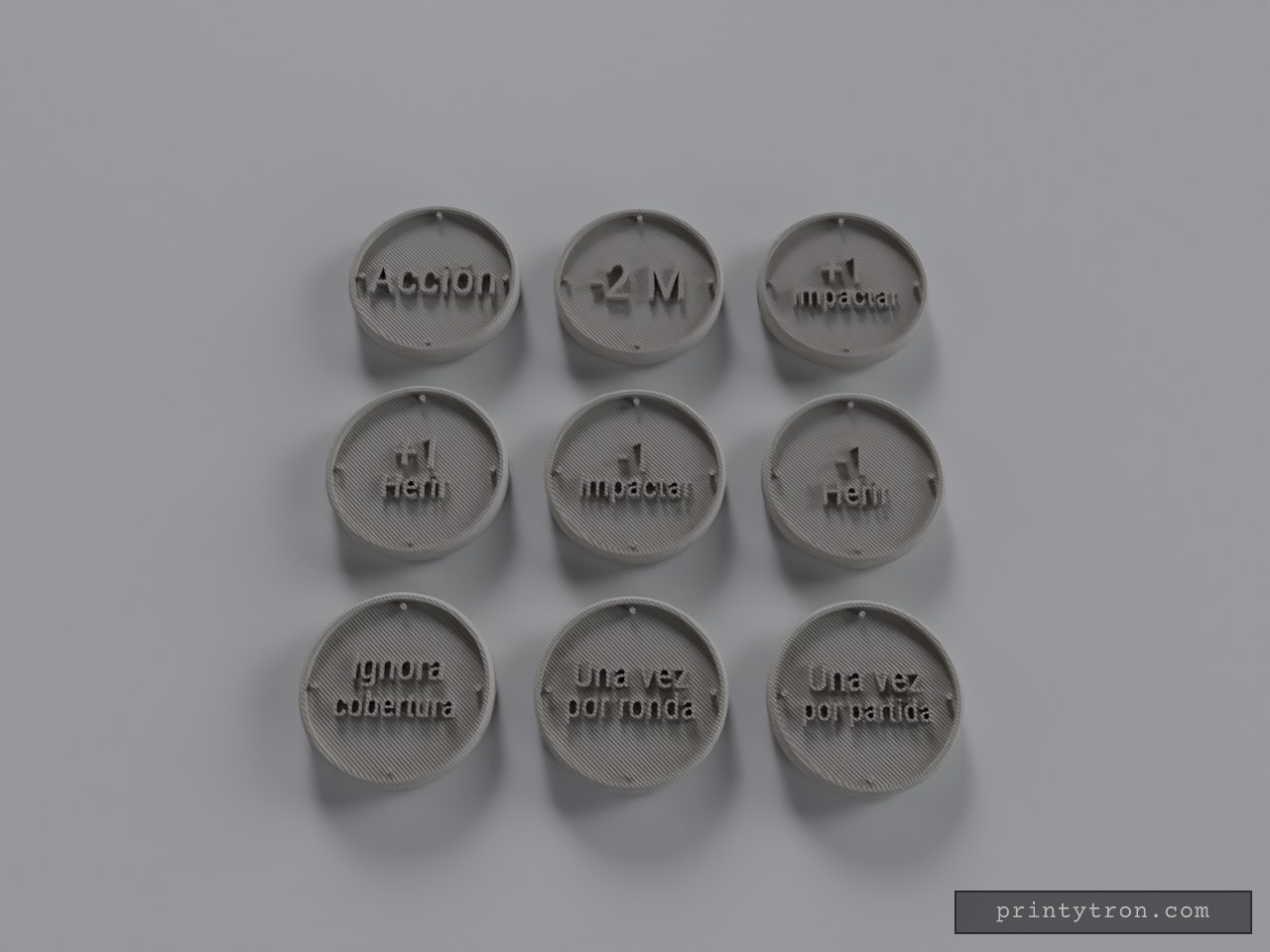
A complete set of nine 25mm wargaming tokens tailored for tabletop tracking. Designed with a clear separation between the base and the raised lettering, making them perfectly suited for a mid-print filament swap or a multi-material system. Specifications Dimensions: 25 mm diameter, 4 mm overall height. Tolerances: The raised text and outer rim sit exactly 1 mm above the base layer, creating a clean Z-height transition for color changes. Printability: No supports required. The bottom edges feature a 1 mm chamfer to prevent elephant-foot distortion on the first layer, ensuring the tokens remain perfectly circular and easy to pick up from flat tables. Layout: Arranged in a flat 3x3 grid for immediate batch printing. Can be split into individual models in the slicer if needed.
Curved Snap-In Interior Trim Cover
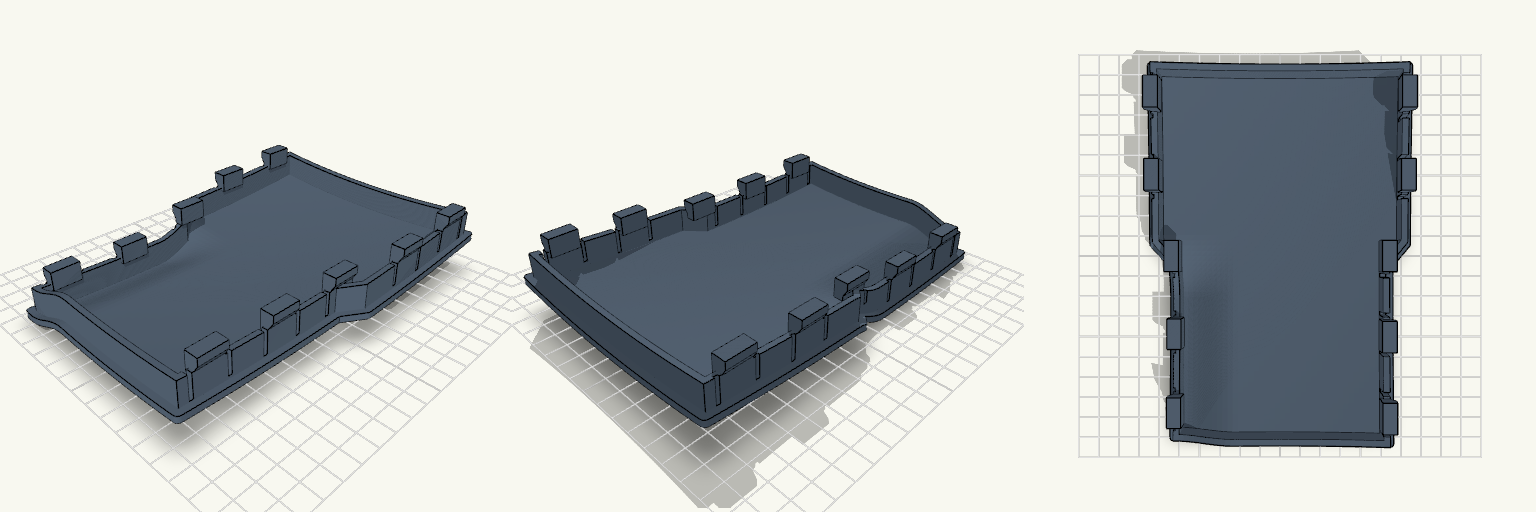
A 123 × 180 mm curved interior trim cover with a straight bottom edge, a stepped outline (107 mm wide at the top, 123 mm in the lower 85 mm) and a 3 mm panel. The perimeter flange follows the crowned surface so the part sits flush around the opening. Remix hooks Surface crown: the front curvature is a few millimetres in both directions. Flatten or deepen it to match a measured body profile. Raised area: 10 mm high with a soft ~30 mm blend at the upper left. Change height or width to suit. Clips: five per side at 18, 54, 90, 126 and 162 mm, 14 mm wide and 4.5 mm thick, with a ~2 mm hook. Adjust hook depth to the real metal edge thickness. Rear frame: 15 mm deep, 2.8 mm wall, inset 3.5 mm. Change the inset for a tighter or looser fit. Pairs with: fuzzy skin in the slicer for a textured look. Print in PETG, ASA or ABS.
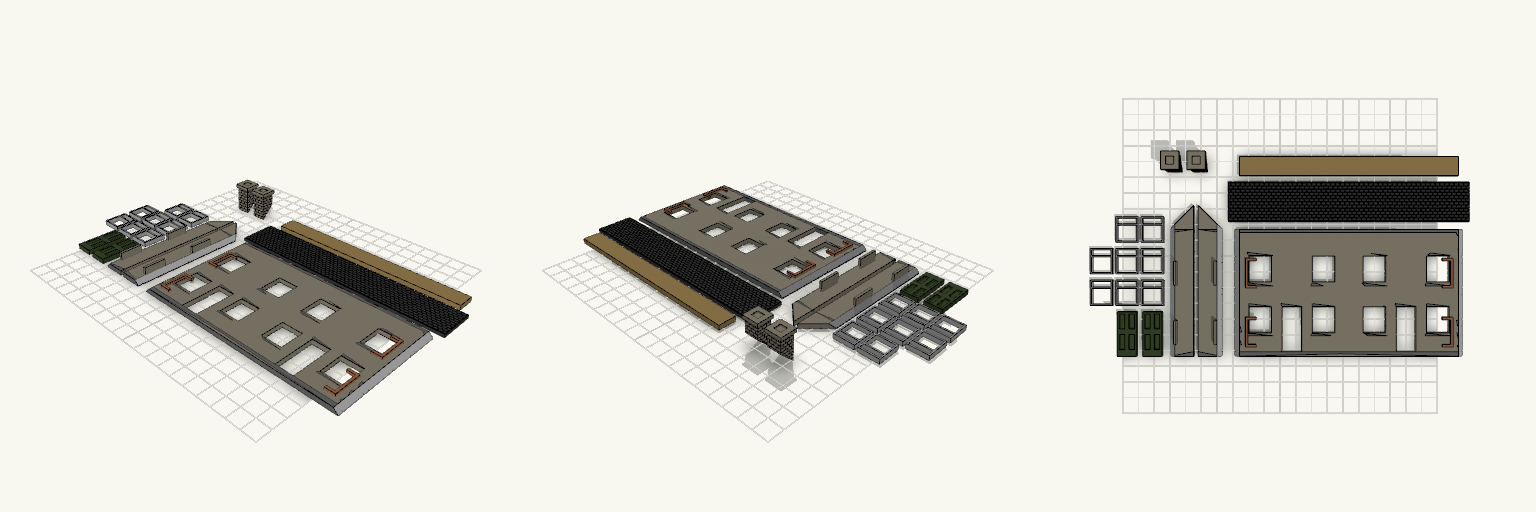
OO Gauge semi detached house stone v2
A semi-detached stone house pair in OO gauge, printed as separate pieces: front wall with quoins at the outer ends, mitred side walls, a one-piece roof, a floor piece, two chimneys, and separate window and door inserts. Four small locator rails now help position the side-wall tabs on the front wall. Remix hooks Tab locators: four U-shaped pieces, each 6.8 × 18.6 × 1.5 mm. Glue one against the inside of the front wall beside each side-wall tab. The 0.3 mm clearance around the 15 × 5 mm tab is the value to tune for your printer. Locator thickness: 1.5 mm now. Raise it for a firmer stop. Window and door inserts: 3 mm thick, 0.2 mm clearance per side. Pairs well with: a thin plasticard base or a printed street baseboard.
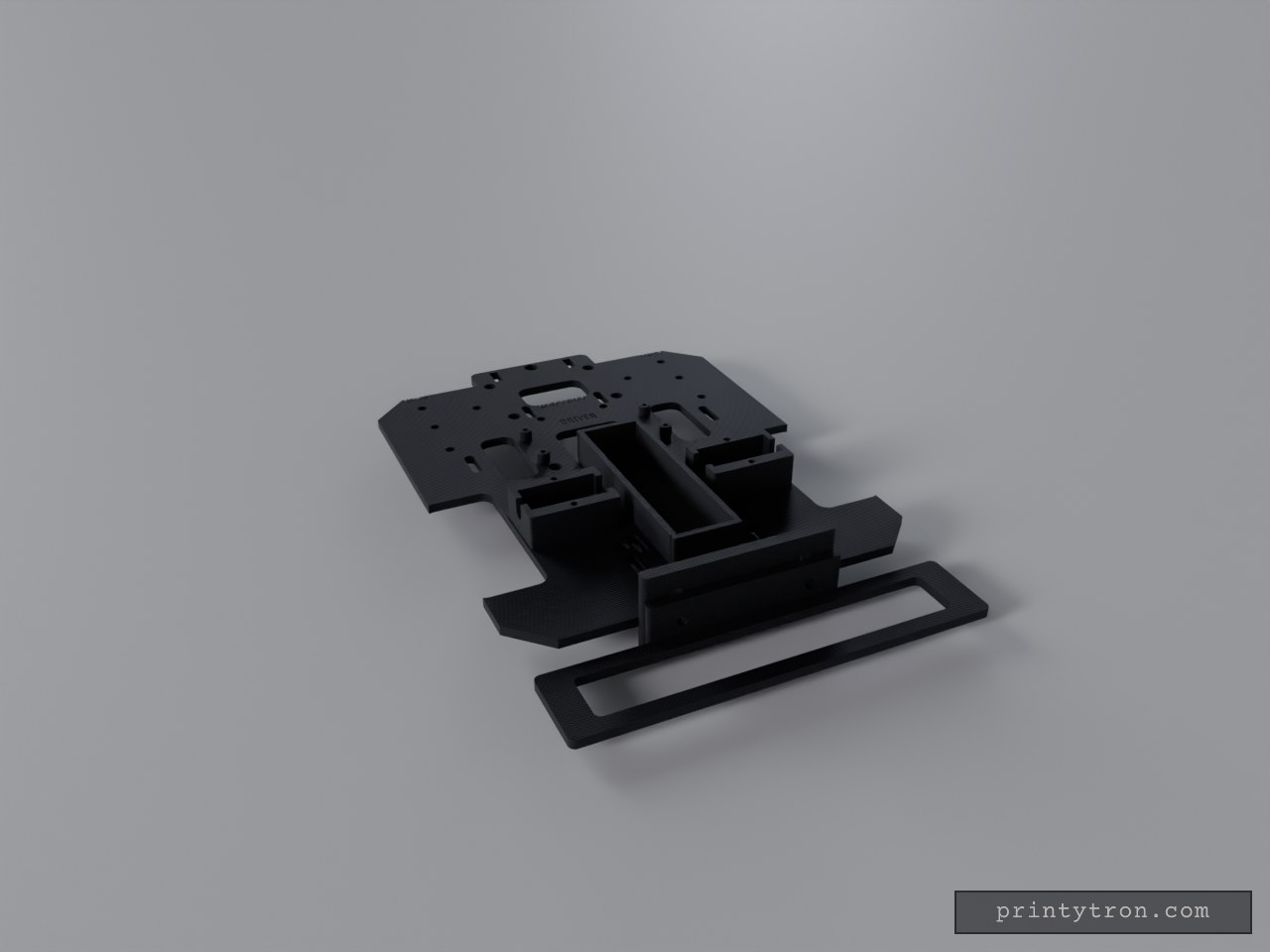
Line Follower Chassis, N20 Drive
What it's for A line-follower chassis plate with N20 motor cradles, an adjustable-height front sensor tray, an ESP32 mount, a battery holder, a driver mount, a rear caster tab and an LED hole. Dimensions Overall: about 130 × 198 mm, under 25 mm tall (the plate sits 8 mm off the ground). Motor cradles: 12.2 × 24.7 mm pocket for a 12 × 10 × 24.5 mm N20, with a shaft notch and two M2 holes each. Wheel cutouts: sized for 34 mm wheels with more than 2 mm clearance to the plate. Sensor tray: 126 × 26 mm board shelf, two vertical M3 slots in the riser for height adjustment. ESP32: four standoffs for a 48 × 26 mm board, plus two zip-tie slots. Battery: 68 × 18 × 19 mm pocket along the axle line, two strap slots. Driver: two zip-tie slots for a 21 × 18 mm module. LED: 5 mm hole near the rear edge. Wiring: two 10 mm slots between the motor mounts and the electronics. Remix ideas Add a cover clamp across each motor cradle using the M2 holes. Change the caster tab hole spacing for a different caster. Add a second sensor tray for a different board width.