Kleiner Puck: Zylinder-Distanzstück mit 6-mm-Bohrung
Created today
Description
Ein kleiner Puck aus der Maschine: 15 mm im Durchmesser, 15 mm hoch, mit einem sauberen 6-mm-Loch, das einmal komplett durchgeht. Die beiden Stirnflächen laufen nicht scharf aus, sondern sind mit einer 1-mm-Fase im 45°-Winkel gebrochen — das gibt dem Teil seine leicht abgerundete Silhouette und lässt es sauber aufliegen, statt mit einer Kante zu kippen. Genau die Art von Kleinteil, das in der Werkstattkiste fehlt, wenn irgendwo Abstand gehalten werden muss — als Distanzstück, Buchse oder Hülse zwischen zwei Flächen, durch die eine Schraube, eine Achse oder eine Gewindestange läuft.
Auf einen Blick
- Durchmesser: 15 mm
- Höhe: 17 mm
- durchgehende Bohrung: 6 mm
- Wandstärke rundum: 4,5 mm
- Fase außen oben und unten: 1 mm × 45°
- steht auf dem Druckbett ohne Stützen und ohne Brim
Die Wandstärke von 4,5 mm macht den kleinen Körper stabil genug für Schraubverbindungen und Abstandshalter, ohne dass er zum Klotz wird. Das 6-mm-Loch nimmt M6-Schrauben, Gewindestangen und Achsen auf; die Höhe von 17 mm lässt sich bei Bedarf leicht skalieren, wenn mehr Abstand gebraucht wird. Die Fase sitzt nur außen — die Bohrung bleibt über ihre ganze Länge zylindrisch und führt Schraube oder Achse gerade durch.
Ein stilles, universelles Teil — eines, das man in mehreren Größen druckt und dann in der Schublade hat, wenn es darauf ankommt.
Images
More like this
Explore more in Workshop & Tools →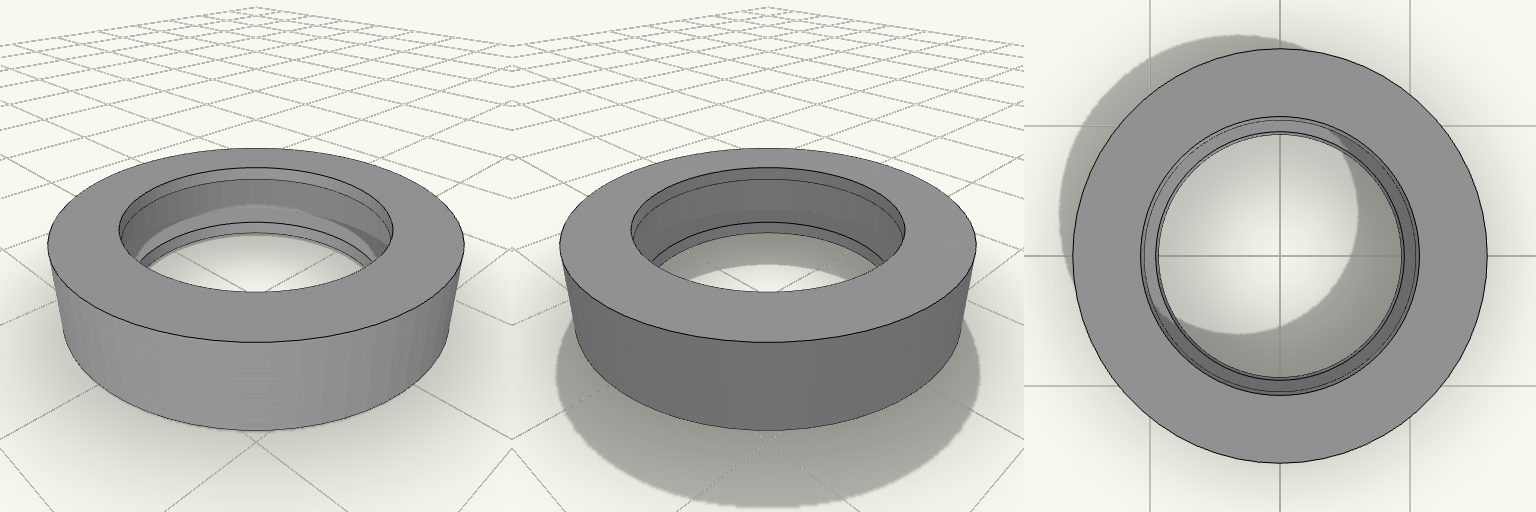
Reifen mit offenem U-Profil innen
Ring mit Ø27,5 mm außen und Ø18,5 mm innen, 6 mm breit, mit nach innen offener U-Nut (4 mm breit). Der Nutgrund liegt bei Ø23,5 mm, damit die Wand am Außenumfang 2 mm stark bleibt. Remix-Ansätze Außendurchmesser (27,5 mm): Nutgrund mitführen, er sollte immer 4 mm unter dem Außendurchmesser liegen, um 2 mm Wand zu behalten. Nutbreite (4 mm): Bei 6 mm Gesamtbreite bleiben je 1 mm Flanke. Schmalere Nut oder größere Breite macht die Flanken stabiler. Innendurchmesser (18,5 mm): Bestimmt die Öffnung und damit, was der Ring aufnimmt. Kombiniert gut mit: Rollen, O-Ringen oder Gummiauflagen, die in der Nut sitzen.
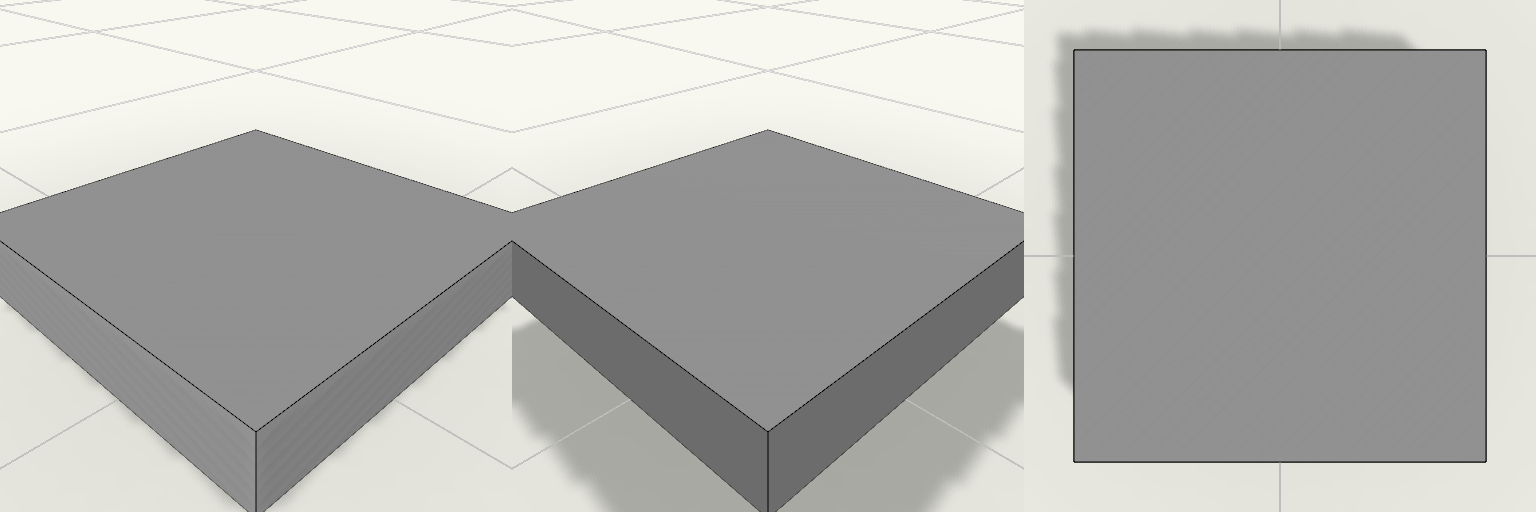
5 x 5 x 1 mm Square Block
A plain square block measuring 5 mm by 5 mm by 1 mm, flat on the bed and ready to print. Remix hooks Footprint: 5 x 5 mm is the starting value. Change it to make a tile, spacer or shim. Thickness: 1 mm is about five layers at 0.2 mm. Raise it for a sturdier piece. Edges: Add a small chamfer or rounding for a softer look. Keep it under 0.5 mm at this size. Pairs with: Use it as a test cube for tolerance checks, or as a base for a hole, text or a peg.
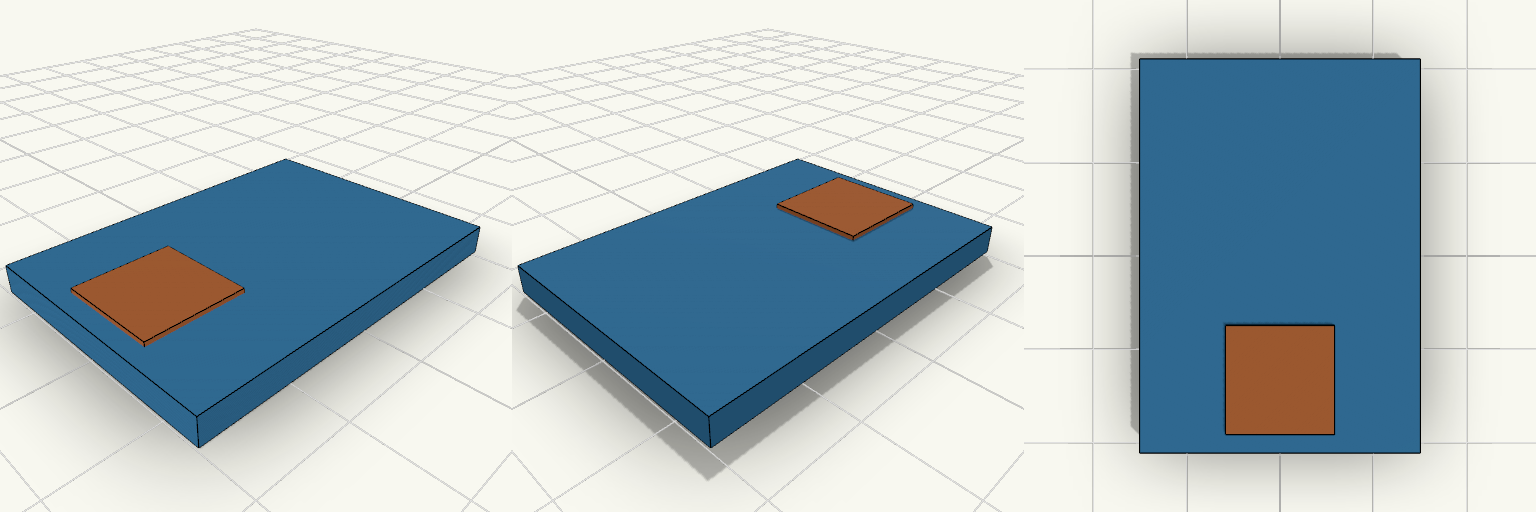
Plate With Offset Square Pad
A flat 28.5 × 40 × 3 mm plate with an 11 × 11 mm raised square pad, 0.5 mm thick, centered in X and set 2 mm from the Y- edge. Remix hooks Pad thickness (0.5 mm): a multiple of your layer height keeps the pad clean. 0.5 mm is about 2 or 3 layers. Pad offset (2 mm from the Y- edge): move it along Y to centre it or push it to the other edge. Plate length (40 mm): the pad is 11 mm, so any length above roughly 15 mm still holds it. Pairs with: a label, a sticker, or a second pad in a different colour for a multi-colour swap.
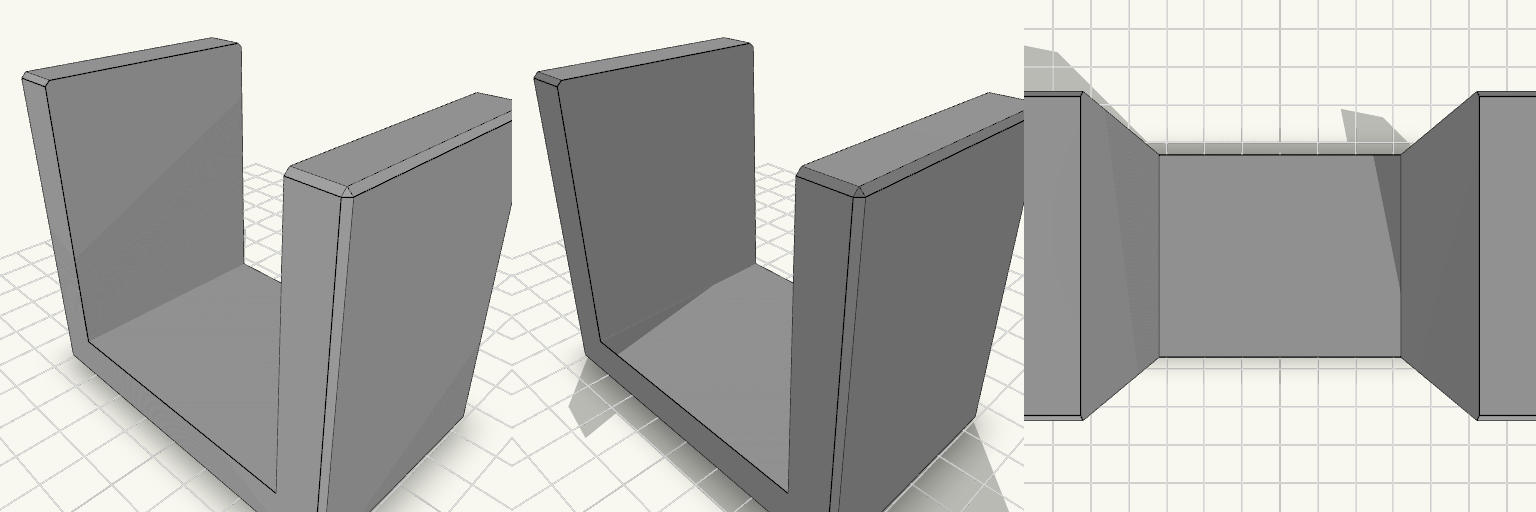
U profilis, 60 mm tarpas, aukštos sienelės
U formos laikiklis, kuriame detalė neslysta į šonus: 60 mm tarpas tarp sienelių, 10 mm sienelės ir dugnas, 50 mm pagrindo plotis. Matmenys Vidinis tarpas: 60 mm Sienelių ir dugno storis: 10 mm Sienelės virš dugno: 60 mm (pailgintos 50 mm) Bendras dydis: 80 × 50 × 70 mm Spausdinimas: dugnu ant stalo, atramų nereikia
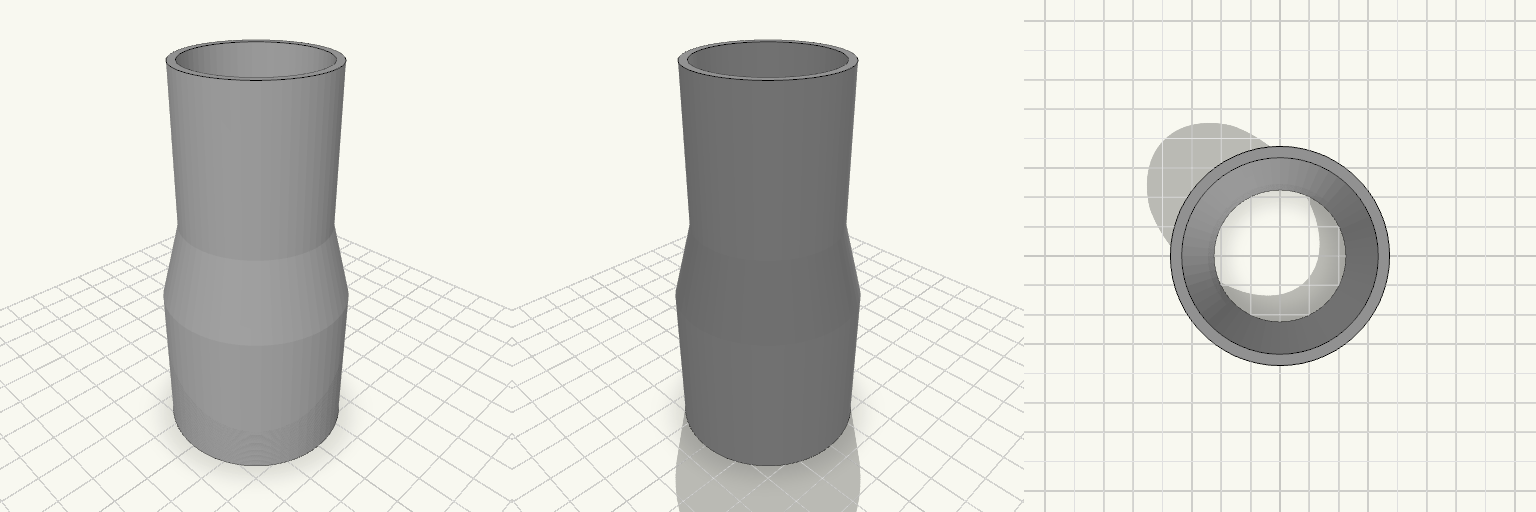
Makita Dust Suction Adapter Tube V2
This single-piece tube adapts a Makita dust port or hose to a smaller connection. It runs 100 mm overall: a 40 mm straight section at 49 mm outer diameter, a 20 mm conical transition, and a 40 mm straight section ending in a 35 mm bore. The wall is 2 mm, so the 49 mm end has a 45 mm bore that narrows to 35 mm at the small end, which measures 39 mm across the outside. Because the fit is defined by those two ends, they are the first thing to check against the real hose and tool port — printed tubes commonly come out slightly off. Remix hooks End sizes: The 49 mm outer diameter and the 35 mm bore are the dimensions to tune. Shifting either by a few tenths of a millimetre is the normal way to account for printer variation and the actual fitting. Wall thickness: The 2 mm wall is a starting value. A thicker wall stiffens the tube and shrinks the bore; a thinner one gives more internal clearance at the same outside size. Bore profile: Here the 49 mm end starts at a 45 mm bore and steps down to 35 mm. Running the 35 mm bore through the whole length is the obvious variant if you want a straight-through passage. Transition: The 20 mm cone can be shortened for a more abrupt step or lengthened for a gentler taper. Ends: Add a lip, retaining ring, or chamfer at either end if the hose or tool port needs a positive stop. Length: The 100 mm overall length is a choice, not a constraint. Shorten it to reach into tight spots or extend it to clear an obstruction. Pairs with: A Makita hose on one side and a smaller vacuum or tool port on the other, with the end sizes adjusted to match whatever you actually have.
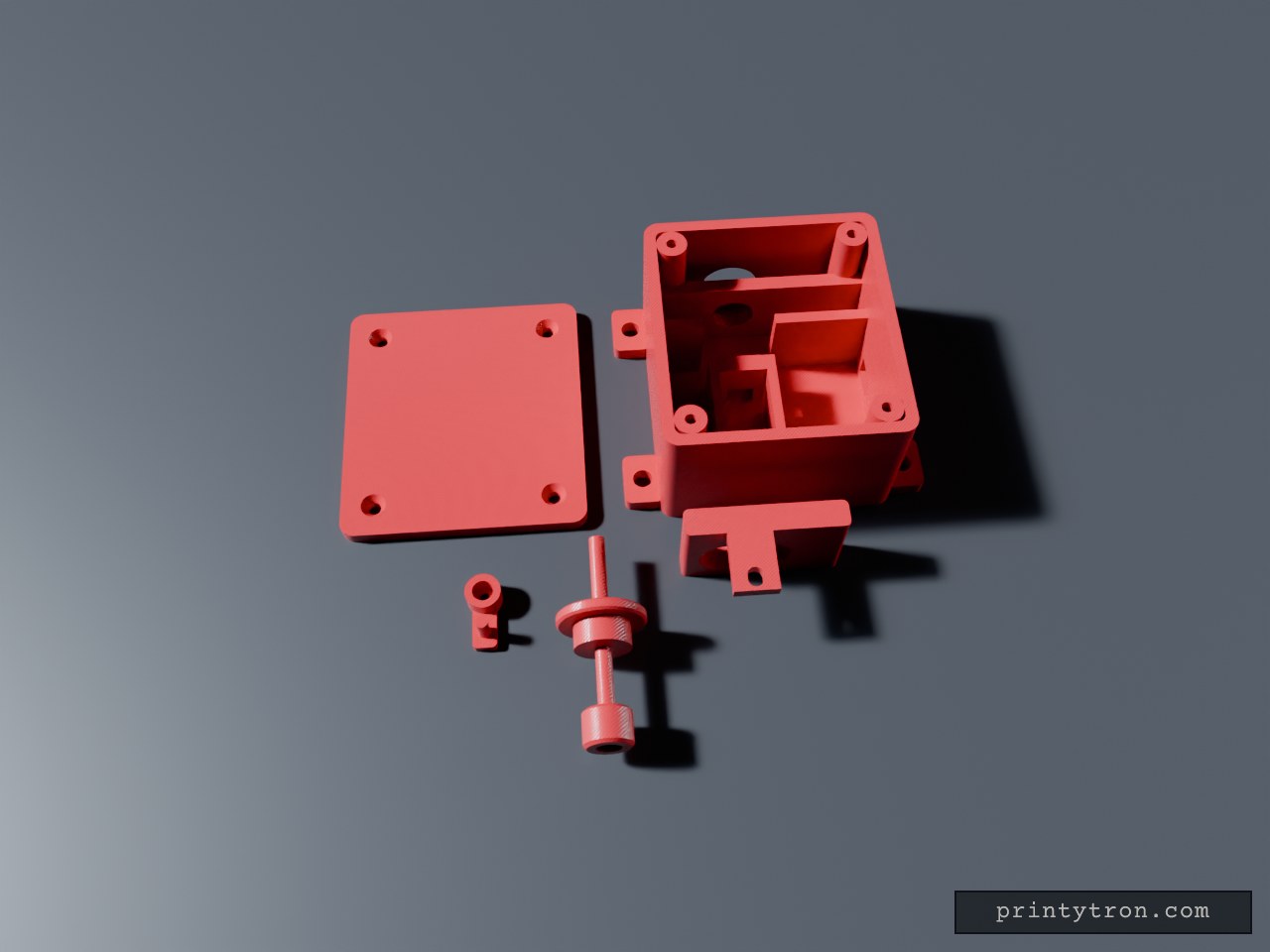
v1 Servo-Release Cable Lock with Servo Arm
Servo-operated cable lock for a paddleboard rental system. A printed servo arm fixes to the servo shaft with a top-mounted screw and drives a sliding keyhole plate that releases the cable terminal. Parts: housing, service cover, release slide, one-piece cable unit, servo arm Servo arm: 9 mm hub with a 5.2 mm shaft socket, M2 screw hole and head recess on top Arm reach: 9.5 mm drive pin radius, engaging the slide yoke slot Slide travel: 9 mm, spring-returned to locked Magnet: 6 x 3 mm coin magnet pockets in terminal tip and wall holder Print: PETG or ASA, 4+ walls, arm printed hub-up Not load-tested; prototype grade