Makita Dust Suction Adapter Tube
Created today
Description
This single-piece tube adapts a Makita dust port or hose to a smaller connection. It runs 100 mm overall: a 40 mm straight section at 48.5 mm outer diameter, a 20 mm conical transition, and a 40 mm straight section at 34.45 mm outer diameter. The 2 mm wall keeps the bore following the outside profile, so the fit is defined by those two end diameters. Printed tubes commonly come out slightly off, so the end sizes are the first thing to check against the actual hose or tool port.
Remix hooks
- End diameters: The 48.5 mm and 34.45 mm ends are the dimensions to tune. Moving either by a few tenths of a millimetre is the normal way to account for printer variation and the real fitting.
- Wall and bore: The 2 mm wall is a starting value. A thicker wall stiffens the tube; a thinner one gives more internal clearance.
- Transition: The 20 mm cone can be shortened for a more abrupt step or lengthened for a gentler taper.
- Ends: Add a lip, retaining ring, or chamfer at either end if the hose or tool port needs a mechanical stop.
- Length: The 100 mm overall length is a choice. Shorten it for tight access or extend it to reach recessed ports.
- Pairing: Use it between a Makita hose and a smaller vacuum or tool port, adjusting the end diameters to match the actual fittings.
Photos
Technical views
More like this
Explore more in Workshop & Tools →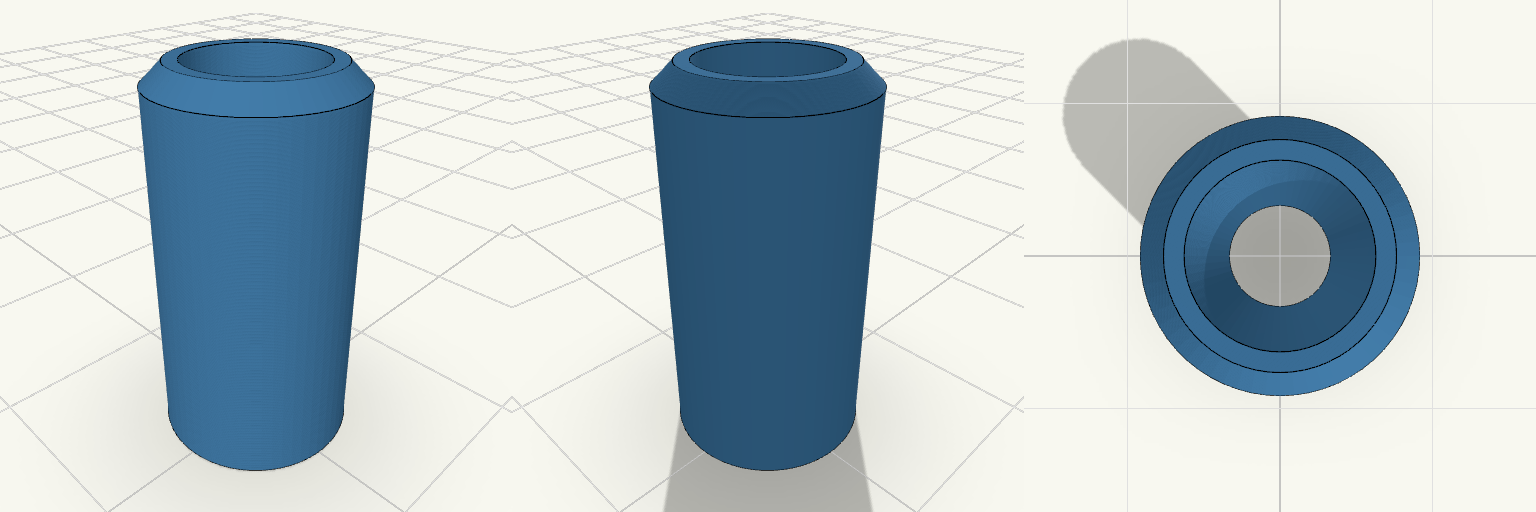
Sleeve — 0.385" OD Spacer Tube
Sleeve is a plain, precise hollow cylinder sized in inches: a straight-through bore and a clean outer wall, ready to use as a spacer, bushing or standoff. Dimensions Outer diameter: 0.385" (9.78 mm) Inner diameter: 0.26" (6.60 mm) Length: 0.75" (19.05 mm) Wall thickness: about 0.0625" (1.59 mm) Print notes Print standing on end, no supports needed. Bore may print slightly tight; ream or scale up a touch if fit matters.
Hex Tube 40 mm Tall With Center Bore
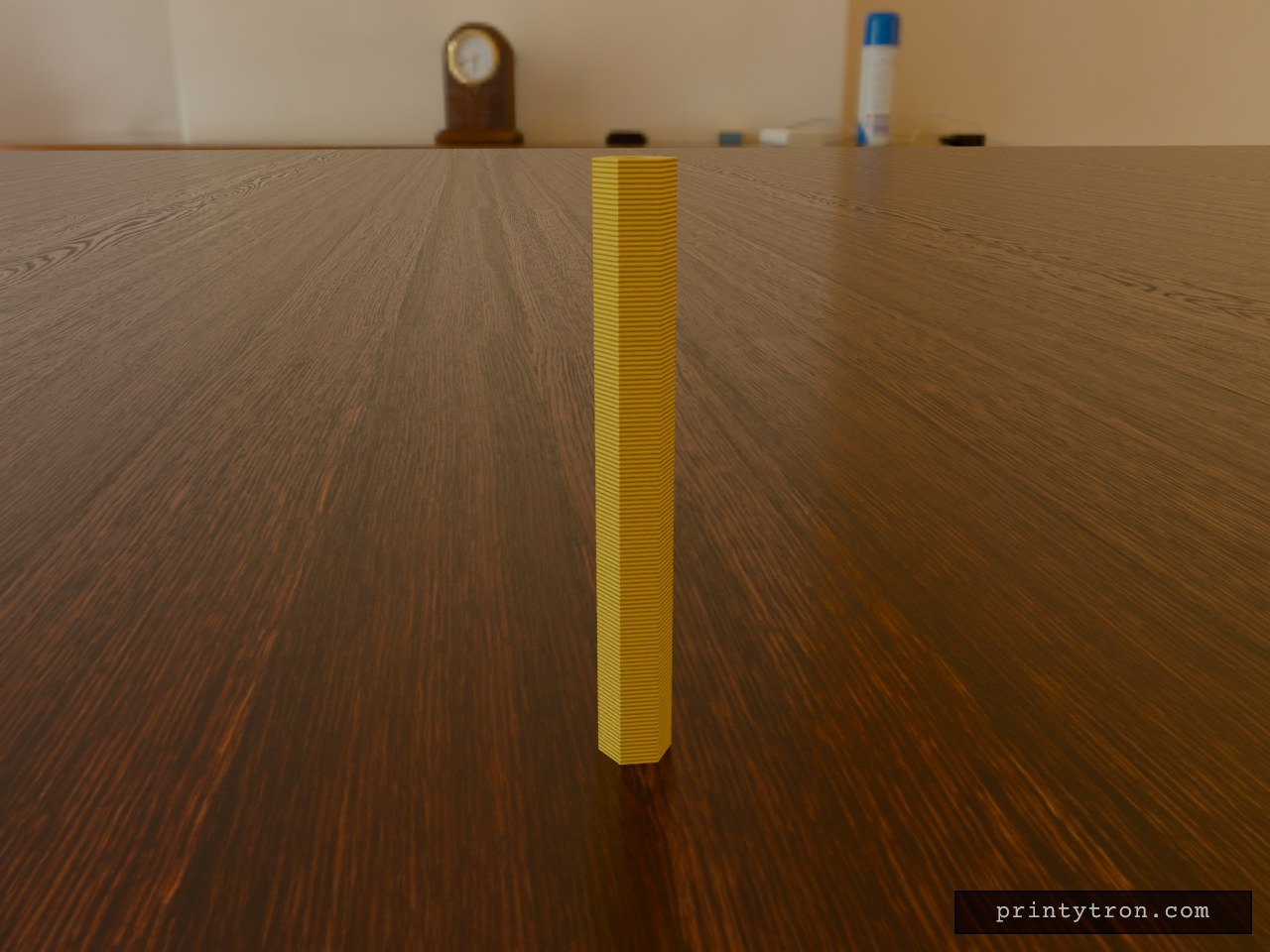
A hex tube, 4 cm tall, for when a round spacer or standoff spins or rolls where a flat-sided one would hold still. The 2.5 mm bore runs the full length so a rod, wire or screw passes straight through. Key dimensions Height: 40 mm Width: 5.15 mm point to point Center bore: 2.5 mm diameter, through the full length Printing Print standing upright, no supports needed. Walls are thin at the hex flats, so use at least 2 perimeters and a small nozzle if possible.
5 x 5 x 1 mm Square Block
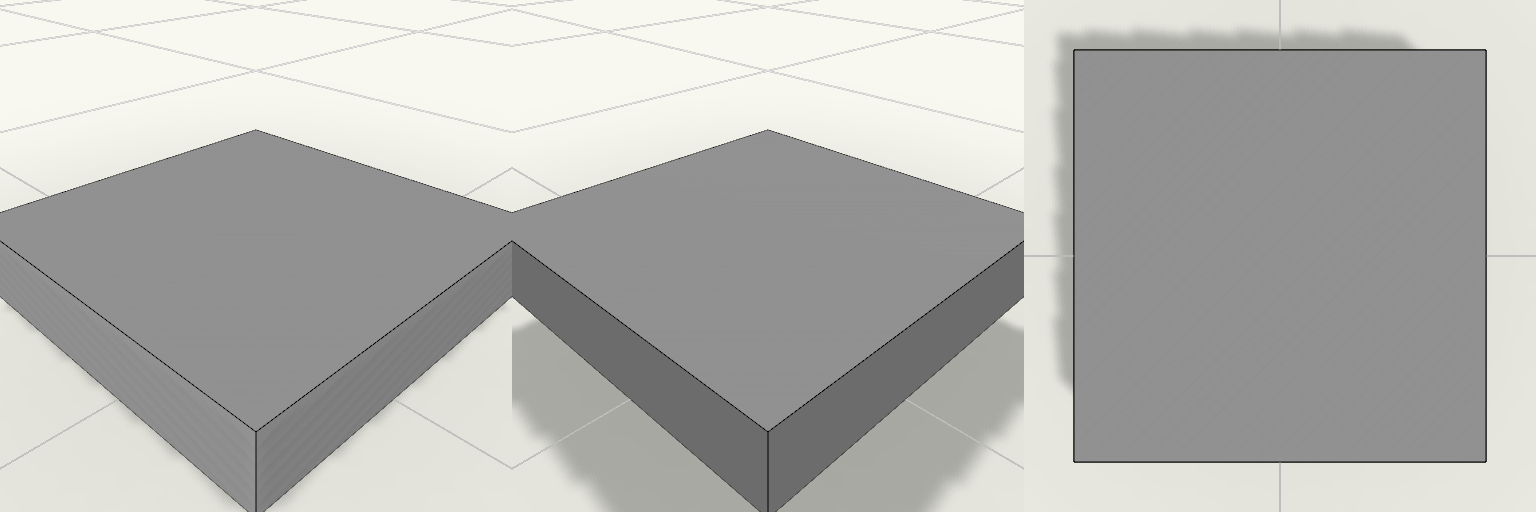
A plain square block measuring 5 mm by 5 mm by 1 mm, flat on the bed and ready to print. Remix hooks Footprint: 5 x 5 mm is the starting value. Change it to make a tile, spacer or shim. Thickness: 1 mm is about five layers at 0.2 mm. Raise it for a sturdier piece. Edges: Add a small chamfer or rounding for a softer look. Keep it under 0.5 mm at this size. Pairs with: Use it as a test cube for tolerance checks, or as a base for a hole, text or a peg.
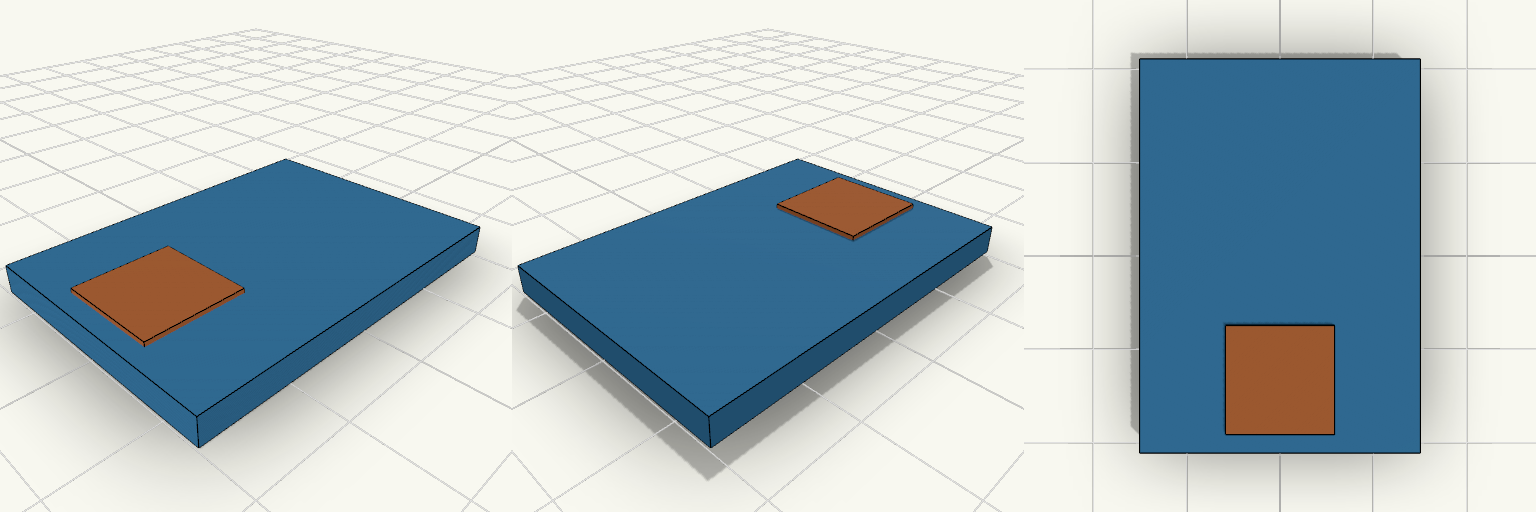
Plate With Offset Square Pad
A flat 28.5 × 40 × 3 mm plate with an 11 × 11 mm raised square pad, 0.5 mm thick, centered in X and set 2 mm from the Y- edge. Remix hooks Pad thickness (0.5 mm): a multiple of your layer height keeps the pad clean. 0.5 mm is about 2 or 3 layers. Pad offset (2 mm from the Y- edge): move it along Y to centre it or push it to the other edge. Plate length (40 mm): the pad is 11 mm, so any length above roughly 15 mm still holds it. Pairs with: a label, a sticker, or a second pad in a different colour for a multi-colour swap.
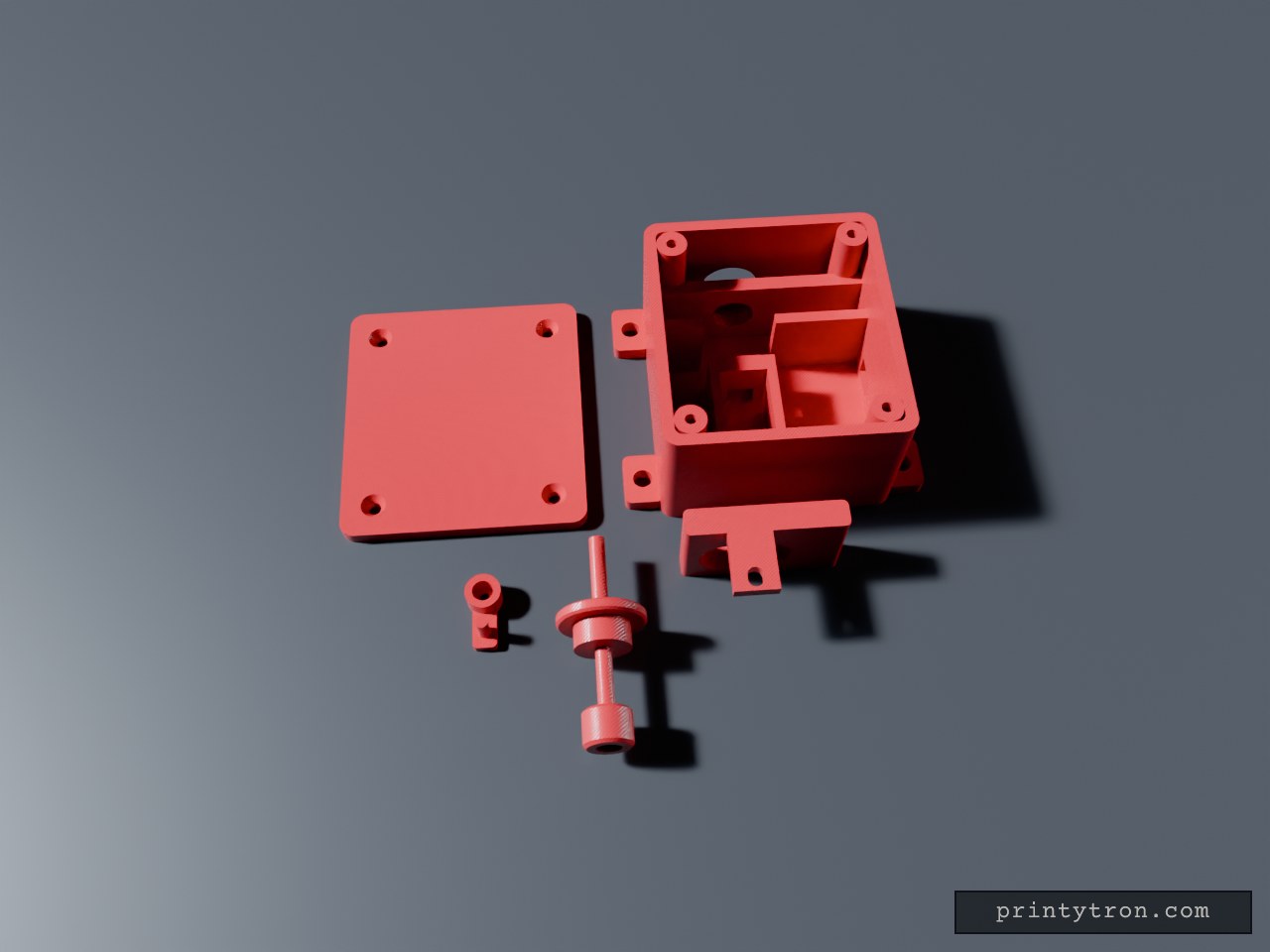
v1 Servo-Release Cable Lock with Servo Arm
Servo-operated cable lock for a paddleboard rental system. A printed servo arm fixes to the servo shaft with a top-mounted screw and drives a sliding keyhole plate that releases the cable terminal. Parts: housing, service cover, release slide, one-piece cable unit, servo arm Servo arm: 9 mm hub with a 5.2 mm shaft socket, M2 screw hole and head recess on top Arm reach: 9.5 mm drive pin radius, engaging the slide yoke slot Slide travel: 9 mm, spring-returned to locked Magnet: 6 x 3 mm coin magnet pockets in terminal tip and wall holder Print: PETG or ASA, 4+ walls, arm printed hub-up Not load-tested; prototype grade
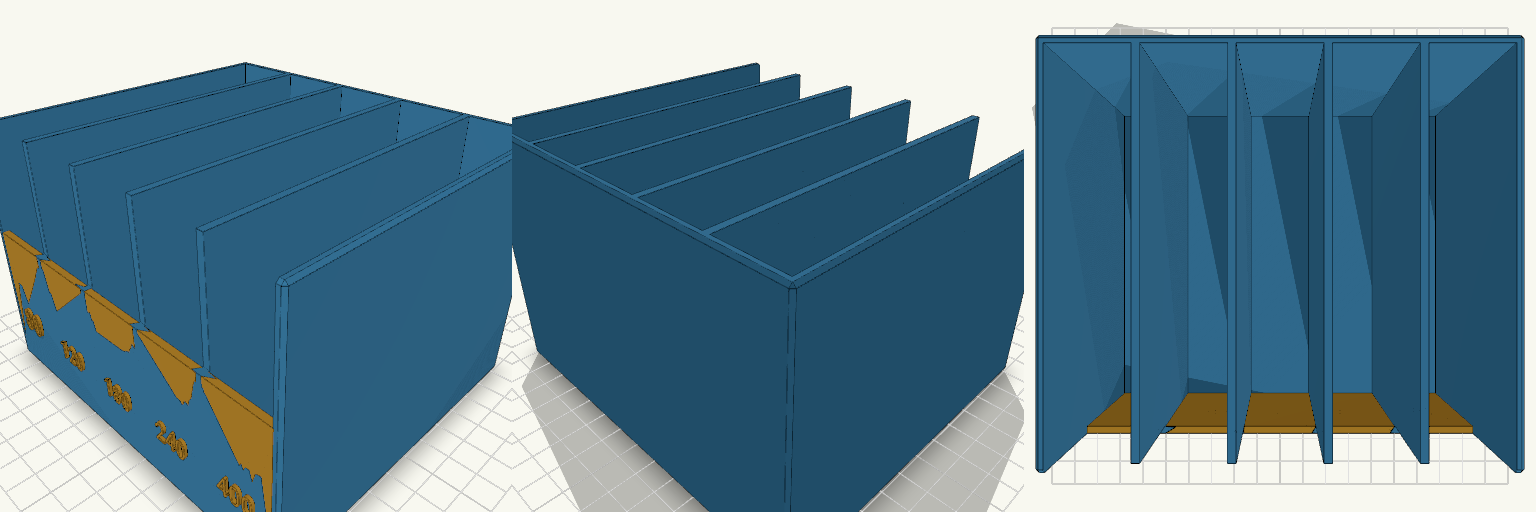
GritHouse — Five-Slot Sandpaper Rack
GritHouse is a bench-top sorting rack that gives every grit of sandpaper its own slot, so a 400 never gets pulled out when a 40 was the target. Five upright slots hold quarter-sheets, and each slot has a front tab with its grit number embossed in raised, easy-to-read digits: 80, 120, 180, 240 and 400, left to right. A tall back wall keeps sheets standing, while the lower front tabs leave room to grip a sheet and pull it out. Features Five slots, each 25 mm wide and 120 mm deep, sized for quarter-sheets Embossed grit labels on the front tabs: 80, 120, 180, 240, 400 Back wall 95 mm tall, front tabs 55 mm tall for easy grabbing Finger scoops cut into the front of each slot Chamfered outer edges for a cleaner print Two colour regions: the rack body and the front tabs with numbers Dimensions Overall: about 139 × 126 × 95 mm (W × D × H) Slot interior: 25 × 120 mm Divider and outer wall thickness: 2.4 mm Floor thickness: 3 mm Print notes Prints upright on its base with no supports needed for the main body. Raised numbers face forward; a 0.2 mm layer height keeps the digits crisp. Use a contrasting filament for the tabs to make the grit numbers stand out.