Material-Saving 30-Degree Base
Created 2 months ago
Remixed once
Description
A solid block of plastic takes forever to print and uses way more filament than it needs to. This base holder replaces the solid wedge with a structural shell — hollowing out the underside while keeping the 30-degree holding angle and the side ridges completely intact.
Print Specs
- Material saving: Massive reduction in volume by carving out a tunnel underneath.
- Overhangs: The 30-degree incline naturally prints without supports.
- Footprint: 68mm long by 60mm wide.
Images
More like this
Explore more in Desk & Tech →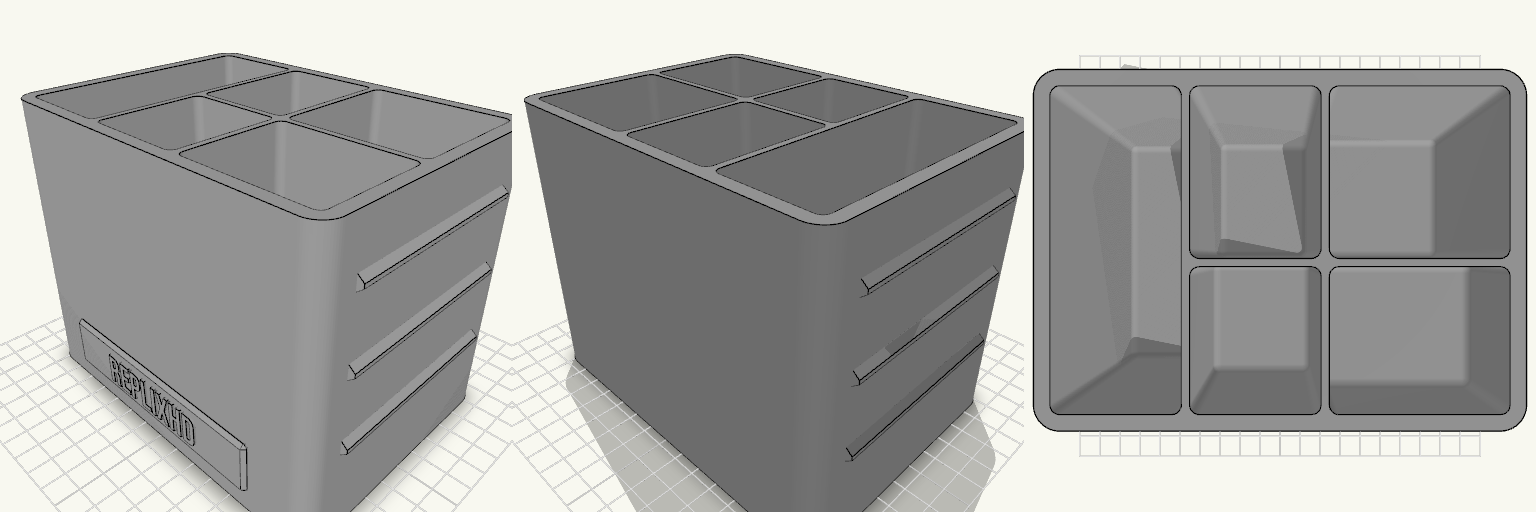
ReplixHD Gaming Desk Organizer
A five-pocket desk organizer for a 150 × 110 × 120 mm footprint, with "ReplixHD" embossed on a raised front plate. Fit Scissors slot: 40 × 100 mm, 105 mm deep. Pen slot: 40 × 52 mm, 100 mm deep. Pencil slot: 55 × 52 mm, 90 mm deep. Marker slot: 40 × 45 mm, 70 mm deep. Small slot for clips and erasers: 55 × 45 mm, 40 mm deep. Walls are 2.5 mm and dividers are 2.5 mm. The pockets' floors sit above the 3 mm base, which is thicker where the pockets are shallower. Check before printing Pen and pencil slots are about 40–55 mm across, so measure any oversized markers against that. Scissors need a handle under 40 mm wide. Print notes One solid body, with no supports needed. The side ridges are sloped at about 60° so they print cleanly. It does not fit anything that needs a closed lid or a drawer.
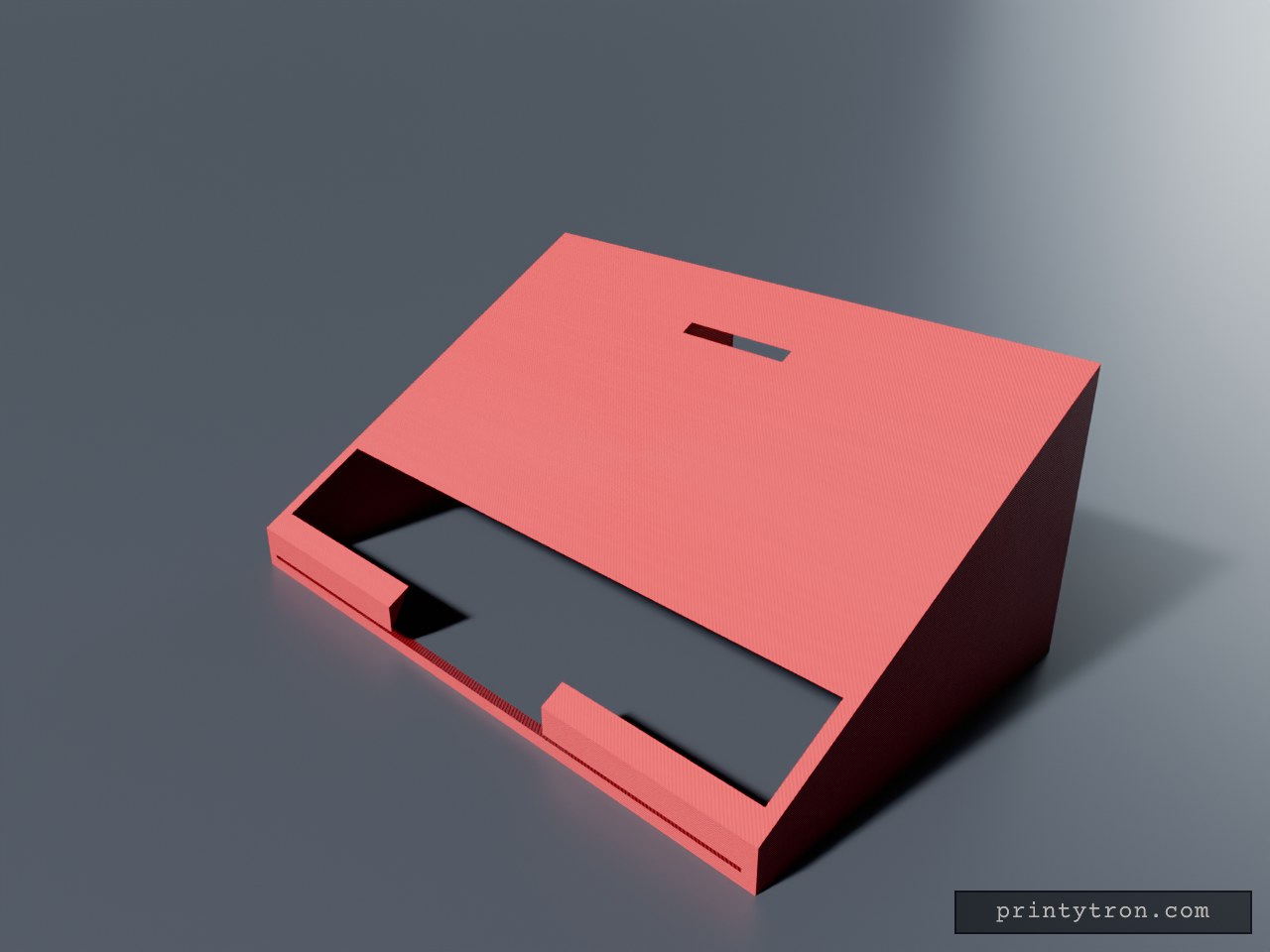
30° Tilted Stand for 118x84mm Keypad
Wedge-style desk stand that holds a 118x84mm macro keypad at a 30° tilt, so the keys face the user instead of lying flat. The pad sits in a recessed pocket that grips its base on all four sides to stop it creeping during use. A finger notch at the front edge lets the pad be lifted out. A cable slot at the back edge routes the cord away from the desk surface. Specs Pad size: 118 x 84 mm Pocket clearance: 0.3 mm per side (0.6 mm total on each axis) Tilt angle: 30° Overall footprint: about 124 x 80 mm, roughly 53 mm tall at the rear Wall thickness: 2.5 mm Front notch: 40 mm wide finger cut-out for lifting the pad Cable slot: 24 mm wide, centered on the back edge Underside: flat; add rubber feet or tape for grip on smooth desks Print orientation: flat side down, no supports needed Notes Check the pocket depth and cable slot position against the actual pad before printing. If the cable exits somewhere other than the center of the back edge, the slot position needs to be moved.
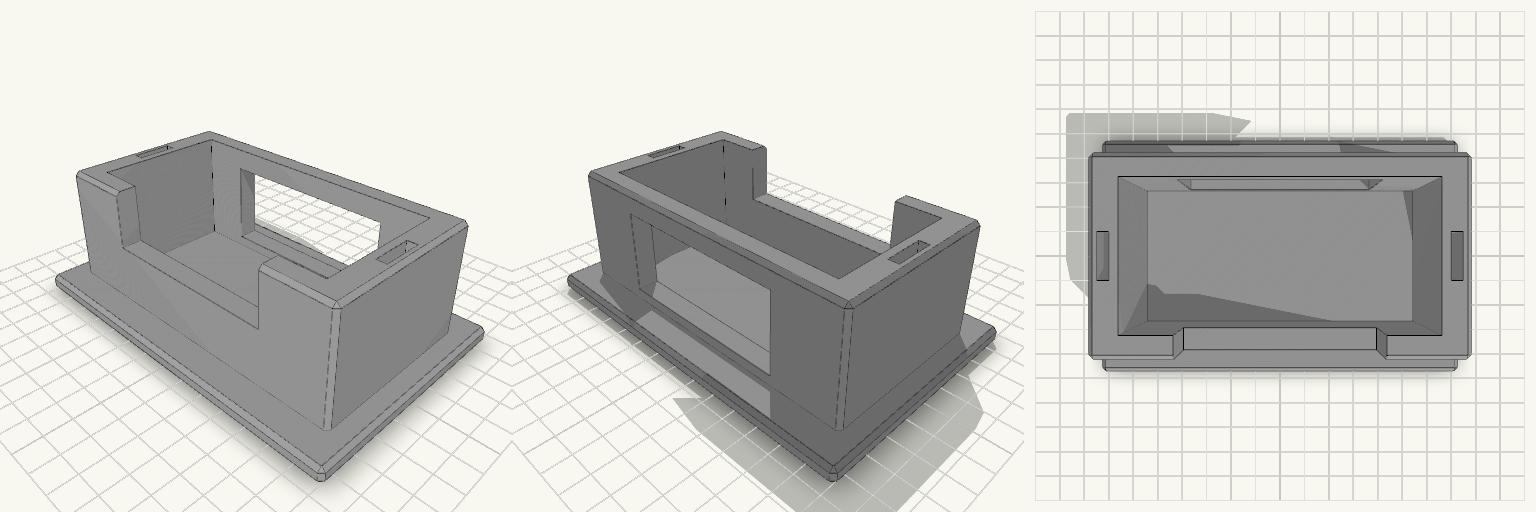
Vertical Switch Dock Stand with Strap Slots
A Switch dock lying flat eats shelf space, and a dock stood on its end tips over the first time someone pulls a cable. This stand holds the dock upright in a snug pocket on a wide flat base, and keeps two spare Joy-Con straps in slots in the side walls. What it does Holds the dock on its end so it takes up a footprint of about 142 × 92 mm instead of its full 175 mm length lying down. Front wall is cut down in the middle, so you can grip the dock to lift it out. A 70 mm opening in the back wall lets the power, HDMI and USB cables leave without bending against the stand. Two 4 × 16 mm slots, one in each side wall, hold spare Joy-Con straps. Numbers that decide fit Pocket: 106 mm wide × 52 mm deep, for a dock of roughly 104 × 49 mm. That leaves about 1 mm of play on width and 3 mm on depth. Pocket depth: 44 mm, above a 6 mm base. Overall: 142 × 92 mm base, 50 mm tall. Side walls: 10 mm thick. Front and back walls: 8 mm. Printing Print flat on the base, with no supports needed. Chamfered edges, 1.5 mm. Any common filament works. PETG or PLA is fine for the load. If your dock is a tight fit or loose, adjust the pocket width and depth to match.
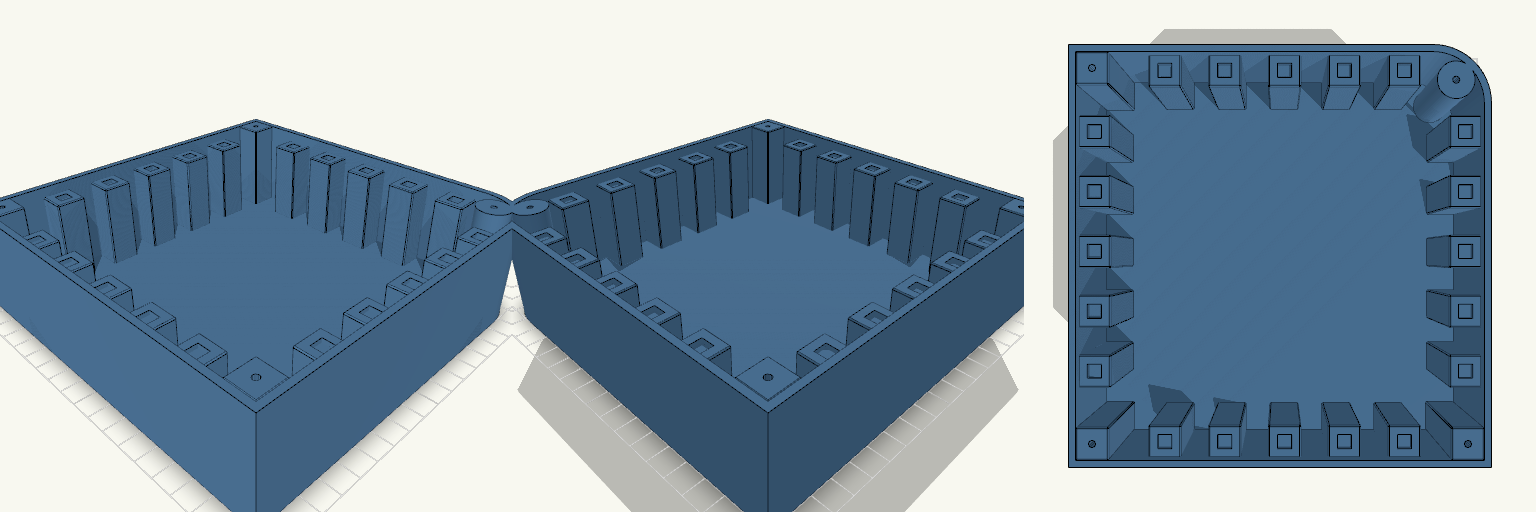
Arecson — Base con Pilares de Pulsador
Arecson es una base de caja de 180 × 180 × 50 mm con una sola esquina redondeada, pensada para un controlador DJ. Cuatro pilares de esquina, uno de ellos cilíndrico en la curva, permiten atornillar la tapa, y una fila de cinco pilares sostiene pulsadores de 6 mm. Características Caja de una pieza, sin tapa, con suelo plano. Pilares de esquina de 50 mm con guía de 3 mm y 30 mm de profundidad. Cinco pilares de 14 × 14 × 45 mm en fila horizontal en la zona inferior. Asiento de 6,1 mm y 2 mm de profundidad en cada pilar. Notas de impresión Si el pulsador entra justo, subir el asiento a 6,2 mm.
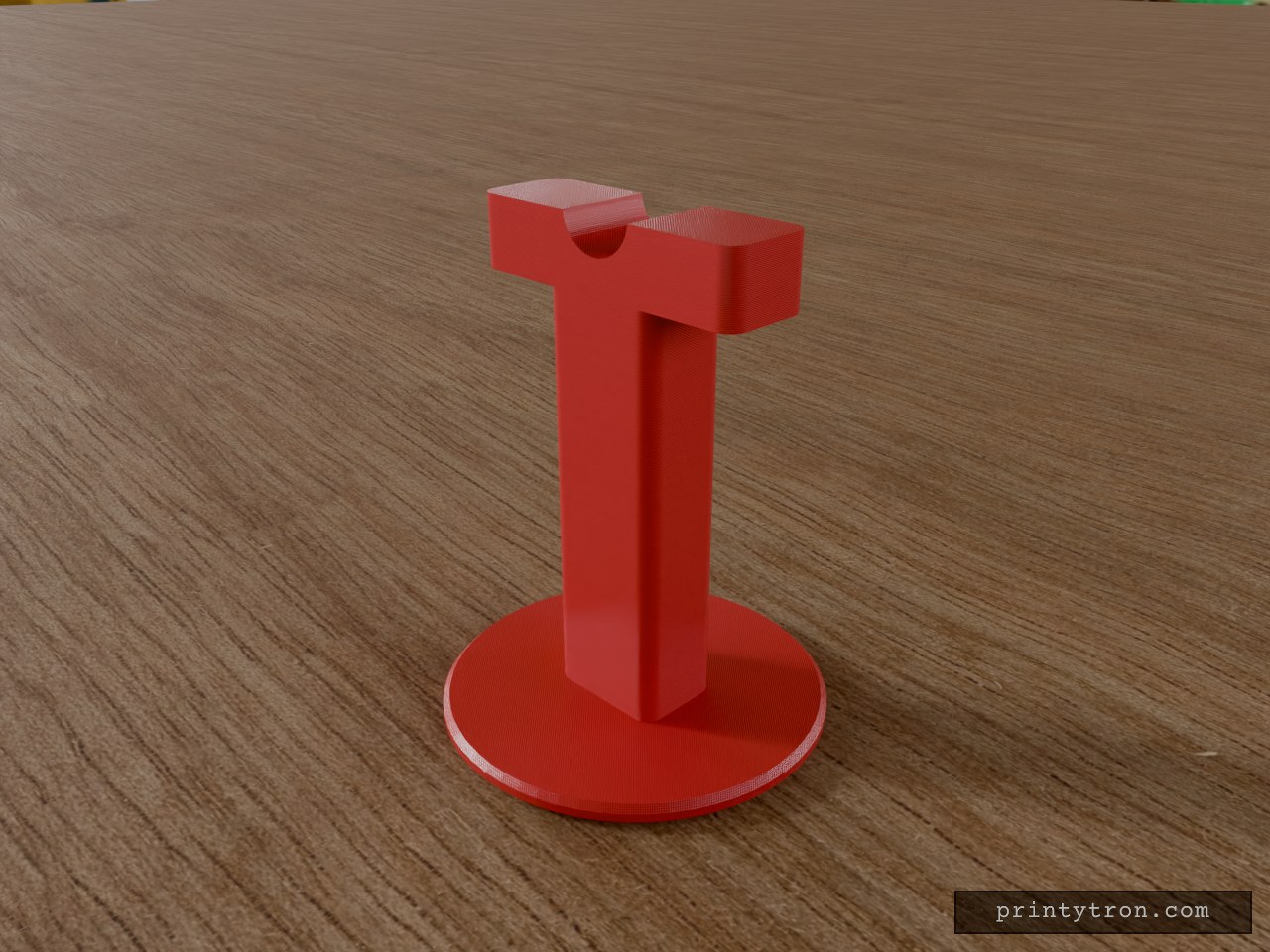
Bedside Reading Glasses Stand, 18mm Bridge
A freestanding bedside stand that holds a pair of reading glasses by the bridge, so they rest off the nightstand and out of the bedding. The top of the column is shaped into a rounded nose-bridge saddle, 18 mm wide at the rim, matching the typical lens-to-lens distance on standard reading glasses. A 90 mm round base keeps the stand upright. Specs Overall size: 90 mm diameter x 116 mm tall Base: 90 mm diameter, 5 mm thick, chamfered edge Column: 30 x 22 mm cross-section, rounded vertical corners Top block: 70 x 22 mm, 16 mm tall Saddle: round dip, 18 mm wide at the rim, 8 mm deep Single-piece body, prints base-down with no supports needed Suggested material: PLA or PETG; 3 or more perimeters for a stiff column Use Place on a nightstand and hang the glasses by the bridge across the saddle. The wide top block and 90 mm base keep the stand stable under light glasses.
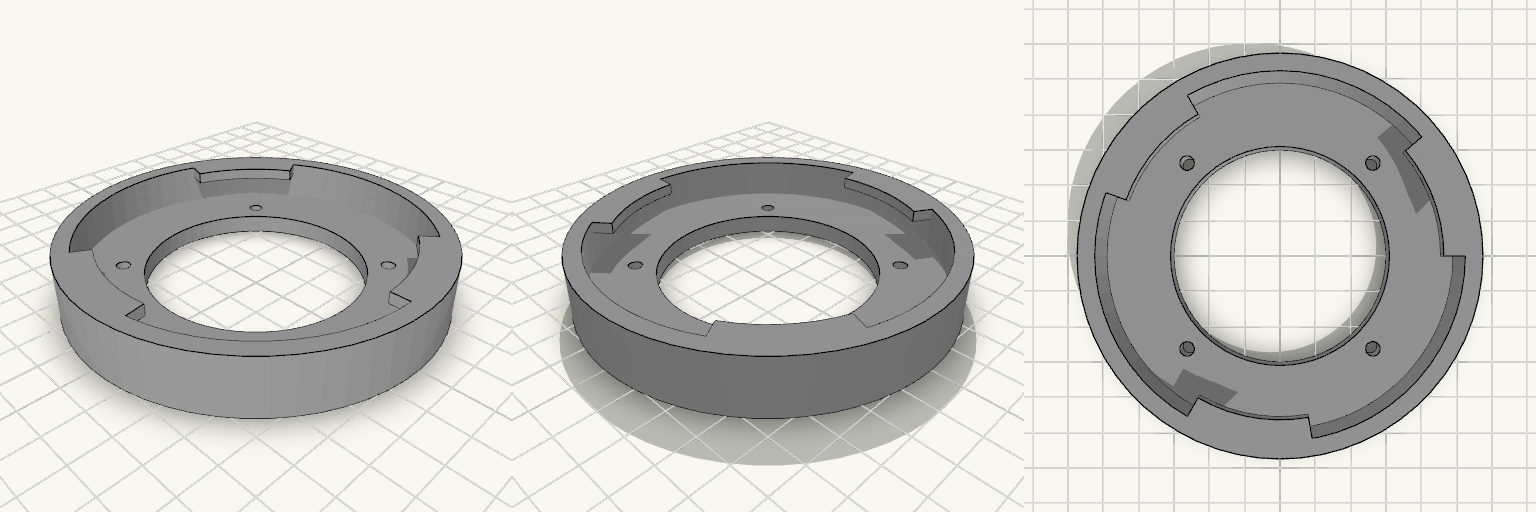
Neewer Mini to Bowens Adapter
LumenLock is a round bayonet adapter that takes a Neewer mini mount and presents a female Bowens-style socket. A 104 mm body carries a 95 mm pocket, and three inward tabs grip the male lugs of a Bowens-headed light: the lugs pass through the gaps between the tabs, then lock when you twist. The 60 mm centre opening and the four 4 mm mounting holes at 45° spacing pass straight through, and the whole part sits 16 mm tall, so it adds little depth between the light and the modifier. Dimensions Body: 104 × 104 mm Overall height: 16 mm Socket pocket: 95 mm, cut 5 mm above the base Tab opening: 84 mm across Centre opening: 60 mm Mounting holes: four at 4 mm, 45° spacing Tabs: three, each spanning 40° of arc Fit notes The socket and tab sizes are estimated rather than measured from hardware. Check your mini mount's bolt spacing and test the tab arc and the pocket depth against your Bowens male fitting before committing to a long print; real mounts vary, so adjust the hole positions or tab geometry to suit your hardware.