Micro Print-in-Place Joystick
Created today
Description
This is a miniature print-in-place joystick that functions as a tactile desk toy. The internal geometry has been rebuilt to ensure the ball joint prints cleanly without supports or mid-air extrusion failures.
Images
More like this
Explore more in Desk & Tech →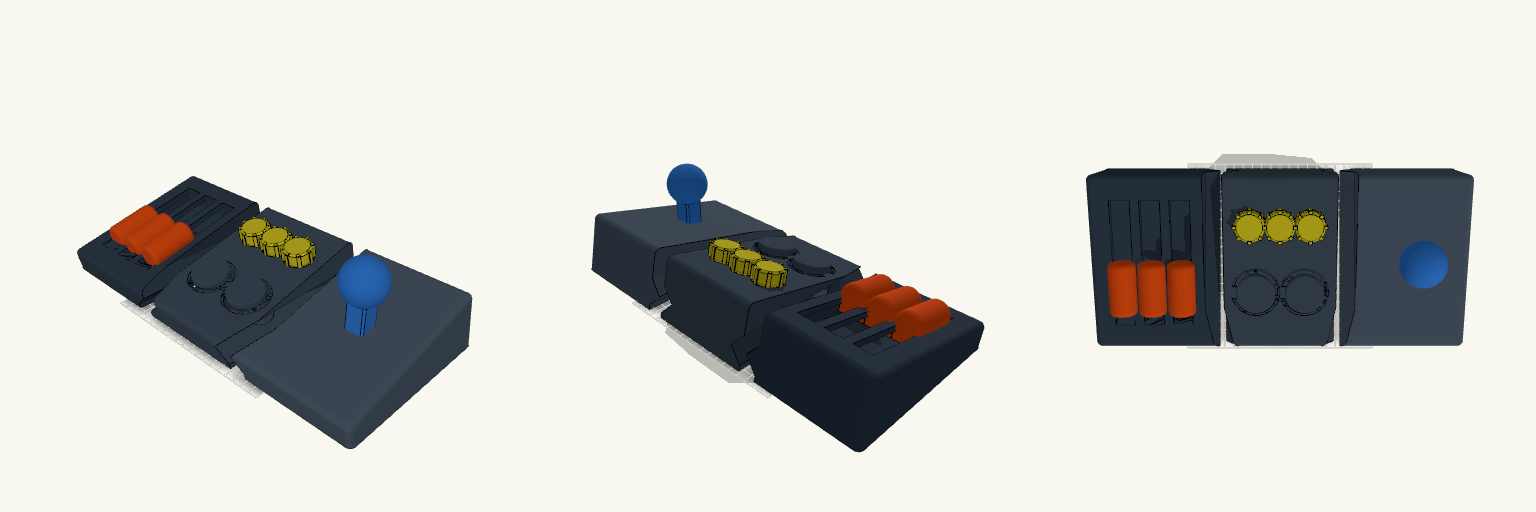
Titan — Modular Command Console
The command desk needed an upgrade. Built to double the footprint of the original, this massive control surface delivers tactile feedback on a completely different scale. Because the final width crosses 340mm, the console is split into three standalone modules locked together by heavy, full-length printed dovetail joints. Every mechanism prints fully in place—no screws, springs, or glue required. Features Triple Throttle Bank: Three independent captured sliders run on generously toleranced T-slots. Oversized Buttons: 40mm caps tied into the deck via compliant living hinges for a satisfying dead-press. Rotary Array: Three massive dials running on captive friction-fit cones that cannot pull out. Gimbal Joystick: A true two-axis gimbal mechanism built completely around FDM bridging limits. Print Notes Modular Layout: Print the Left, Center, and Right blocks separately. Each easily fits a standard 220x220 build volume. Clearances: Designed with a fixed 0.3mm (0.6mm total) clearance gap across all joints and moving parts. Wait for the bed to fully cool before cracking the mechanisms loose. Orientation: Everything prints exactly as oriented. The 13-degree incline is handled natively, and the gimbal joints use 45-degree diamond pins to print entirely without supports.
Pi 3 case
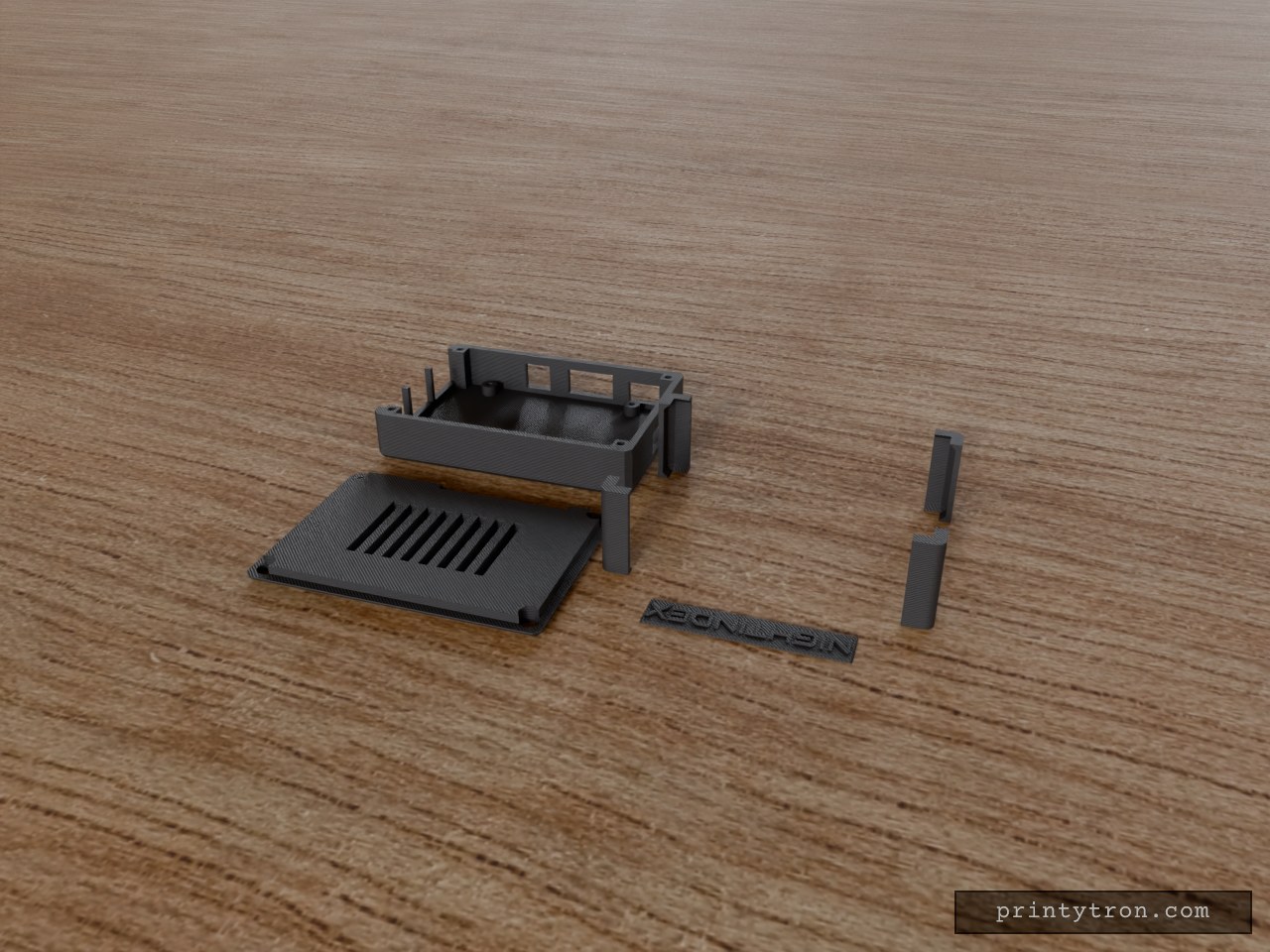
A bare Raspberry Pi 3 is so light that hooking up a standard HDMI cable instantly tips it off the desk. This case locks the board into a heavy enclosure and uses snap-on outer corner bumpers to give it some actual grip, so the board stays exactly where you put it. The port cutouts are oversized enough to accept real molded cables without them binding against the shell. Bed Fit: Everything is packed tightly to fit in a single run on a 180×180 mm print bed. Printing: All pieces sit flat on the plate. No supports required anywhere. Clearances: Built with a 0.4 mm gap around the board and lid joint so it slots together cleanly.
Airpods clip
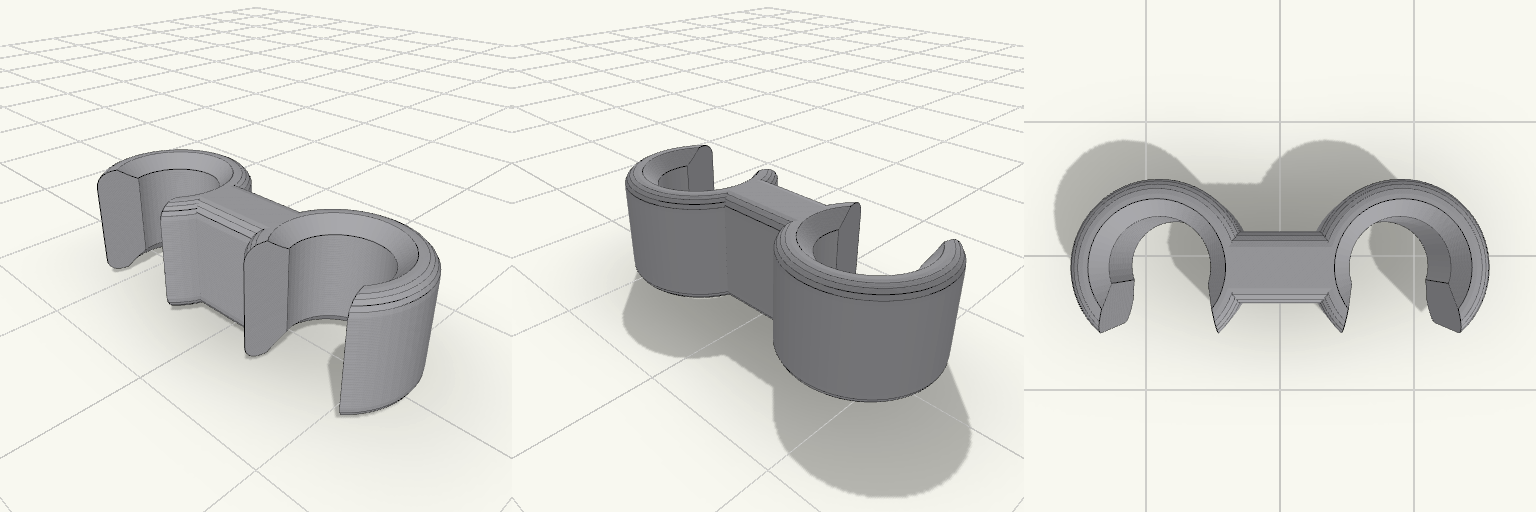
A compact, single-piece dual clip designed to snap onto the stems of AirPods Pro, holding the pair securely together without the charging case. The inner bores feature flared entries at the top and bottom to guide the stems in smoothly, while the front openings are angled to flex just enough to let the earbuds snap in and out laterally. The design prints flat without supports and relies on the natural stiffness of the filament to grip the smooth plastic of the stems. Remix Hooks This geometry is essentially a tension spring—the fit relies on your printer's tolerances and the material you choose. Opening Gap (Currently 4.8 mm): If PLA snaps when inserting the earbuds, widen the inner points of the front slot. Inner Diameter (Currently 6.4 mm): Sized for a snug friction fit on the Pro stems. Dial this up slightly if using a very rigid material, or down if you want a tighter lock. Bridge Thickness (Currently 4.5 mm): Widen this if you want to attach a lanyard loop or carabiner hole to the center.
Modular Hexagonal Phone Stand
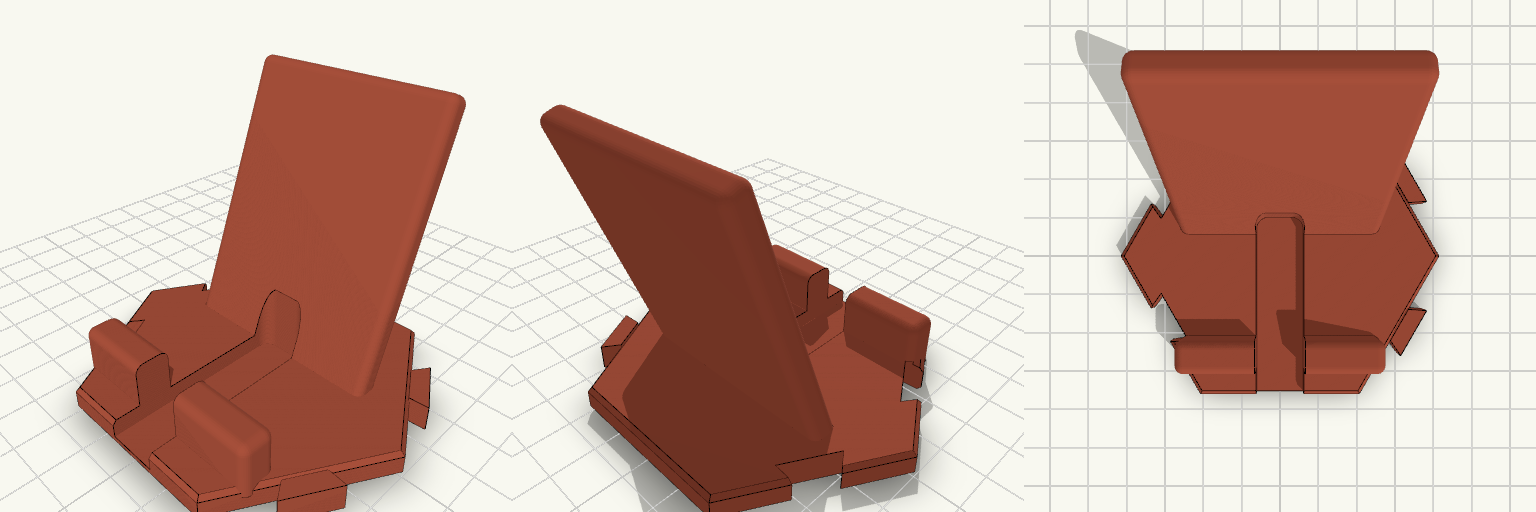
What it's for A single-piece modular phone stand designed around a regular hexagonal footprint. It features an angled 70-degree backrest for optimal viewing and a sturdy front retaining lip. A central U-groove is carved through the front lip and into the base, allowing a charging cable to pass cleanly underneath the phone while docked. The stand is designed to tile: dovetail tabs on the right side match with identical slots on the left side, allowing multiple hexagonal units to be linked together into a continuous charging array or desk organizer without any extra hardware. Dimensions Base size: 80 mm across opposite vertices, sitting 6 mm thick. Back panel: 65 mm tall, leaning back at a 20-degree angle from vertical. Front lip: 10 mm high above the resting surface, leaving a generous 23 mm gap for the device. Cable groove: 12 mm wide, recessing down to a 2 mm floor height. Print notes Designed to print entirely support-free in its default upright orientation. The 0.2 mm clearance on the dovetail joints should slide together firmly on a well-calibrated machine. Standard PLA or PETG will provide plenty of strength for the upright panels.
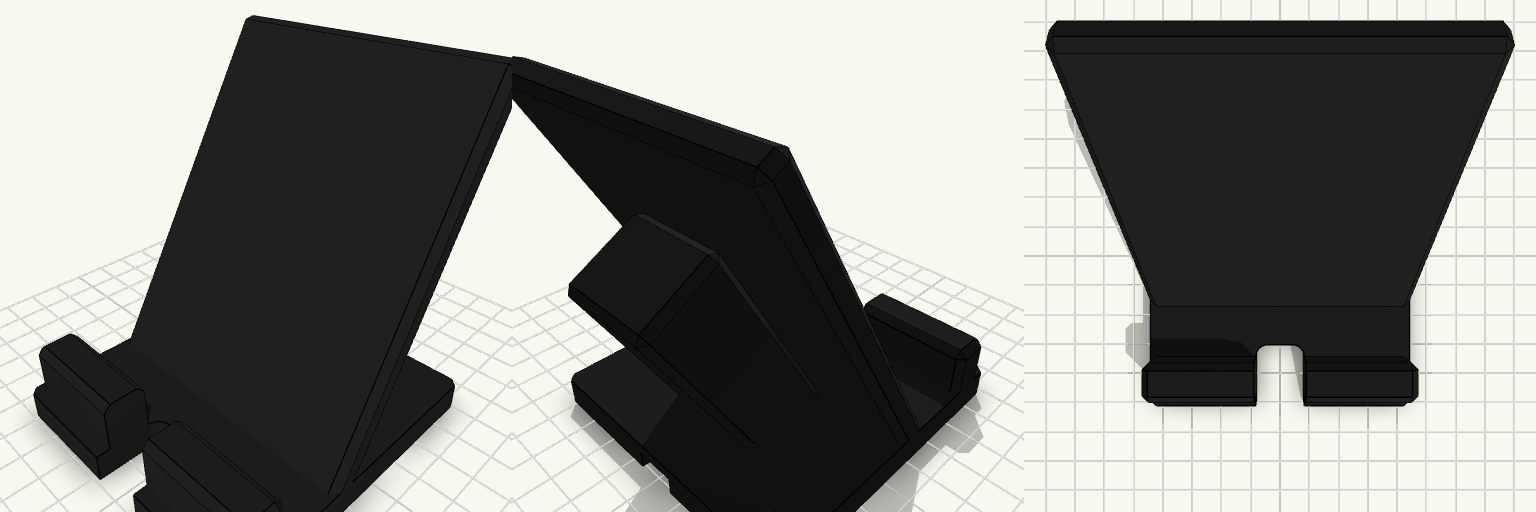
A-Frame Mobile Stand
A sturdy, functional stand for phones and small tablets. Designed with a 35-degree viewing angle, it works nicely for watching media or keeping an eye on notifications while at your desk. Features a 16mm-wide cutout for routing charging cables Includes a solid rear spine to prevent flexing when tapping the screen 14mm resting gap accommodates most phones, even with a case Prints in one piece without supports
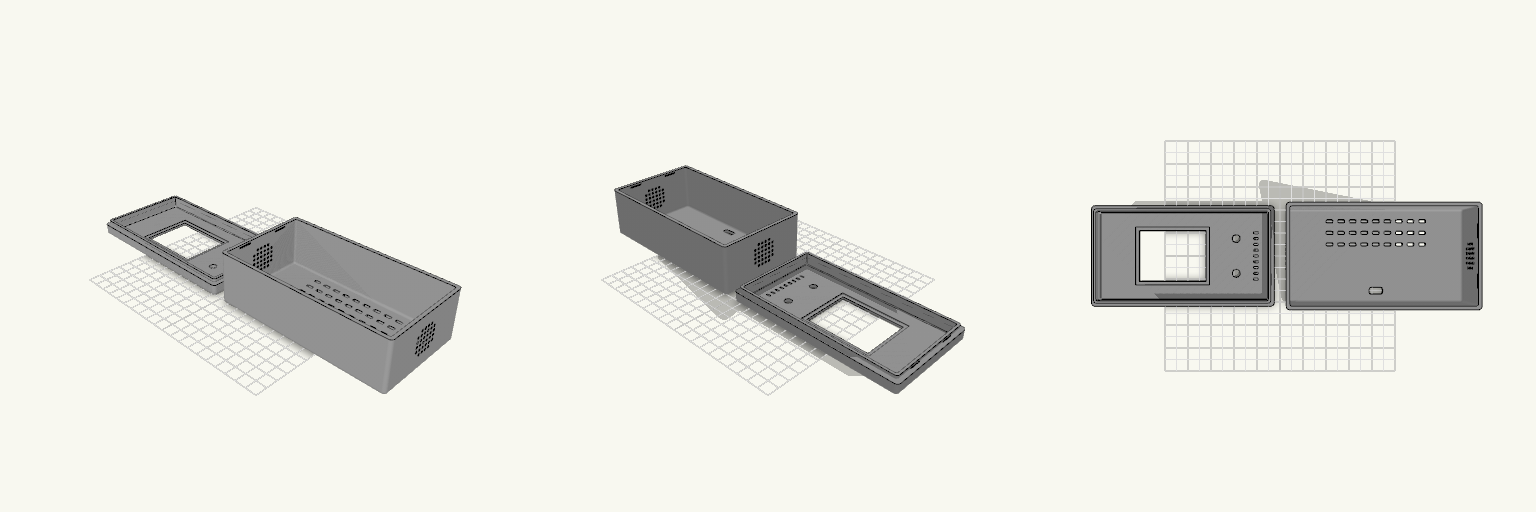
Retro TV Enclosure v2
A reinforced retro TV enclosure designed for an RP2040 video player project. The walls have been bulked up for extra durability without compromising the interior payload space, while side-firing one-inch speaker grilles and a classic bent antenna give it a finished look. What it's for Built to house a no-solder RP2040 media player. The clamshell locks together with an integrated friction fit and the entire model prints flat on the bed with zero supports. Dimensions Internal volume: 150 × 80 × 50 mm Wall thickness: 5 mm (beefed up from standard) Grilles: 25.4 mm (1 inch) perforated arrays on the left and right panels Assembly Both halves print cleanly flat. Slide your display into the front bezel's chamfered recess, route the cables out the back USB port, and firmly press the halves together until the interior ridges lock.