Remixed once
Description
A bare Raspberry Pi 3 is so light that hooking up a standard HDMI cable instantly tips it off the desk. This case locks the board into a heavy enclosure and uses snap-on outer corner bumpers to give it some actual grip, so the board stays exactly where you put it. The port cutouts are oversized enough to accept real molded cables without them binding against the shell.
- Bed Fit: Everything is packed tightly to fit in a single run on a 180×180 mm print bed.
- Printing: All pieces sit flat on the plate. No supports required anywhere.
- Clearances: Built with a 0.4 mm gap around the board and lid joint so it slots together cleanly.
Photos
Technical views
More like this
Explore more in Desk & Tech →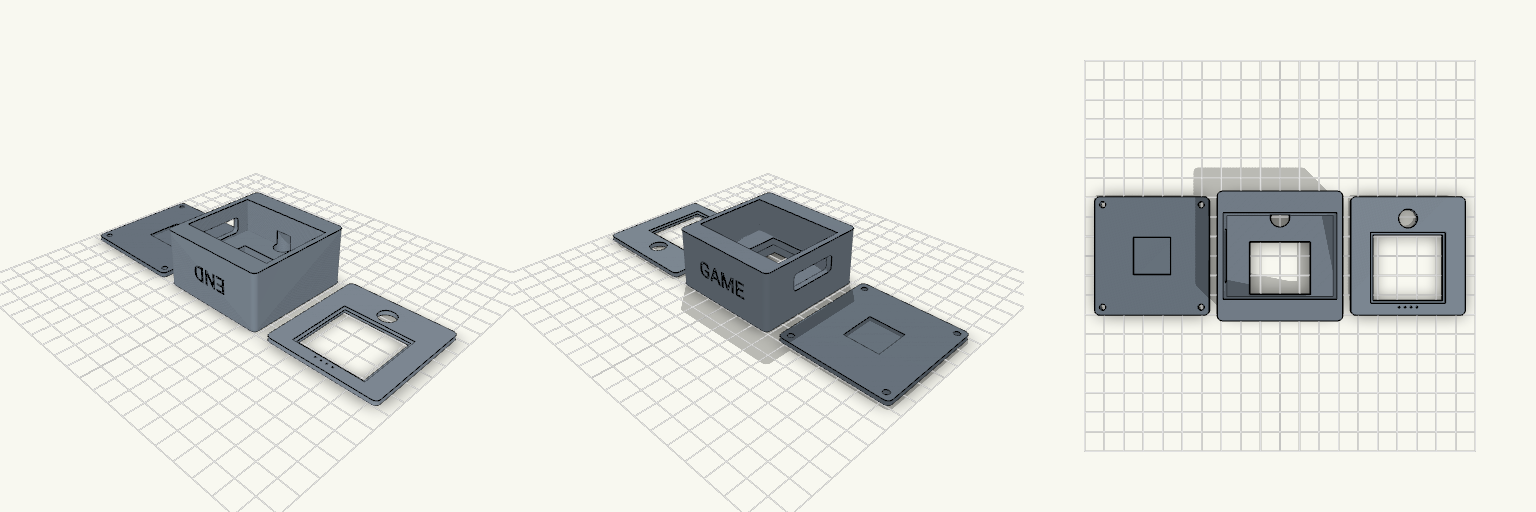
Lockdown — Dev Board Case With Camera Eye
Lockdown is a three-part enclosure for a Freenove ESP32-S3 WROOM CAM board with a 35.5 × 33.5 mm display. The front bezel turns the screen into a face, with a 9.6 mm camera eye above the window. The side wall carries one wide cable opening, so USB-C plugs and cables pass straight through the housing. Features 58 × 60 mm footprint across chassis, back cover and bezel Screen pocket with a support ledge and a flex-cable opening 9.6 mm camera bore lined up with the bezel eye Single 26 × 9 mm cable pass-through on the +X wall, raised for a high-mounted board Four M3 screws from the back Embossed-in END and GAME text on the end walls Print notes Print the three parts flat on their backs. PETG works well.
Bakelite-Era Two-Piece Electronics Enclosure
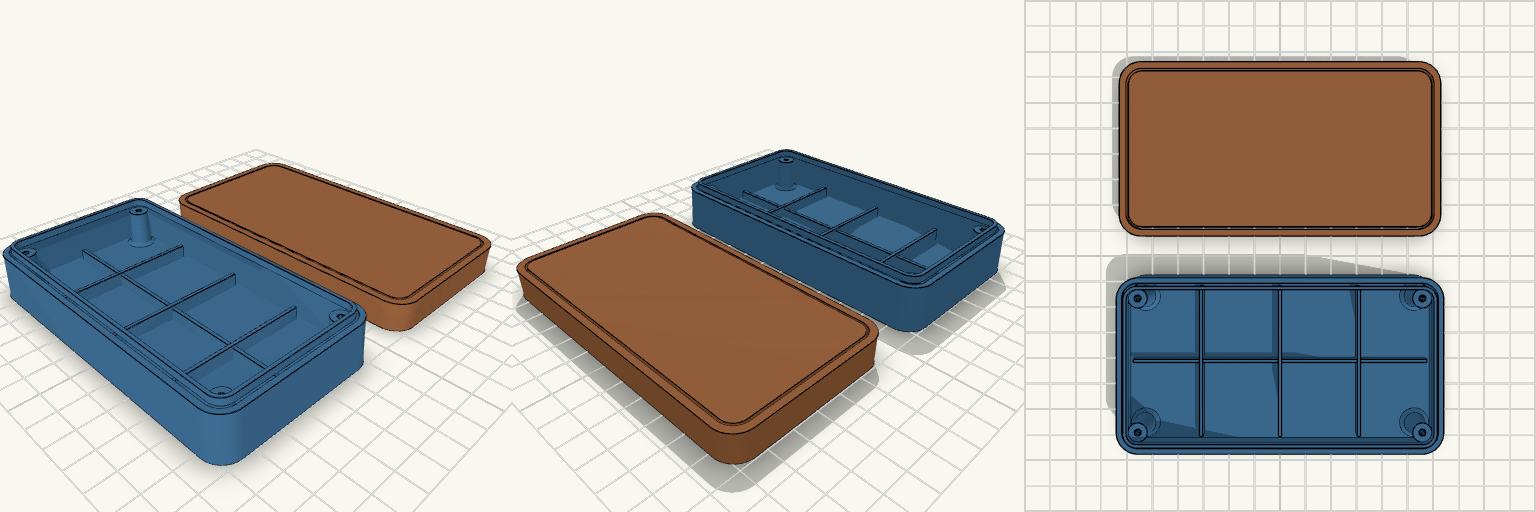
A compact two-piece case with a vintage Bakelite silhouette: rounded corners, softly drafted walls, and a clean split line between the lower housing and the upper cover. At 120 × 65 × 28 mm, it gives a small board or module a protected home, with a hollow internal cavity, four corner screw bosses, reinforcement ribs, and a tongue-and-groove closing lip. The enclosure prints as two separate pieces, with the cover laid beside the housing so both print without supports. Design notes Lower Housing: the deeper shell, with corner bosses, internal ribs, and a raised closing tongue. Upper Cover: the lid, with a matching groove and clearance holes for the screws. Walls and corners: 2 mm walls, 8 mm outer corner radius, and a 1.5° draft on the outer shell and lip. Screw bosses: four corner bosses with 2.6 mm pilot holes in the housing and 3.2 mm clearance holes in the cover. Printing: separate upper and lower parts, oriented to avoid supports.
Case ESP32 + LoRa com Display e Cooler
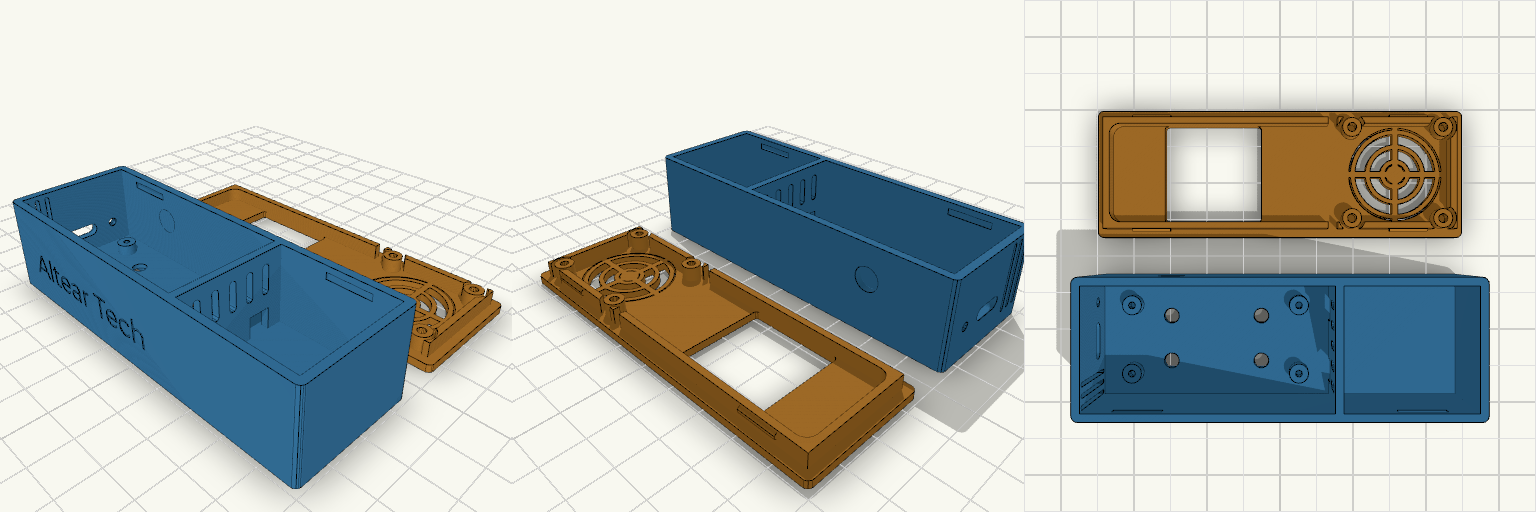
Case compacto para ESP32 e módulo LoRa SX1278, com tampa de encaixe por pressão, janela para display TFT 1.44" e cooler na tampa. Ganchos para remix Altura interna (IH = 21 mm): altura total de 24 mm. Aumente se o LoRa ficar justo. Furação do cooler: quadrado de 24 mm com pinos de 5 mm e furo de 2,4 mm. Ajuste para outro tamanho de cooler. Janela do display: 26 × 26 mm na tampa. Combina com um suporte interno para o módulo. LoRa: sem canaletas internas. Dá para adicionar suportes na medida da sua placa. Ranhuras inferiores: duas ranhuras de 4 mm para cabos entre as placas.
Samsung S24 FE Snap-In Bumper Case
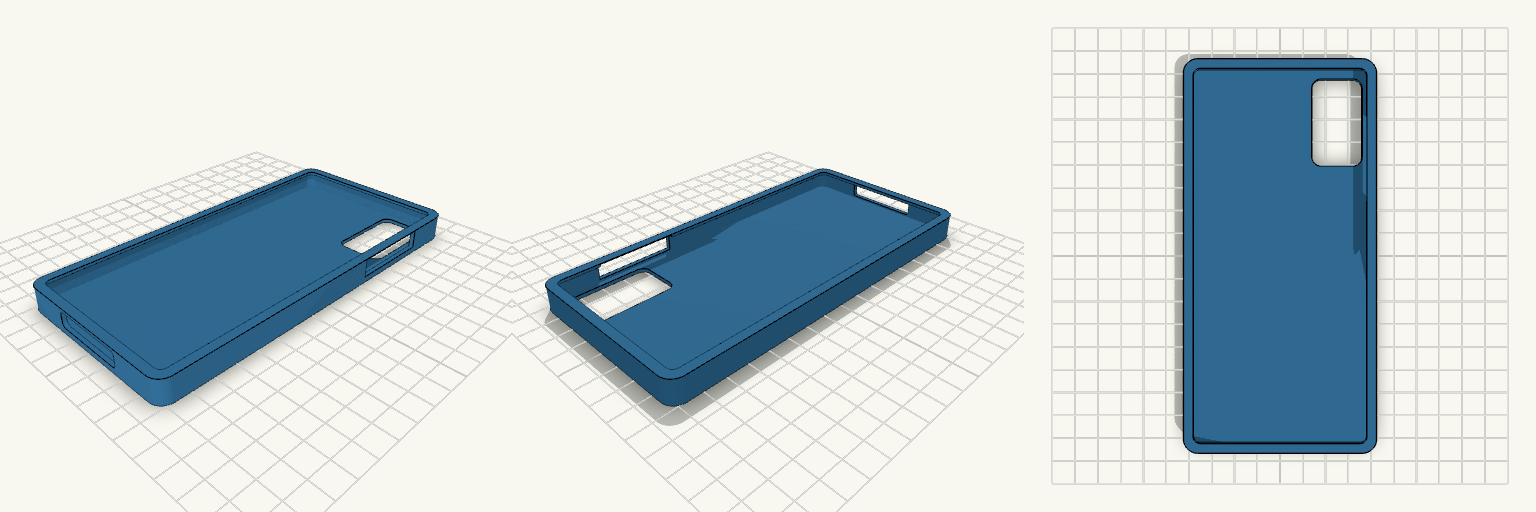
A one-piece snap-in bumper case for the Samsung S24 FE, sized from the 162.0 × 77.3 × 8.0 mm phone spec with 0.2 mm clearance. The open front leaves the screen clear, and the walls are 1.8 mm with a 1.5 mm back and a 1.2 mm lip that catches the screen edge. Camera cutout on the back Button slot along one side Bottom slot for USB-C and the speaker Prints back-down with no supports One piece, no assembly The case is rigid, so the phone presses in from one corner. PLA works, but a flexible filament such as TPU is easier on the phone and less likely to crack the lip. The camera and button positions are estimates, so check them against your phone before printing the whole case.
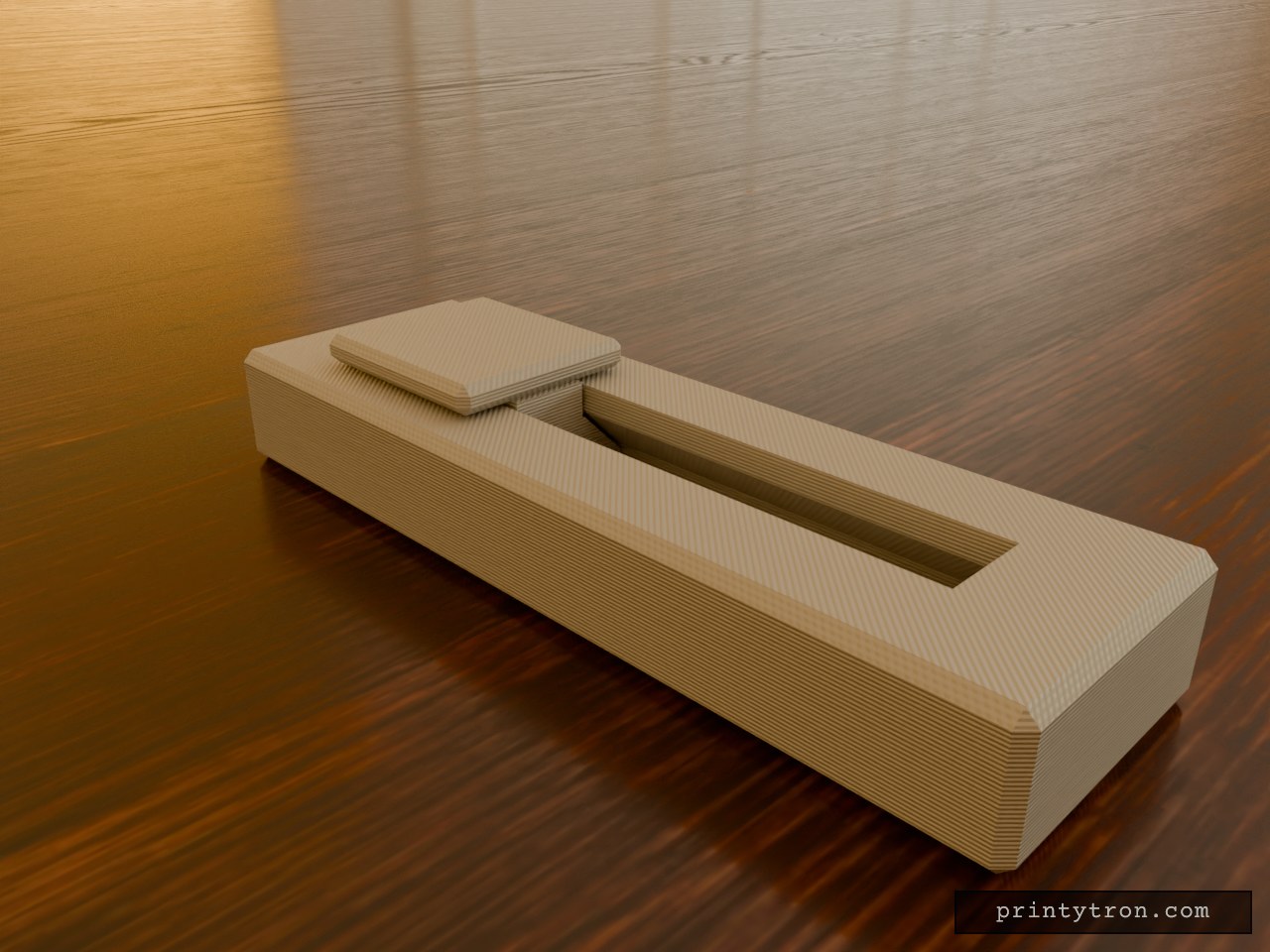
Fidget Slider Toy, Captive Print-in-Place
A fidget slider that prints already assembled, so there is no loose weight to lose and nothing to glue. The slider is captured in an enclosed dovetail track and cannot fall out. It runs 40 mm end to end and clicks at each stop instead of rolling freely. What it does Slides back and forth along a closed track in an 80 x 25 mm body. A small bump on the track floor at each end of travel drops into a dimple under the slider and gives the click. The dovetail profile holds the slider down, so it cannot lift out of the rails. Numbers that matter Body: 80 x 25 x 11 mm, with the slider top reaching 14 mm. Slider: 20 mm long, 18 mm wide cap. Travel: 40 mm. Clearance between slider and track: 0.4 mm per side. This is what lets it move after printing. Click bump: about 0.6 mm of interference against the 0.4 mm gap. Reduce the bump height if it feels too stiff. Printing Print flat, body base down, with no supports needed inside the track. Use a well-tuned printer. A 0.4 mm gap fuses easily if the flow is too high. After printing, work the slider back and forth a few times to break any thin bridging between the slider and the rails. Two colours show as separate parts in the preview, but the print is one job.
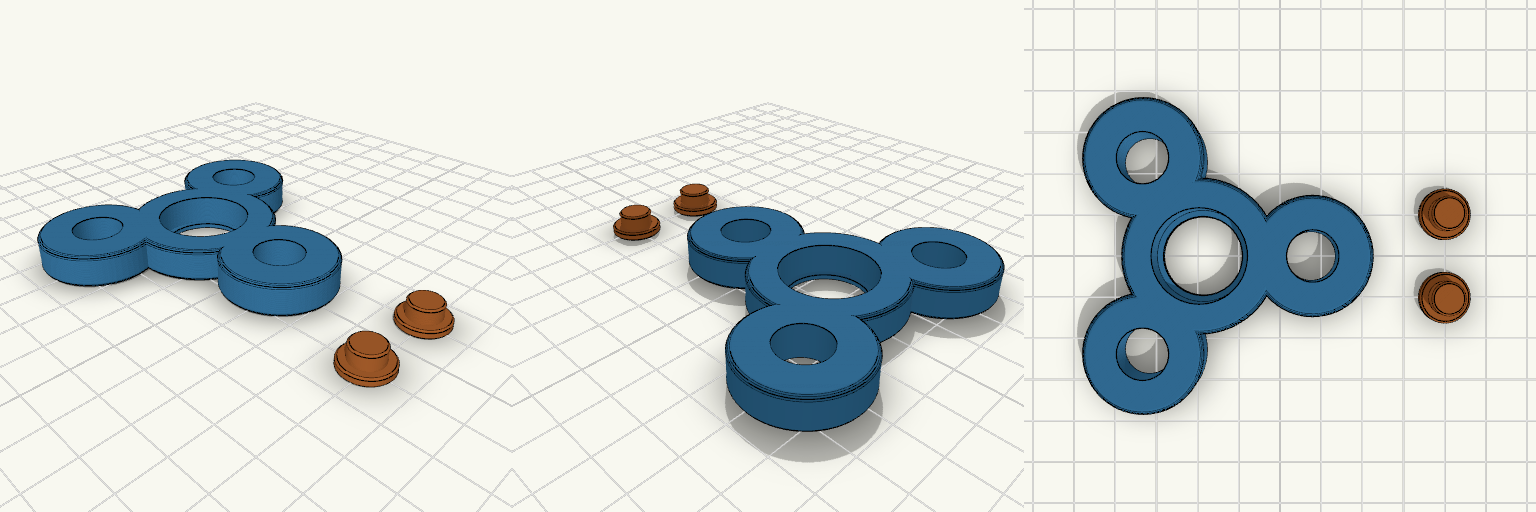
Bearing-Driven Tri-Lobe Fidget Spinner
A classic three-lobe hand spinner, the shape every desk drawer has seen, rebuilt around a real 608 skate bearing so it spins freely for a long time. The body has a bearing pocket in the centre, a lip underneath to hold it, and weight-saving holes in each lobe. Two small caps press into the bearing's inner ring from either side to make the finger pads. Notes You need: one 608 bearing (8 × 22 × 7 mm). Print: body flat; the two caps print flat-side down beside it. No supports. Assembly: press the bearing into the pocket from the top, then push one cap in from each side until they meet. Tuning: if the bearing is loose or tight in the pocket, adjust the pocket diameter slightly. Remix: the lobe holes can be enlarged to take 608 bearings as extra weights.