Modern Egg Cup with Tray
Created 3 months ago
Description
A modern geometric egg cup designed for soft-boiled eggs. The central holder features a precise 42mm top opening scaled to secure a standard chicken egg, tapering smoothly down into a stable central pedestal.
The lower section extends into a wide ring that functions as an integrated tray. This base provides a designated space to drop and hold cracked shell tops during use, keeping the surrounding surface clear of debris.
- 42mm interior opening fits standard chicken eggs
- 86mm wide integrated lower ring for catching shell fragments
- Seamless pedestal design with rounded rims for durability
Images
More like this
Explore more in Kitchen & Bathroom →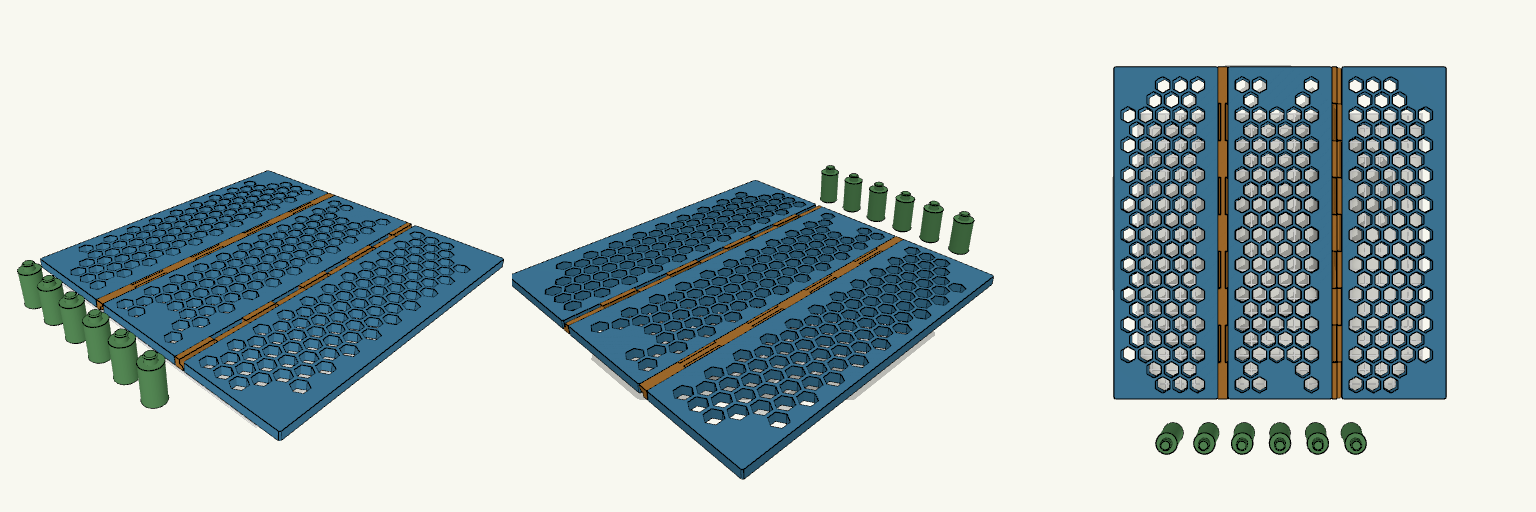
Trifold — Z-Fold Hex Drying Tray
Trifold is a 230 mm square drying tray that folds into thirds. Three honeycomb-perforated panels are joined by print-in-place Z-fold hinges, so it stacks flat for storage. Six separate peg legs lift it 25.4 mm off the surface. Dimensions Open: 230 × 230 × 6 mm Panels: about 72 mm wide each, with 7 mm hinge gaps Legs: 25.4 mm tall, press into underside sockets Features Dense hexagon holes for drainage Hinge on top for one fold, bottom for the other, allowing a flat stack Six legs: four at the corners, two under the center panel Print notes Print the tray flat; legs print separately Remove legs before folding
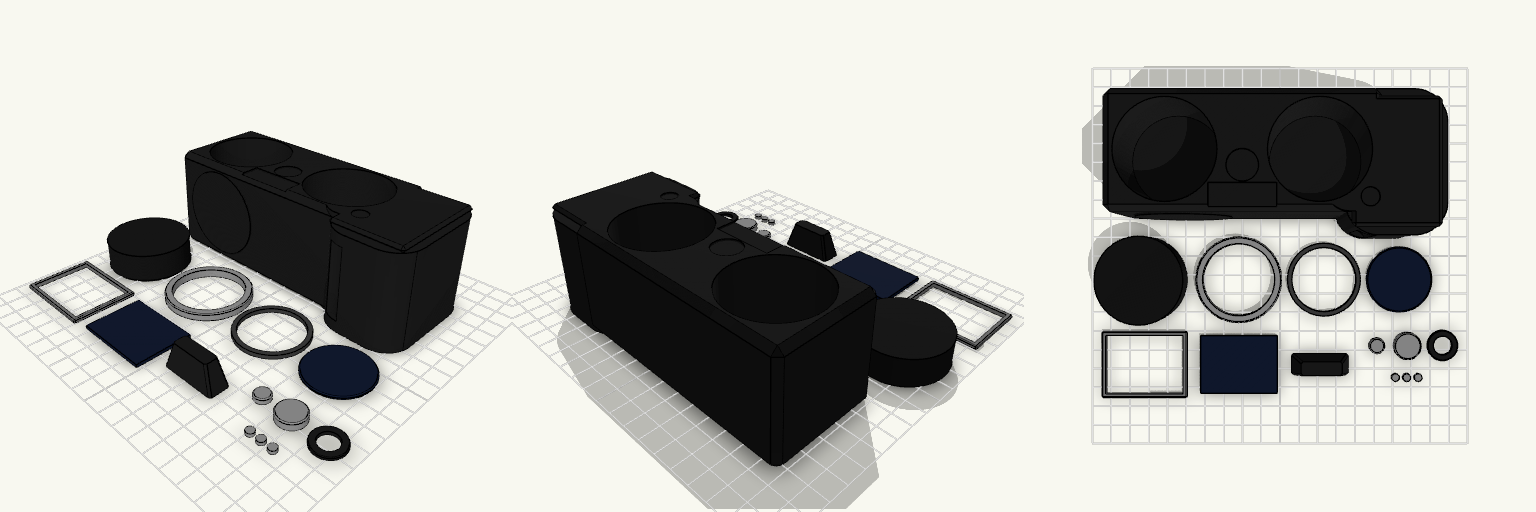
43mm Bore Egg DSLR Kit
A multi-part glue-together camera chassis built around a 43mm bore standard to hold two large chicken eggs. The main chassis houses the egg bores and the right-hand grip, while all dials, rings, and screens are printed separately and dropped into 1mm alignment recesses on the main block. Fitment Fits two standard large/jumbo chicken eggs (vertical clearance is completely unimpeded) Mounts to flat build plates only; requires CA glue or similar for the detail pieces Main chassis is 125mm wide; ensure your plate can handle it before starting
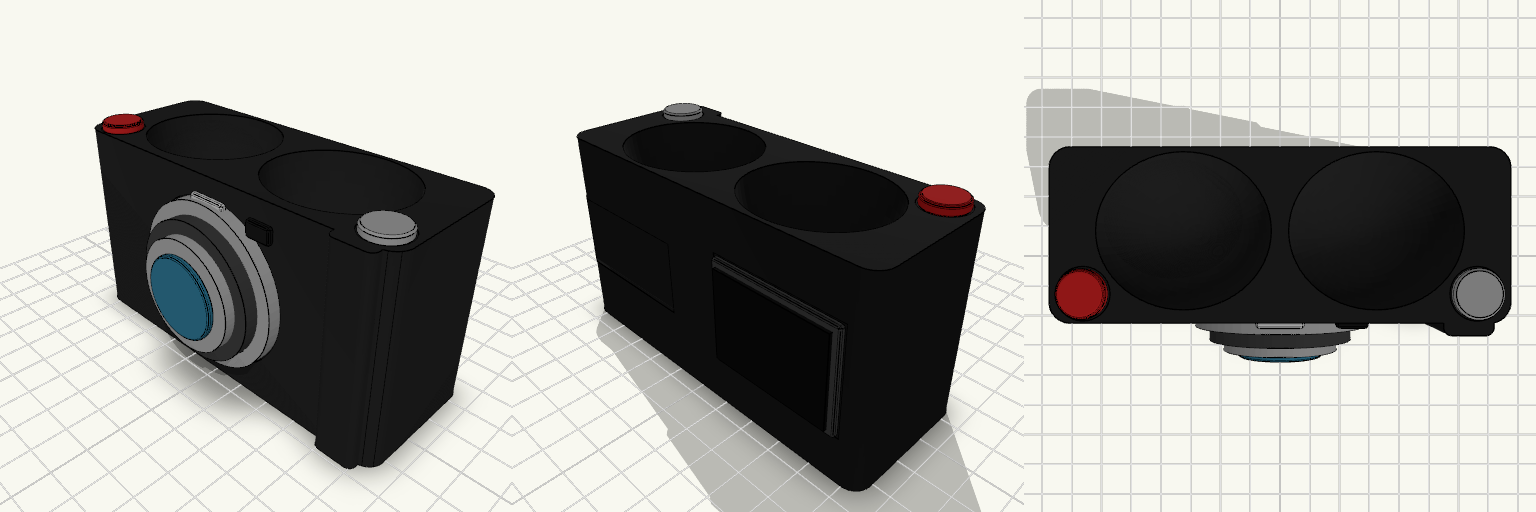
Point-and-Shoot Egg Caddy
A fun, functional holder for two standard chicken eggs styled exactly like a classic compact digital camera. Built to mimic realistic compact proportions, this design features an array of modular, colour-separated printable pieces — from the multi-stage lens assembly to the top control dials and rear screen — that socket precisely into the main camera block. Print notes When you load the main STL into your slicer, simply use the "Split to Objects" or "Split to Parts" function. The model is built entirely from mathematically separated, non-overlapping shells. You can then recolour each piece (the outer lens ring, screen insert, shutter button, etc.) for a multi-colour print, or delete the ones you've already printed and run them off in batches of single-colour filament. Assembly All separate pieces sit perfectly flush against shallow 0.5 mm recesses on the main body. Once printed, they drop neatly into place with a dab of glue. Features Secure, deep recesses for two standard chicken eggs. Fully cleared top deck — the mode dial and shutter button sit out on the shoulders so you have unhindered access to drop the eggs in and pick them up. Dedicated 40×20 mm flat recess on the back panel designed specifically for a company logo or custom sticker.
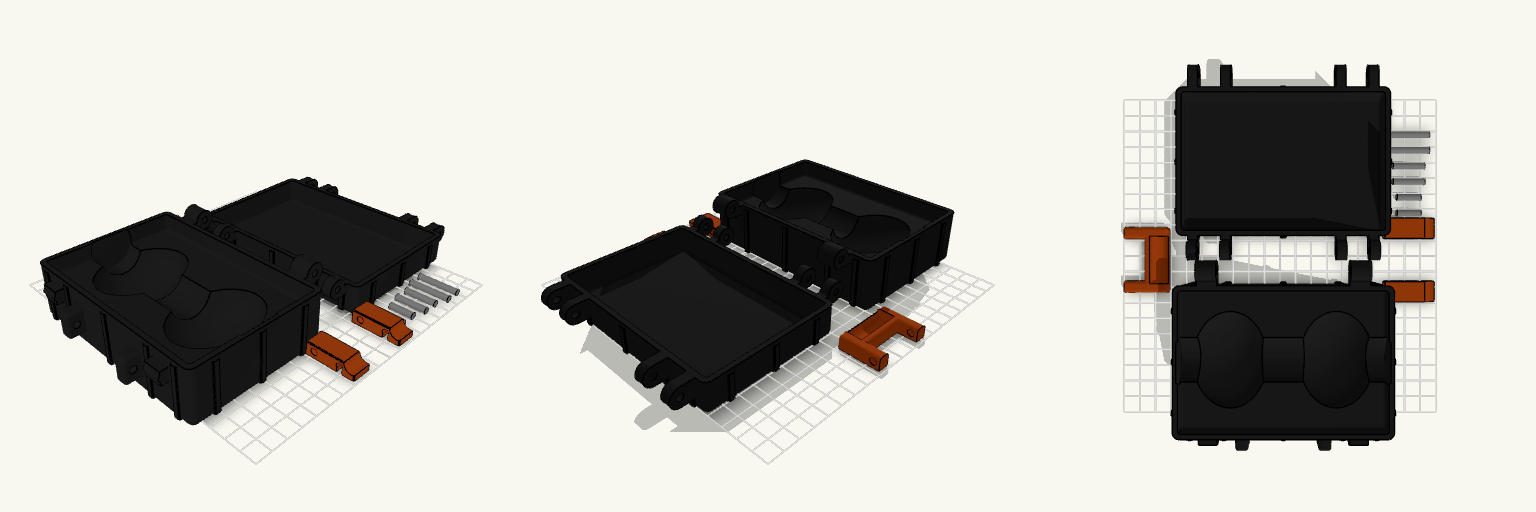
Professional Egg Transport Case
What it's for A heavy-duty, miniature equipment case engineered to safely transport precisely two standard chicken eggs. It features a rugged ribbed exterior, mechanically hinged lid, cam-action latches, and a folding front handle — designed entirely around a genuine Pelican-style aesthetic. The egg recesses are integrated cleanly into the base block, spaced with a center finger groove for easy retrieval. The top lid carries a clean, framed blank plate ready for your own branding. Dimensions Overall footprint: 130 mm wide by 90 mm deep Closed height: 55 mm Internal capacity: Specifically contoured for two 45 mm x 60 mm eggs (large/XL chicken eggs), leaving a generous 3.5 mm top clearance. Print notes Orientation: All pieces are laid flat in their ideal printing orientations. The upper lid is flipped to print face down. Tolerances: Hinge mounts and pins are designed with 0.3 mm radial clearance. A well-tuned printer will allow the pins to slide right into place. The latches snap firmly over the base hooks. Supports: No supports required. The hinge knuckles and latch mounts feature steep bridging, but standard FDM cooling handles this easily. Adhesion: The cylindrical pins incorporate subtle flats on the bottom edge to ensure they don't roll off the bed mid-print. Assembly No hardware required. Press the 26mm pins through the rear hinges to mate the base and lid, the 20mm pins through the front latches, and the short 15mm pins through the handle mounts. Everything relies on reliable friction fits and printed mechanics.
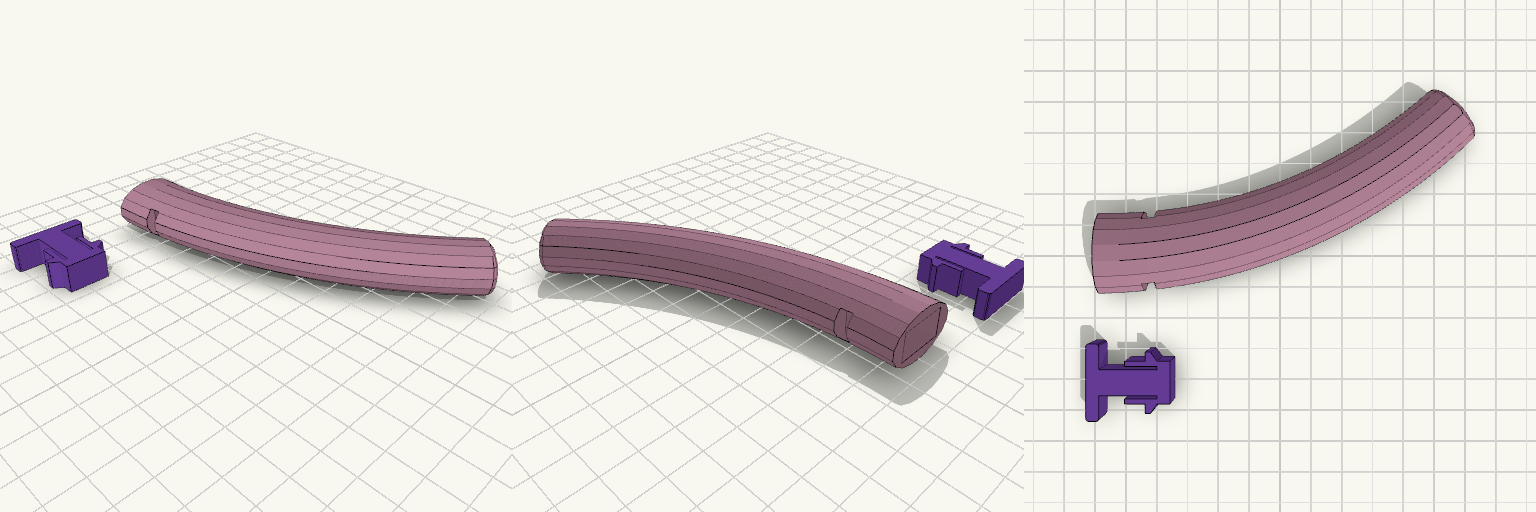
Cucharilla de dos piezas con conector
What it's for Mango curvo tipo banana y conector independiente con dos pestañas flexibles. El conector encaja con un clic en el alojamiento del mango y se retira pellizcando las pestañas a través de las ventanas laterales, sin herramientas. Dimensions Mango: 120 mm de largo, 25 mm de ancho en la base y 20 mm en la punta, 16 mm de grosor. Alojamiento: 16 × 6 mm, 23 mm de profundidad. Conector: núcleo de 22 mm, 5,6 mm de grosor, brazos de 1,6 mm con resalte de clic. Ventanas laterales de 4 mm donde se aloja el resalte. Remix ideas Añadir una cabeza de cuchara en la pestaña tope del conector. Ajustar el grosor de los brazos (1,6 mm) para un clic más suave o más firme. Cambiar el radio de curvatura del mango.
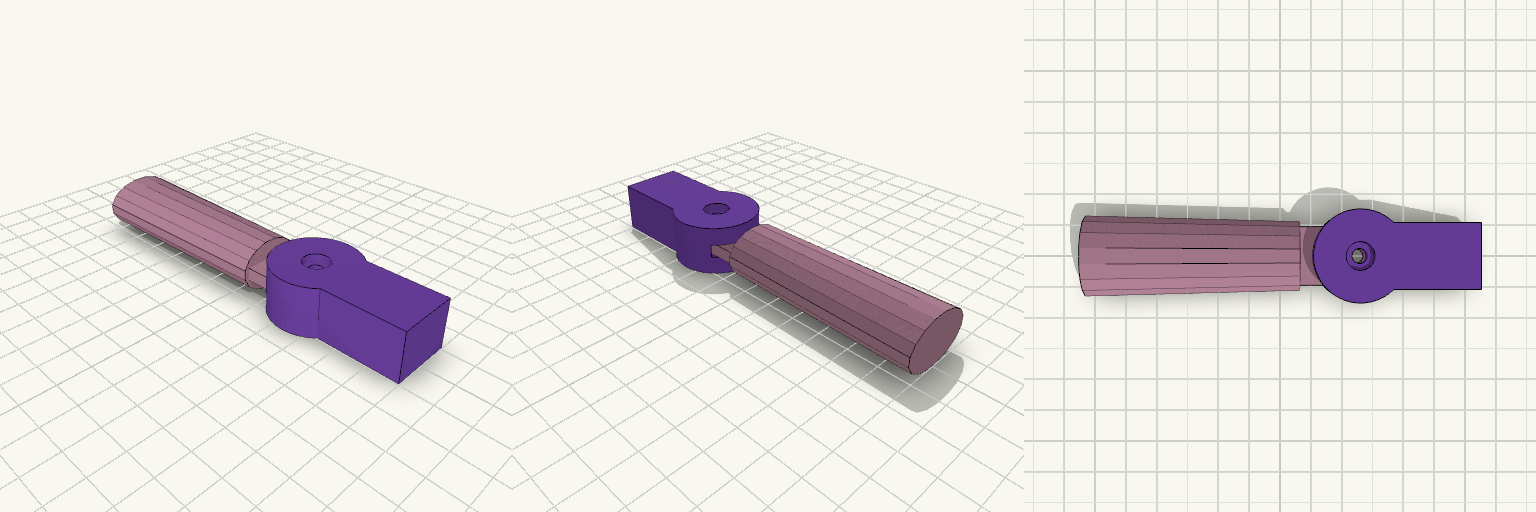
Mango recto con soporte giratorio
Mango recto con soporte giratorio para cuchara, de 12 cm de largo total, 2,8 cm de ancho y 1,6 cm de alto. Se compone de dos piezas independientes unidas por un tornillo M4 vertical y una tuerca hexagonal en la parte inferior. El soporte abraza una lengüeta circular del mango y pivota alrededor del tornillo, de modo que la cuchara se orienta a derecha o izquierda y se fija al apretar. Largo total: 12 cm Mango: unos 9,4 cm, se afina hacia el extremo Lengüeta de 4 mm con disco de 20 mm y orificio de 4,6 mm Soporte con ranura de 4,4 mm y alojamiento para cabeza de tornillo y tuerca M4 Tornillo y tuerca no incluidos