Monolith Desk Marker
Created 1 months ago
Description
A heavy, brutalist-inspired desktop marker designed to hold its ground. This double-sided sign is carved deep with a high-impact sans-serif typeface, offering clear identification from either side of a workstation or counter.
Design Notes
- Typeface: Archivo Black (heavy sans, regular weight).
- Base: Stepped 35mm footprint to prevent tipping on active desks.
- Carve Depth: 2mm inset text to catch overhead lighting and cast crisp internal shadows without requiring a multi-color print.
Images
More like this
Explore more in Desk & Tech →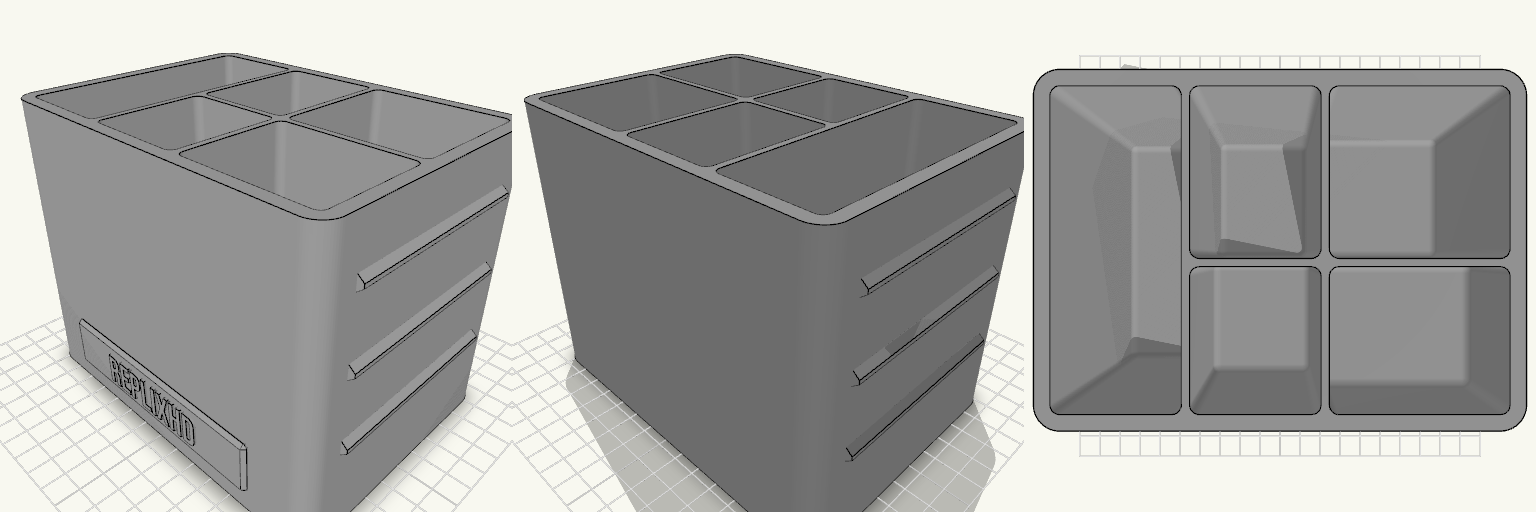
ReplixHD Gaming Desk Organizer
A five-pocket desk organizer for a 150 × 110 × 120 mm footprint, with "ReplixHD" embossed on a raised front plate. Fit Scissors slot: 40 × 100 mm, 105 mm deep. Pen slot: 40 × 52 mm, 100 mm deep. Pencil slot: 55 × 52 mm, 90 mm deep. Marker slot: 40 × 45 mm, 70 mm deep. Small slot for clips and erasers: 55 × 45 mm, 40 mm deep. Walls are 2.5 mm and dividers are 2.5 mm. The pockets' floors sit above the 3 mm base, which is thicker where the pockets are shallower. Check before printing Pen and pencil slots are about 40–55 mm across, so measure any oversized markers against that. Scissors need a handle under 40 mm wide. Print notes One solid body, with no supports needed. The side ridges are sloped at about 60° so they print cleanly. It does not fit anything that needs a closed lid or a drawer.
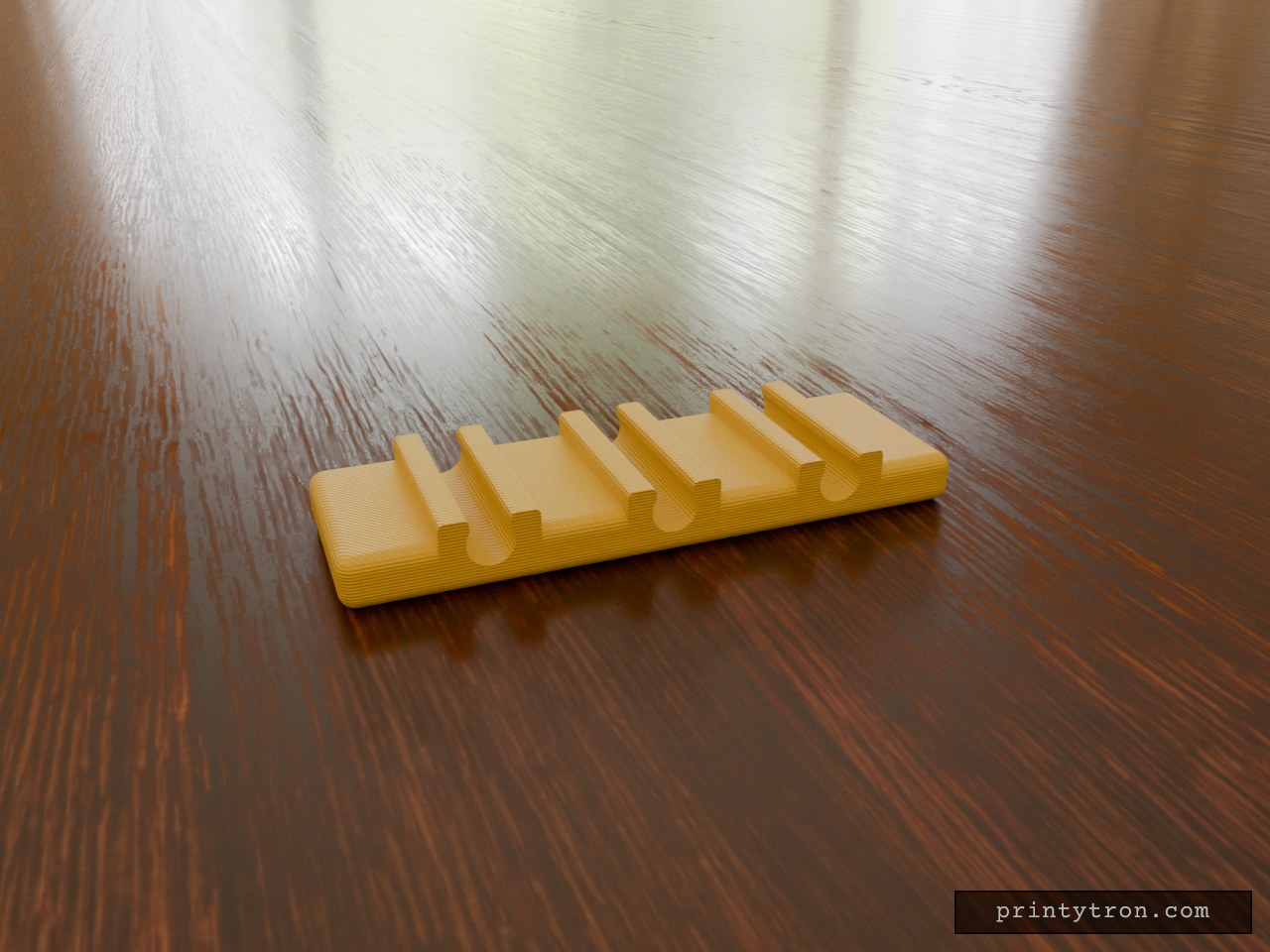
ReplixHD Gaming Cable Holder.
A low, slate-like desk plate in the spirit of a game-console accessory, with three rounded C-shaped clips standing in a symmetrical row. Cables press in from above, sit in a 4.4 mm round channel, and are held by smooth lips. Size: 60 × 20 mm, 5 mm base, 7 mm total height. Clips: three, 17 mm apart, 3.6 mm entry opening, lips about 1.2 mm thick at the opening. Floor: about 1.8 mm of material under each channel, measured from the tape recess. Underside: 48 × 12 mm tape recess, 0.5 mm deep. Printing: one solid piece, flat bottom, no supports needed.
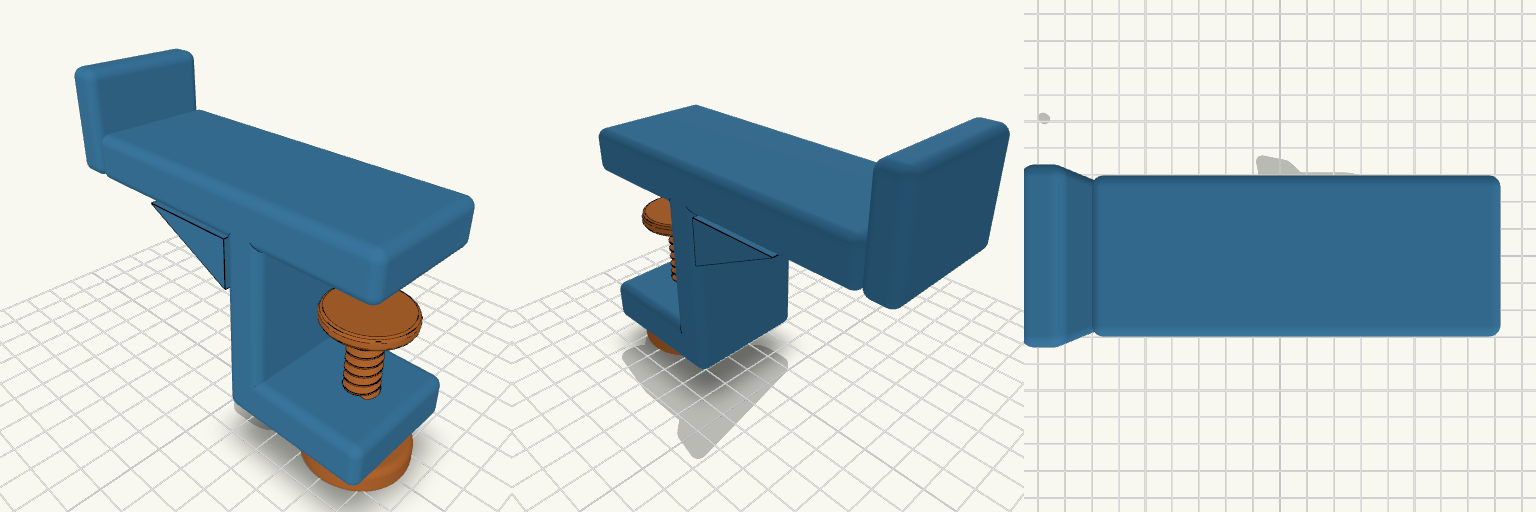
Desk Clamp Headphone Holder, 15–35 mm
What it's for A two-piece headphone holder that clamps to a desk edge and holds headphones on an upper hook arm. A threaded screw with a large knob under the lower jaw tightens it. Dimensions Desk thickness range: 15–35 mm Width: 40 mm Body height: about 69 mm Hook reach: 55 mm past the spine, with a raised lip Screw: 10 mm diameter, 3 mm pitch, 26 mm pad, 32 mm knob Print notes Two parts: clamp body and screw Print the body on its side (40 mm face down) and the screw upright, both without supports PLA, 4 or more perimeters Remix ideas Add a rubber or felt pad to the screw head Lengthen the hook arm for larger headphones Add a cable notch on the lip
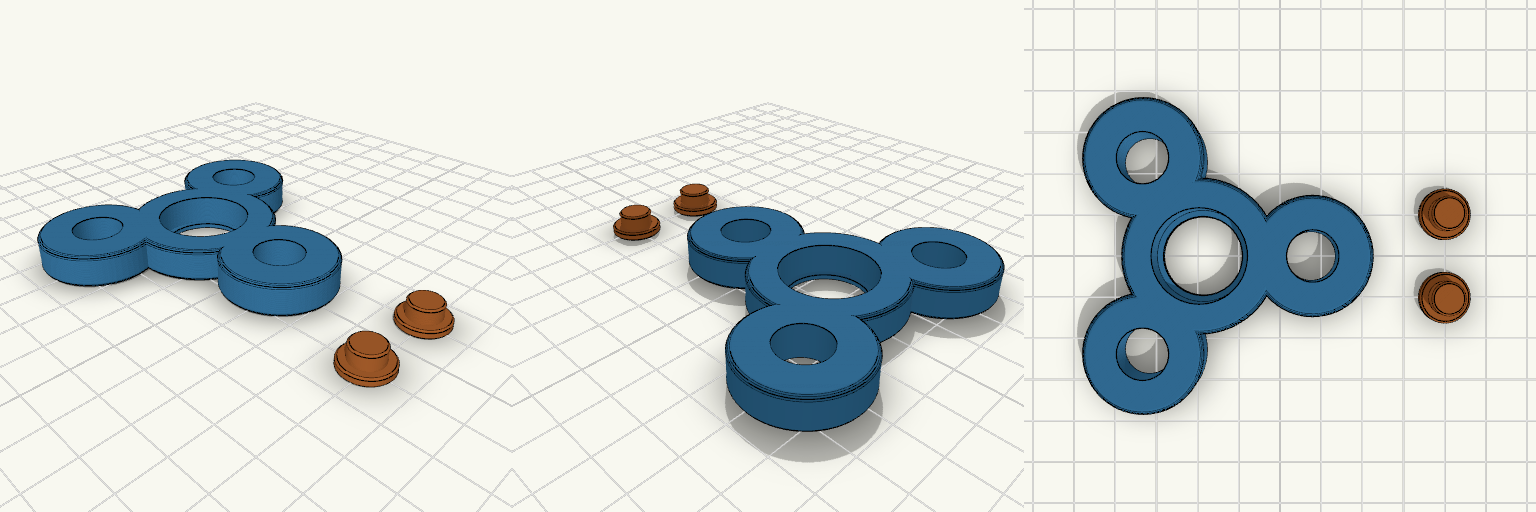
Bearing-Driven Tri-Lobe Fidget Spinner
A classic three-lobe hand spinner, the shape every desk drawer has seen, rebuilt around a real 608 skate bearing so it spins freely for a long time. The body has a bearing pocket in the centre, a lip underneath to hold it, and weight-saving holes in each lobe. Two small caps press into the bearing's inner ring from either side to make the finger pads. Notes You need: one 608 bearing (8 × 22 × 7 mm). Print: body flat; the two caps print flat-side down beside it. No supports. Assembly: press the bearing into the pocket from the top, then push one cap in from each side until they meet. Tuning: if the bearing is loose or tight in the pocket, adjust the pocket diameter slightly. Remix: the lobe holes can be enlarged to take 608 bearings as extra weights.
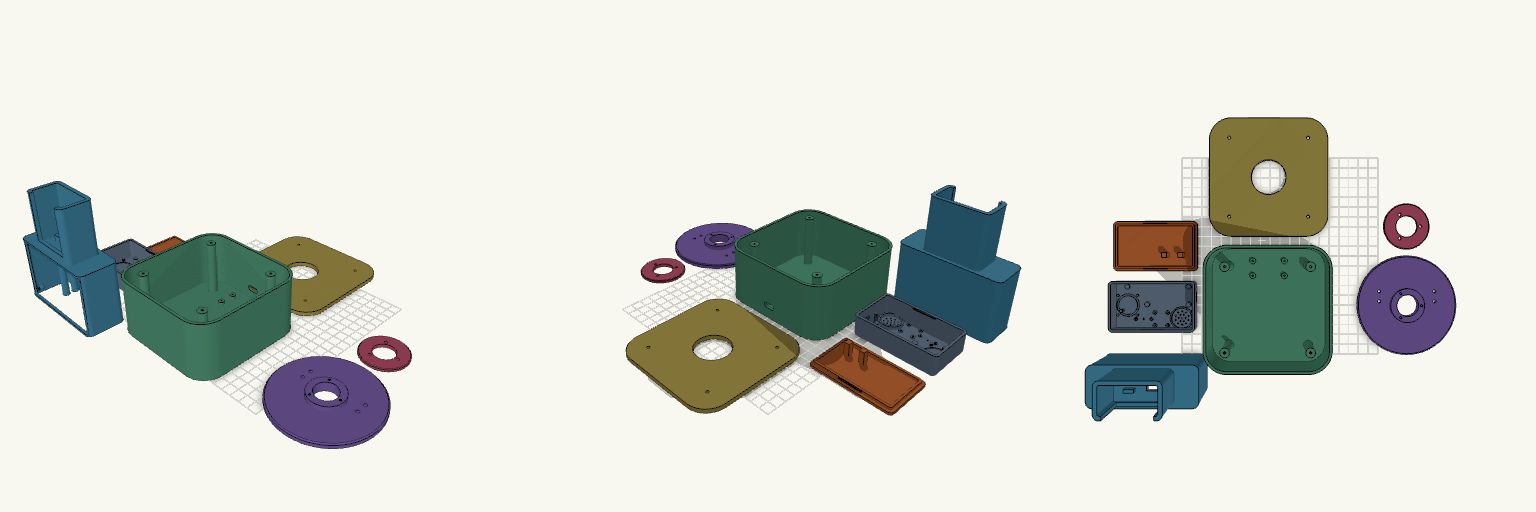
Modular Voice Assistant Enclosure with Rotating Desk Dock
A two-part enclosure system for a modular AI voice assistant: a pocket-sized "Brain" that works on its own, and a desktop station that docks it, swivels a full 360° and carries a 3.5-inch touchscreen behind a removable bezel. Both halves share the same matte-black design language — rounded corners, smooth surfaces and 2–2.5 mm walls — and print as eight separate pieces. What it's for Brain — houses an ESP32-S3 N16R8 board, an INMP441 I2S microphone, a MAX98357A amplifier and a 20 mm speaker behind a grille. A circular LED ring glows through a 0.8 mm front skin for listening, thinking and speaking states; there is no display of its own. A USB-C port sits on the short end, and the unit runs standalone once lifted off the dock. Desk station — a weighted base with a bolted lid carries a swivel plate and the dock tower. The Brain drops into the tower pocket from above with its face still visible, and a USB-C plug cradle in the pocket floor lines up with the port. Display — the tower front takes a standard 98 × 56 mm touchscreen module in landscape, held on four M2 bosses and framed by a bezel that drops into a recess in the front face. Removing four screws frees the display for replacement, and a flat-cable slot below the opening routes the ribbon into the cavity. Rotation — the swivel plate's hollow stem passes through the lid, a retaining ring screws on underneath, and the cable runs down the centre of the stem, so the tower turns 360° without twisting the lead. Dimensions Brain: 85 × 50 × 25 mm overall, with a snap-fit rear cover. Desk base: 120 × 120 mm with 22 mm corner radii; base, lid and swivel plate stack to 65 mm. Dock tower: 104 × 40 × 119 mm, docking the Brain vertically above the display section. It overhangs the 100 mm swivel plate slightly at the front and rear corners. Display opening: 84 × 54 mm, with mounting bosses behind the wall at ±46 × ±25 mm and M2 pilot holes; bezel 100 × 60 × 2.5 mm. Walls: 2–2.5 mm throughout hollow cavities. Print notes Print the Brain shell face-down for a smooth front skin; the LED ring, microphone port and speaker grille all sit in that face. The rear cover snaps on with two bump-and-groove pairs along the long sides; pads on its inside hold the ESP32 down. The tower's internal floor and the display window bridge wide spans, so expect a little support in the dock tower only. Everything else is oriented to print without it. Print the bezel flat; it is a thin frame and needs no supports. PLA or PETG both work; four rubber-foot recesses under the base are worth filling. All eight pieces — Brain shell, rear cover, desk base, base lid, swivel plate, retaining ring, dock tower and display bezel — are separate. The lid bolts on at four corners and the display bezel screws in from the front. Compatibility The display bosses use M2 pilot holes; check your module's hole spacing before driving screws, since pinouts vary between boards. The dock pocket is sized for the Brain as drawn — if you change the Brain's shell, adjust the pocket in step. Remix ideas Lean the dock back a few degrees for a more natural viewing angle if you can accept the extra support. Swap the removable bezel for a blank panel or a vent if your build has no screen. Scale the docking pocket to fit a different companion device while keeping the same swivel mechanism.
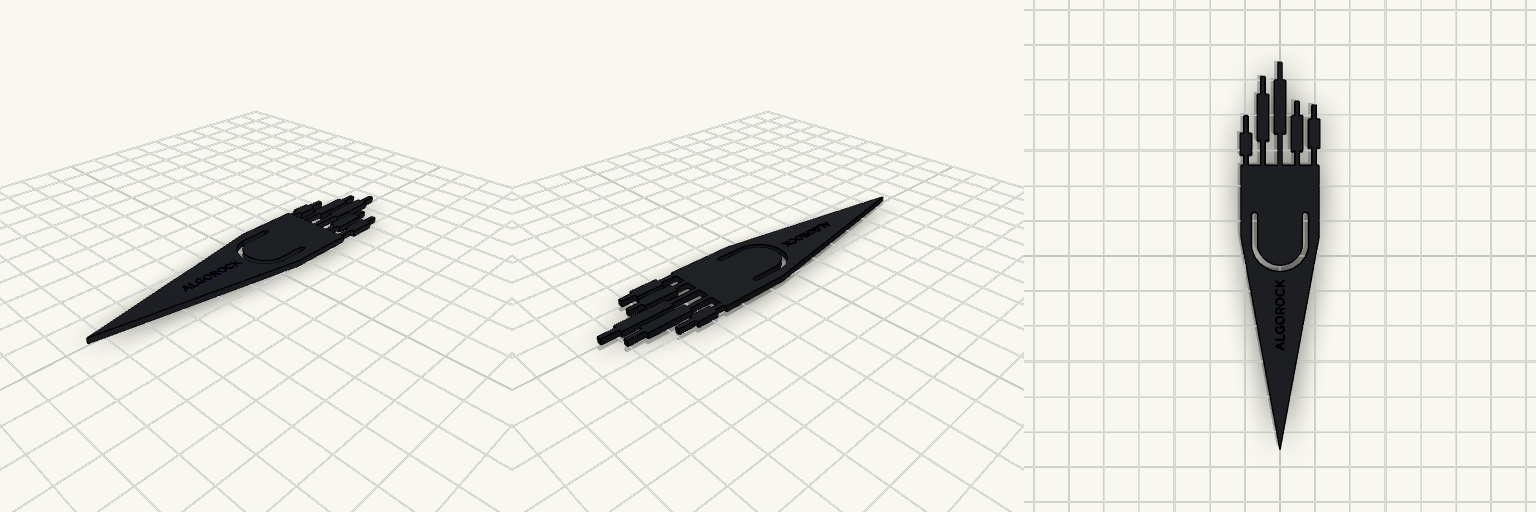
Candlestick Crown Blade Pocket Bookmark
A tapered graphite blade crowned by five candlesticks whose uneven heights still read as a single mountain, with a clear central peak and a natural descent to each side. It sits in the same family as a market-chart skyline, turned into a slim physical object. The lower taper holds an internal page pocket with a flexible inner layer. The page edge enters from the opening near the top of the taper, and the crown stays above the book. Five candles with wicks, two of them hollow ALGOROCK as a fine 0.3 mm raised purple wordmark along the blade Prints flat in one piece, with no supports PETG is recommended for the thin inner layer