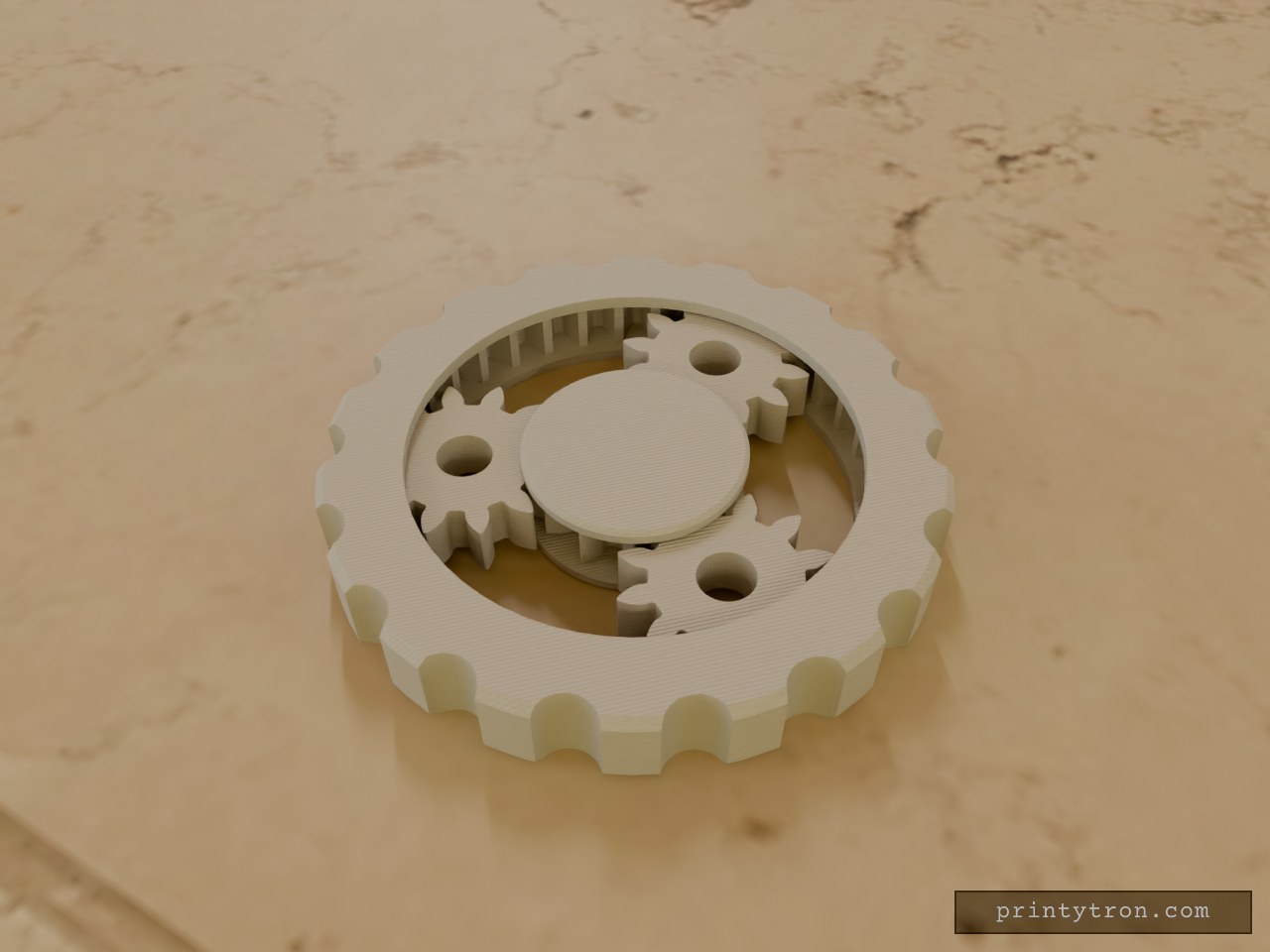
montr 2
Made by BrightStapler
Created 1 months ago
Description
What it's for
A streamlined, one-piece 50 mm watch case with a 22 mm lug width. The edges have been significantly rounded for a softer, more refined profile on the wrist. Features a classic coin-edge bezel aesthetic with engraved minute markers and an inverted triangle at 12 o'clock.
Dimensions
- Overall Case: 50 mm diameter, 8 mm thickness
- Inner Cavity: 36 mm diameter, with a solid 2 mm base floor
- Lugs: 22 mm spacing, slightly thinned for a dressier look
Assembly
Standard 22 mm spring bars will fit the 1.3 mm lug holes. The central cavity is a straight cylindrical fit, ready for a 36 mm movement or a custom dial insert.
Images
More like this
Explore more in Keychains & EDC →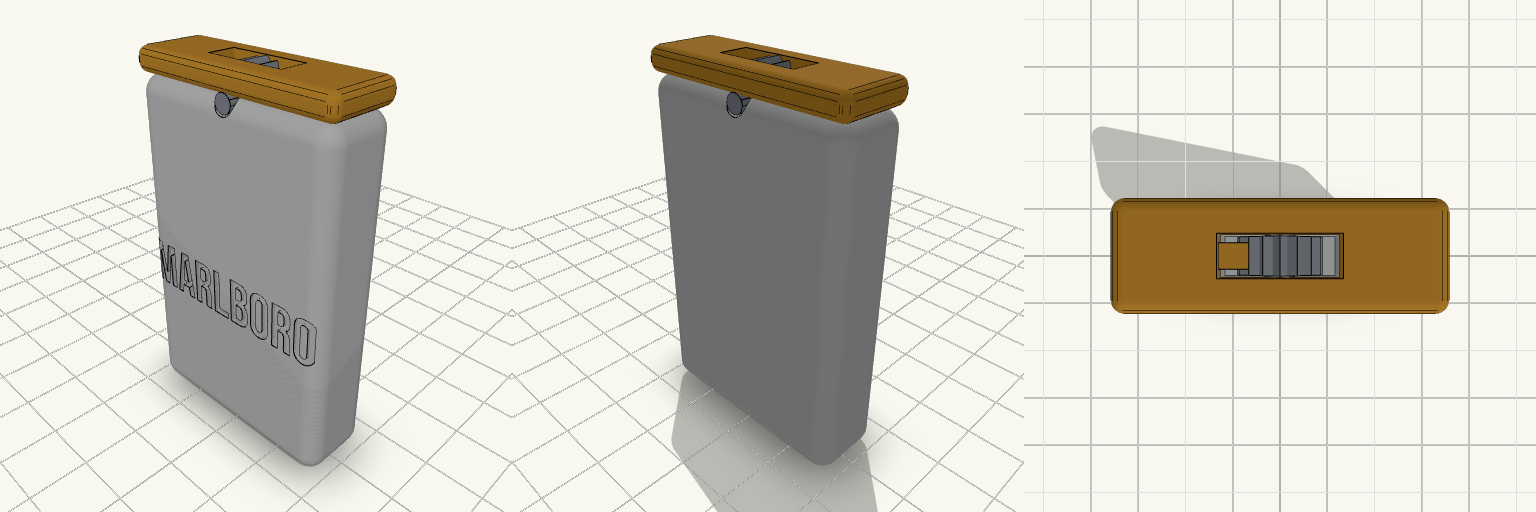
Pocket Lighter With Spark Wheel
A pocket lighter body with a hinged lid and a spark wheel that clicks as it turns. The wheel carries ratchet teeth and rides on a 3 mm axle spanning both side walls, and a thin flexible pawl in the lid presses against those teeth, so flicking the wheel snaps it tooth to tooth for a mechanical click. The body, the lid and the wheel sit side by side on the plate as separate pieces, so the wheel can be printed in a contrasting colour and dropped in afterwards. The front face is engraved 0.6 mm deep with "MARLBORO" in tall condensed capitals, easy to swap for your own lettering. Overall it measures 38 × 13 × 62 mm with the lid on, a footprint that matches a classic 38 × 13 mm lighter case almost exactly; the height runs about 4 mm over because of the 4 mm lid, which is the simplest thing to change if you want a flush match. Nothing here is final: the click mechanism is the one part worth test-printing before you commit, since the pawl's thickness sets both how loud the snap is and how freely the wheel spins. Remix hooks Click pawl: the thinnest feature and the first thing to tune. A thinner tab gives a softer, quieter click and less drag; a thicker one snaps harder but can bind the wheel. Trim or shim it after a test print. Spark wheel: 10 × 12.6 × 10 mm with 16 teeth. Tooth count and tooth depth carry the character of the click — more, finer teeth give a rapid tick, fewer coarse ones a single heavy snap — and a knurled or coarser profile swaps in without touching anything else. Axle: 3 mm and the one genuinely tight constraint, since it runs through both side walls. Change the wheel and the axle has to change with it. Lid: 38 × 13 × 4 mm. Its wheel opening and the pawl seat are the fitted areas; remove material from the lid face rather than from the wheel seat if a wheel runs tight. Shortening the body by 4 mm brings the closed height down to a flush match. Body: the largest free variable. Profile, height and wall thickness are all open; roughly 1.6–2 mm walls keep the shell printable upright without supports, and anything thinner shows the cavity through the side. Front engraving: the brand text, font width and depth all change independently of the shell — deeper letters catch more shadow, shallower ones survive a fast print better. Keep the text clear of the hinge line so the lid still seats. Hinge: loosen the pin or knuckle a touch for a lid that swings freely, tighten it for one that stays put. Add-ons and variants: a lanyard hole or pocket clip on the base, a textured grip band, or a small tray that holds the lighter with the lid open. If you want a real sound rather than a mechanical one, a pocket for a small buzzer replaces the pawl entirely. Colour changes at the wheel and at the lid boundary do most of the visual work, and the lid reprints on its own if you change your mind about the wheel seat.
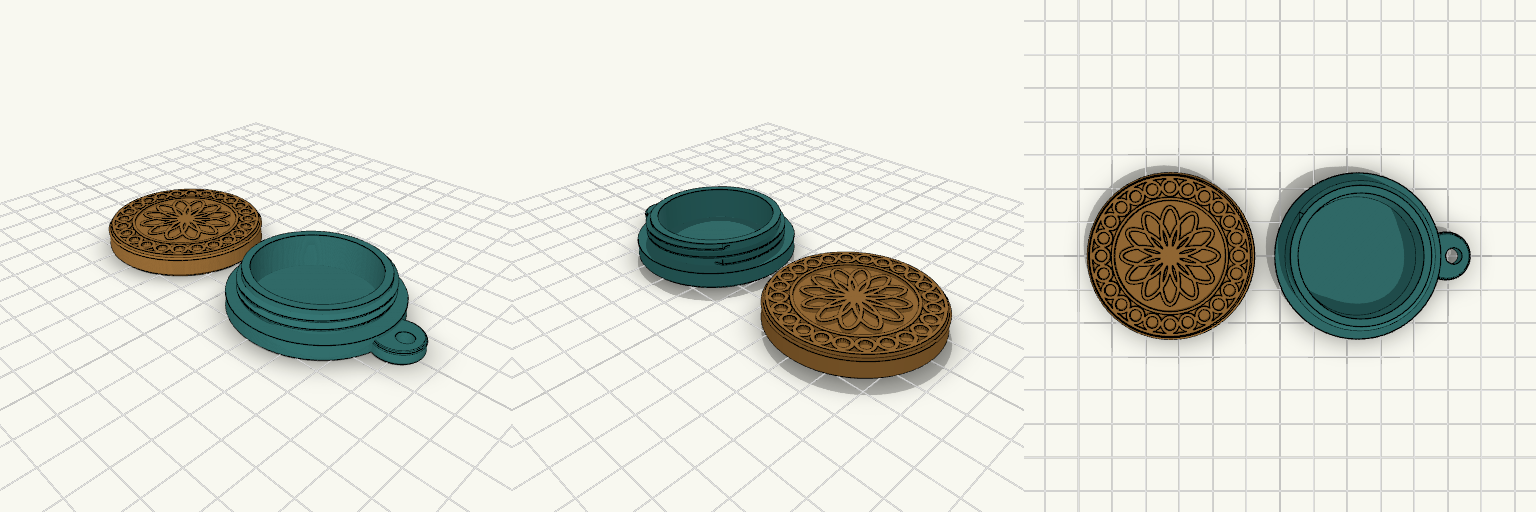
35 mm Threaded Keychain Container, Rosette Lid
Round screw-top keychain container: a deep base with a 35 mm bore and a thin matching lid with an ornamental rim and a twelve-petal rosette centre. Fit Bore: 35 mm diameter, 10 mm deep. Thread: 42 mm major diameter, 2.5 mm pitch, lid cut 0.7 mm oversize. Outer diameter: 48 mm on both pieces. Keyring tab: 4.8 mm hole, on the outside of the base. Check before printing Measure how your printer holds the 35 mm bore. Print the lid first to test the thread fit. Not included No Arabic calligraphy. The lid uses a geometric rosette and scalloped border.
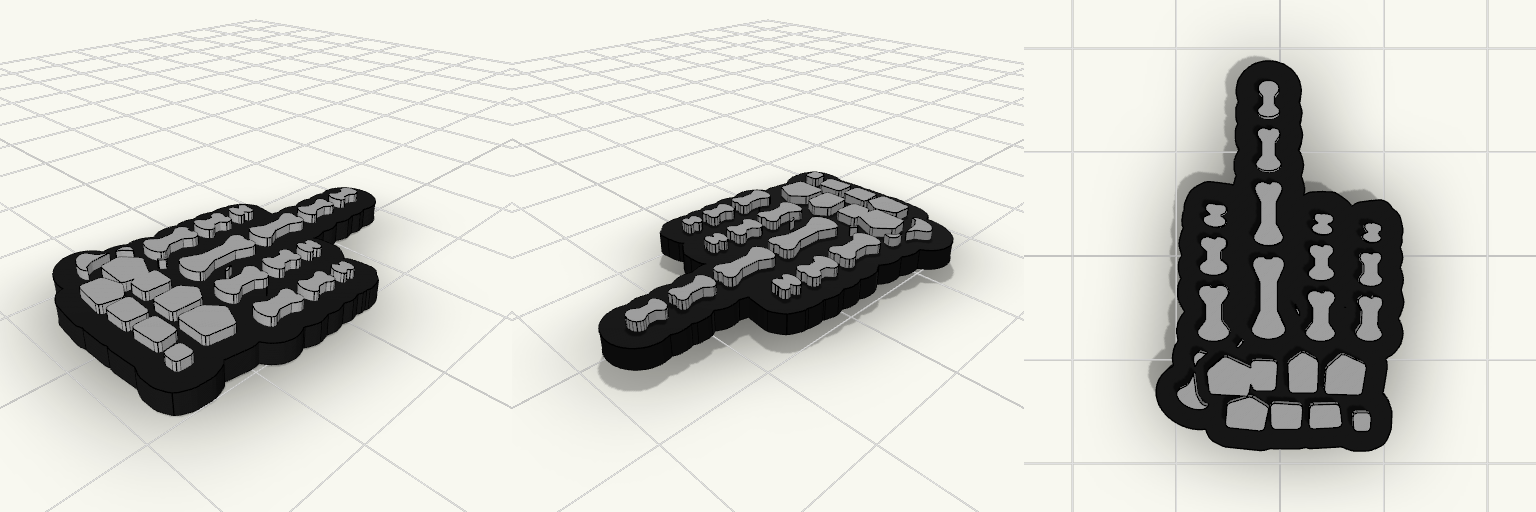
Pin de mano esquelética con dedo medio levantado
Pin con forma de mano esquelética cerrando el puño y con el dedo medio levantado. El dedo medio sube recto con sus tres falanges; el índice, el anular y el meñique quedan plegados hacia la palma. El pulgar va por detrás de los dedos plegados, así que solo asoma por el lado izquierdo y entre los huesos. Los huesos son blancos y de estilo realista: cada uno tiene una diáfisis fina y dos cóndilos redondeados en cada extremo, con una muesca central, y el extremo superior algo más pequeño. Las divisiones negras entre huesos marcan las articulaciones. En la palma hay cuatro metacarpianos y en la muñeca un grupo de huesos del carpo pequeños. La placa negra de 2 mm sigue la silueta de la mano y sobresale como borde. Los huesos van elevados 0,9 mm sobre ella, con la parte trasera completamente plana. La pieza mide unos 23 × 36 mm, así que queda 1 mm por encima de los 35 mm; el grosor total es de unos 2,9 mm. Para ajustarla al límite de 35 mm, reduce el borde de la placa. Placa negra plana de 2 mm; huesos blancos elevados 0,9 mm Huesos segmentados y separados por huecos negros de articulación, todos apoyados en la placa Sin piezas flotantes; se imprime como una sola pieza Sin soportes: la parte trasera es plana y los detalles se elevan desde la placa Huecos estrechos entre huesos; pensados para una boquilla de 0,4 mm
21mm Disk Holder with Snap Lip
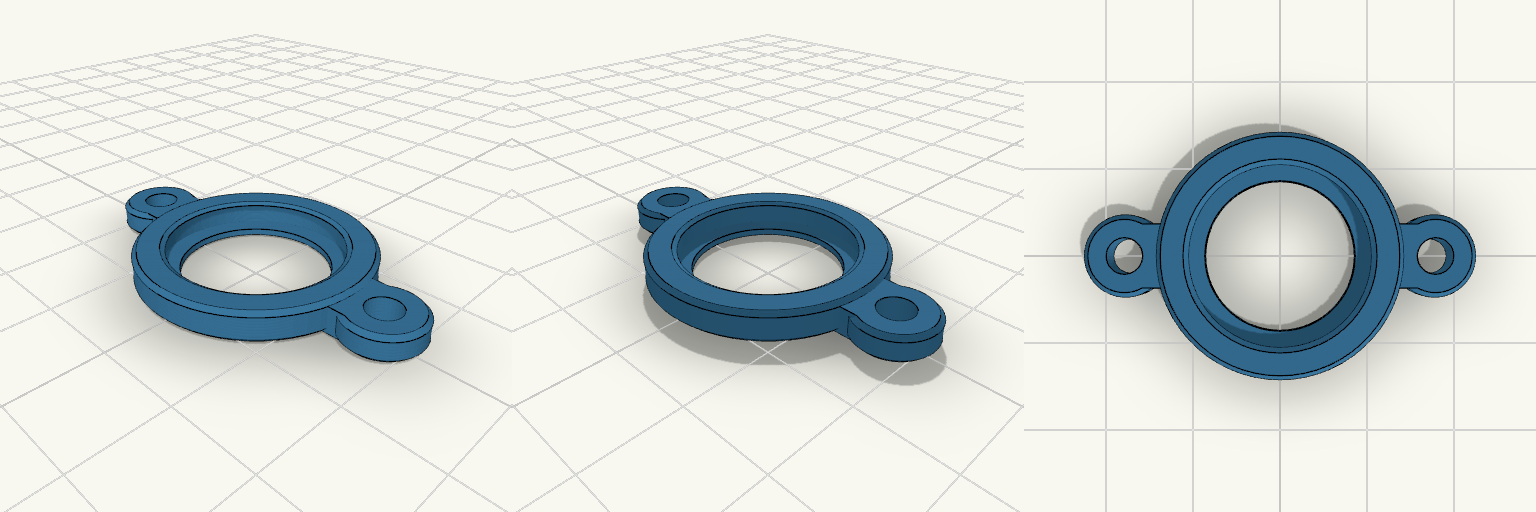
What it's for A round holder for a 21 mm by 2.5 mm disk, with an eyelet on each side for a strap, cord or ring. A 0.5 mm lip around the top edge snaps over the disk to keep it in place. Dimensions Outer diameter: 27 mm, 4.7 mm tall Disk pocket: 21.4 mm diameter, 2.5 mm deep Retaining lip: 0.5 mm overhang with a tapered lead-in Rear window: 17 mm, for pushing the disk out Eyelets: 4 mm holes, 9 mm pads, on both sides Remix ideas Increase the lip overhang for a firmer grip Remove the rear window for a closed back Add text or a chamfer ring around the edge
Costa Rica Takeaway Cup Keychain
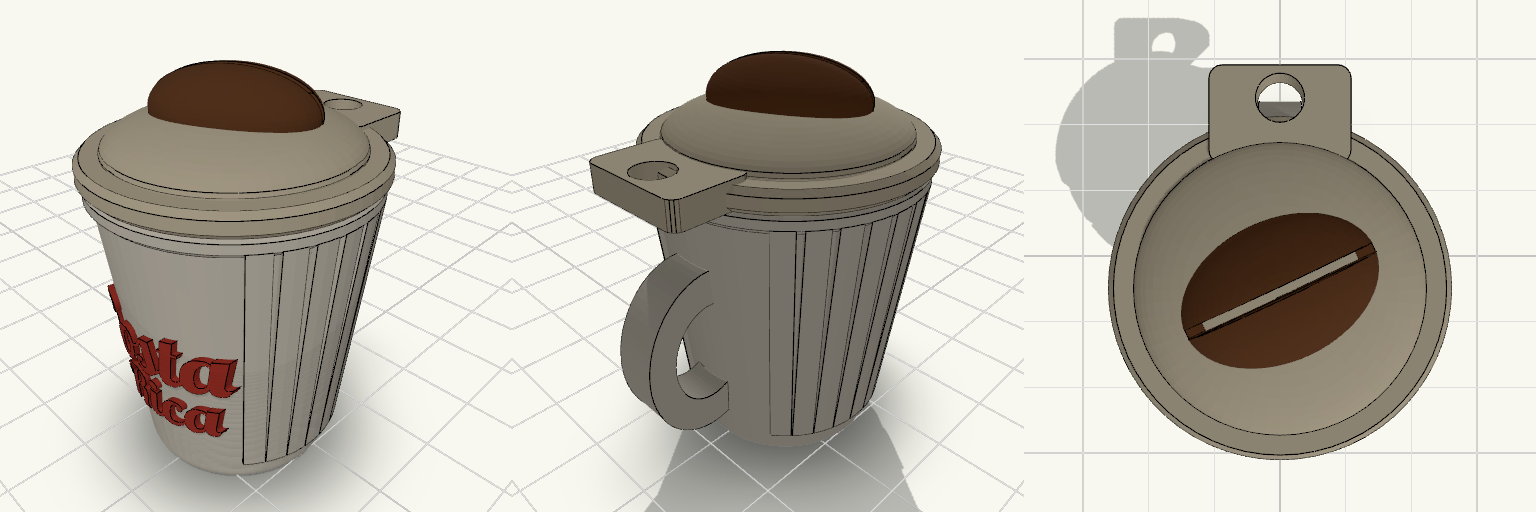
A tall, slim takeaway-cup keychain with a domed lid, a coffee bean knob on top and "Costa / Rica" lettering raised on the front, in the spirit of a corner-café travel cup. Vertical ribs run from near the base up to the neck under the lid Ribs are cleared at the lettering and around the handle Side handle sits directly below the key-ring tab Bean, lid, cup and lettering are separate colour regions