3D-printable keychains & everyday carry
Whistles, carabiners, money clips and slim wallets built to real dimensions. Browse what makers built, or describe your own EDC piece and Printy makes it.
Need one that fits your exact measurements? Start building →
Newest
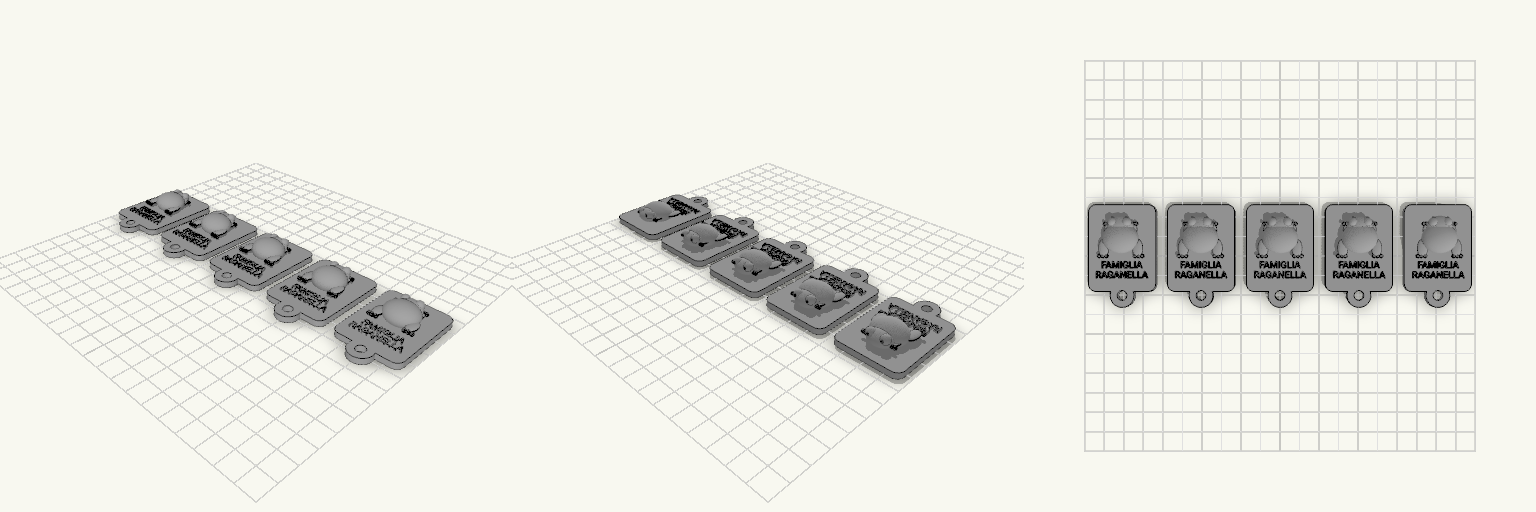
Portachiavi Famiglia Raganella con rilievo
Sei portachiavi con una raganella in rilievo e la scritta FAMIGLIA RAGANELLA, per distinguere le chiavi di casa senza provare tutte le copie. I sei pezzi sono disposti su due file da 3, con 40 mm tra un portachiavi e l'altro lungo X e 56 mm tra le file in Y: si stampano tutti insieme su un'unica piastra, pronti da separare e da agganciare agli anelli. La disposizione resta compatta e tra una piastra e l'anello della fila successiva rimangono pochi millimetri. Le zampe della raganella, davanti e dietro, sono abbassate fino a toccare la piastra del portachiavi, così non restano sospese. Misure e stampa Sei portachiavi in due file da 3 Passo di 40 mm in X, 56 mm tra le file in Y Ingombro totale sul piatto: 114 × 108 × 11,4 mm Piastra singola: 34 × 44 mm, spessore 3 mm Foro per l'anello: 5 mm Corpo della raganella e scritta in rilievo, circa 1 mm sopra la piastra; zampe a contatto con la piastra Stampa piatta, senza supporti, anche in PLA Note Lo spazio tra le file è stretto: se serve più margine attorno ai pezzi, si possono distanziare o stampare in due passaggi.
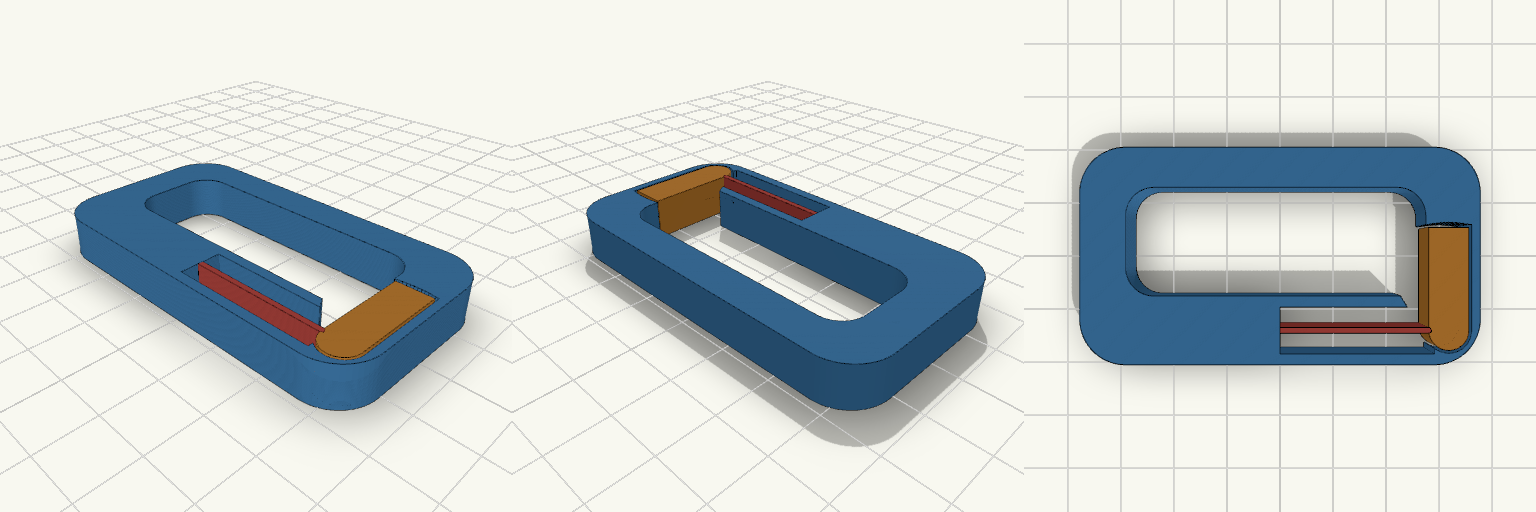
Pocket Snaplink Print-in-Place Carabiner
A compact, D-shaped snaplink in the spirit of the little accessory carabiners that hang off backpack straps and key rings. The 70 mm body carries a pivoting gate and a thin flexure spring that nudges it shut, all printed together in one go. Pop the gate open with a thumb, slip a key ring or bottle loop in, and let it snap back. Not rated for climbing or load-bearing safety use. Keep it to keys, bottles and bag clips. Design notes Size: 70 mm long, 38 mm tall, 8 mm thick. Gate: hinged at the right end, swings inward about 32° for a roughly 12 mm opening. Spring: a 1 mm living-hinge arm along the bottom wall returns the gate to closed. Print-in-place: 0.5 mm clearance gaps around the gate and spring, so no assembly is needed. Material: PETG is recommended for the flexing spring arm. Work the gate a few times after printing to free it. Tuning: if the gate sticks or rattles, adjust the clearance for your printer. The spring thickness sets how stiff the gate feels.
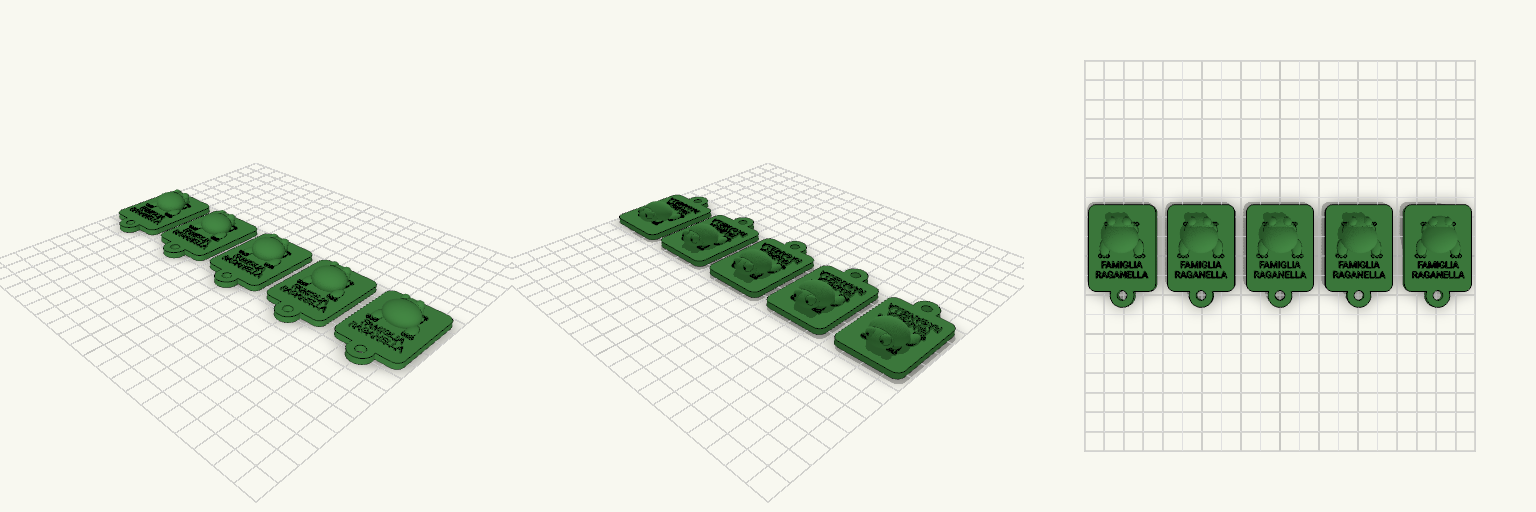
Portachiavi Famiglia Raganella con rilievo
Il portachiavi a raganella risolve il momento in cui tutte le chiavi di casa sembrano la stessa copia e si finisce a provarle una per una. La rana e la scritta FAMIGLIA RAGANELLA restano in rilievo sulla piastra, mentre le zampe anteriori e posteriori sono state abbassate fino a fondersi con il portachiavi: non restano sospese sopra la piastra e non sporgono come elementi separati. Misure e stampa Set da cinque portachiavi: ingombro 194 × 52 mm sul piano di stampa Piastra singola: 34 × 44 mm, spessore 3 mm Foro per l'anello: 5 mm Rana e scritta in rilievo, circa 1 mm sopra la piastra Zampe anteriori e posteriori fuse alla piastra Stampa piatta, senza supporti, anche in PLA
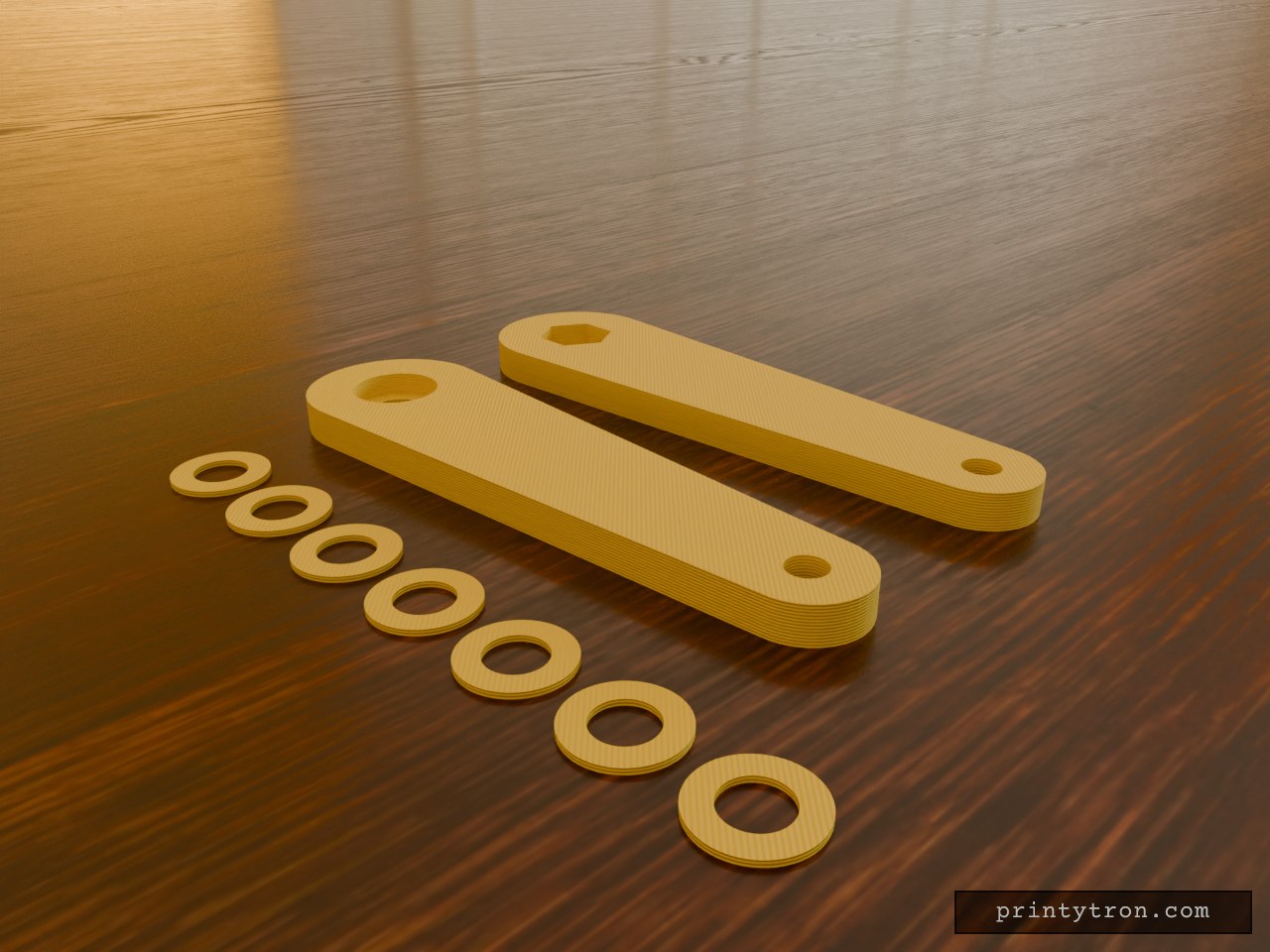
Fanlock — 6-Key Pivot Organiser
Fanlock is a compact pivot organiser that stacks up to six keys between two side plates on a single bolt. Keys fan out when needed and stay put when closed, so they stop jingling and stop wearing through pockets. The nut sets the tension, so keys can be held at whatever angle they are swung to. The plates are 75 mm long, sized for house keys, with a tapered free end and a rounded pivot end. One plate has a round recess that hides the bolt head. The other has a hex recess that captures the nut. Both sit flush with the outer faces. Seven thin spacers keep the keys from rubbing on each other or on the plates. Dimensions Plate length: 75 mm Plate width at the pivot: 20 mm Plate thickness: 4 mm Pivot hole: 5.5 mm, set 8 mm from the end Spacers: 10 mm outer diameter, 0.6 mm thick, 7 included Second 4 mm hole near the free end of each plate, for a lanyard or split ring In the box 1 head-side plate 1 nut-side plate 7 spacers Hardware needed 1 × M5 × 25 mm bolt 1 × M5 nut Print notes All pieces print flat with no supports. The stack assumes keys about 2 mm thick. Six keys, seven spacers and two plates come to roughly 24 mm, which leaves very little thread past the nut. With thicker keys, switch to an M5 × 30 mm bolt.
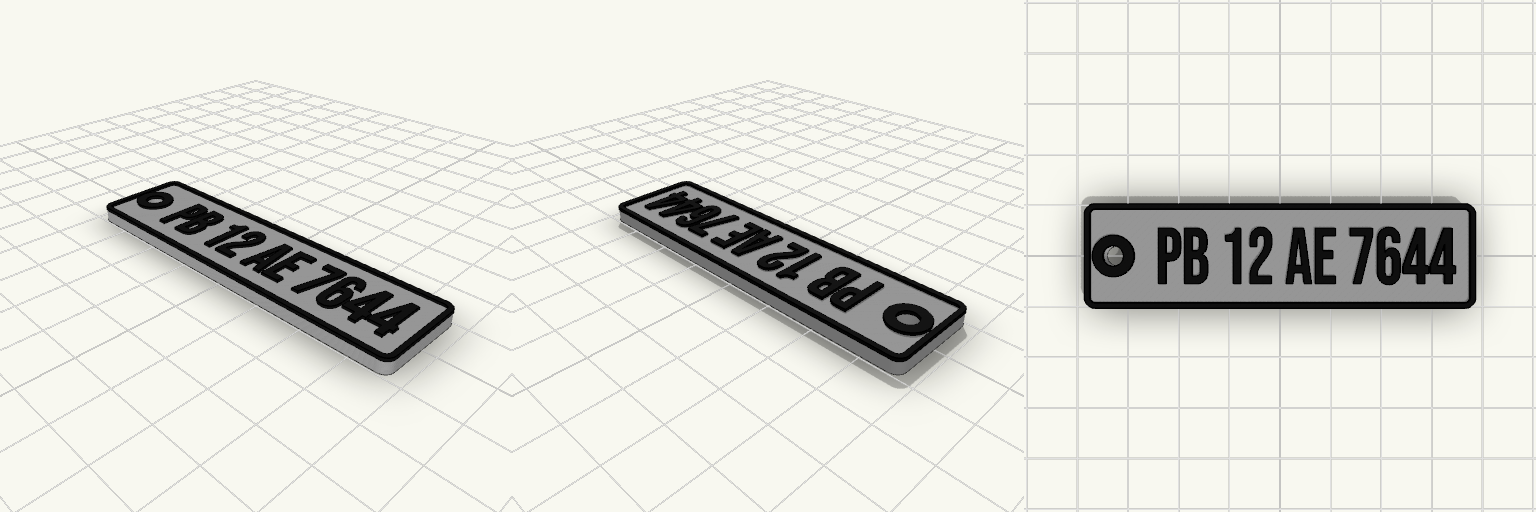
Bharat Key — Mini Number Plate Keychain
Bharat Key is a miniature Indian-style number plate keychain made to carry the exact registration PB 65 BK 3388. The long, slim plate uses a light grey/white base, a thin raised black border, and bold black lettering raised on one horizontal line. The single keyring hole sits at the extreme left with a raised ring around it for strength, while the registration stays centred in the remaining space. No blue IND strip, flag, extra colour or decoration is present, so the tag keeps a clean plate look while staying sturdy enough for a keyring. Dimensions Plate: 75 × 20 × 2.5 mm Raised border and text: 0.6 mm above the base; border 1 mm wide Lettering block: about 57 × 11 mm, fitted to the space right of the hole Keyring hole: 4 mm diameter, cut fully through at the extreme left Hole ring: raised black ring around the hole for extra strength Features Exact registration text: PB 65 BK 3388 on one horizontal line Bold black lettering raised above a light grey/white base Thin raised black border around the whole plate One circular keyring hole at the extreme left, fully through the plate Raised black ring around the hole to reinforce the keyring area Flat rectangular body with slightly rounded corners and a smooth flat backside Light grey/white base and black details only — no blue, no flag, no logos or decorations Print notes Print flat on the back; no supports are needed. The raised border and lettering sit 0.6 mm above the base and read clearly at miniature scale. Keep the 4 mm hole clear so the plate hangs cleanly on a keyring.
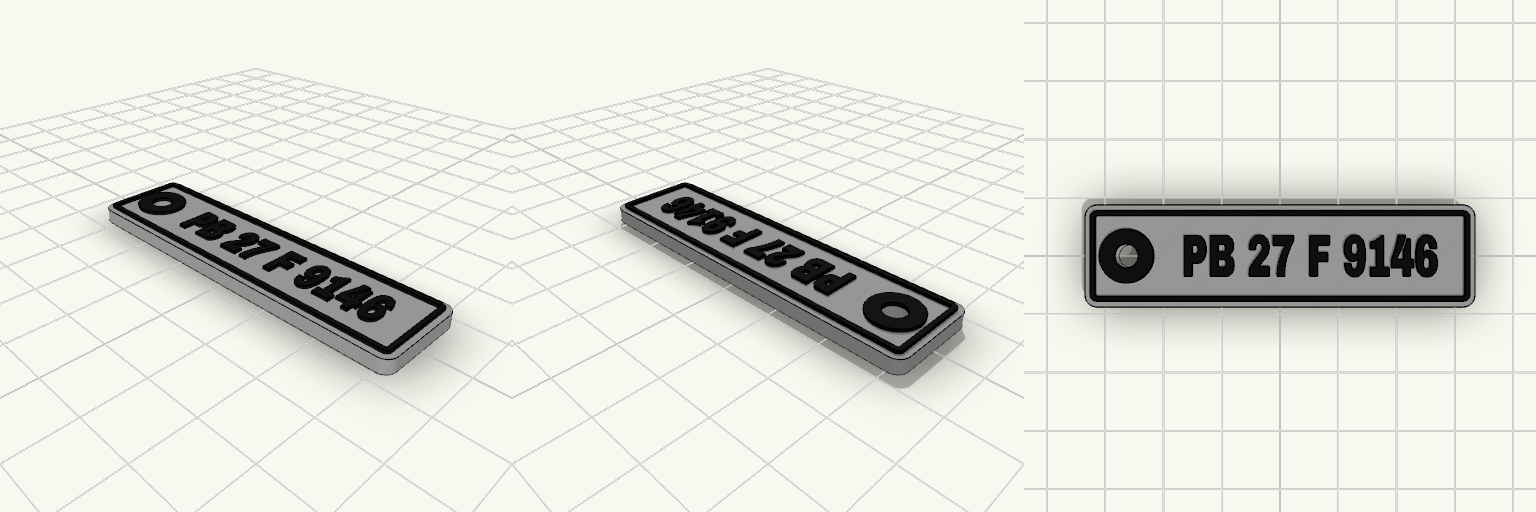
Number Plate Keychain with 4 mm Keyring Hole
A flat 65 × 17 mm number plate keychain built around the three things that ruin a printed tag: a hole that tears out, lettering that runs off the right edge of the plate, and a border crowded with extra frames. The hole sits inside a raised black ring instead of hanging on a thin web of plastic, so a heavy bunch of keys has something solid to pull against. The registration line sits on one horizontal line, raised 0.6 mm so it stays readable instead of rubbing smooth in a week, and it starts clear of the ring so nothing touches the hole. Print and fit Plate: 65 × 17 × 2.5 mm, corners rounded, smooth flat back. Keyring hole: one 4 mm through-hole at the far left, 7 mm in from the end so its ring clears the border, fully open through the base, with its own clear area so it never meets the text. Hole ring: a 9 mm black raised ring around the hole, kept neat and with no other decoration around it. Lettering: "PB 27 F 9146" on one line, raised 0.6 mm in a heavy bold face with even spacing, sized to fit the space between the ring and the right border. Border: a single thin black raised border around the whole plate, 0.6 mm high — no inner frame. Base: light grey, flat and unbroken underneath, prints without supports; the detail all sits on the raised top face, so a two-colour print or a paint fill both work. The text sits a little right of the plate's true centre because the hole takes up the left end — a truly centred line would run into the ring. If you change the registration, shorten the text rather than the plate, or the line will overrun the border on the right side.
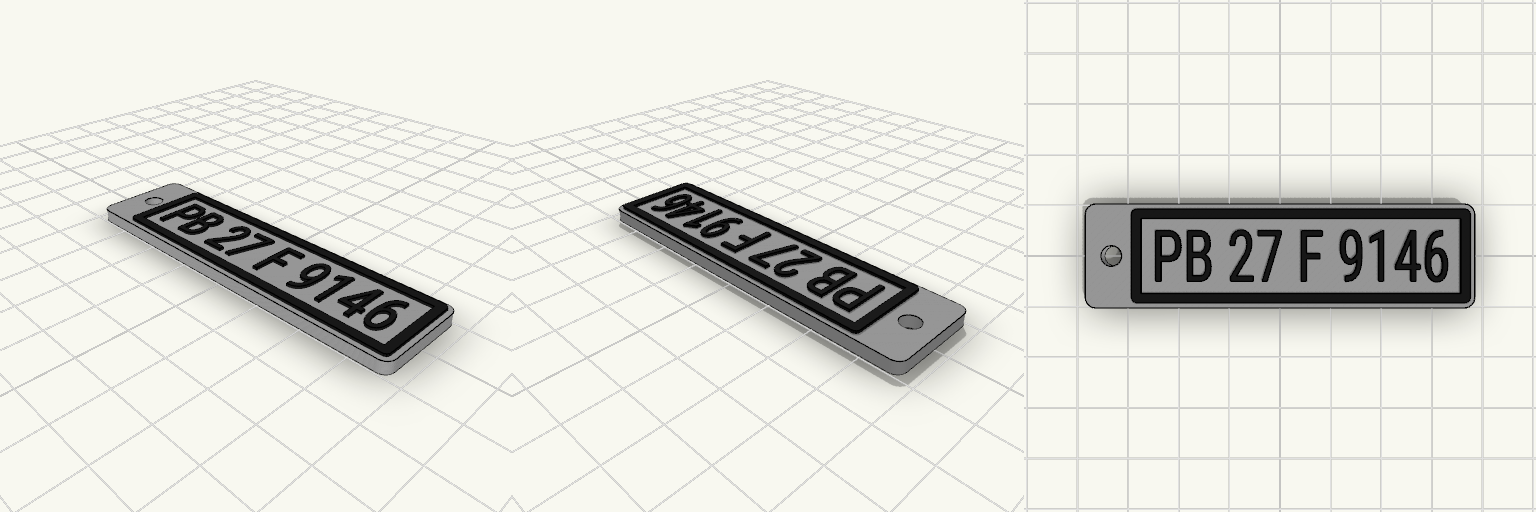
PB 27 F 9146 Number Plate Keychain
A miniature Indian-style number plate keychain reading PB 27 F 9146 on a single line, with a thin raised border and a 4 mm keyring hole at the left end. Size: 75 × 20 mm, 2.5 mm base Raised text and border: 0.6 mm Light grey base with black text and border Rounded corners, flat smooth back One 4 mm hole at the left end No flag, IND strip or blue section For a two-colour print, pause for a filament change at the 2.5 mm layer. The text is centred in the area to the right of the hole.
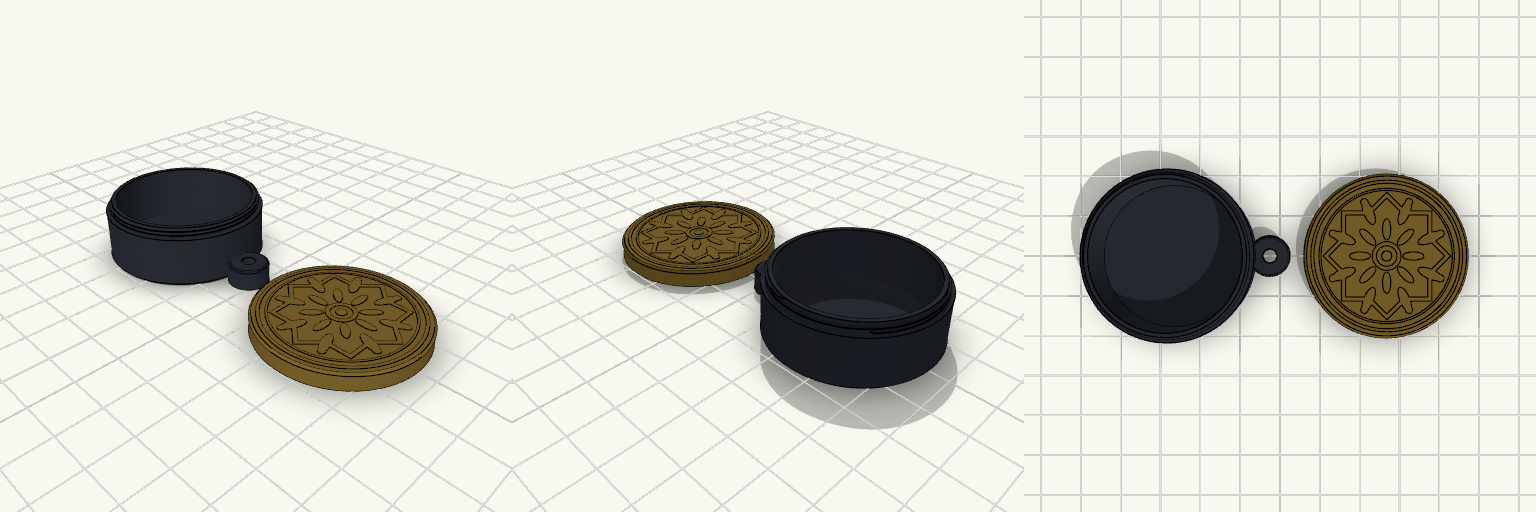
تربة حسينية100
A round pocket case in the spirit of Islamic tilework: a dark cylindrical base with a threaded neck, and a gold-toned cap that screws down over the outside. The cap's top carries a raised eight-point star, petal ring and beaded borders, all geometric with no lettering. 40 mm diameter body, 15 mm tall base with a 32 mm storage cavity External male threads on the base neck; matching internal threads in the 4 mm cap About 0.35 mm radial thread clearance Keychain lug with a 3.5 mm hole fused to the base side Ornament raised 0.1 mm
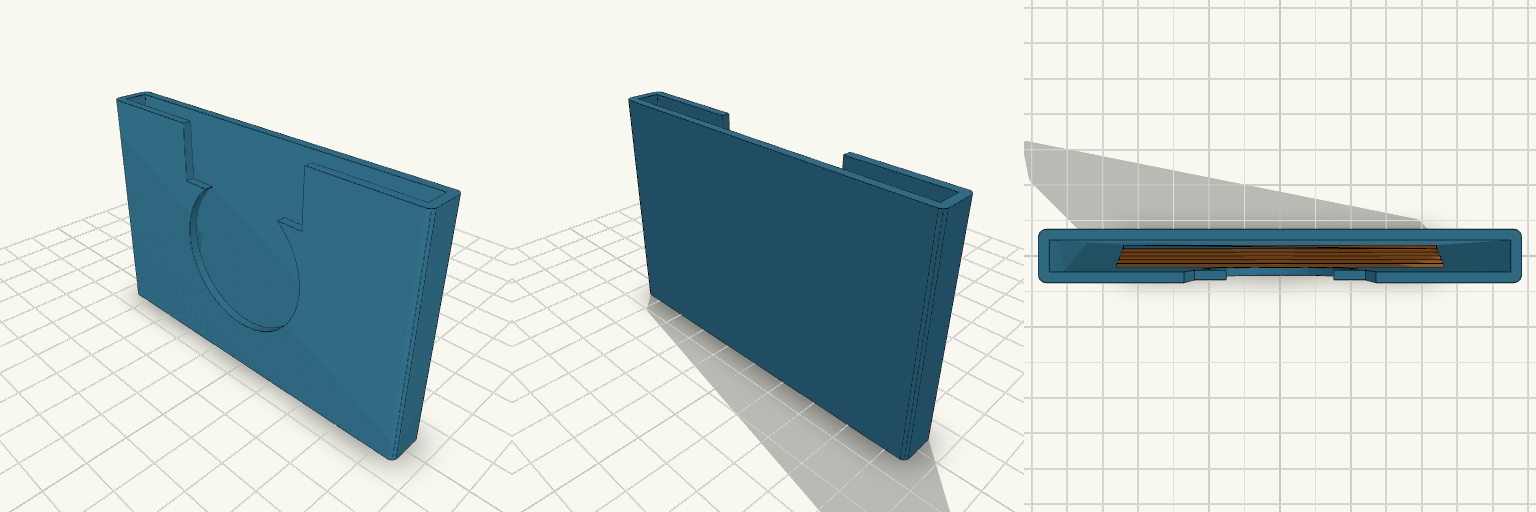
Staircase Slim Card Wallet
A card wallet with the silhouette of a tiny amphitheatre: six standard cards sit in a tall open pocket, and the floor climbs toward the front in 1.5 mm steps so the front card rides highest. A rounded thumb cutout in the front wall lets you push the stack up and out, and the front card pops clear of the rest for a quick grab. The pocket is sized for standard credit cards (85.6 x 54 x 0.76 mm) with a little breathing room, in a slim 90.5 x 10 x 58 mm body. The stepped floor is a separate colour region in the preview so the staircase is easy to read. Design notes Pocket: 86.5 x 55 x 6 mm, open at the top Floor: six steps, each 1.5 mm higher than the one behind, so the front card sits about 7.5 mm above the back one Thumb cutout: round-bottomed notch through the front wall, 36 mm wide Vertical corners rounded at 1.5 mm for a comfortable pocket feel Prints upright or flat; no supports are needed for the main body Remix hooks Taller or shorter steps for a different stagger A narrower thumb notch for a stiffer front wall Fewer steps and a thinner pocket for a 3 or 4 card version
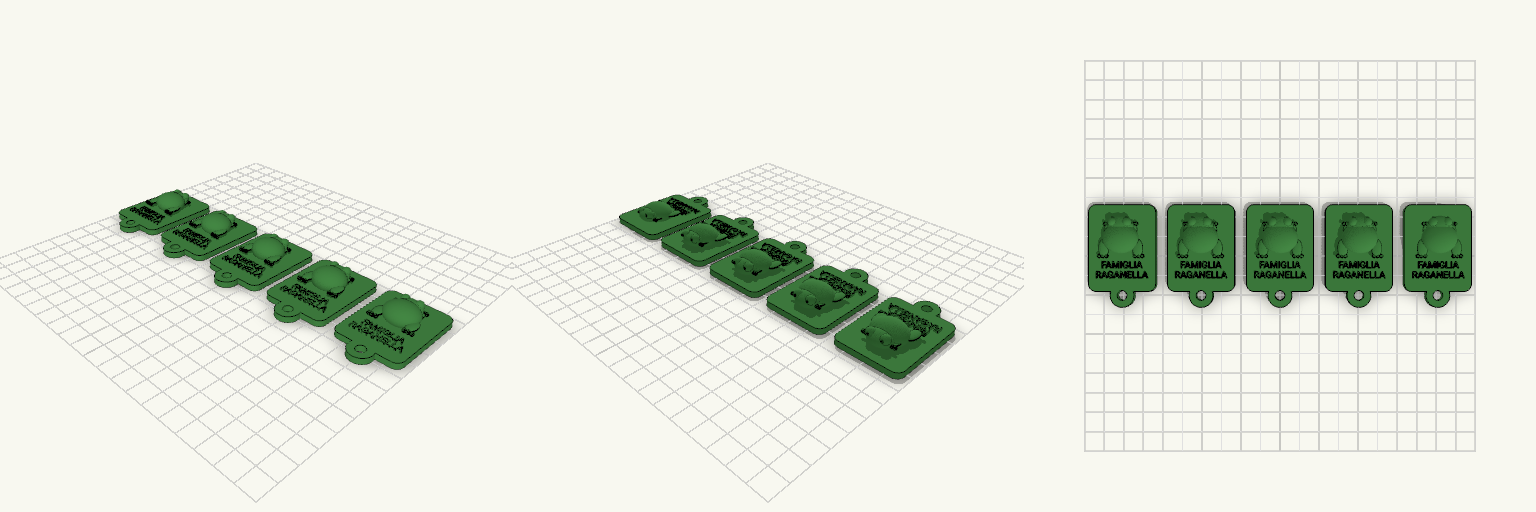
Portachiavi Famiglia Raganella con rilievo
Cinque portachiavi con una raganella in rilievo e la scritta FAMIGLIA RAGANELLA, per distinguere le chiavi di casa senza provare tutte le copie. Misure e stampa Piastra: 34 × 44 mm, spessore 3 mm Foro per l'anello: 5 mm Rana e scritta in rilievo, circa 1 mm sopra la piastra Stampa piatta, senza supporti, anche con PLA
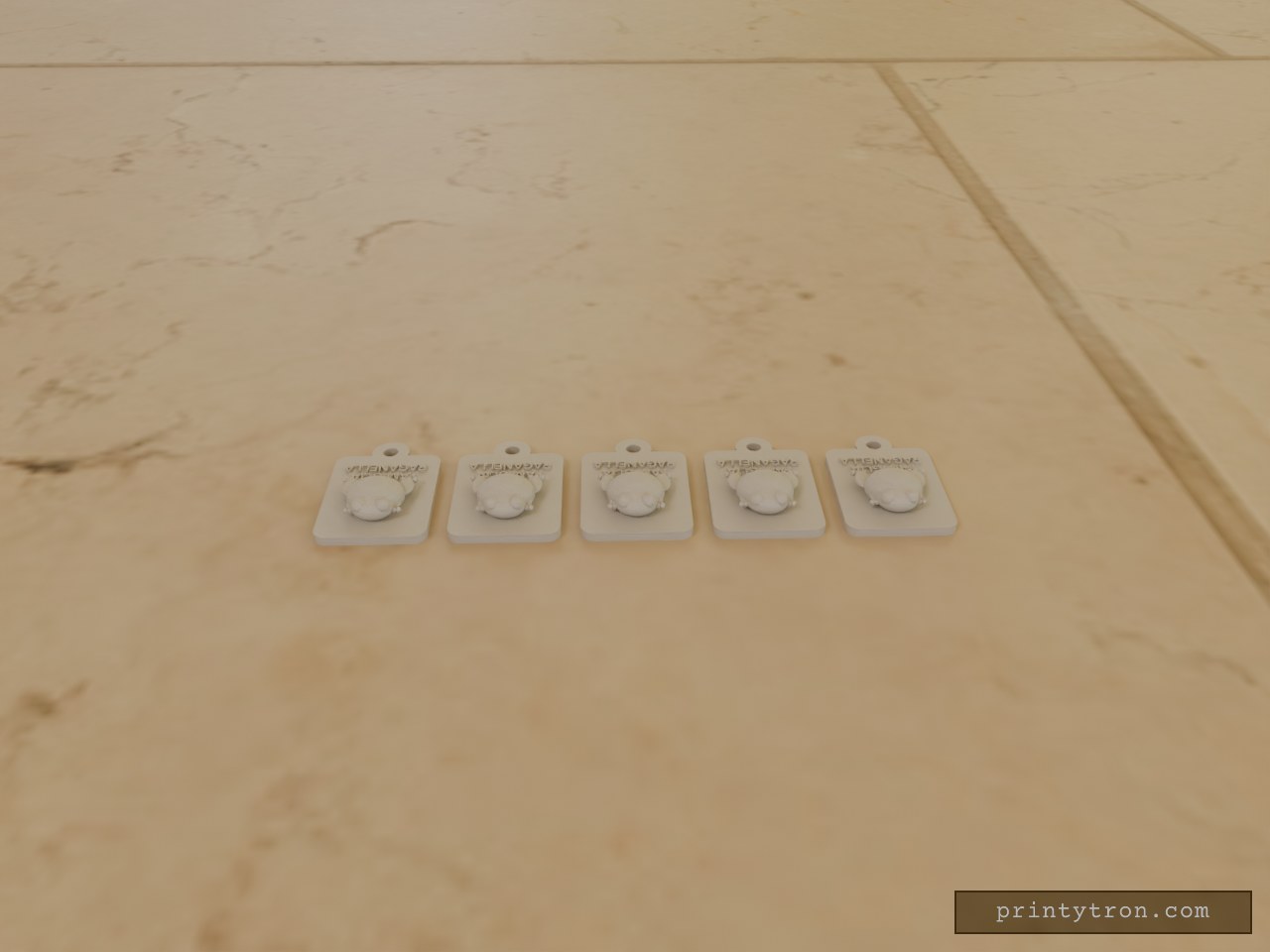
Portachiavi Famiglia Raganella con rilievo
Cinque portachiavi con una raganella in rilievo e la scritta FAMIGLIA RAGANELLA, per distinguere le chiavi di casa senza provare tutte le copie. Misure e stampa Piastra: 34 × 44 mm, spessore 3 mm Foro per l'anello: 5 mm Rana e scritta in rilievo, circa 1 mm sopra la piastra Stampa piatta, senza supporti, anche con PLA
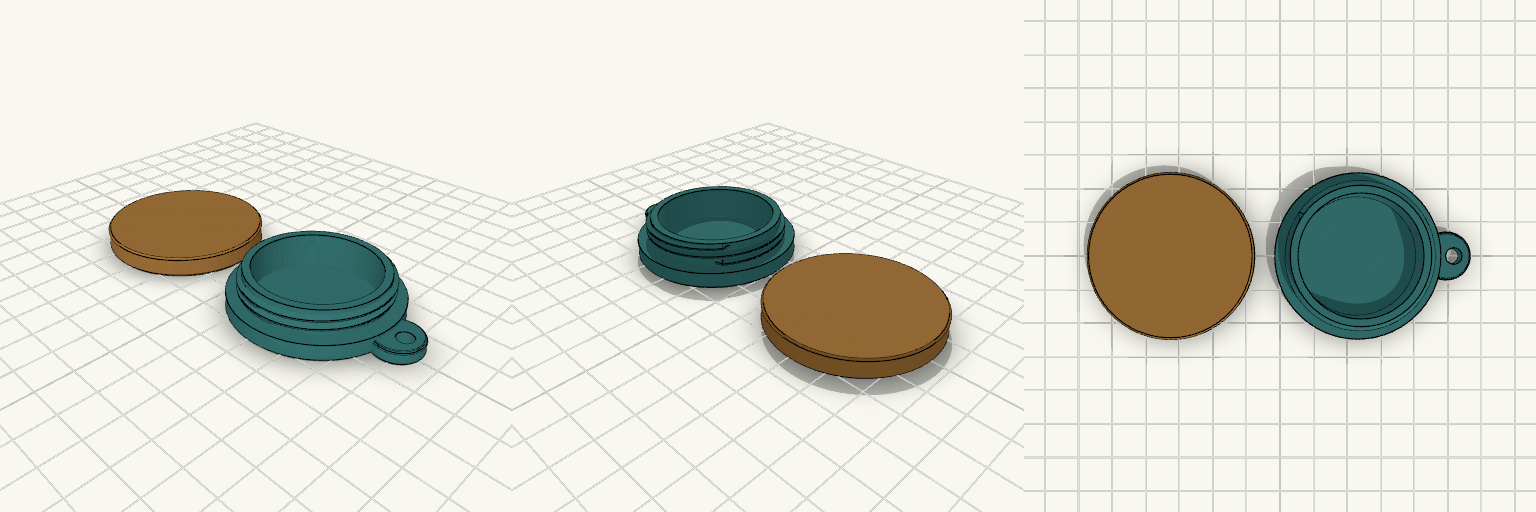
Contenedor de llavero roscado de tapa lisa
La tapa con roseta y borde festoneado se engancha en el bolsillo y retiene pelusa; esta versión la sustituye por un disco liso que cierra a ras. El contenedor sigue siendo un cilindro roscado para llevar en el llavero, con la misma cámara interior y la misma rosca. Ajuste Rosca: 42 mm de diámetro exterior, paso 2,5 mm; tapa con 0,7 mm de holgura. Cámara interior: 35 mm de diámetro, 10 mm de profundidad. Cuerpo: 48 mm; base total 57 mm con la pestaña del llavero. Tapa lisa: 48 mm, sin roseta ni borde decorativo; 6 mm de alto. Agujero del llavero: 4,8 mm. Antes de imprimir Imprime primero la tapa para comprobar el ajuste de la rosca en tu impresora.
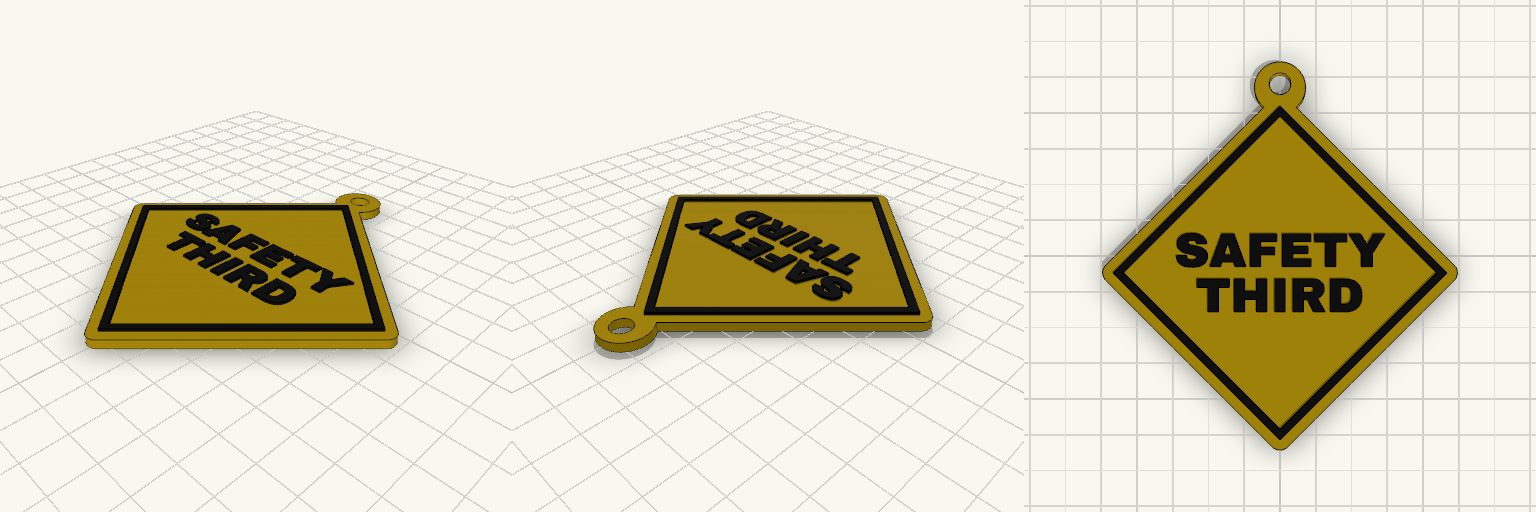
Safety Third Diamond Keychain
A keychain for the keyring that always ends up at the bottom of the bag: a diamond-shaped yellow warning sign with "SAFETY THIRD" in black on two lines, and a loop at the top apex for the ring. It is oversized on purpose, so it reads as a sign rather than a tag and is easy to find by feel and grab. Fit and print Overall size: about 97 mm across and about 107 mm tall including the top loop — big for a keychain, deliberately. Lettering: both lines are centred in the diamond at a size that keeps "SAFETY" inside the inner border, with a small gap at the top corners. Attachment: 6 mm hole through the plain yellow loop at the top apex; no black ring around the hole. Two-colour print: yellow base with the black border and text raised 0.8 mm; swap filament at 0.8 mm. Assembly: prints as one piece, with the black layer sitting proud of the yellow face.
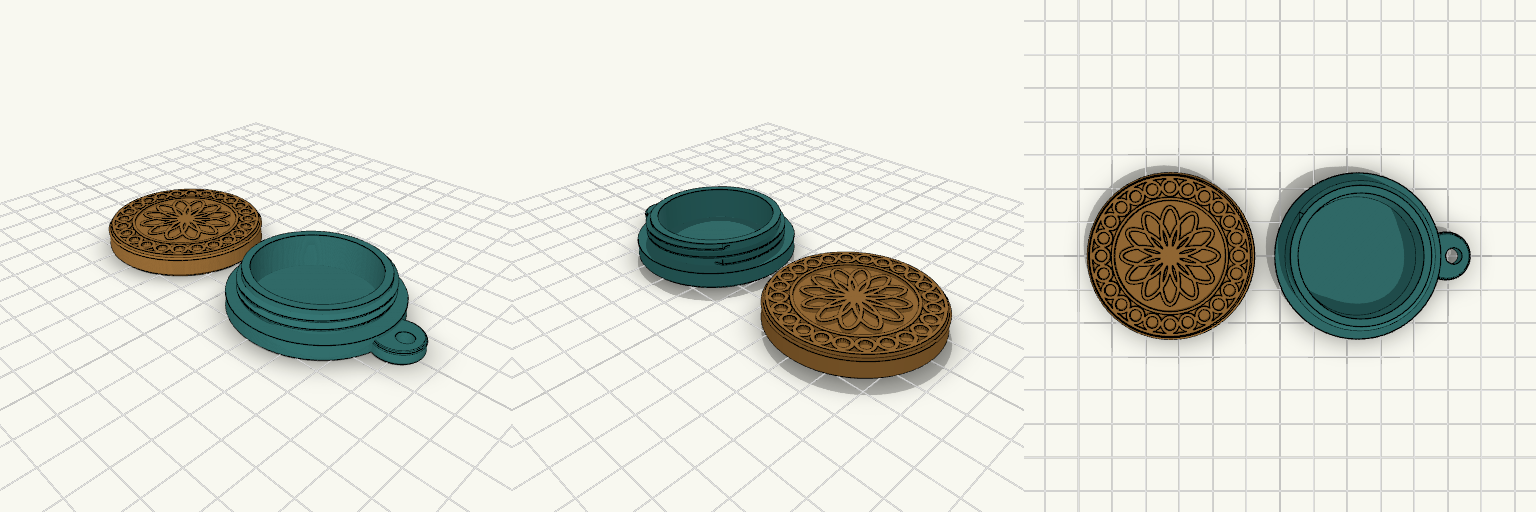
35 mm Threaded Keychain Container, Rosette Lid
Round screw-top keychain container: a deep base with a 35 mm bore and a thin matching lid with an ornamental rim and a twelve-petal rosette centre. Fit Bore: 35 mm diameter, 10 mm deep. Thread: 42 mm major diameter, 2.5 mm pitch, lid cut 0.7 mm oversize. Outer diameter: 48 mm on both pieces. Keyring tab: 4.8 mm hole, on the outside of the base. Check before printing Measure how your printer holds the 35 mm bore. Print the lid first to test the thread fit. Not included No Arabic calligraphy. The lid uses a geometric rosette and scalloped border.
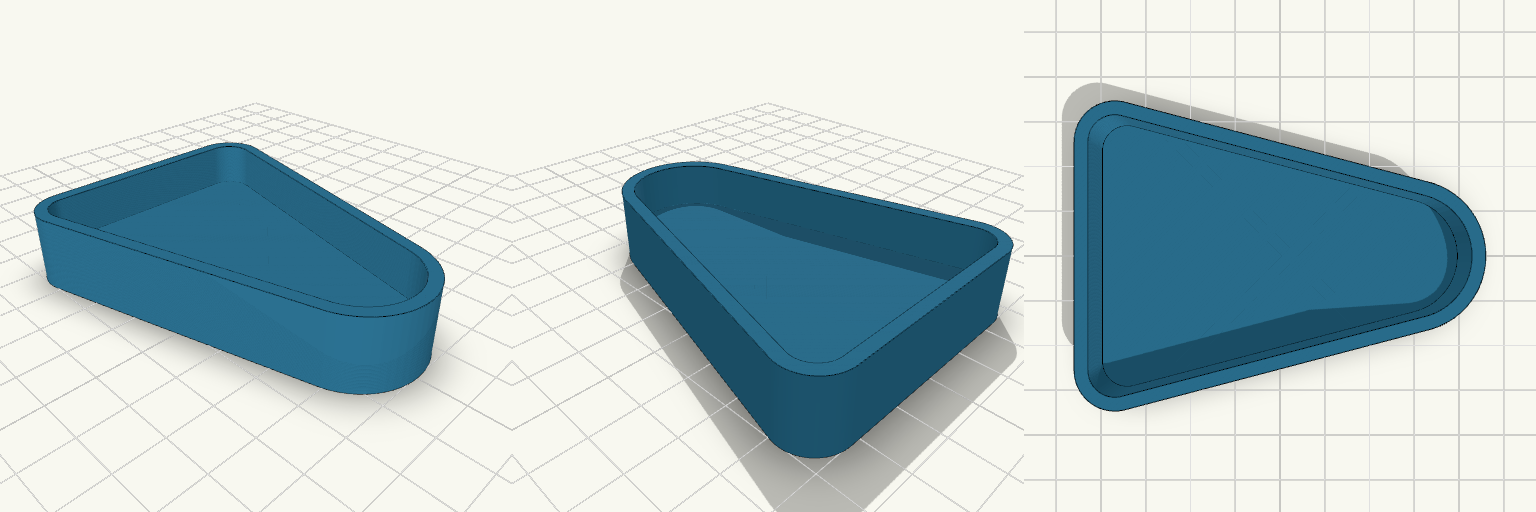
SPD-SL Cleat Covers With Wet-Tile Tread
SPD-SL cleat covers for walking in cycling shoes without clacking across café floors or skating on wet tile. Bare cleats are hard plastic on a hard surface, so they click, slide, and wear down. This cover wraps the cleat and puts a deep cross-hatched tread between the cleat and the floor. The outline is a rounded teardrop, widest at the heel end. It approximates the triangular cleat footprint and has no retention lip, so it relies on a snug fit. Print one and test it on a cleat before printing the pair. Numbers that decide fit and print Cleat footprint allowed for: about 75 mm long by 55 mm wide at the heel end Clearance around the cleat: 0.3 mm per side Side wall: 3 mm Sole thickness: 6 mm, with the cavity above it Overall height: 16 mm Overall size: about 81 mm long by 61 mm wide Tread: diagonal cross-hatch grooves at ±45°, 2.5 mm wide and 3 mm deep, on a 7 mm pitch Material: TPU gives the best grip and a flexible fit. PETG also works. Orientation: print sole-side down. The cavity opens upward, so no supports are needed.
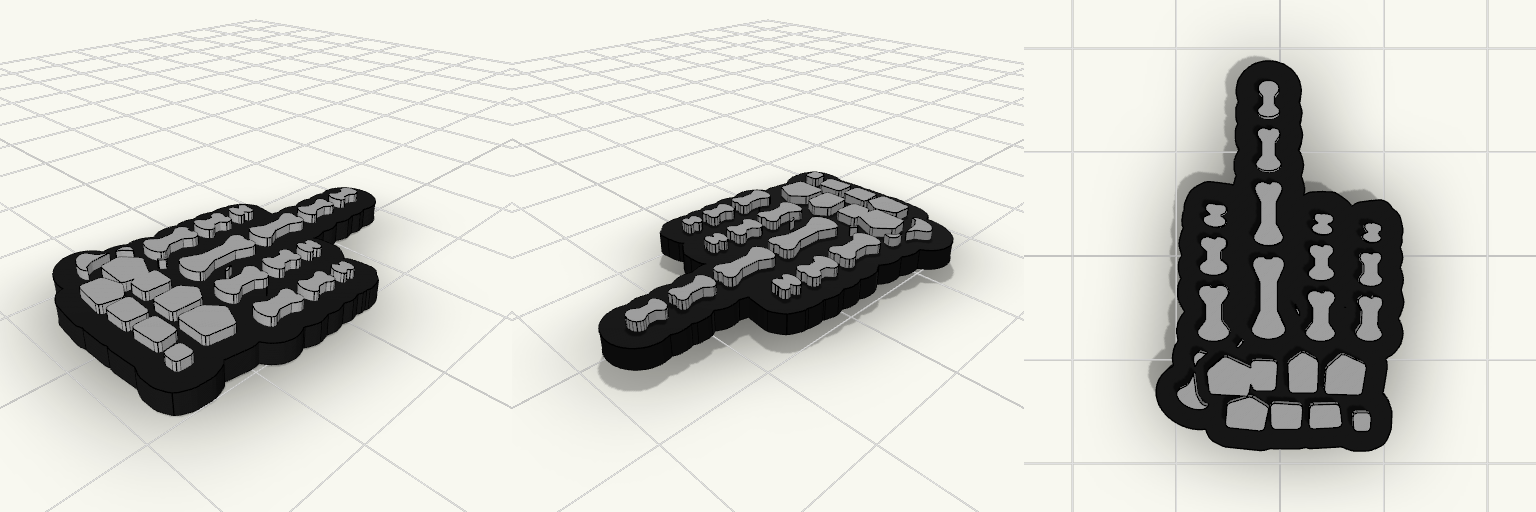
Pin de mano esquelética con dedo medio levantado
Pin con forma de mano esquelética cerrando el puño y con el dedo medio levantado. El dedo medio sube recto con sus tres falanges; el índice, el anular y el meñique quedan plegados hacia la palma. El pulgar va por detrás de los dedos plegados, así que solo asoma por el lado izquierdo y entre los huesos. Los huesos son blancos y de estilo realista: cada uno tiene una diáfisis fina y dos cóndilos redondeados en cada extremo, con una muesca central, y el extremo superior algo más pequeño. Las divisiones negras entre huesos marcan las articulaciones. En la palma hay cuatro metacarpianos y en la muñeca un grupo de huesos del carpo pequeños. La placa negra de 2 mm sigue la silueta de la mano y sobresale como borde. Los huesos van elevados 0,9 mm sobre ella, con la parte trasera completamente plana. La pieza mide unos 23 × 36 mm, así que queda 1 mm por encima de los 35 mm; el grosor total es de unos 2,9 mm. Para ajustarla al límite de 35 mm, reduce el borde de la placa. Placa negra plana de 2 mm; huesos blancos elevados 0,9 mm Huesos segmentados y separados por huecos negros de articulación, todos apoyados en la placa Sin piezas flotantes; se imprime como una sola pieza Sin soportes: la parte trasera es plana y los detalles se elevan desde la placa Huecos estrechos entre huesos; pensados para una boquilla de 0,4 mm
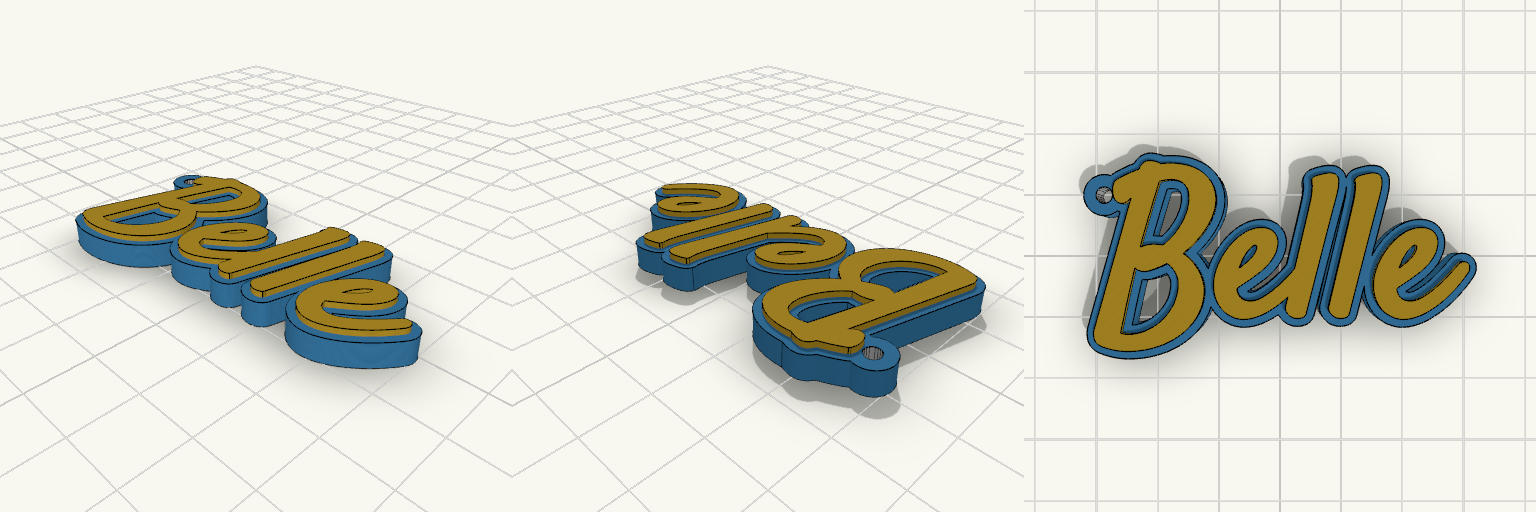
Hueco de 2,6 mm para llavero Belle
Llavero «Belle» para anillas finas, con una argolla de círculo pequeño. La argolla mide 6,4 mm de diámetro exterior y tiene un hueco de 2,6 mm, con pared de 1,9 mm; va sin palito ni puente, junto al borde azul de la B. El texto va en Satisfy, con la B y las dos l de esa tipografía. El borde rodea las letras por fuera y también perfila el interior: los huecos pequeños de las e se rellenan en azul, y en la B el borde rodea el espacio interior dejando un hueco en el medio. Ese mismo borde interior achica los óvalos de las dos l. El borde y la argolla forman la zona azul «Borde y argolla»; el texto es la zona amarilla «Texto Belle»; cada zona se puede recolorear por separado. Qué encaja Hueco de argolla: 2,6 mm de diámetro; para anillas de alambre fino, no para alambre de 3 mm. Huella de impresión: 61,3 × 32,1 mm; altura máxima 5 mm. Dos zonas de color: «Borde y argolla» en azul y «Texto Belle» en amarillo; se pueden cambiar por separado. Borde exterior e interior en las letras; huecos de las e rellenos en azul y hueco central en la B. Qué comprobar antes de imprimir El hueco de la argolla: 2,6 mm. Mide el alambre de la anilla antes de imprimir; una anilla de 3 mm de alambre no entra. La pared de la argolla es de 1,9 mm. Revisa también que el círculo de la argolla toque el borde azul en la vista previa; si queda separado, no sirve como llavero de una sola pieza. Lo que no incluye La anilla no viene con el modelo: solo se imprime el llavero con su argolla. No es un llavero universal; el hueco está dimensionado para anillas finas, no para cordones, cadenas ni mosquetones de mochila. La B y las dos l conservan las formas de Satisfy; no hay una B dibujada a mano.
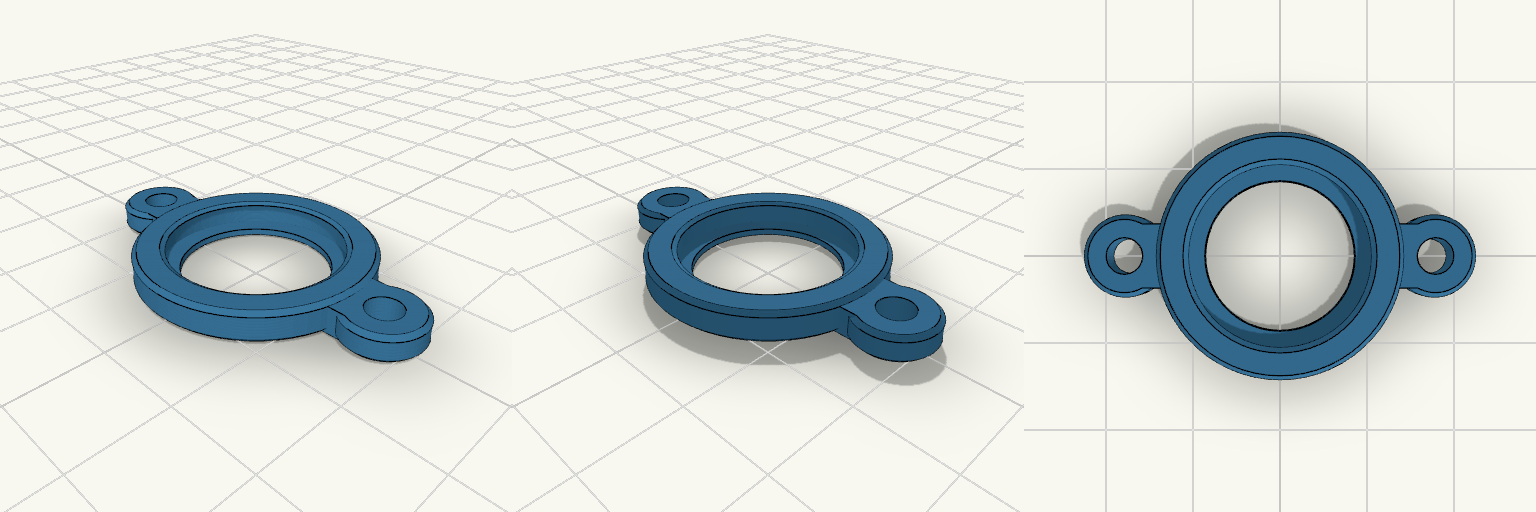
21mm Disk Holder with Snap Lip
What it's for A round holder for a 21 mm by 2.5 mm disk, with an eyelet on each side for a strap, cord or ring. A 0.5 mm lip around the top edge snaps over the disk to keep it in place. Dimensions Outer diameter: 27 mm, 4.7 mm tall Disk pocket: 21.4 mm diameter, 2.5 mm deep Retaining lip: 0.5 mm overhang with a tapered lead-in Rear window: 17 mm, for pushing the disk out Eyelets: 4 mm holes, 9 mm pads, on both sides Remix ideas Increase the lip overhang for a firmer grip Remove the rear window for a closed back Add text or a chamfer ring around the edge
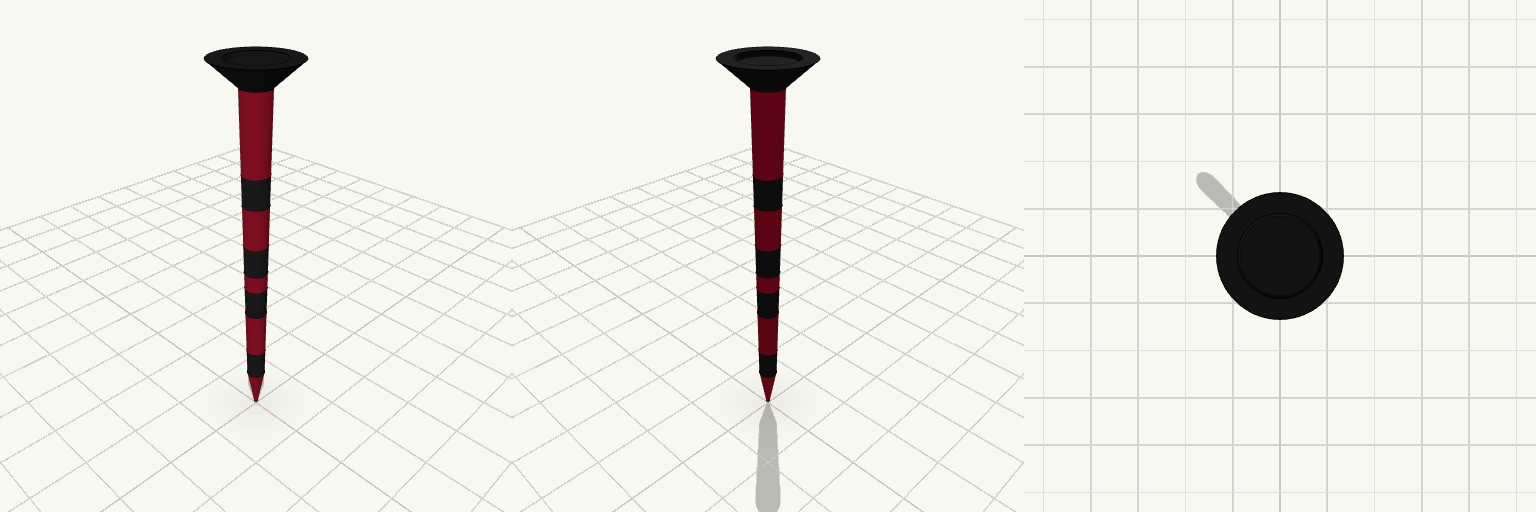
Dawg Tee — Georgia Fan Golf Tee
The Dawg Tee is a Georgia fan golf tee in red and black, made for showing team colors out on the course. It stands 62 mm tall with a compact, shallow dish at the top to seat the ball, a black head, and four black bands breaking up the red shaft along most of its length. Below the bands the shaft tapers into a short, sharp point that starts easily in the ground. The narrow head keeps the silhouette tidy, and the alternating red-and-black blocking gives the tee a look that reads instantly from the tee box. Dimensions Overall height: 62 mm Shaft: 5 × 5 mm, 58 mm tall including the point, tapering from a 0.6 mm tip over the lowest 7 mm Head: black shallow dish, 14 mm across, 4 mm tall with a 0.8 mm recess Bands: four black rings around the shaft, 4.7 mm across, spaced roughly 7, 20, 28 and 40 mm up and together covering 38 mm of the shaft Features Slim, low-profile head that keeps the ball sitting close to the shaft Red shaft with a black head and four contrasting black bands Short, sharp point for pushing into the ground Prints as one solid piece — no separate parts to assemble Print notes The 0.6 mm tip is fine and fragile; print in a tough material and avoid forcing it into hard, compacted ground. Rounding the very tip slightly makes it far more durable at the cost of a little bite. The shallow 0.8 mm recess holds the ball more loosely than a deeper cup; deepen the recess if you want a firmer seat. Multi-color printing brings out the red shaft against the black head and bands; a single-color print still works but loses the contrast. The tapered shaft prints cleanly without supports.
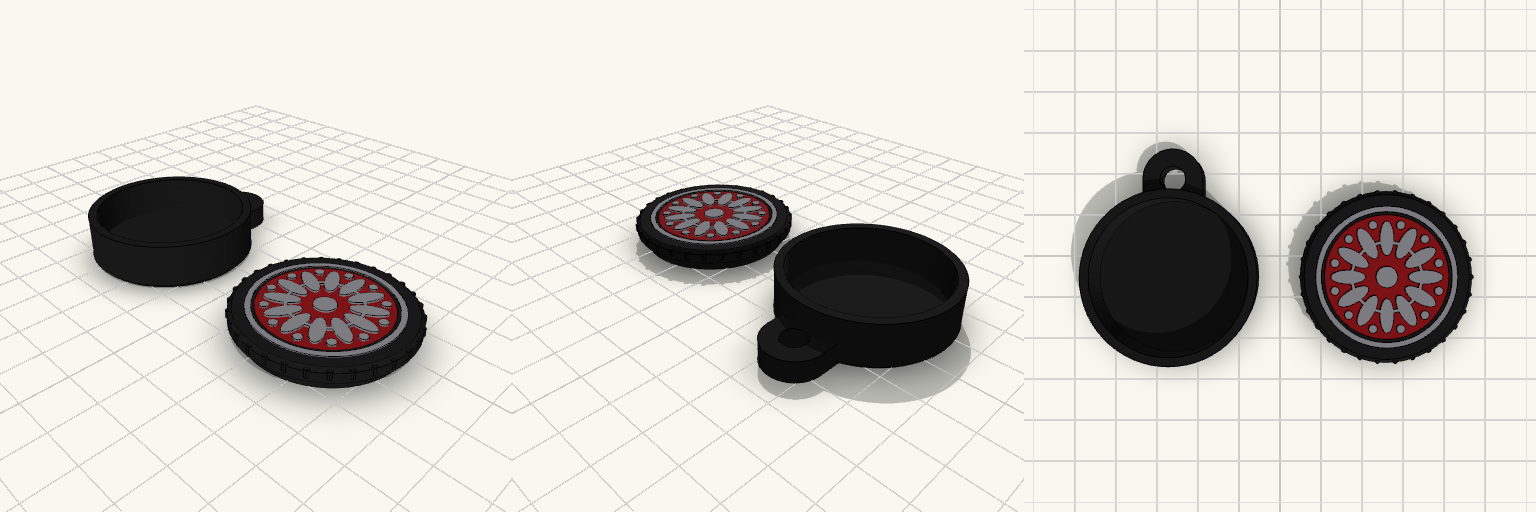
Round Turbah Keychain Container
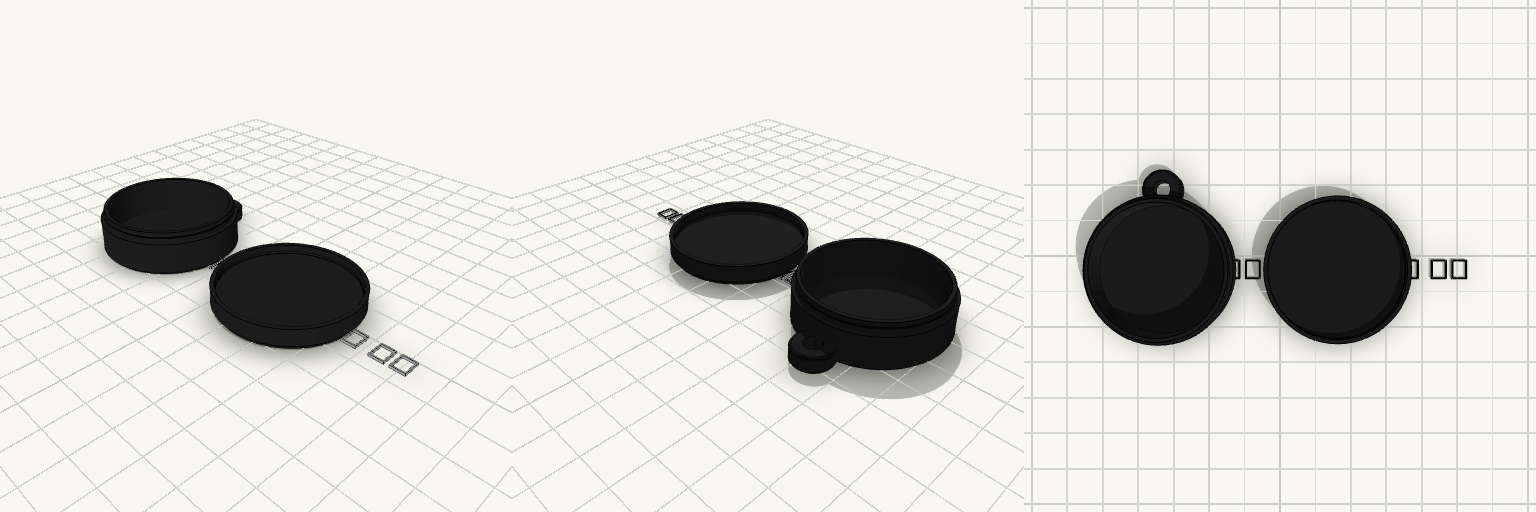
A 40 mm round container with a press-fit lid and a keyring loop, sized for a 35 mm turbah disc. The lid carries a red medallion with a silver ornamental pattern of petals, dots and rings. It has no text. Remix hooks Interior fit: the cavity is 36 mm wide; change ID for a tighter or looser disc. Height: the base is 11 mm and the lid adds 3 mm for a stack of about 14–15 mm; raise the base height for thicker discs. Ornament: petal count (12 at 30° steps), ring diameters and relief height (0.4 mm) are easy to change. Lid grip: the 30 ribs around the rim can be removed or swapped for a knurl. Colours: print black, red and silver as separate colour regions in a multicolour slicer. Pairs with: a split ring or lanyard clip through the 6 mm loop hole.
Round Turbah Keychain Container
A 40 mm round keychain container with a hollow cavity for a 35 mm Hussaini Turbah disc and a separate press-fit lid. The closed height is about 15 mm. The lid carries a raised border, a red central medallion, white Arabic lettering (يا أبا عبد الله) and a grey ornamental ring, each a separate colour region. The lid is laid out face-down for printing without supports. Cavity: 35.6 mm diameter, about 10.5 mm deep Lid: snap bead and groove, removable by hand Keyring loop: 4.8 mm hole at the top edge Material: PLA or PLA+, multicolour or filament swap
Portachiavi 30x45x4 mm con battistrada
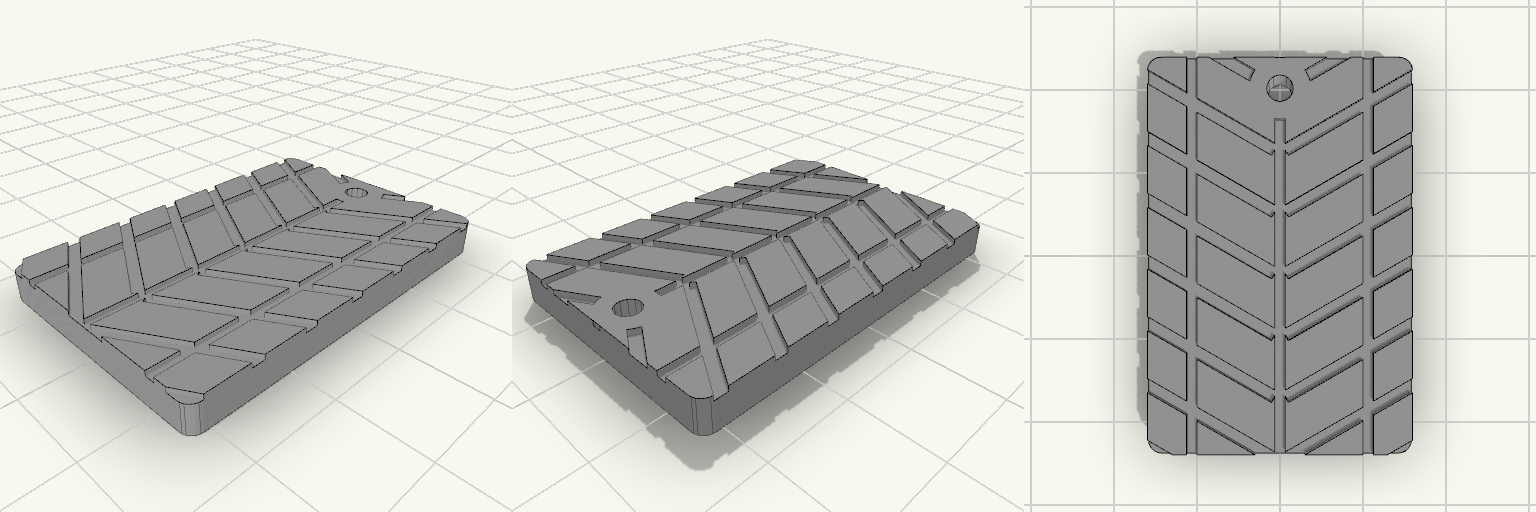
Portachiavi rettangolare 30x45 mm, spessore 4 mm, con cavità interna chiusa e disegno di battistrada inciso sulla faccia superiore. Misure da controllare Cavità interna: disco Ø26 x 1 mm, a metà spessore (da 1,5 a 2,5 mm), con pareti da 2 mm ai lati e 1,5 mm sopra e sotto. Non è visibile dall'esterno. Foro passante: Ø3 mm, a 3,5 mm dal bordo corto. Battistrada: tacchetti a V e scanalature laterali, profondità 0,6 mm. Compatibilità Il vano è pensato per un inserto piatto fino a Ø25 x 0,8 mm (moneta sottile, rondella, disco magnetico), da inserire con una pausa di stampa al layer 1,5 mm. Non adatto a inserti più spessi di 1 mm. Stampa senza supporti, con la faccia battistrada verso l'alto.
Hollow Sphere Keychain, 33 mm Screen Opening
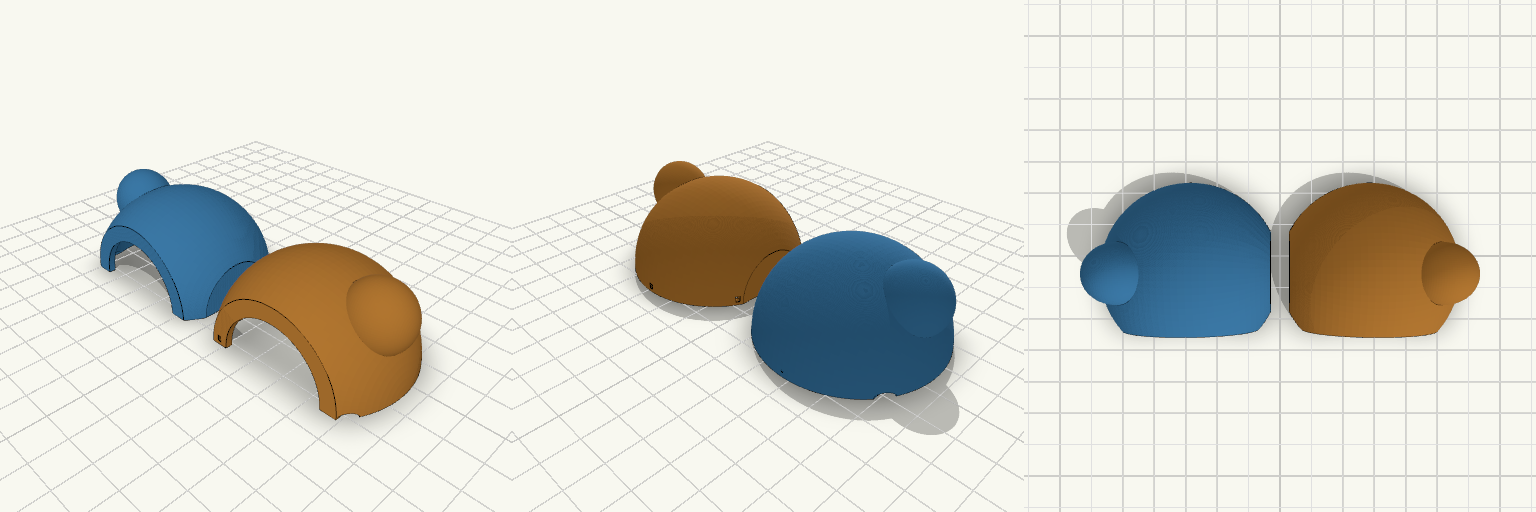
Two-piece hollow sphere keychain with a 33 mm round screen opening in the front and a 3.3 mm ring hole through the top wall. The halves snap together with small bead pegs and can be pulled apart by hand. Body: about 56 mm sphere with two ear bumps, 2 mm wall, flat front face Screen opening: 33 mm diameter, through the front wall into the hollow interior Ring hole: 3.3 mm, a plain hole through the top wall on each side, with no inner sleeve Joint: three bead pegs and undercut sockets, pull apart along the left-right axis Print: each half sits cut-face down, no supports needed for the outer curve
6 mm Ball-Joint Crystal Dragon, 42 Segments
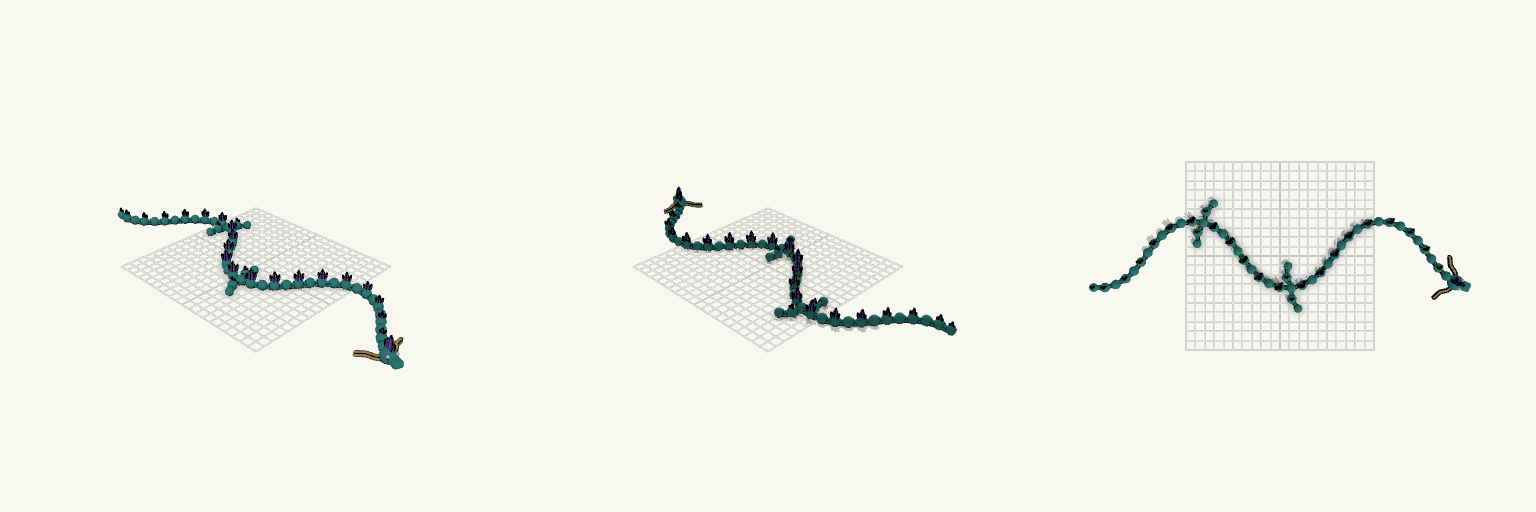
A print-in-place articulated dragon built on 6 mm balls in 7 mm sockets, with faceted hexagonal crystal clusters on the head, spine, legs and tail tip. Fit and clearance Joint: 6 mm ball in a 7 mm socket (0.5 mm radial clearance), 5 mm neck opening so the ball cannot pull out. Chain: 42 body segments at 12 mm pitch, plus four legs of two segments each. Check before printing: the laid-out dragon is roughly 350 mm long in its S-curve, so verify your bed size or scale it down in the slicer. Scaling below about 80% closes the 0.5 mm clearance. Not suited to Printers with a bed under about 250 mm without rescaling. Printing the crystals first: the model lies flat on the bed, crystals pointing up, flat horns on the bed. Fast, uncooled printing: joint gaps need slow, well-cooled layers.
Need a part that doesn't exist yet?
Start building →