35 mm Threaded Keychain Container, Rosette Lid
Created 7 days ago
Remixed once
Description
Round screw-top keychain container: a deep base with a 35 mm bore and a thin matching lid with an ornamental rim and a twelve-petal rosette centre.
Fit
- Bore: 35 mm diameter, 10 mm deep.
- Thread: 42 mm major diameter, 2.5 mm pitch, lid cut 0.7 mm oversize.
- Outer diameter: 48 mm on both pieces.
- Keyring tab: 4.8 mm hole, on the outside of the base.
Check before printing
Measure how your printer holds the 35 mm bore. Print the lid first to test the thread fit.
Not included
No Arabic calligraphy. The lid uses a geometric rosette and scalloped border.
Images
More like this
Explore more in Keychains & EDC →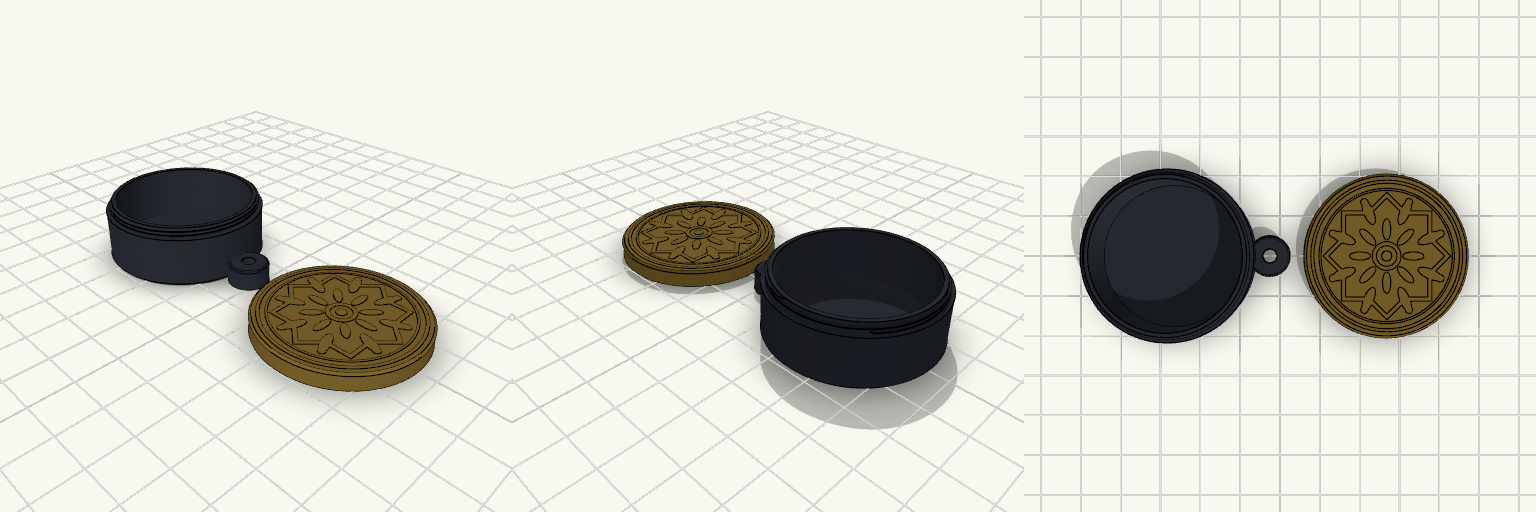
تربة حسينية100
A round pocket case in the spirit of Islamic tilework: a dark cylindrical base with a threaded neck, and a gold-toned cap that screws down over the outside. The cap's top carries a raised eight-point star, petal ring and beaded borders, all geometric with no lettering. 40 mm diameter body, 15 mm tall base with a 32 mm storage cavity External male threads on the base neck; matching internal threads in the 4 mm cap About 0.35 mm radial thread clearance Keychain lug with a 3.5 mm hole fused to the base side Ornament raised 0.1 mm
Round Turbah Keychain Container
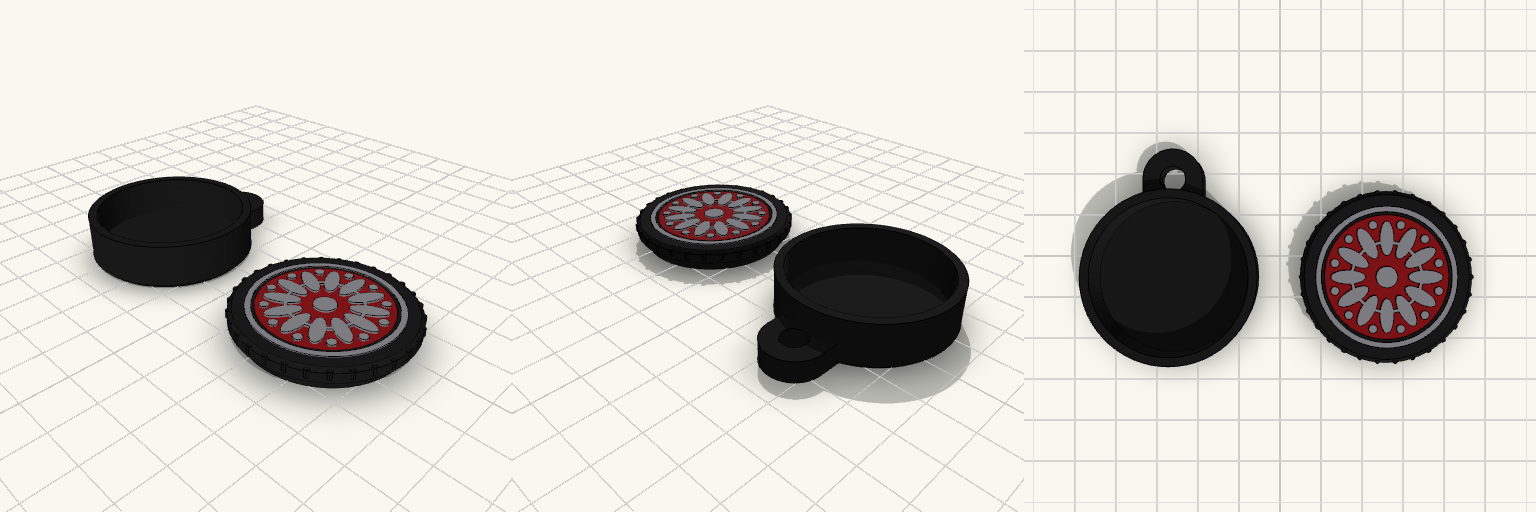
A 40 mm round container with a press-fit lid and a keyring loop, sized for a 35 mm turbah disc. The lid carries a red medallion with a silver ornamental pattern of petals, dots and rings. It has no text. Remix hooks Interior fit: the cavity is 36 mm wide; change ID for a tighter or looser disc. Height: the base is 11 mm and the lid adds 3 mm for a stack of about 14–15 mm; raise the base height for thicker discs. Ornament: petal count (12 at 30° steps), ring diameters and relief height (0.4 mm) are easy to change. Lid grip: the 30 ribs around the rim can be removed or swapped for a knurl. Colours: print black, red and silver as separate colour regions in a multicolour slicer. Pairs with: a split ring or lanyard clip through the 6 mm loop hole.
Apple Watch SE 44mm Keychain Case
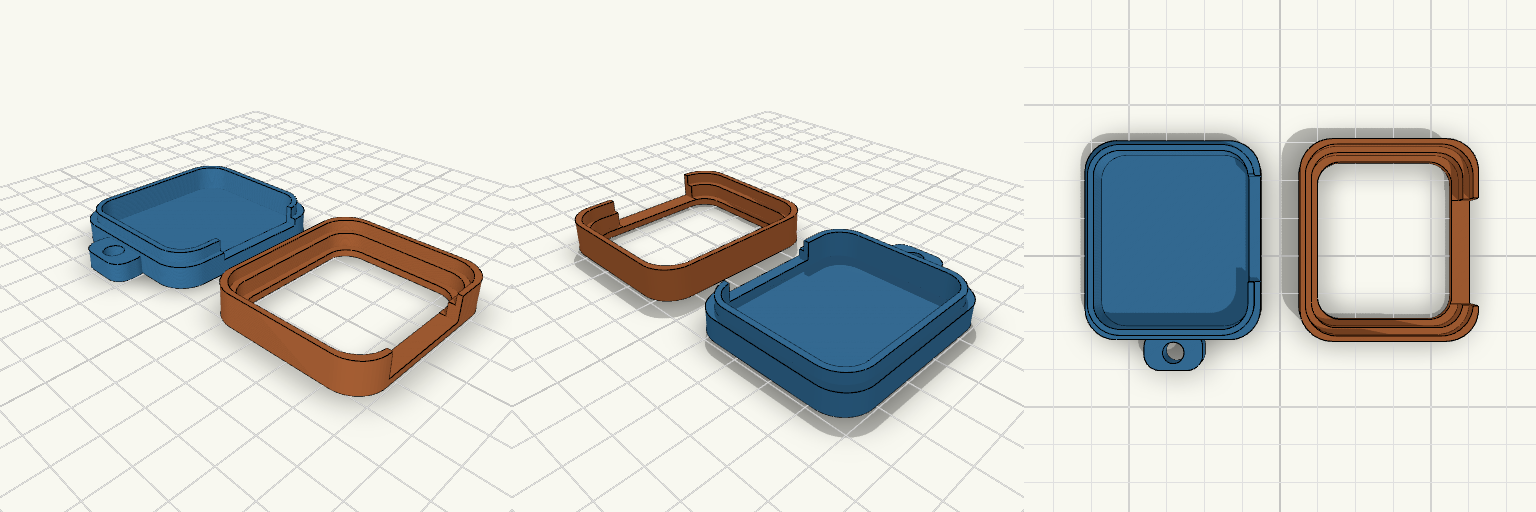
What it's for A two-piece case that turns a 44mm Apple Watch SE (1st gen) into a keychain fob, with no wrist strap. A back shell cradles the watch and carries the key-ring lug. A front bezel fits over it and holds the watch in, leaving the screen open. Dimensions Cavity: 38.6 x 44.6 mm, sized for a 44mm watch body with about 0.3 mm of clearance Outer size: about 44.6 x 50.6 mm, plus the lug Wall thickness: 3 mm Key-ring hole: 5.5 mm Side window on the crown/button edge: 27 mm long, so the Digital Crown and side button stay usable Screen opening: about 1.75 mm of lip around the display Print notes Both parts are laid out separately on the plate. The bezel is flipped so its lip prints flat. Print in PETG or PLA. Check the fit on the stepped joint and sand it if it is tight. The halves are a press fit, and a drop of glue will make the joint permanent. Remix ideas Add a lanyard slot or a carabiner notch. Emboss initials on the back. Make a version for 40mm watches by shrinking the cavity.
21mm Disk Holder with Snap Lip
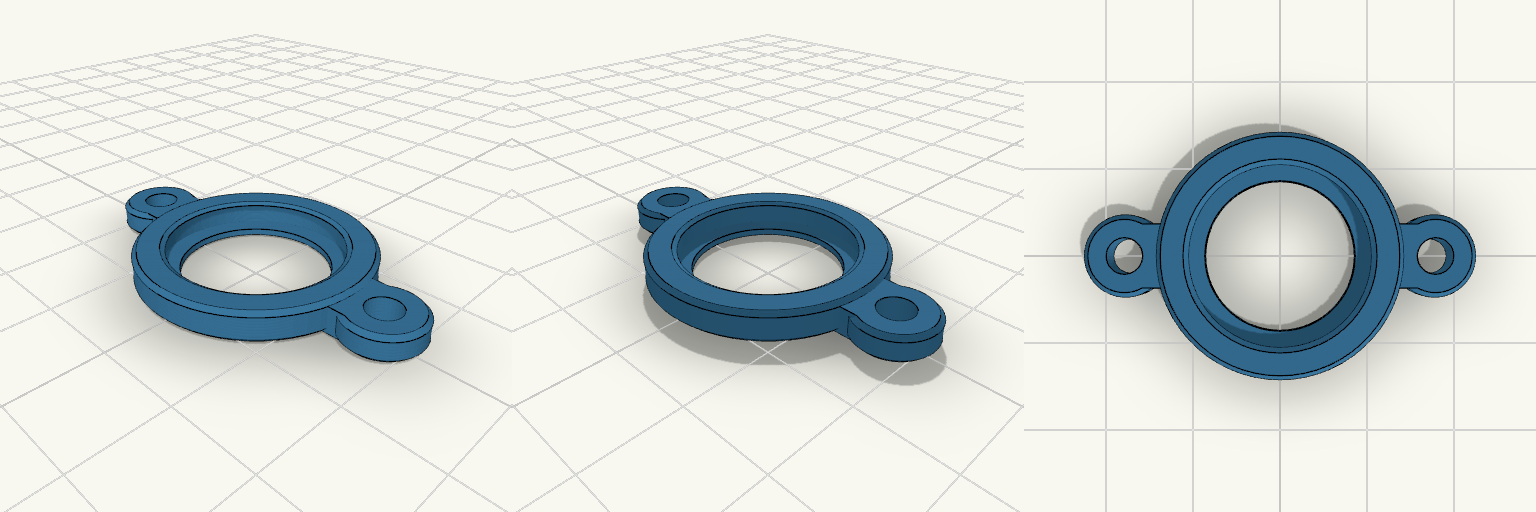
What it's for A round holder for a 21 mm by 2.5 mm disk, with an eyelet on each side for a strap, cord or ring. A 0.5 mm lip around the top edge snaps over the disk to keep it in place. Dimensions Outer diameter: 27 mm, 4.7 mm tall Disk pocket: 21.4 mm diameter, 2.5 mm deep Retaining lip: 0.5 mm overhang with a tapered lead-in Rear window: 17 mm, for pushing the disk out Eyelets: 4 mm holes, 9 mm pads, on both sides Remix ideas Increase the lip overhang for a firmer grip Remove the rear window for a closed back Add text or a chamfer ring around the edge
Bharat Key — Mini Number Plate Keychain
Bharat Key is a miniature Indian-style number plate keychain made to carry the exact registration PB 12 AE 7644. The long, slim plate uses a light grey/white base, a thin raised black border, and bold black lettering raised on one horizontal line. The single keyring hole sits at the extreme left with a raised ring around it for strength, while the registration stays centred in the remaining space. No blue IND strip, flag, extra colour or decoration is present, so the tag keeps a clean plate look while staying sturdy enough for a keyring. Dimensions Plate: 75 × 20 × 2.5 mm Raised border and text: 0.6 mm above the base; border 1 mm wide Lettering block: about 57 × 11 mm, fitted to the space right of the hole Keyring hole: 4 mm diameter, cut fully through at the extreme left Hole ring: raised black ring around the hole for extra strength Features Exact registration text: PB 12 AE 7644 on one horizontal line Bold black lettering raised above a light grey/white base Thin raised black border around the whole plate One circular keyring hole at the extreme left, fully through the plate Raised black ring around the hole to reinforce the keyring area Flat rectangular body with slightly rounded corners and a smooth flat backside Light grey/white base and black details only — no blue, no flag, no logos or decorations Print notes Print flat on the back; no supports are needed. The raised border and lettering sit 0.6 mm above the base and read clearly at miniature scale. Keep the 4 mm hole clear so the plate hangs cleanly on a keyring.
Number Plate Keychain with 4 mm Keyring Hole
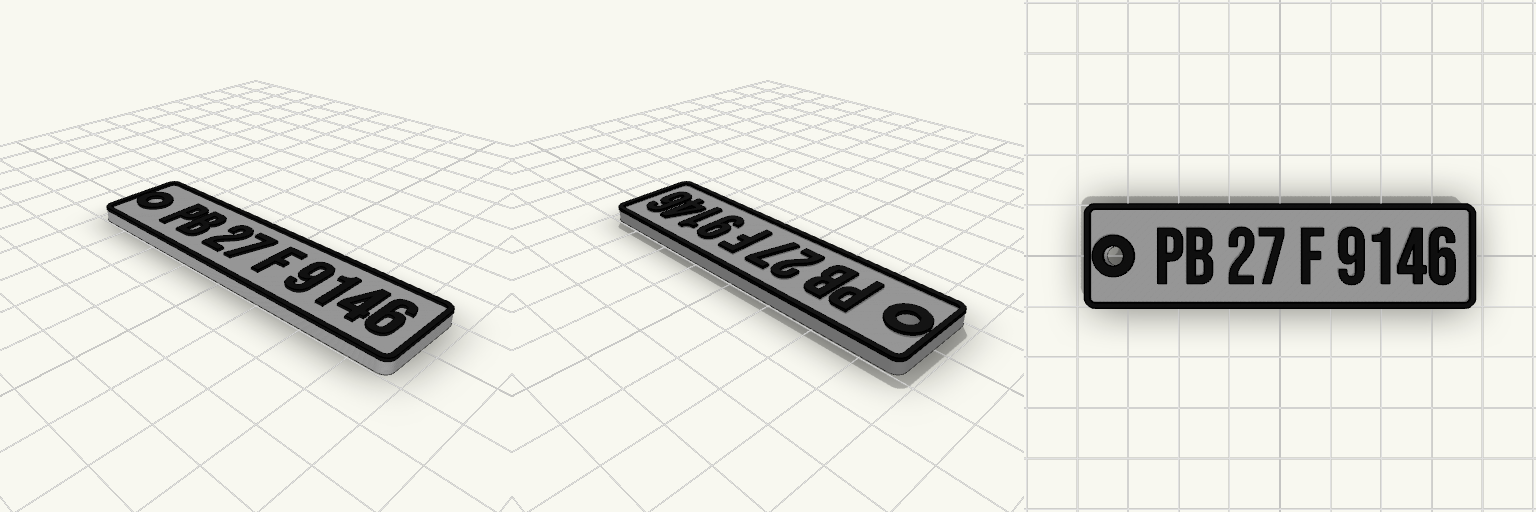
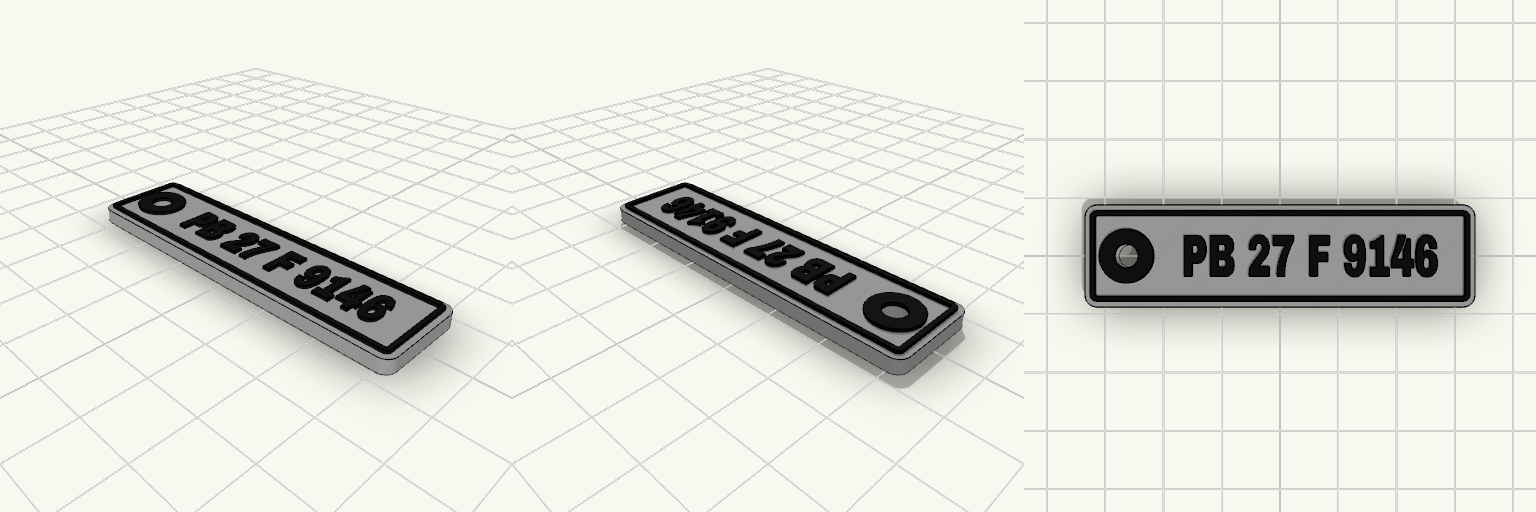
A flat 65 × 17 mm number plate keychain built around the three things that ruin a printed tag: a hole that tears out, lettering that runs off the right edge of the plate, and a border crowded with extra frames. The hole sits inside a raised black ring instead of hanging on a thin web of plastic, so a heavy bunch of keys has something solid to pull against. The registration line sits on one horizontal line, raised 0.6 mm so it stays readable instead of rubbing smooth in a week, and it starts clear of the ring so nothing touches the hole. Print and fit Plate: 65 × 17 × 2.5 mm, corners rounded, smooth flat back. Keyring hole: one 4 mm through-hole at the far left, 7 mm in from the end so its ring clears the border, fully open through the base, with its own clear area so it never meets the text. Hole ring: a 9 mm black raised ring around the hole, kept neat and with no other decoration around it. Lettering: "PB 27 F 9146" on one line, raised 0.6 mm in a heavy bold face with even spacing, sized to fit the space between the ring and the right border. Border: a single thin black raised border around the whole plate, 0.6 mm high — no inner frame. Base: light grey, flat and unbroken underneath, prints without supports; the detail all sits on the raised top face, so a two-colour print or a paint fill both work. The text sits a little right of the plate's true centre because the hole takes up the left end — a truly centred line would run into the ring. If you change the registration, shorten the text rather than the plate, or the line will overrun the border on the right side.