Osłona Gniazda Kampera z Klapką v2
Created 1 months ago
Description
Gniazda zewnętrzne w przyczepach mają tendencję do zbierania wody i pyłu, zwłaszcza w czasie jazdy. Ta osłona rozwiązuje problem braku szczelności w standardowych pokrywach poprzez zastosowanie profilu labiryntowego i kapinosa, całkowicie eliminując potrzebę gumowych uszczelek, które z czasem parcieją.
- Wymiary: Ramka 65×65×20 mm, precyzyjnie centrowany otwór 48×48 mm.
- Wydruk: Zaprojektowana jako model print-in-place ze zintegrowanym zawiasem. Zalecana minimalna wysokość warstwy to 0.2 mm dla zachowania tolerancji mechanizmów.
- Ochrona: Wyposażona w kanał odpływowy (5°), daszek nad zawiasem oraz barierę labiryntową.
Images
More like this
Explore more in Automotive, RC & Hobby →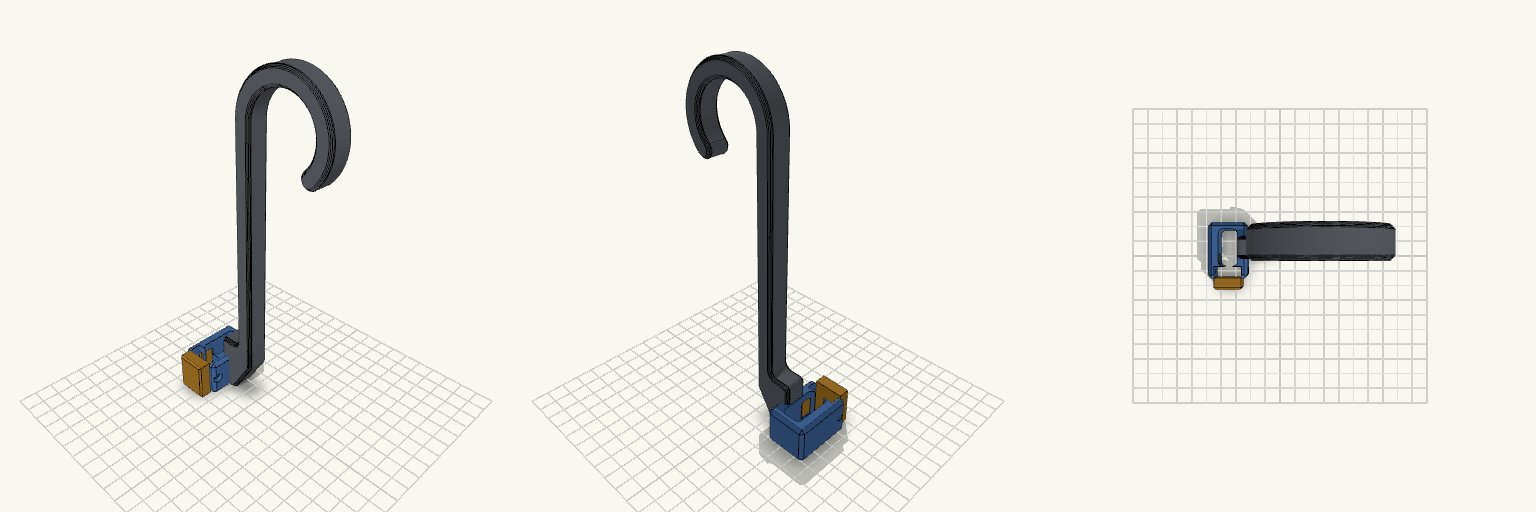
Gancho de Garrafa com Braçadeira Snap
Gancho de garrafa de treino em J, 200 mm, com braçadeira bipartida na base: corpo fixo ligado à haste e tampa separada que fecha por encaixe de pressão ao redor da alça de 12 × 24 mm. Pontos de remix Snap-fit: ganchos flexíveis de 8 mm de comprimento, 1,8 mm de espessura e ressalto de 0,6 mm (armlen, armt, ridge). Entrada em rampa, retenção reta. Folga: 0,2 mm entre tampa e corpo (gap). Trava extra: furo M3 em gota atravessando tampa e corpo, com porca sextavada embutida no lado +X. Paredes: wallx (6,4 mm) e wallf (7,5 mm) definem o tamanho externo; reduza se o furo M3 for dispensado. Haste e gancho: inalterados, seção 10 × 14 mm, bojo de 40 mm, boca de 34 mm. Combina com: parafuso M3 e porca M3 (opcionais); imprima corpo e tampa separados em PETG ou PLA.
ct1 blinker brackets
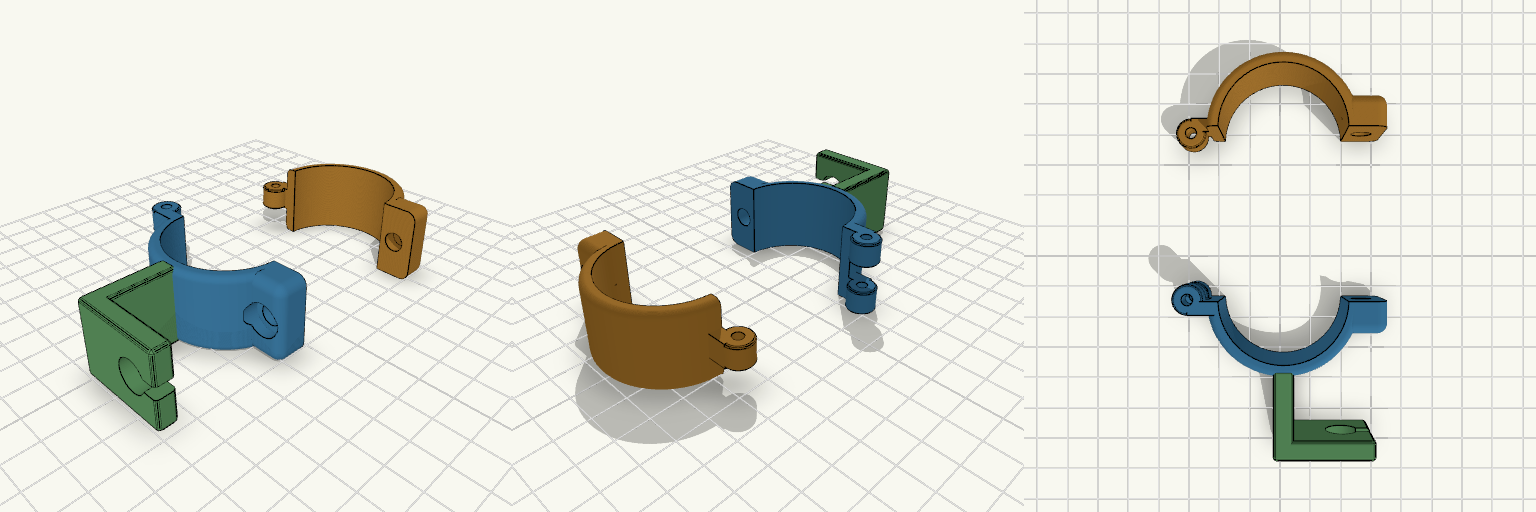
A two-piece hinged clamp for a 38.5 mm motorcycle fork tube, with an L-shaped bracket that carries a 10 mm hole and a 4 mm wire slit for a turn signal post. The halves swing open on an M3 hinge pin and close with one M6 bolt and a hex nut pocket, so the fork stays on the bike. The hinge sits outside the ring on small webs, so the knuckles clear the opposite half when it swings. Bore: 38.0 mm Height: 24 mm, wall 3.5 mm Hinge pin: M3 × 30 bolt or 3 mm rod Clamp bolt: M6 with nut Print the front half with its L bracket, and the rear half separately
Triple Socket Adapter Floor Cradle
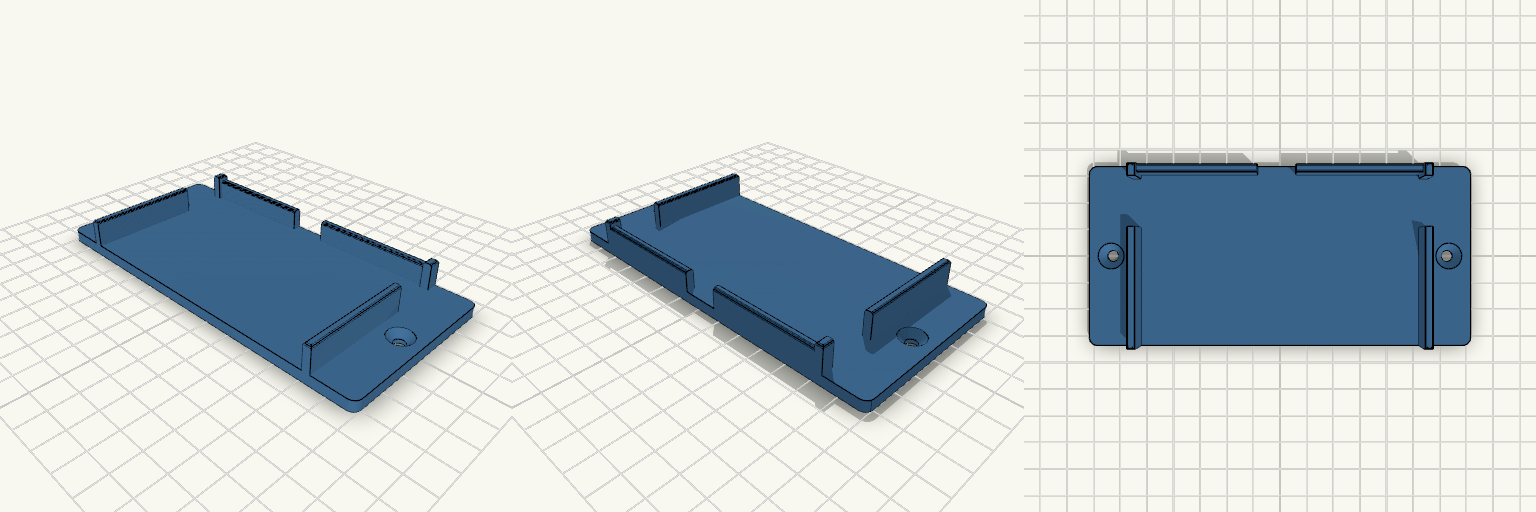
What it's for A one-piece floor cradle that holds a triple 12V socket adapter horizontally under a dashboard. The front and top stay open, so the sockets and power switches remain reachable, and side windows keep the side USB ports clear. Dimensions Adapter: 100.4 x 60.85 x 31.72 mm, about 1 mm clearance Side walls: 3 mm thick, 14 mm tall Side windows: 18 mm long, centred 51.38 mm from the front (plus 1 mm clearance) Back lip: 12 mm tall with reinforced corners Mounting ears: 16 mm each end, countersunk screw holes Remix ideas Change the window length to fit a different USB port. Add a third screw hole at the back. Lengthen the ears for wider mounting.
OO Gauge semi detached house stone v2
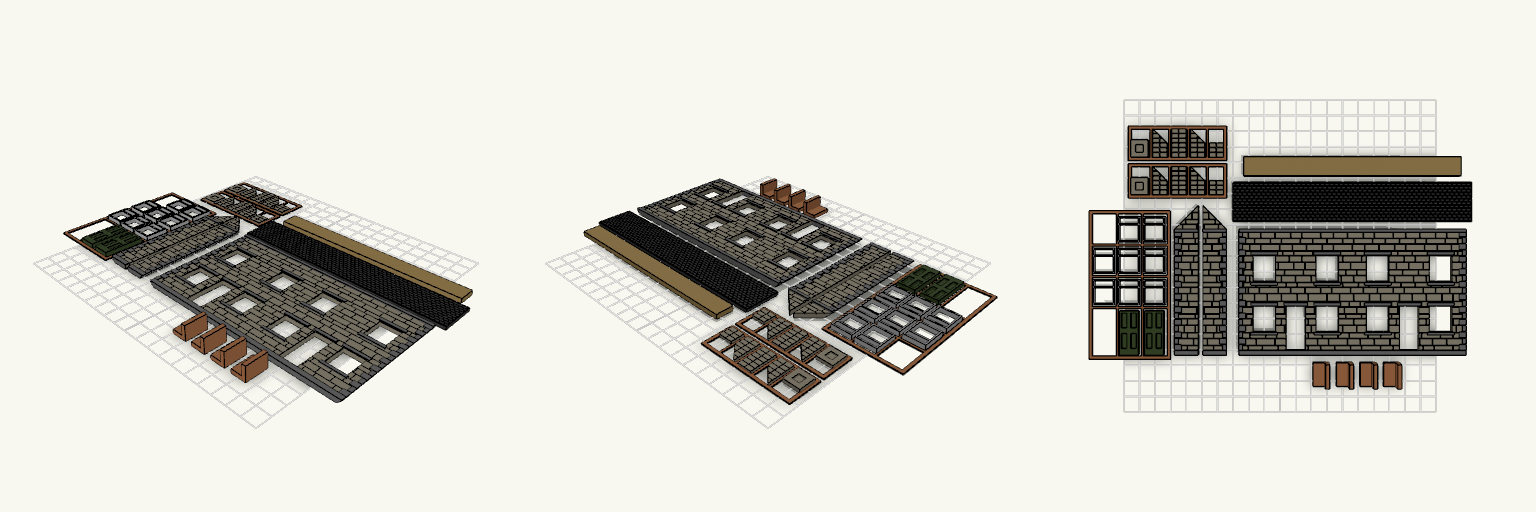
A semi-detached OO gauge house pair with stone walls, a one-piece roof, separate door and window inserts, and chimneys supplied as flat-pack panels. The two 72 mm frontages sit side by side (144 mm overall) with quoins only at the outer ends. Each chimney is four panels plus a capped top, printed flat and joined by a thin 0.4 mm web. A second web holds the windows and door together on the plate. Remix hooks Chimney slope: side panels run 9 to 18 mm high at 45°. Change the two heights to suit a different roof pitch. Panel thickness: 1.5 mm. Thicker panels give stronger glue joints. Web: 0.4 mm tall with 1.2 mm bars. Cut it away after printing, or thin it further. Pairs with: the L-shaped corner brackets (10 × 10 mm legs, 15 mm long) for gluing the walls square.
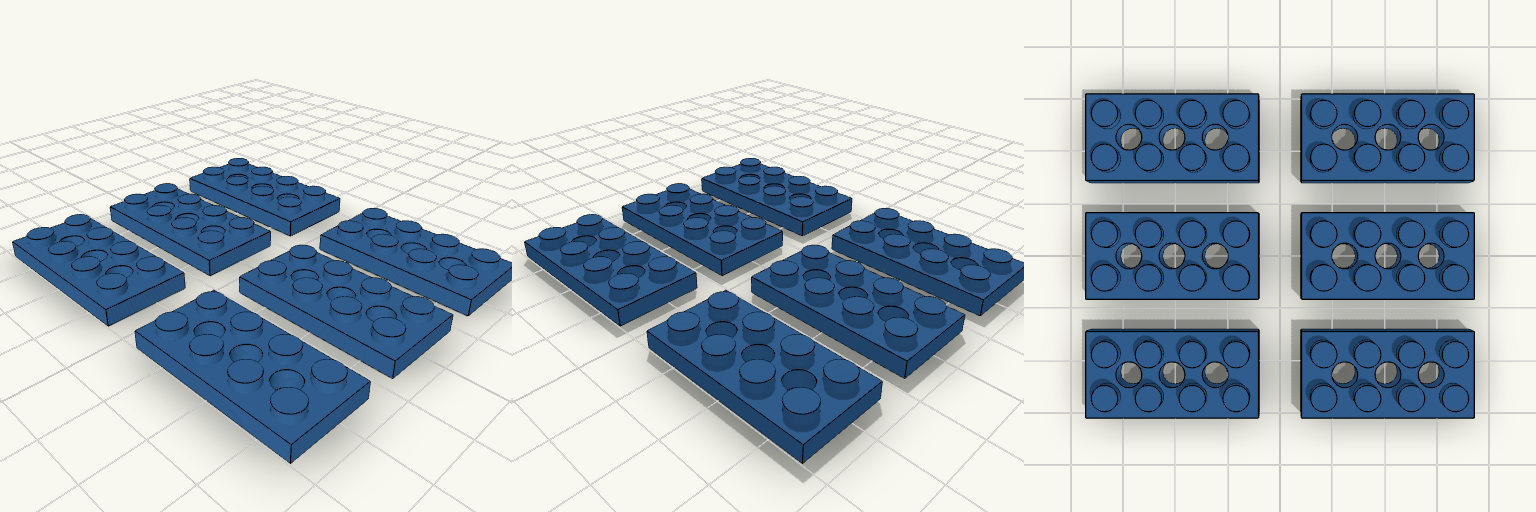
Technic Plate 2x4 With Holes, Set of 6
A 2x4 plate with no way to pass a Technic pin or axle through it is a dead end in a studless build. This plate has three holes on the centre line, so pins and axles go straight through. Six are laid out flat for one print run. Key numbers Plate: 32 x 16 mm, 3.2 mm thick, studs on 8 mm pitch Studs: 4.8 mm diameter, 1.8 mm tall Holes: three, 4.8 mm diameter, on the centre line, 8 mm apart Print: flat, no supports, 0.2 mm layers; test one first to check clutch fit
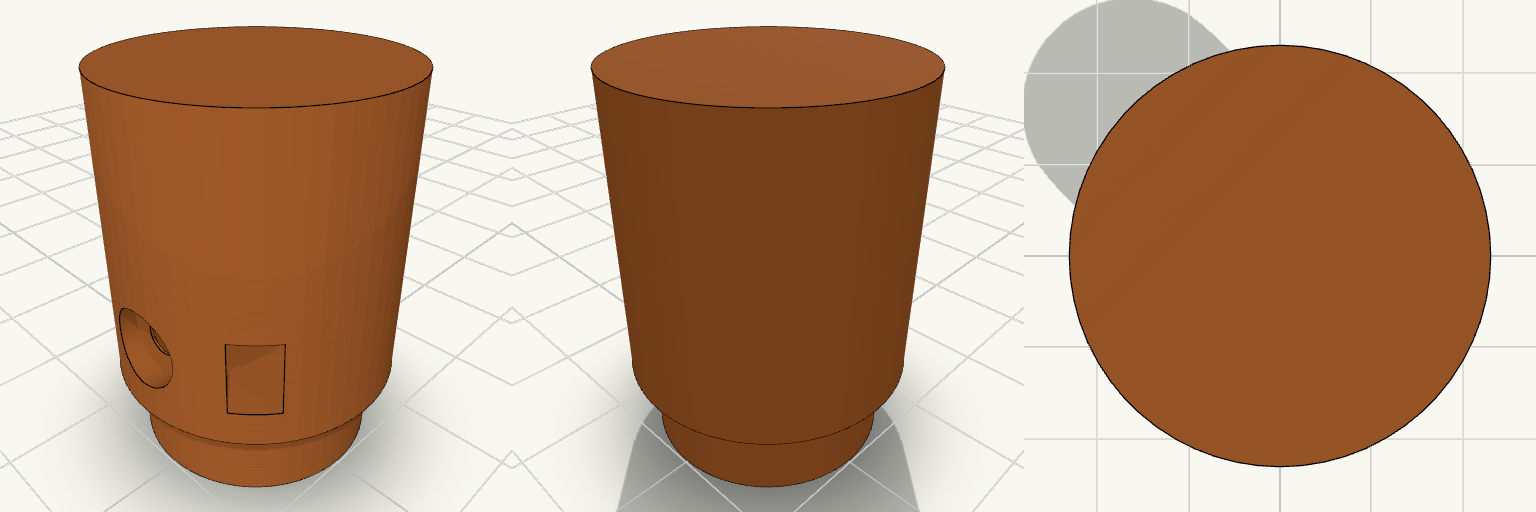
Pinch-Feed Drive Roller, Print-Ready
A knurl-free drive wheel for a pinch-feed wire feeder, built like a small industrial pulley: a 24 mm roller with a hub on one side and a blind D-bore that slips over a 5 mm D-shaft. The model is just the roller, standing on its hub and ready to slice. Design notes Blind D-bore, open on the hub face and closed by a wall on the far end, so the closed end shows which side stays out. M3 grub screw hole with a trapped hex nut that slides in through a slot open to the rim. Counterbored screw recess 2 mm deep, so a headed M3 screw sits below the surface and a nylon or TPU sleeve goes on smooth. Hub spaces the roller off the motor face so the two do not rub. Printing Stands on the hub with the bore opening onto the bed, so there is no bridging inside the bore and no supports are needed. Printing upright keeps the roller round. Suggested: PETG, ASA or nylon, 3 or more walls, 25–30% infill.