Pin de mano esquelética con dedo medio levantado
Created 9 days ago
Description
Pin con forma de mano esquelética cerrando el puño y con el dedo medio levantado. El dedo medio sube recto con sus tres falanges; el índice, el anular y el meñique quedan plegados hacia la palma. El pulgar va por detrás de los dedos plegados, así que solo asoma por el lado izquierdo y entre los huesos. Los huesos son blancos y de estilo realista: cada uno tiene una diáfisis fina y dos cóndilos redondeados en cada extremo, con una muesca central, y el extremo superior algo más pequeño. Las divisiones negras entre huesos marcan las articulaciones. En la palma hay cuatro metacarpianos y en la muñeca un grupo de huesos del carpo pequeños.
En la parte trasera, centrado en la palma, hay un agujero ciego de 6 mm y 1,4 mm de profundidad. Solo atraviesa la placa negra y no toca los huesos blancos.
La placa negra de 2 mm sigue la silueta de la mano y sobresale como borde. Los huesos van elevados 0,9 mm sobre ella, con la parte trasera completamente plana. La pieza mide unos 23 × 36 mm, así que queda 1 mm por encima de los 35 mm; el grosor total es de unos 2,9 mm. Si necesitas ajustarla al límite de 35 mm, reduce el borde de la placa.
- Placa negra plana de 2 mm; huesos blancos elevados 0,9 mm
- Agujero ciego de 6 mm en la parte trasera, 1,4 mm de profundidad, sin llegar a los huesos
- Huesos segmentados y separados por huecos negros de articulación, todos apoyados en la placa
- Sin piezas flotantes; se imprime como una sola pieza
- Sin soportes: la parte trasera es plana y los detalles se elevan desde la placa
- Huecos estrechos entre huesos; pensados para una boquilla de 0,4 mm
Images
More like this
Explore more in Decor & Display →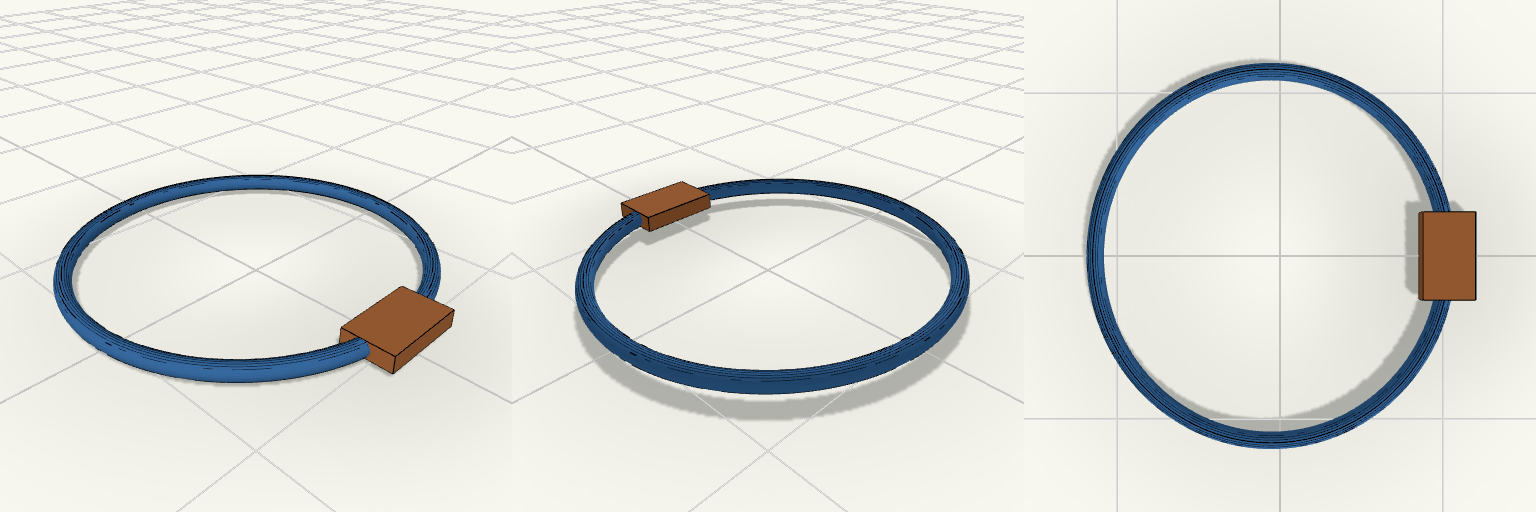
Toroide con caja abierta de 5,2 mm
Un toroide ovalado hueco con una caja abierta integrada en el lateral +X. El anillo mide 21,7 mm en X y 23 mm en Y, y el tubo tiene 2,8 mm por fuera con un canal interior de 1,2 mm, suficiente para pasar un cable de 1 mm sin forzarlo. La caja mide 5,2 mm de largo por 3,1 mm de ancho y 2,8 mm de alto, igual que el tubo, con paredes de 0,8 mm y el fondo interior a 0,8 mm, justo donde el canal desemboca en la cavidad. El tubo no atraviesa la caja: se corta en sus dos lados en Y y el canal se abre hacia el interior, de modo que la caja hace de cámara entre una entrada y una salida. La pieza se apoya en Z = 0 con la abertura de la caja mirando hacia la cama de impresión, así que probablemente necesite soportes o un primer nivel bien ajustado. Todo se imprime como una sola pieza. Puntos para remezclar Toroide: la elipse de 21,7 × 23 mm es la restricción de tamaño; el tubo exterior de 2,8 mm es una elección, y es lo que permite el canal de 1,2 mm con pared de 0,8 mm. Si quieres un canal más ancho o más justo, mueve el diámetro exterior antes que la elipse. Caja: parte de 5,2 × 3,1 × 2,8 mm, con paredes de 0,8 mm y fondo interior a 0,8 mm. Largo y ancho son libres; el alto está atado al del tubo. Engrosa el fondo si buscas resistencia. Entrada y salida: el canal se corta en Y a ambos lados de la caja. Cambia la posición de esos cortes o el recorrido para que la cámara quede más centrada o más discreta. Orientación: la pieza va girada con la abertura hacia la cama. Volver a girarla mejora el primer nivel pero deja la cavidad mirando arriba, con lo que la cámara necesita soportes por otro lado; elige según tu material. Variantes: mueve la caja alrededor del anillo, duplícala en el lado opuesto o añade una tapa. Conserva la proporción 5,2 × 3,1 mm si quieres que la cámara mantenga su escala. Combinaciones: funciona como colgante geométrico, llavero o pieza de exhibición, y la cámara con paso de cable invita a convertirla en contenedor pequeño o en guía para un cordón.
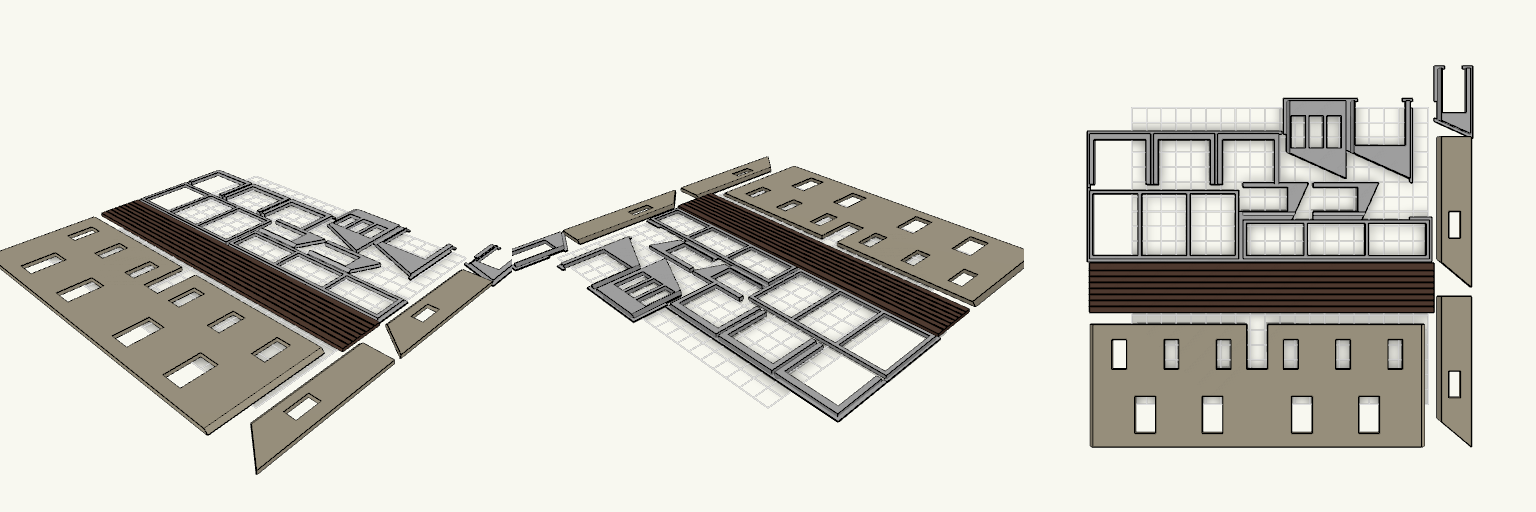
Tearoom Terrace — OO Half-Relief Kit
Tearoom Terrace is a flat-pack, half-relief OO scale (1:76) double-width house with a glazed tearoom conservatory, laid out on a single Bambu A1 plate. All pieces print flat with the outer face down. Features 225 mm wide render-finish frontage with mitred corner edges Single-slope 40° roof panel Conservatory in two parts: a deeper glazed right part and an open-framed left part Conservatory pieces are grouped and joined by thin breakaway webs so they print as one cluster Print notes Snip the thin webs after printing Print the open frames slowly Openings are left empty for glazing
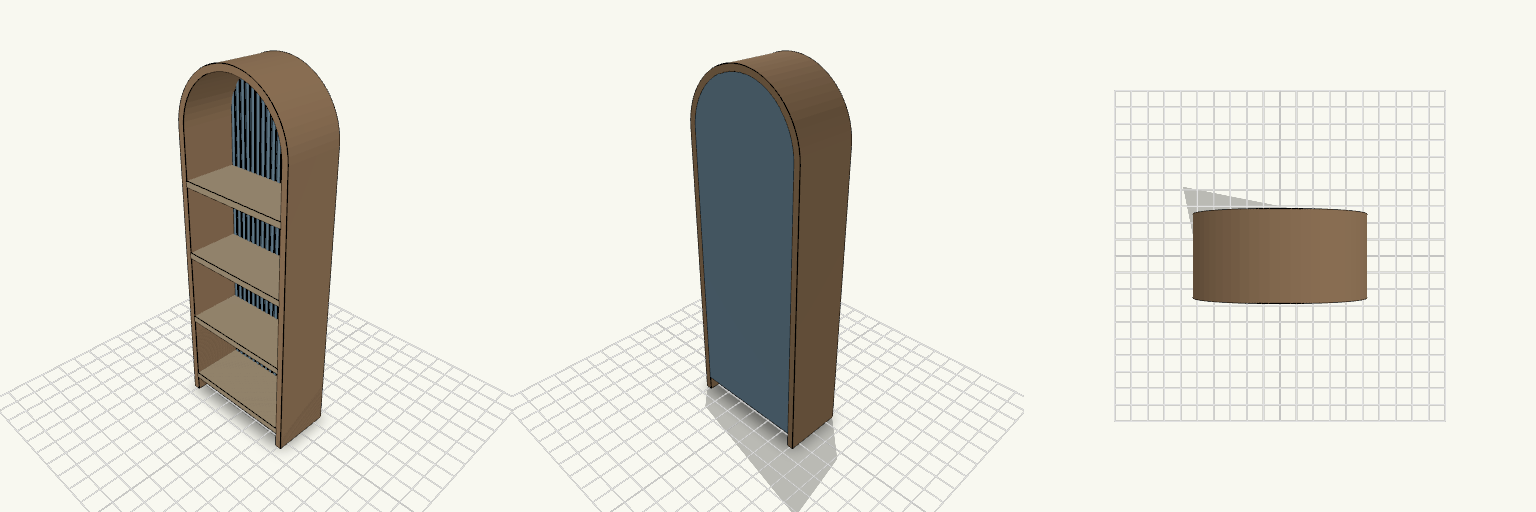
Arched Fluted Bookshelf, 63.5x177.8 mm
Miniature arched-top bookshelf, 7 in tall and 2.5 in wide, with four shelves and a vertically fluted back panel that mimics shiplap. The side walls extend below the bottom shelf to form feet, lifting it off the surface. Overall size: 63.5 mm wide x 30 mm deep x 177.8 mm tall Top: semicircular arch, 31.75 mm radius Back: 18 fine half-round vertical flutes Feet: 8 mm, formed by the side walls Wall and shelf thickness: 3 mm Prints upright as one piece; the arched top and shelf undersides may benefit from supports
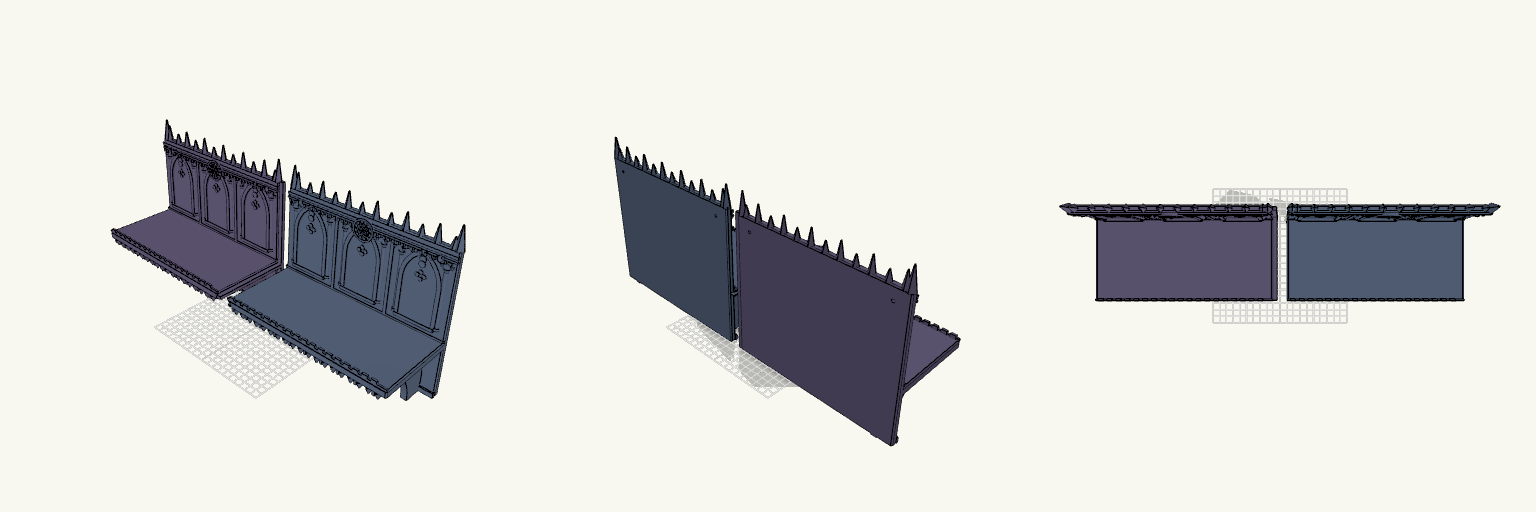
Gothic Rose Window Cathedral Shelf
A cathedral-front wall shelf in two glue-together halves, with blind lancet windows, pinnacles, battlements and a blind arcade below the shelf. Each half now carries layered rose windows in the style of a medieval cathedral facade: stepped rings, twelve radiating spokes, cusped lobes and a domed centre boss. Design notes Large rose window at the top centre of each half, plus two more in the lower arcade Countersunk screw holes for hanging, with clear access pockets Tongue-and-groove seam for super gluing the halves together Each half fits a 250 mm-class print bed
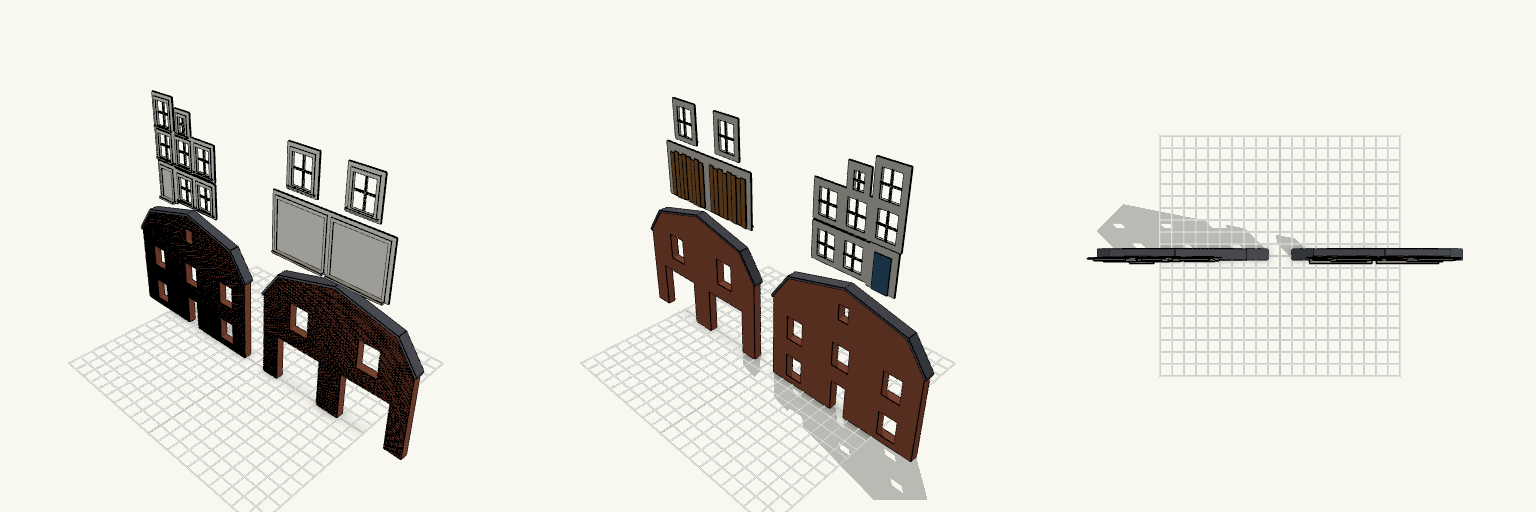
OO Gauge Gable, Dutch barn roof, Wide Low Slat Doors
Two half-relief gable-end frontages for 1:76.2 (OO gauge) buildings, each 120 mm wide and 6 mm deep, with a 68 mm eaves height and a two-pitch roofline rising to a 100 mm apex. Fitment Scale: OO, 1:76.2. Not intended for HO or N scenery without rescaling. Front face: Flemish bond mortar joints, 0.2 mm wide and 0.25 mm deep, over the full height. Frontage one: door and five windows plus a loft frame. Frontage two: two 38 × 38 mm wooden slat doors and two high windows. Frames and doors are printed as a separate sheet above each apex. Check before printing Joint detail needs a 0.4 mm nozzle or finer. The wall openings are through-holes, so the frame sets must be glued in from the front. Does not fit No back wall, floors or side walls are included.
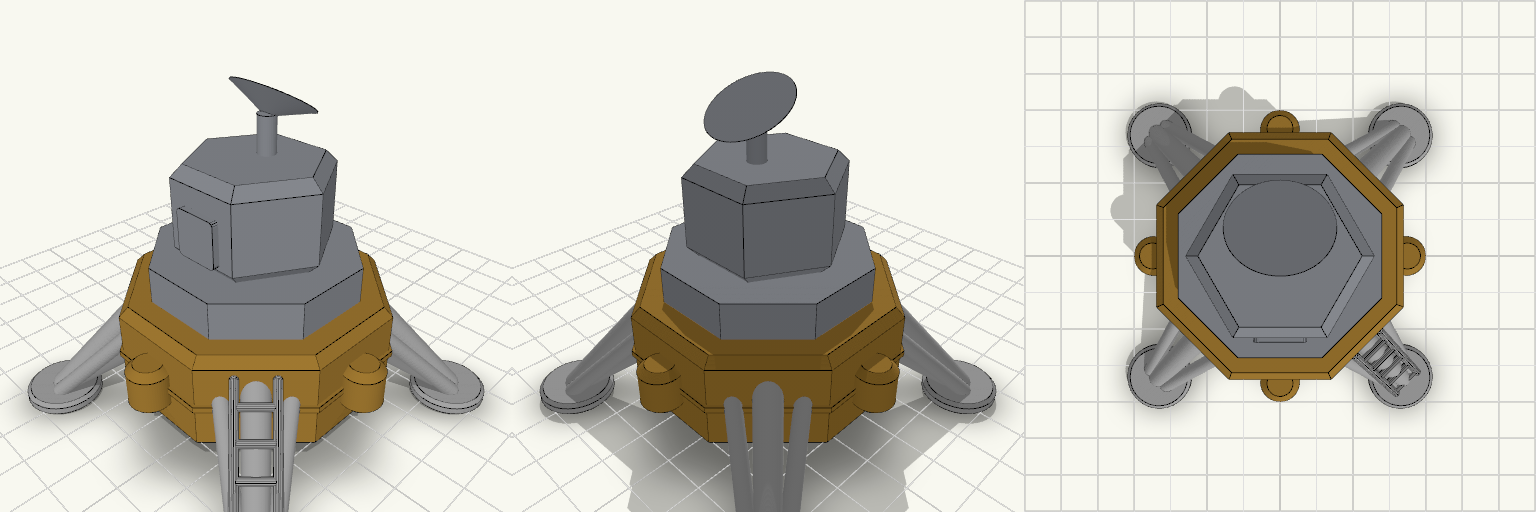
Apollo-Style Lunar Lander Model, 82 mm Footprint
This is a stylized Apollo-style lunar lander display model. It has an octagonal descent stage with four shallow fuel-tank bulges and a panel band around the middle, a faceted hexagonal ascent cabin with a raised front hatch, an engine bell underneath, and four splayed A-frame legs with chamfered footpads. One leg — the front-right — carries a ladder with two rails and rungs, and a tilted dish on an 8 mm mast sits toward the rear of the cabin roof. At roughly 82 mm across the footpads, it is sized as a compact desk or shelf piece. The cabin front is clean apart from the hatch, so the model reads as a lander rather than anything else. The legs are the widest part of the print; the body sits well inside that spread. Specs Footprint: approx. 82 mm across the footpads Descent stage: octagonal, approx. 68 mm across × 22 mm tall, with four shallow fuel-tank bulges and a mid panel band Ascent stage: faceted hexagonal cabin, approx. 42.5 mm across × 43.5 mm tall, with a raised front hatch and a tilted dish on an 8 mm mast Engine bell: approx. 18 mm across × 9 mm tall, mounted low under the central body about 1 mm above the plate, so it reads best from a low viewing angle Legs: four A-frame legs, each with a thick main strut anchored into the descent stage, a lower angled strut and two side struts; chamfered footpads approx. 17 mm Ladder: two rails and rungs on the front-right leg Use: display model for a desk, shelf, or space-themed collection Printing notes The splayed legs and footpads set the build plate footprint; check the 82 mm spread against your plate before scaling up The dish mast, ladder rungs and hatch are the finest features — a smaller layer height keeps them crisp