Print Bed Mechanical Counter
Created today
Description
A fully printable, purely mechanical shot counter designed to clip onto a basketball hoop. Every component has been laid out flat on the print bed in its optimal printing orientation to avoid unnecessary supports and ensure layer strength across the linkages.
- Housing Shell & Cover Plate: Dropped onto their solid side faces.
- Wheels & Axles: Standing flat on their bases to keep the ratchets clean.
- Lever Assembly: Laid flat on the paddle side to minimize overhangs around the pivot points.
- Mounting Clip: Tipped sideways so the layer lines reinforce the snap hooks.
Images
More like this
Explore more in Automotive, RC & Hobby →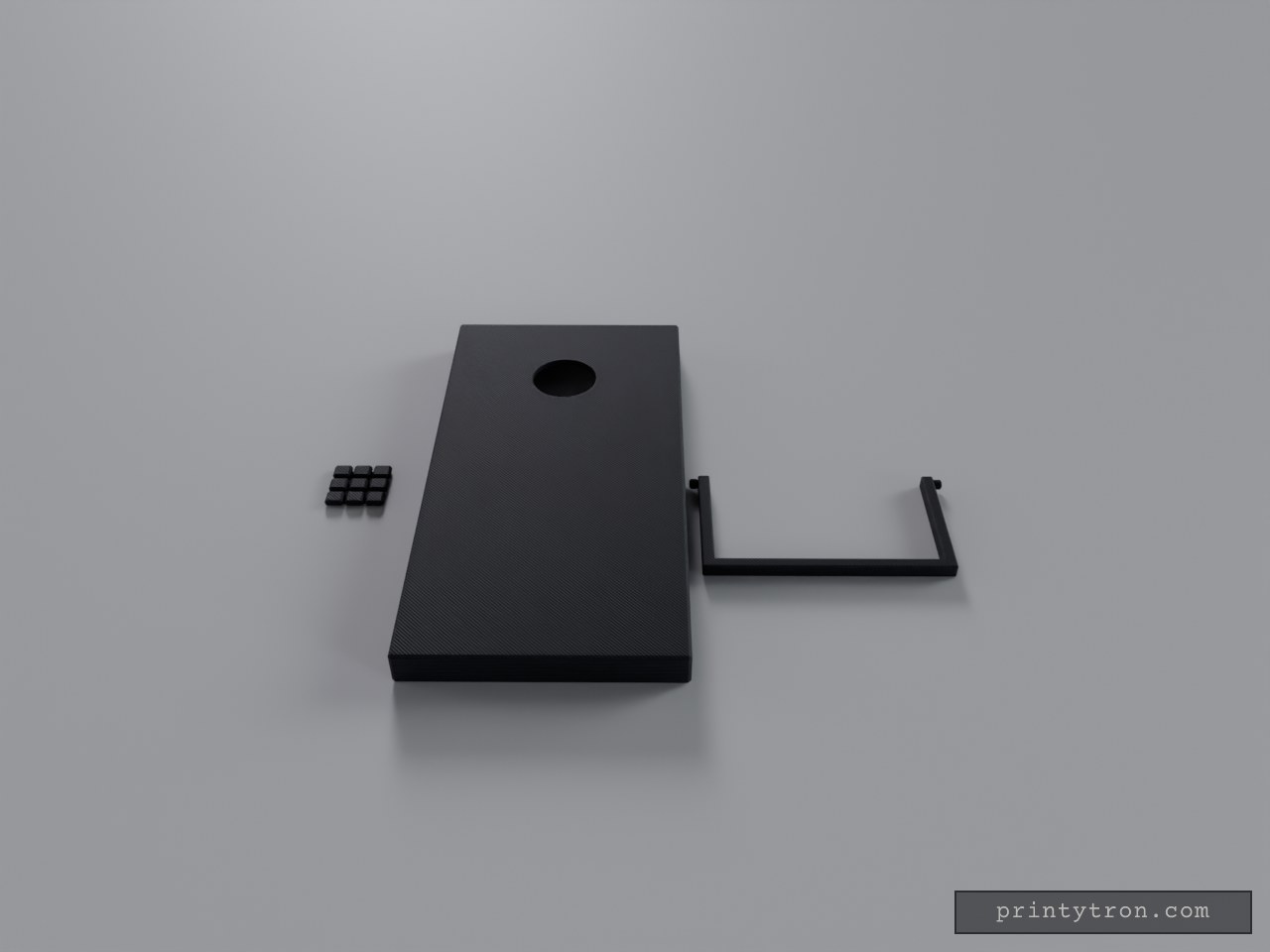
Tabletop Cornhole Deck
A desktop-scale modular cornhole kit scaled to a 175mm deck length, complete with a print-in-place flexure bag that collapses to clear the main bore. The deck prints upside down (or flat) to avoid supports inside the main cavity, while the folding leg frame snaps securely into the 4.2mm frame hinges. Fitment notes Bore Size: 24mm diameter target hole. Bag Size: 21x21mm overall, connected by 0.4mm thick living-hinge webs. Leg Hinge: 4.2mm deck bore, 3.5mm pins on the leg frame — expects a firm flex to seat.
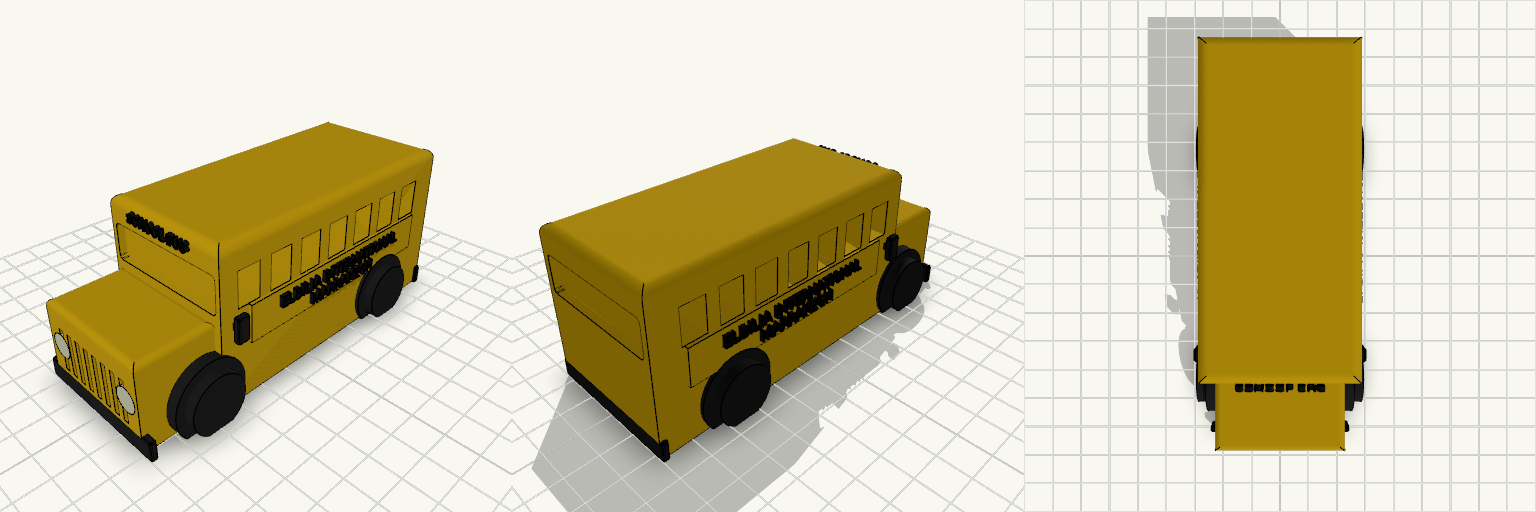
Custom Solid School Bus
A miniature school bus scaled to exactly 120 mm in overall length, proportioned realistically for print-in-place FDM printing. Features include recessed windows to preserve a watertight manifold body, integrated fenders, and robust side mirrors that won't snap when the supports pull away. Dedicated Sign Panels: Extruded flat blanks on the sides carry the requested school name on two clear lines. Exact Dimensional Fit: The front and rear bumpers are anchored dead on the 120 mm boundaries. Printability: The entire base is sliced flat at Z=0, guaranteeing solid bed adhesion without rafts.
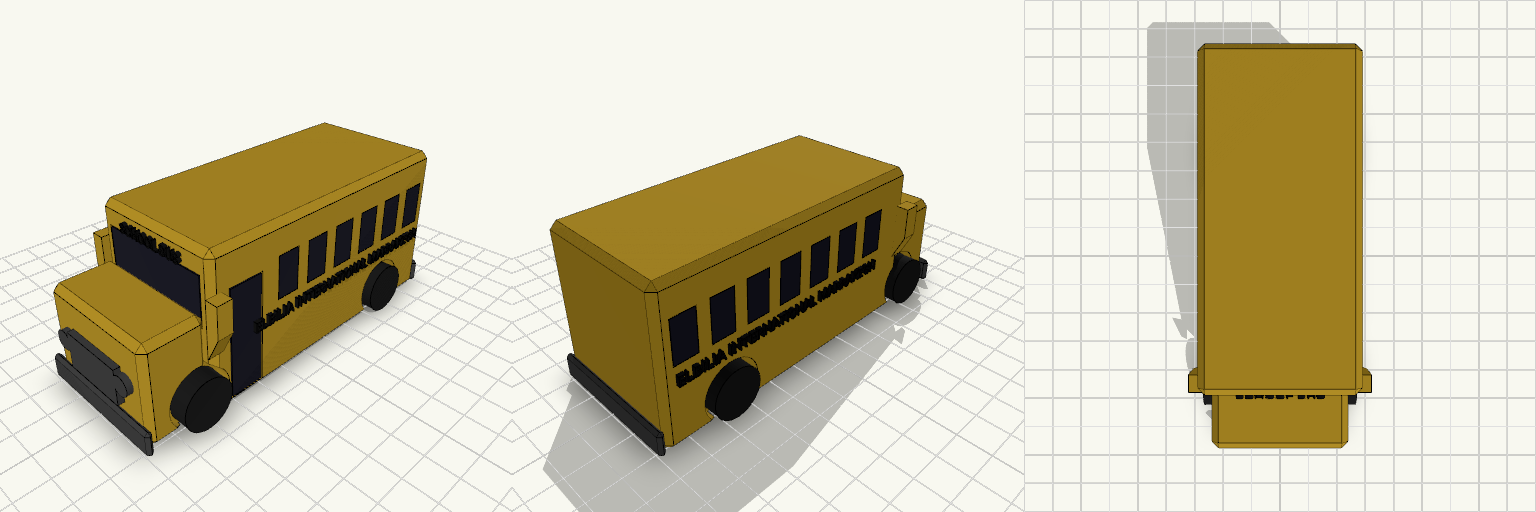
Classic Block School Bus
A solid, 3D-printable school bus styled specifically for direct FDM printing. The entire chassis, wheels, and bumper bases share a completely flat Z=0 plane for excellent bed adhesion. Support-Free Windows: Modeled as deep structural recesses rather than complete cutouts, preserving the strong solid core of the model. Embossed Lettering: Thick 1.5mm 3D lettering cleanly fused to the hull. Support-Free Mirrors: The side mirrors feature a smooth 45-degree brace underneath, eliminating the need for delicate breakaway supports. 120mm Scale: Exactly 120mm bumper-to-bumper.
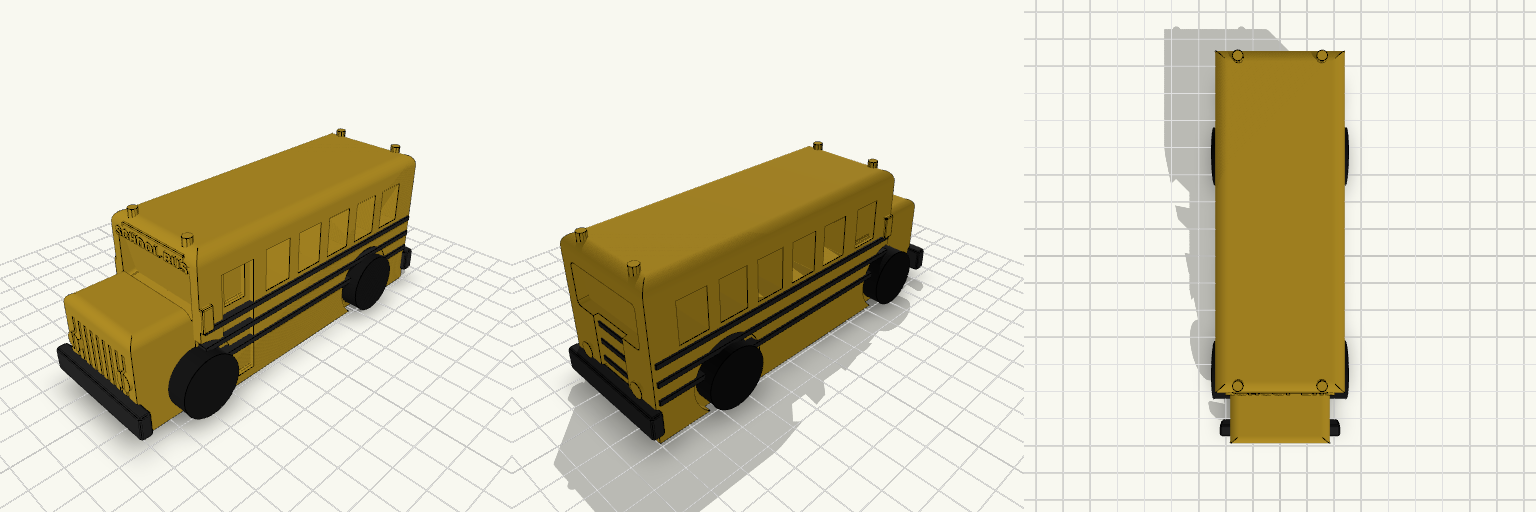
School Bus with Flat Chassis
Most printed vehicles fail because the wheels are left hanging on fragile pegs or the chassis sits at an odd angle that demands heavy scaffolding. This model fixes that. The chassis and the tires all bottom out exactly at zero, so the whole block sits dead flat on the build plate. The wheels are deeply anchored into the body via solid internal axles — no snap-offs, no thin joints, and absolutely zero internal voids to confuse the slicer. Print details Dimensions: 120 mm total length, 45 mm wide (at the wheels), 50 mm tall. Wall thickness: Core is completely solid; window recesses leave a 36 mm thick central pillar. Overhangs: Window frames drop in by 1 mm, wheel arches span smoothly, and mirrors sit flush. No supports needed.
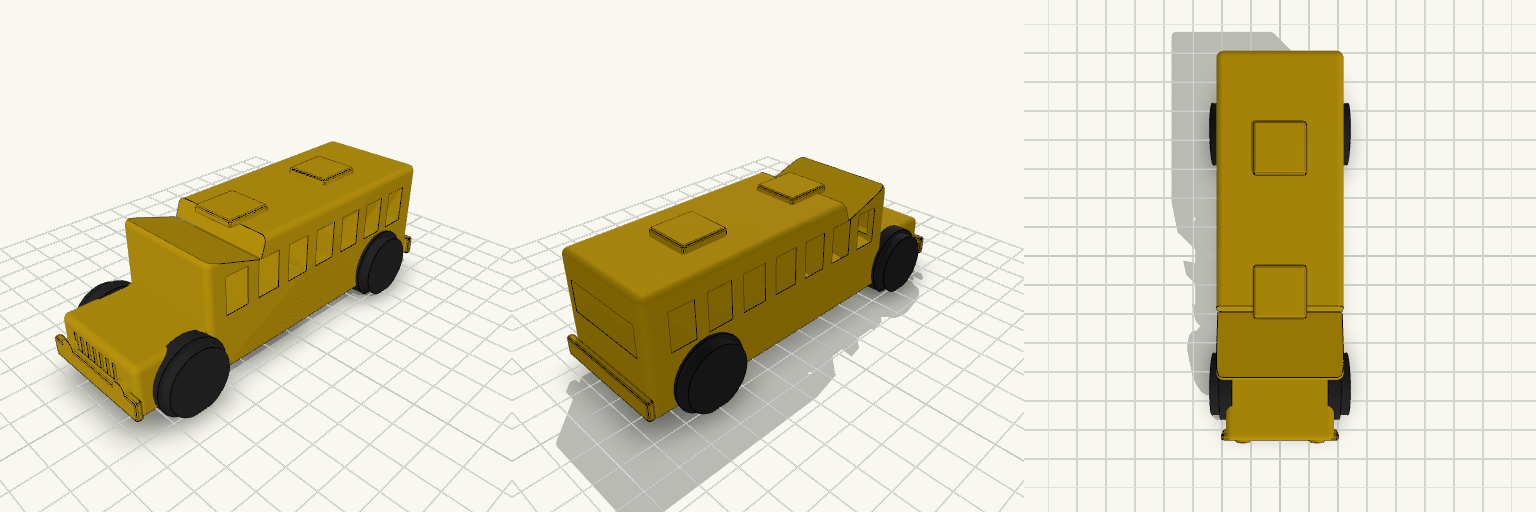
BlockBus — Solid FDM Chassis
This is a heavy-duty, monolithic school bus model engineered specifically for FDM printers like the K1 Max. Instead of a fragile hollow shell, the body is a continuous solid block. The details — including the windows, grille, and doors — are debossed just 1mm deep, providing all the visual definition without introducing internal overhangs or requiring support material. Dimensions Length: Exactly 120 mm (from front to rear bumper) Width: 44 mm (outer wheel edge to wheel edge) Height: 42 mm (including the roof hatches) Print Notes Support-Free: Designed to be printed entirely without supports. The debossed windows bridge easily, and the wheel overhangs are minimal. Bed Adhesion: The bottom 0.4 mm of the model (including the wheels) is sliced perfectly flat, yielding a wide contact patch for a flawless first layer. Infill: Since the core is fully solid, use your slicer's infill (10-15% is usually plenty) to control the final weight of the part.
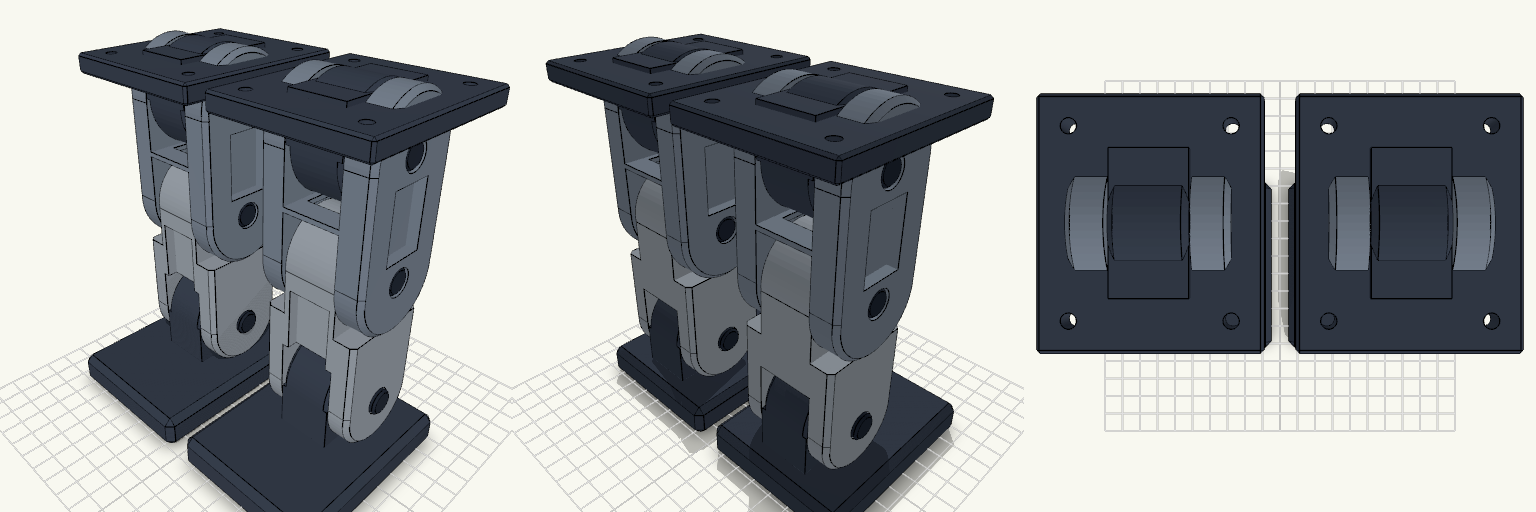
AuraZex Support Legs
The torso had no base and tipped over the second a cable was bumped. I machined this pair of modular legs to give it a stance. They bolt directly to the 150mm underside spacing of the AuraZex frame, bearing the weight on overlapping 12.5mm pin joints instead of fragile ball-sockets. Mechanical Specifications Leg span: 150mm total width, staying flush with the torso edges. Stand height: 165mm from the floor to the torso mounting plates. Routing: 20x26mm central channels clear right through the internal structure for future wiring runs.