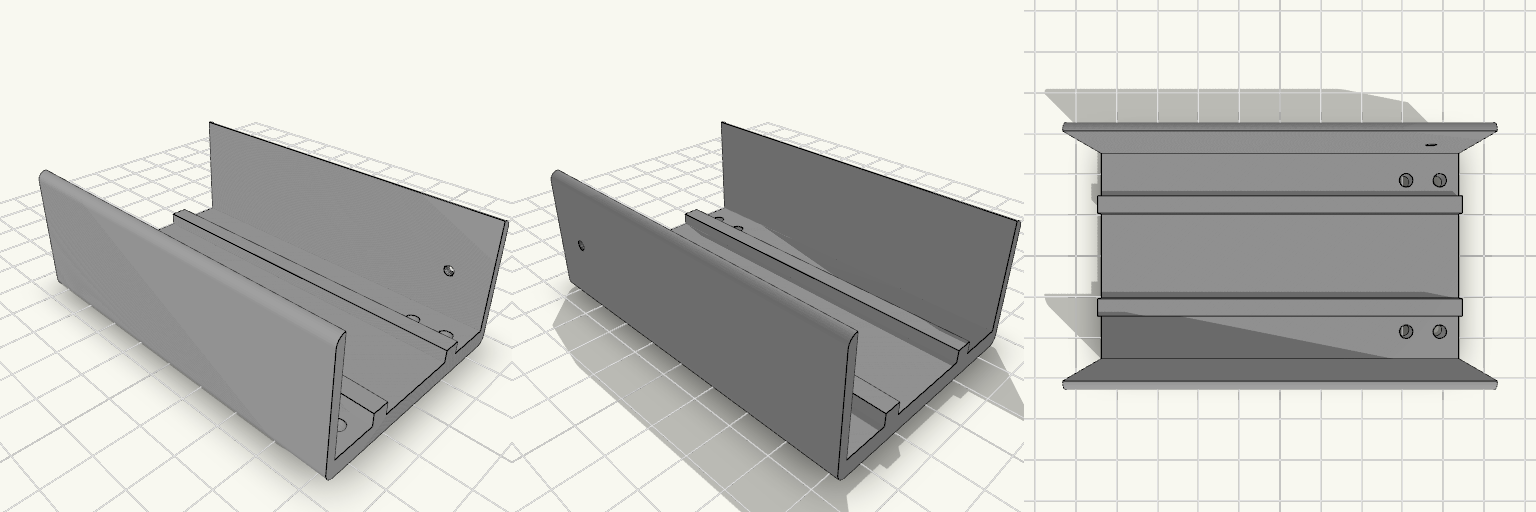
Quarter-Sheet Sanding Block, 135x110mm
Made by a Guest
Created today
Description
Hand sanding block sized for a quarter sheet of sandpaper (140 x 115 mm). The 135 x 110 mm base is slightly smaller than the sheet, so the paper wraps around the edges and is held against the underside. A domed palm grip on top has finger grooves along both long sides to spread pressure across the hand during longer sanding sessions.
Specs
- Base: 135 x 110 x 14 mm, 3 mm rounded edges
- Overall height: about 42 mm including the grip
- Grip: domed palm rest, trimmed flush inside the base footprint
- Finger grooves: 3 per long side, 7 mm diameter, spaced 7 mm apart in height
- Paper slots: 8 mm wide x 1.6 mm tall tuck slots at both short ends
- Paper size: quarter sheet, 140 x 115 mm
Notes
- The slots are thin. Fold or crease the paper edge to seat it.
- No separate clamp is included. Paper is held by wrapping and tucking.
- Prints flat on the base with no supports needed for the base. The grooves and dome are shallow curves.
- PETG or PLA both work. Use 3 or more perimeters for a rigid base.
Images
More like this
Explore more in Workshop & Tools →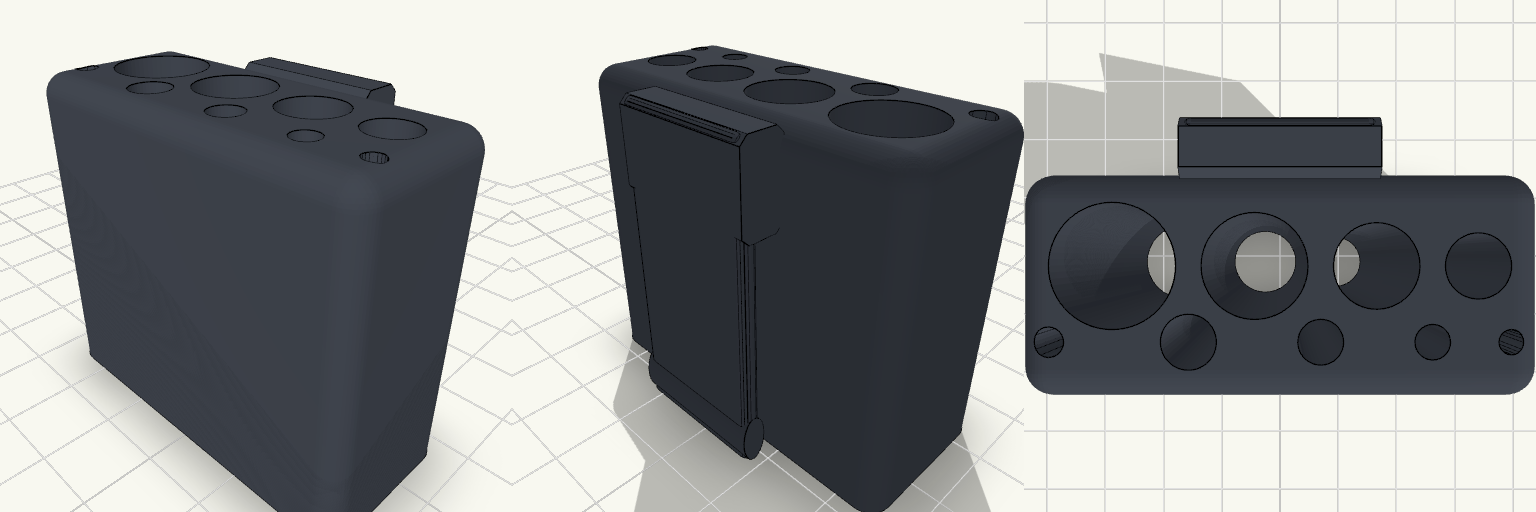
Two-Row Honeycomb Hex Key Pouch
A two-row pouch for nine hex keys from 2 to 12 mm. The back row holds the four large holes and the front row holds five small ones, set into the gaps and ends of the back row so the pouch stays compact. A belt strap runs up the back, and an oval hook at the bottom holds the pouch against the belt. Remix hooks Wall thickness: 1.6 mm between neighbouring holes. This drives the row spacing and the overall depth. Hole list: back row 12.5, 10.5, 8.5 and 6.5 mm. Front row 5.5, 4.5, 3.5, 3 and 2.5 mm. Each has 0.5 mm of clearance. Height: 45 mm. Increase it for longer keys. Strap: 20 mm wide and 2.5 mm thick, standing 3 mm off the body. Lower hook: an oval rod, 6.8 × 3.4 mm, that attaches to the strap only. It leaves about 2.5 mm of clearance to the body. Pairs with: the single-row variant, if you want a slimmer pouch that is wider.
Flat Slider Block with Side Rails
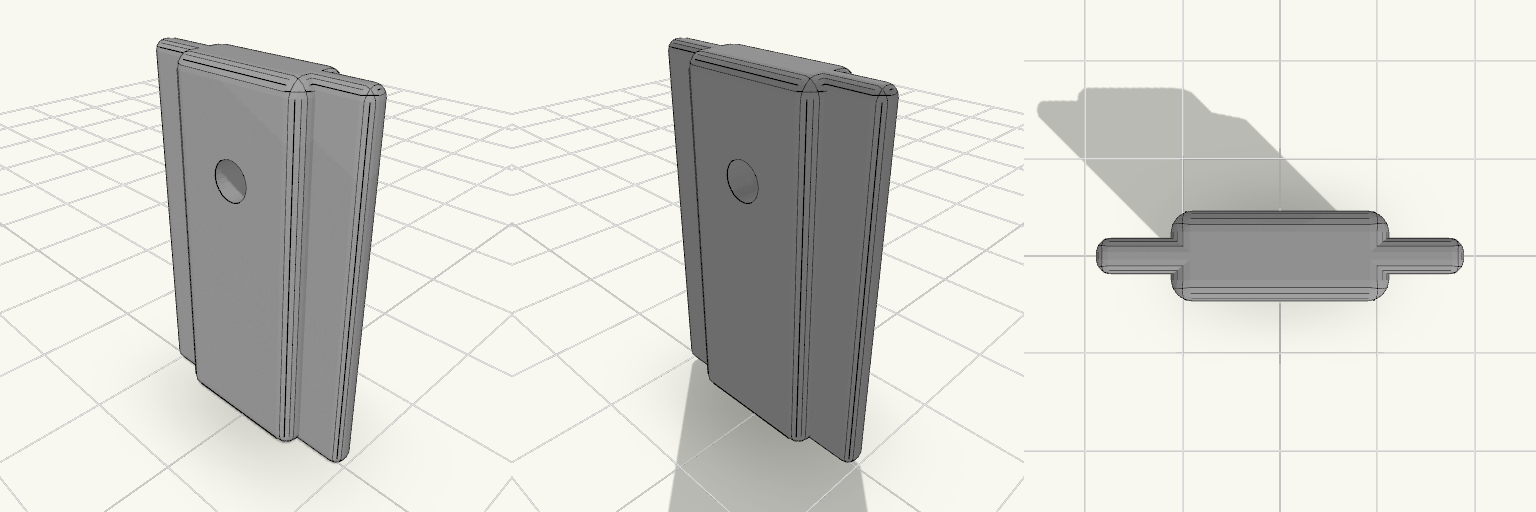
A flat slider block with two side rails that ride in a slot, so it moves up and down in a straight line. A 3.2 mm hole passes through the 5 mm thick body for a pin or linkage connection. Body: 12 × 5 × 30 mm with rounded edges Side rails: 20 mm overall width, 2 mm thick, centred on the body Hole: 3.2 mm diameter, through the thickness, 22 mm up from the base Prints standing on its end with no supports The rails sit at mid-thickness, so the slot needs a matching 2 mm groove plus clearance of about 0.3 mm per side.
20mm Ring Magnet Chalk Holder, 10mm Spring
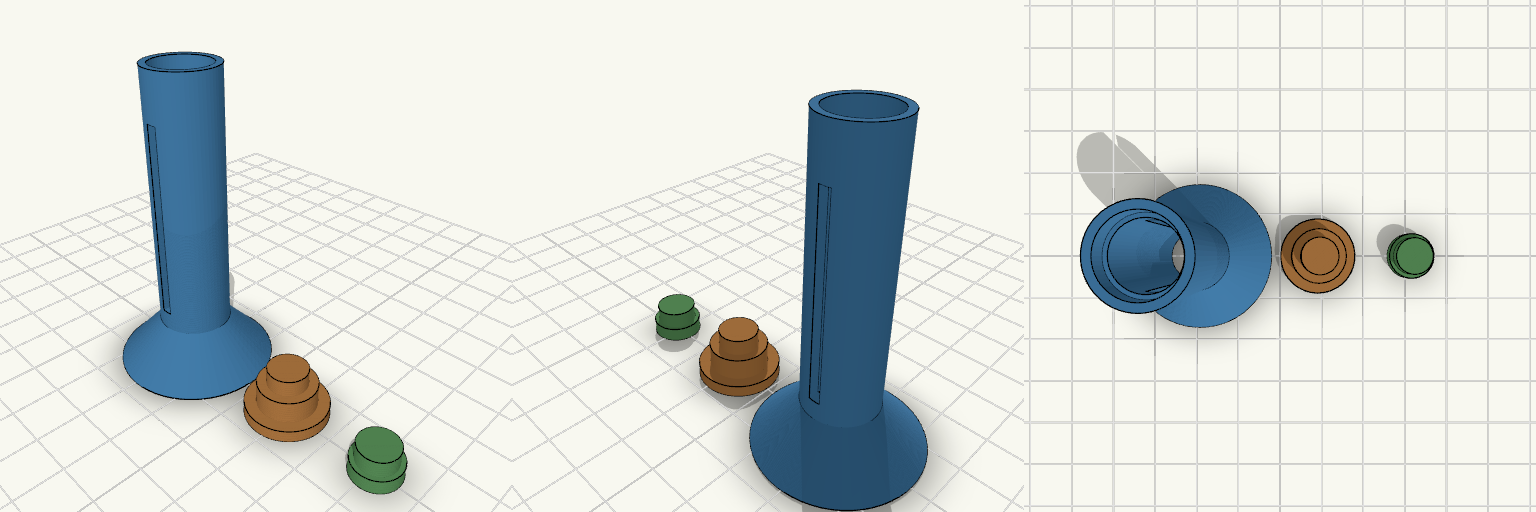
A three-piece spring-fed chalk holder: barrel with magnet base, press-fit top cap, and follower plunger. It is built around a 20 mm OD x 5 mm ring magnet and a 10 mm OD x 30 mm compression spring. What it fits Ring magnet: 20 mm OD x 5 mm (pocket is 20.3 x 5.1 mm, glue in place) Spring: 10 mm OD, 8.8 mm ID, 0.6 mm wire, 30 mm long Chalk: about 9.5–10 mm diameter (bore is 11 mm) Check before printing Measure the actual chalk and magnet. The 11 mm bore and 20.3 mm pocket have no room for much deviation. Not compatible with Chalk over 10.5 mm diameter Springs over about 10.5 mm OD Magnets larger than 20.3 mm OD or taller than 5.1 mm Parts Barrel (65 mm tall, 34 mm flared base, two dust-relief slots), top cap with spring boss, and a plunger that sits between the spring and chalk. Glue the spring to the cap.
Stepped Tray Drill Bit Organizer
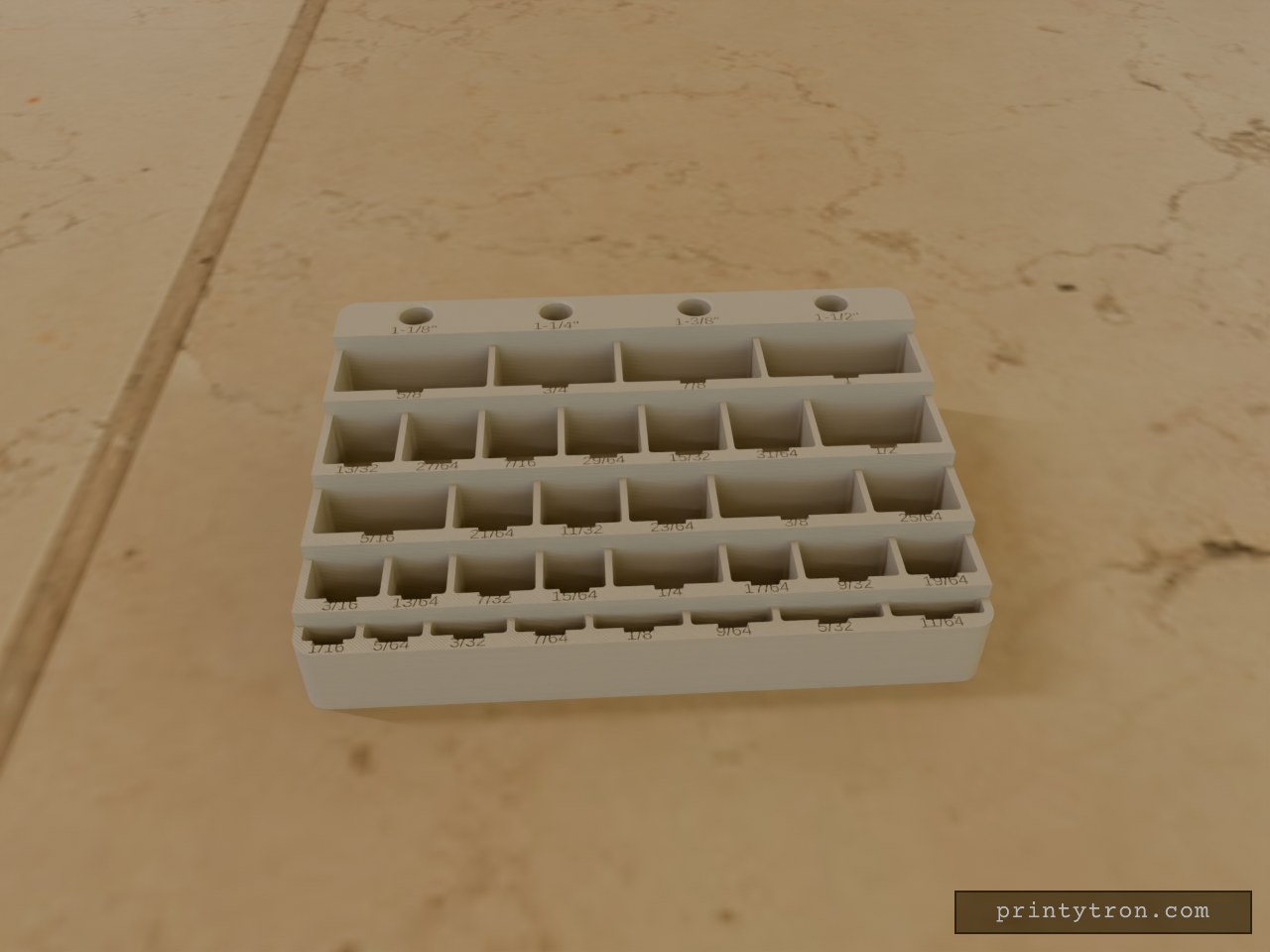
A one-piece, low-profile drill bit organizer built from open-top tray pockets that each hold several bits of one size. Five stepped rows rise toward the back so every engraved label stays visible from the front, and four round holders at the rear take oversized bits by their reduced 1/2" shanks. What it's for Sorting fractional bits from 1/16" to 1" into labeled multi-bit trays. Parking 1-1/8", 1-1/4", 1-3/8" and 1-1/2" bits in single dedicated holders. Benchtop storage with no lid, drawers or moving parts. Dimensions Footprint: 230 mm wide by roughly 160 mm deep, inside the 230 × 170 mm target. Tier heights step from 28 mm at the front to 58 mm at the rear, under the 65 mm limit. Row 1 (1/16"–11/64"): single-file narrow trays, 5–6 bits each. Row 2 (3/16"–19/64"): 4–8 bits each, with 1/4" as the large tray. Row 3 (5/16"–25/64"): 5/16" and 3/8" are enlarged, 8 bits each. Row 4 (13/32"–1/2"): 4 bits each, with 1/2" enlarged to 6. Row 5 (5/8", 3/4", 7/8", 1"): 3, 2, 2 and 2 bits, wider than the smaller trays. Rear holders: four 13.5 mm holes, 35 mm deep, about 54 mm apart. Each pocket has a front finger scoop, an engraved label on the rim, and rounded inner corners. Four 12 mm recessed rubber-foot pockets on the underside. Remix ideas Change the bit counts per tray to match a personal set. Add matching lids or stacking posts. Swap the rear holders for 3/8" shank-reducer sockets. Print in PETG or PLA+ with a 3–4 wall perimeter for extra rigidity.
牙膏头扁方接头 20×14×5
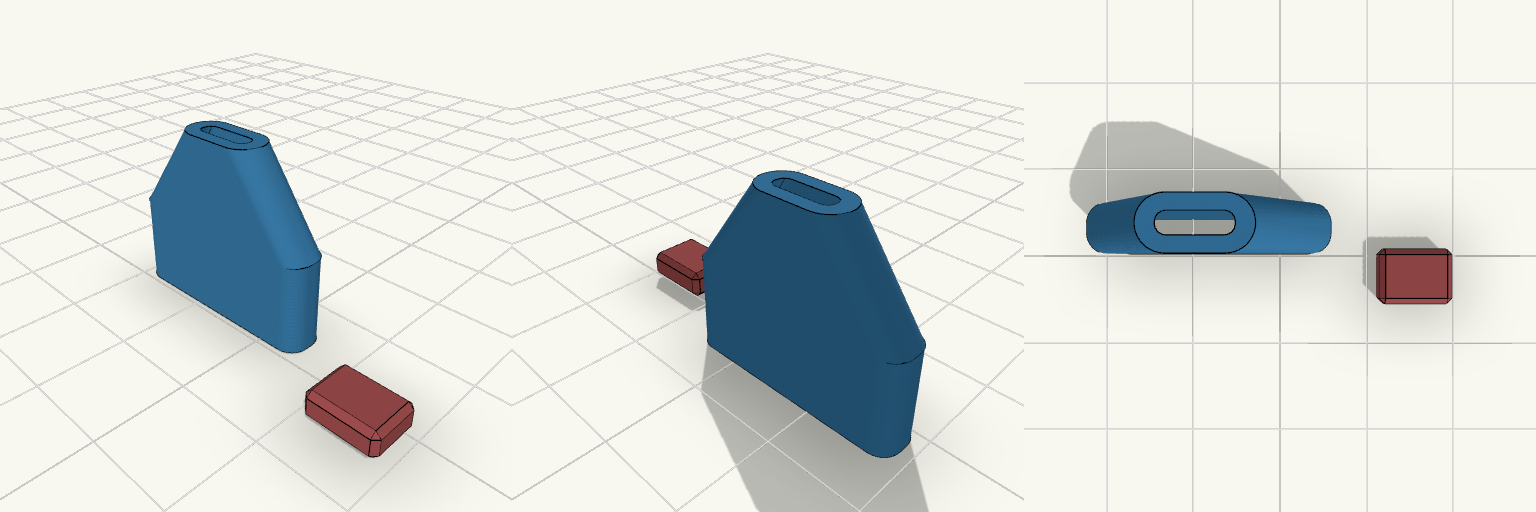
What it's for Short tapered flat connector that fits a trimmed cat-treat tube opening and mates with the front channel of the chamber. A raised block on top presses a micro switch to detect seating. Dimensions Length 20 mm, root 14 × 5 mm, R2 edges Front outlet: 10 × 5 mm flat oval outside, 6 × 2 mm bore Rear bore: 12 × 3 mm Trigger block: 8 × 6 × 2.5 mm on top Remix ideas Resize the front oval to the real tube opening Lengthen the part for a deeper rear bore Move the trigger block to match the switch position