Red Planet Rover Chassis
Created 2 months ago
Description
A fully articulated, print-in-place scale model capturing the iconic six-wheel stance of off-world explorers. The design relies on the famous rocker-bogie suspension geometry, allowing the wheels to ride over uneven terrain while keeping the main chassis relatively stable.
It prints entirely assembled as a single piece.
Print Guidelines
- Clearance: Designed with 0.4mm gaps on all articulating joints.
- Orientation: Prints directly on its wheels.
- Support: No supports required. The internal axle caps are conical to bridge cleanly.
- Post-Processing: Gently work each wheel and pivot arm free after taking it off the bed to break away any tiny stringing inside the joints.
Images
More like this
Explore more in Automotive, RC & Hobby →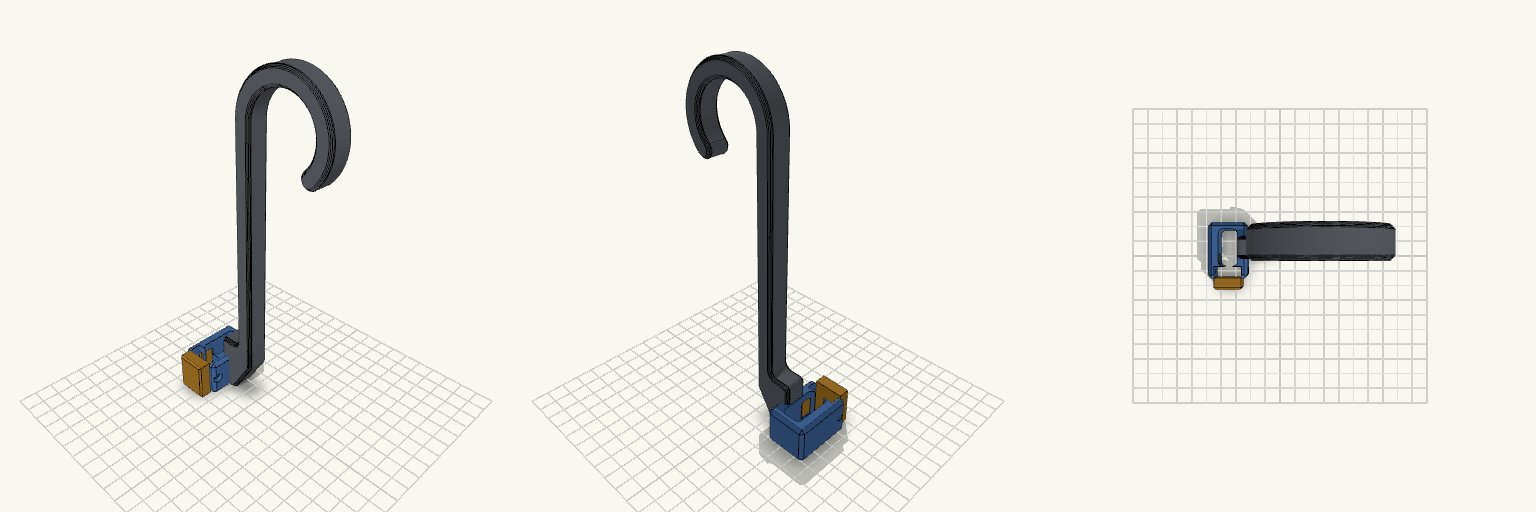
Gancho de Garrafa com Braçadeira Snap
Gancho de garrafa de treino em J, 200 mm, com braçadeira bipartida na base: corpo fixo ligado à haste e tampa separada que fecha por encaixe de pressão ao redor da alça de 12 × 24 mm. Pontos de remix Snap-fit: ganchos flexíveis de 8 mm de comprimento, 1,8 mm de espessura e ressalto de 0,6 mm (armlen, armt, ridge). Entrada em rampa, retenção reta. Folga: 0,2 mm entre tampa e corpo (gap). Trava extra: furo M3 em gota atravessando tampa e corpo, com porca sextavada embutida no lado +X. Paredes: wallx (6,4 mm) e wallf (7,5 mm) definem o tamanho externo; reduza se o furo M3 for dispensado. Haste e gancho: inalterados, seção 10 × 14 mm, bojo de 40 mm, boca de 34 mm. Combina com: parafuso M3 e porca M3 (opcionais); imprima corpo e tampa separados em PETG ou PLA.
Triple Socket Adapter Floor Cradle
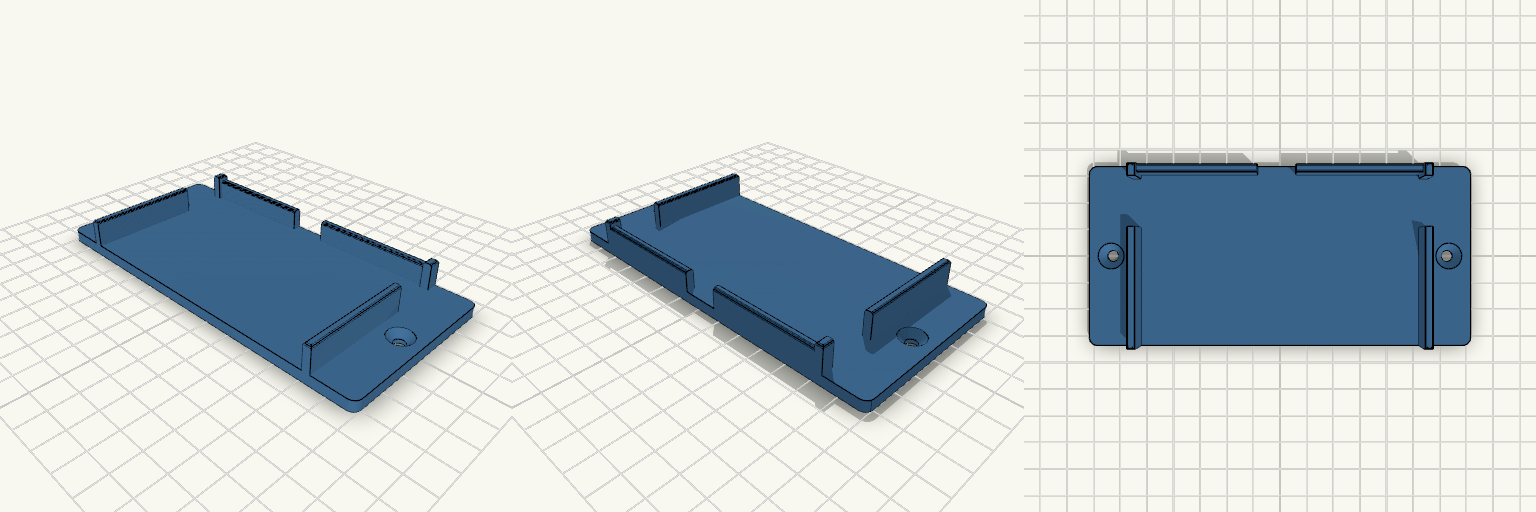
What it's for A one-piece floor cradle that holds a triple 12V socket adapter horizontally under a dashboard. The front and top stay open, so the sockets and power switches remain reachable, and side windows keep the side USB ports clear. Dimensions Adapter: 100.4 x 60.85 x 31.72 mm, about 1 mm clearance Side walls: 3 mm thick, 14 mm tall Side windows: 18 mm long, centred 51.38 mm from the front (plus 1 mm clearance) Back lip: 12 mm tall with reinforced corners Mounting ears: 16 mm each end, countersunk screw holes Remix ideas Change the window length to fit a different USB port. Add a third screw hole at the back. Lengthen the ears for wider mounting.
Technic Plate 2x4 With Holes, Set of 6
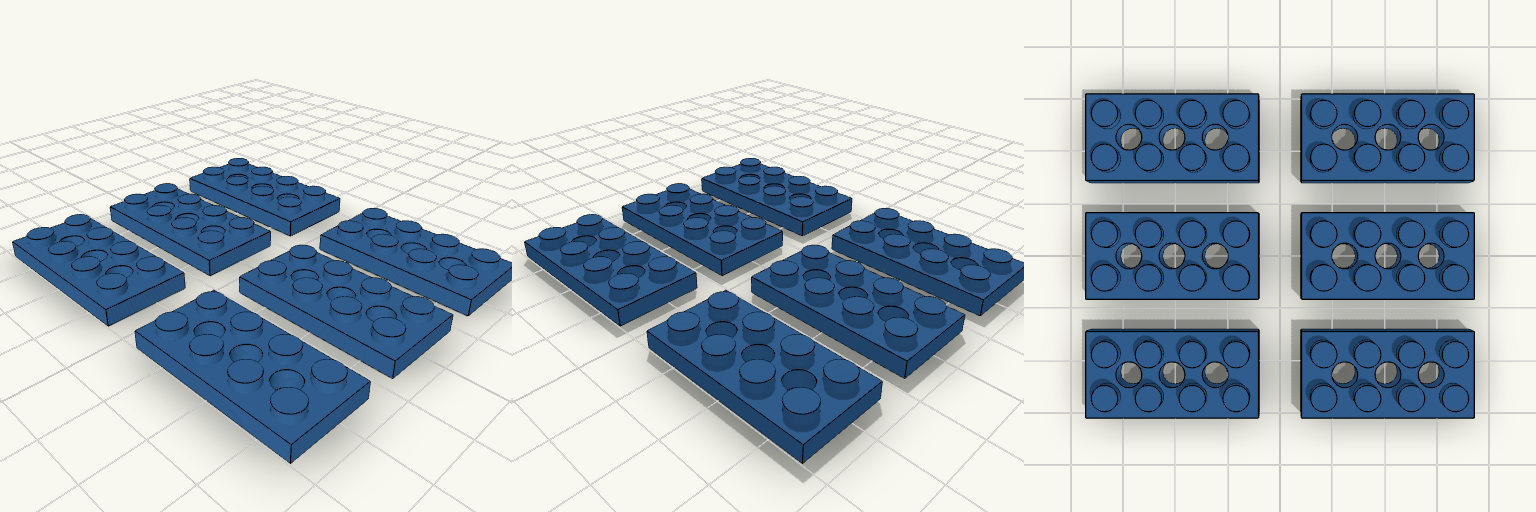
A 2x4 plate with no way to pass a Technic pin or axle through it is a dead end in a studless build. This plate has three holes on the centre line, so pins and axles go straight through. Six are laid out flat for one print run. Key numbers Plate: 32 x 16 mm, 3.2 mm thick, studs on 8 mm pitch Studs: 4.8 mm diameter, 1.8 mm tall Holes: three, 4.8 mm diameter, on the centre line, 8 mm apart Print: flat, no supports, 0.2 mm layers; test one first to check clutch fit
Pinch-Feed Drive Roller, Print-Ready
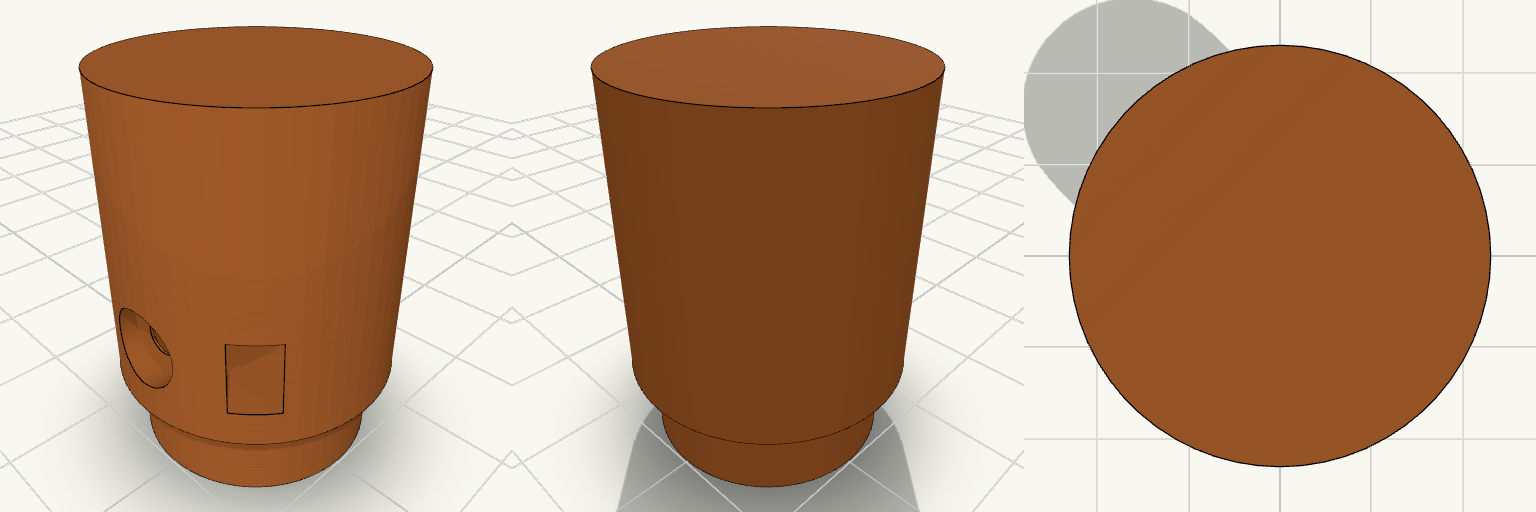
A knurl-free drive wheel for a pinch-feed wire feeder, built like a small industrial pulley: a 24 mm roller with a hub on one side and a blind D-bore that slips over a 5 mm D-shaft. The model is just the roller, standing on its hub and ready to slice. Design notes Blind D-bore, open on the hub face and closed by a wall on the far end, so the closed end shows which side stays out. M3 grub screw hole with a trapped hex nut that slides in through a slot open to the rim. Counterbored screw recess 2 mm deep, so a headed M3 screw sits below the surface and a nylon or TPU sleeve goes on smooth. Hub spaces the roller off the motor face so the two do not rub. Printing Stands on the hub with the bore opening onto the bed, so there is no bridging inside the bore and no supports are needed. Printing upright keeps the roller round. Suggested: PETG, ASA or nylon, 3 or more walls, 25–30% infill.
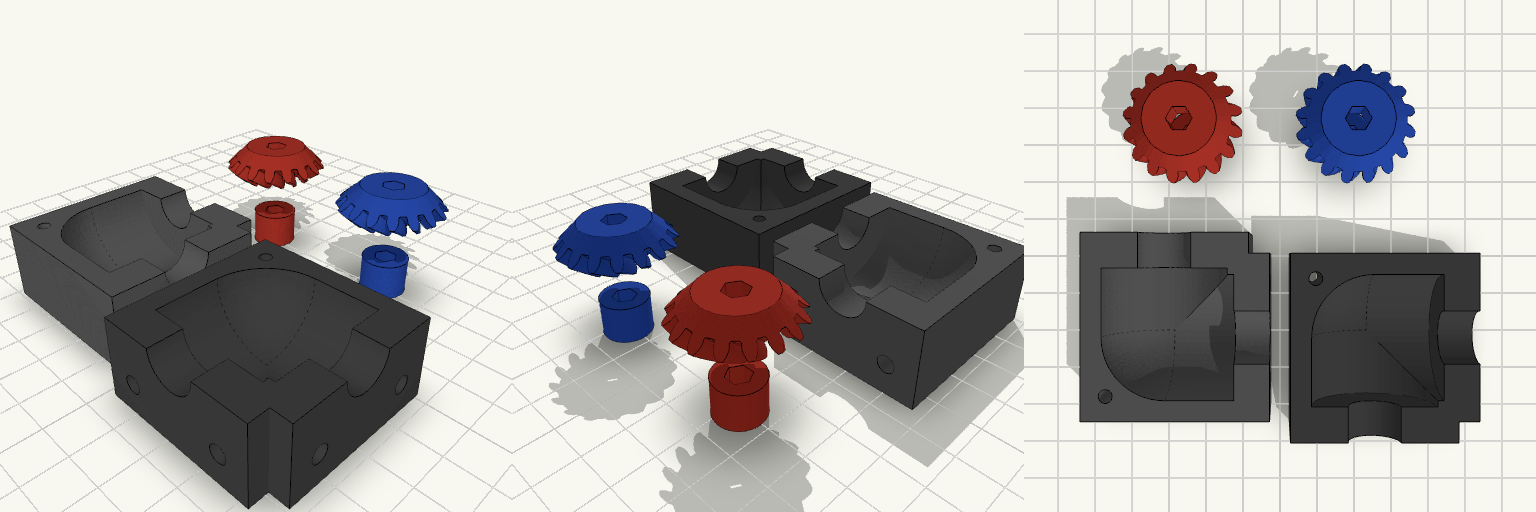
90° Bevel Gearbox Assembly
A fully functional 90-degree bevel gearbox with 5 mm hex bores on both the input and output gears. The split housing prints without supports and clamps the gear stack together when the face flanges are bolted down. Specifications Transmission: 1:1 ratio bevel gears (16 teeth, 90-degree mesh). Input/Output: 5 mm hex bores on both gears, measuring 5.2 mm across the flats including 0.2 mm printing clearance. Housing: Split base and top, each 45 × 45 × 20 mm, designed to print flat without supports. Mounting Interfaces: Four 4.3 mm clearance holes on each face flange, arranged in a 25 mm square pattern. Assembly: The housing halves are clamped together when bolted to a surface using the face flanges; an extra M3 hole in the rear corner provides optional tightening. Printing: All pieces print flat without supports; the housing and gears assemble after printing.
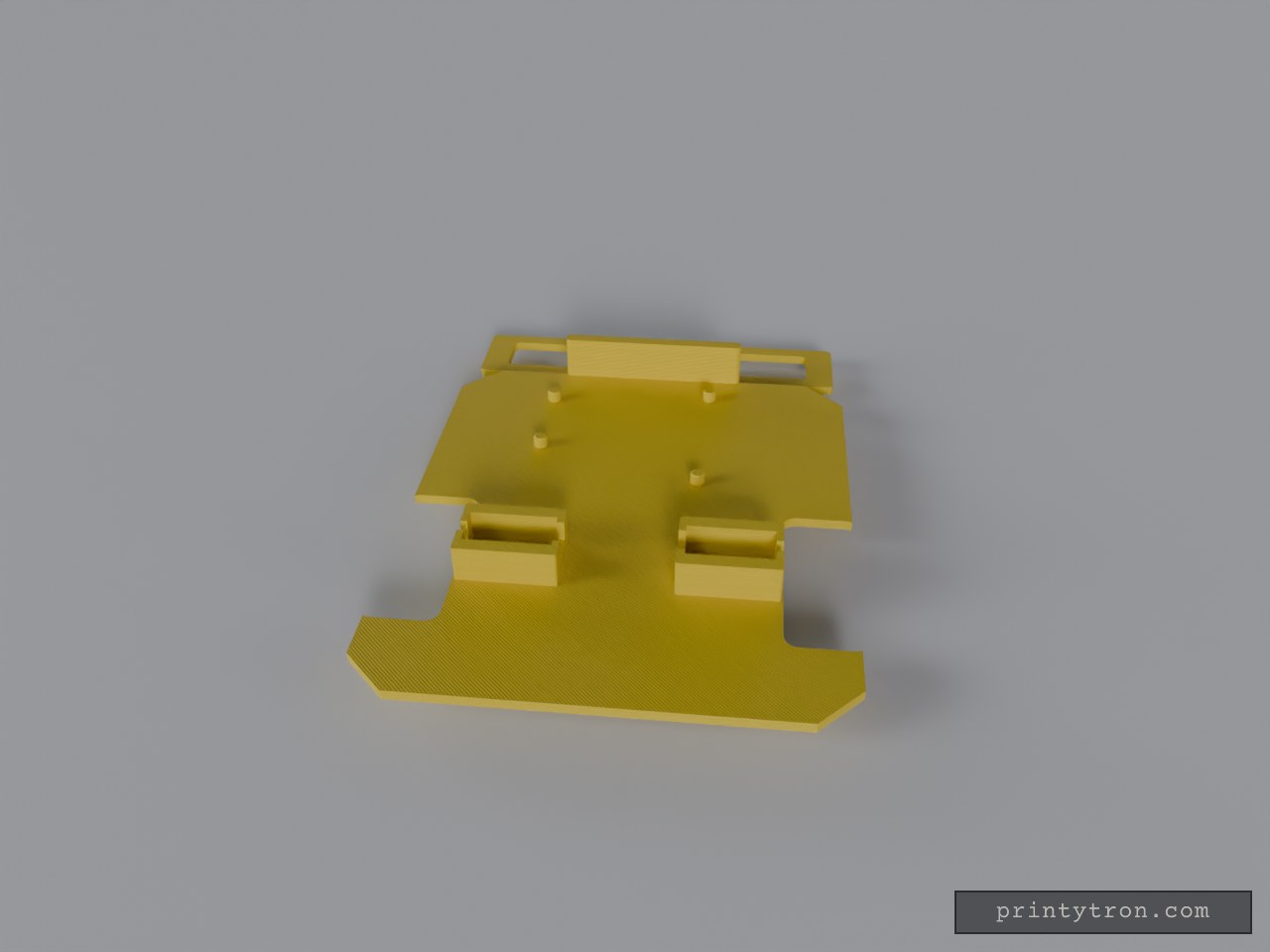
Rear-Drive Uno Line Follower Chassis
A flat, no-fuss line-follower deck in the spirit of a bare-bones racing sled: one smooth plate, wheels tucked at the rear, and a sensor bracket reaching out front. Built around an Arduino Uno, with four solid standoffs matching the Uno R3 hole pattern. Design notes Plain flat baseplate with no fastener holes or slots Openings only for the two wheel cutouts and the sensor tray window N20 motor cradles at the rear, shaft notches kept Four solid Uno standoffs for a 68.6 × 53.3 mm board, long side across the chassis Front sensor bracket with a 126 × 26 mm board shelf