Ribbed Vase With Raised Flower
Made by devilmaycry
Created 3 days ago
Description
A 120 mm tall decorative vase with a rounded, tapered body and vertical ribbing. A six-petal flower with stem and two leaves stands out from the front face.
- Height: about 120 mm; widest diameter about 60 mm
- Wall: 3 mm, 6 mm solid base
- Flower: raised relief on the -Y side
- Print upright; the flower relief may need supports or a brim
- Suited to dried flowers or as a shelf ornament; not watertight-rated
Photos
Technical views
More like this
Explore more in Decor & Display →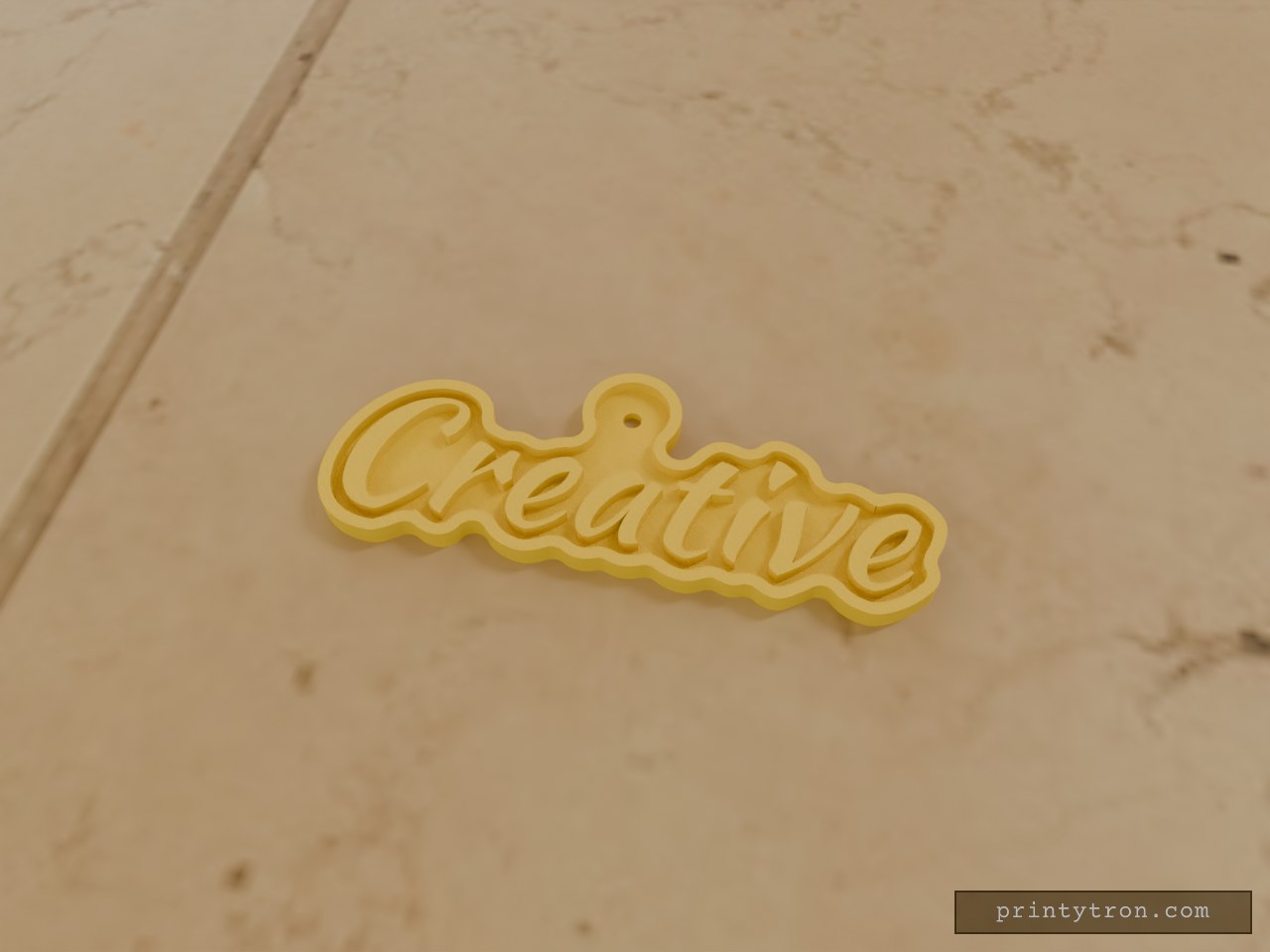
Creative with Raised Border
A wall sign that reads Creative in a brushed script — the fix for a sign that ends up a plain rectangle of plastic with the lettering lost inside it. The backing follows the outline of the letters instead of being a plate, and a raised border traces that same shape, so the sign keeps the word's silhouette on the wall rather than a slab around it. Because the border, backing and lettering are separate colour areas, you can swap filament at the layer changes and get a two- or three-tone sign off a single-colour printer. Sizes Overall footprint: 126 × 49 mm Lettering: 116 × 29.5 mm, 3 mm proud of the backing Backing: 2 mm thick, cut to the lettering outline Border: 5 mm tall, rounded, tracing the same outline Hanging: one round tab above the lettering with a 4 mm hole Hang it from the single tab — check the tab clears your hook or screw head before you commit to a wall position. Print flat on the backing, no supports needed.
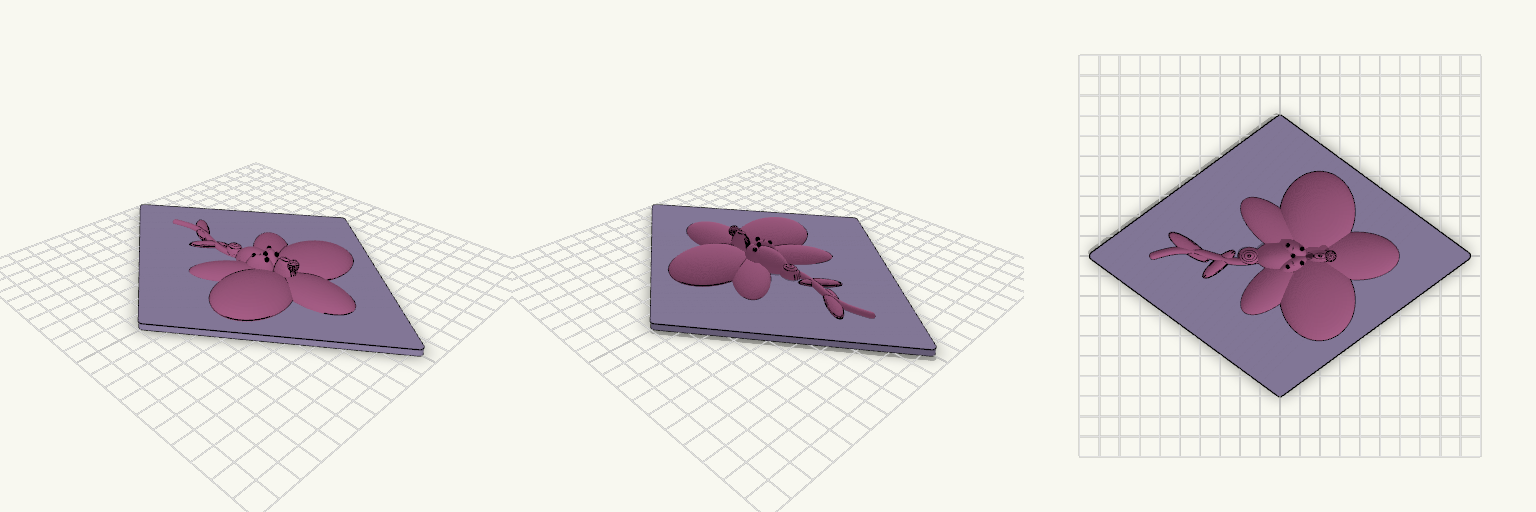
Diamond Panel 7.5x5.5 in Orchid
A flat diamond-shaped panel with diagonals of 7.5 in (190.5 mm) along X and 5.5 in (139.7 mm) along Y, 3 mm thick. A single orchid bloom with a short stem and two leaves is raised on the top face, with the top of the flower pointing toward the +X tip of the panel. Panel: 190.5 x 139.7 mm diamond, 3 mm thick, lightly rounded corners Flower: dorsal sepal, two lateral sepals, two broad petals, lip with side lobes, column, anther cap and throat spots Relief: petals domed with raised center ridges; roughly 10-12 mm above the panel at the highest point Printer: sized for the Flashforge Adventurer 5M (220 x 220 mm bed); supports for the petal undersides can be added in slicer Print time depends on slicer settings; use high-speed profile, low infill and a 0.4 mm or larger nozzle to approach 30 minutes
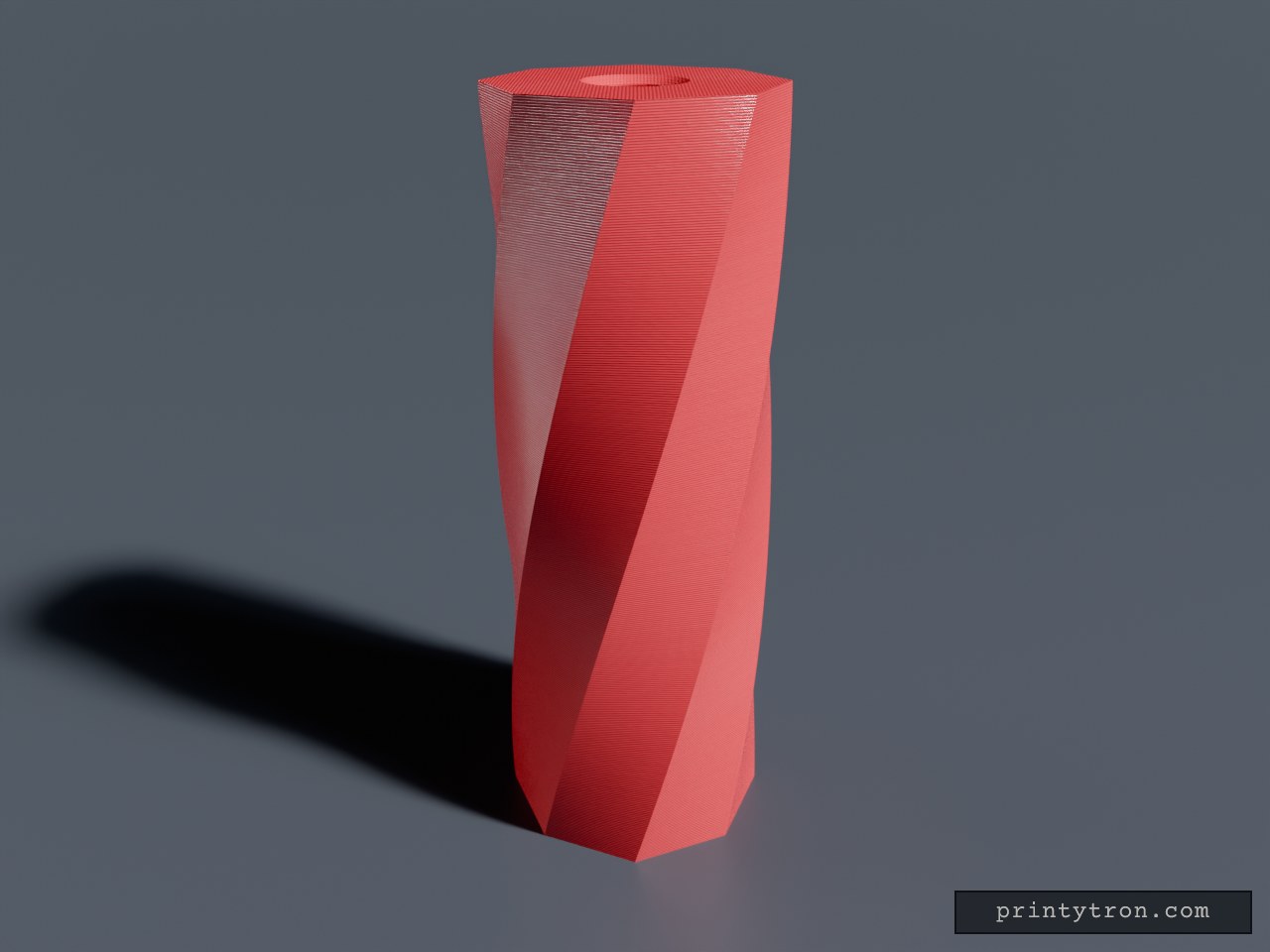
Bud Vase Holding Glass Test Tube
A bare test tube tips over, and a printed vase can't hold water on its own. This bud vase gives a 15 mm glass test-tube liner a heavy, upright body. The liner carries the water and the vase carries the liner, so a single stem stays put. The eight facets twist a quarter turn from base to mouth, which gives the ridges edges that catch light along the full height. Numbers that matter Bore: 16 mm diameter, for a standard 15 mm glass tube with 1 mm of clearance Bore depth: about 138 mm, above a 12 mm solid floor Height: 150 mm Width: 50 mm across the flats at the base Mouth: 1.5 mm lead-in chamfer so the tube slides in without catching Printing Prints upright with no supports. The twist is gentle enough that each layer sits on the one below. Use a 0.2 mm layer height or finer so the ridges stay crisp. The printed body is not watertight. Keep water inside the glass tube only. Measure your tube before printing. Tubes longer than about 138 mm will stick out of the mouth.
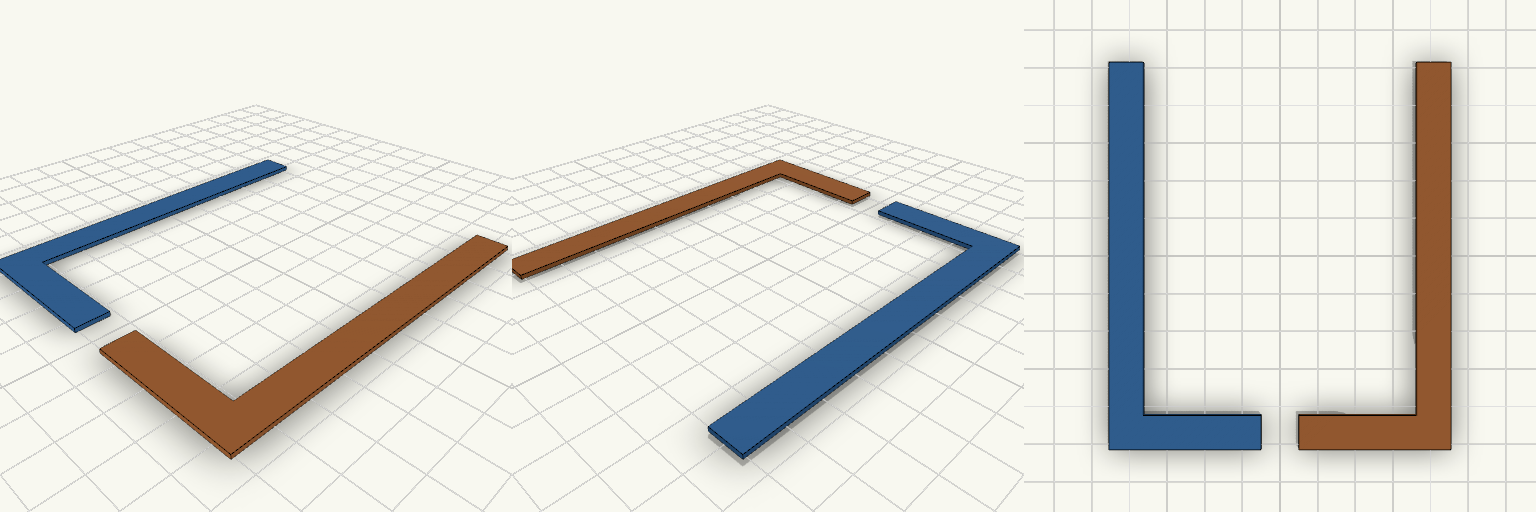
Flaches L und gespiegeltes L
What it's for Zwei flache Buchstaben-L als Paar: ein normales L und eine spiegelverkehrte Version. Geeignet für Schablonen, Beschriftungen, Dekoration oder Modellbau. Dimensions Je Buchstabe: 40 mm breit, 102 mm hoch, 1,1 mm dick Strichbreite überall 9 mm Abstand zwischen beiden Buchstaben: 10 mm (gesamt 90 mm breit) Remix ideas Abgerundete Ecken oder Fasen an den Kanten Bohrungen zum Aufhängen oder Verschrauben Dickere Ausführung für mehr Steifigkeit
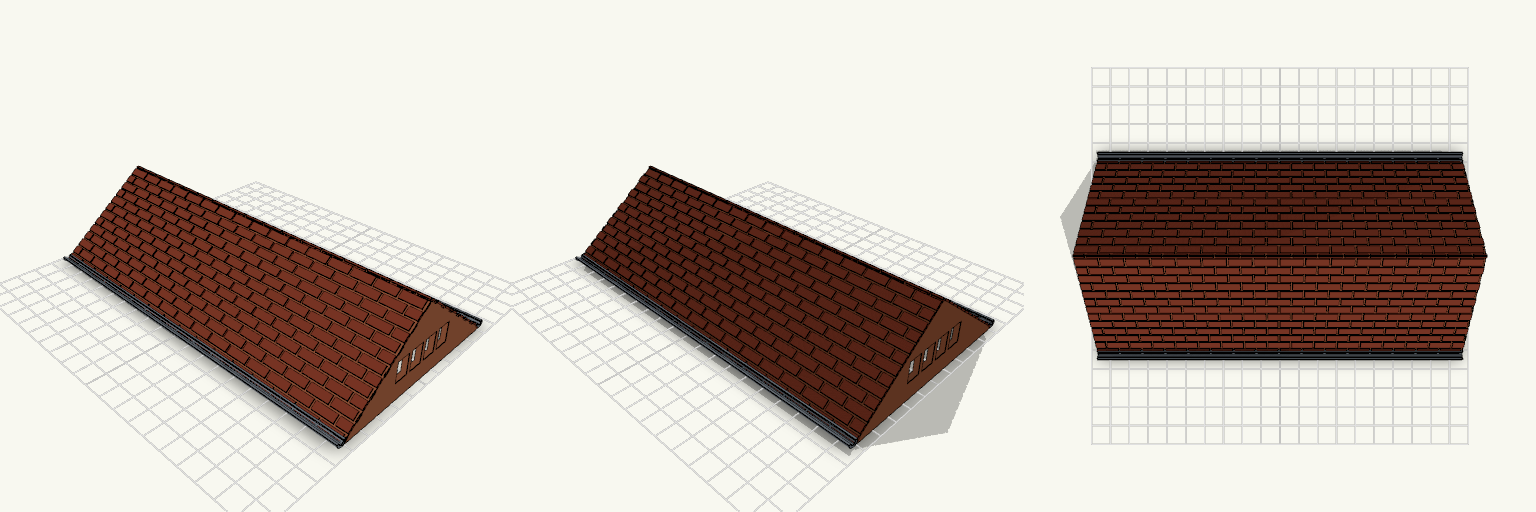
Toiture 192×103 mm, fenêtres 4 carreaux
Toiture creuse de 192 × 103 mm pour une maison de 192 × 101,19 mm, hauteur 40 mm, avec pignons fermés percés chacun d'une fenêtre à 4 carreaux alignés. À vérifier avant impression Largeur de la maison : 101,19 mm (le toit déborde d'environ 0,9 mm de chaque côté). Longueur : 192 mm, pignons affleurant les murs. Caractéristiques Coque de 2,5 mm, dessous ouvert. Motif de briques sur les deux pentes. Demi-gouttières Ø3 mm ouvertes vers le haut. Fenêtres : 4 carreaux de 6 × 8 mm, montants de 2 mm. Incompatibilités Aucun ergot ni emboîtement : le toit se colle ou se maintient sur les murs.
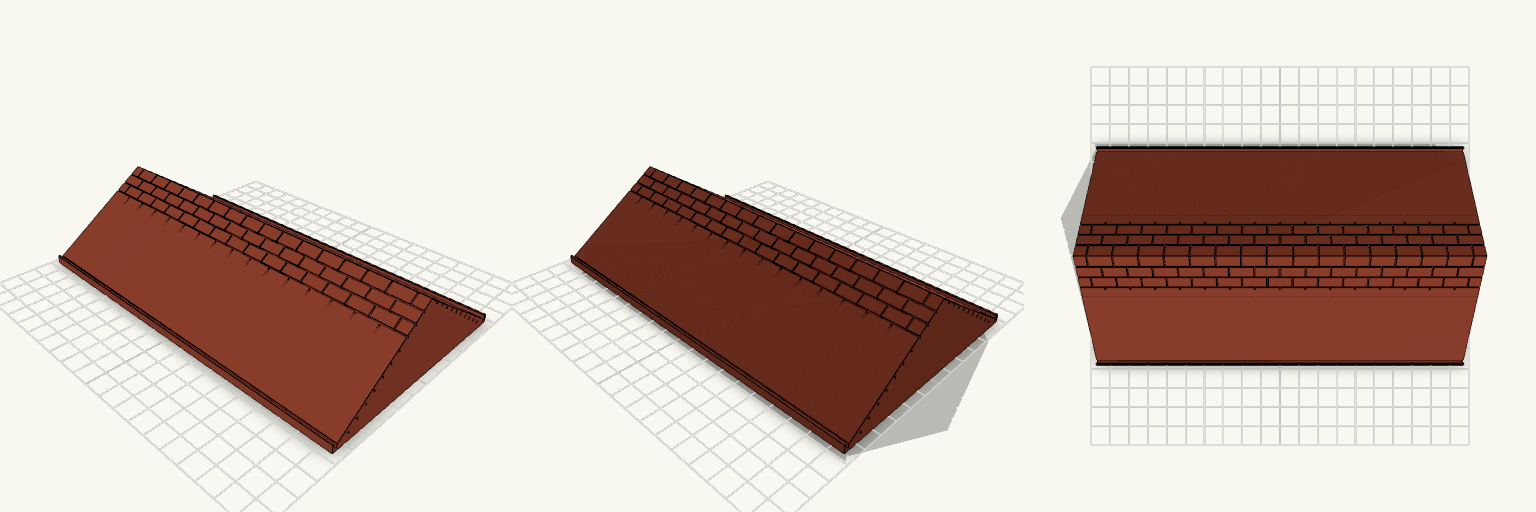
Toit creux avec demi-gouttières
Toit à deux pentes creux, ouvert en dessous, dont le bas des pentes se termine au milieu de gouttières arrondies en U, de sorte que seule la moitié extérieure du canal reste visible. Joints d'ardoise gravés sur les deux pentes. Pistes de remix Hauteur du toit : 40 mm au faîtage, donc des pentes d'environ 36°. Réduire cette valeur donne un toit plus plat. Gouttière : profil de 5 × 4 mm, canal rond de 3,4 mm. Élargir le canal pour un meilleur écoulement. Position de fin de pente : le bas des pentes s'arrête à 54,5 mm de l'axe, au centre du canal. Décaler cette valeur change la part de gouttière visible. Compatible avec un garage de 192 mm de large à quatre portes de 40 mm.