Show Me — Desk Sign
Created 3 months ago
Remixed 2 times
Description
The classic desk sign, remixed. This freestanding tabletop block drops a solid underline beneath the bottom row of text, fusing everything together for a sturdier base while maintaining the chunky, self-supporting typographic aesthetic.
Features
- Solid Baseline: The new chunky 5mm underline ties the bottom text together, making it more stable on the desk.
- Support-Free Design: Prints flat on its back or bottom edge without relying on bridges or supports.
- Vibrant Typography: Heavy weight text makes a statement while being physically robust.
Photos
Technical views
More like this
Explore more in Decor & Display →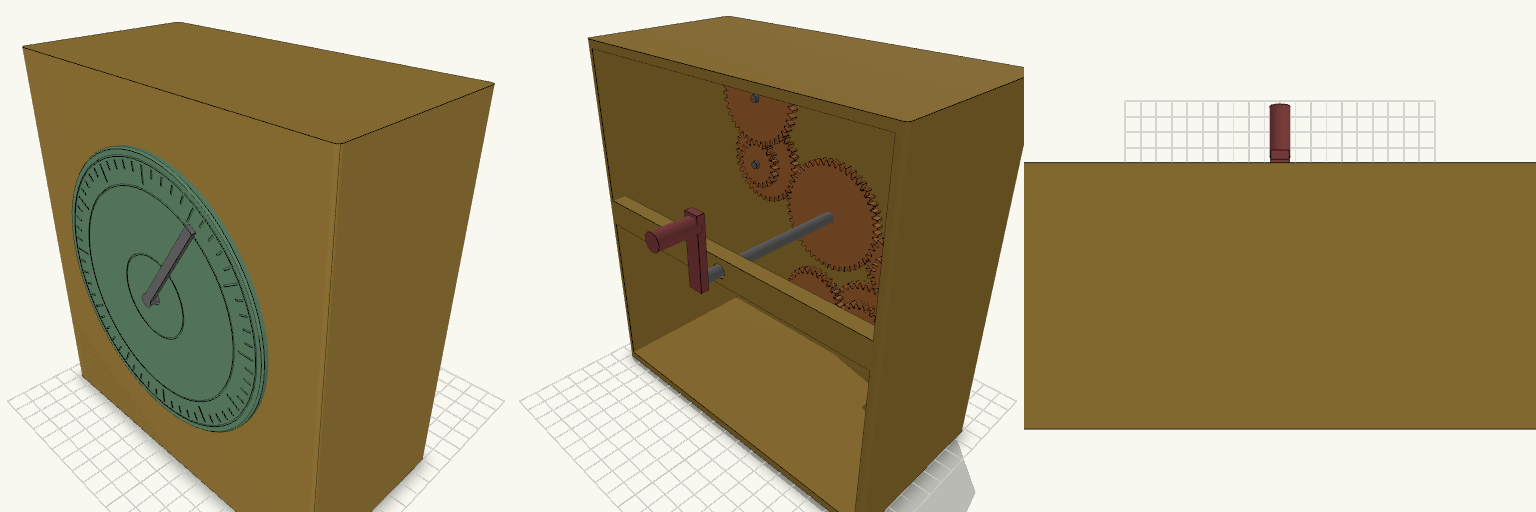
Antikythera Mechanism Desk Model
A simplified, life-size-style display model of the Antikythera mechanism: an upright case with a round front dial, a pointer, an open-backed gear train and a rear hand crank. Case 180 x 90 x 190 mm, open at the back to show the gears 130 mm front dial with ring grooves and 60 tick marks Nine spur gears (20 to 48 teeth, module 1.25) arranged in three layers, with phase-matched teeth so they mesh Fixed 4 mm pegs on the front wall carry the compound gears; the main 48-tooth gear is fused to a 6 mm axle that drives the front pointer Rear bearing bar supports the axle, with a crank handle on the back The gear train is a stylised interpretation, not a tooth-accurate copy of the original 30-plus gear mechanism. Print the case, dial, gears, axle and crank separately; the compound gears sit loose on their pegs with 0.3 mm clearance.
Miniature Suitcase with Handle, Wheels and Weight Display
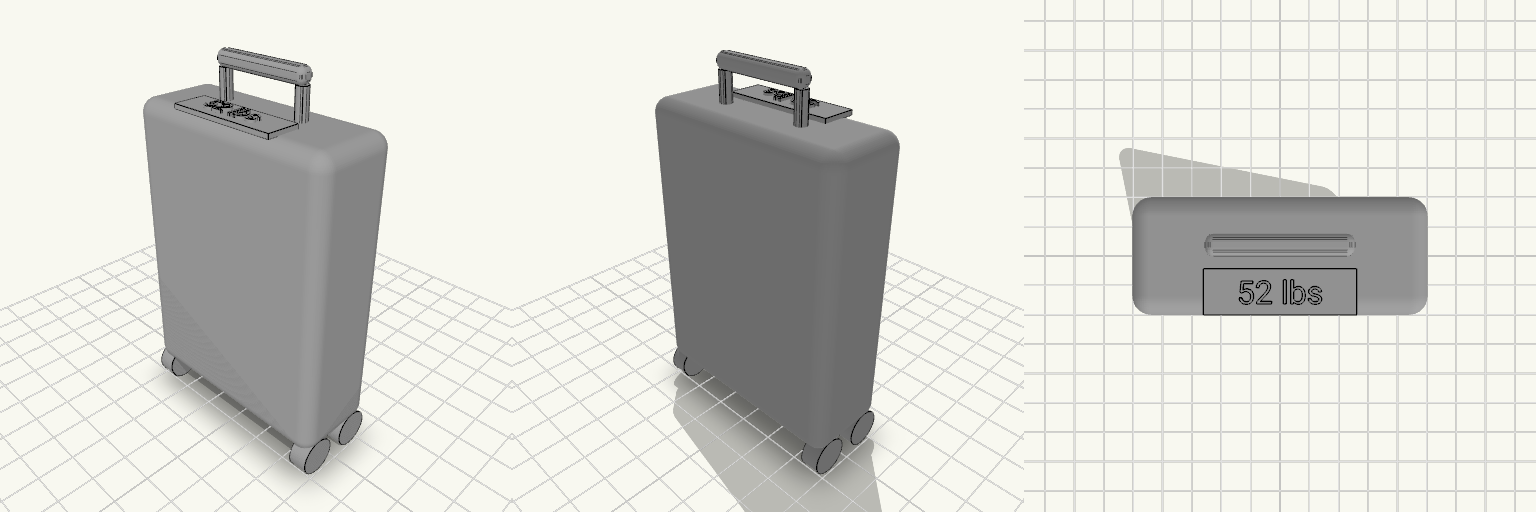
What it's for A miniature suitcase standing upright on four sideways-mounted wheels, with a pull handle on top and a small thin scale plate set into the top face just in front of the handle. The plate carries a raised readout of 52 lbs, so the piece reads as a luggage scale at a glance. It works as a small desk ornament, a travel-themed display piece, or a scale prop for a dollhouse or diorama. The whole thing is one plain neutral finish, with no colour coding or recessed front screen. Dimensions Overall footprint: 60 × 24 × 100 mm (width × depth × height, as it sits on the print plate) Wheels: mounted sideways, axles running across the width of the case, so the body rests on them Weight plate: a small thin panel on the top face, in front of the handle Readout: raised 52 lbs lettering, picked as a believable airline-limit weight — say if you want a different figure Print notes The model prints as a single piece lying on its wheels, so no supports are needed under the body. The raised readout is small — a 0.4 mm nozzle with fine layer heights keeps the digits and the "lbs" legible, and a 0.25 mm nozzle gives crisper text. The thin top plate is shallow, so check that your bridging over that area is clean. Remix ideas Change the readout to a different weight, or leave the plate blank for a custom label. Swap the handle for a telescoping version, or add corner guards to the body. Scale the case up to hold small items, or down to keyring size. Finish A single neutral colour suits the plain, serious look — the design relies on shape and the raised text rather than colour contrast, so any filament works.
Articulated Flat S-Shaped Snake
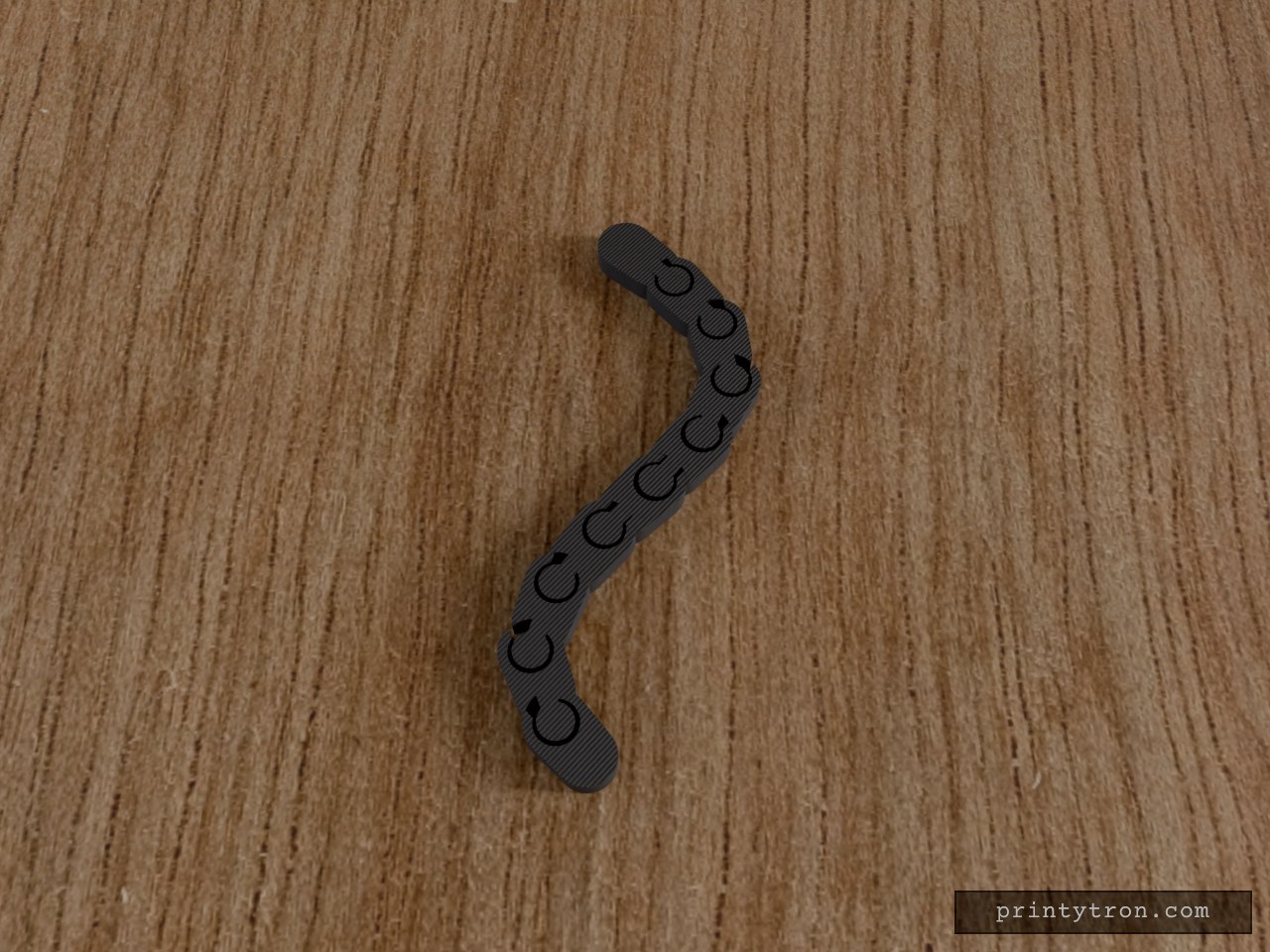
A flat snake made of separate links joined by knob-and-socket joints, laid out in an S shape. Each link is 3 mm thick with smooth rounded outlines and no extra detail. Links print already connected, with clearance in each joint Flat on the bed, no supports needed Links pivot in the plane, so the snake can be bent into other curves Plain solid links, no surface detail Use a small layer height and check that the joints move freely after printing.
OO Gauge Flat-Pack Thatched Cottage with Dormers
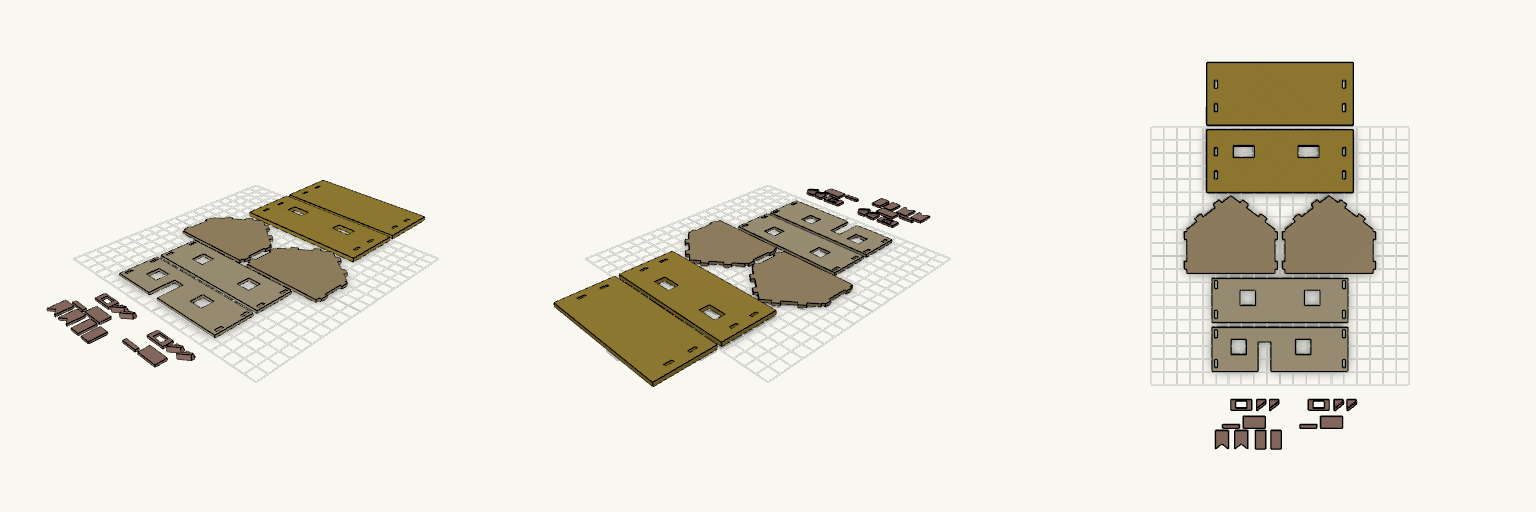
Flat-pack 1:76 (OO gauge) detached cottage with thatched roof panels, dormer windows and a chimney, all printed lying flat. Fit notes Host: OO gauge, 1:76 scale; footprint 105 × 72 mm, 34 mm walls. Wall tabs use 2.4 mm slots for 2 mm tabs; test one tab first. Roof dormer openings are 16.4 × 9.4 mm; check one dormer against them before printing the rest. Each dormer cheek has a 4 mm tall gluing lip along its sloped lower edge, cut to the 37.4° roof pitch, to glue under the roof panel. Not a fit for other scales (N, HO) without resizing.
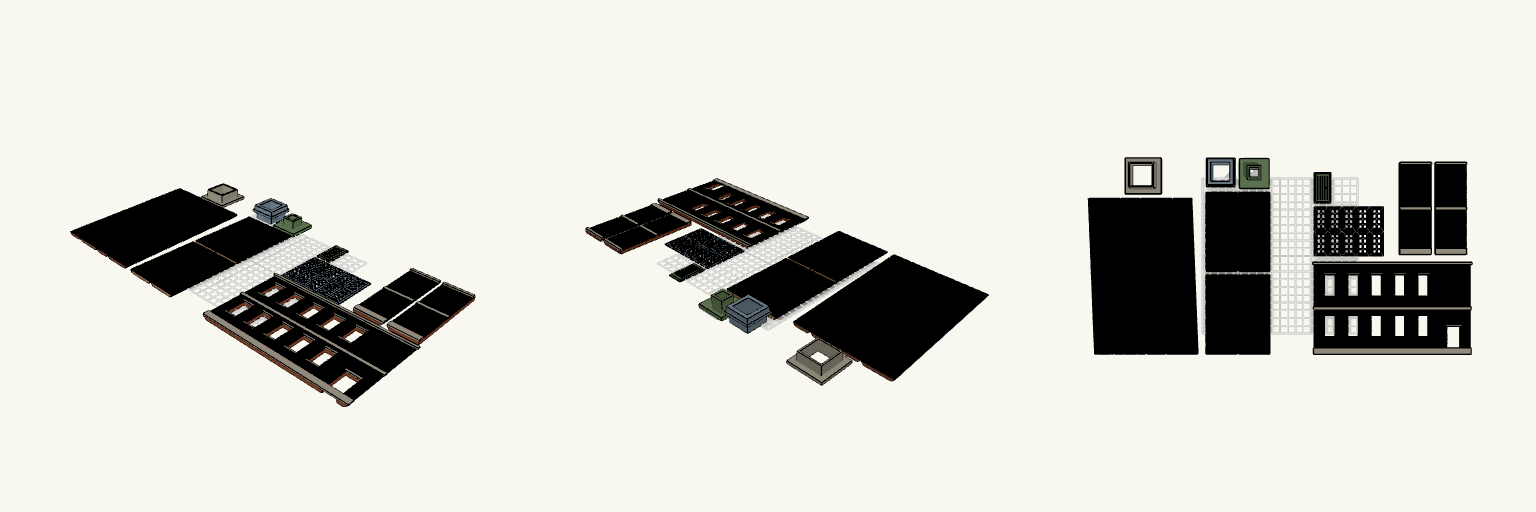
OO Mill Front and part-tapered Chimney Set
A four-panel tapered chimney with a straight brick base, paired with a half-relief two-storey mill front in OO scale. The wall, ten window frames and plank door all print flat. Each window frame and the door now carries a thin web around its outside edge to hold it down during printing. Remix hooks Web width (webw, 1.8 mm): wider grips better; keep it under half the 4 mm spacing so neighbouring webs stay separate. Web thickness (webt, 0.3 mm): roughly one or two layers. Thinner peels off easier, thicker holds harder. Window grid (14 x 28 mm frames, 4 mm spacing): change the spacing if the web is widened. Pairs with: the chimney set on the same plate layout, and a clear or painted glazing insert behind the frames. Print notes Trim the web with a hobby knife after printing, before fitting frames into the wall openings. Wall is 200 mm long and needs its own print separate from the chimney set.
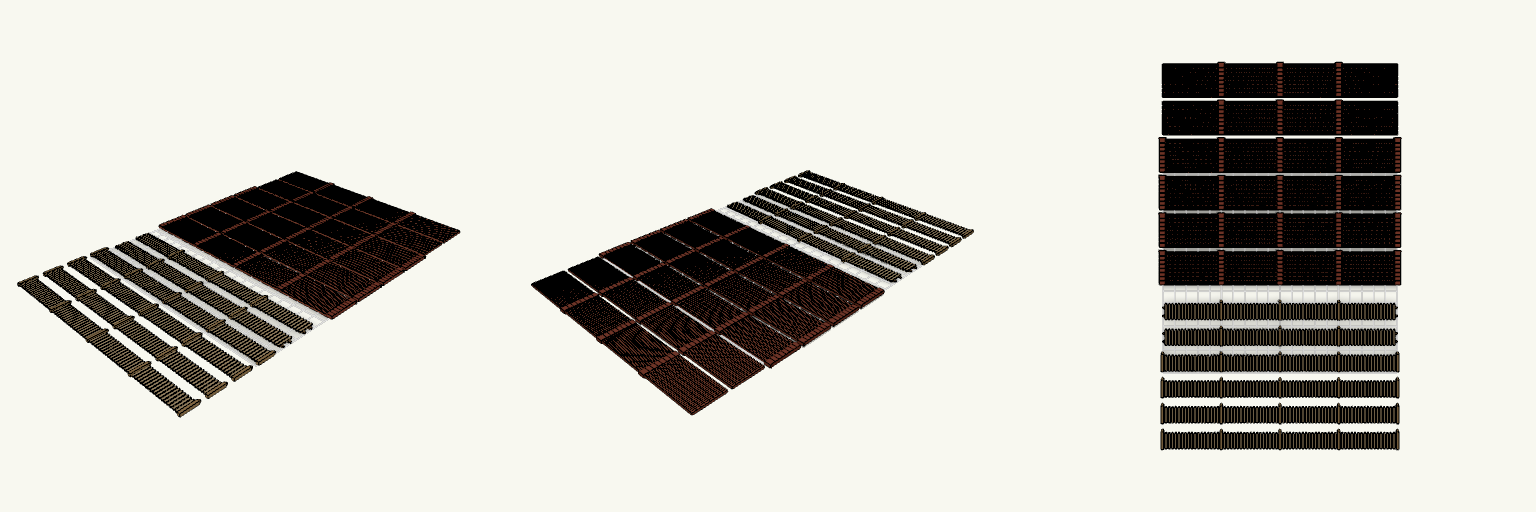
OO Scale Picket Fences and Brick Walls
Flat-pack OO scale (1:76) boundary set: six 200 mm wooden picket fence panels and six 200 mm brick wall panels, all printing on one bed in separate rows. Fences: four with five posts, two with only the three centre posts (50, 100, 150 mm). Posts are 17 mm tall with pyramid tips; slats are 1.6 mm wide, 14 mm tall and pointed. Brick walls: 28 mm tall (7 ft), 1.6 mm thick, soldier bond: upright bricks, with 0.4 mm mortar grooves every 1.4 mm and a course line every 3.5 mm. Pillars are 5 mm wide, 2.4 mm thick, with a small cap, spaced 50 mm apart. Two walls have only the three centre pillars. Remix hooks wh (28) sets wall height; crs (3.5) sets course spacing. pitch (1.4) and gw (0.4) set brick width and mortar line; keep gw at or above one nozzle width. pwid (5) widens the pillars; wall wt (1.6) sets thickness. Swap the pillar count or spacing to match the fence posts. Pairs with the fences as a mixed boundary run; glue panels to a base strip for display.