Solid Flat-Print Cervical Roll
Created 10 days ago
Description
Most neck rolls are either wobbly two-piece assemblies that snap, or complex curved shapes that require a forest of plastic supports to print. This bridges the gap by making the entire arc a single solid extrusion with a deep, elliptical center channel. It prints completely flat on its side with zero supports, while the swept cut cleanly shapes the flared end into two pronounced horns to catch the occipital ridge.
- Footprint: 300-degree sweep, ~160mm outer diameter
- Center Channel: 25mm deep elliptical trough, leaving wide supportive sides
- Printability: Lies perfectly flat on the Z-plane. Print entirely without supports.
Images
More like this
Explore more in Workshop & Tools →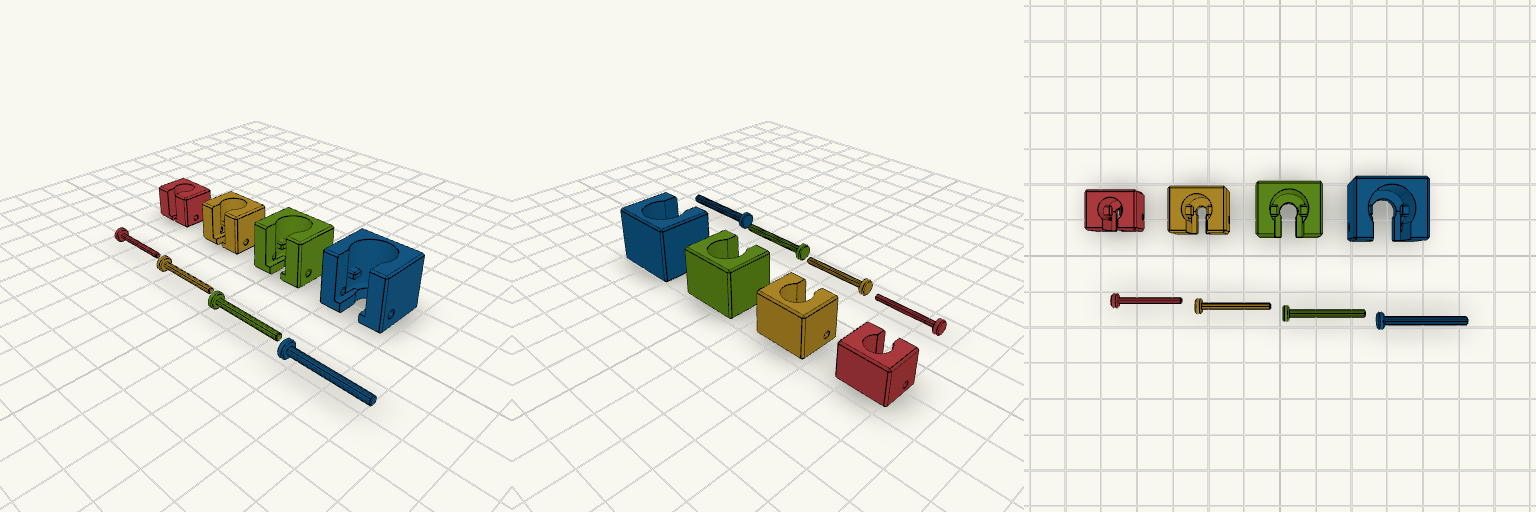
Inline Screw Driver Retainers
These four independent sleeves snap over the shaft of a screwdriver (or hex bit) and grip the screw from the sides, making overhead installation much safer. The driver bit drops straight through the open top to engage the screw head directly. As the screw bites into the material, the flexible jaws slide back up the driver shaft, releasing the screw automatically without jamming against the ceiling. What it's for Holding screws securely to a driver for overhead work Accommodates four size ranges (1–8 mm screw diameters) Slides freely on the driver shaft as the screw drives home Dimensions Tiny: Fits 1–2.5 mm screws (red) Small: Fits 2.5–4 mm screws (yellow) Standard: Fits 4–6 mm screws (green) Large: Fits 6–8 mm screws (blue) Wall thickness tapers down to ~1.5 mm at the jaws for optimal FDM flexibility. Print notes Print them standing vertically (as oriented) so the layer lines follow the curve of the C-clip. This ensures maximum lateral flexibility when snapping screws in from the side. No supports required.
Biofloc Monitor Station Enclosure
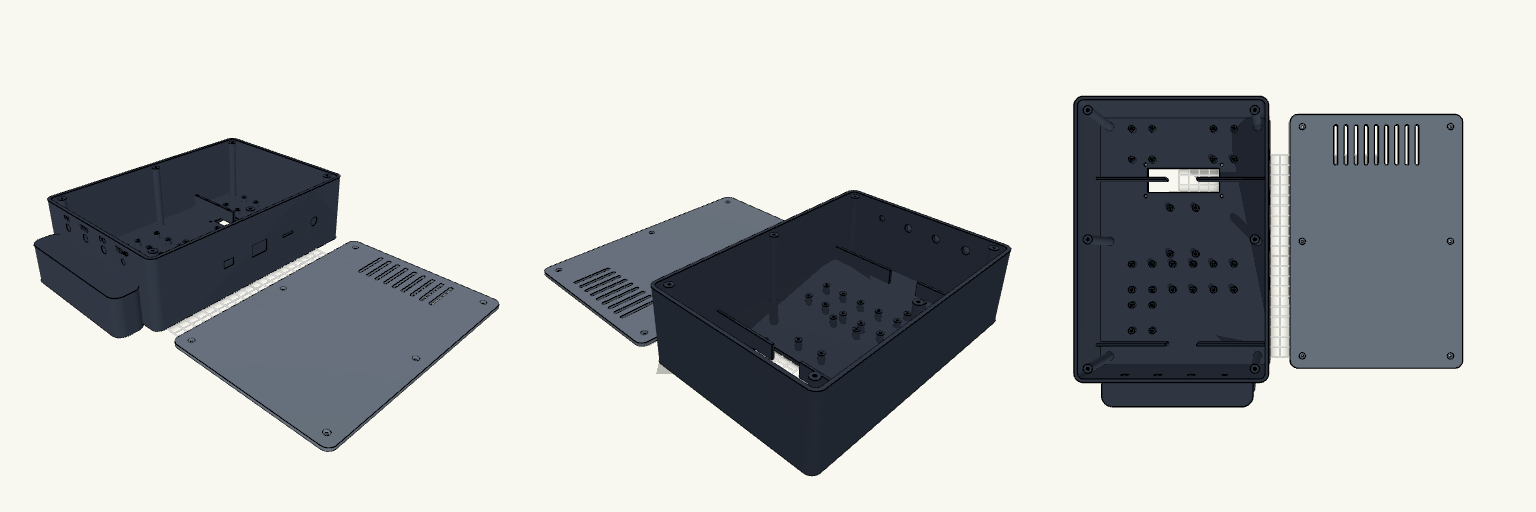
An enclosure is only as good as the snarl of wires it prevents. This is a heavy-duty two-part monitor housing built specifically for FDM printing, designed to group, separate, and anchor a complete suite of biofloc water-quality electronics without turning into a bird's nest inside. The layout isolates the battery compartment at the bottom and keeps the DC buck converters and relay in a ventilated top section, leaving the central deck clear for the ESP32 and an array of sensor interfaces. Internal divider walls double as cable routing channels, forcing the wiring to stay orderly. Core Features Printability: Both halves print completely flat on the build plate (Z=0). The integrated bottom handle is flush with the front face to avoid overhangs. Dimensions: 170 mm width × 250 mm height × 75 mm depth. Hardware Required: 6× M3 screws for the rear cover; additional M3 hardware for the internal standoffs and the 16x2 LCD faceplate mount. Ports: Bottom panel holds 4× sensor ports (3× 8mm, 1× 6mm) with engraved labels. Right panel holds cutouts for 12V DC, an SD card slot, a rocker switch, and USB programming access.
Compact Hex Key Pouch
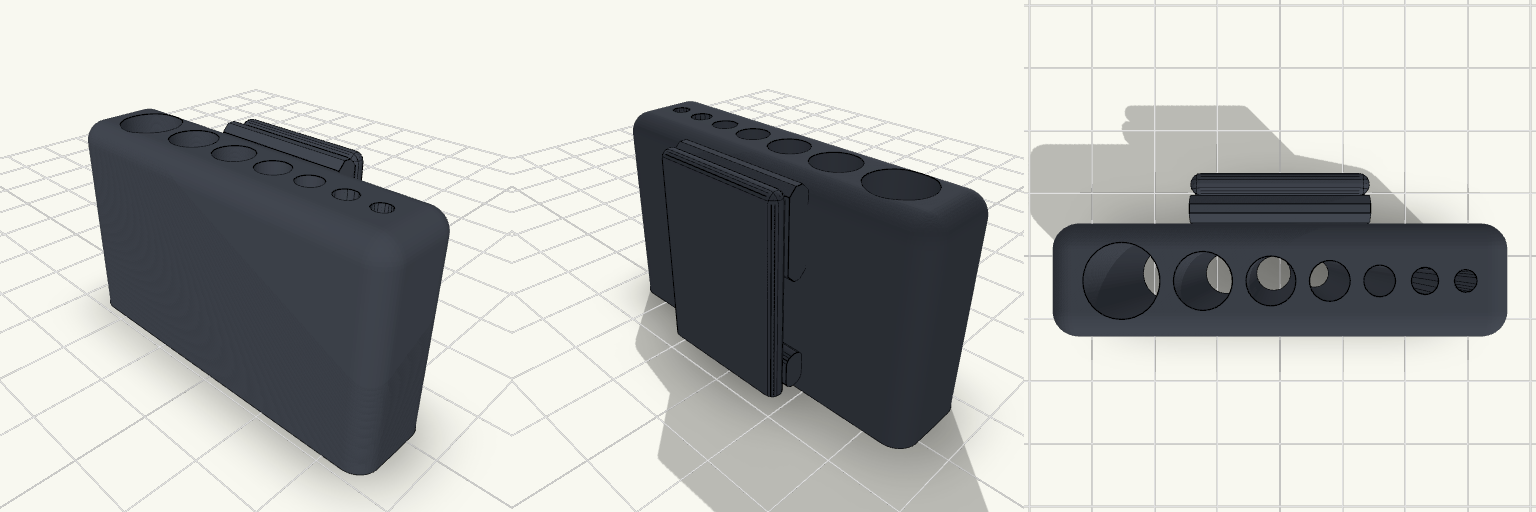
A compact, low-profile pouch for a standard set of seven metric Allen keys (2 mm through 8 mm). Designed for belt or pocket carry, the main body is slimmed down and heavily rounded to prevent it from catching on clothing or digging in while working. The holes run completely through the block so sawdust and metal shavings cannot collect inside. What it's for Keeps your hex keys organized and immediately accessible on a belt or work apron. The integrated spring clip features a tightly radiused catch designed to grip fabric securely without feeling bulky. Dimensions Overall footprint: 68 × 16 mm (body), plus 6.5 mm depth for the clip. Height: 50 mm. Hole diameters: 8.5, 6.5, 5.5, 4.5, 3.5, 3.0, and 2.5 mm, providing a comfortable 0.5 mm clearance for each key. Print notes Print upright as oriented (the flat base on the bed). The through-holes require no supports, and the integrated clip relies on the Z-axis layer strength — PETG or ABS is highly recommended for the flex and durability of the clip, though PLA works for lighter duty.
Acoustic Labyrinth Harmonica Silencer
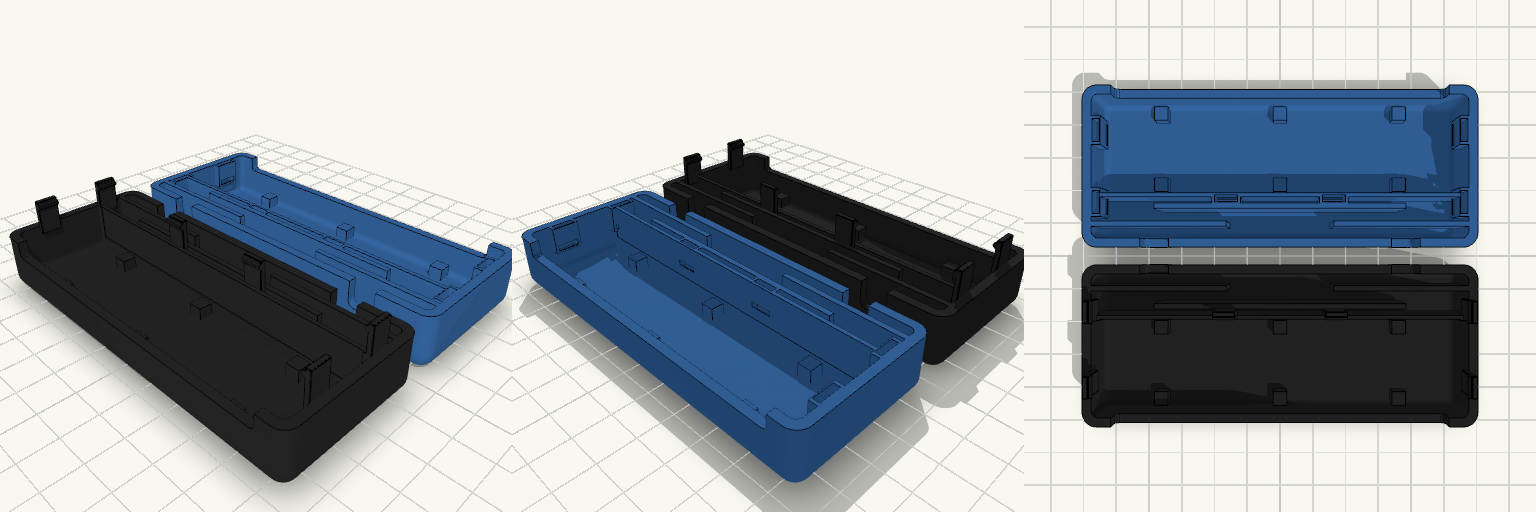
A custom-engineered, fully playable acoustic enclosure designed for the Fender Blues Deluxe 10-hole diatonic harmonica. This silencer creates a miniature acoustic labyrinth directly behind the harmonica while leaving the entire metal mouthpiece exposed through a smooth, continuous lip opening. You can play normally—including bends and fast sweeps—without any rigid plastic interfering with your embouchure. Acoustic Architecture Direct Lip Access: A 94x9mm heavily rounded opening lets you play directly on the harmonica's surface. Three-Chamber Labyrinth: Sound exiting the back of the harmonica is forced through a tortuous path (Chamber 1 → 90° split → Chamber 2 → Chamber 3) before reaching the external exhaust vents. Foam-Ready: Generous internal tolerances (up to 4mm) on the back wall and first baffle allow for the manual installation of standard acoustic foam. Vibration Isolation: The harmonica is held precisely in place by six tiny internal ribs with a calibrated 0.4mm clearance, eliminating rattle without clamping the instrument. Tool-Free Assembly: Six internal cantilever snap-fits lock the top and bottom shells securely together and can be separated by hand.
Acoustic Harmonica Silencer Enclosure
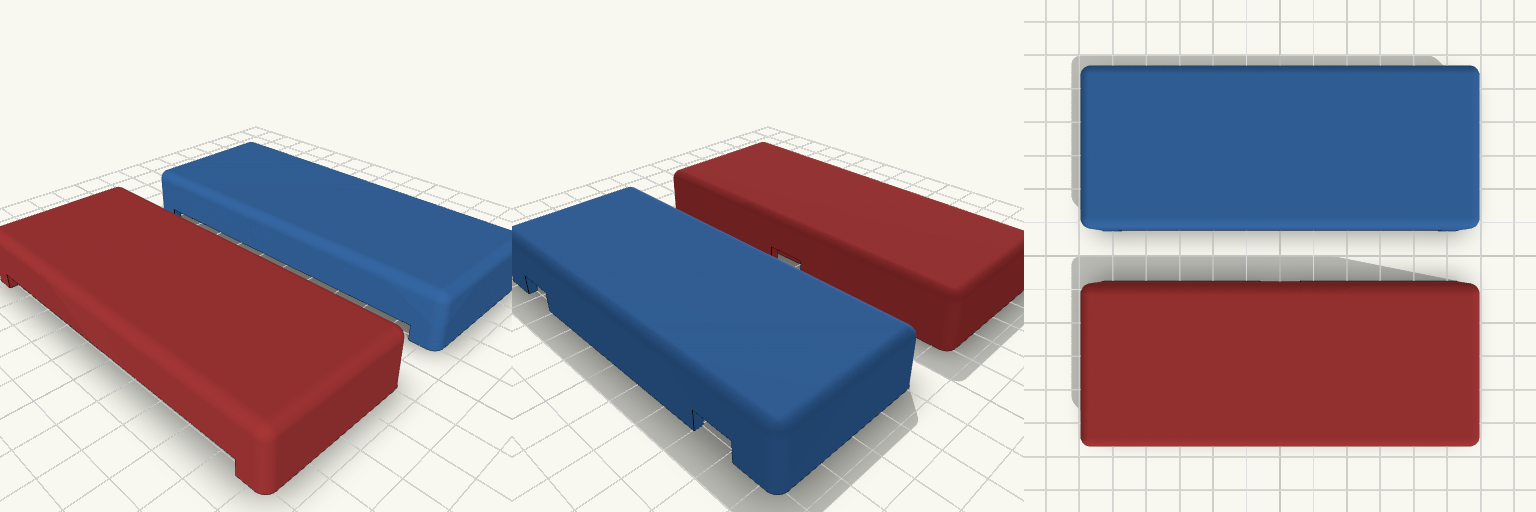
A custom-designed acoustic enclosure built to fit a standard 10-hole diatonic harmonica (specifically dimensioned for the Fender Blues Deluxe). This silencer is built to drop external volume during practice while preserving a totally natural playing feel. The enclosure features a wide front opening that allows direct lip contact with the harmonica body, avoiding any forced embouchure changes. The rear of the enclosure acts as a miniature acoustic labyrinth, forcing outgoing air through staggered baffles and multi-chamber pathways to break up sound waves before they exit the exhaust ports. Remixing and Assembly Clearances: The default harmonica cavity includes a 0.4mm clearance, with 4mm of allocated depth at the rear for installing your own acoustic foam. Two-Piece Shell: The model splits into a top and bottom shell, joined by integrated friction-fit alignment pins. Print Settings: Prints completely support-free when the large flat mating surfaces are placed face-down on the build plate. PLA or PETG recommended for rigidity and snap-fit durability.
10mm-Tip Pressure Stylus
Solid-body pressure stylus with a 10mm spherical working tip and an 110mm overall length. Mates with the human hand for direct mechanical transfer onto resistive touch panels, modeling clay, or mechanical switches. Specifications and Fitment Working Tip: 10mm diameter. Grip Profile: Maximum diameter of 22mm tapering down to a 13mm waist. Total Length: 110mm footprint. Compatibility: Functions on physical media and resistive panels only. Will not register on capacitive touchscreens (modern phones or tablets) as it lacks conductivity.