Support Casque Base 120mm
Made by a Guest
Created 1 months ago
Description
Support monobloc pour casque audio. Construit pour la stabilité sans assemblage requis.
Dimensions critiques :
- Base : 120 mm de diamètre pour assurer l'équilibre de l'ensemble.
- Hauteur du pied : 180 mm (la hauteur totale atteint environ 217 mm avec le berceau).
- Berceau (repose-bandeau) : 45 mm de profondeur avec un profil convexe. À vérifier contre la largeur de l'arceau du casque ciblé avant impression.
Imprimable en PLA d'une seule pièce, sans supports. L'orientation par défaut place la base sur le plateau.
Photos
Technical views
More like this
Explore more in Desk & Tech →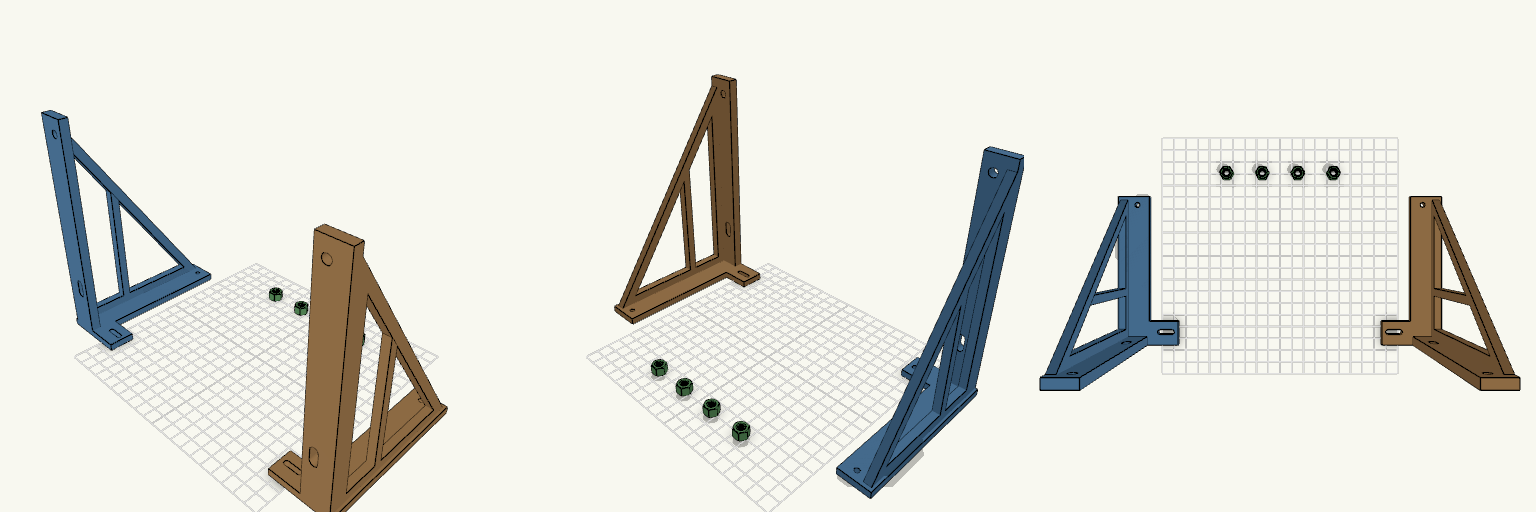
Tromba Perch — Due Staffe Laterali
Tromba Perch è una coppia di staffe laterali indipendenti per una tromba 220x160 mm con interasse fori di 240 mm. Senza traversa centrale, ogni staffa si avvita sul monitor con la propria base e regge un lato della tromba. Si risparmia materiale e ogni pezzo entra facilmente nel piatto di stampa. Features Interasse fori tromba invariato: 240 mm in orizzontale, 126 mm in verticale Pilastro allargato verso l'esterno fino a filo del triangolo Triangolo a telaio con montante di irrigidimento Base da 125 mm con fori di fissaggio anteriori (asole regolabili) e posteriori Fori tromba da 6,4 mm per perni M6, foro basso asolato per regolare l'inclinazione In the box Staffa sinistra Staffa destra 4 dadi M6 da 7 mm, stampati a parte Print notes Le due staffe sono pezzi separati, senza giunto Filettatura stampata in PLA fragile: per carichi veri meglio dadi metallici
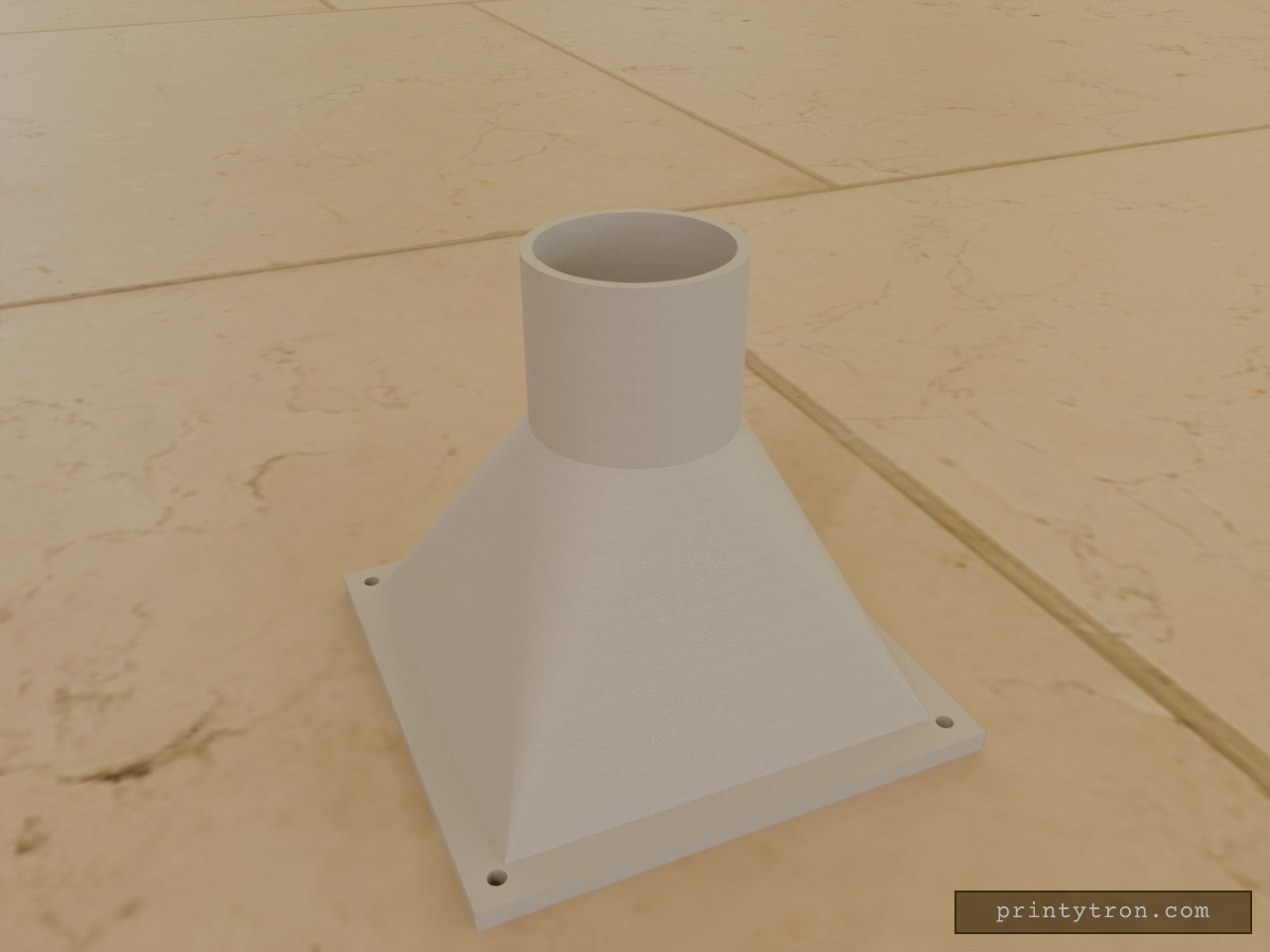
Square-to-Round Fan Duct With Spout
A fan-shroud adapter in the spirit of a classic blower nozzle: a flat square flange that funnels up into a round outlet, then runs straight like a spout. 92.5 mm square flange, 4 mm thick, with four M3 clearance holes on an 82.5 mm pitch (5 mm from each edge) 75 mm square inlet 50 mm square-to-round transition 30 mm straight round tube, 32 mm inner diameter, 36 mm outer 2 mm walls, no chamfers, prints flange-down in PLA without supports
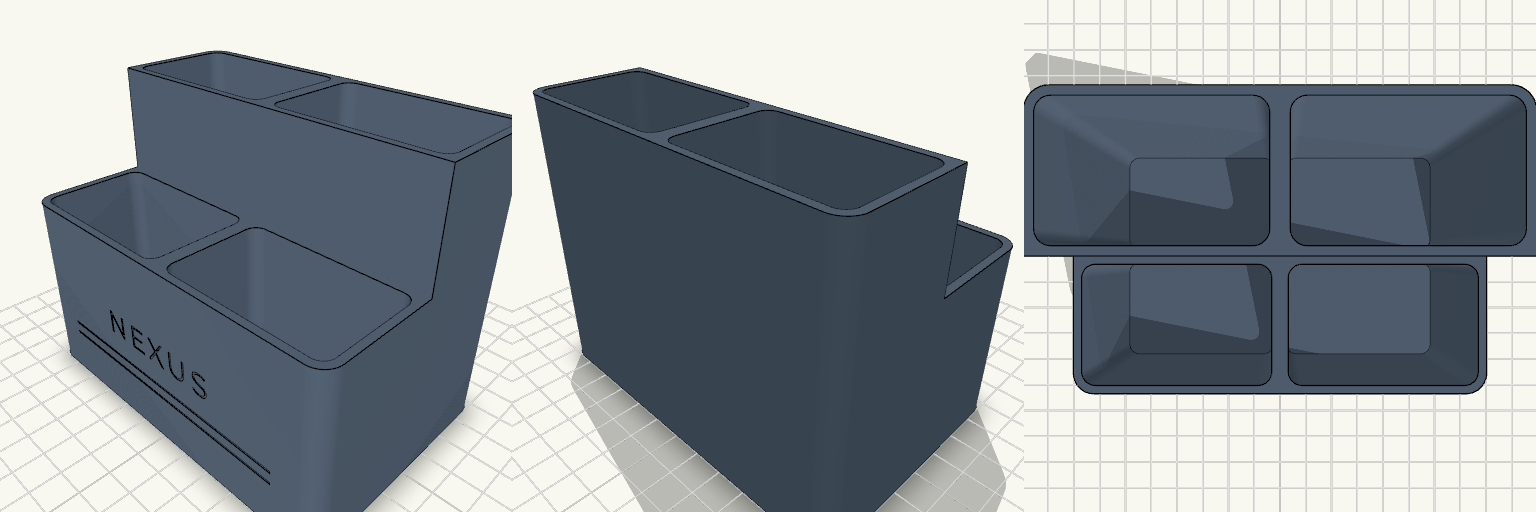
NEXUS Desk Pen Holder
What it's for A minimalist desk organizer with four open-top compartments for pens, pencils, markers and small stationery. A stepped front lowers the front pair for easy reach to small items, and a small NEXUS logo is engraved on the front face. Dimensions Footprint: 120 × 80 mm Height: 95 mm rear, 60 mm front Wall thickness: about 2.4 mm Flat base, rounded vertical corners, chamfered base edge Remix ideas Change the logo text to a name or initials. Make the front compartments deeper for scissors or rulers. Add a non-slip pad under the base.
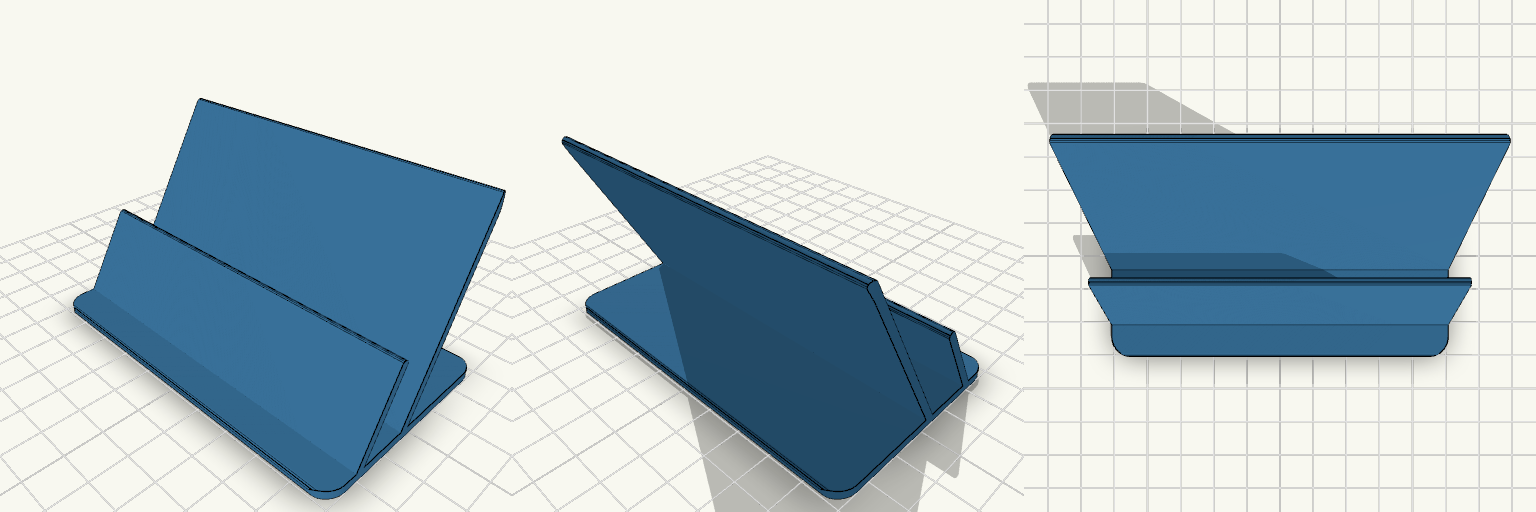
手机支架
A phone stand for a phone that keeps sliding flat or tipping over: a 60° backrest holds it upright, and a front lip stops it sliding out. Key numbers Base: 100 × 60 mm, 2.2 mm thick Backrest tilt: 60° from the table Slot: 12 mm wide, measured between backrest and front lip Walls: 2.2 mm throughout Corners: rounded in plan and along the profile edges Printing Print with the base flat on the bed. No supports needed: the backrest leans back at 60°, which stays within a typical overhang limit. Phones with thick cases may need a wider slot.
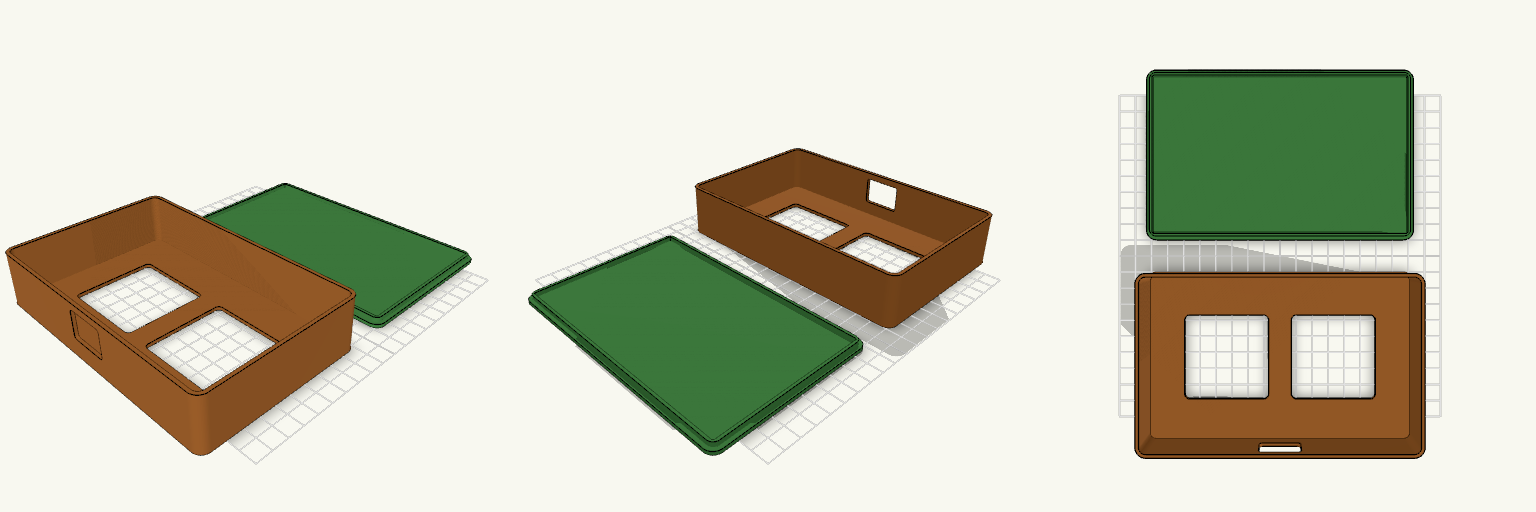
Joystick Controller Enclosure With Bottom Cover
A dual-joystick controller enclosure that can't be wired or soldered through the top, because the two 52 × 52 mm joystick openings are too small for the board. This version splits the floor off as a removable bottom cover, so the board and joysticks go in from below. Key numbers Outer size when assembled: 165 × 105 × 35 mm (shell 33 mm + cover 2 mm) Walls and top panel: 2 mm; corner radius R6 Joystick openings: two at 52 × 52 mm, R3 corners, 14 mm apart RJ45 window: 25 × 18 mm, centred on the rear wall, 6 mm up from the open edge (provisional) Cover lip: 0.3 mm clearance inside the walls, 3 mm tall Printing Shell: print top panel down, open side up, no supports. Cover: print flat with the lip pointing up. Check the 25 mm bridge over the RJ45 window in the slicer preview. The cover is held by friction or a dab of adhesive; there are no screws.
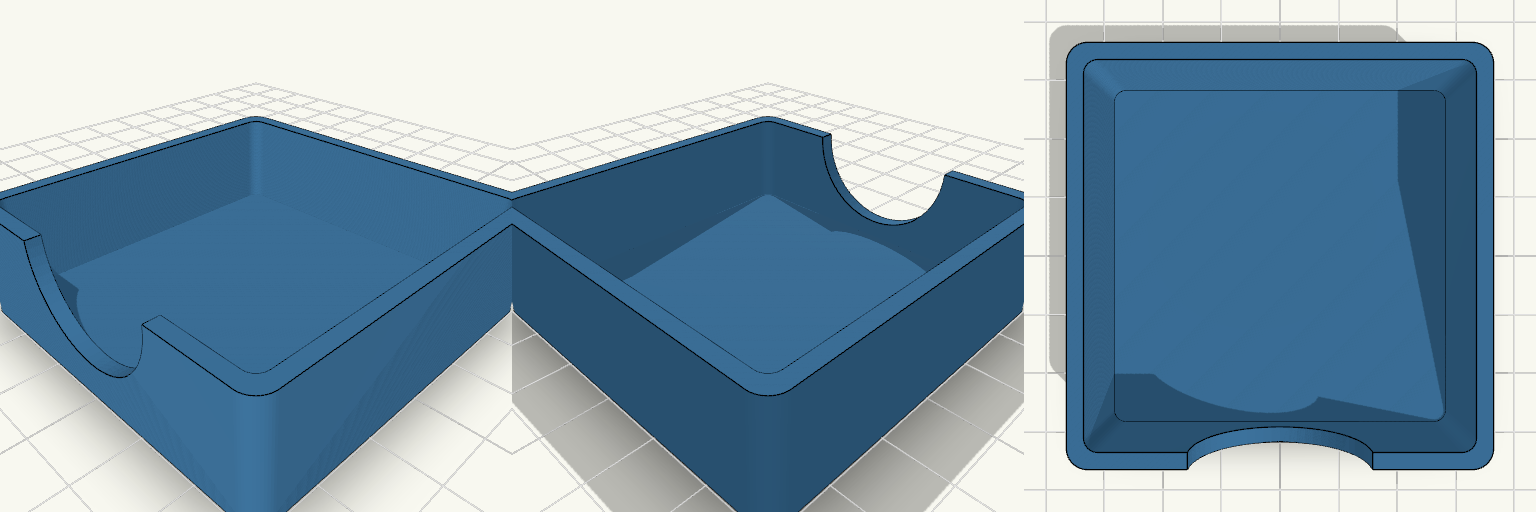
Base cuadrada para estuche de auriculares
Para qué sirve Base cuadrada pensada para dejar el estuche de carga de los auriculares en su sitio sobre la mesa. La cavidad es algo más grande que el estuche para que entre suelto y se pueda coger sin forzar, y la muesca redondeada del frente deja pasar el dedo para sacarlo de un tirón. Cavidad con 0,6 mm de holgura por lado respecto al estuche. Muesca redondeada de 26 mm en el borde delantero. El estuche queda sujeto pero sobresale, así que se agarra fácil. Dimensiones Tamaño exterior: 59,9 × 59,9 mm, con 18,4 mm de altura total. Paredes de 2,4 mm y cavidad de 16 mm de profundidad. Con el estuche dentro, sobresale unos 11 mm por encima de la base. Ideas de remezcla Ajustar la holgura si el estuche entra demasiado justo o demasiado suelto. Ampliar la muesca frontal para dedos más gruesos. Añadir una salida lateral para el cable de carga y poder dejar el estuche enchufado.