TCG Pre-Grading Imaging Stand
Made by a Guest
Created 1 months ago
Description
A two-piece cantilever imaging stand engineered specifically for trading card pre-grading and the iPhone 16 Pro. The design strips away light-blocking walls in favour of an open C-arm structure, allowing desk lamps to rake across the card from three sides without casting harsh structural shadows.
The stand breaks down into two separate pieces for flat printing without supports.
- Raised Pedestal: Sized at 64x89mm to fit standard raw or penny-sleeved cards (like Pokémon or MTG). The raised platform prevents edge-shadows that occur when cards lie flat on a desk.
- Tactile Phone Rails: Raised outer guides sit flush with the iPhone 16 Pro's straight edges, bypassing the camera bump. Push the phone flush into the top-left corner rails to perfectly centre the lenses over the card.
- Focal Clearance: Suspends the phone 160mm above the card, providing the ideal distance for macro focus while keeping the entire card squarely in the frame.
Images
More like this
Explore more in Desk & Tech →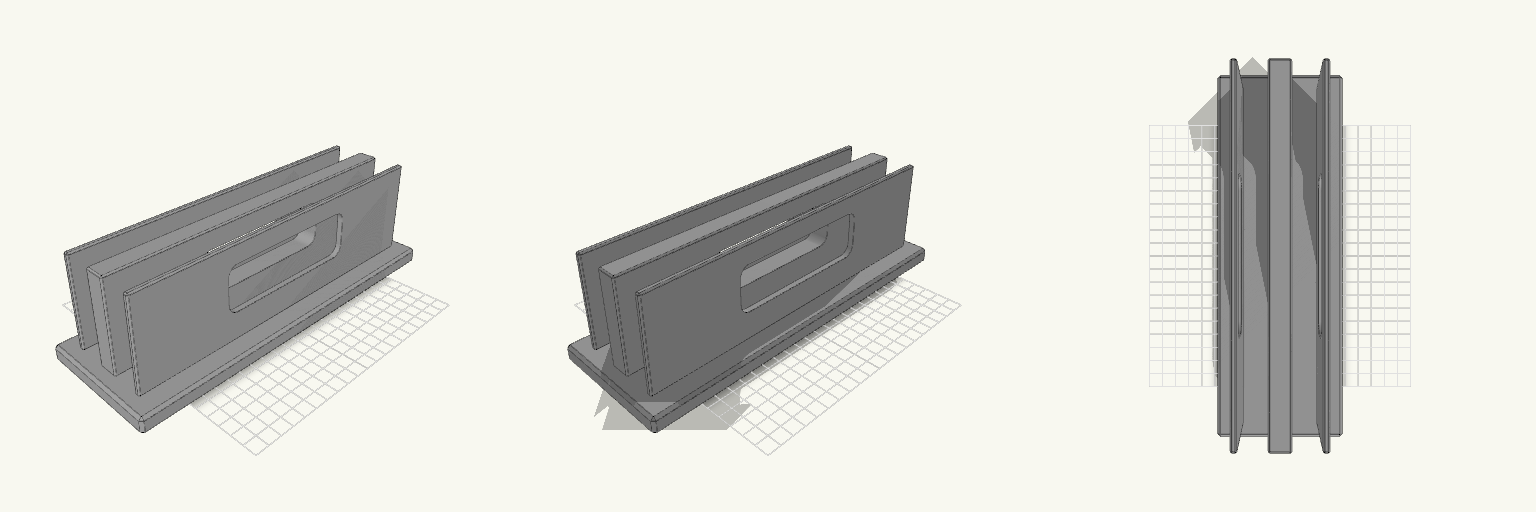
Dual Vertical Laptop Stand, 20mm Slots
A vertical stand that docks two closed laptops side by side on their edges, freeing up desk space. Built for a setup with a work laptop and a personal laptop sharing one desk. Each slot has a window cut through its walls, so a hand can rest on a lid to check for heat without removing the laptop. What it's for Holding two closed laptops upright, one per slot, with a solid 15 mm divider between them. Checking temperature by touch through the window in each slot wall. Staying put thanks to a wide, weighted base that resists tipping. Dimensions Slot width: 20 mm each Divider between slots: 15 mm Outer and divider wall thickness: 4 mm (the divider is the 15 mm gap) Overall width: about 93 mm Overall depth: 270 mm base, 250 mm walls Overall height: about 82 mm (12 mm base plus 70 mm walls) Windows: 110 mm long by 35 mm tall, with rounded ends, through each wall Weight pockets: four underneath, each 14 × 80 × 7 mm Print notes Print with the base flat on the bed. No supports are needed for the main body. The underside pockets open downward. Fill them with steel washers, shot or similar, then seal them with felt, a sticker or a thin plate. Use PETG or PLA with 3 or more perimeters for stiff walls. Remix ideas Change the slot width to fit thicker laptops or ones in sleeves. Add a third slot for a tablet. Add rubber feet or a felt pad under the base. Add a cable cutout in the base for charging leads.
Helix — Twisted Hexagonal Pen Cup
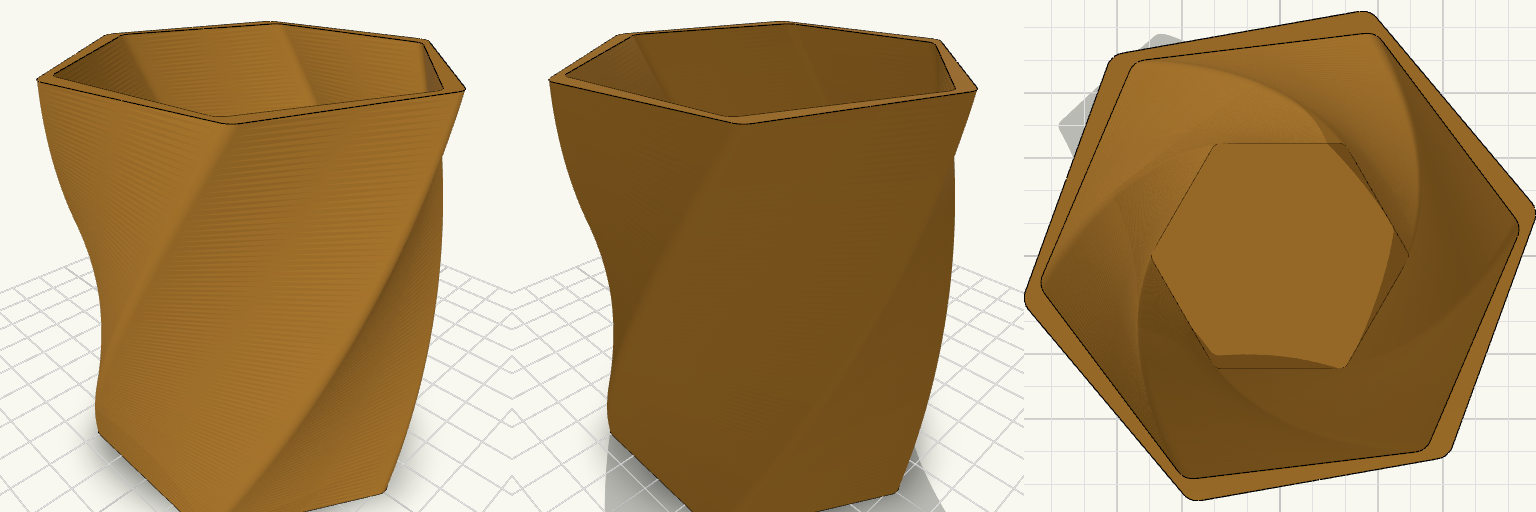
A hexagonal desk cup with the twist built into its silhouette: the six-sided body rotates 70° from bottom to top, so the facets read as a slow spiral rather than a straight column. It stands 90 mm tall and measures about 83 mm across the corners — enough for pens and pencils, with room to spare for scissors or a ruler. The hexagon sits flat on the desk, giving it the weight of a solid block rather than a floating one. Walls are 3 mm and the floor is 4 mm, so it holds its shape under a full load without feeling heavy. Dimensions Overall height: 90 mm — takes pens, pencils, scissors and a ruler Width across corners: about 83 mm Wall thickness: 3 mm Floor thickness: 4 mm Features Six-sided body with a 70° twist from base to rim Flat hex base sits directly on the desk for a stable, blocky stance One named area, Twisted Cup Body, printed as a single piece Flat facets catch the light along the spiral Print notes Print upright as oriented on the plate. The twist is gentle enough that the walls lean without needing supports, and the flat hex base gives a broad, secure contact patch. A matte dark filament shows the spiral facets best; 0.2 mm layers with two or three perimeters make a sturdy cup, and a finer layer height sharpens the edges of the twist.
Tromba Perch — Due Staffe Laterali
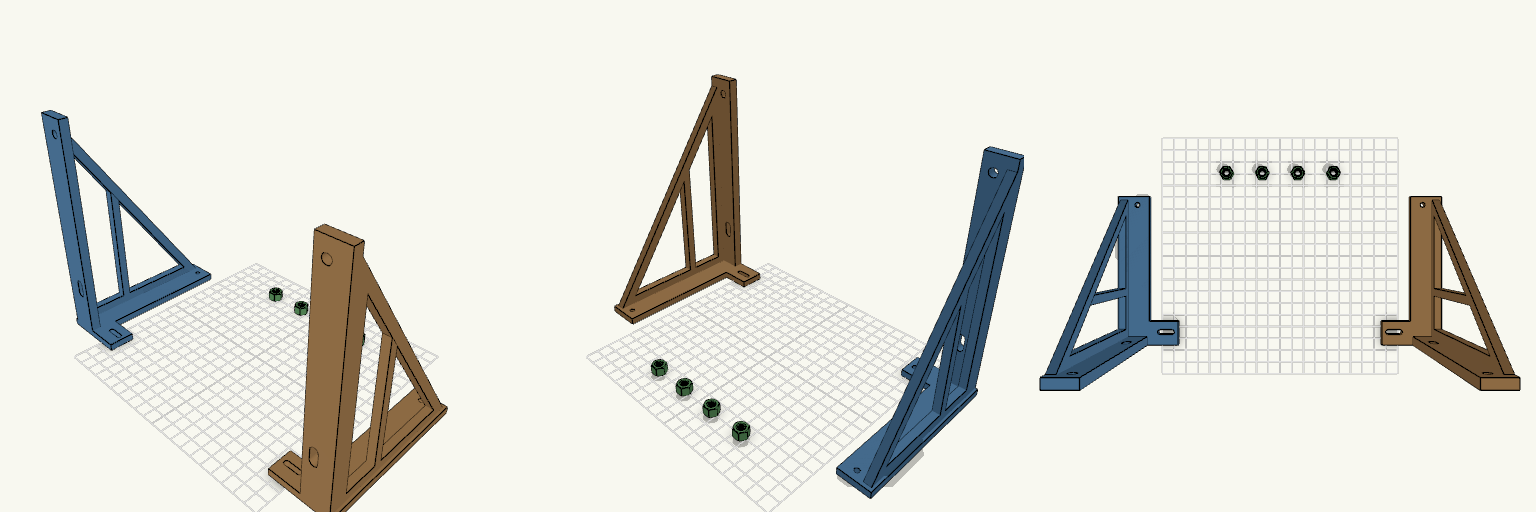
Tromba Perch è una coppia di staffe laterali indipendenti per una tromba 220x160 mm con interasse fori di 240 mm. Senza traversa centrale, ogni staffa si avvita sul monitor con la propria base e regge un lato della tromba. Si risparmia materiale e ogni pezzo entra facilmente nel piatto di stampa. Features Interasse fori tromba invariato: 240 mm in orizzontale, 126 mm in verticale Pilastro allargato verso l'esterno fino a filo del triangolo Triangolo a telaio con montante di irrigidimento Base da 125 mm con fori di fissaggio anteriori (asole regolabili) e posteriori Fori tromba da 6,4 mm per perni M6, foro basso asolato per regolare l'inclinazione In the box Staffa sinistra Staffa destra 4 dadi M6 da 7 mm, stampati a parte Print notes Le due staffe sono pezzi separati, senza giunto Filettatura stampata in PLA fragile: per carichi veri meglio dadi metallici
NEXUS Desk Pen Holder
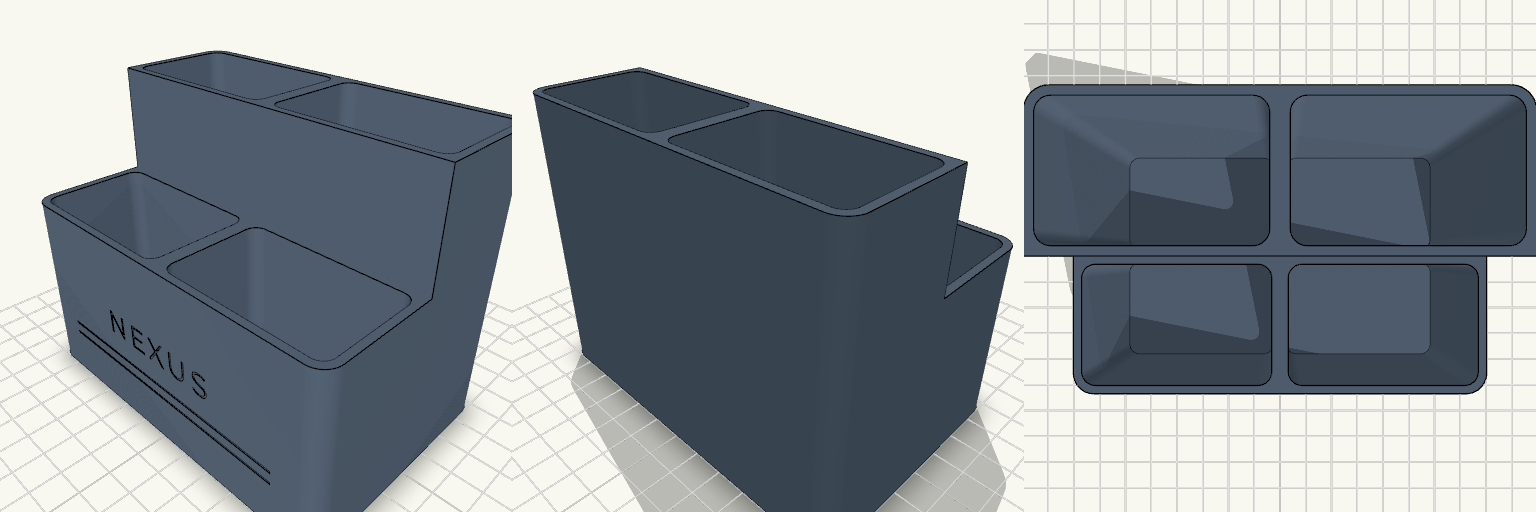
What it's for A minimalist desk organizer with four open-top compartments for pens, pencils, markers and small stationery. A stepped front lowers the front pair for easy reach to small items, and a small NEXUS logo is engraved on the front face. Dimensions Footprint: 120 × 80 mm Height: 95 mm rear, 60 mm front Wall thickness: about 2.4 mm Flat base, rounded vertical corners, chamfered base edge Remix ideas Change the logo text to a name or initials. Make the front compartments deeper for scissors or rulers. Add a non-slip pad under the base.
手机支架
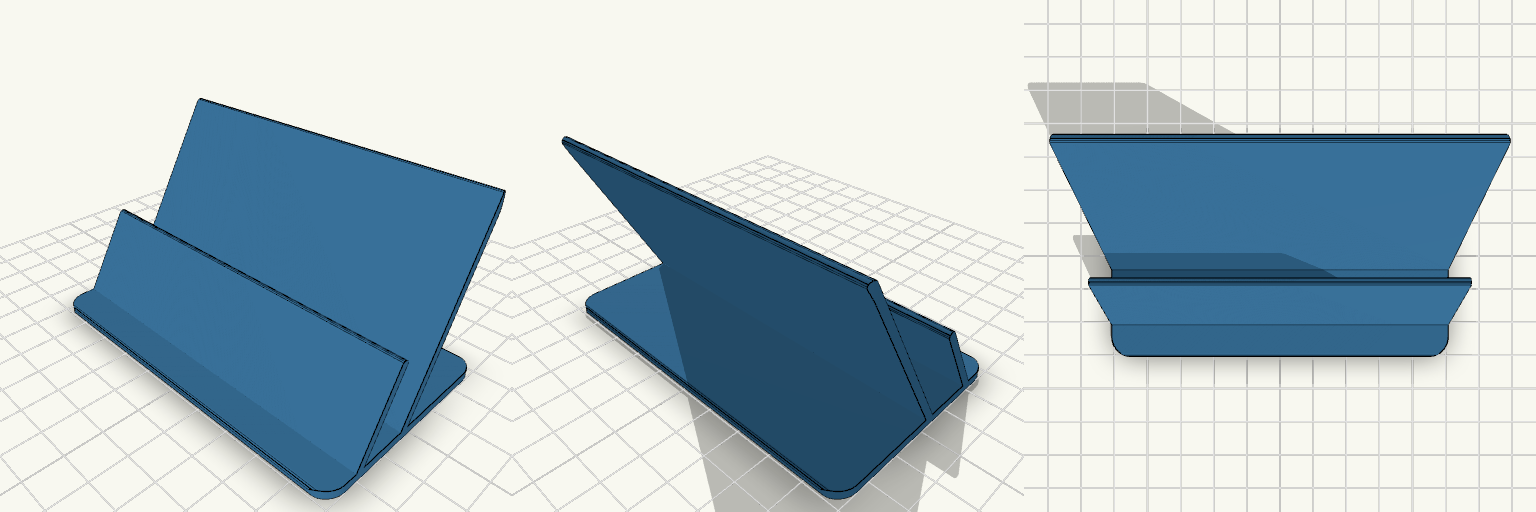
A phone stand for a phone that keeps sliding flat or tipping over: a 60° backrest holds it upright, and a front lip stops it sliding out. Key numbers Base: 100 × 60 mm, 2.2 mm thick Backrest tilt: 60° from the table Slot: 12 mm wide, measured between backrest and front lip Walls: 2.2 mm throughout Corners: rounded in plan and along the profile edges Printing Print with the base flat on the bed. No supports needed: the backrest leans back at 60°, which stays within a typical overhang limit. Phones with thick cases may need a wider slot.
Joystick Controller Enclosure With Bottom Cover
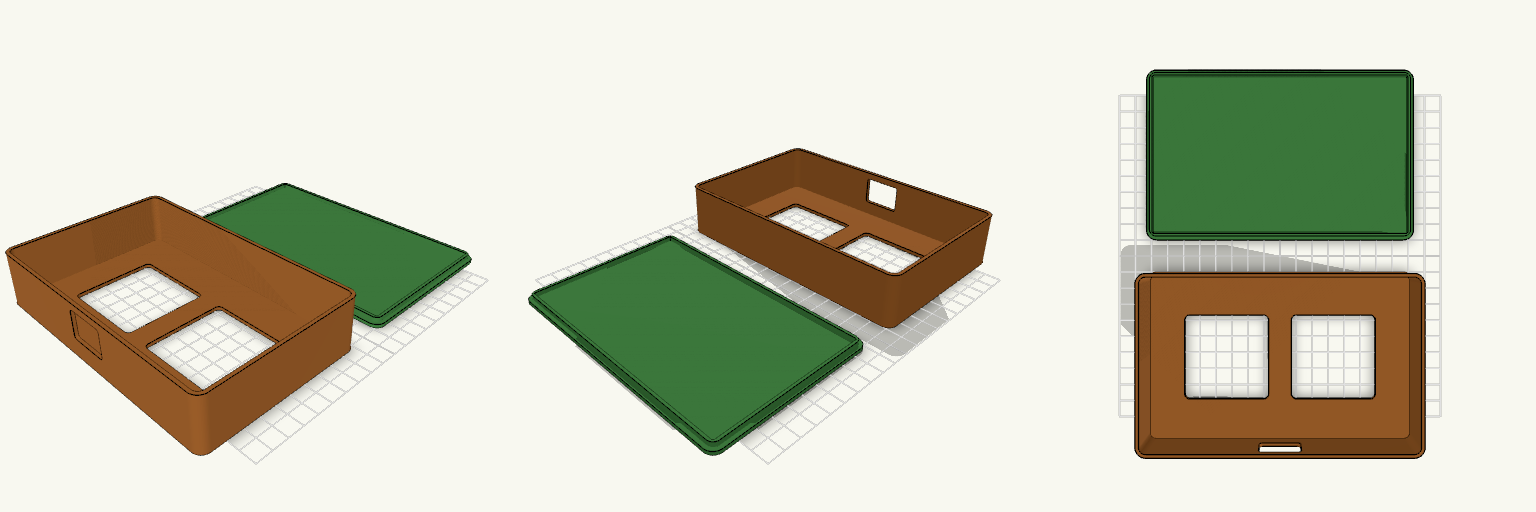
A dual-joystick controller enclosure that can't be wired or soldered through the top, because the two 52 × 52 mm joystick openings are too small for the board. This version splits the floor off as a removable bottom cover, so the board and joysticks go in from below. Key numbers Outer size when assembled: 165 × 105 × 35 mm (shell 33 mm + cover 2 mm) Walls and top panel: 2 mm; corner radius R6 Joystick openings: two at 52 × 52 mm, R3 corners, 14 mm apart RJ45 window: 25 × 18 mm, centred on the rear wall, 6 mm up from the open edge (provisional) Cover lip: 0.3 mm clearance inside the walls, 3 mm tall Printing Shell: print top panel down, open side up, no supports. Cover: print flat with the lip pointing up. Check the 25 mm bridge over the RJ45 window in the slicer preview. The cover is held by friction or a dab of adhesive; there are no screws.