Threaded Spoke Magnet Clamp
Created 1 months ago
Description
A zero-hardware, print-in-place clamp for mounting a 10x4mm cylindrical magnet to an e-bike spoke, designed for velocity sensors.
The two-piece assembly uses an M16x2 thread to clamp directly over the spoke, trapping the magnet inside the cap and requiring no glue or screws.
- Magnet Pocket: Sized at 10.1mm to 10.6mm taper to account for ASA shrinkage, with a direct drop-in channel.
- Spoke Clearance: The slot accommodates standard bicycle spokes, self-centering as the cap is tightened.
- Standoff: The cap body is exactly 15mm long to position the sensor face properly.
- Material: Designed for ASA or PETG for outdoor UV and temperature resistance. No supports needed.
Images
More like this
Explore more in Automotive, RC & Hobby →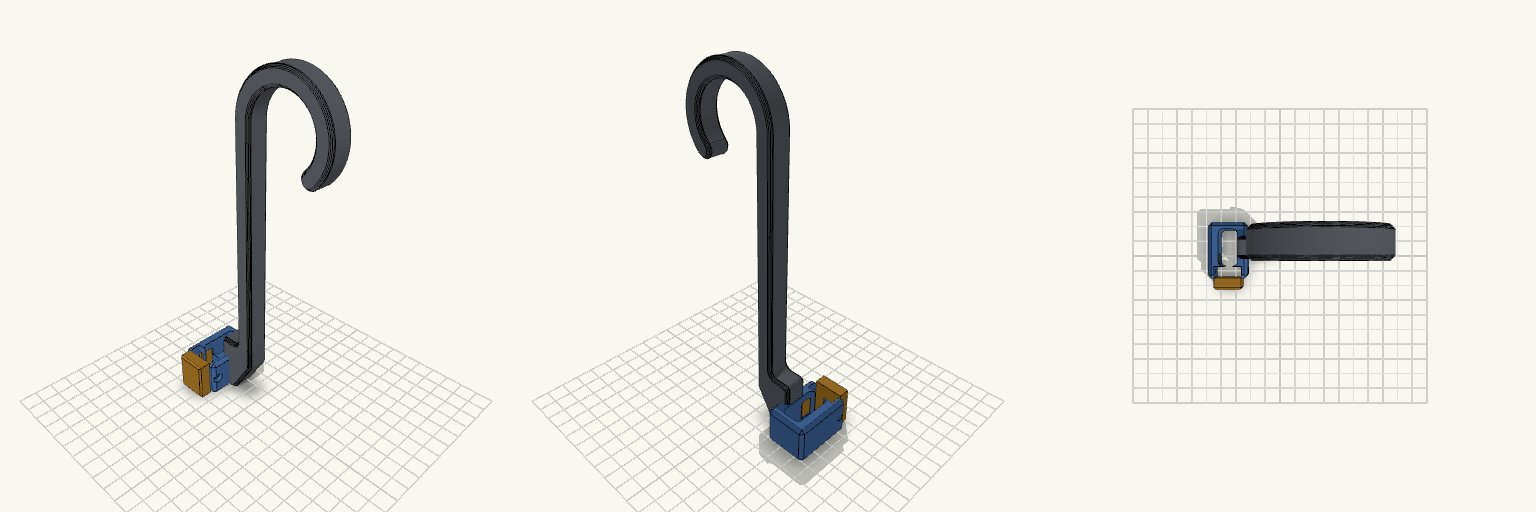
Gancho de Garrafa com Braçadeira Snap
Gancho de garrafa de treino em J, 200 mm, com braçadeira bipartida na base: corpo fixo ligado à haste e tampa separada que fecha por encaixe de pressão ao redor da alça de 12 × 24 mm. Pontos de remix Snap-fit: ganchos flexíveis de 8 mm de comprimento, 1,8 mm de espessura e ressalto de 0,6 mm (armlen, armt, ridge). Entrada em rampa, retenção reta. Folga: 0,2 mm entre tampa e corpo (gap). Trava extra: furo M3 em gota atravessando tampa e corpo, com porca sextavada embutida no lado +X. Paredes: wallx (6,4 mm) e wallf (7,5 mm) definem o tamanho externo; reduza se o furo M3 for dispensado. Haste e gancho: inalterados, seção 10 × 14 mm, bojo de 40 mm, boca de 34 mm. Combina com: parafuso M3 e porca M3 (opcionais); imprima corpo e tampa separados em PETG ou PLA.
Triple Socket Adapter Floor Cradle
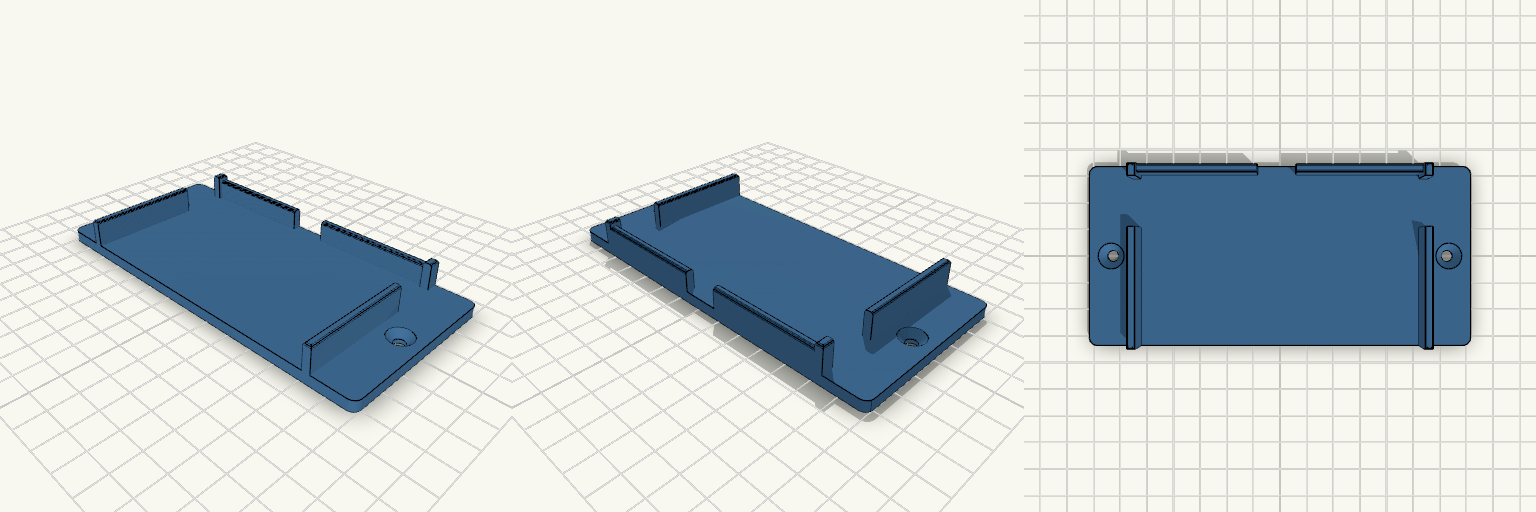
What it's for A one-piece floor cradle that holds a triple 12V socket adapter horizontally under a dashboard. The front and top stay open, so the sockets and power switches remain reachable, and side windows keep the side USB ports clear. Dimensions Adapter: 100.4 x 60.85 x 31.72 mm, about 1 mm clearance Side walls: 3 mm thick, 14 mm tall Side windows: 18 mm long, centred 51.38 mm from the front (plus 1 mm clearance) Back lip: 12 mm tall with reinforced corners Mounting ears: 16 mm each end, countersunk screw holes Remix ideas Change the window length to fit a different USB port. Add a third screw hole at the back. Lengthen the ears for wider mounting.
Technic Plate 2x4 With Holes, Set of 6
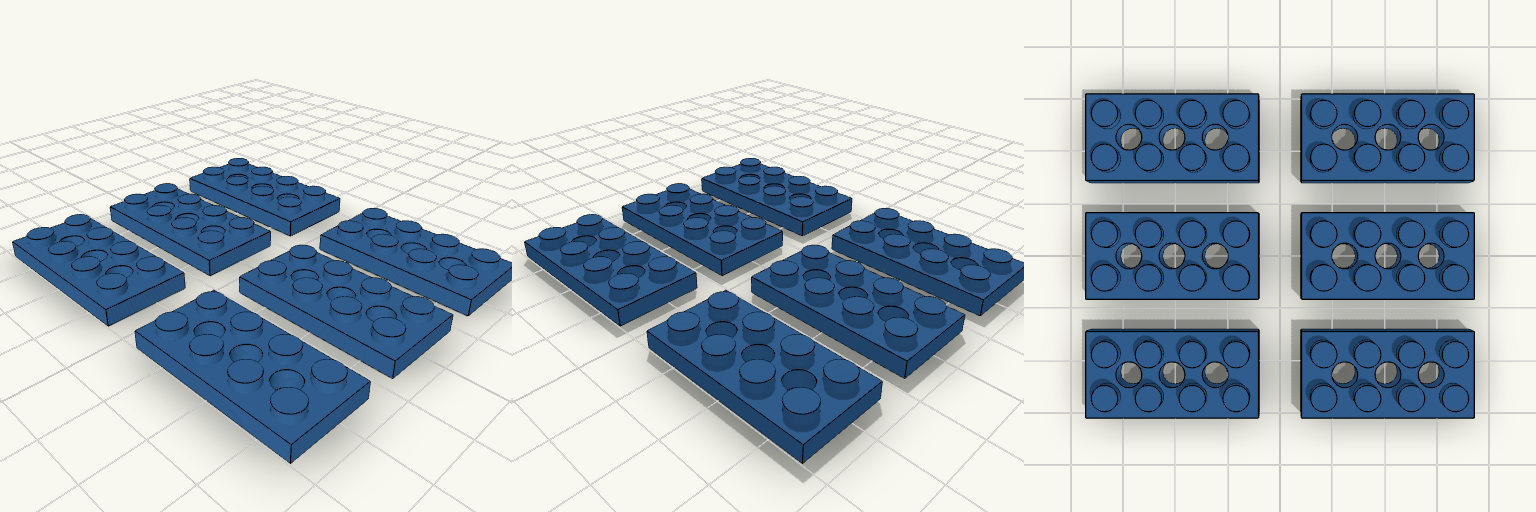
A 2x4 plate with no way to pass a Technic pin or axle through it is a dead end in a studless build. This plate has three holes on the centre line, so pins and axles go straight through. Six are laid out flat for one print run. Key numbers Plate: 32 x 16 mm, 3.2 mm thick, studs on 8 mm pitch Studs: 4.8 mm diameter, 1.8 mm tall Holes: three, 4.8 mm diameter, on the centre line, 8 mm apart Print: flat, no supports, 0.2 mm layers; test one first to check clutch fit
Pinch-Feed Drive Roller, Print-Ready
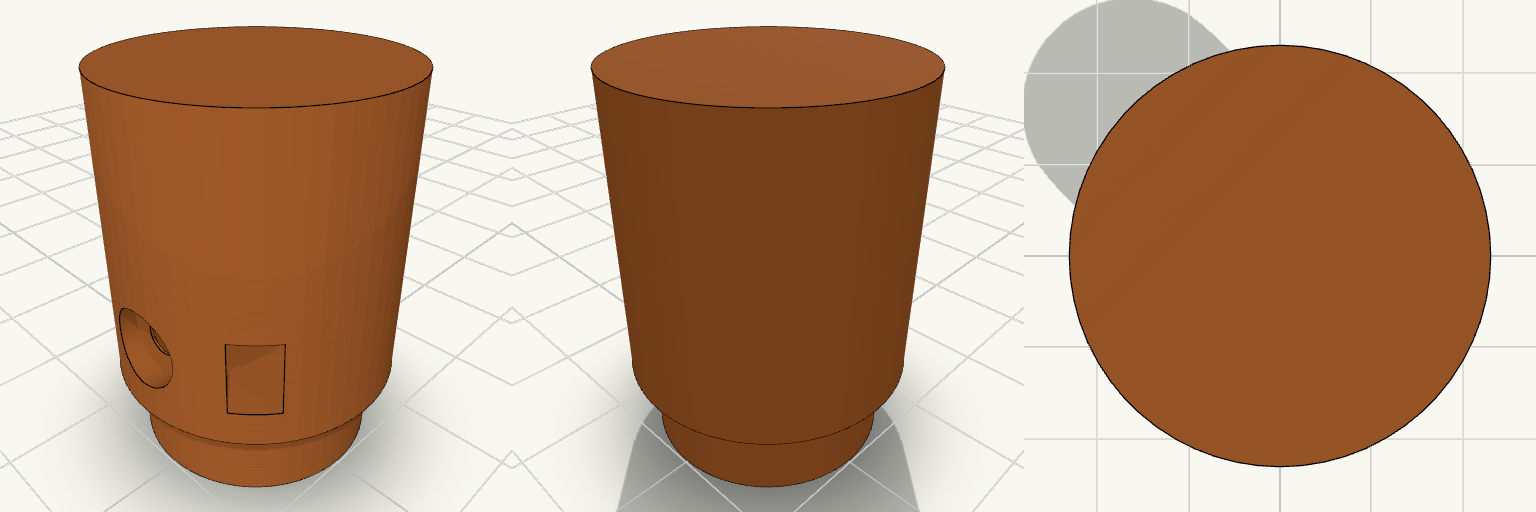
A knurl-free drive wheel for a pinch-feed wire feeder, built like a small industrial pulley: a 24 mm roller with a hub on one side and a blind D-bore that slips over a 5 mm D-shaft. The model is just the roller, standing on its hub and ready to slice. Design notes Blind D-bore, open on the hub face and closed by a wall on the far end, so the closed end shows which side stays out. M3 grub screw hole with a trapped hex nut that slides in through a slot open to the rim. Counterbored screw recess 2 mm deep, so a headed M3 screw sits below the surface and a nylon or TPU sleeve goes on smooth. Hub spaces the roller off the motor face so the two do not rub. Printing Stands on the hub with the bore opening onto the bed, so there is no bridging inside the bore and no supports are needed. Printing upright keeps the roller round. Suggested: PETG, ASA or nylon, 3 or more walls, 25–30% infill.
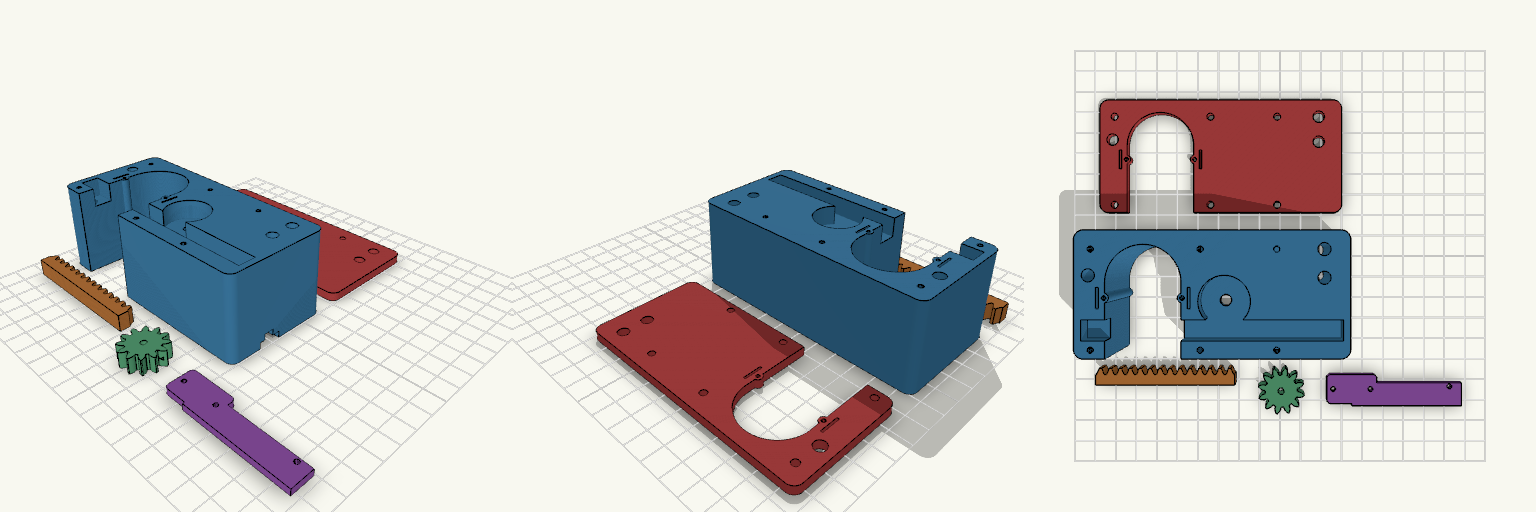
final version 25 mm Paddle Shaft
Motorised rack-and-pinion U-holder for a 30 mm paddle shaft, with hollow flexing snap detents on the slot walls. Fit Host: 30 mm round paddle shaft in a 32 mm slot; N20 gear motor, 12 × 10 mm body, 3 mm shaft. Detents: each slot wall has a hollow bump (1 mm radius through-hole) on a flex finger with a relief slit. The cover plate carries the same features. Not for: shafts other than about 30 mm, or motors with a different body size. Check before printing Measure the N20 body length including gearbox and terminals; the motor length is a parameter. Detent stiffness depends on the bump height and the hole radius. Adjust them for your filament. Parts Housing, sliding rack, pinion, motor retainer and cable cover (one piece), guide cover plate.
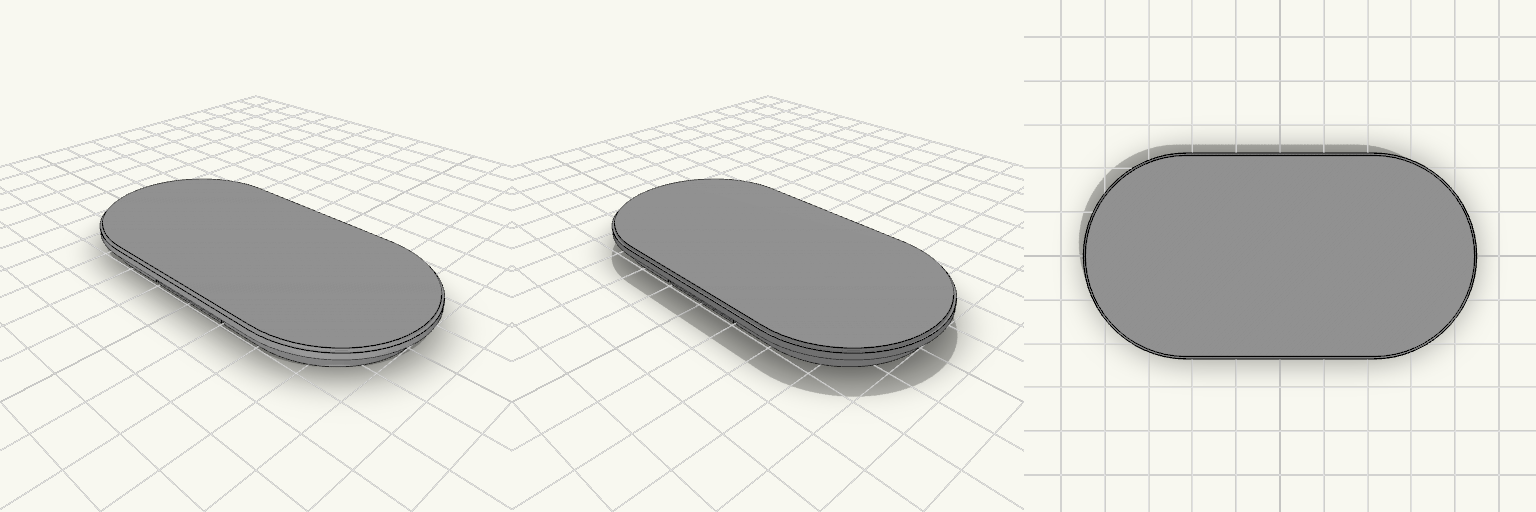
86x45mm Ovaler Karosserie-Blindstopfen mit Snap-Fit-Clips
Geschlossene ovale Abdeckplatte für eine 80 × 39 mm große Öffnung in etwa 1 mm dickem Karosserieblech. Die Kontur ist ein Stadion-Oval, also ein gerades Mittelstück mit vollständig runden Enden. Die Platte wird eingedrückt, die integrierten Snap-Fit-Clips federn zurück und rasten hinter dem Blech ein – ohne Schrauben, Kleber oder separate Befestigungsteile. Die Abdeckung lässt sich wieder entfernen, ohne das Blech zu beschädigen. Das Teil wird als ein Stück gedruckt. Frontplatte: 86 × 45 mm, 2 mm dick, vollständig geschlossen, gerundete Kanten; die 2 mm fallen an der gerundeten Kante etwas dünner aus Einsatz: Außenkante 80 × 39 mm, Endradius 19,5 mm, 4 mm tief, hohle Wand mit 1,6 mm Stärke Innenöffnung: 76,8 × 35,8 mm Flansch: rundum 3 mm breit, an den Längsseiten wie an den Enden; die Clip-Haken liegen vollständig innerhalb der Plattenfläche Clips: zwei Zungen an den Längsseiten oben und unten, je ein 0,7 mm hoher Haken mit Rampen-Anlauf und flacher Fangfläche für 1 mm Blech Clip-Schlitze: 1 mm breit × 6 mm lang durch die Wand der Längsseiten, geben den Zungen Platz zum Federn Passung: Die Außenkante des Einsatzes entspricht exakt 80 × 39 mm, es bleibt kein Spiel – straffer Sitz, vor dem Einbau einen Probedruck einplanen Einbauraum: Die Frontplatte misst 86 × 45 mm; vor dem Einbau prüfen, ob um die Öffnung herum genug Platz für 45 mm Höhe ist Material: PETG oder ASA, mit der Frontseite nach unten drucken Bauteilmaße auf der Druckplatte: 86 × 45 × 6 mm