Track-Ready Kart Frame
Created 1 months ago
Description
A half-meter-long go-kart frame complete with a full racing loadout. The chassis features lightweight cutouts along the floor pan and thick side pods for impact resistance, while the cockpit sports a contoured racing seat with aggressive side bolsters to keep the driver planted. Out back, a finned engine block feeds twin rear-facing exhaust pipes.
Key Features
- Chassis Design: Extended floor pan with weight-reduction cutouts and integrated side pods.
- Racing Seat: Deeply contoured base and backrest with prominent side bolsters.
- Steering: Three-spoke wheel mounted on an angled column with a solid base support.
- Powerplant: Rear-mounted block engine featuring cooling fins and dual exhausts.
- Wheels: Rounded tires with defined center hubs mounted on robust solid axles.
Images
More like this
Explore more in Automotive, RC & Hobby →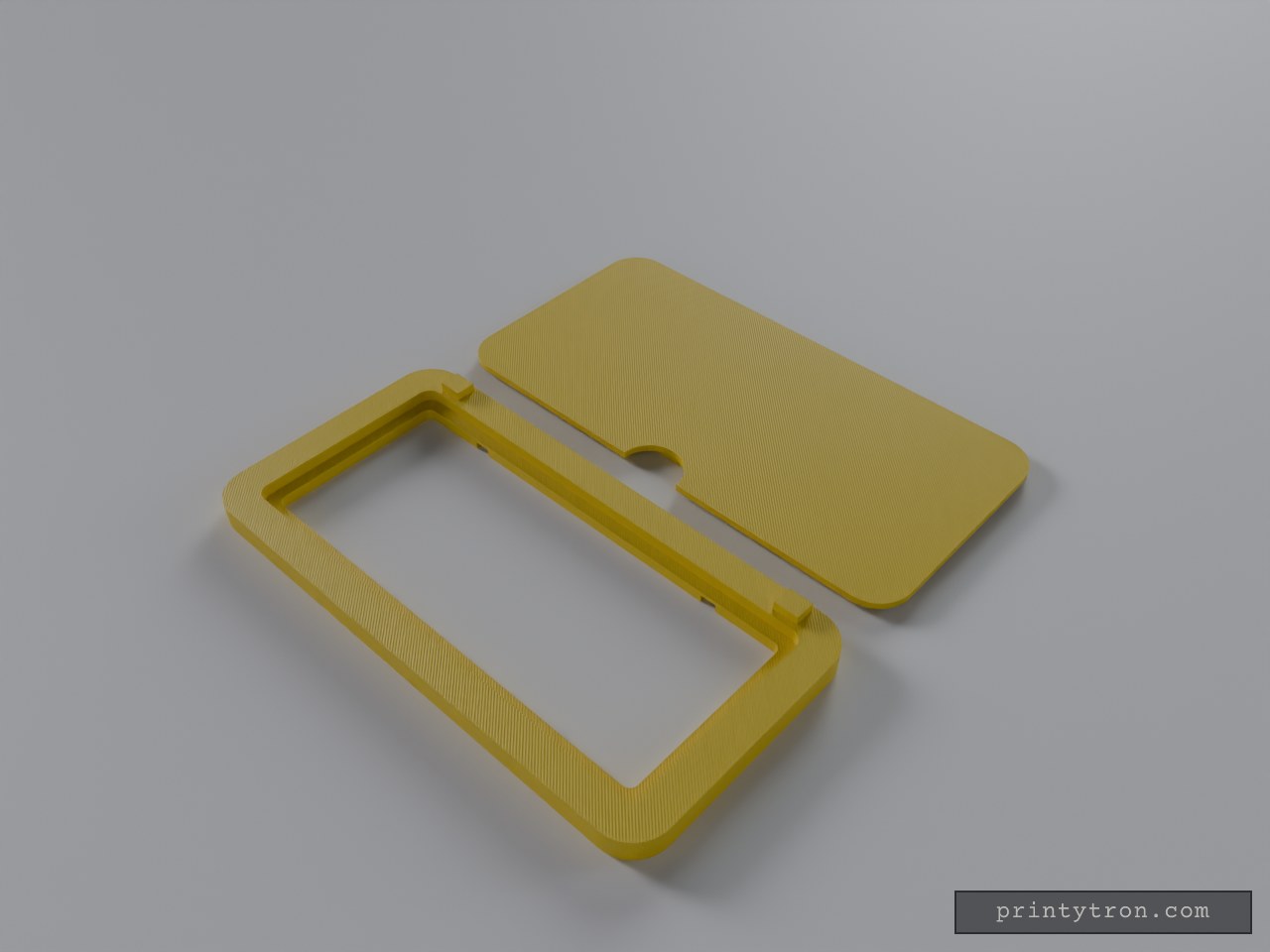
Slim Sun Visor Mirror Frame
A flat, rounded-corner frame for a sun visor vanity mirror, with a separate thin protective lid. Glass is supplied by you. Body: 130 x 65 x 6 mm, 9 mm corner radius Glass pocket: 114 x 50 mm, 3 mm deep Rear strap slots: two slots for a hook-and-loop or elastic strap around the visor, so no clips show Lid: 1.8 mm plate with an underside lip that press-fits into the pocket, plus a front thumb notch Printed as two separate pieces, no supports needed when printed flat Adjust the pocket size to match your glass before printing.
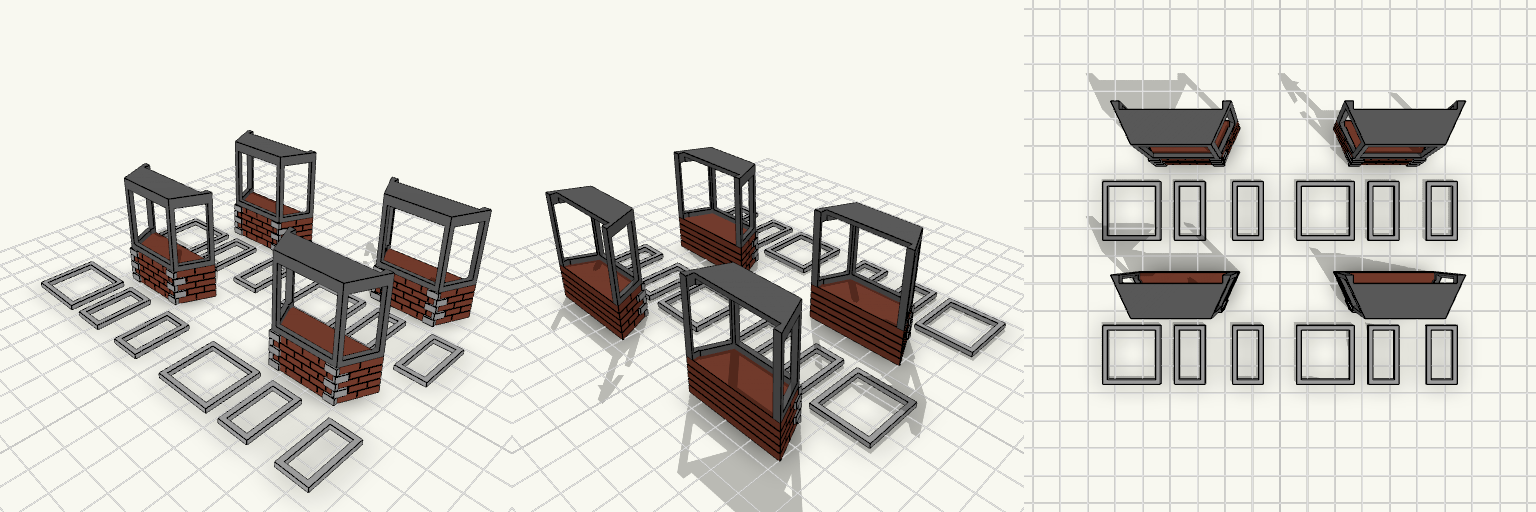
Bay windows for shops
OO scale bay window body, 36 mm wide, 13 mm deep and 40 mm high, with 13 mm of brickwork at the base and three window openings above. Three open window frames print separately on the plate for painting and gluing into the openings. Scale: OO gauge (4 mm to 1 ft) Overall size: 36 × 13 × 40 mm Brickwork: 13 mm high, horizontal courses with staggered joints Front window: 24 mm wide opening; two angled side windows about 14.3 mm wide Frames: 1.6 mm thick with 1.6 mm borders and a through-opening Fit: frames sized with clearance to their openings Back: open, for gluing to a wall
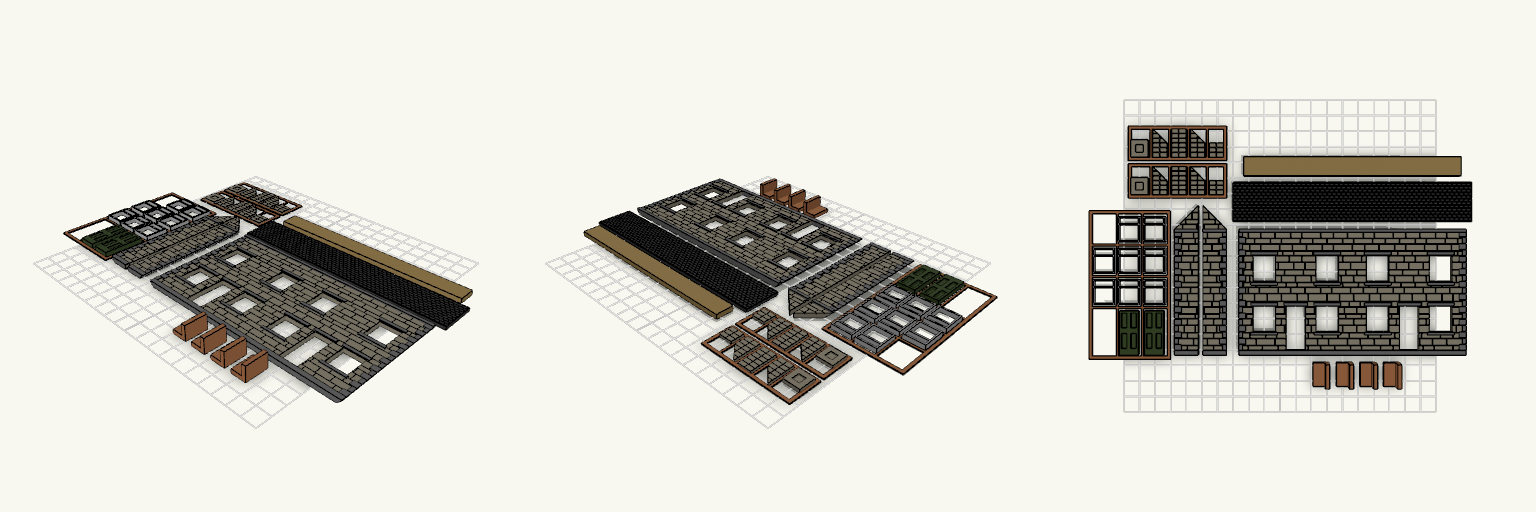
OO Gauge semi detached house stone v2
A semi-detached OO gauge house pair with stone walls, a one-piece roof, separate door and window inserts, and chimneys supplied as flat-pack panels. The two 72 mm frontages sit side by side (144 mm overall) with quoins only at the outer ends. Each chimney is four panels plus a capped top, printed flat and joined by a thin 0.4 mm web. A second web holds the windows and door together on the plate. Remix hooks Chimney slope: side panels run 9 to 18 mm high at 45°. Change the two heights to suit a different roof pitch. Panel thickness: 1.5 mm. Thicker panels give stronger glue joints. Web: 0.4 mm tall with 1.2 mm bars. Cut it away after printing, or thin it further. Pairs with: the L-shaped corner brackets (10 × 10 mm legs, 15 mm long) for gluing the walls square.
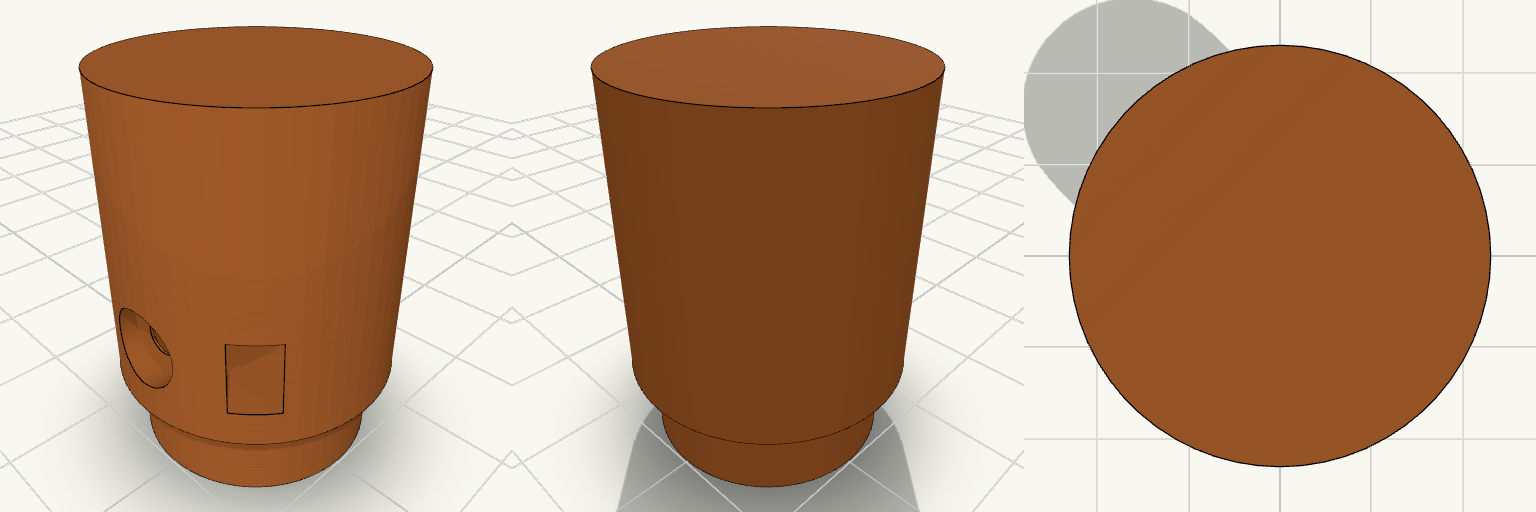
Pinch-Feed Drive Roller, Print-Ready
A knurl-free drive wheel for a pinch-feed wire feeder, built like a small industrial pulley: a 24 mm roller with a hub on one side and a blind D-bore that slips over a 5 mm D-shaft. The model is just the roller, standing on its hub and ready to slice. Design notes Blind D-bore, open on the hub face and closed by a wall on the far end, so the closed end shows which side stays out. M3 grub screw hole with a trapped hex nut that slides in through a slot open to the rim. Counterbored screw recess 2 mm deep, so a headed M3 screw sits below the surface and a nylon or TPU sleeve goes on smooth. Hub spaces the roller off the motor face so the two do not rub. Printing Stands on the hub with the bore opening onto the bed, so there is no bridging inside the bore and no supports are needed. Printing upright keeps the roller round. Suggested: PETG, ASA or nylon, 3 or more walls, 25–30% infill.
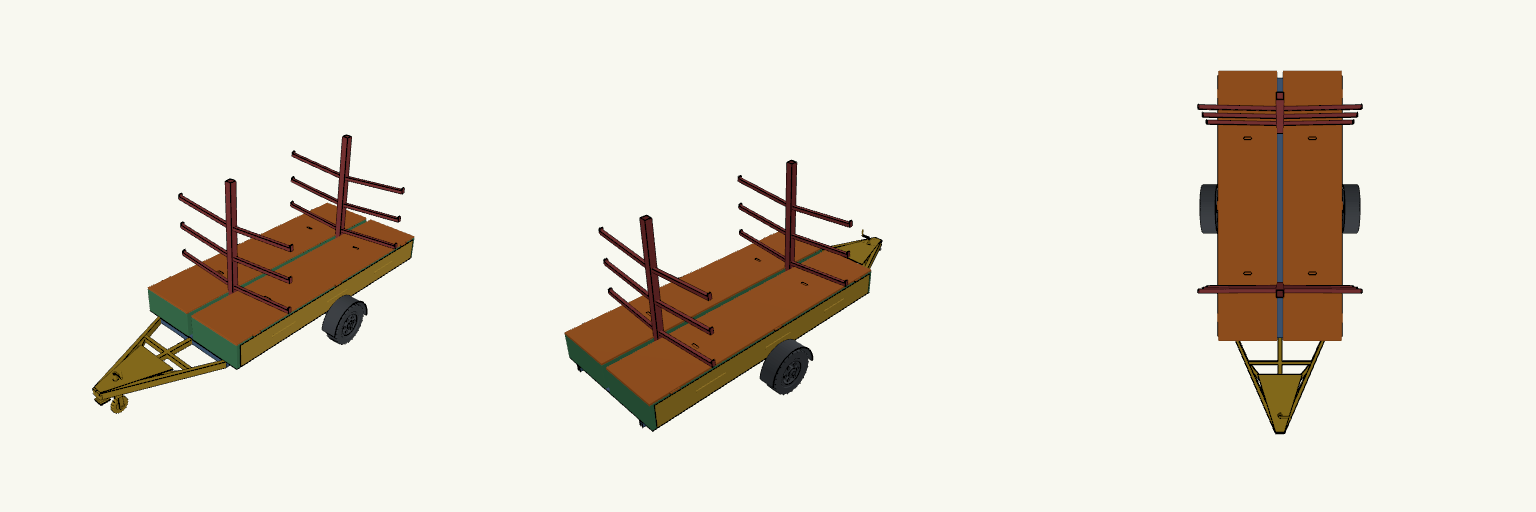
Six Kayak Trailer with Jockey Wheel
A trailer for carrying six kayaks, three per side, on two centre columns with branching support arms. Full-length lockers run along both sides under the kayaks, each with a side door for paddles and life jackets. The A-frame drawbar carries a ball coupler with latch, lever and safety chain, plus a jockey wheel with a tyre, rim, fork and a crank handle on top. Six kayak positions, three per side Two full-length side lockers with side doors Twin wheels with tyres, rims and mudguards A-frame drawbar with cross members, spine and braces Jockey wheel with top crank handle
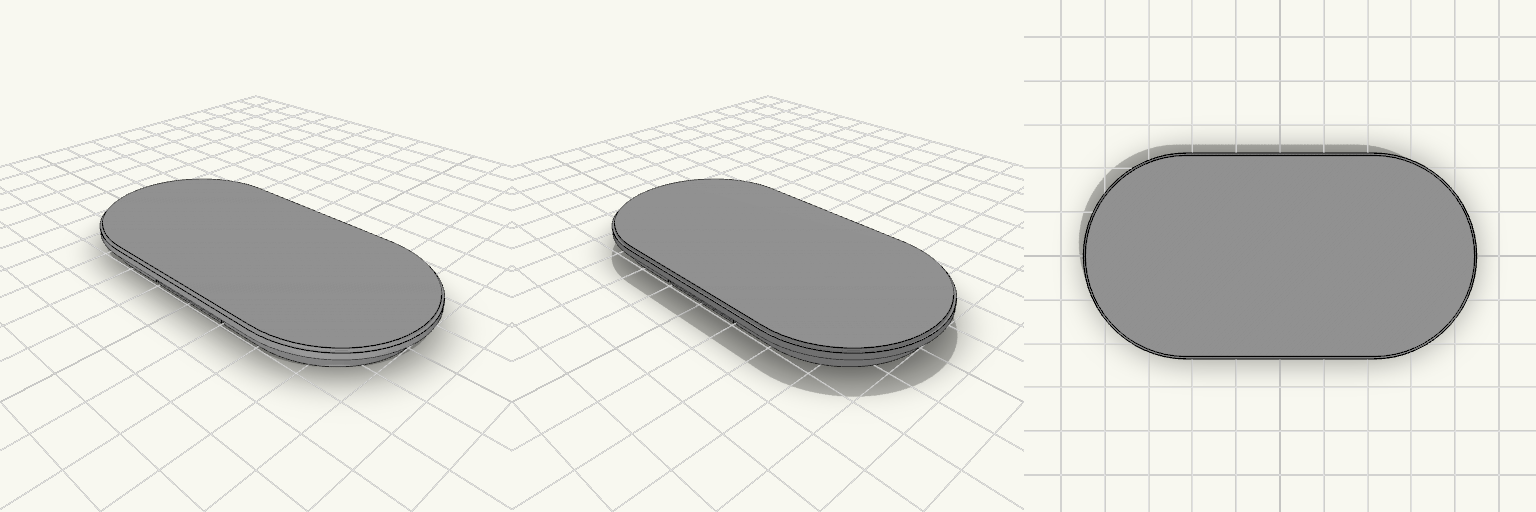
86x45mm Ovaler Karosserie-Blindstopfen mit Snap-Fit-Clips
Geschlossene ovale Abdeckplatte für eine 80 × 39 mm große Öffnung in etwa 1 mm dickem Karosserieblech. Die Kontur ist ein Stadion-Oval, also ein gerades Mittelstück mit vollständig runden Enden. Die Platte wird eingedrückt, die integrierten Snap-Fit-Clips federn zurück und rasten hinter dem Blech ein – ohne Schrauben, Kleber oder separate Befestigungsteile. Die Abdeckung lässt sich wieder entfernen, ohne das Blech zu beschädigen. Das Teil wird als ein Stück gedruckt. Frontplatte: 86 × 45 mm, 2 mm dick, vollständig geschlossen, gerundete Kanten; die 2 mm fallen an der gerundeten Kante etwas dünner aus Einsatz: Außenkante 80 × 39 mm, Endradius 19,5 mm, 4 mm tief, hohle Wand mit 1,6 mm Stärke Innenöffnung: 76,8 × 35,8 mm Flansch: rundum 3 mm breit, an den Längsseiten wie an den Enden; die Clip-Haken liegen vollständig innerhalb der Plattenfläche Clips: zwei Zungen an den Längsseiten oben und unten, je ein 0,7 mm hoher Haken mit Rampen-Anlauf und flacher Fangfläche für 1 mm Blech Clip-Schlitze: 1 mm breit × 6 mm lang durch die Wand der Längsseiten, geben den Zungen Platz zum Federn Passung: Die Außenkante des Einsatzes entspricht exakt 80 × 39 mm, es bleibt kein Spiel – straffer Sitz, vor dem Einbau einen Probedruck einplanen Einbauraum: Die Frontplatte misst 86 × 45 mm; vor dem Einbau prüfen, ob um die Öffnung herum genug Platz für 45 mm Höhe ist Material: PETG oder ASA, mit der Frontseite nach unten drucken Bauteilmaße auf der Druckplatte: 86 × 45 × 6 mm