Utilitarian Chassis Flight Skids
Made by SunnySliderule
Created 1 months ago
Description
This lightweight hardware suite is designed for custom chassis builds, keeping the overall footprint low while providing a sturdy base. The components are arranged flat on the build plate for easy, support-free fabrication.
Flight Hardware
- The Deck: A 50×55 mm central mounting plate. It features a solid 2 mm deck surrounded by a 3 mm retaining wall, ideal for corralling electronics or batteries.
- The Skids: Twin 50 mm long landing legs. They have been heavily cored out to reduce mass, leaving just a rugged 3 mm footprint and sturdy outer struts to handle hard landings.
Images
More like this
Explore more in Automotive, RC & Hobby →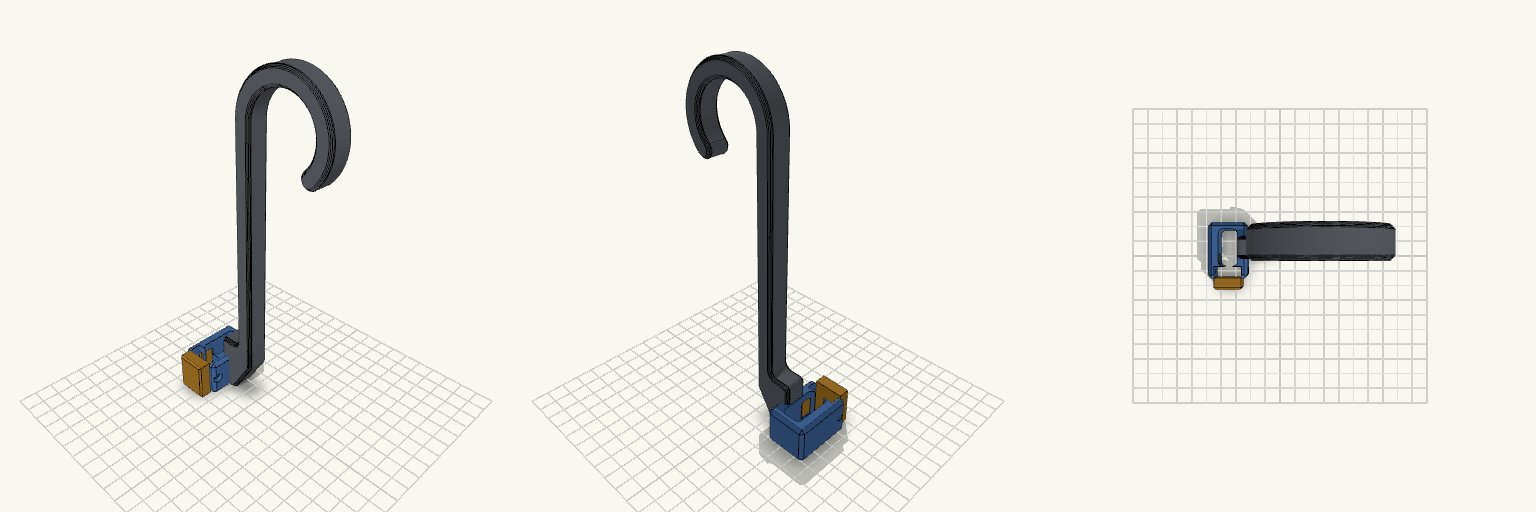
Gancho de Garrafa com Braçadeira Snap
Gancho de garrafa de treino em J, 200 mm, com braçadeira bipartida na base: corpo fixo ligado à haste e tampa separada que fecha por encaixe de pressão ao redor da alça de 12 × 24 mm. Pontos de remix Snap-fit: ganchos flexíveis de 8 mm de comprimento, 1,8 mm de espessura e ressalto de 0,6 mm (armlen, armt, ridge). Entrada em rampa, retenção reta. Folga: 0,2 mm entre tampa e corpo (gap). Trava extra: furo M3 em gota atravessando tampa e corpo, com porca sextavada embutida no lado +X. Paredes: wallx (6,4 mm) e wallf (7,5 mm) definem o tamanho externo; reduza se o furo M3 for dispensado. Haste e gancho: inalterados, seção 10 × 14 mm, bojo de 40 mm, boca de 34 mm. Combina com: parafuso M3 e porca M3 (opcionais); imprima corpo e tampa separados em PETG ou PLA.
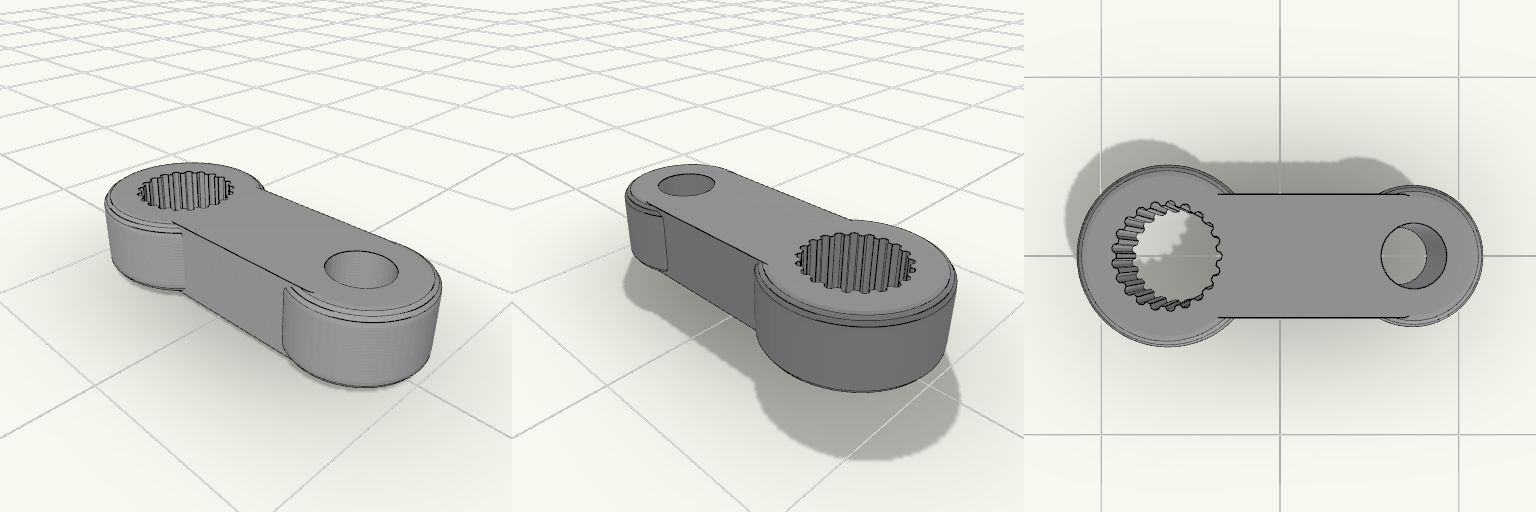
SG90 Spline Single-Arm Servo Horn
A single-arm servo horn for the SG90 micro servo, with a 3.2 mm linkage hole 12 mm from the output shaft centre. Fitment Fits: SG90 and compatible 9 g servos with the 21-tooth, ~4.8 mm output spline. Does not fit: MG90S metal-gear servos with a different spline count, or 25T servos such as MG995/MG996. Arm: 12 mm centre distance, 4 mm thick, rounded edges. Check before printing Test the spline bore on a scrap print. Bore size is ~4.9 mm with small tooth notches, and printer tolerance varies. Adjust it if the fit is loose or tight. The part prints flat with no supports, and PLA works.
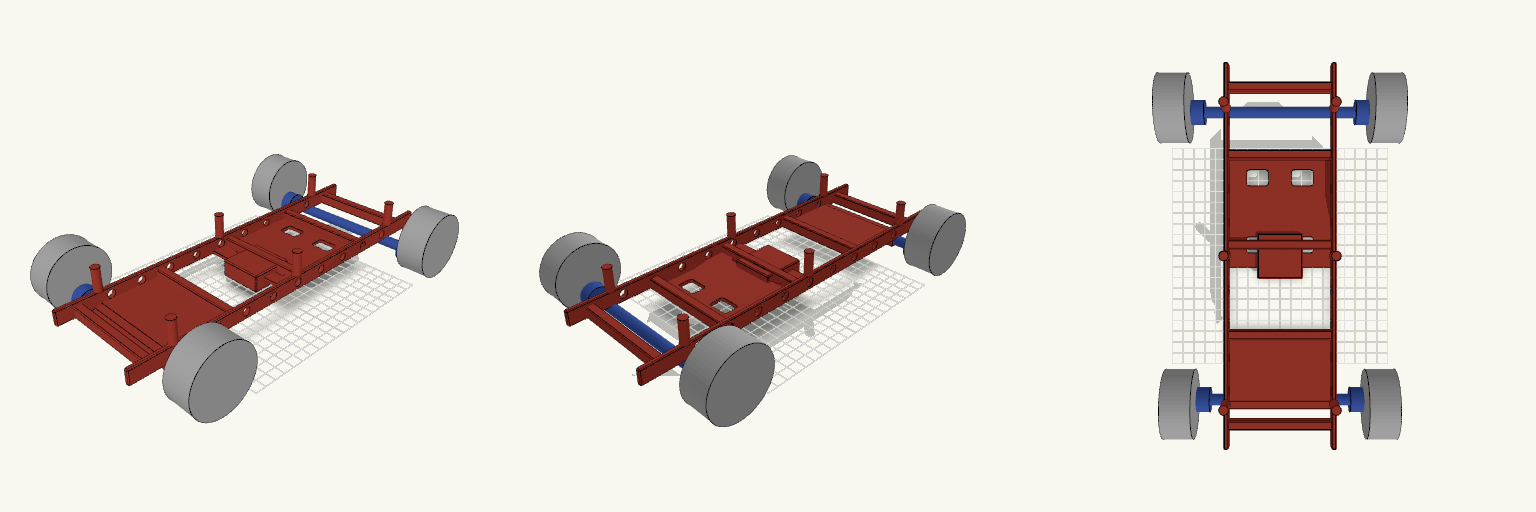
factory five 1935 hotrod truck chassis i guess
A 1/10-scale ladder-frame chassis for a rear-wheel-drive RC hot rod truck. The frame is 340 mm long with 95 mm rail spacing and a 260 mm wheelbase, and it includes a front servo plate, motor plate, battery tray with cutouts, rear diff block, six body-mount posts, and placeholder axles and wheels. The dimensions are a starting point rather than a scale copy of a full-size Factory Five 1935 truck, and the mounts and axles are not sized to a specific motor, diff, servo, battery or drivetrain. Check hardware fit before printing. The frame length exceeds many printer beds, so plan for a large-format printer or split the frame into sections. Frame: 340 mm long, 95 mm rail spacing, 260 mm wheelbase Includes: five crossmembers, front servo plate, motor plate, battery tray with cutouts, rear diff block, six body-mount posts Placeholder parts: axles and wheels, not matched to a specific drivetrain Printing note: 340 mm frame length may require a large bed or sectional printing
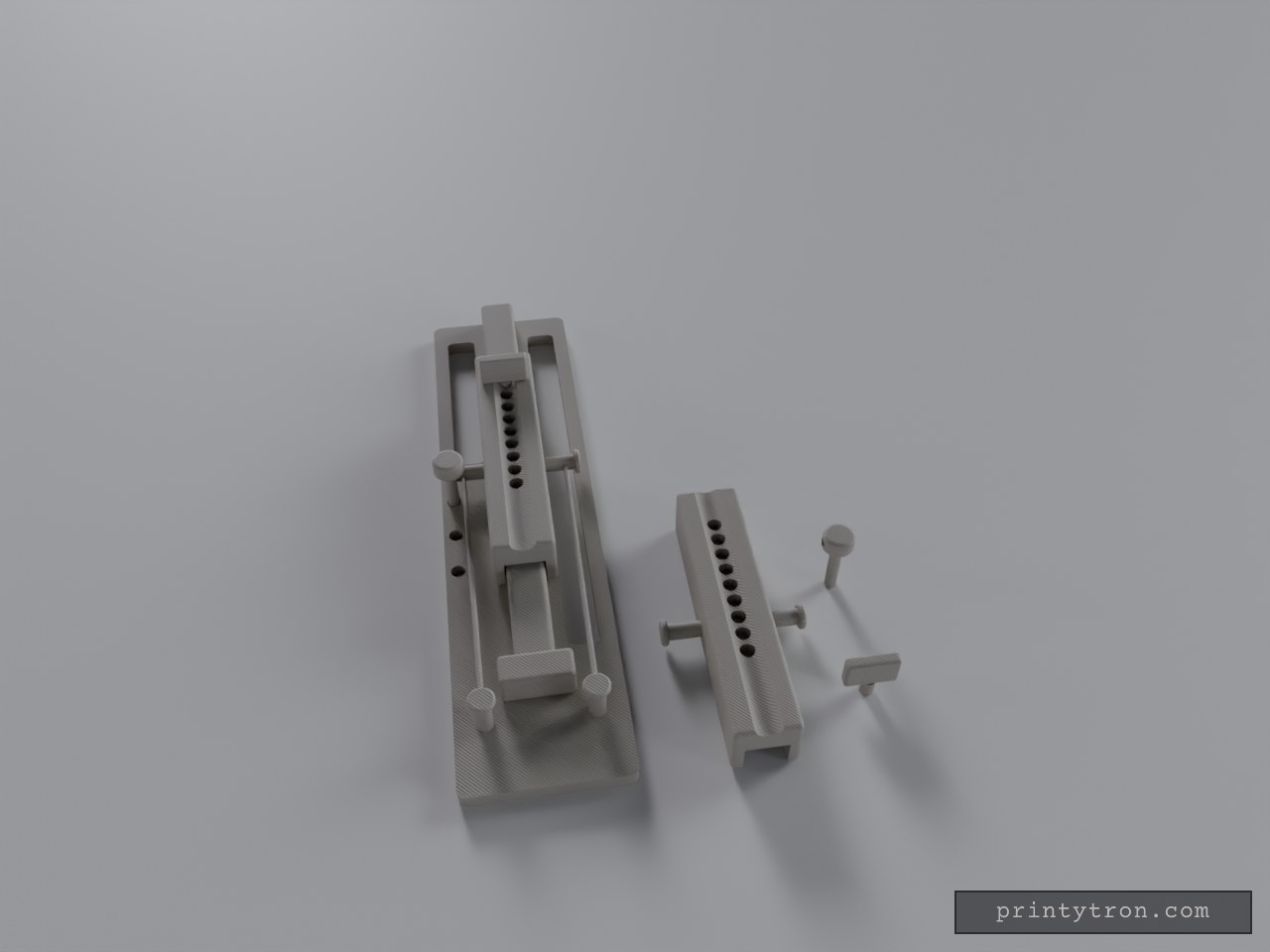
plane launcher
This is a model aircraft launching system, NOT a weapon or toy gun. It is an adjustable, compact tabletop launcher for small hand-launched gliders, set up for gentle, repeatable launches with low-tension rubber bands. The base sits flat, the carriage cradles the fuselage, and the side-mounted release pin can be pulled from behind with a string so fingers stay out of the flight path. The launcher has not been test-printed or test-flown; check fits and band tension before use. What it's for Launches small hand-launched gliders with no propeller or engine. Holds the fuselage in a carriage groove while the tail pusher supports the rear of the model. Uses two standard rubber bands looped over front posts and carriage pegs; the bands are replaceable and not permanently attached. Keeps the release pin at the side of the base, with a string hole so it can be pulled from behind. Adjusts for slightly different fuselage lengths with a movable tail pusher. Built as a small engineering test rig, so you can compare glider wing designs with a repeatable launch. Dimensions Base & Rail: a narrow 50 mm wide plate, 200 mm long and 5 mm thick, with the rail bringing the assembly to 18 mm tall. Two long slots run through the plate to cut filament use. Carriage: rides on the rail and has a groove that cradles the fuselage. Tail Pusher: plugs into a row of holes along the carriage to adjust for fuselage length. Release Pin: has a string hole in the head and sits at the side of the base. Footprint: the base stays within a 220 mm grid, with the loose parts laid out beside it. Print notes Prints as four parts: base and rail, carriage, tail pusher, and release pin. Rubber bands are standard replaceable items and are not part of the printed set. The parts are laid out flat on the plate and fit together into the assembled launcher. The plate is kept thin and slotted to hold print time and material down; it is the largest part. Side shields have been removed, so the rubber bands are exposed. Keep fingers clear of the bands when the carriage is drawn back. Designed for standard FDM printing with rounded edges and without extremely thin structural members. Remix ideas Resize the carriage groove or tail pusher for a different glider fuselage. Add a wider base version for larger hand-launched gliders. Include a small clip on the base for storing spare rubber bands. Re-add side shields over the bands for a more enclosed build.
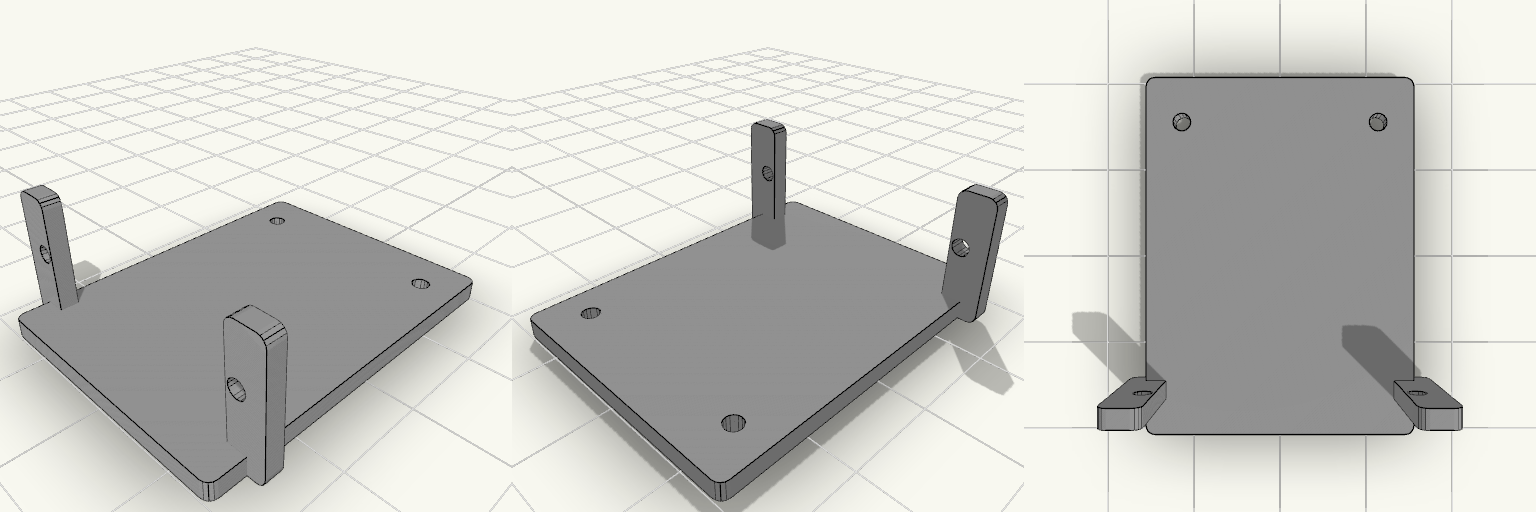
SG90 舵机底板与固定耳片
What it's for 30×40 mm 底板,前端带两片独立固定耳片,用于锁 SG90 舵机自带的安装耳。 Dimensions 底板 30×40×2 mm,圆角 R1,2 个 φ2 孔,孔距 22 mm 耳片各宽 4.2 mm、厚 2 mm、高 14.5 mm 耳孔 φ2,中心距 28 mm,孔内侧距耳片内边 0.2 mm Remix ideas 加宽耳片内侧以增加强度 恢复 U 型侧壁
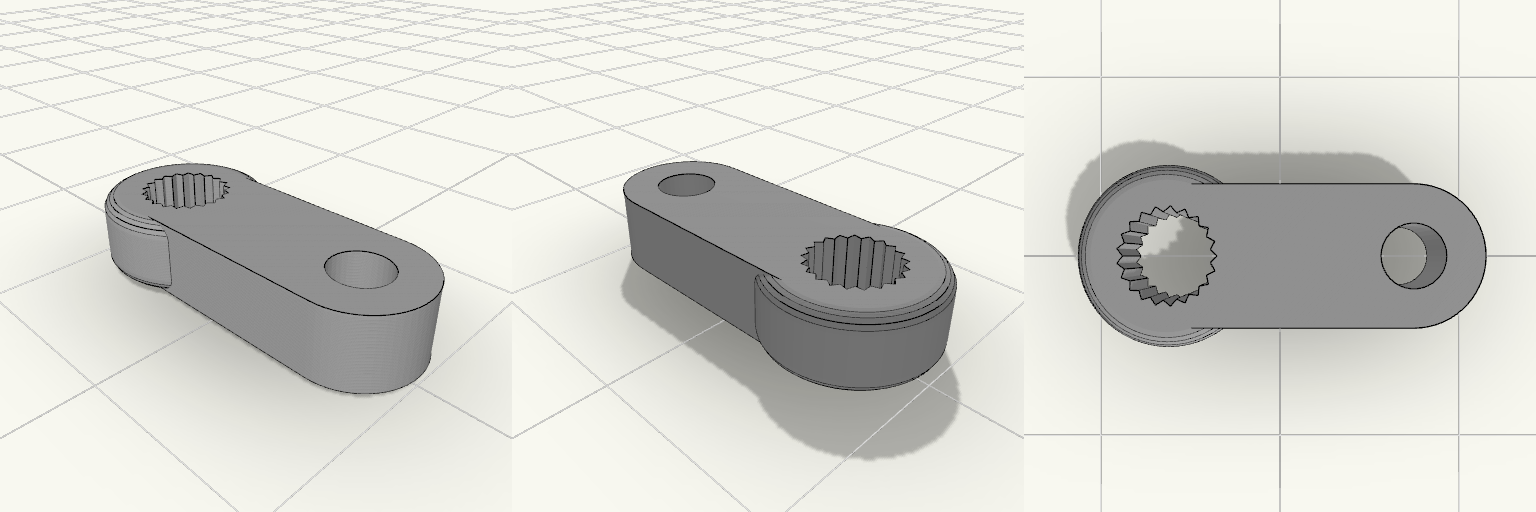
ServoLink — SG90 Straight Crank Arm
ServoLink is a compact single-bar crank arm for SG90 micro servos. One end carries a 21-tooth spline socket that grips the servo output shaft. The other end has a 3.2 mm round hole for a linkage pin or screw. The part is flat and printable without supports. Dimensions Hole centre to centre: 12 mm Thickness: 4 mm Left hole: SG90 spline, about 4.9 mm across the teeth Right hole: 3.2 mm diameter Hub: 9 mm round, arm end: 7 mm round, with softened edges Print notes PLA, printed flat, no supports The spline is sized close to nominal. Scale the hole slightly if your printer runs tight or loose.