Vented 50mm Speaker Basket
Created today
Description
A custom 3D-printable 50mm speaker basket designed for custom driver assemblies. It provides a rigid framework linking a standard 50mm top surround ring to a tailored bottom magnet housing.
This version features a completely hollow core:
- Pass-Through Bottom: The central pole has been deleted and the floor bored out to 25mm, allowing full clearance for a voice coil and T-yoke assembly.
- Magnet Seat: Leaves a 3mm resting lip for a standard 31mm ring magnet.
- Acoustic Venting: Four structural struts anchor the assembly while maximizing rear airflow.
Photos
Technical views
More like this
Explore more in Automotive, RC & Hobby →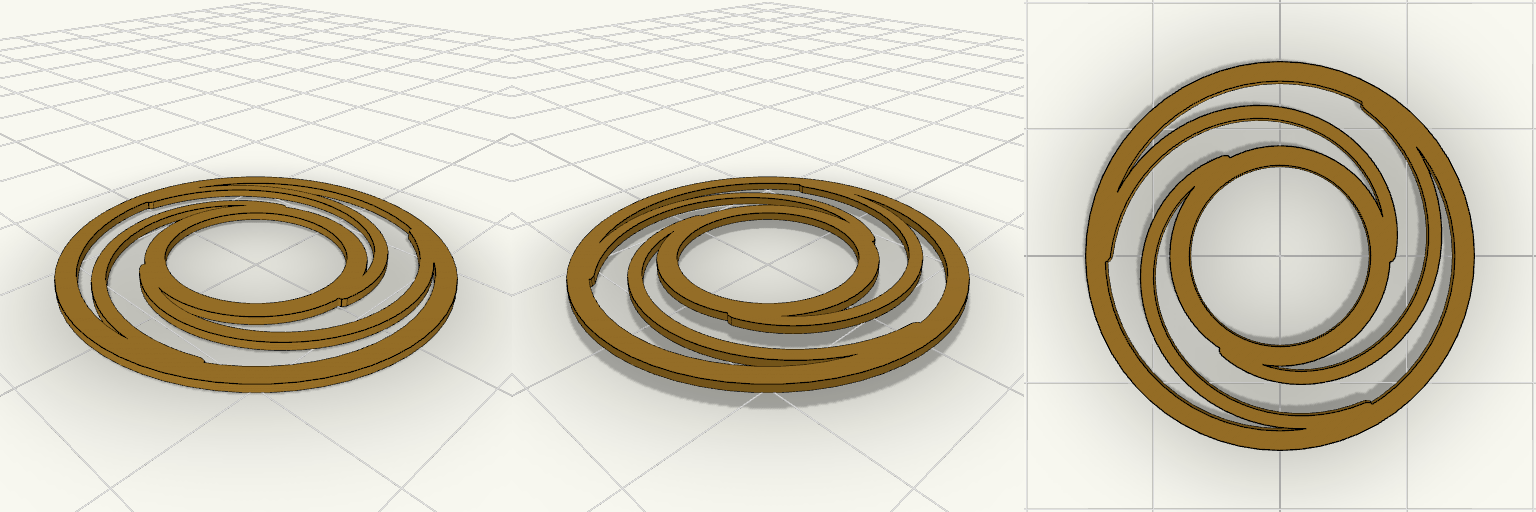
Vented Acoustic Basket
A skeletal mounting chassis designed to hold a custom 50mm driver assembly. The aggressive cutouts strip away unnecessary mass, leaving four sweeping struts that provide rigid support while entirely opening the rear wave to prevent acoustic reflections. The base houses a precision-cut cavity tailored to scavenged PC fan magnets, complete with a vented central pole piece. Acoustic Details Rear Ventilation: 50-degree windows cut low into the voice coil gap ensure maximum airflow and heat dissipation. Magnet Housing: A 28.5mm OD x 5mm bottom slot sized specifically for standard 120mm fan ring magnets. Mounting Interface: 50mm outer diameter upper ring with a 2mm wall thickness for standard cone attachment.
Double Seatbelt Buckle Holder, Backseat
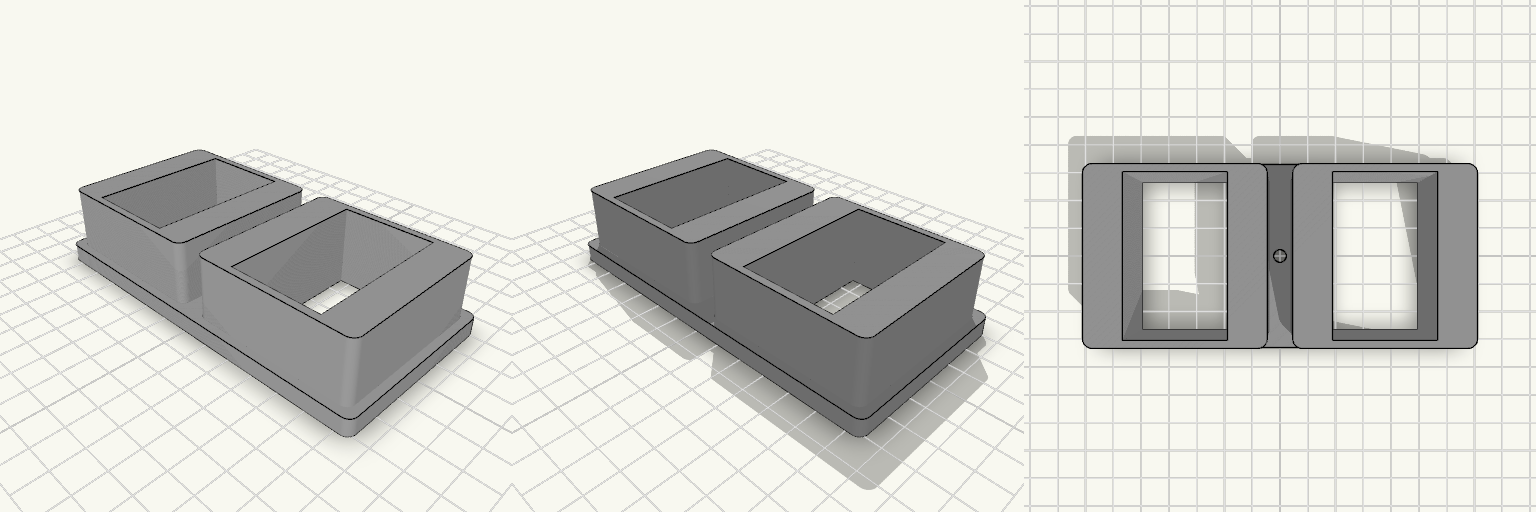
Two seatbelt buckles flop around and fall into the seat gap, so this holder stands both upright side by side in the backseat of a Toyota Sienta. Each 33 x 53 mm pocket goes straight through the base, so the buckle and webbing pass through with nothing blocking the bottom. Pocket size: 33 x 53 mm each, sized for a 31 x 51 mm buckle Sleeve height: 28 mm above a 6 mm base Overall footprint: 130 x 64 mm Centre screw hole: 4.5 mm Print flat on the base, no supports needed
Retro TV Enclosure for No-Solder RP2040 Builds
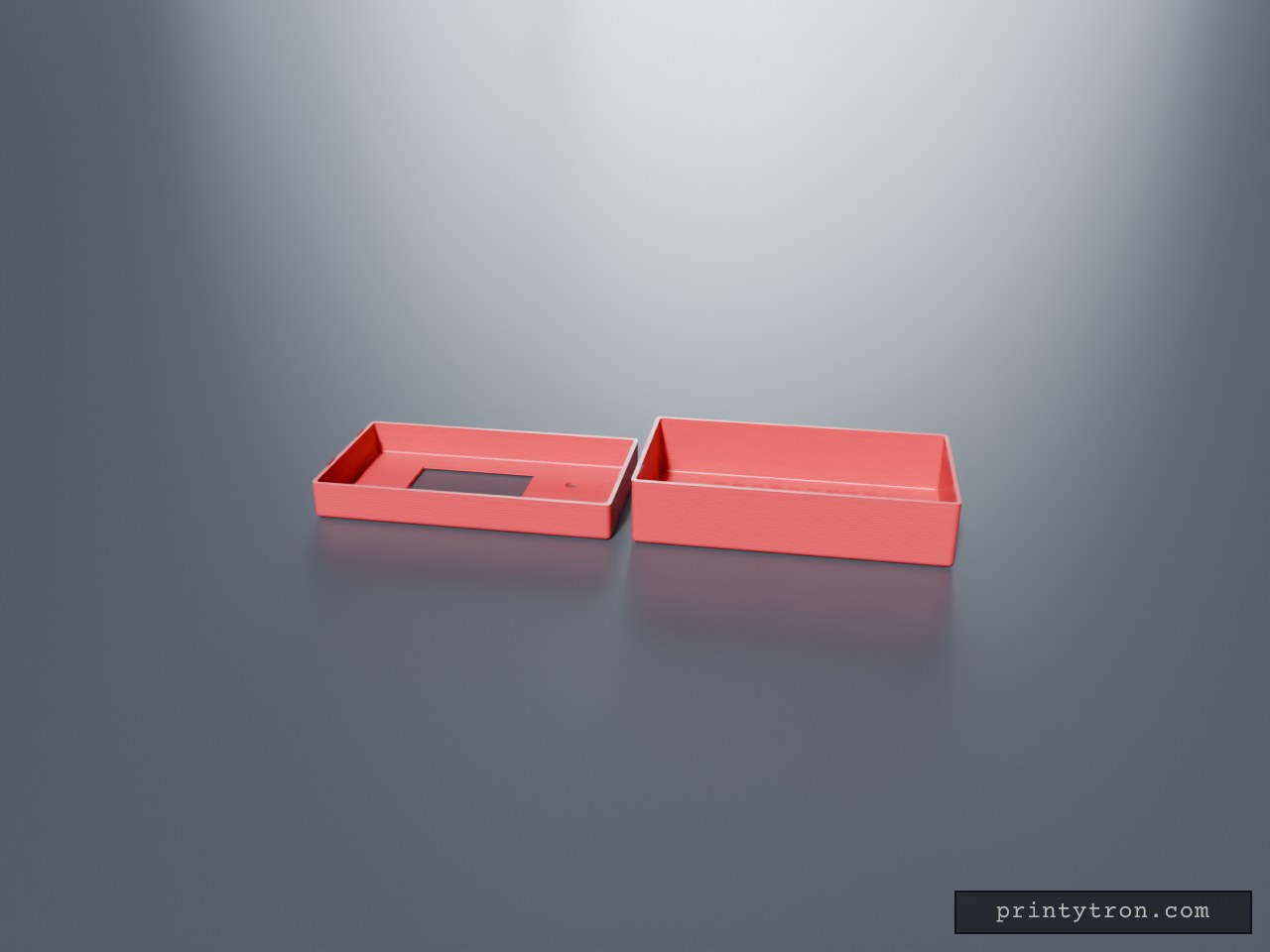
A two-piece retro TV shell designed to house a no-solder RP2040 video player. The clamshell locks together with a built-in snap fit, offering exactly 150×80×50mm of internal space. Both halves print flat on the bed without supports. Front Bezel: Features a sloped CRT-style screen cutout with an internal ledge for a 2.8" display, twin 7mm dial holes, and integrated speaker vents. Back Shell: Includes a bottom-edge USB-C cutout and classic rear cooling vents. Snap Fit: A 4mm friction lip with interlocking bumps holds the enclosure securely together.
RC Car Bevel Gear Rear Drive
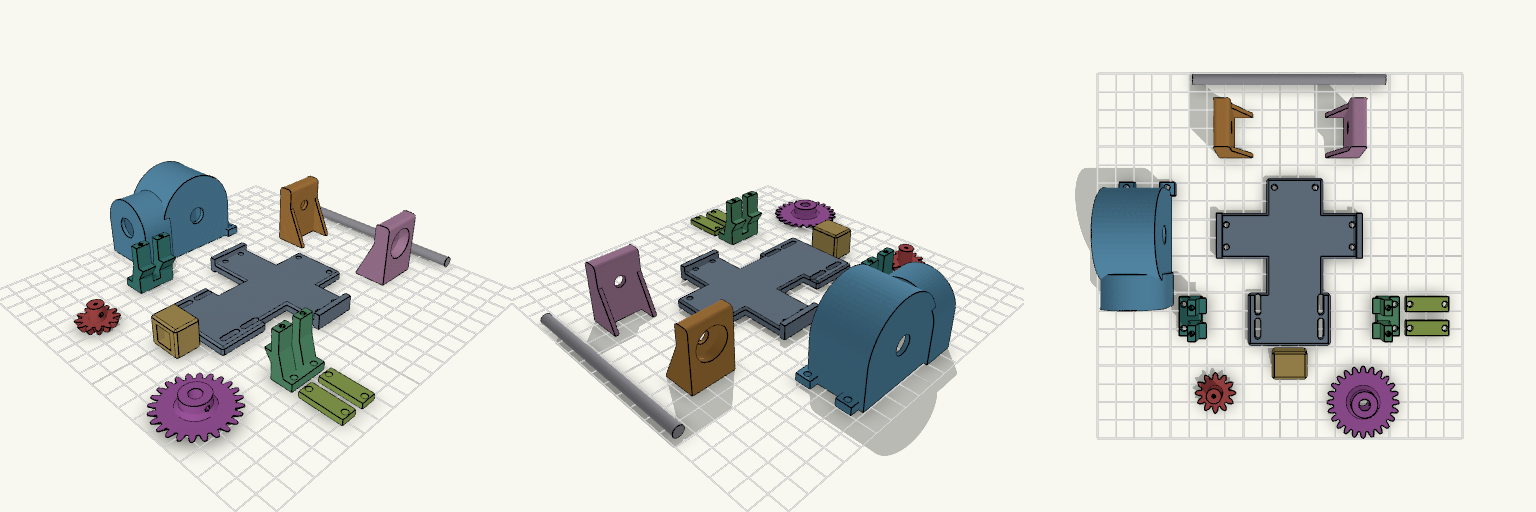
A rear-axle drive for an RC car where the motor shaft has to turn 90° into a cross-car axle without the gears skipping or the motor shifting. This set uses a 12-tooth pinion and 24-tooth crown gear (2:1) on a 103.9 mm × 6 mm axle, with an open motor cradle instead of a closed box. Key numbers Gears: module 1.5, 20° pressure angle, 4 mm face width, 90° shaft angle Pitch cone angles: 26.57° (pinion) and 63.43° (crown); cone distance about 20.1 mm Pinion bore 2.1 mm, crown bore 6.2 mm, both with M3 set-screw holes in the hubs Axle supports: 6.4 mm through-hole plus a 17.3 mm seat for 606 bearings (6×17×6) Base: 84 × 92 × 5 mm, M3 holes (3.4 mm clearance); cradle slots allow forward and back adjustment Motor cradle parameters at the top of the file: mw, mh, wall, saddlel, saddley. Measure the real motor and edit them Cover is open at the bottom, with two M3 ears at the rear Printing Print gears with the hub facing up or down on the bed; PETG or nylon preferred Cover prints open-side up without supports Axle is a separate 6 mm steel rod; M3 screws hold supports, cradle, straps and cover
NAJMA
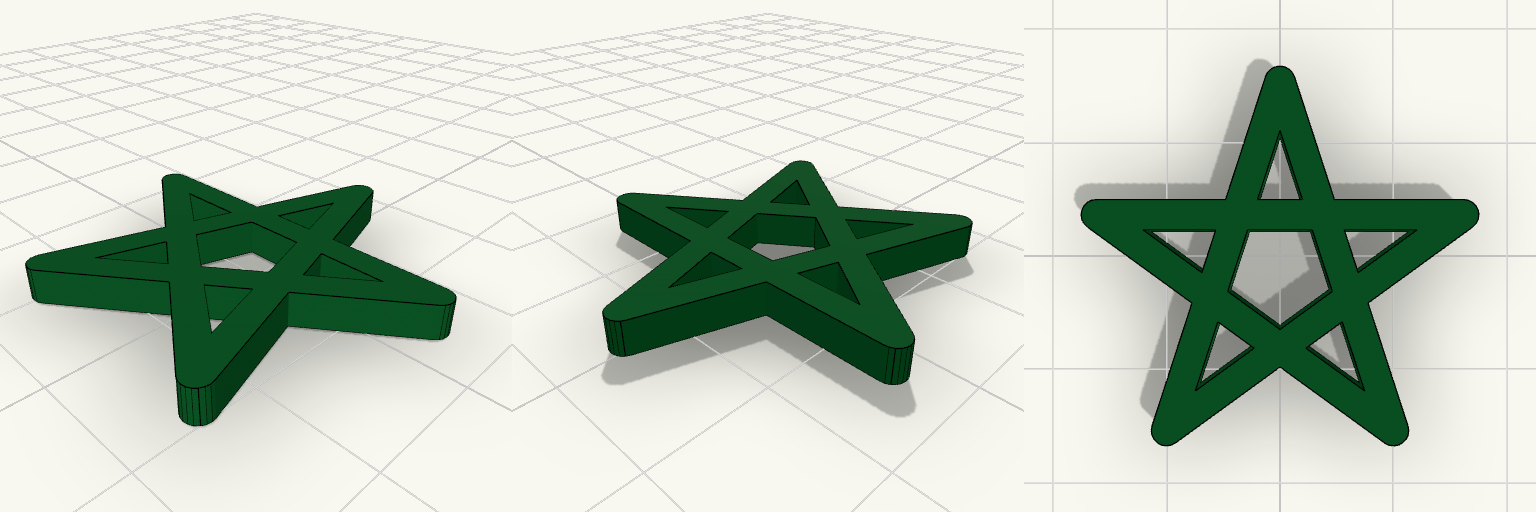
A compact, single-piece delivery truck chassis designed as Part 1 of a commemorative desk model. Engineered to print in place with zero assembly required for the base. Integrated Wheels: Solid cylinders fused into the chassis base for a robust, no-moving-parts foundation. Rear Platform: Provides a flat bed with two precisely placed alignment pins to locate a custom cargo box. Commemorative Markings: Features embossed text on the cabin roof celebrating the occasion. Built to be fully printable without supports, keeping the underside flat and stable.
Drone Frame For 8mm Motors
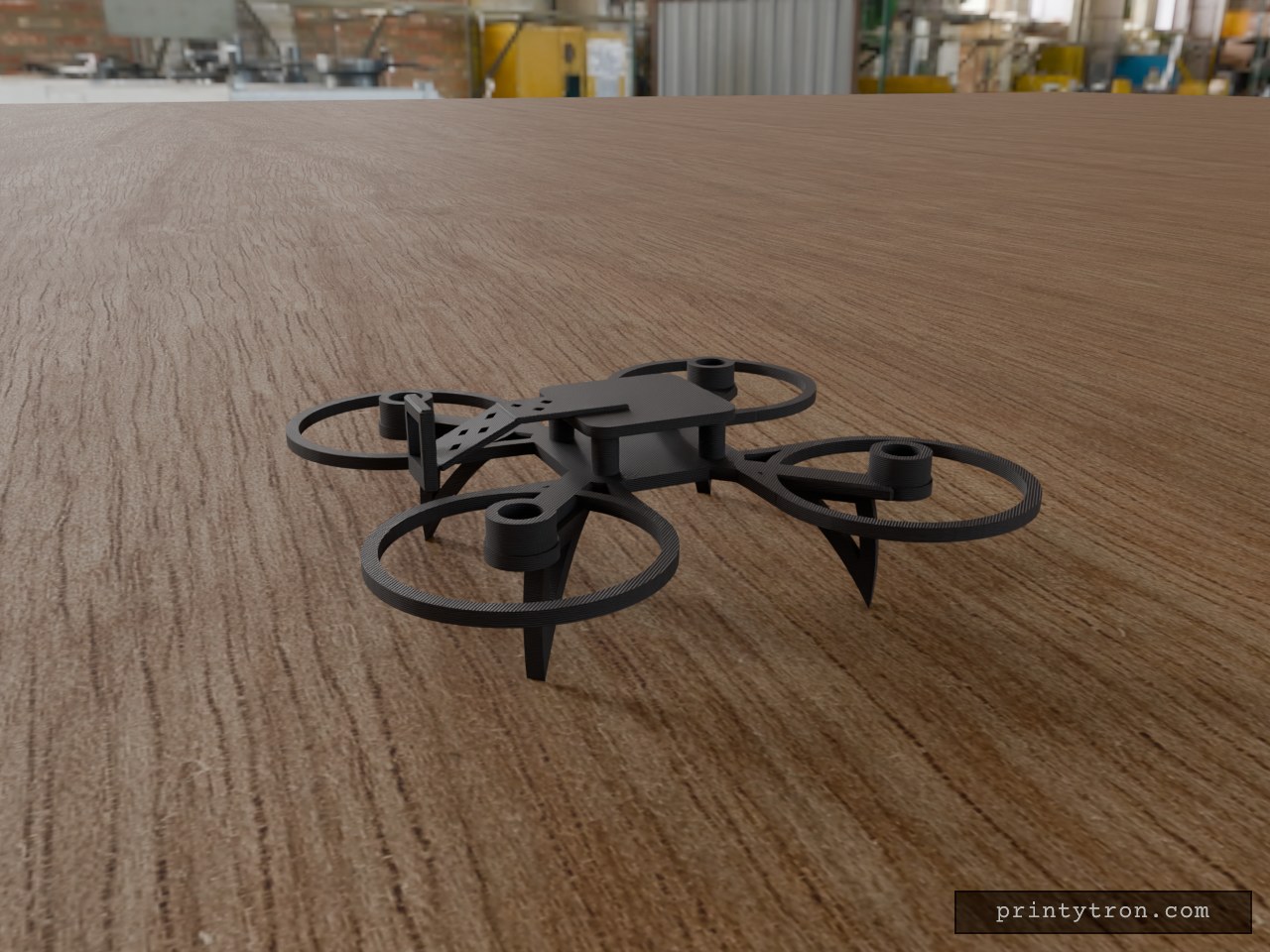
A quad frame for 8 mm motors with a 14 mm wide, lattice-cut camera mount on the top deck. Fitment Motors: 8 mm, in 8.4 mm bore cups. Does not fit 7 mm or 11xx motors without resizing. Camera mount: 14 mm wide extender and slanted plate, with a single vertical wall at the low end and a 7 mm lens hole. Frame: 4 arms, 58 mm guard rings with two curved sticks each, raised deck, hollow pointed legs. Check before printing Measure the camera body width. The 14 mm wall suits only nano-size FPV cameras. Known limits No flight-controller holes in the deck. The camera has no retaining feature. Use a strap or glue.