Description
ZeroScoop — ePaper Edition expands the original protective shell to fully encapsulate the Raspberry Pi Zero 2 WH alongside a top-mounted Waveshare 2.13" ePaper HAT. It retains the signature oversized SD-card thumb notch while adding a precision bezel window for the display, keeping both boards safe inside a single rigid structure.
Features
- HAT Headroom: Lifted ceiling provides internal clearance for the HAT PCB and components.
- Bezel Window: 50x25mm chamfered opening frames the e-Paper active area.
- Unchanged Base: The lower chassis still offers full access to HDMI, dual USB ports, and the camera ribbon cable.
- Hardware: Countersunk M2.5 screw channels keep the assembly clean and secure.
Images
More like this
Explore more in Desk & Tech →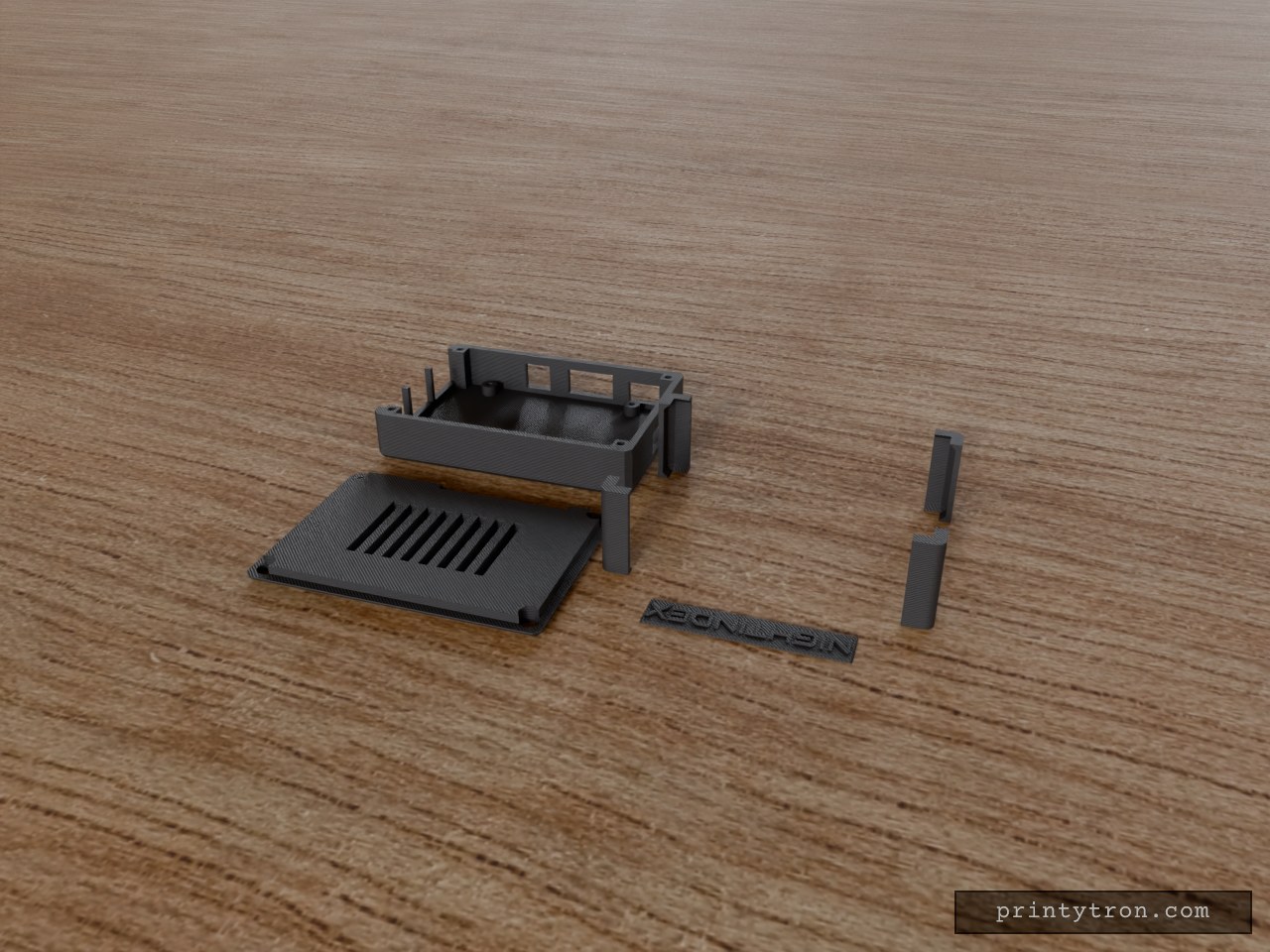
Pi 3 case
A bare Raspberry Pi 3 is so light that hooking up a standard HDMI cable instantly tips it off the desk. This case locks the board into a heavy enclosure and uses snap-on outer corner bumpers to give it some actual grip, so the board stays exactly where you put it. The port cutouts are oversized enough to accept real molded cables without them binding against the shell. Bed Fit: Everything is packed tightly to fit in a single run on a 180×180 mm print bed. Printing: All pieces sit flat on the plate. No supports required anywhere. Clearances: Built with a 0.4 mm gap around the board and lid joint so it slots together cleanly.
Dev Board Lockdown Case
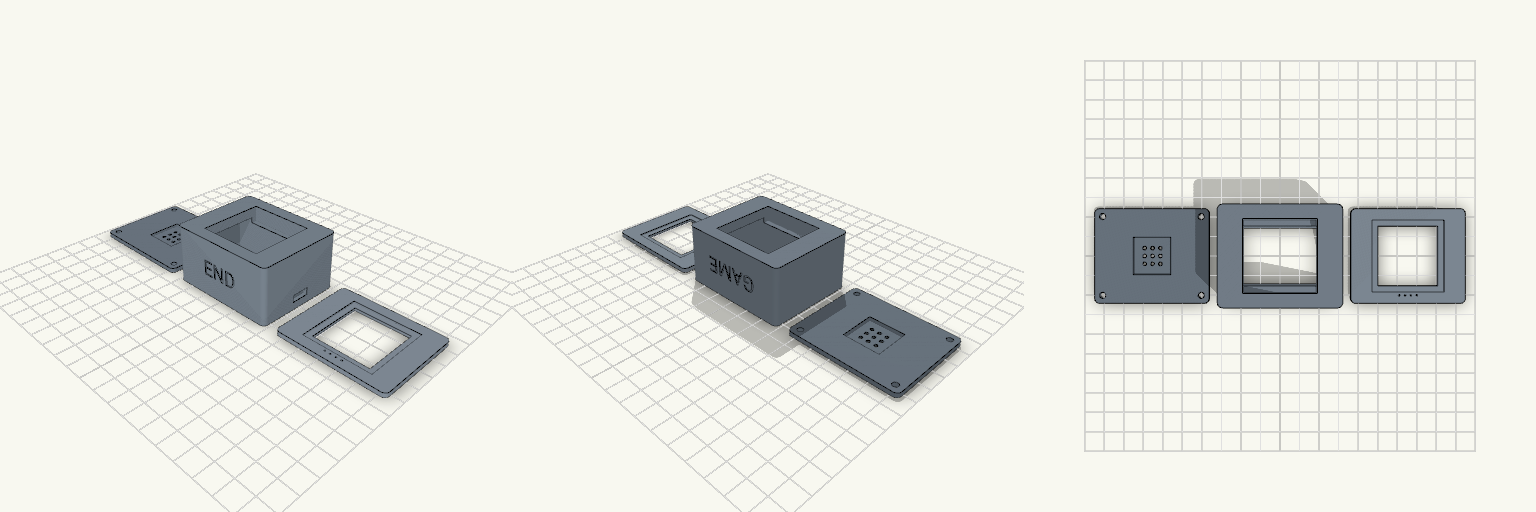
Raw development boards sliding across a desk are just waiting to short out on a stray screw or drop a jumper wire mid-compile. It’s annoying, it ruins components, and it makes moving a project impossible. This ends that. This is a clean, three-part enclosure built to lock down an ESP32 and an OLED display, keeping the wiring hidden and the desk clear. Footprint: 58.0 mm × 48.0 mm Total thickness: 34.5 mm (assembled) Display window: 30.5 mm square (designed for 1.3" OLEDs) Assembly: Uses four M3 screws driven from the back, leaving the front bezel perfectly clean. Print the three parts flat on their backs. Frosted PETG recommended if you want the board LEDs to diffuse through the case walls.
Lazy-Tongs Piano Bottle Caddy
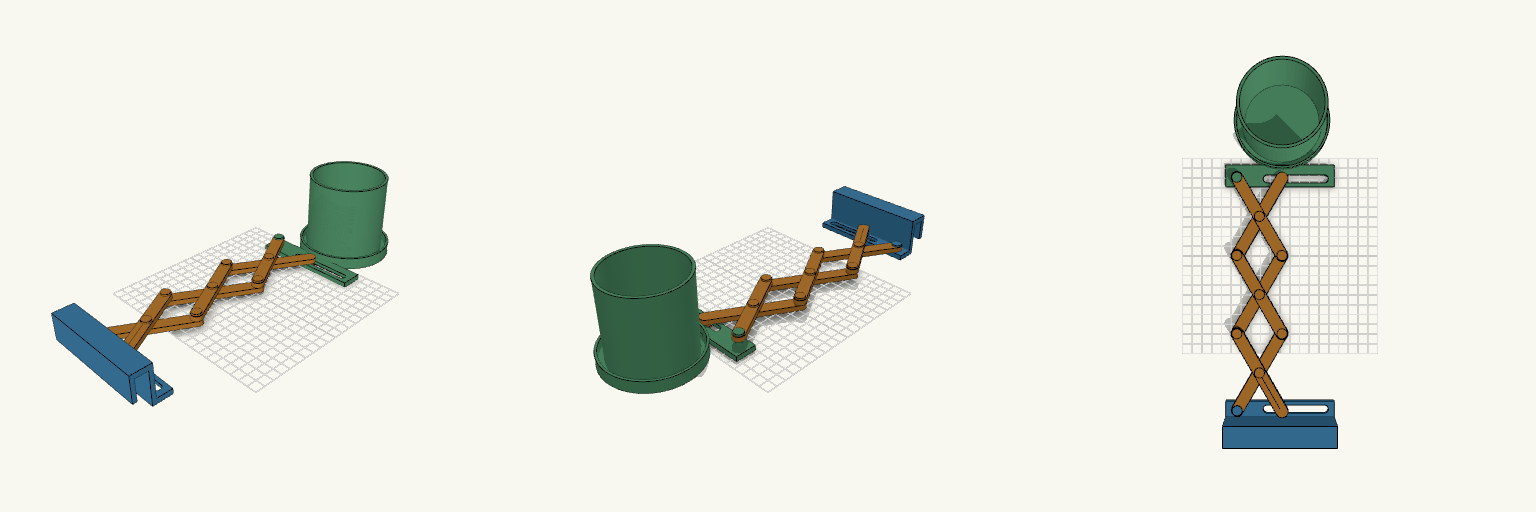
A pantograph-style drink arm in the spirit of a vintage lazy-tongs: a hooked clip straddles the top of a piano's music desk, and a three-unit scissor mechanism unfolds backward to carry a bottle cup. The cup sits inside a wide, rimmed drip tray, so condensation stays off the keys and cabinet. The arm folds flat for storage and stretches out for use. Pivots are print-in-place pins, and the two end joints ride in slots so the arms can open and close. Design notes Cup bore is 76 mm, sized for a standard 33.8 fl oz (1 L) water bottle; cup wall is 85 mm tall. Drip tray is 96 mm across with a 12 mm rim and sits flush with the arm plane. Clip slot fits a music desk about 13 mm thick; adjust the thickness value to suit your piano. Three colored regions: desk clip, scissor arms, cup and tray. Shown in a partly extended pose; the opening angle can be changed to show it folded or fully reached. Best printed as shown, with 0.4 mm clearances at the pivots. Support is only needed under the clip hook. A full bottle is a cantilever load, so keep the arm short for heavier bottles.
Handheld-Gehäuse mit herausnehmbarer Anschlussblende
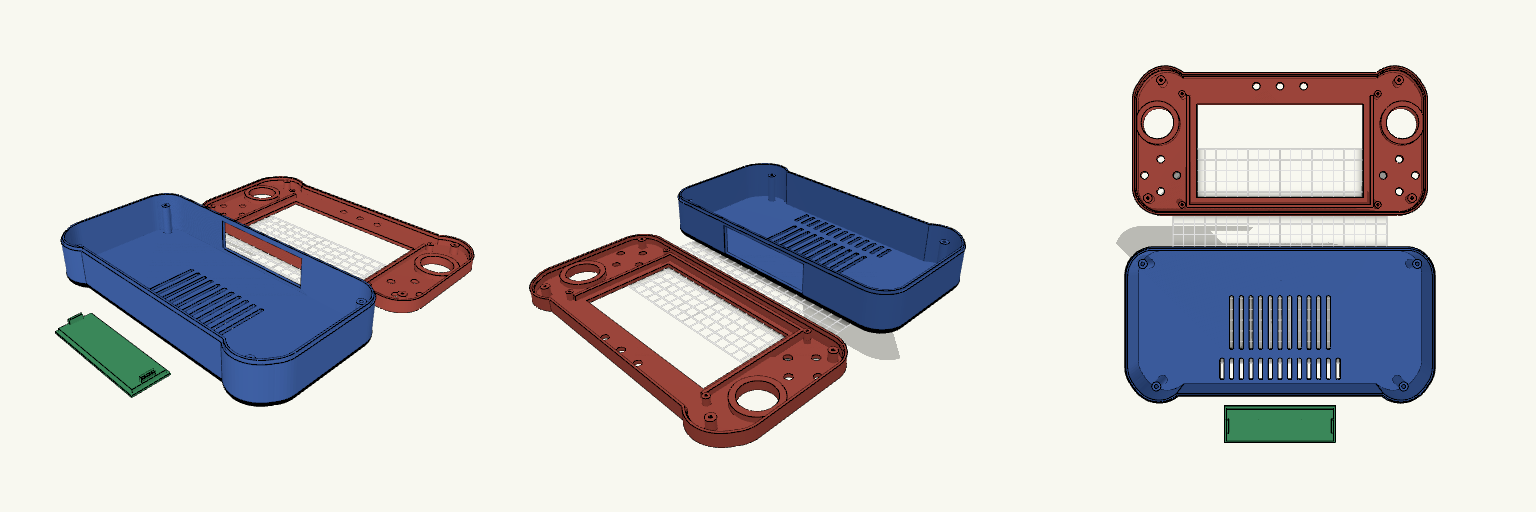
Handheld-Gehäuse für eine selbstgebaute Konsole, bei dem die Kabel- und USB-Öffnung hinten nicht dauerhaft offen bleibt: Eine Klipp-Platte schließt sie und lässt sich bei Bedarf herausnehmen. Aussparung in der Rückwand: 100 × 30 mm, mittig Klipp-Platte: Außenrand 104 × 34 mm, Einsatz 99,6 × 29,6 mm, zwei Federarme mit Rastnasen, Fingermulde Innentiefe: 48 mm, Wandstärke 3 mm Display-Fenster 155 × 87 mm, Tastenlöcher 7,2 mm Druck: Schalen offen nach oben, Platte flach, ohne Stützen möglich
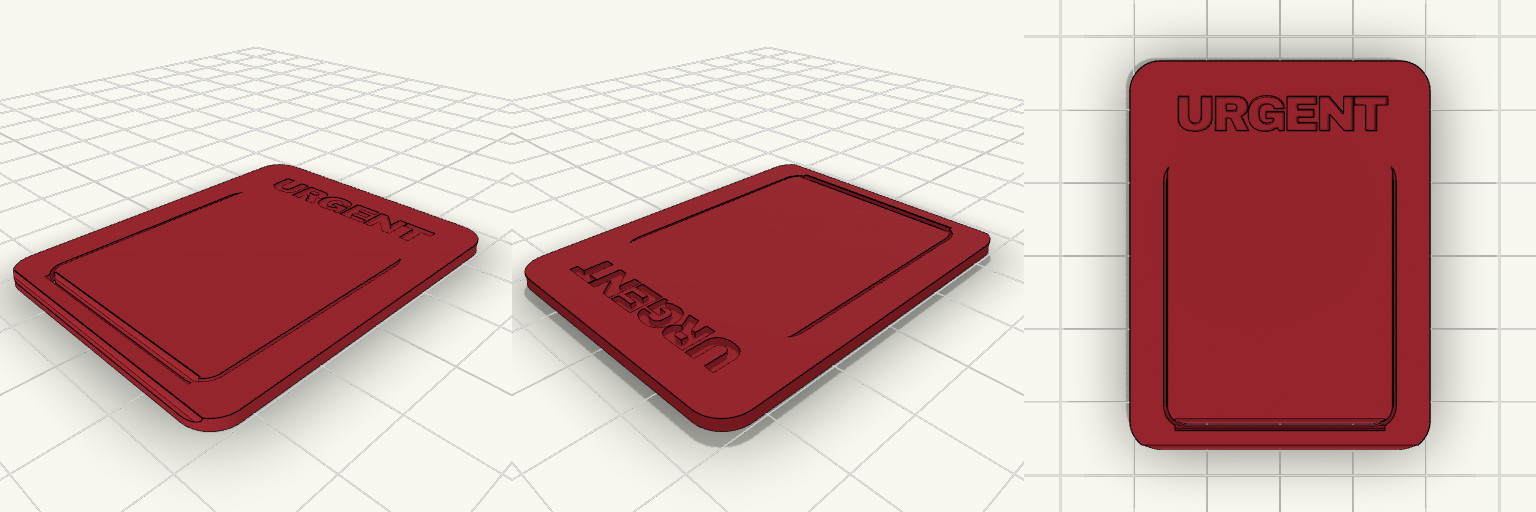
Urgent Document Clip
A slim, low-profile clip meant to bind a few urgent sheets. Clearance: 0.5 mm pinch gap. Size: 40 mm wide for a firm hold. Print: Prints flat, face up, no supports.
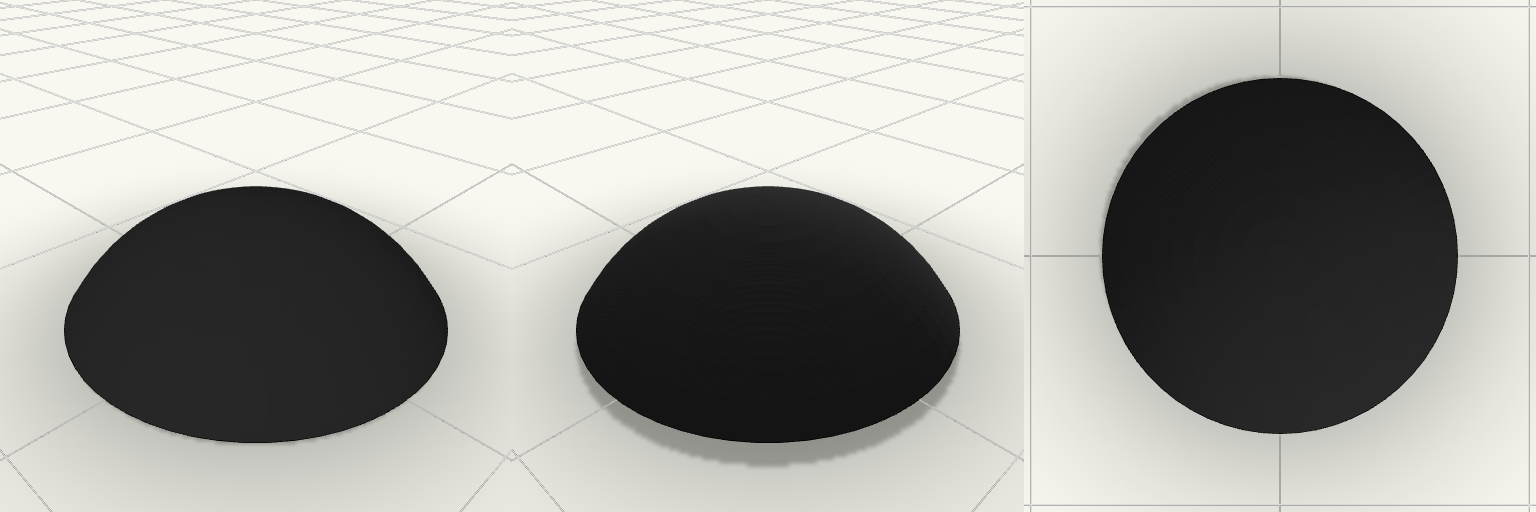
Speaker Dust Cap 14mm
Exposed speaker voice coils attract dust and metal particles until they grind themselves to death. This replacement dust cap seals the center of a 50mm driver without adding enough mass to ruin the high-frequency response. Footprint: 14mm diameter base to perfectly match standard 50mm driver coils. Profile: 4mm spherical dome for rigidity. Mass: 0.3mm shell thickness, designed to print as a single perimeter. Mounting: Sliced flat at the absolute bottom zero to provide a clean, continuous rim for CA glue or rubber cement.