110mm Triangular Phone Stand
Created 4 months ago
Description
A rigid phone stand with a truncated back. The overhanging vertical rest has been clipped, terminating the structure at the brace point to form a closed, structural triangle that reduces overall height while maintaining a 65-degree device angle.
Parameters and capacity:
- Backrest Height: 110mm apex.
- Viewing Angle: 65 degrees from vertical.
- Ledge Depth: 24mm for clearance of thick cases.
- Frame Structure: 6mm width, extruded to 76.2mm.
Images
More like this
Explore more in Desk & Tech →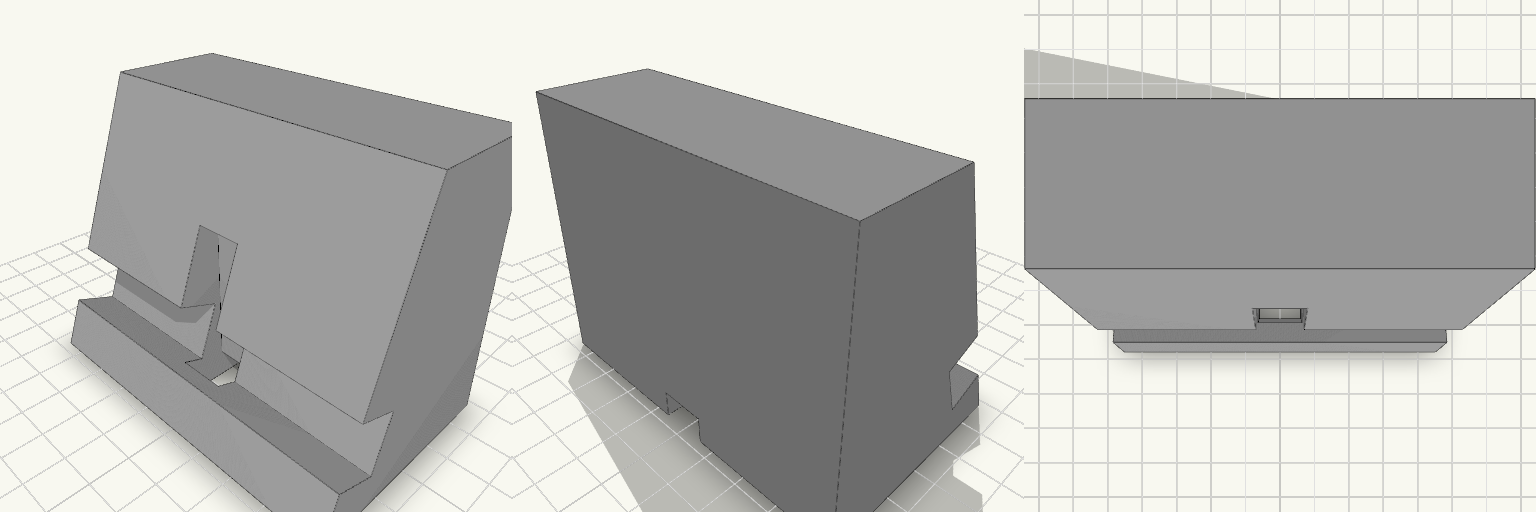
Phone Stand with Cable Channel
A phone stand that holds the phone upright in portrait or landscape, with a cable channel so the charger doesn't pin the phone down or dangle off the edge. Most stands either tip the phone back too far to tap or force the cable to loop around the outside. This one leans the phone at 70° from horizontal and routes the cable up through the stand to the back of the phone. What decides fit and print Lean angle: 70° from horizontal, steep enough to tap the screen and upright enough to watch video. Groove: runs the full 90 mm width, so the phone sits in it in either orientation. It is sized for a phone in a thin case. Cable channel: 12 mm wide, open on the underside of the base. It runs in from the back, then rises through a 12 x 12 mm opening in the groove floor. Overall size: 90 mm wide, about 56 mm deep and 70 mm tall. Printing: the flat base goes down on the bed. The underside channel is a 7 mm-tall tunnel, so print it with bridging on or light supports. No other supports are needed. Material: PLA or PETG both work. Use 3 or more perimeters for a stiffer groove lip.
StudyDock Desktop Phone Stand
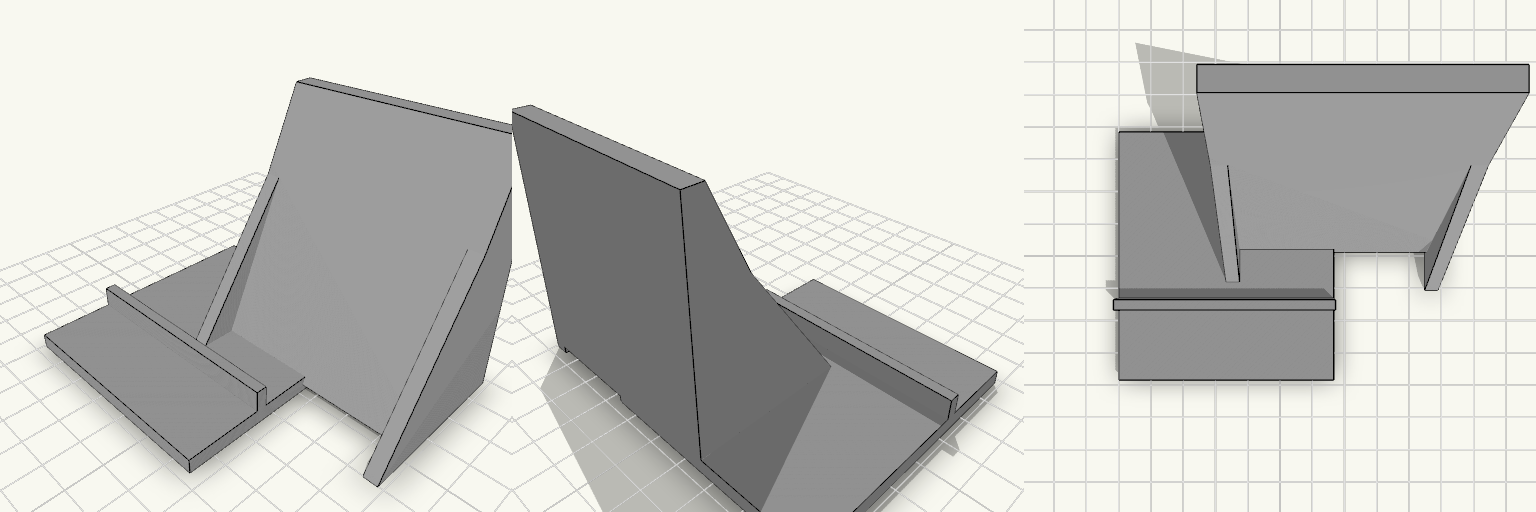
What it's for A one-piece desktop phone stand for students, holding a phone at a 65° viewing angle on a desk. Dimensions 65 mm wide, 75 mm deep, 70 mm tall 4 mm flat base, 4–5 mm walls 14 mm deep shelf with a 6 mm front lip Two triangular side supports Remix ideas Widen the shelf for phones with cases. Add a cable slot through the backrest. Lower the backrest angle for typing-height viewing.
Snake Tail Phone Stand
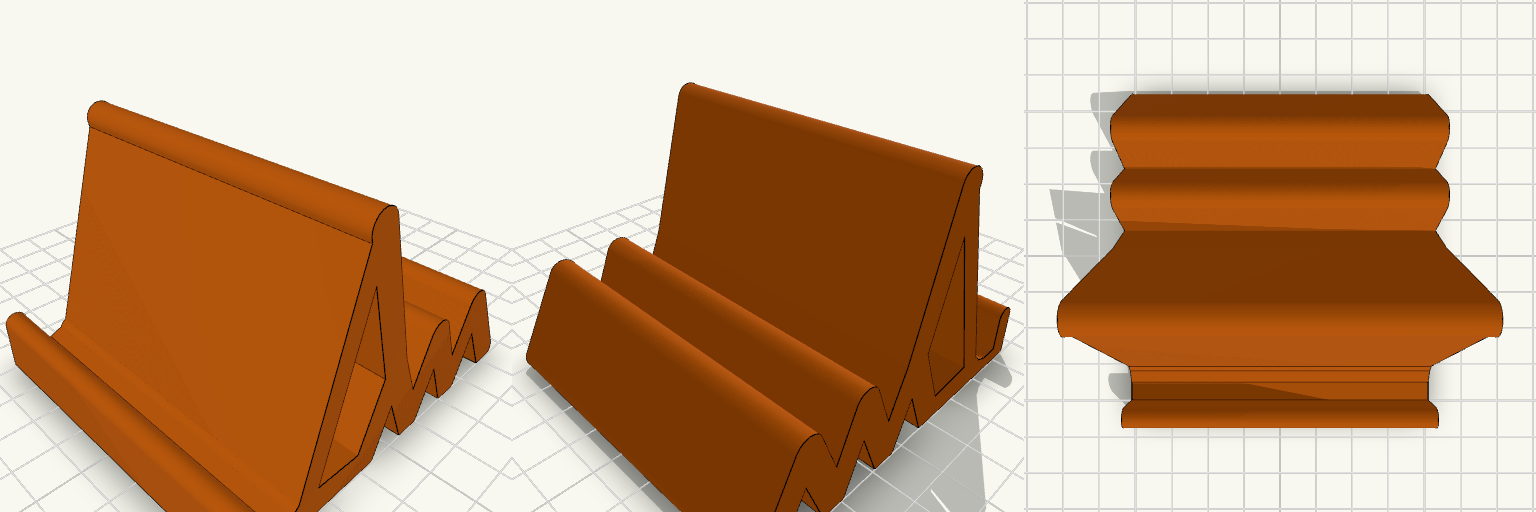
A one-piece orange phone stand with a low front lip, a short flat seat and a backrest leaning up to about 60 mm. A zig-zag snake of humps runs along the back. Remix hooks Lip height: the front stopper is about 5 mm of strip plus the strip's rounded end, roughly 7.5 mm in total. Raise it for a more secure hold, or lower it further to keep captions clear. Seat depth: 12 mm. Deepen it for thick cases, though a steeper backrest helps more. Backrest angle and height: it rises about 18 mm in Y over 55 mm in Z, so it is steep. Both are easy to change. Snake humps: 4 peaks, each about 14 mm high. Add more humps, or raise or lower the peaks. Width: 70 mm, with a 5 mm strip thickness. Pairs well with a non-slip pad on the seat.
Foldable Snap-Fit Phone Stand
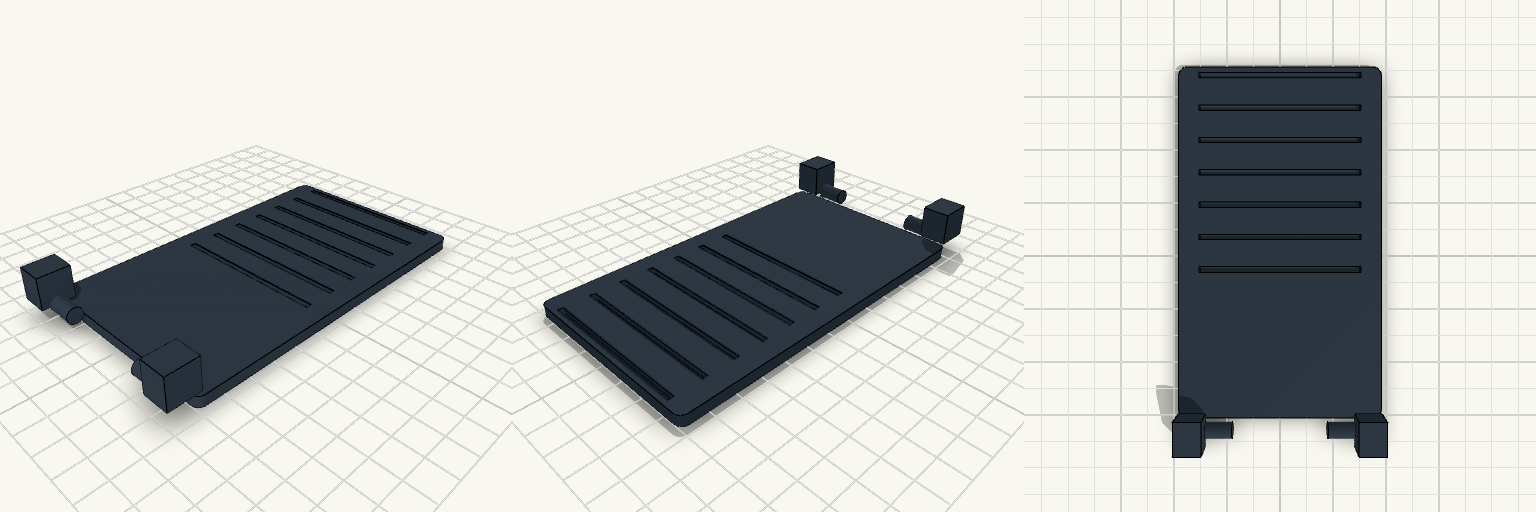
A rugged, fully printable foldable phone stand. It is printed in three flat pieces that snap together securely, allowing it to fold completely flat for travel. Features Adjustable Angles: Features 7 resting notches on the base plate to precisely control the screen angle. Snap-Fit Hinges: Uses C-clip snap joints that grip firmly onto 6mm pins without requiring any extra hardware. Travel-Ready: Folds down to a flat profile when not in use. Print Instructions Print flat on the bed as oriented. Standard PLA or PETG works perfectly. Ensure good bed adhesion for the flat plates. The snap-fit hinges are designed with a 0.4mm clearance — they will require a firm push to snap into place during assembly, but will hold tight thereafter.
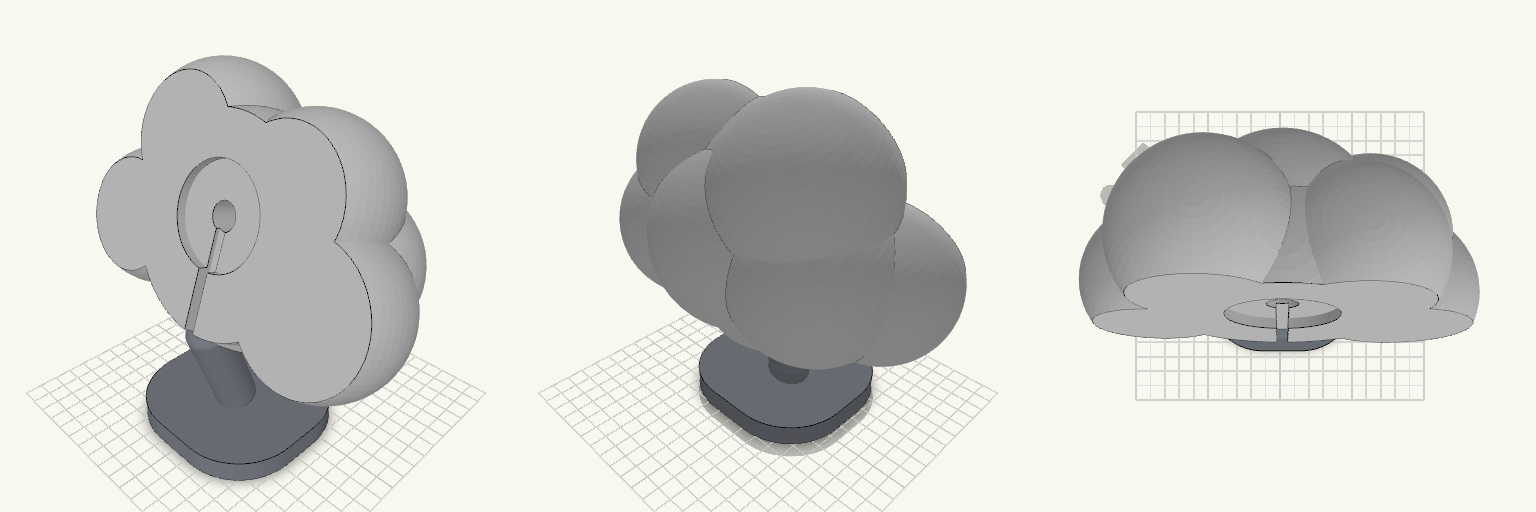
Cartoon Cloud MagSafe Stand
A heavy, volumetric desktop stand for the iPhone 15 with a friction-fit MagSafe socket. The body is built as a fully rounded, bubbling cloud with a perfectly sheared flat front to carry the phone and a sliced flat bottom for desk stability. Mounted on a heavy, hidden pill base holding a 20-degree back-tilt. Fit: 56.5 mm cutout for a standard MagSafe puck, with an 8 mm channel for the cable routing down the face. Format: Two-piece assembly. The cloud and the base print separately and socket together. Volume: Bubbly 3D geometry across the back and sides; dead flat front surface for phone rest.
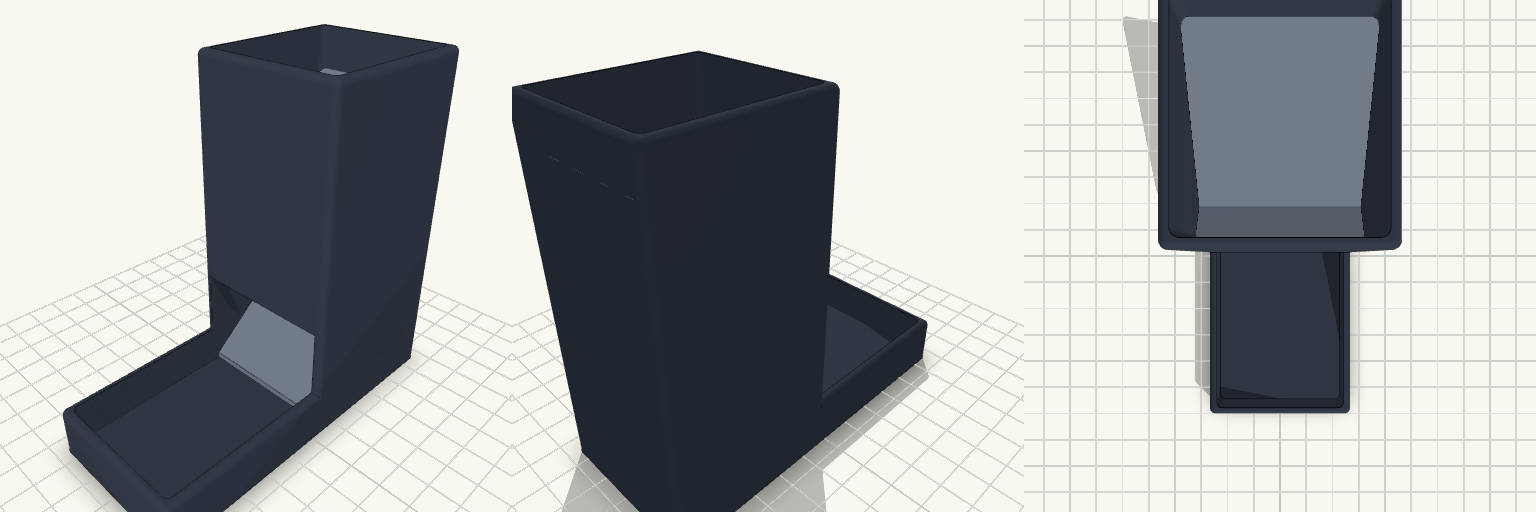
110mm Compact D20 Dice Tower
A 110 mm compact dice tower designed to randomize standard 20-sided dice. The one-piece enclosure integrates a catch tray to contain the dice after descent, while the internal structure uses three alternating baffles to ensure unpredictable rolls. Dimensions: 50 mm wide by 110 mm tall, with a 60 mm extended tray. Fitment: Engineered with clearances for standard 20 mm tabletop dice. Baffles: Three internal deflectors pitched at 40 degrees. Printability: Self-supporting internal geometry prints without support material.