6-Camion
Created 1 months ago
Description
What it's for
A commemorative 3D-printable plaque featuring the Arabic phrase "عيد الوحدة" (Unity Day) in raised, bold typography. Designed to be mounted on a parade truck cargo box, the lettering is heavily embossed to ensure clear visibility from a distance.
Dimensions
- Backing Plate: 300 mm x 90 mm x 4 mm thick
- Raised Text: 4.5 mm relief height above the plate
- Mounting Holes: 4x symmetrically placed holes, 3.5 mm diameter
Print notes
- Material: White PLA or similar rigid filament is recommended for high contrast.
- Orientation: Print flat on the text side up (Z=0).
- Supports: None required. Ensure good bed adhesion to prevent warping on the 300 mm span.
Images
More like this
Explore more in Decor & Display →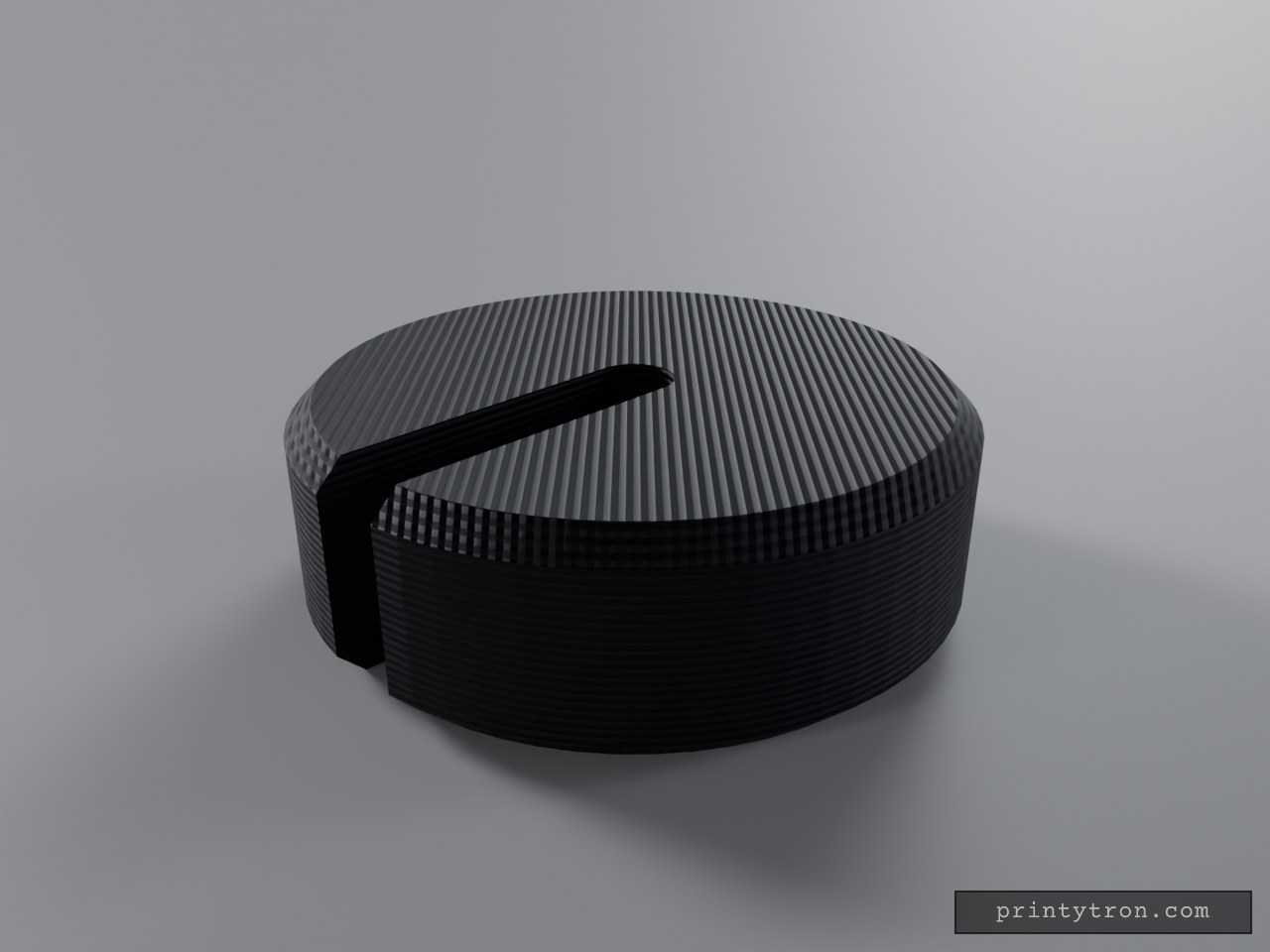
Pebbl — Aquarium Plant Weight
Pebbl is a small slotted disc that holds aquarium plant stems down in the substrate. The stem slides in through the open slot and seats in a rounded pocket at the centre, so the plant stays put without wire, glue or clips. The flat, compact profile sits low and is easy to bury under gravel or sand. Dimensions Diameter: 25 mm Thickness: 8 mm Slot width: 3 mm, running from one edge to the centre Edges: 1 mm chamfer on the top and bottom rims Slot end: rounded at the centre so a stem seats cleanly Print notes Prints flat on the build plate with no supports. PETG at high infill is a good choice for sinking weight. Plastic is light, so larger plants may need a thicker or wider disc. Use an aquarium-safe filament.
Wall-Mounted Running Medal Holder
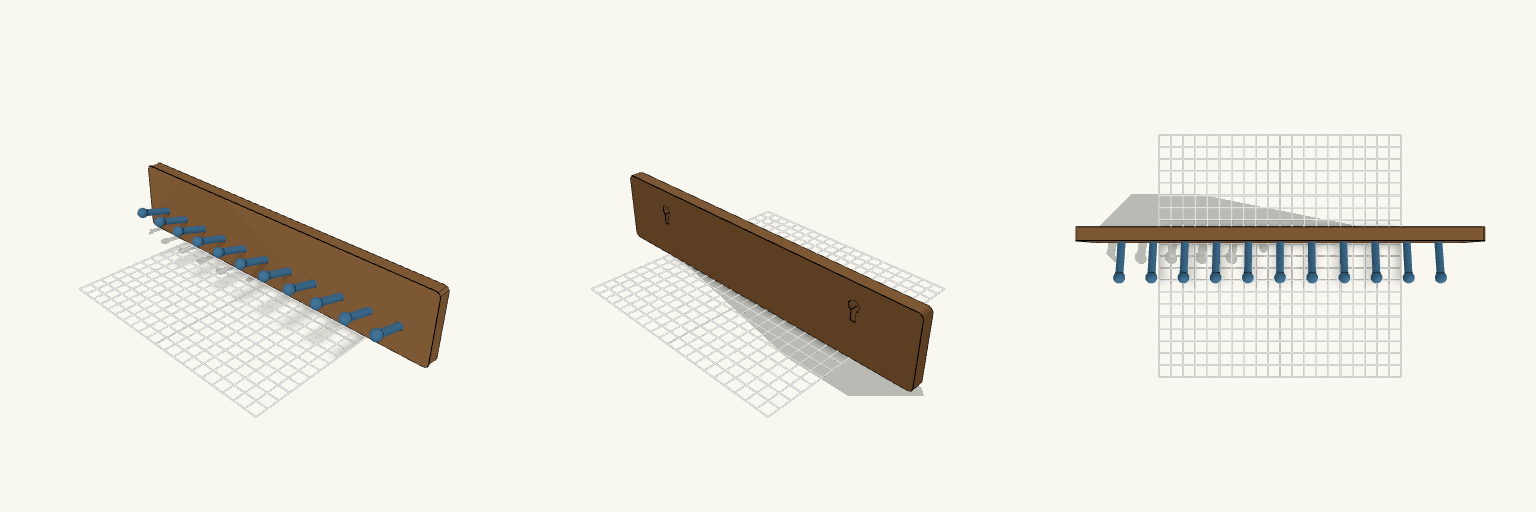
What it's for A wall-mounted rack for displaying running medals. Each ribbon slides onto one of eleven angled prongs that project from a flat backboard, so medals hang in a neat row and stay visible instead of ending up in a drawer. The prongs tilt up and finish in a ball tip, which holds the strap in place once it is looped on. The backboard is left plain above the prongs, giving the row of medals a clean edge to hang against and keeping the silhouette simple to print. The front face is completely smooth — the hanging slots are cut only into the back, so no holes or screw heads show through the display side. Dimensions Backboard: 300 mm wide × 60 mm tall × 10 mm deep Medal prongs: 11 prongs at 25 mm spacing, each reaching 30 mm out from the backboard at a 15° upward tilt, with ball tips Hanging slots: two keyhole pockets cut 6 mm into the back, 200 mm apart, leaving 4 mm of solid material at the front Prong spacing is the number worth checking against your own medals — wide straps need more room between prongs, and the spacing can be opened up if yours run thick. Roughly 10 to 15 medals fit across the 300 mm board. Print notes Prints as one piece; no assembly required. Lay the backboard flat on the plate so the prongs build up in front of it. The tilt keeps them self-supporting, so no supports are needed. Because the slots are stopped short of the front, the screw heads sit recessed in the back rather than passing through the board. Two wall screws 200 mm apart carry the holder. Remix ideas Widen the backboard to 400 or 500 mm and add prongs for a larger collection. Add a second row of prongs below the first to stagger medals in two tiers. Add a raised name plate or a finish-line banner along the plain top edge using the same prong layout. Materials Rigid filament is the better choice here; the prongs carry real weight and a soft or flexible material will let them droop.
Flat-Pack OO Scale Corrugated Garage
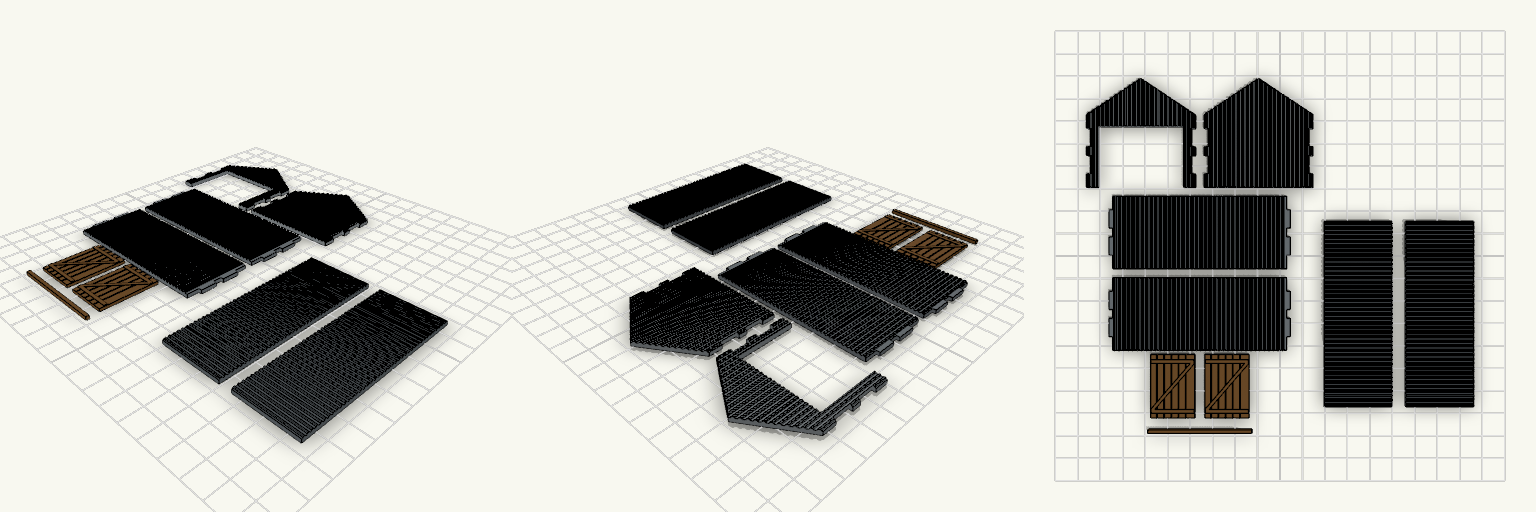
A flat-pack OO scale garage with corrugated iron panels, a gable roof and sliding timber doors. Every piece prints flat on the bed with no supports, then assembles with glue. The side walls carry tabs that pass through slots in the front and back gable ends, with 0.3 mm clearance. The two roof panels sit on the gable slopes. Two plank-and-brace doors hang from a separate rail across the front opening. Footprint: about 48 × 80 mm, ridge height about 48 mm Pieces: 2 side walls, 2 gable ends (front one has the door opening), 2 roof panels, 2 doors, 1 rail Panel thickness 1.6 mm with raised corrugation ribs Print flat, glue the joints, fix the rail above the opening
55كعبة مجزءة
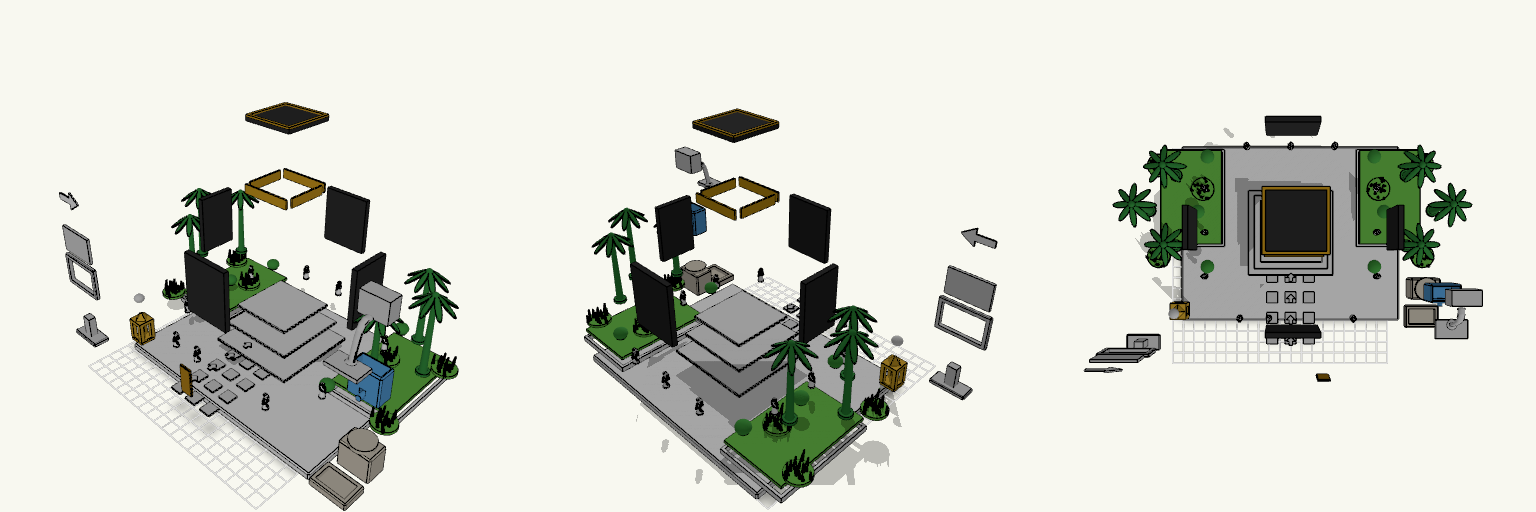
Exploded miniature of a masjid scene with every component spread apart with visible gaps. Parts: white base, platform tiers, four black Kaaba walls, roof, door, gold bands, walkway tiles, arrows, palms, bushes, grass, pilgrims, Zamzam station, Maqam Ibrahim and blue sign parts. Layout: exploded only, no assembled copy. Export: the download is one file; separating individual parts happens outside this model.
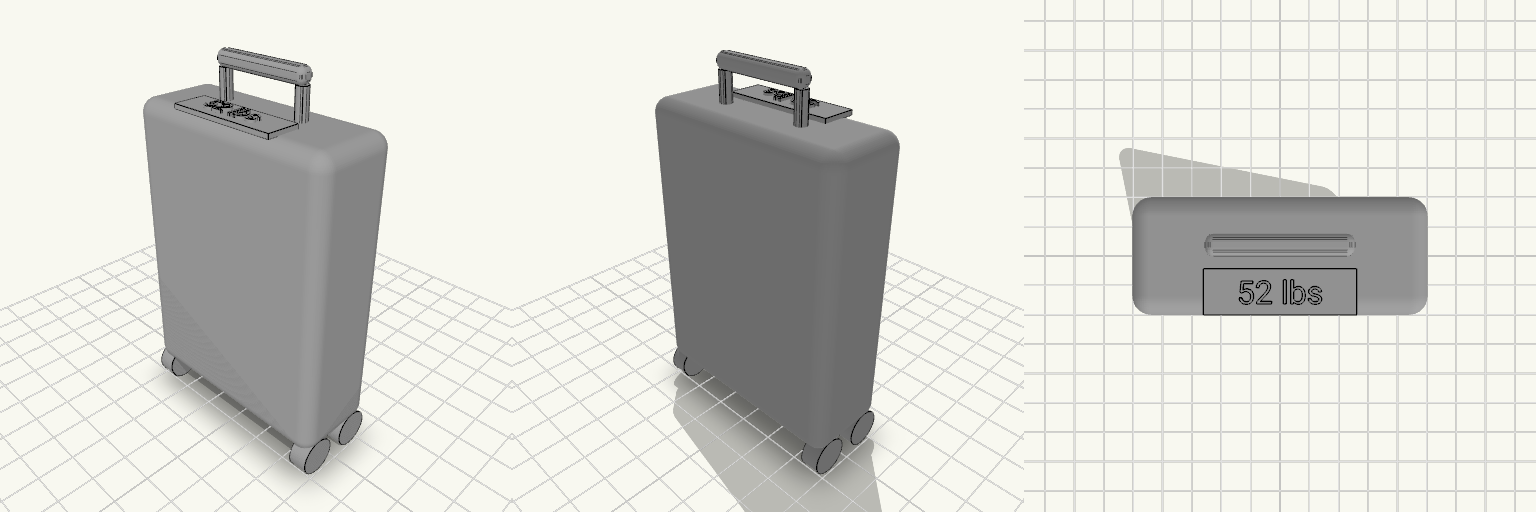
Miniature Suitcase with Handle, Wheels and Weight Display
What it's for A miniature suitcase standing upright on four sideways-mounted wheels, with a pull handle on top and a small thin scale plate set into the top face just in front of the handle. The plate carries a raised readout of 52 lbs, so the piece reads as a luggage scale at a glance. It works as a small desk ornament, a travel-themed display piece, or a scale prop for a dollhouse or diorama. The whole thing is one plain neutral finish, with no colour coding or recessed front screen. Dimensions Overall footprint: 60 × 24 × 100 mm (width × depth × height, as it sits on the print plate) Wheels: mounted sideways, axles running across the width of the case, so the body rests on them Weight plate: a small thin panel on the top face, in front of the handle Readout: raised 52 lbs lettering, picked as a believable airline-limit weight — say if you want a different figure Print notes The model prints as a single piece lying on its wheels, so no supports are needed under the body. The raised readout is small — a 0.4 mm nozzle with fine layer heights keeps the digits and the "lbs" legible, and a 0.25 mm nozzle gives crisper text. The thin top plate is shallow, so check that your bridging over that area is clean. Remix ideas Change the readout to a different weight, or leave the plate blank for a custom label. Swap the handle for a telescoping version, or add corner guards to the body. Scale the case up to hold small items, or down to keyring size. Finish A single neutral colour suits the plain, serious look — the design relies on shape and the raised text rather than colour contrast, so any filament works.
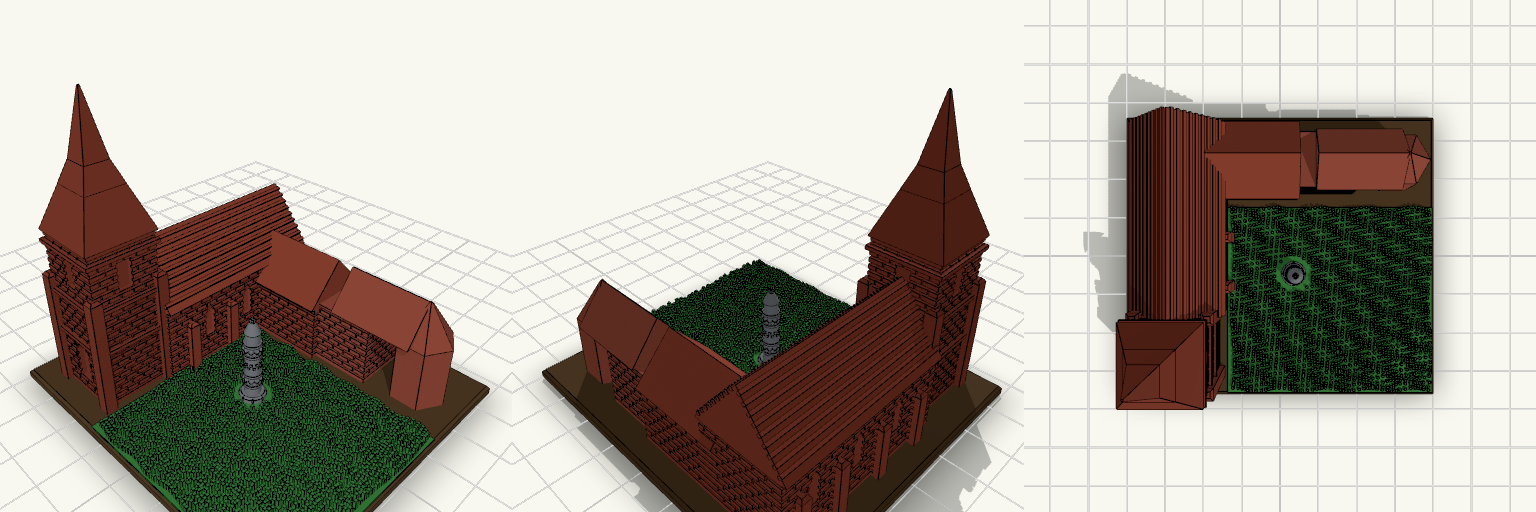
Fara — Uproszczony Model Kościoła
Fara to miniaturowa świątynia w duchu gotyku ceglanego, rozplanowana na literę L. Nawa biegnie wzdłuż jednej osi, a od jej tylnego końca odchodzi w bok skrzydło z dachem dwuspadowym; na jego końcu zamyka całość wieloboczne prezbiterium. Przy froncie wznosi się smukła wieża z ostrym hełmem. W środku wewnętrznego narożnika litery L, odsunięty od ściany nawy i od frontu skrzydła, stoi Słup Koniński — walcowaty trzon na szerszej podstawie ze stożkowym zwieńczeniem i kulką na szczycie. Ściany nawy, wieży i prezbiterium mają ceglaną czerwień oraz relief prawdziwego muru: poziome fugi i przesunięte w co drugiej warstwie pionowe spoiny. Słup zachowuje własny, kamienny charakter i odrębny zestaw ornamentów. Całość stoi na wspólnej, brązowej płycie o lekko ściętej krawędzi. Plac wokół słupa ma zieloną nawierzchnię i porasta go gęsta trawa — źdźbła o różnej wysokości, rozsiane w rozstawie około 1 mm, z wolnym miejscem tuż przy podstawie słupa. Model dobrze czyta się jako dekoracyjna miniatura na półkę, element makiety miasteczka albo pamiątka związana z Koninem. Proporcje są przybliżone — oparte na ogólnym układzie świątyni, a nie na planach budynku — więc detale wieży czy liczba okien mogą odbiegać od oryginału. Słup jest wyraźnie wyższy względem kościoła, niż byłby w skali: prawdziwy jest dużo niższy i przy tej skali wyszedłby zbyt cienki do druku. Wymiary Szerokość × głębokość × wysokość poszczególnych części: Płyta: 79 × 71 × 2 mm, z lekko ściętą krawędzią Trawa (zielony plac ze słupem): 52,6 × 47,8 × 2,3 mm Nawa (ze skrzydłem): 39,8 × 45,2 × 32 mm Wieża: 18,6 × 18,6 × 67 mm Prezbiterium: 30,9 × 14 × 24 mm Słup koniński: 6,1 × 6,1 × 21 mm Wieża jest najwyższym elementem całości — o tym warto pamiętać przy planowaniu wysokości druku. Cechy Plan litery L: nawa i odchodzące od jej tylnego końca skrzydło z dachem dwuspadowym, a na jego końcu wieloboczne prezbiterium Stromy dach nawy, przypory i ostrołukowe okna — czytelny gotycki charakter bryły Mur z cegieł na nawie, wieży i prezbiterium: poziome fugi co około 1,6 mm oraz pionowe spoiny co około 3 mm, przesunięte o pół cegły w co drugiej warstwie Żebra imitujące dachówki na obu połaciach dachu nawy Trzy poziome gzymsy i rząd drobnych rombów pod hełmem wieży Słup ustawiony w środku placu przy wewnętrznym narożniku litery L, odsunięty od kościoła, z podstawą i stożkowym zwieńczeniem z kulką, ozdobiony pierścieniami, dwoma rzędami rombów, zygzakiem i bruzdami na cokole Wspólna płyta pod całością, z zieloną nawierzchnią i trawą na placu wokół słupa — model stoi stabilnie i zaczyna się od płaskiego spodu Uwagi o druku Model nie ma delikatnych, ażurowych detali — okna i przypory są płaskorzeźbione w bryle — więc dobrze znosi typowe ustawienia druku. Fugi mają około 0,4 mm głębokości, a pionowe spoiny rozstawione co 3 mm mogą przy standardowej dyszy 0,4 mm wyjść ledwo widoczne; jeśli drukarka je zaleje, warto zmniejszyć warstwę lub nieco pogłębić rowki w slicerze. Źdźbła trawy mają 0,6 mm szerokości i rozstaw około 1 mm — gęściej nie ma sensu przy dyszy 0,4 mm, bo źdźbła zleją się w jedną plamę. Największą uwagę warto poświęcić wieży z hełmem, która sięga 67 mm, oraz cienkiemu trzonowi słupa o średnicy 6,1 mm. Cały model jest jednym elementem na wspólnej płycie — nie wymaga sklejania.