Ajman car tray
Created today
Description
A rectangular coffee tray for the car, measuring 124.7 mm wide by 107.4 mm deep, with a raised rim and a recessed inner surface that keeps cups and items in place. "Meet me in Ajman" is engraved into the inner floor, centered.
- 124.7 × 107.4 mm footprint, 10 mm tall
- 4 mm raised walls with rounded corners
- Recessed floor, 6 mm below the rim
- Text engraved 1 mm deep, not raised
- Flat bottom, single solid piece, no supports needed
Images
More like this
Explore more in Automotive, RC & Hobby →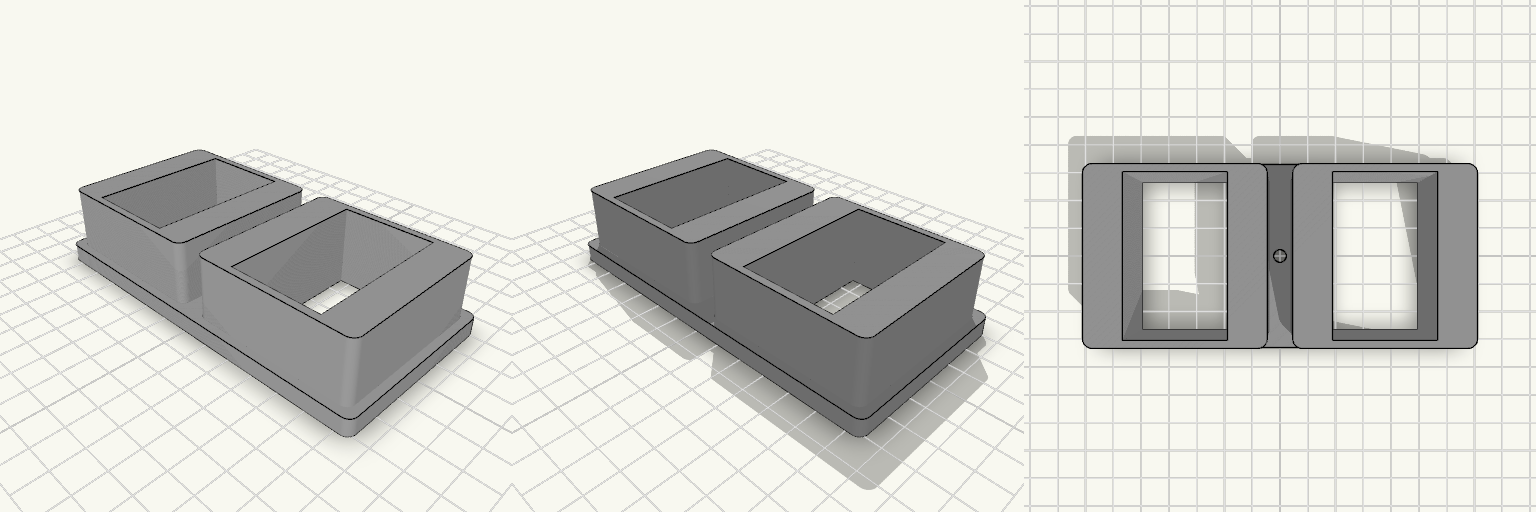
Double Seatbelt Buckle Holder, Backseat
Two seatbelt buckles flop around and fall into the seat gap, so this holder stands both upright side by side in the backseat of a Toyota Sienta. Each 33 x 53 mm pocket goes straight through the base, so the buckle and webbing pass through with nothing blocking the bottom. Pocket size: 33 x 53 mm each, sized for a 31 x 51 mm buckle Sleeve height: 28 mm above a 6 mm base Overall footprint: 130 x 64 mm Centre screw hole: 4.5 mm Print flat on the base, no supports needed
RC Car Bevel Gear Rear Drive
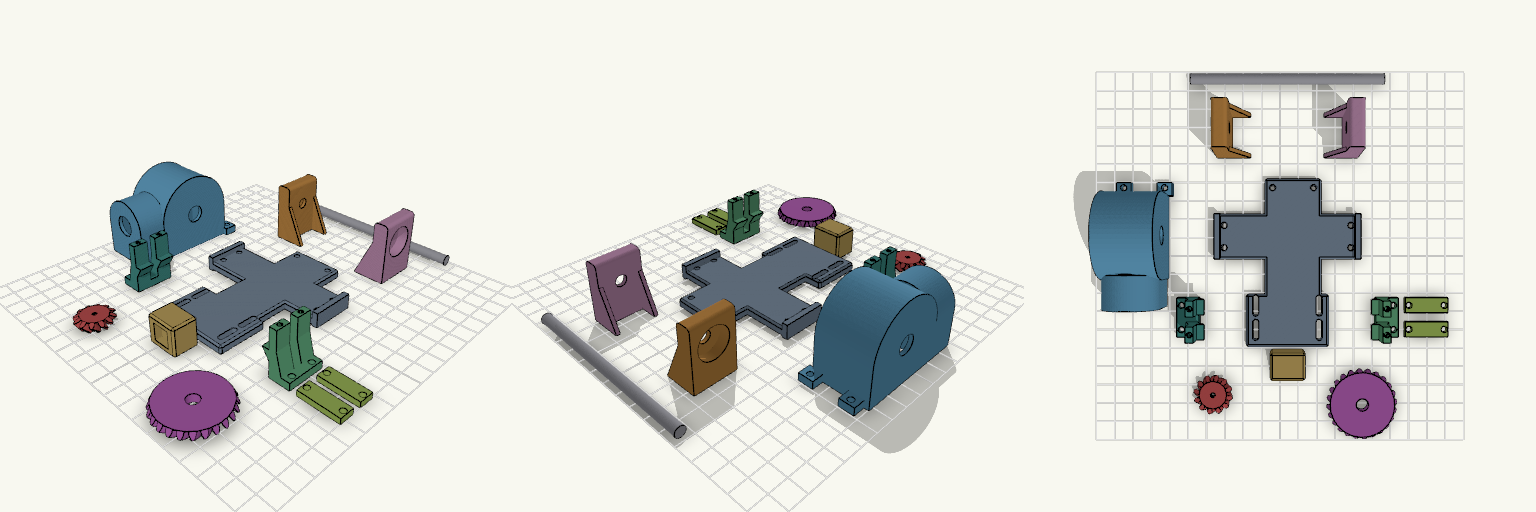
A rear-axle drive for an RC car where the motor shaft has to turn 90° into a cross-car axle without the gears skipping or the motor shifting. This set uses a 12-tooth pinion and 24-tooth crown gear (2:1) on a 103.9 mm × 6 mm axle, with an open motor cradle instead of a closed box. Key numbers Gears: module 1.5, 20° pressure angle, 4 mm face width, 90° shaft angle Pitch cone angles: 26.57° (pinion) and 63.43° (crown); cone distance about 20.1 mm Pinion bore 2.1 mm, crown bore 6.2 mm, both with M3 set-screw holes in the hubs Axle supports: 6.4 mm through-hole plus a 17.3 mm seat for 606 bearings (6×17×6) Base: 84 × 92 × 5 mm, M3 holes (3.4 mm clearance); cradle slots allow forward and back adjustment Motor cradle parameters at the top of the file: mw, mh, wall, saddlel, saddley. Measure the real motor and edit them Cover is open at the bottom, with two M3 ears at the rear Printing Print gears with the hub facing up or down on the bed; PETG or nylon preferred Cover prints open-side up without supports Axle is a separate 6 mm steel rod; M3 screws hold supports, cradle, straps and cover
25mm Tactical Tabletop Tokens
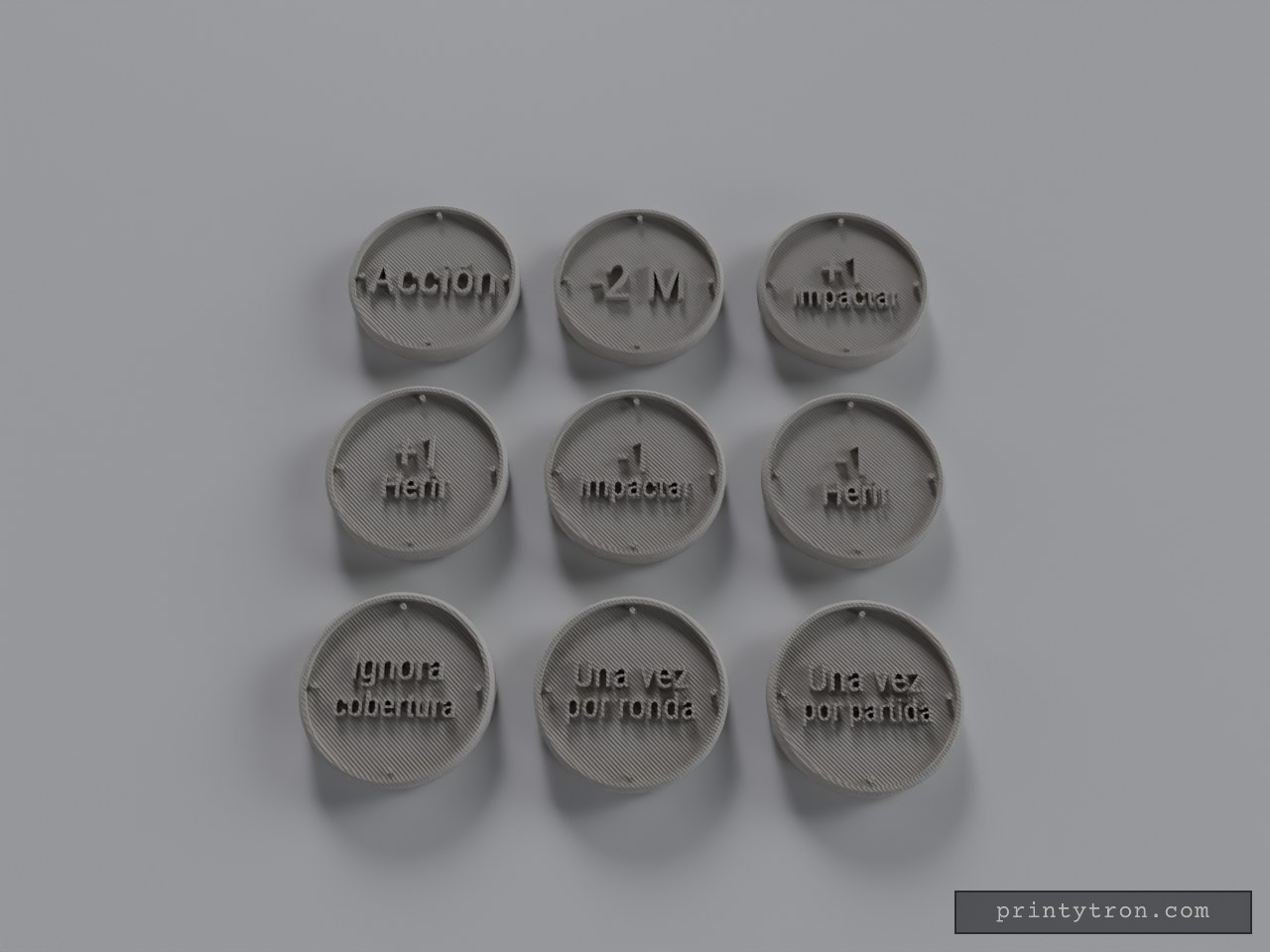
A complete set of nine 25mm wargaming tokens tailored for tabletop tracking. Designed with a clear separation between the base and the raised lettering, making them perfectly suited for a mid-print filament swap or a multi-material system. Specifications Dimensions: 25 mm diameter, 4 mm overall height. Tolerances: The raised text and outer rim sit exactly 1 mm above the base layer, creating a clean Z-height transition for color changes. Printability: No supports required. The bottom edges feature a 1 mm chamfer to prevent elephant-foot distortion on the first layer, ensuring the tokens remain perfectly circular and easy to pick up from flat tables. Layout: Arranged in a flat 3x3 grid for immediate batch printing. Can be split into individual models in the slicer if needed.
Aura — Automotive Ring Emblem
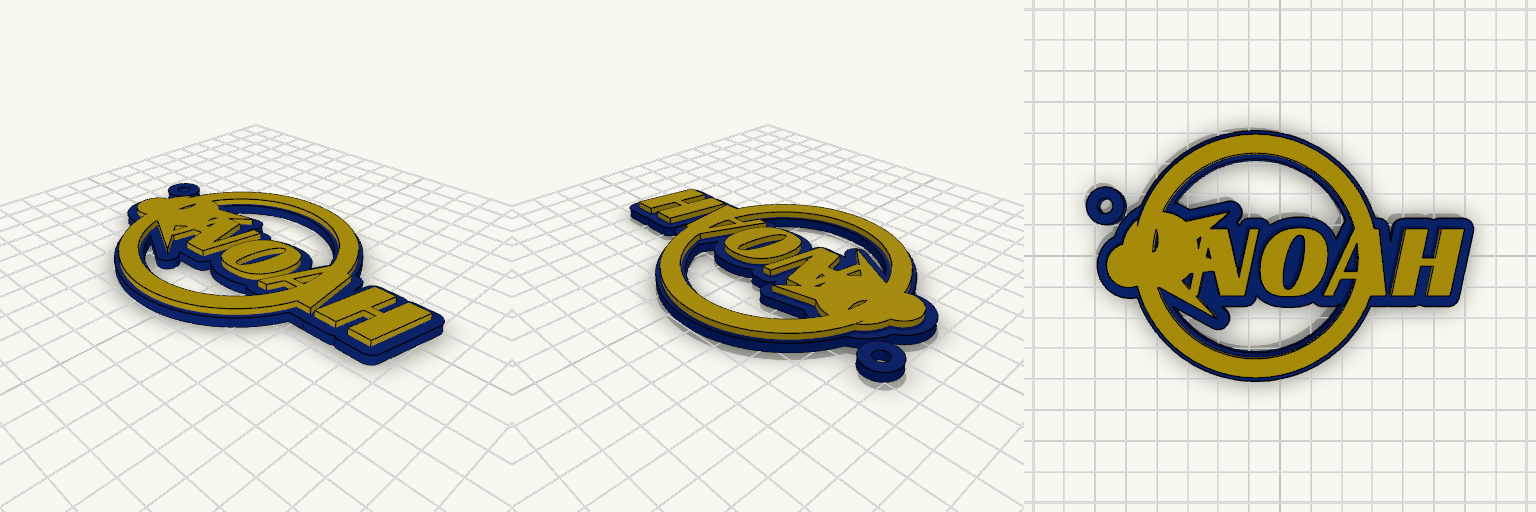
Llavero personalizado con el nombre "NOAH" en letras mayúsculas e inclinadas, diseñado con la temática de su personaje favorito. Cuenta con la silueta clásica asomándose por el anillo dorado, perfecto para colgar en la mochila o en las llaves. Características Diseño dinámico: Letras gruesas e inclinadas para dar sensación de velocidad. Impresión a dos colores: El diseño está dividido en dos alturas distintas. Cambia el filamento a los 3 mm para que el texto y el relieve resalten sobre el fondo. Resistente: Base sólida de 3 mm de grosor que aguanta los tirones del uso diario.
Modular Cat Puzzle Scratcher
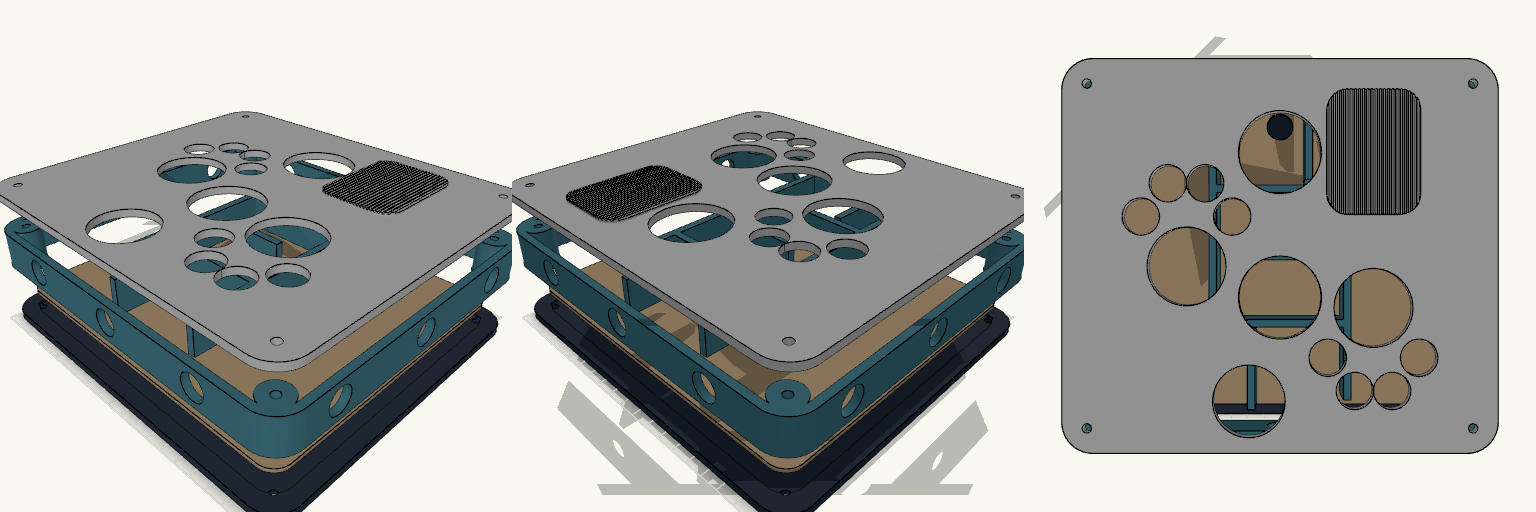
A modular puzzle and scratcher assembly designed to keep a cat engaged while filing their nails. The unit bolts together in layers, enclosing a labyrinth meant to hold treats or toys. The stack consists of four distinct pieces: Base Plate: Features a recessed pocket to accurately seat the scratch tray. Filing Tray: A removable insert that sits at the bottom of the maze, complete with a finger hole for easy swaps. Maze Walls: A 20mm deep labyrinth structure with reinforced corner bosses for clamping force. Top Plate: Incorporates multiple circular and elongated paw cutouts to allow access to the maze below, plus a dedicated raised ribbed section for exterior nail filing. Designed to be clamped together using four M4 bolts passing through all outer corners. Note that the provided file lays out the parts in an exploded view to clearly show the internal structures.
Kawasaki z1100 bar end mirror handle bar adaptors
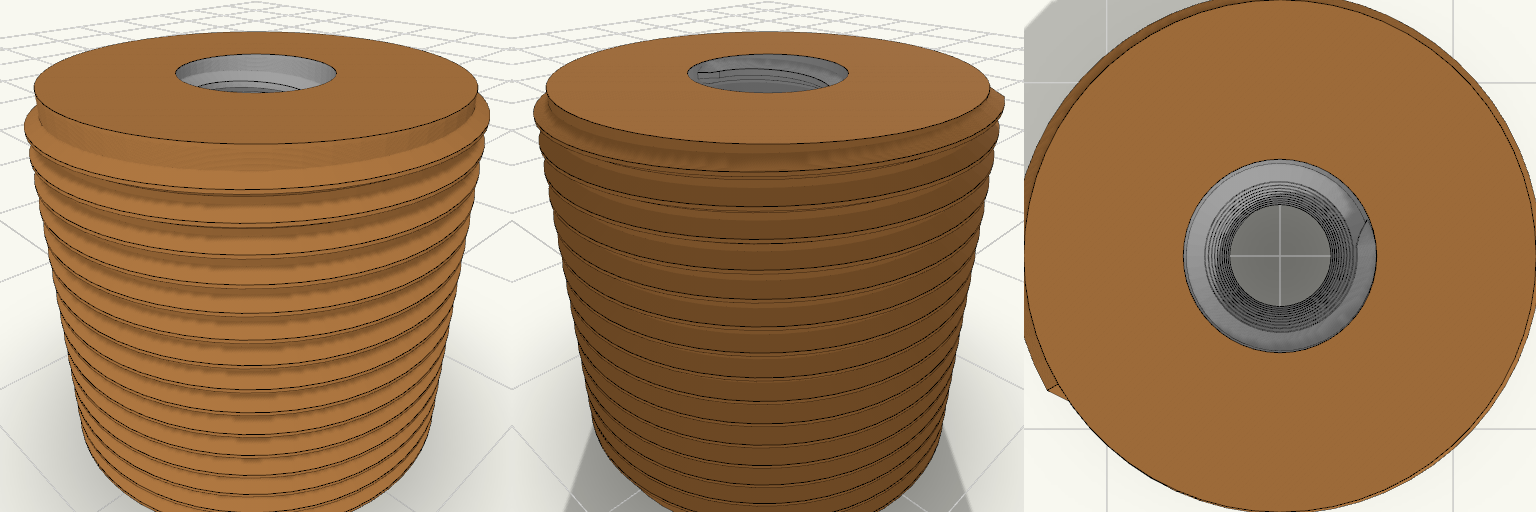
A threaded adapter that steps an M18x1 fine-pitch external thread down to an M6x1 internal thread, made for fitting bar end mirrors to the handlebars of a Kawasaki Z1100. The stud is 16 mm tall with no flange, and a 10 mm hex socket in the base lets it be driven in with an Allen key. Remix hooks Hex socket size and depth: 10 mm across flats, 5 mm deep. A deeper socket (7 mm was the earlier value) grips a key better but leaves less solid material around the M6 thread. Change the across-flats value to match a different key. Overall height: 16 mm. Taller gives the mirror stem more thread to bite into; shorter reduces how far it protrudes from the bar end. Thread fit: both threads are modelled at nominal size. FDM usually needs 0.1–0.2 mm of adjustment on the M18x1 outside and the M6x1 inside, so print a short test ring first. Add a stop: there is no flange, so insertion depth is set by feel. A thin collar or a shoulder on the mating part would give a hard stop. Pairs with: a lock nut or thread-locking compound on the M6 side to keep a mirror from backing out under vibration. Starting dimensions External thread: M18, 1 mm pitch Internal thread: M6, 1 mm pitch, through the full height Height: 16 mm Socket: 10 mm hex, 5 mm deep Check the thread on your actual bar ends before relying on it. Print in a tough material such as PETG or ABS, since the part sees vibration and weather.