Chaveiro Esfera Preta 30 mm
Made by Silva3djack
Created 2 days ago
Description
Chaveiro em formato de esfera de 30 mm com argola no topo e dois pontos amarelos de 5 mm embutidos na face frontal.
- Esfera: 30 mm de diâmetro
- Argola: 11 mm externo, 6 mm furo, 2,4 mm de espessura
- Pontos amarelos: 5 mm, embutidos 0,6 mm abaixo da superfície
- Impressão em duas cores (preto e amarelo)
Images
More like this
Explore more in Keychains & EDC →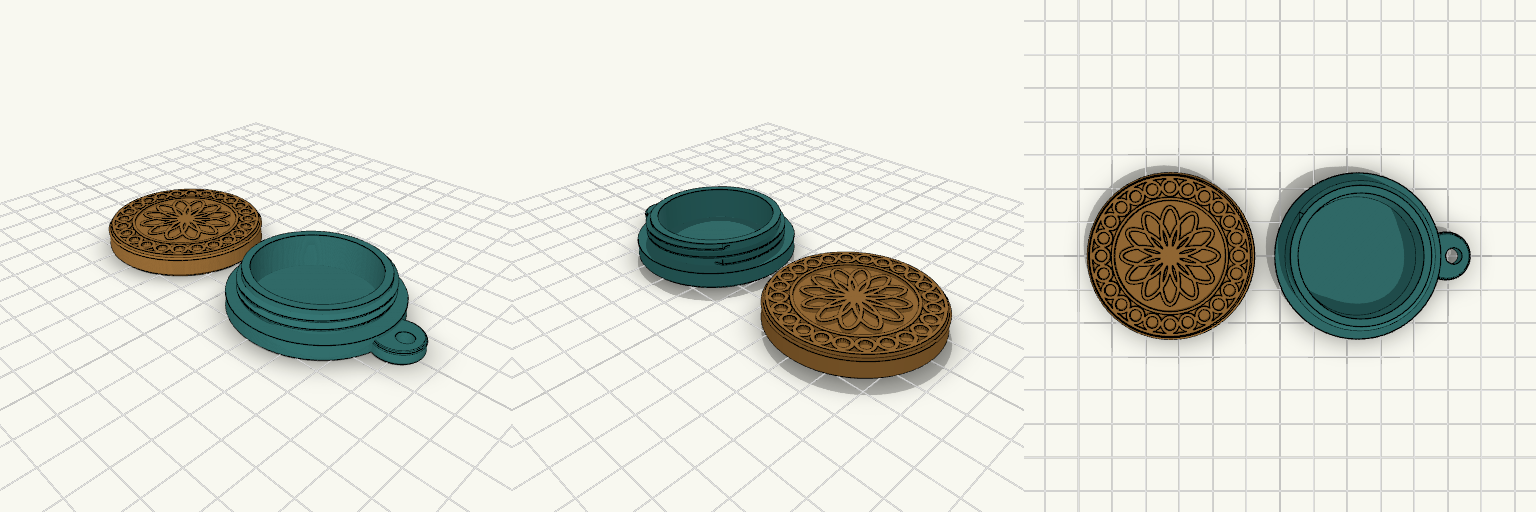
35 mm Threaded Keychain Container, Rosette Lid
Round screw-top keychain container: a deep base with a 35 mm bore and a thin matching lid with an ornamental rim and a twelve-petal rosette centre. Fit Bore: 35 mm diameter, 10 mm deep. Thread: 42 mm major diameter, 2.5 mm pitch, lid cut 0.7 mm oversize. Outer diameter: 48 mm on both pieces. Keyring tab: 4.8 mm hole, on the outside of the base. Check before printing Measure how your printer holds the 35 mm bore. Print the lid first to test the thread fit. Not included No Arabic calligraphy. The lid uses a geometric rosette and scalloped border.
21mm Disk Holder with Snap Lip
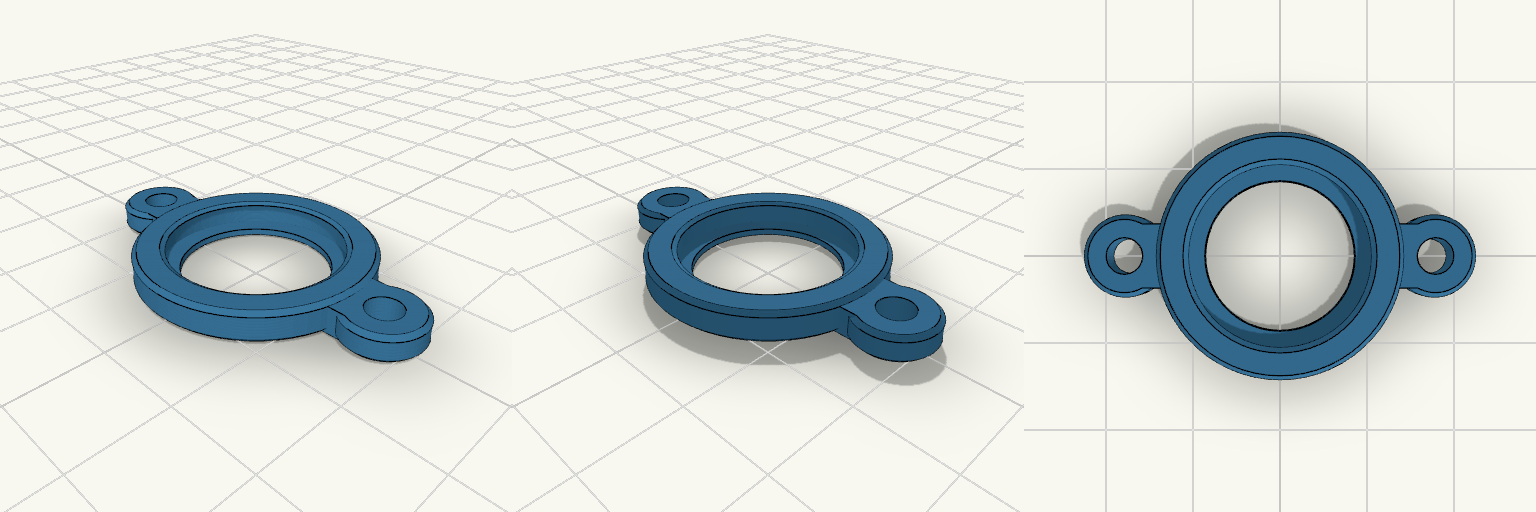
What it's for A round holder for a 21 mm by 2.5 mm disk, with an eyelet on each side for a strap, cord or ring. A 0.5 mm lip around the top edge snaps over the disk to keep it in place. Dimensions Outer diameter: 27 mm, 4.7 mm tall Disk pocket: 21.4 mm diameter, 2.5 mm deep Retaining lip: 0.5 mm overhang with a tapered lead-in Rear window: 17 mm, for pushing the disk out Eyelets: 4 mm holes, 9 mm pads, on both sides Remix ideas Increase the lip overhang for a firmer grip Remove the rear window for a closed back Add text or a chamfer ring around the edge
Bharat Key — Mini Number Plate Keychain
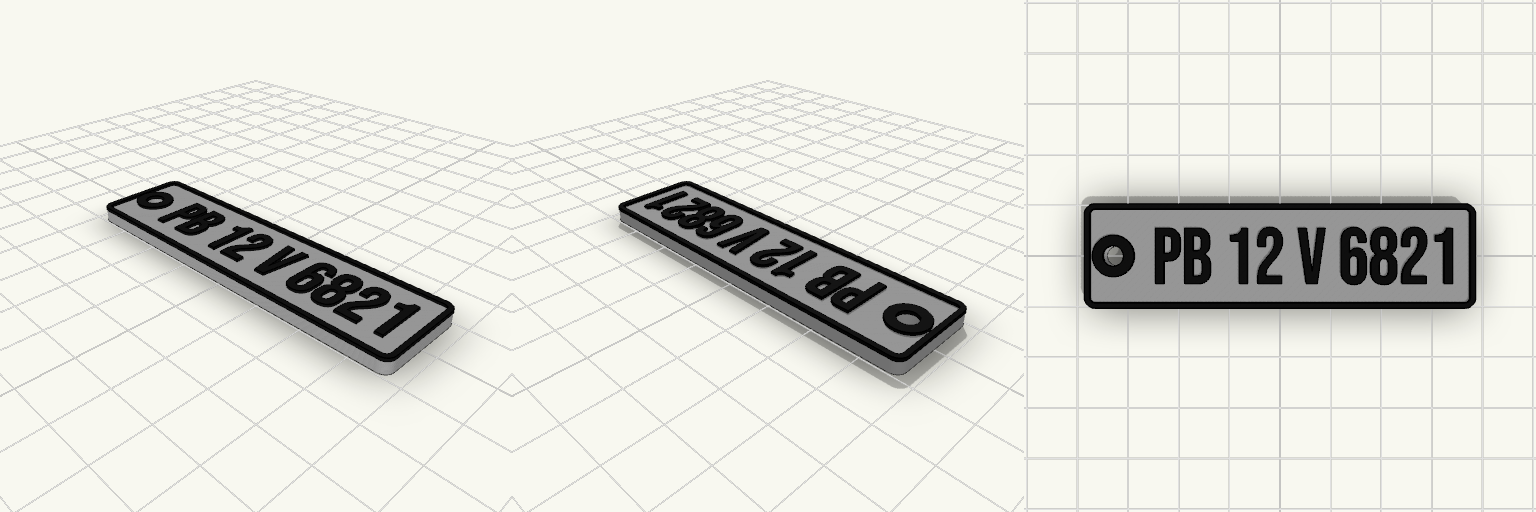
Bharat Key is a miniature Indian-style number plate keychain made to carry the exact registration PB 12 V 6821. The long, slim plate pairs a light grey/white base with a thin raised black border and bold black lettering raised on a single horizontal line. The keyring hole sits at the extreme left, ringed with raised black for strength, while the registration stays centred in the space that remains. No blue IND strip, flag, extra colour or decoration is present, so the tag keeps a clean number-plate look while staying sturdy enough for a keyring. Dimensions Plate: 75 × 20 × 2.5 mm Raised border and text: 0.6 mm above the base; border 1 mm wide Keyring hole: 4 mm diameter, cut fully through at the extreme left Hole ring: raised black ring around the hole for extra strength Features Exact registration text: PB 12 V 6821 on one horizontal line Bold black lettering raised above a light grey/white base Thin raised black border around the whole plate One circular keyring hole at the extreme left, fully through the plate Raised black ring around the hole to reinforce the keyring area Flat rectangular body with slightly rounded corners and a smooth flat backside Light grey/white base and black details only — no blue, no flag, no logos or decorations Print notes Print flat on the back; no supports are needed. The raised border and lettering sit 0.6 mm above the base and read clearly at miniature scale. Keep the 4 mm hole clear so the plate hangs cleanly on a keyring.
Portachiavi Famiglia Raganella con rilievo
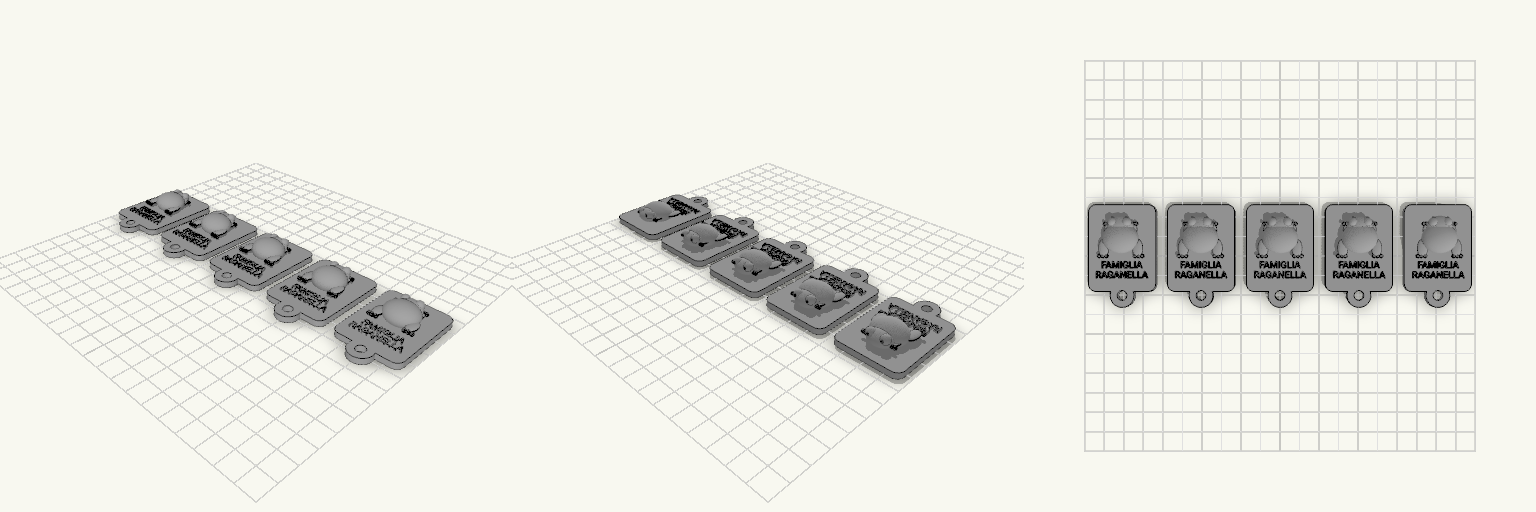
Sei portachiavi con una raganella in rilievo e la scritta FAMIGLIA RAGANELLA, per distinguere le chiavi di casa senza provare tutte le copie. I sei pezzi sono disposti su due file da 3, con 40 mm tra un portachiavi e l'altro lungo X e 56 mm tra le file in Y: si stampano tutti insieme su un'unica piastra, pronti da separare e da agganciare agli anelli. La disposizione resta compatta e tra una piastra e l'anello della fila successiva rimangono pochi millimetri. Le zampe della raganella, davanti e dietro, sono abbassate fino a toccare la piastra del portachiavi, così non restano sospese. Misure e stampa Sei portachiavi in due file da 3 Passo di 40 mm in X, 56 mm tra le file in Y Ingombro totale sul piatto: 114 × 108 × 11,4 mm Piastra singola: 34 × 44 mm, spessore 3 mm Foro per l'anello: 5 mm Corpo della raganella e scritta in rilievo, circa 1 mm sopra la piastra; zampe a contatto con la piastra Stampa piatta, senza supporti, anche in PLA Note Lo spazio tra le file è stretto: se serve più margine attorno ai pezzi, si possono distanziare o stampare in due passaggi.
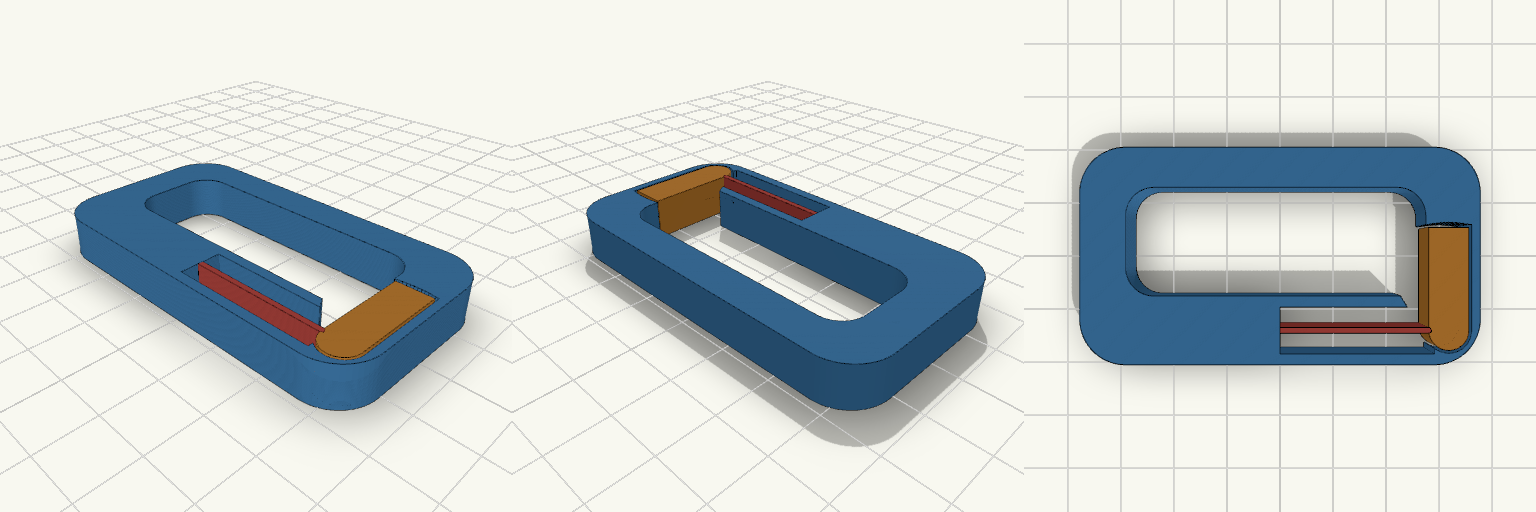
Pocket Snaplink Print-in-Place Carabiner
A compact, D-shaped snaplink in the spirit of the little accessory carabiners that hang off backpack straps and key rings. The 70 mm body carries a pivoting gate and a thin flexure spring that nudges it shut, all printed together in one go. Pop the gate open with a thumb, slip a key ring or bottle loop in, and let it snap back. Not rated for climbing or load-bearing safety use. Keep it to keys, bottles and bag clips. Design notes Size: 70 mm long, 38 mm tall, 8 mm thick. Gate: hinged at the right end, swings inward about 32° for a roughly 12 mm opening. Spring: a 1 mm living-hinge arm along the bottom wall returns the gate to closed. Print-in-place: 0.5 mm clearance gaps around the gate and spring, so no assembly is needed. Material: PETG is recommended for the flexing spring arm. Work the gate a few times after printing to free it. Tuning: if the gate sticks or rattles, adjust the clearance for your printer. The spring thickness sets how stiff the gate feels.
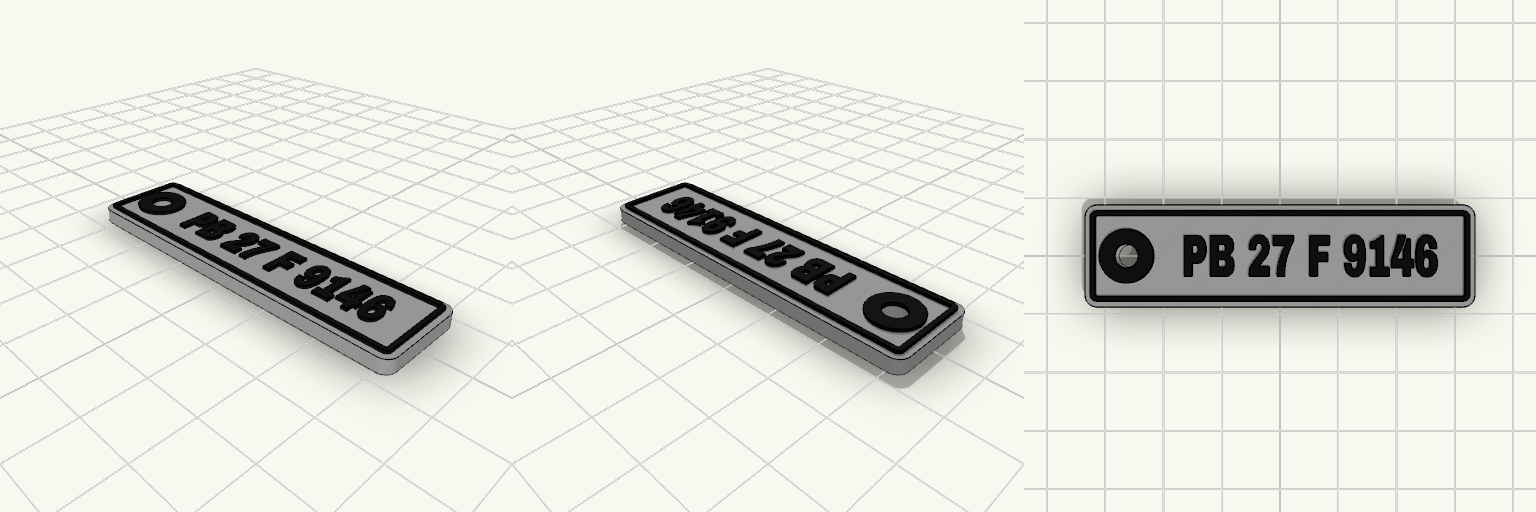
Number Plate Keychain with 4 mm Keyring Hole
A flat 65 × 17 mm number plate keychain built around the three things that ruin a printed tag: a hole that tears out, lettering that runs off the right edge of the plate, and a border crowded with extra frames. The hole sits inside a raised black ring instead of hanging on a thin web of plastic, so a heavy bunch of keys has something solid to pull against. The registration line sits on one horizontal line, raised 0.6 mm so it stays readable instead of rubbing smooth in a week, and it starts clear of the ring so nothing touches the hole. Print and fit Plate: 65 × 17 × 2.5 mm, corners rounded, smooth flat back. Keyring hole: one 4 mm through-hole at the far left, 7 mm in from the end so its ring clears the border, fully open through the base, with its own clear area so it never meets the text. Hole ring: a 9 mm black raised ring around the hole, kept neat and with no other decoration around it. Lettering: "PB 27 F 9146" on one line, raised 0.6 mm in a heavy bold face with even spacing, sized to fit the space between the ring and the right border. Border: a single thin black raised border around the whole plate, 0.6 mm high — no inner frame. Base: light grey, flat and unbroken underneath, prints without supports; the detail all sits on the raised top face, so a two-colour print or a paint fill both work. The text sits a little right of the plate's true centre because the hole takes up the left end — a truly centred line would run into the ring. If you change the registration, shorten the text rather than the plate, or the line will overrun the border on the right side.