Dragon Head Blind Cord Cleat
Created today
Description
Blind cords slip off a plain cleat the moment the tension changes. This dragon head cord cleat has a tusk on each side of the snout, so the cord wraps under it and stays put.
- Mounting plate: 30 x 70 mm, 4 mm thick, two countersunk screw holes
- Tusks: ball-tipped, project about 16 mm out from the centre on each side, above the cord path
- Cord slot: 3.5 mm tall, runs left to right through the snout
- Flames: three tongues from each nostril, pointing forward over the plate
- Extras: horns, brow ridges, cheek spikes
- Print: plate flat on the bed; the horns and flames are small overhangs, so a little cleanup or supports may help
Photos
Technical views
More like this
Explore more in Home & Fixtures →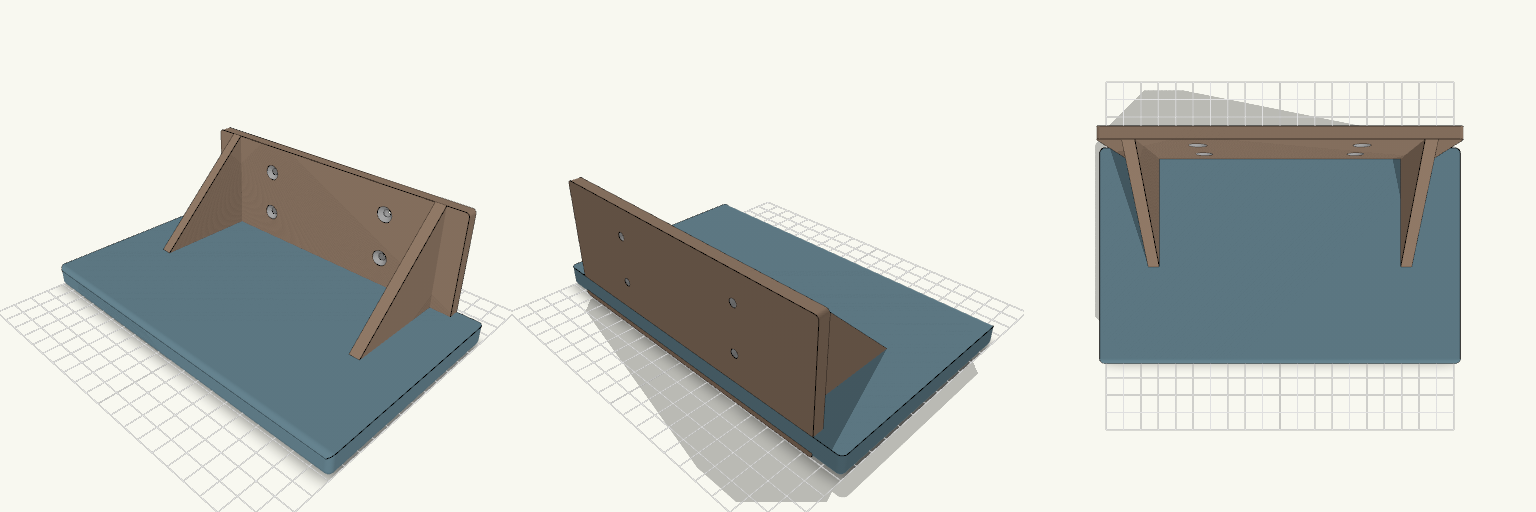
Wall-Mounted Bedside Floating Shelf
What it's for A sleek floating shelf for beside the bed at about head height, sized for an ornament or a small potted plant. A back plate with four countersunk screw holes fixes it to the wall, and two triangular brackets support the top. The design is symmetrical, so printing two gives a matching pair for each side of the bed. Dimensions Shelf top: 200 × 120 × 12 mm, rounded edges Back plate: 170 mm wide, 6 mm thick, 70 mm tall including the shelf Screw holes: four, 4.5 mm shank with 9 mm countersink, set 80 mm apart, the upper pair just below the shelf Brackets: two, 6 mm thick, at X ±70 mm Print notes Prints with the top face on the bed, with no supports needed. Use wall plugs suited to your wall type and countersunk screws with heads up to 9 mm. Remix ideas Narrow the shelf for tighter spaces. Add a small front lip to keep ornaments from sliding off. Add a cable notch for a bedside lamp.
Lifebuoy — Wall Key Rack
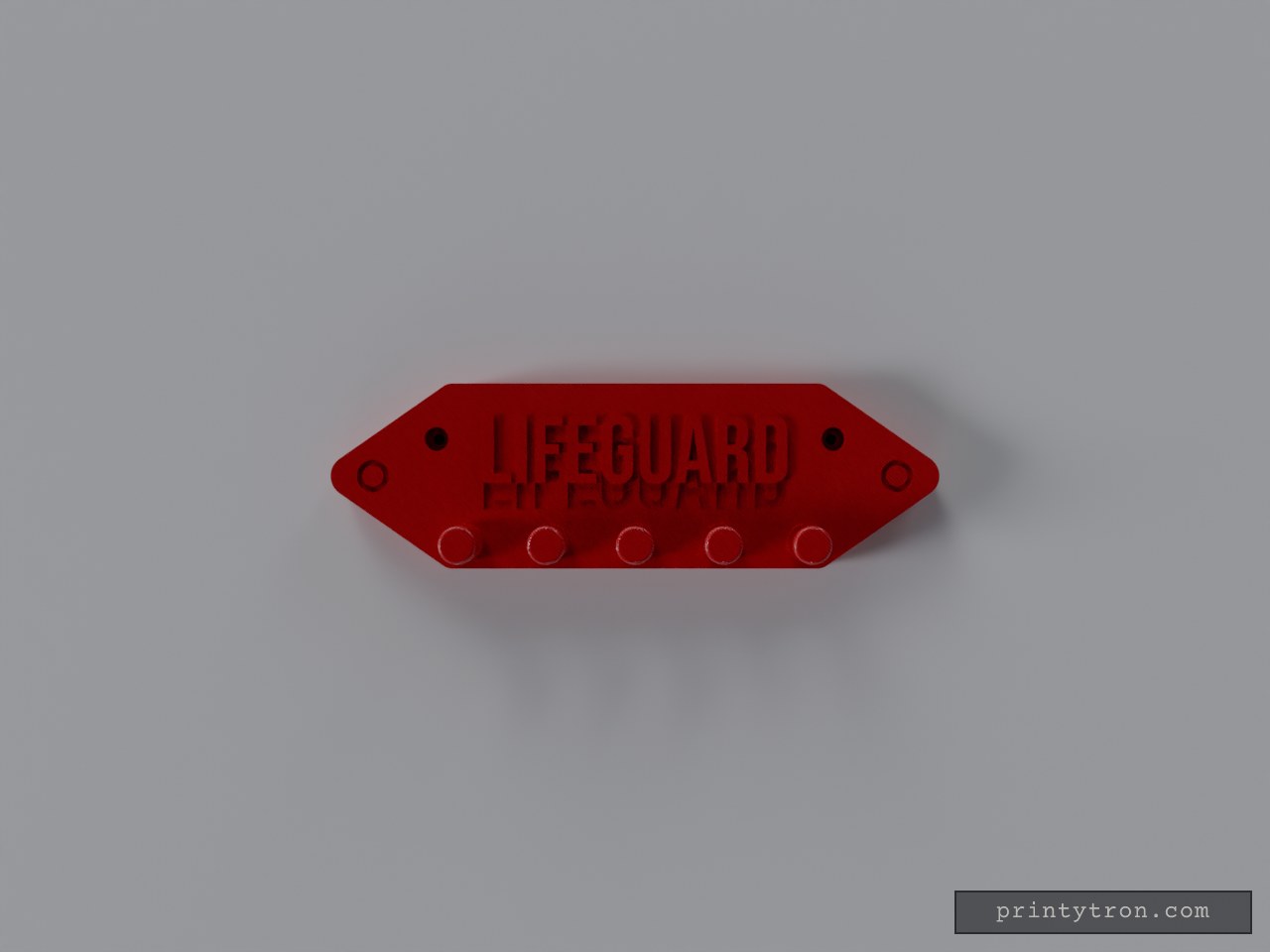
Lifebuoy is a wall-mounted key rack shaped like a beach lifeguard buoy, with a red body, white LIFEGUARD lettering and five sturdy hooks. Features 230 mm long stadium-shaped body, 70 mm tall, 14 mm deep Letters as a separate white piece set into a pocket in the red body Five round-tipped hooks along the lower front Two rear keyhole-style screw holes with counterbores Flat back for printing without supports Print notes Print the body and the letters in separate colours (PLA, 0.4 mm nozzle), back face down.
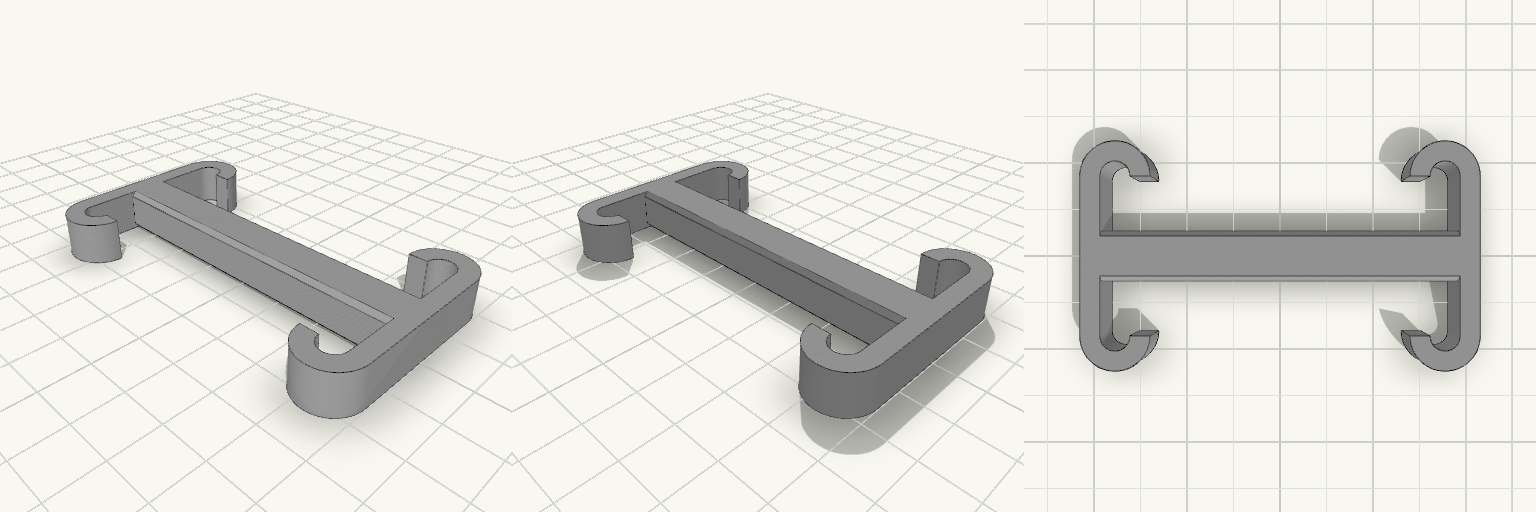
Figure8 — Clip-On Cord Winder
Figure8 is a compact cord winder that snaps onto the flex of a kettle, toaster or similar appliance and takes up the slack. Wrap the spare cord around the two end horns in a figure-eight pattern, and the curled horn tips hold the turns in place so the wrapped cord can't spring loose. It is designed for cluttered counters where appliance cords tend to tangle. The spine carries a round channel with a narrower snap-in slot, so the winder stays on the cord instead of sliding off. The cord is pressed through the slot, and the lips flex to let it pass. Dimensions Overall length: 80 mm Overall width: about 46 mm across the horns Height: 9 mm Cord channel: 5 mm diameter, running the full spine Snap-in slot: 4 mm opening Features Four horns with tips curled back toward the centre Chamfered spine edges Single-piece body with no assembly Compatibility Intended for standard 6–7 mm appliance cords, which squeeze through the slot and sit snugly in the channel Print notes PETG or TPU is recommended, since the slot lips need to flex Stiff PLA may crack at the lips when the cord is pushed in Prints flat on the bed; the curled tips are short, so supports are only needed if the slicer flags them
Under-Sink Bag Roll Dispenser Barrel
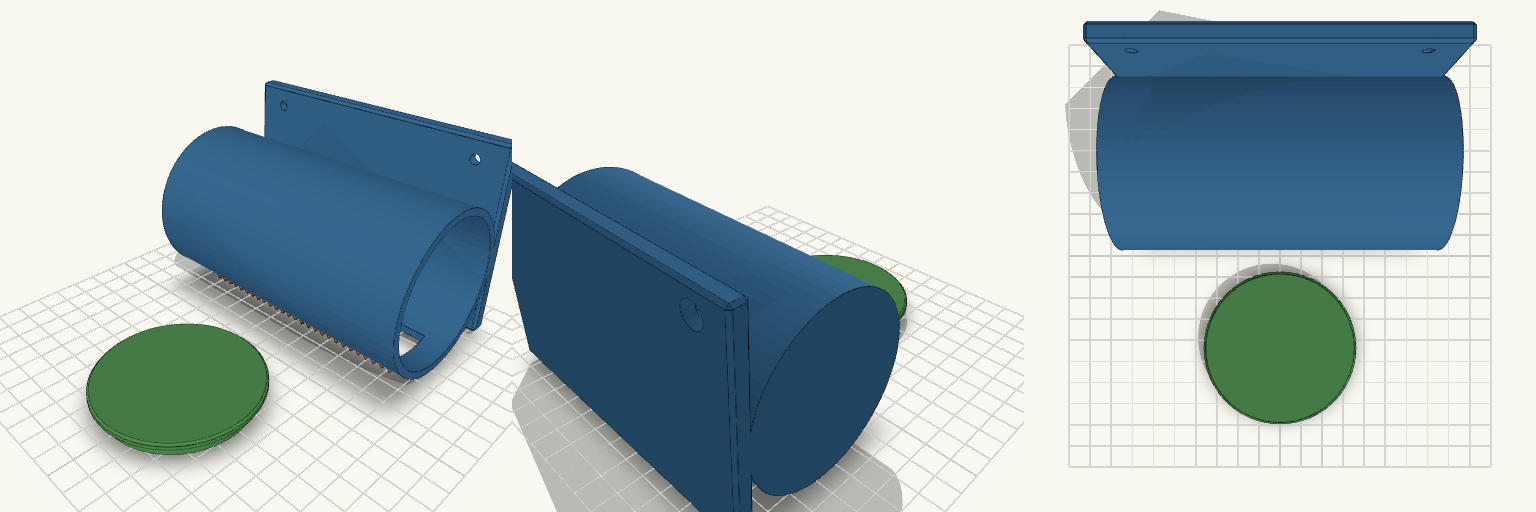
A grocery-store bag-roll dispenser, shrunk down and bolted under the sink. A snug barrel holds a 60 mm roll of trash bags, and the next bag's edge hangs out of a slot in the bottom, ready to grab. A serrated lip along the front of the slot tears each bag off cleanly, so there's no more digging for the end of the roll. The barrel is closed at one end and open at the other. A separate press-fit end cap seals the open end once the roll is loaded. Design notes Bore: 64 mm diameter for a 60 mm roll, with 3 mm walls. Length: 130 mm overall. Dispensing slot: 20 mm wide, running along the bottom of the barrel. Tear lip: a row of downward-pointing teeth at 4 mm pitch on the front edge of the slot. Mounting: a flat back plate with two countersunk screw holes. The holes sit above the barrel, so screws never cross the bore. End cap: printed as its own piece, with a plug that fits the bore and a flange that matches the barrel. Print and remix notes The teeth are the lowest points as modelled, so plan on supports under the barrel. Printing the part on its back plate is an easy re-orientation. Slot length, tooth pitch and screw spacing are the obvious values to adjust for other roll sizes or cabinet layouts.
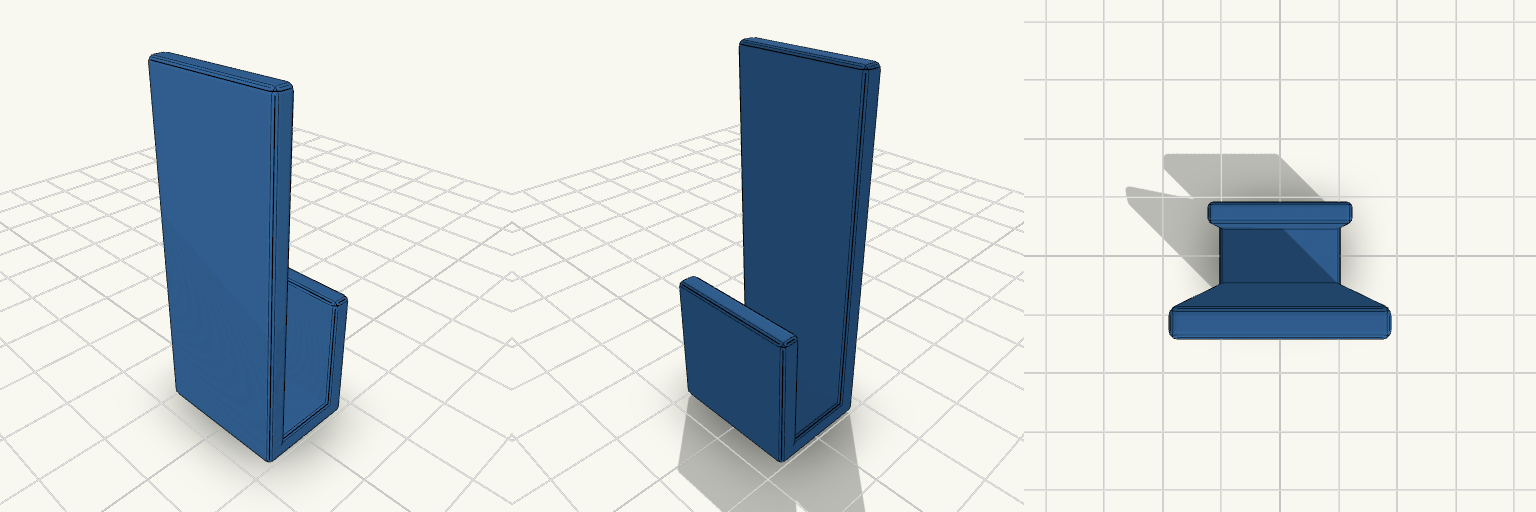
Wide Hook With Tall Front Lip
A small wall-side hook, 20 mm wide and 15 mm deep, with a 20 mm back plate, a flat 3 mm arm and a 50 mm upturned front lip. Remix hooks Width (20 mm): the one value shared by the plate, arm and lip. Widen it for heavier loads or narrow it for tight spots. Lip height (50 mm): lower it to around 10–15 mm for a simple catch, or keep it tall to hold flat items upright. Back plate height (20 mm): raise it to leave room for a screw hole or two. Arm thickness (3 mm): thicken it if the hook will carry weight. Pairs well with countersunk screw holes in the back plate or double-sided mounting tape.
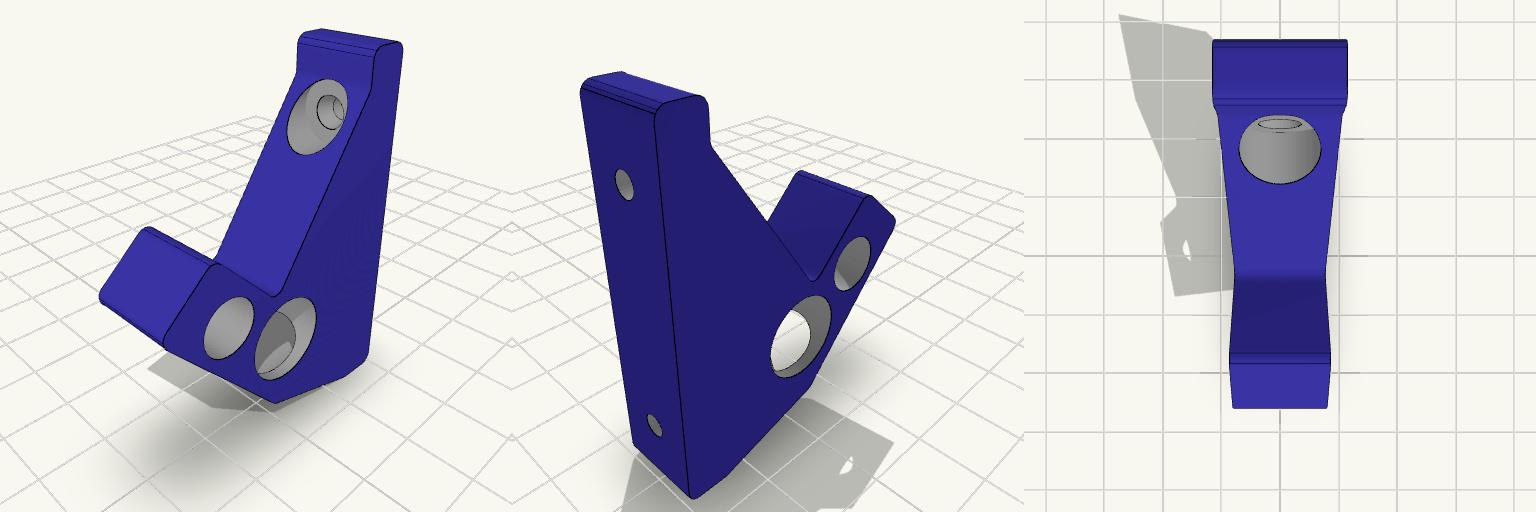
Appendiabiti a Traliccio 32mm
Appendiabiti rigido a parete stampabile in 3D. Disegnato con un profilo sagomato per ridurre il consumo di filamento mantenendo un'elevata resistenza al carico. Interasse: 32 mm esatti. Fori: 3,2 mm (per viti da 3 mm), con svasature da 4,5 mm posizionate a profondità fissa. Accessibilità: tunnel orizzontali da 8,5 mm per inserire agilmente vite e cacciavite. Orientamento: Da stampare rigorosamente coricato sul fianco per sfruttare la direzione dei layer.