Düz Kutu Yüzeyi için Polis Arabası Stickerı
Created today
Description
Düz kutu yüzeyine yapıştırmak için tasarlanmış, tamamen düz yüzeyli bir polis arabası stickerı. Gövde siyah, lastikler siyah, jantlar gri; kapı boyunca ince beyaz bir şerit, önde far, arkada stop lambası ve çatıda yan yana iki lamba var: biri kırmızı, biri mavi. Kapı bölümünün ortasında beyaz "POLICE" yazısı vardır; yazı gövdeye oyulmuş ve beyaz şeritle aynı renk alanına dahildir, yüzeyden çıkıntı yapmaz. Altında ayrı bir taşıyıcı plaka yoktur; arka yüzü tamamen düzdür ve baskıdan çıktığı gibi tek parçadır. Tüm detaylar aynı 2 mm kalınlıktadır; camlar, şerit, far, lambalar, lastikler ve yazı gövdenin içine yan yana oturur, hiçbir bölüm çıkıntı yapmaz.
Renk bölgeleri gövde, camlar, lastikler, jantlar, kırmızı lamba (arka stop lambası dahil), mavi lamba, far, beyaz şerit ve beyaz POLICE yazısı olarak ayrılmıştır; bunlar ayrı parçalar değildir, tek parça içindeki renk alanlarıdır. POLICE yazısı beyaz şeritle aynı renk bölgesindedir; çok renkli bir baskı istiyorsan baskı sırasında filamenti değiştirmen gerekir.
Kendinden yapışkanlı değildir: baskı bittikten sonra arkasına çift taraflı bant ya da uygun bir yapıştırıcı uygulaman gerekir. Düz arka yüzü sayesinde bant iyi tutar.
Baskı öncesi kontrol
- Gövde 54 mm genişliğindedir; yapıştıracağın yüzeyde en az bu kadar düz alan olmalı.
- Parça tamamen 2 mm kalınlığındadır; lambalar, camlar, tekerlekler ve yazı dahil hiçbir bölüm daha yüksek değildir. Kutu kapağı dar bir yuvaya giriyorsa bu 2 mm'yi hesaba kat.
- Destek malzemesi gerekmez; figür doğrudan yatak üzerine oturur, ilk katmanı iyi tutan bir yüzeyde bas.
- 60 mm genişliğe göre hazırlanmış eski bir boşluk ya da şablon varsa, figür artık 54 mm'dir; o ölçüye göre kesilmiş alanlara tam oturmaz.
Uymadığı yerler
- Eğri, bombeli veya sık dokulu yüzeylerde kenarlar kalkar; bu figür düz ve sert zeminler içindir.
- Kumaş kaplı, yumuşak ya da sürekli esneyen yüzeylere yapıştırılmaz.
- Kendinden yapışkanlı vinil sticker yerine geçmez; sökülüp tekrar yapıştırılmak üzere tasarlanmamıştır.
Images
More like this
Explore more in Decor & Display →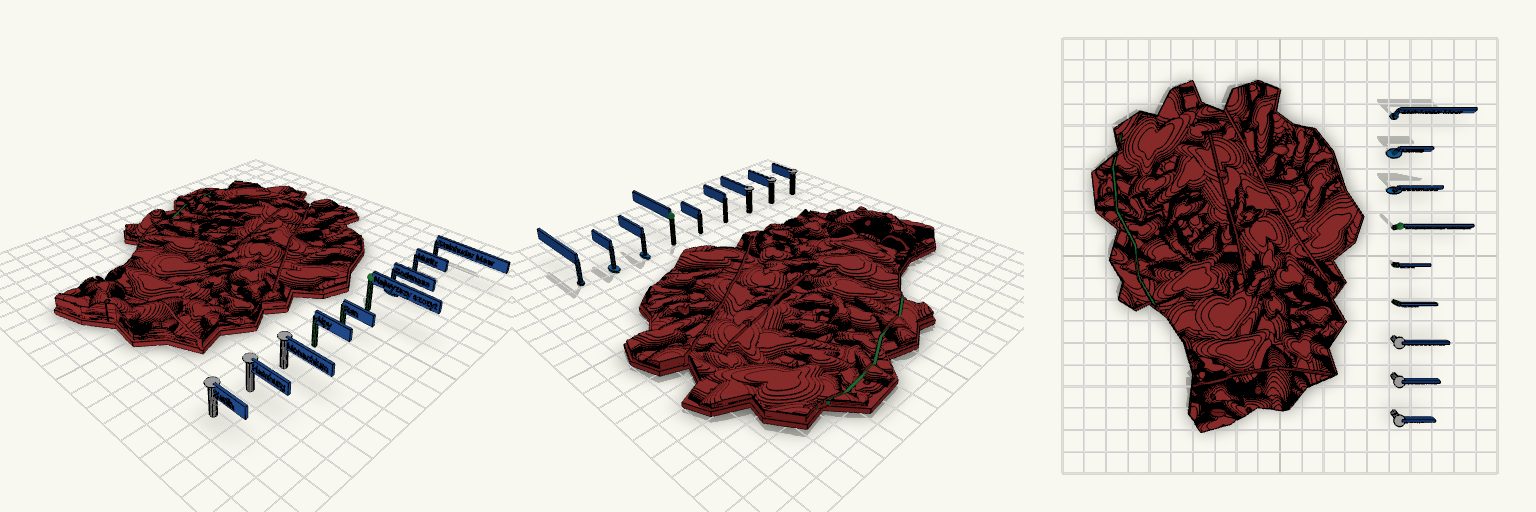
Germania Relief — Wypukła Mapa Niemiec
Germania Relief to wypukła mapa Niemiec z rzeźbą terenu: cała powierzchnia jest lekko falista, także na nizinach, a góry wybijają się ponad nią. Wzniesienia mają gładkie, wielowarstwowe zbocza i nieregularne, powyginane obrysy zamiast regularnych owali. Cztery wyżłobione rzeki przecinają teren, a Ren jest wyróżniony zielonym wypełnieniem koryta, przyciętym do zarysu mapy, oraz tabliczką „Ren”. Znaczniki — trzy miasta, szczyt, Alpy, Ren i jeziora — są osobnymi elementami: leżą płasko obok mapy, bez dodatkowej podstawy, i pasują do gniazd w mapie. Całość czyta się jak dekoracyjna mapa reliefowa, a nie płaski plan. Najważniejsze cechy Ukształtowanie terenu w gładkich, wielowarstwowych zboczach, z Alpami wybijającymi się ponad resztę mapy i zieloną tabliczką „Alpy” Cztery rzeki, w tym Ren z zielonym wypełnieniem koryta przyciętym do zarysu mapy i podpisem; wypełnienie leży w korycie na mapie Trzy największe miasta — Berlin, Hamburg i Monachium — oznaczone wyjmowanymi słupkami z pionową tabliczką z wypukłym napisem Najwyższy szczyt Alp oznaczony wyjmowanym znacznikiem z kulką, kołkiem i tabliczką „Najwyzszy szczyt” Jeziora: Muritz, Bodensee i Steinhuder Meer — niebieskie wkładki w wycięciach, podpisane małymi tabliczkami Wyjmowane znaczniki leżą luzem obok mapy, bez podstawy; po przełożeniu wciska się je w gniazda mapy W zestawie Mapa Niemiec ok. 124 × 160 mm z gniazdami na znaczniki Wyjmowane znaczniki miast, szczytu, Alp, Renu i jezior, leżące płasko obok mapy Znaczniki nie mają osobnej podstawy Druk i montaż Model składa się z mapy i osobnych znaczników. Znaczniki są wciskane w gniazda mapy; pasowanie jest ciasne, więc luzy warto sprawdzić na wydruku. Najdrobniejsze elementy, jak kołek szczytu, są delikatne.
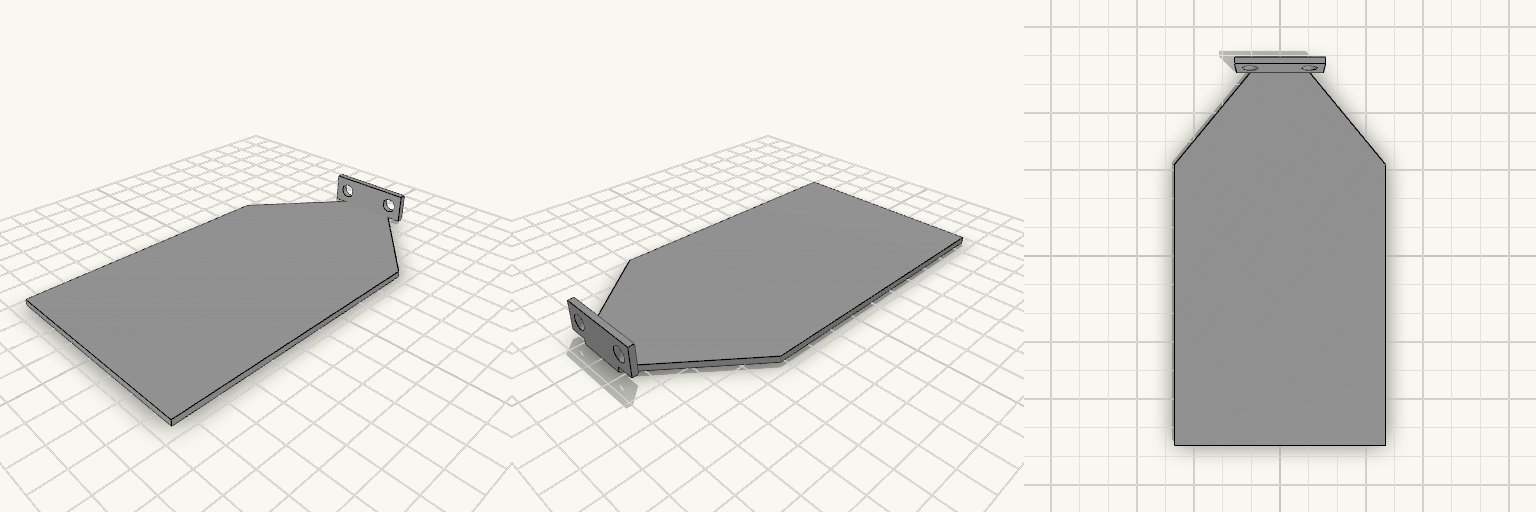
plate protection + bracket lumiere araignee
Le sommet plat de 17 mm est trop court pour une équerre de 30 mm : cette plaque en forme de maison reçoit une équerre à 90° collée au bord du sommet, posée sur la plaque, avec deux trous de 5,2 mm pour la fixer. Les extrémités de l'équerre dépassent d'environ 6 mm de chaque côté du sommet et restent dans le vide ; elles ne tiennent que par la partie centrale. Dimensions Base : 73 mm Murs verticaux : 97 mm Pans de toit : 44 mm chacun Sommet plat : 17 mm Équerre : 30 mm de large, 10 mm de haut au-dessus de la plaque, 2 mm d'épaisseur, à 90° Trous : 5,2 mm de diamètre, un de chaque côté de l'équerre, à 10 mm du centre et à mi-hauteur, traversant les 2 mm Alignement : arrière de l'équerre au bord du sommet Dépassement : environ 6 mm de chaque côté Longueur du profil : environ 131 mm Encombrement posé à plat : environ 73 × 131 mm, 12 mm de haut au total Épaisseur de la plaque : 2 mm Impression Une seule pièce, posée à plat sur le plateau L'équerre est verticale et collée au bord du sommet ; ses extrémités dépassent et ne sont pas appuyées sur la plaque Le sommet plat supprime la pointe fine : moins de zone fine à surveiller au refroidissement Contour symétrique, sommet plat centré sur la base
Stackhouse — OO Scale Brick Chimney
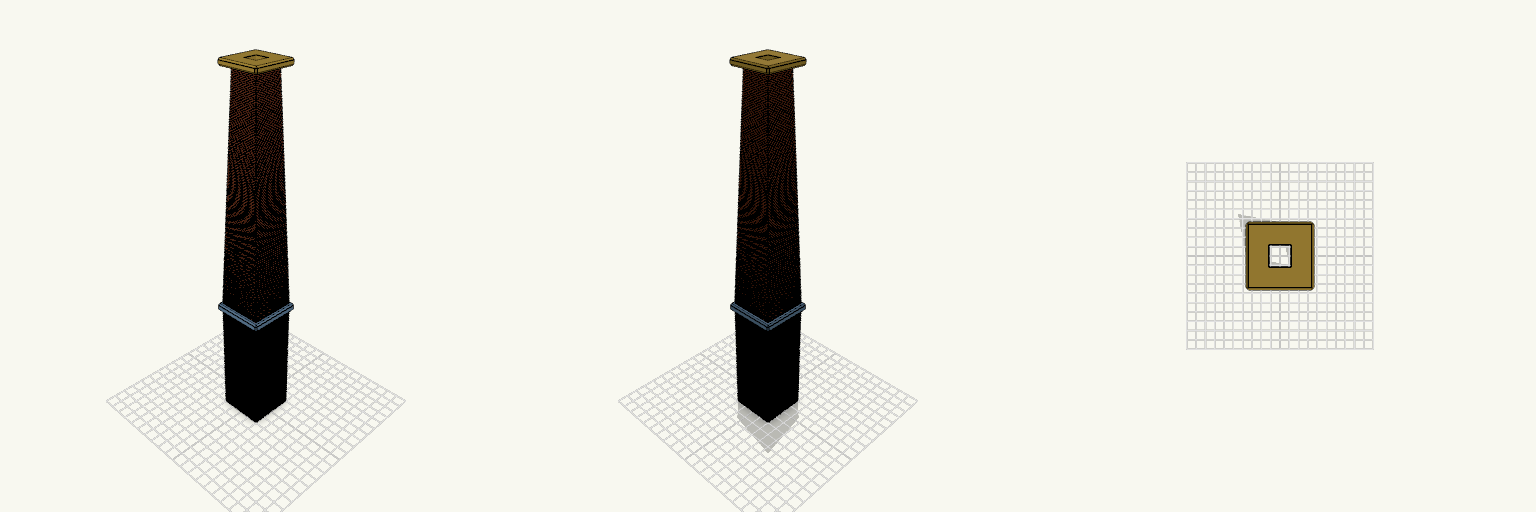
Stackhouse is a tapering industrial chimney in OO scale, built from flat-printing brick-faced panels. A straight square base section sits beneath the tapered stack, and a plinth and cap with locating spigots make assembly simple. Features Four tapered brick panels, 200 mm tall, 40 mm wide at the base and 24 mm at the top, with true mitred edges Straight base section made of four 101.6 mm (4 inch) mitred brick sides, each printed flat Three industrial four-pane windows, one on each of three sides; the fourth side is solid Top plate for the straight section, with a spigot that locates the plinth Plinth with socket and chamfered cap with spigot Print notes Print every panel inner face down, with the bricks facing up. The 45° corner mitres of the straight sides close exactly; glue them together.
13 mm M&M-Style Candy Discs, 20 Pieces
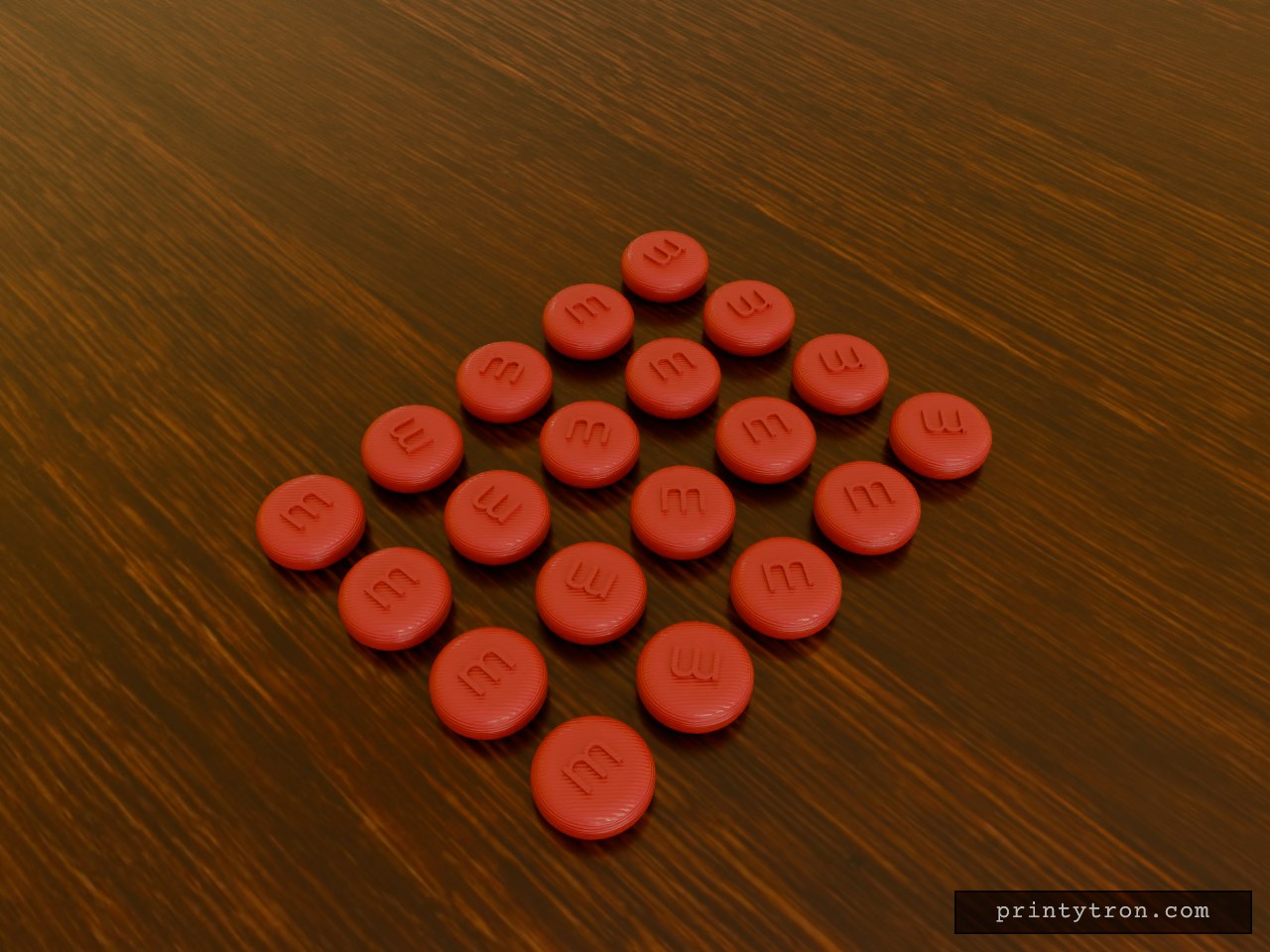
Twenty M&M-style candy discs for fake-sprinkle piles and display work: 13 mm across, 5 mm thick, rounded at the edge and topped with a raised white "m". There is no host part, thread or bore to match here, so the number that decides whether a batch works is the disc diameter — 13 mm — measured against the surface, bowl or tray it is going onto. Sizes (viewer labels: Red Candies, Yellow Candies, Green Candies, Blue Candies, Orange Candies, White m Letters) Disc diameter: 13 mm on every piece. Thickness: 5 mm at the body; the raised "m" adds 0.5 mm. Raised "m": 0.5 mm tall, white, and its own colour region. Quantity: 20 pieces in a 5 × 4 grid. Spacing: about 16 mm centre to centre, so no two pieces touch. Whole batch footprint on the plate is roughly 77 × 61 mm. Colours: five candy regions — red, yellow, green, blue and orange — plus white "m" lettering. Each candy is a separate loose piece sitting flat on its base, so the batch prints with no supports. The candy colours and the white lettering are separate regions of the print, which means a colour print needs filament changes for the candy colours and another for the white "m"; a single-colour batch will lose the M&M look entirely. What to check before printing The "m" is only 0.5 mm tall and is white as its own colour region. For a clean white letter, switch filament at the layer where the "m" starts, about 5 mm up; at that height it prints as a thin top layer. Without that swap, the lettering prints in the loaded colour and loses contrast. At 13 mm across and 16 mm spacing the first layer has plenty of room, but 20 small loose pieces still reward a brim or a slow first layer so nothing gets knocked loose. What these are not: decoration only — not edible, not real candy, and not a substitute for real sweets on food. They are also not a match for anything with a fixed 14 mm or 15 mm recess; at 13 mm they will sit loose in it.
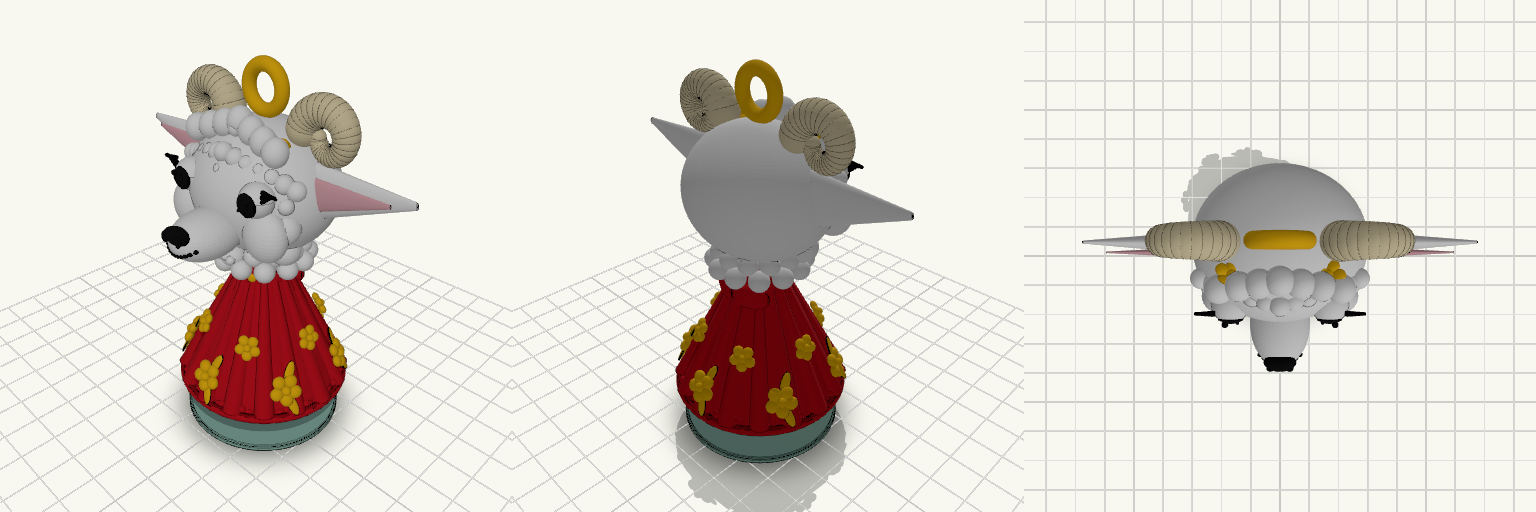
Goat Ballerina Christmas Ornament with Hanging Loop
A baby goat ballerina ornament that hangs from a ribbon loop and stands on a small stage disc. The old version tipped on its tiny shoe soles and looked flat. This one stands on a 44 mm base and has a fuller sculpt. Face: lidded eyes with lashes, a highlight in each pupil, rounded cheeks, a nose and a smile line. Horns: ridged spiral curls on each side. Ears: pointed, stretching out sideways, with raised inner ears. Dress: two layers of folds, a beaded hem roll, a sash and a back bow. Flowers: on the skirt, the sash and between the horns. Pose: hands joined under the chin, legs crossed, ankle-strap shoes. Print notes Height: about 100 mm, with the loop at the top. Base disc: 44 mm across and 2 mm thick, so the figure doesn't rely on the shoe soles. Loop: 3.5 mm thick, 7 mm opening for ribbon. Printing upright works for FDM; the horns and ears are the parts most likely to need supports. Resin printing suits the fine detail best.
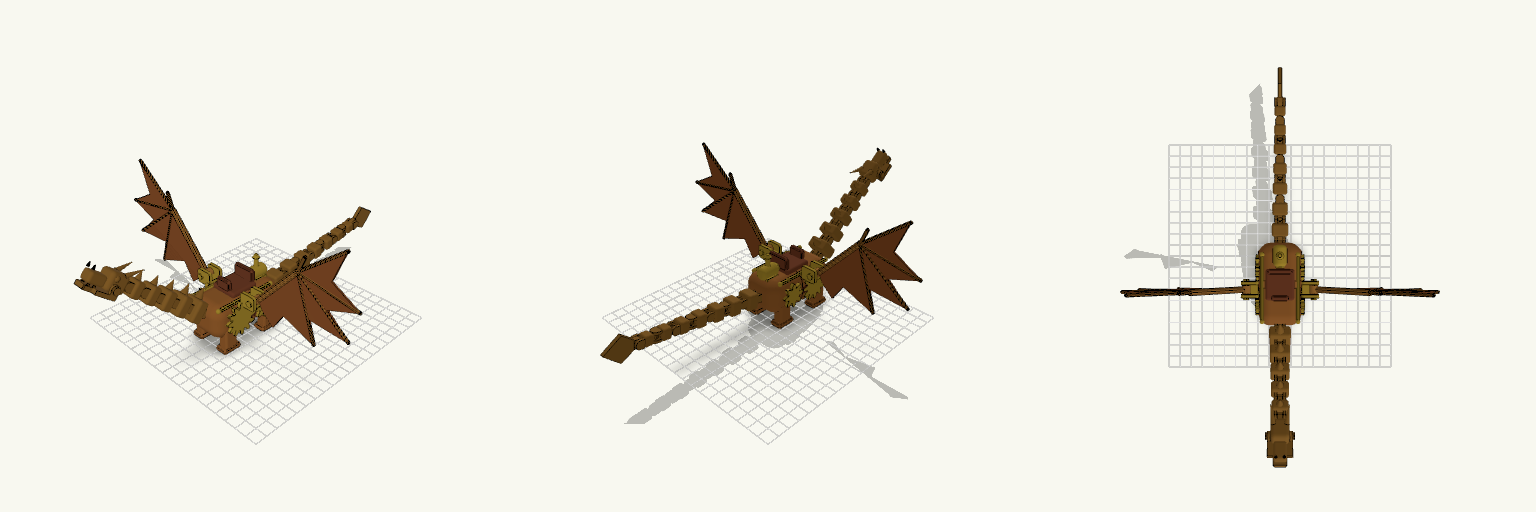
Steampunk Articulated Dragon with Saddle
A print-in-place articulated steampunk dragon with a saddle on its back, a hinged neck, a segmented tail and an opening jaw. It is a standalone figure, so the critical dimension is the hinge clearance. What it has Five-segment neck on pin hinges, tilted up from the chest Seven-segment tail with alternating hinge directions, so it swings both up-down and side-to-side, ending in a blade tip Head with a pinned lower jaw that swings open Saddle with pommel, cantle and girth band Brass-style gears on both flanks, side steam pipes and a boiler with a stack Check before printing Hinges use a 0.4 mm gap per side and 3.8 mm holes on 3 mm pins. Printer tolerance has to hold that, or the joints fuse. Print as-is with no rotation. Supports are needed under the jaw, neck and tail hinges. Break each joint free after printing. Does not fit or do The legs are fixed and the figure has no wings. It is not a scale model of any commercial figure.