Embossed Corporate Logo Keychain
Created 1 months ago
Description
A minimalist, single-piece keychain blank featuring raised corporate typography. The body uses a flat-bottomed pill geometry to print seamlessly on an FDM bed without supports, while the integrated mounting hole ensures the outer perimeter remains completely uninterrupted.
Print Specifications:
- Dimensions: 65 mm × 32 mm × 4.2 mm (total height including text).
- Mounting interface: 5.5 mm diameter integrated hole, positioned for 4 mm of solid wall thickness to resist torsion.
- Lettering clearance: Text is extruded 1.2 mm above the base layer, providing enough depth for a mid-print filament swap if high-contrast text is desired.
- Material guidance: Prints cleanly in PETG or PLA. No brim required.
Images
More like this
Explore more in Keychains & EDC →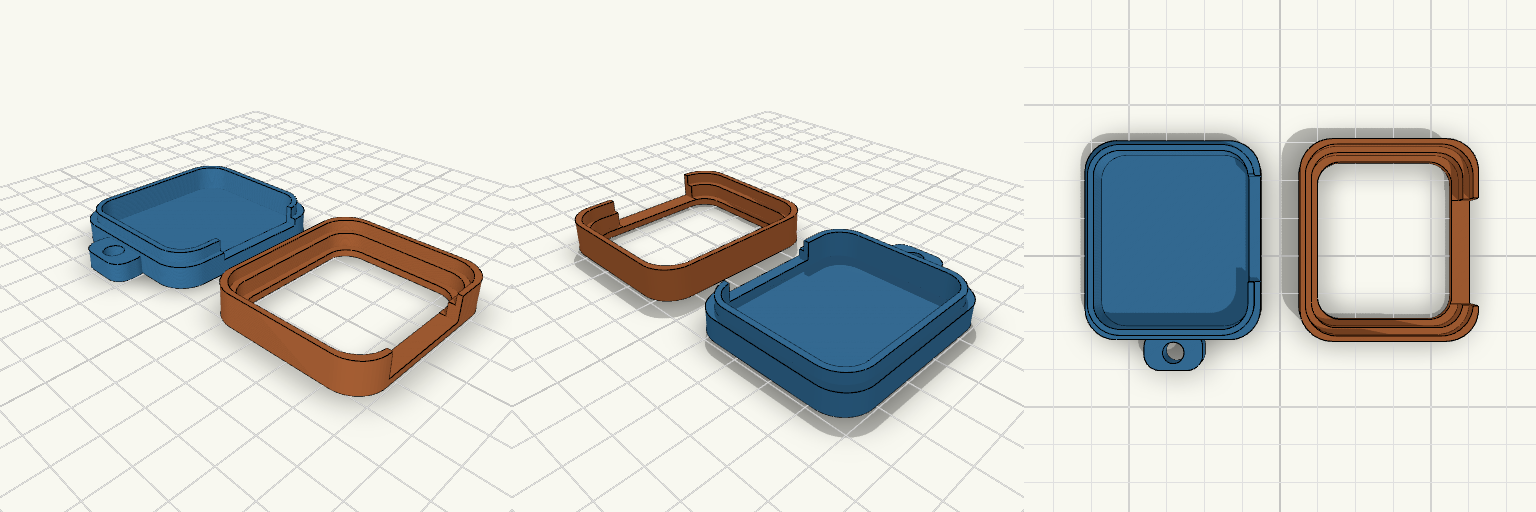
Apple Watch SE 44mm Keychain Case
What it's for A two-piece case that turns a 44mm Apple Watch SE (1st gen) into a keychain fob, with no wrist strap. A back shell cradles the watch and carries the key-ring lug. A front bezel fits over it and holds the watch in, leaving the screen open. Dimensions Cavity: 38.6 x 44.6 mm, sized for a 44mm watch body with about 0.3 mm of clearance Outer size: about 44.6 x 50.6 mm, plus the lug Wall thickness: 3 mm Key-ring hole: 5.5 mm Side window on the crown/button edge: 27 mm long, so the Digital Crown and side button stay usable Screen opening: about 1.75 mm of lip around the display Print notes Both parts are laid out separately on the plate. The bezel is flipped so its lip prints flat. Print in PETG or PLA. Check the fit on the stepped joint and sand it if it is tight. The halves are a press fit, and a drop of glue will make the joint permanent. Remix ideas Add a lanyard slot or a carabiner notch. Emboss initials on the back. Make a version for 40mm watches by shrinking the cavity.
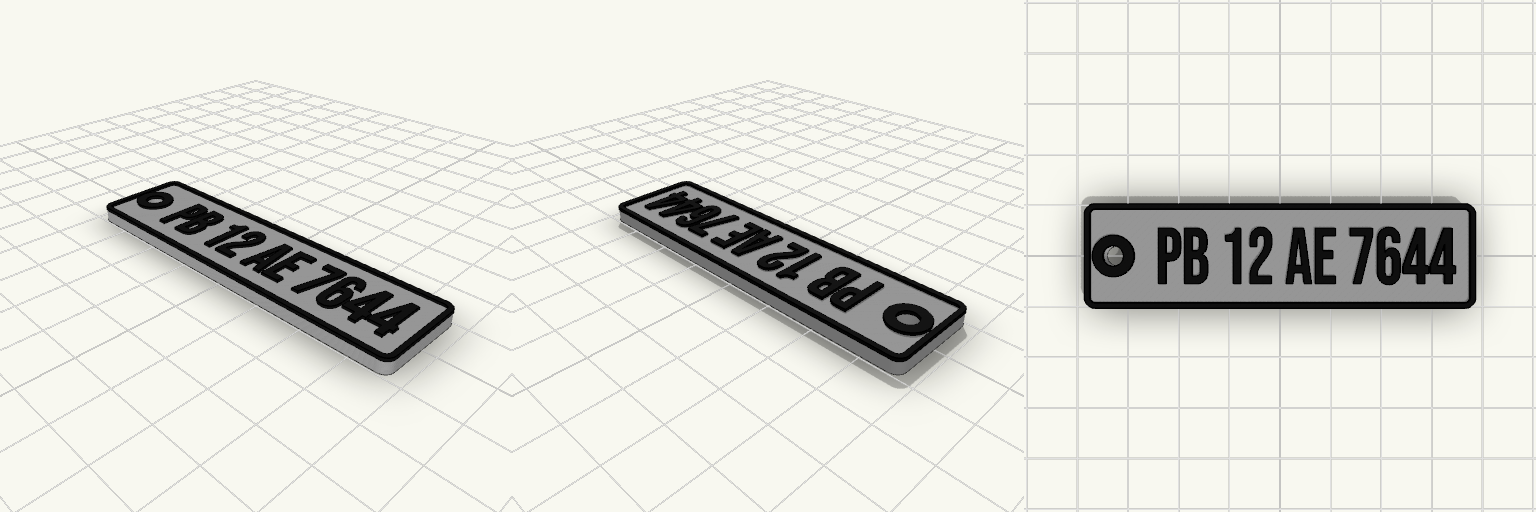
Bharat Key — Mini Number Plate Keychain
Bharat Key is a miniature Indian-style number plate keychain made to carry the exact registration PB 65 BK 3388. The long, slim plate uses a light grey/white base, a thin raised black border, and bold black lettering raised on one horizontal line. The single keyring hole sits at the extreme left with a raised ring around it for strength, while the registration stays centred in the remaining space. No blue IND strip, flag, extra colour or decoration is present, so the tag keeps a clean plate look while staying sturdy enough for a keyring. Dimensions Plate: 75 × 20 × 2.5 mm Raised border and text: 0.6 mm above the base; border 1 mm wide Lettering block: about 57 × 11 mm, fitted to the space right of the hole Keyring hole: 4 mm diameter, cut fully through at the extreme left Hole ring: raised black ring around the hole for extra strength Features Exact registration text: PB 65 BK 3388 on one horizontal line Bold black lettering raised above a light grey/white base Thin raised black border around the whole plate One circular keyring hole at the extreme left, fully through the plate Raised black ring around the hole to reinforce the keyring area Flat rectangular body with slightly rounded corners and a smooth flat backside Light grey/white base and black details only — no blue, no flag, no logos or decorations Print notes Print flat on the back; no supports are needed. The raised border and lettering sit 0.6 mm above the base and read clearly at miniature scale. Keep the 4 mm hole clear so the plate hangs cleanly on a keyring.
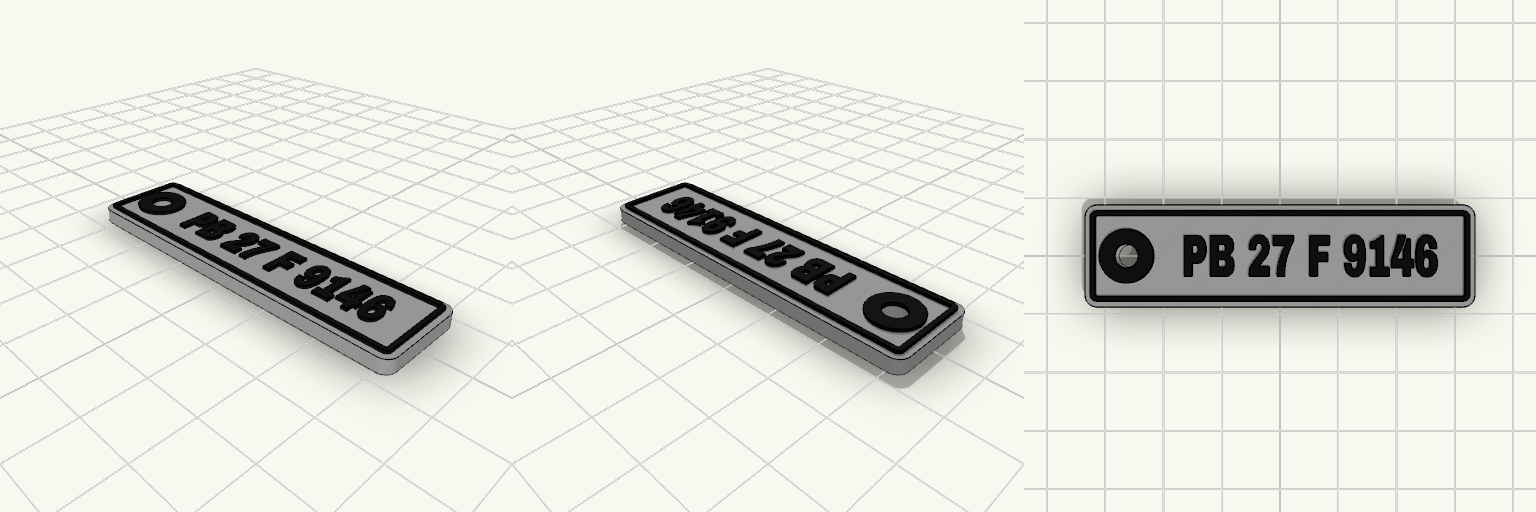
Number Plate Keychain with 4 mm Keyring Hole
A flat 65 × 17 mm number plate keychain built around the three things that ruin a printed tag: a hole that tears out, lettering that runs off the right edge of the plate, and a border crowded with extra frames. The hole sits inside a raised black ring instead of hanging on a thin web of plastic, so a heavy bunch of keys has something solid to pull against. The registration line sits on one horizontal line, raised 0.6 mm so it stays readable instead of rubbing smooth in a week, and it starts clear of the ring so nothing touches the hole. Print and fit Plate: 65 × 17 × 2.5 mm, corners rounded, smooth flat back. Keyring hole: one 4 mm through-hole at the far left, 7 mm in from the end so its ring clears the border, fully open through the base, with its own clear area so it never meets the text. Hole ring: a 9 mm black raised ring around the hole, kept neat and with no other decoration around it. Lettering: "PB 27 F 9146" on one line, raised 0.6 mm in a heavy bold face with even spacing, sized to fit the space between the ring and the right border. Border: a single thin black raised border around the whole plate, 0.6 mm high — no inner frame. Base: light grey, flat and unbroken underneath, prints without supports; the detail all sits on the raised top face, so a two-colour print or a paint fill both work. The text sits a little right of the plate's true centre because the hole takes up the left end — a truly centred line would run into the ring. If you change the registration, shorten the text rather than the plate, or the line will overrun the border on the right side.
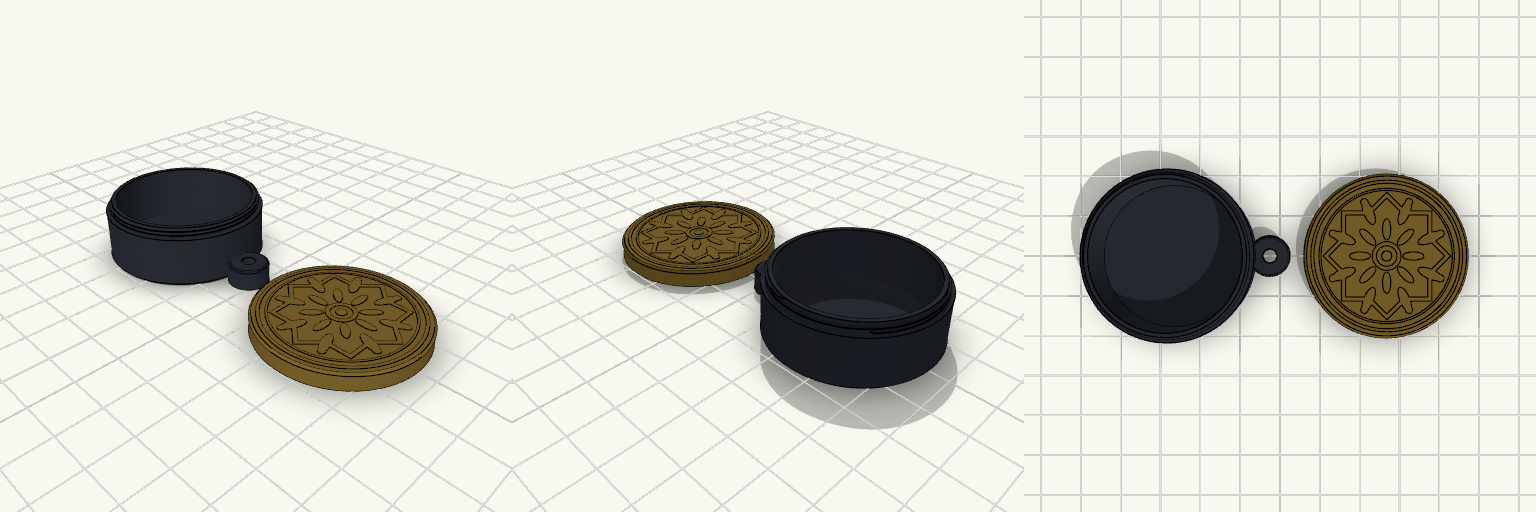
تربة حسينية100
A round pocket case in the spirit of Islamic tilework: a dark cylindrical base with a threaded neck, and a gold-toned cap that screws down over the outside. The cap's top carries a raised eight-point star, petal ring and beaded borders, all geometric with no lettering. 40 mm diameter body, 15 mm tall base with a 32 mm storage cavity External male threads on the base neck; matching internal threads in the 4 mm cap About 0.35 mm radial thread clearance Keychain lug with a 3.5 mm hole fused to the base side Ornament raised 0.1 mm
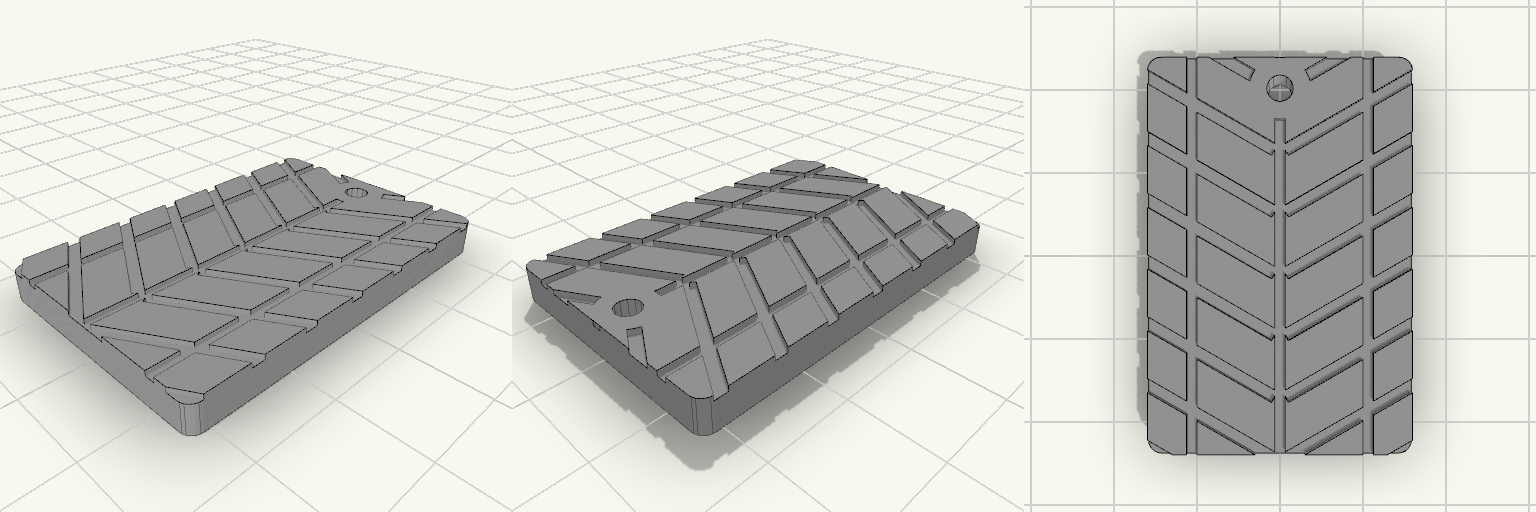
Portachiavi 30x45x4 mm con battistrada
Portachiavi rettangolare 30x45 mm, spessore 4 mm, con cavità interna chiusa e disegno di battistrada inciso sulla faccia superiore. Misure da controllare Cavità interna: disco Ø26 x 1 mm, a metà spessore (da 1,5 a 2,5 mm), con pareti da 2 mm ai lati e 1,5 mm sopra e sotto. Non è visibile dall'esterno. Foro passante: Ø3 mm, a 3,5 mm dal bordo corto. Battistrada: tacchetti a V e scanalature laterali, profondità 0,6 mm. Compatibilità Il vano è pensato per un inserto piatto fino a Ø25 x 0,8 mm (moneta sottile, rondella, disco magnetico), da inserire con una pausa di stampa al layer 1,5 mm. Non adatto a inserti più spessi di 1 mm. Stampa senza supporti, con la faccia battistrada verso l'alto.
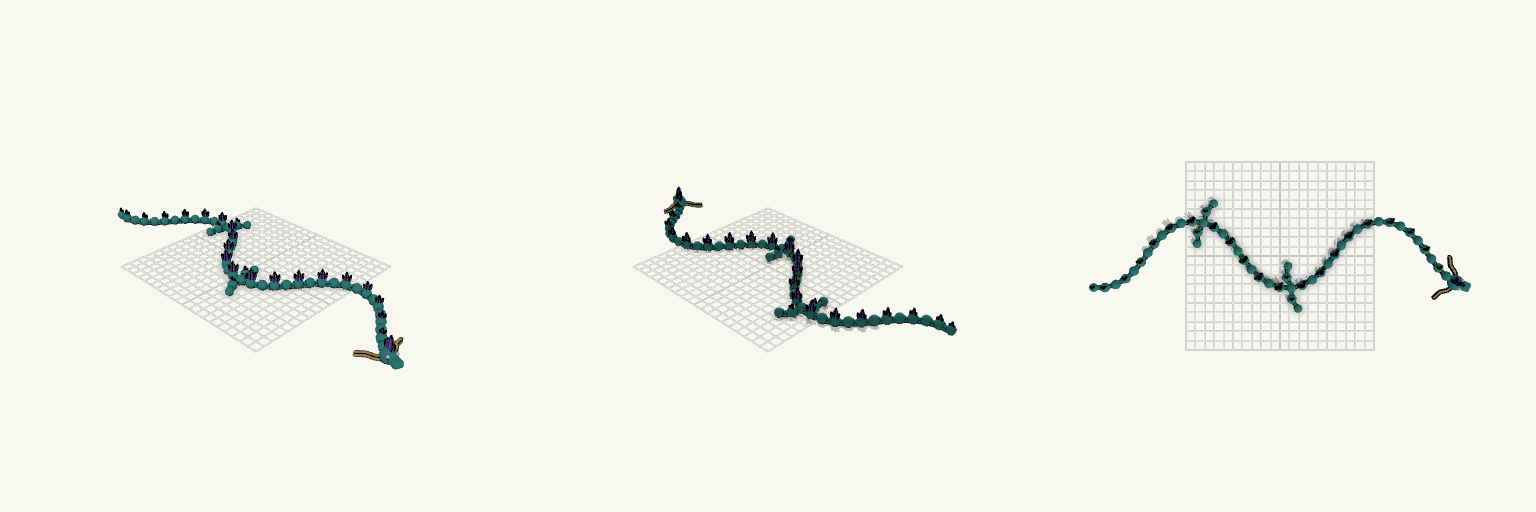
6 mm Ball-Joint Crystal Dragon, 42 Segments
A print-in-place articulated dragon built on 6 mm balls in 7 mm sockets, with faceted hexagonal crystal clusters on the head, spine, legs and tail tip. Fit and clearance Joint: 6 mm ball in a 7 mm socket (0.5 mm radial clearance), 5 mm neck opening so the ball cannot pull out. Chain: 42 body segments at 12 mm pitch, plus four legs of two segments each. Check before printing: the laid-out dragon is roughly 350 mm long in its S-curve, so verify your bed size or scale it down in the slicer. Scaling below about 80% closes the 0.5 mm clearance. Not suited to Printers with a bed under about 250 mm without rescaling. Printing the crystals first: the model lies flat on the bed, crystals pointing up, flat horns on the bed. Fast, uncooled printing: joint gaps need slow, well-cooled layers.