Fanned Metric Drill Bit Index
Created 4 months ago
Remixed once
Description
A stepped index block for storing and organizing metric drill bits. The layout features a sweeping, fanned curve that arranges the bits in ascending order, ensuring quick access and clear visibility on the workbench.
- Holds 13 metric drill bits from 1.0mm to 7.0mm in 0.5mm increments.
- Arranges mounting slots in a fanned curve resembling piano keys.
- Features clear, embossed size labels next to every slot.
- Includes a built-in 0.3mm diametric clearance so bits drop in easily without rattling.
The solid stepped base ensures the index remains stable while inserting or removing tools, creating a highly organized and identifiable tool storage block.
Photos
Technical views
More like this
Explore more in Workshop & Tools →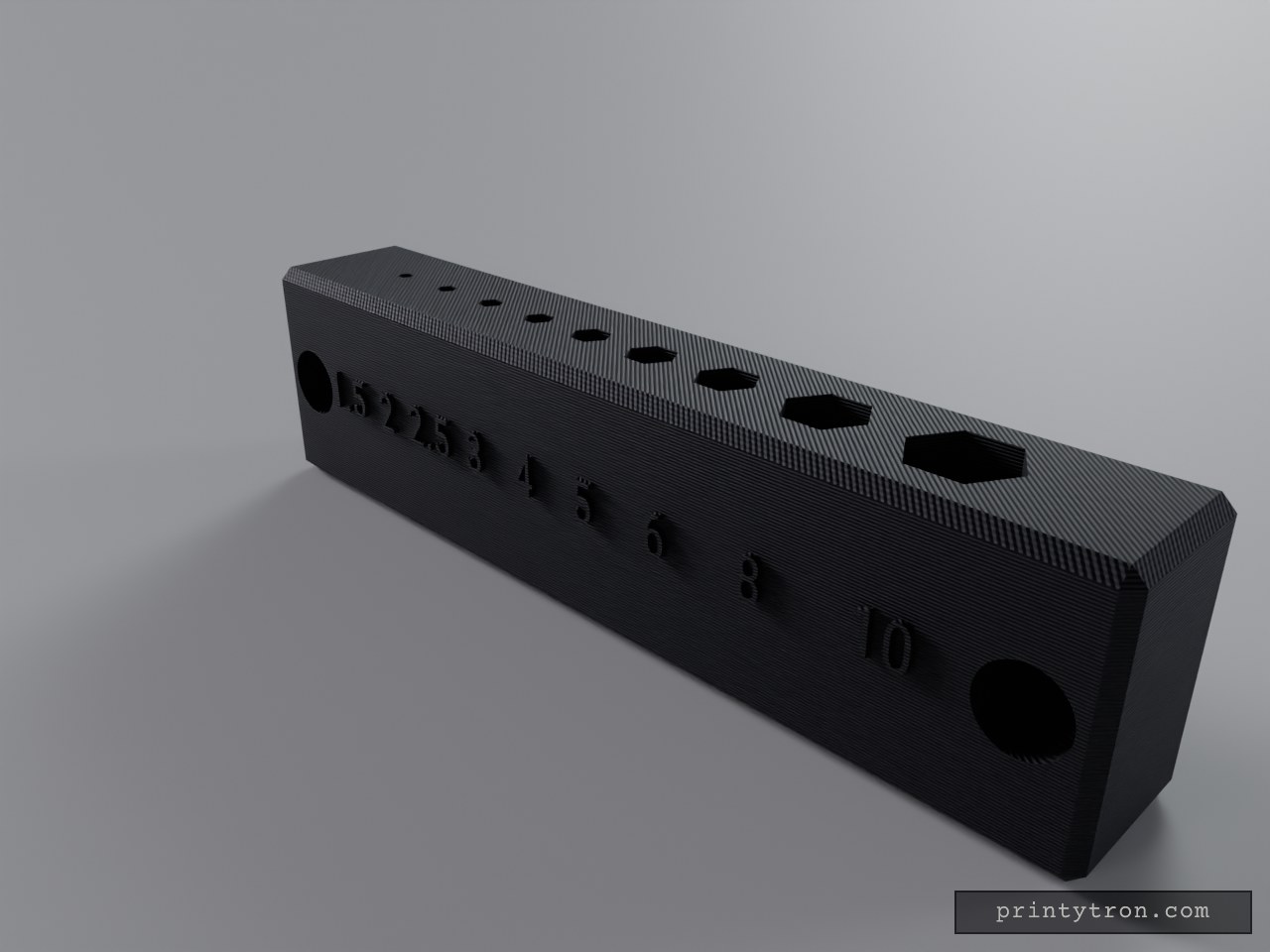
Apothecary Drawer Hex Key Rack
A row of nine upright hex pockets, like a pharmacist's labelled vial rack, scaled down for the workshop wall. Each long-arm Allen key stands in its own slot, sorted from 1.5 mm up to 10 mm, with the metric size embossed on the front face beside it so the right key is readable at a glance. Every pocket is a hex cut to its key's across-flats size plus 0.3 mm of clearance, 22 mm deep, so keys drop in and lift out without wobbling loose. Two counterbored screw holes near the ends let the rack mount flat to a wall. Design notes Fits the standard metric set: 1.5, 2, 2.5, 3, 4, 5, 6, 8 and 10 mm Overall size about 120 mm wide, 20 mm deep, 30 mm tall Embossed labels are a separate colour region for multi-colour prints or a filament swap Chamfered outer edges for a cleaner print and a softer look The 1.5 mm slot is the tightest fit, so check it on a first print Remix hooks: change pocket depth, enlarge the label text, or add more slots for imperial sizes
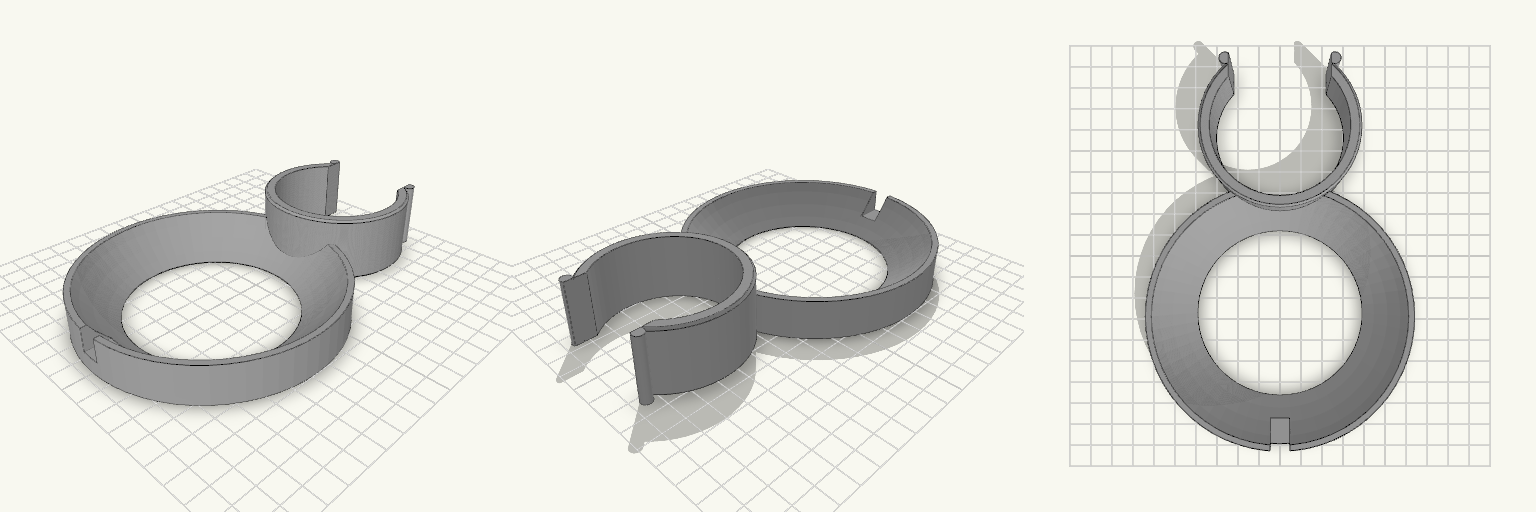
Drill Press Column Tray with Key Slot
A C-shaped clip that snaps around a 60 mm drill press column, with a 120 mm round dished tray attached at the front. The tray holds drill bits, chuck keys and small parts within reach while you work. The clip opening is narrower than the column, so it snaps on and grips by spring tension. Lead-in lips on both sides of the opening guide it onto the column. A slot on the front rim of the tray holds the chuck key, so it stays off the floor. Clip: fits a 60 mm column, 30 mm tall, 5 mm wall Tray: 120 mm diameter, 18 mm tall, with a 3 mm floor and a dished cavity Key slot: on the front rim, 9 mm wide, sized for a chuck key shaft Print the clip upright with the tray on the plate. PETG or ABS gives the clip better flex and durability than PLA.
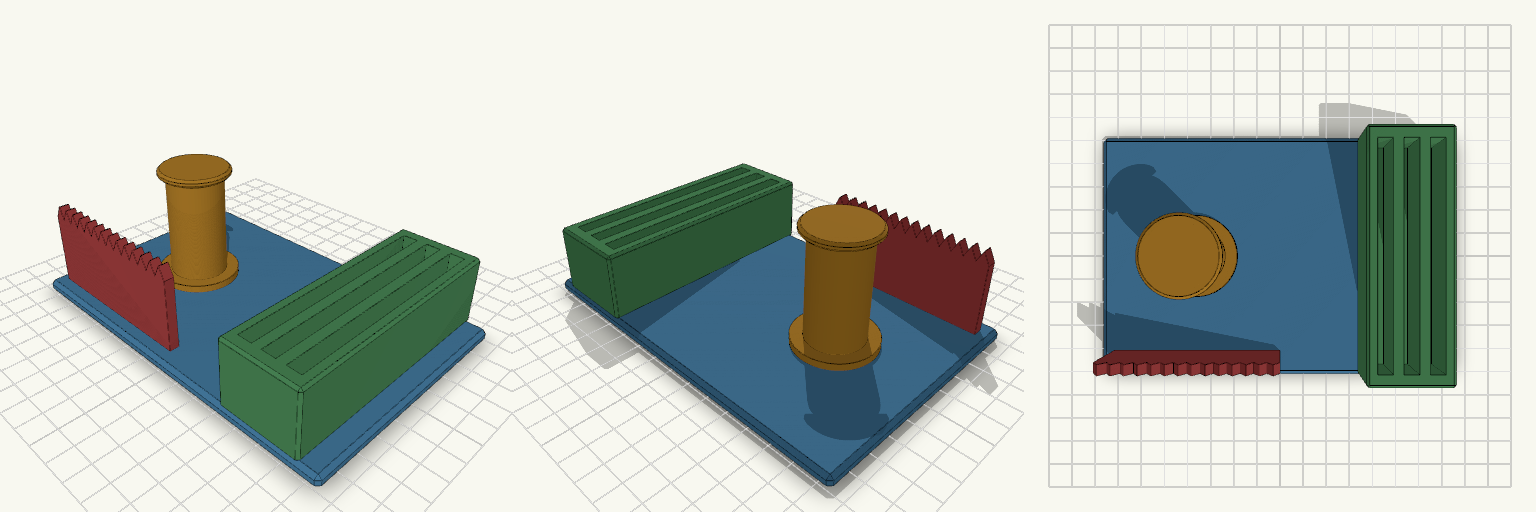
Tape Spindle and Zip Tie Bench Caddy
Bench caddy that keeps a tape roll and a bundle of zip ties in one fixed spot on the bench. A 24 mm spindle holds a roll with a 25 mm core. A serrated tear bar runs along the front edge so tape can be pulled across the teeth and torn. A block on the right has three slots for zip ties up to 90 mm long. Specs Base: 150 × 100 × 5 mm plate with 1.5 mm chamfered edges Spindle: 24 mm diameter, about 46 mm tall, with a 34 mm foot and a 30 mm top flange. Sized for a 25 mm core with 1 mm clearance. Tear bar: 70 mm long, 4 mm thick wall with 14 serrated teeth. It sits along the front (-Y) edge, beside the spindle. Tie trough: 34 × 100 mm block, 28 mm tall, with three 6 mm wide slots, each 90 mm long, in a row across X. Overall height: about 54 mm, measured at the top of the spindle flange. Material: PLA or PETG. Print flat on the base with no supports. Notes Fit has not been tested against a physical roll. If the roll is tight on the spindle, reduce the spindle diameter slightly. Slot width suits standard narrow zip ties. Wider ties need wider slots.
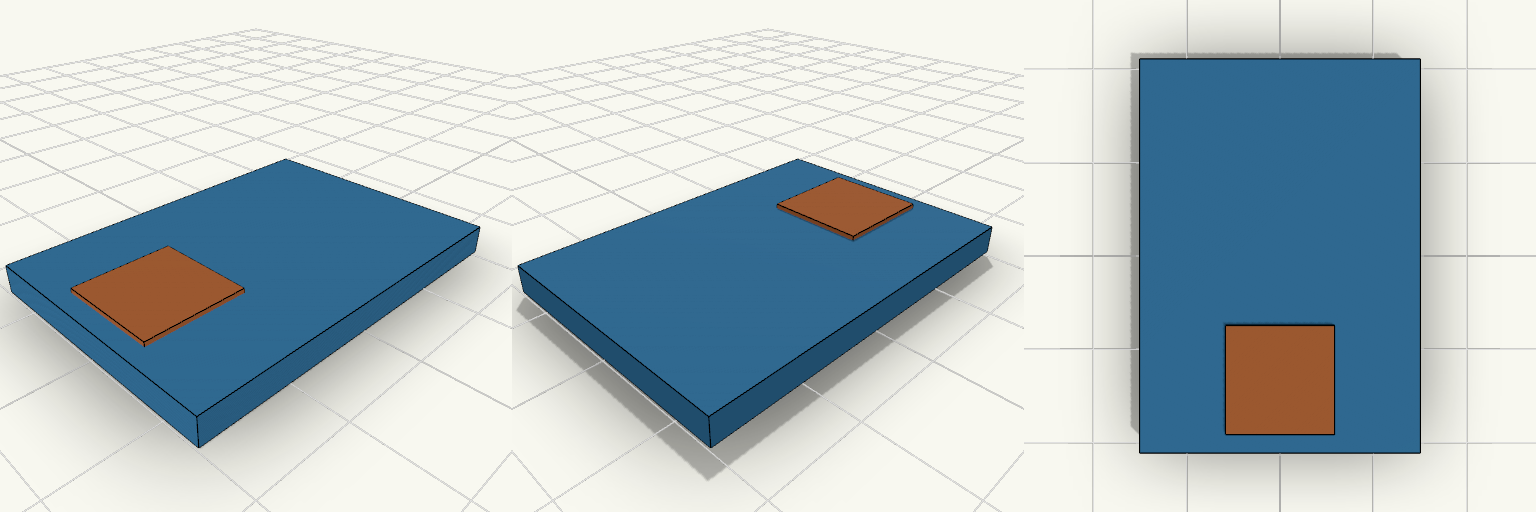
Plate With Offset Square Pad
A flat 28.5 × 40 × 3 mm plate with an 11 × 11 mm raised square pad, 0.5 mm thick, centered in X and set 2 mm from the Y- edge. Remix hooks Pad thickness (0.5 mm): a multiple of your layer height keeps the pad clean. 0.5 mm is about 2 or 3 layers. Pad offset (2 mm from the Y- edge): move it along Y to centre it or push it to the other edge. Plate length (40 mm): the pad is 11 mm, so any length above roughly 15 mm still holds it. Pairs with: a label, a sticker, or a second pad in a different colour for a multi-colour swap.
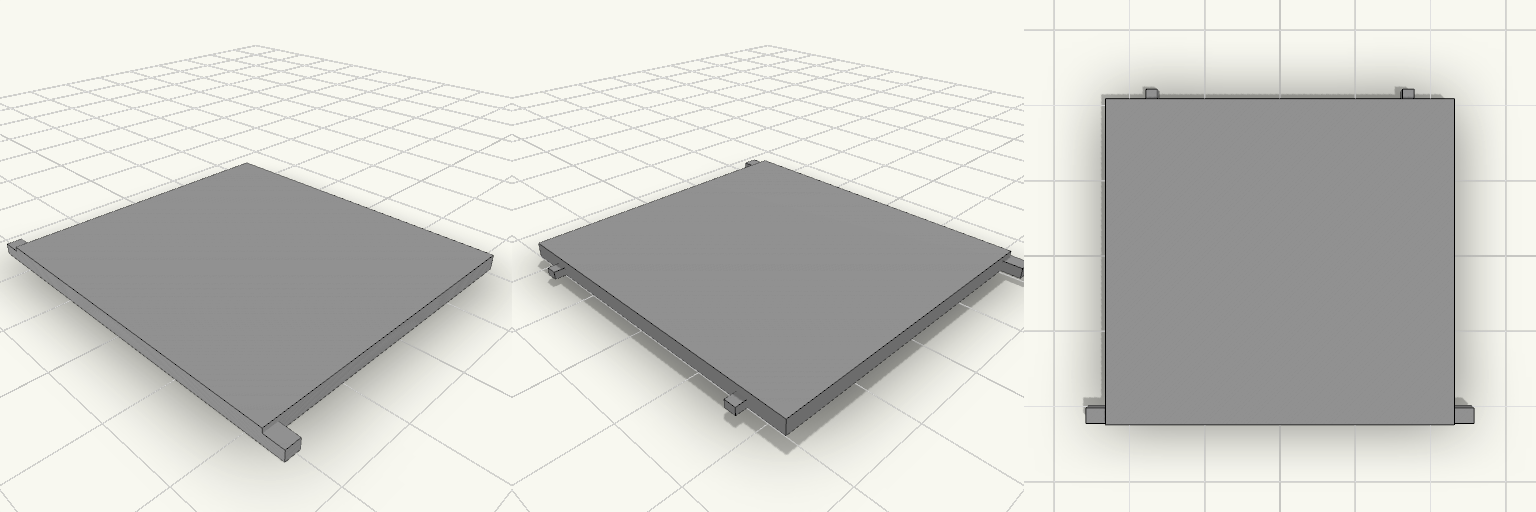
Flat Ground Plate 45x42x2 mm with Tabs
Flat 45 × 42 × 2 mm ground plate with two side tabs on the front 45 mm edge and two small blocks on the back edge. Overall width across the tabs is 50.4 mm. Plate: 45 × 42 × 2 mm, sharp edges Side tabs: 1.4 mm thick, flush with the underside, 50.4 mm overall span Back blocks: 1.5 mm wide, 1 mm thick, 1.5 mm protrusion, 5 mm from each side edge Print flat, no supports needed
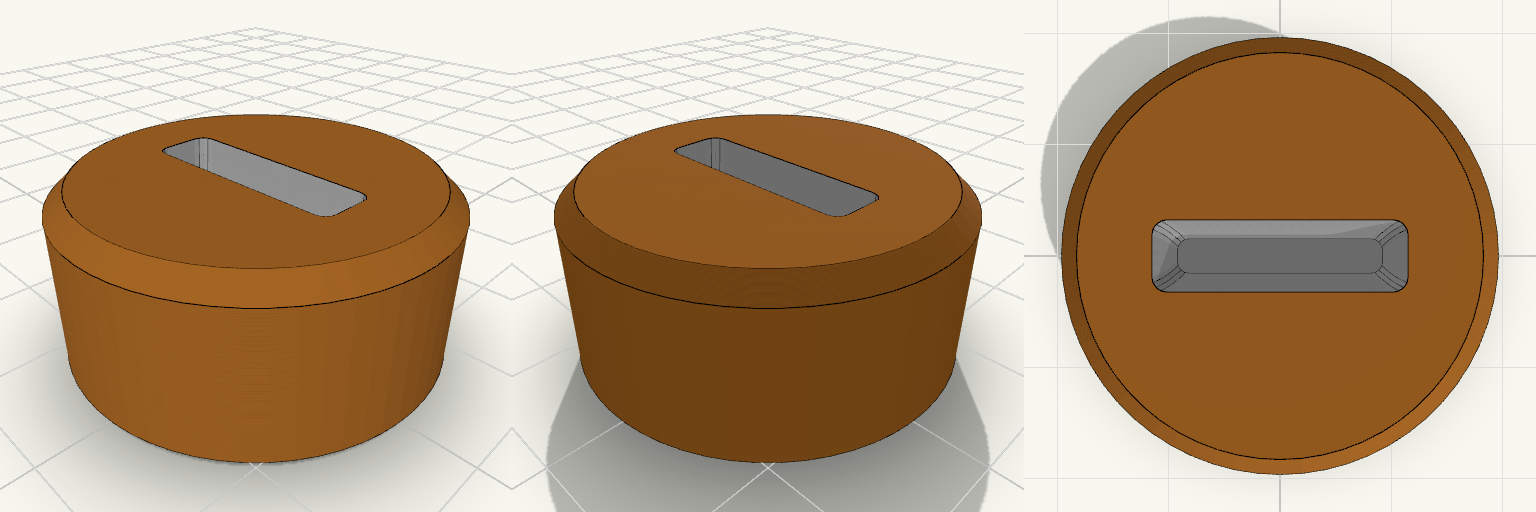
サーボソケット
A servo can't turn a valve knob without a socket that grips it, and a loose fit slips under torque. This cylindrical socket slides onto the knob from the bottom and keeps the top face flat and closed for a future servo horn. Key numbers Body: 30 mm diameter, 14 mm tall, chamfered edges Cavity depth: 10 mm, opening only on the bottom face Opening at the bottom: 2.6 mm × 16.7 mm, widening to 4.5 mm × 16.7 mm at the inner end Clearance: 0.15 mm per side, with rounded corners and slightly bowed long walls Top wall: 4 mm solid, with no screw or mounting holes Printing: open face down on the bed, no supports needed; the wall slope is about 5° from vertical Cavity size, taper, corner radius and clearance are all adjustable parameters