Description
Brute is a hollow, LEGO-compatible cab modelled loosely on the British Class 47 locomotive. It is six studs wide and four deep, with a closed floor that carries a grid of sockets so it presses onto a standard baseplate. Two studs on the nose give a place to clip on headlight pieces.
Features
- Raked twin windscreens and side door windows
- Flat, smooth roof at five-brick height
- Two studs on the front face for headlights
- Lamp recess centred between the headlight studs
- 6×4 socket grid under the floor
Dimensions
- Width: 47.8 mm
- Depth: 31.8 mm
- Height: 48 mm to the roof
- Headlight studs: 4.8 mm diameter, 8 mm either side of centre
Print notes
Print upright on the floor plate, or flipped onto the roof for a clean top surface. Hollow underneath and open at the rear.
Images
More like this
Explore more in Automotive, RC & Hobby →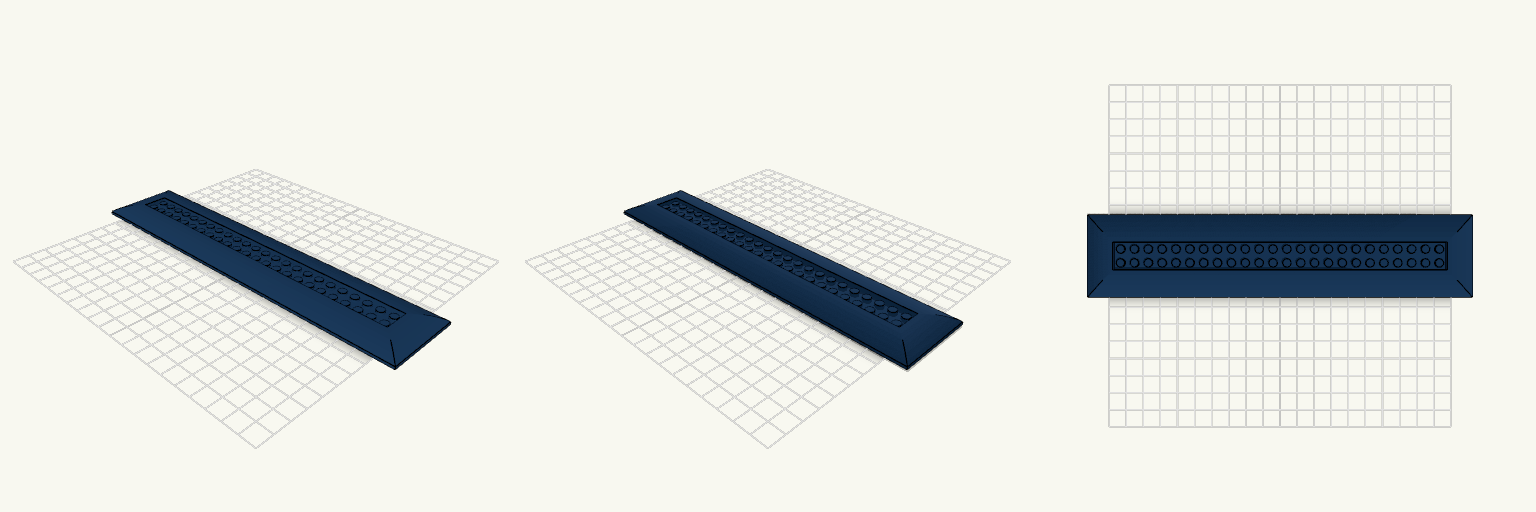
One piece Lego compatible fit roof for E44 style loco
A custom monolithic spanning piece built for standard interconnecting block systems. It features two continuous 26-stud curved roof sections (matching a 15068 profile) separated by a sunken two-stud central channel. The central channel is dropped by one standard plate height (3.2 mm), allowing the next layer of parts to sit flush below the curve peaks. The underside features a full 6x26 cavity equipped with 125 interlocking tubes. Integrated structural cross-ribs connect the entire undercarriage, providing genuine rigidity and ensuring a tight clutch across a massive 208 mm span.
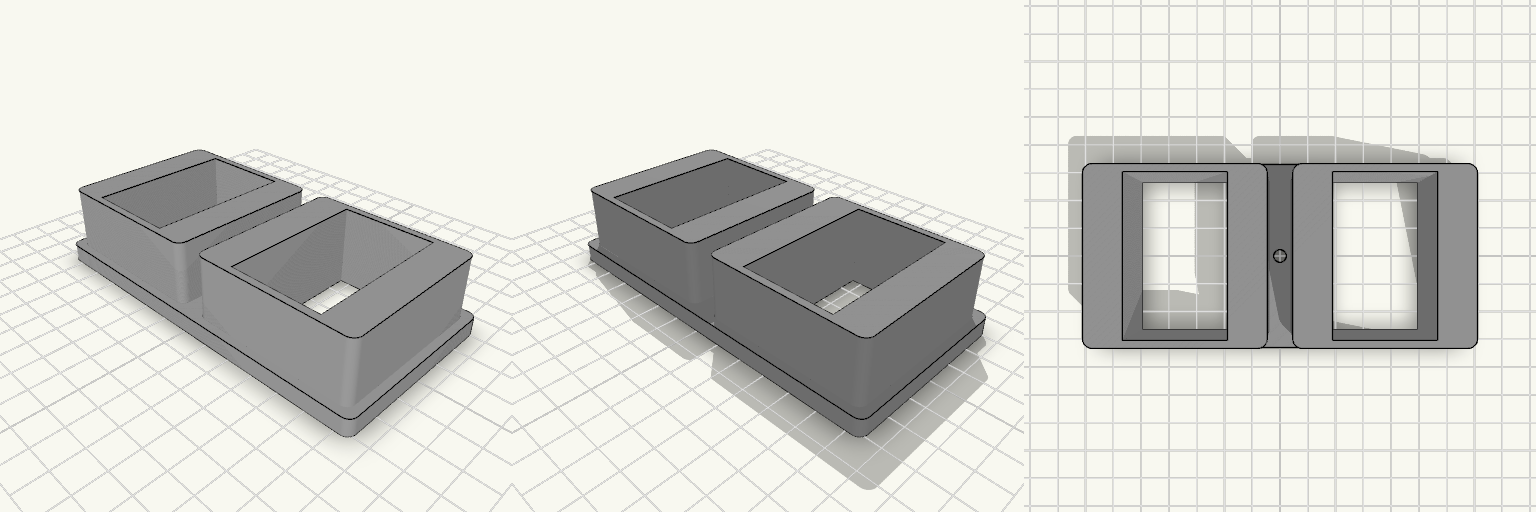
Double Seatbelt Buckle Holder, Backseat
Two seatbelt buckles flop around and fall into the seat gap, so this holder stands both upright side by side in the backseat of a Toyota Sienta. Each 33 x 53 mm pocket goes straight through the base, so the buckle and webbing pass through with nothing blocking the bottom. Pocket size: 33 x 53 mm each, sized for a 31 x 51 mm buckle Sleeve height: 28 mm above a 6 mm base Overall footprint: 130 x 64 mm Centre screw hole: 4.5 mm Print flat on the base, no supports needed
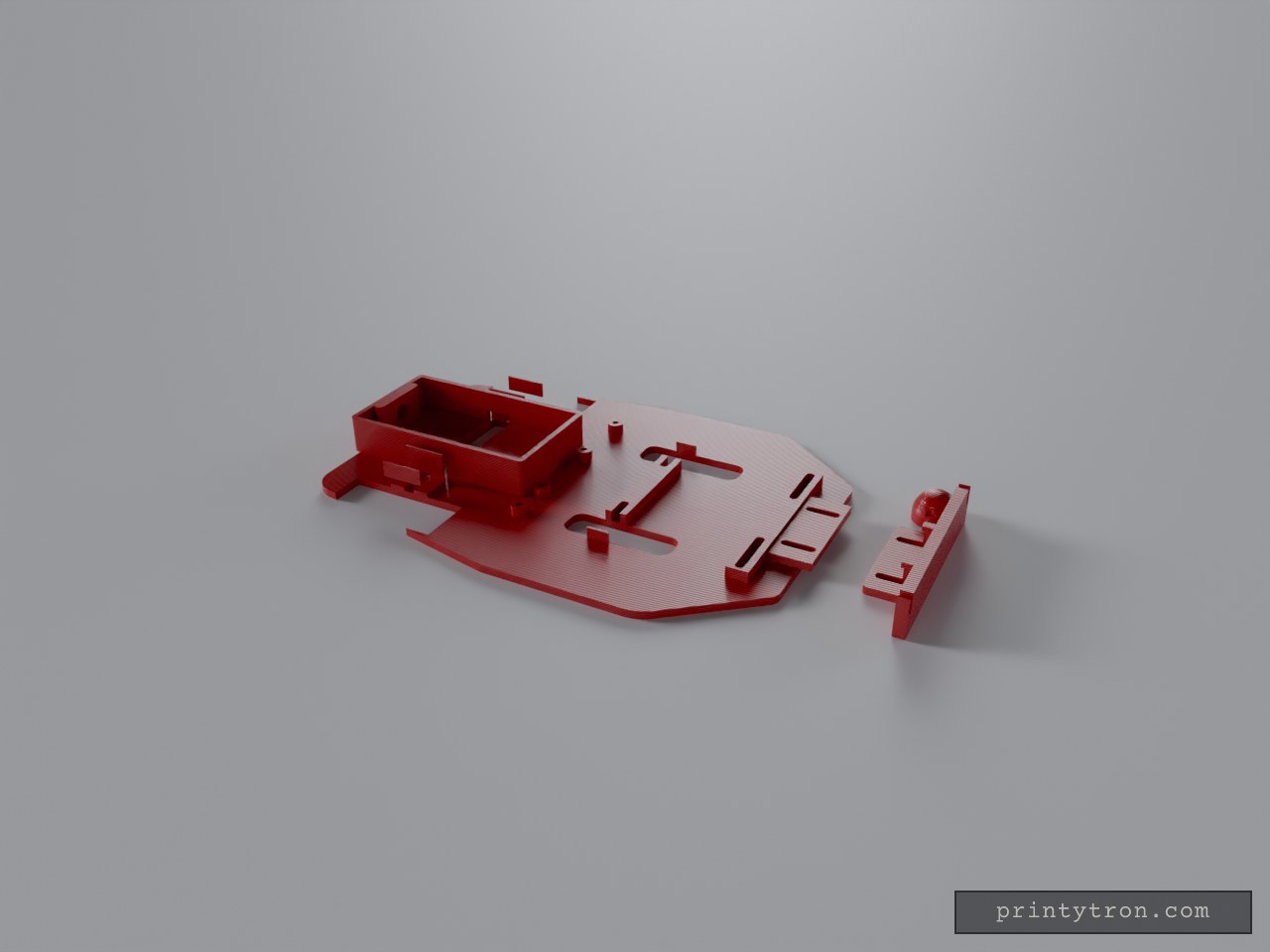
Line Follower Chassis (N20/Mega)
A flat-printing, modular chassis designed specifically for high-speed line following. Engineered to accommodate an Arduino Mega 2560, dual N20 motors, and a Pololu QTR-8RC reflectance sensor, with priority placed on a low center of gravity and straightforward field maintenance. What it's for This frame carries the electronics and drive system for a 2WD differential steering robot. Components drop into dedicated regions rather than requiring complex brackets, and all sensitive electronics are kept clear of the track surface. The front sensor mount separates from the main plate to allow independent height tuning of the IR array. Dimensions Overall envelope (assembled): 180 mm (L) × 130 mm (W) × 55 mm (H) Track width: ~90 mm, providing clearance for 35–38 mm diameter wheels. Electronics rails: Slotted cross-members accept an Arduino Mega or similarly sized microcontrollers. Drive mounts: Drop-in snap/strap cradles for standard 12×10 mm N20 motors. Power bay: Sized for two parallel 18650 lithium cells (44 mm inner width) with integrated Velcro pass-throughs. Assembly All major features anchor with standard M2 or M3 hardware. The front skid and sensor bracket print flat independently and bolt into designated sliding rails on the chassis nose. The motor mounts include under-plate zip-tie channels to secure the gearboxes rigidly against torque. Use standoffs for the motor driver and buck converter pads to ensure proper wiring clearance above the deck.
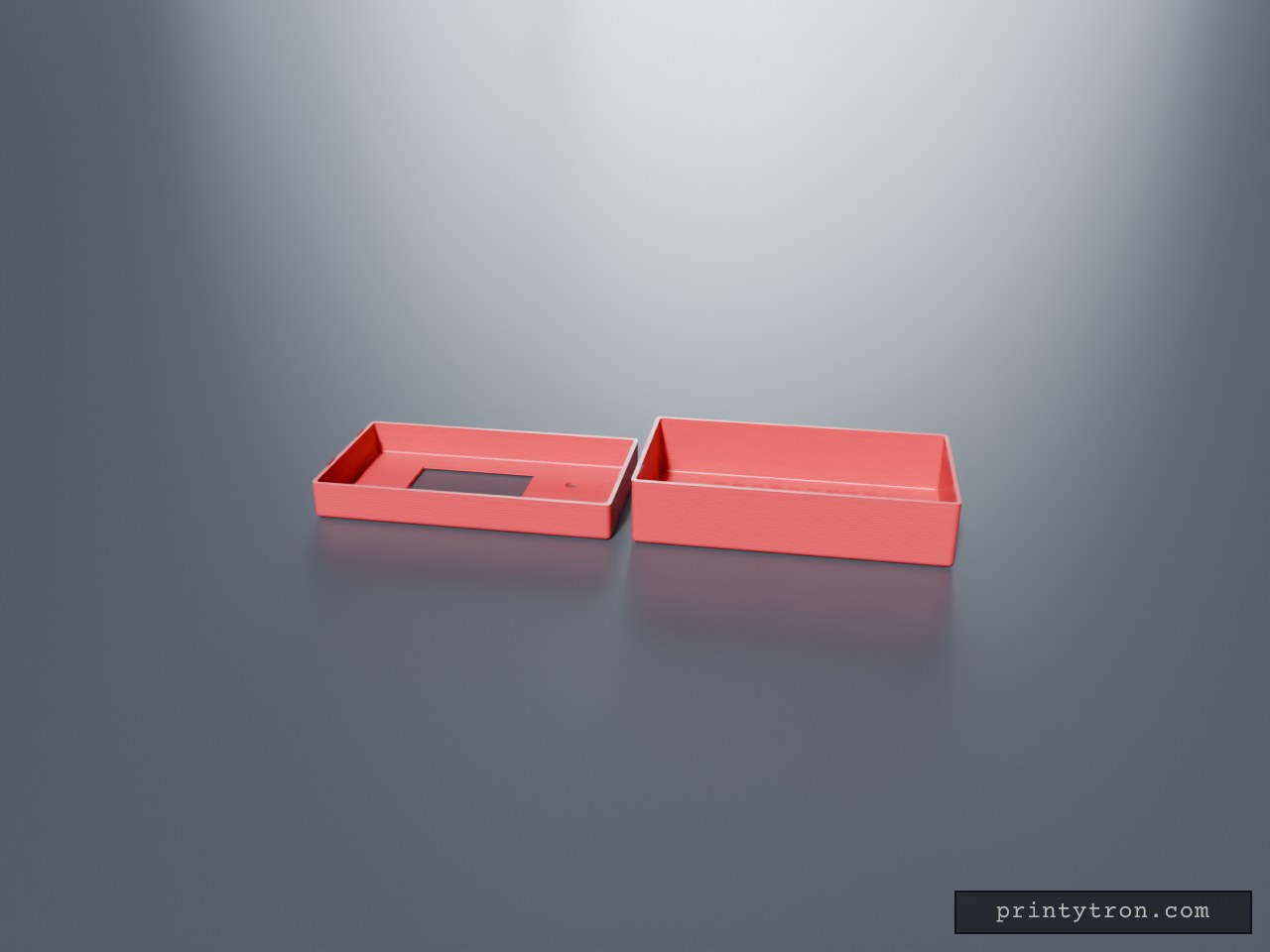
Retro TV Enclosure for No-Solder RP2040 Builds
A two-piece retro TV shell designed to house a no-solder RP2040 video player. The clamshell locks together with a built-in snap fit, offering exactly 150×80×50mm of internal space. Both halves print flat on the bed without supports. Front Bezel: Features a sloped CRT-style screen cutout with an internal ledge for a 2.8" display, twin 7mm dial holes, and integrated speaker vents. Back Shell: Includes a bottom-edge USB-C cutout and classic rear cooling vents. Snap Fit: A 4mm friction lip with interlocking bumps holds the enclosure securely together.
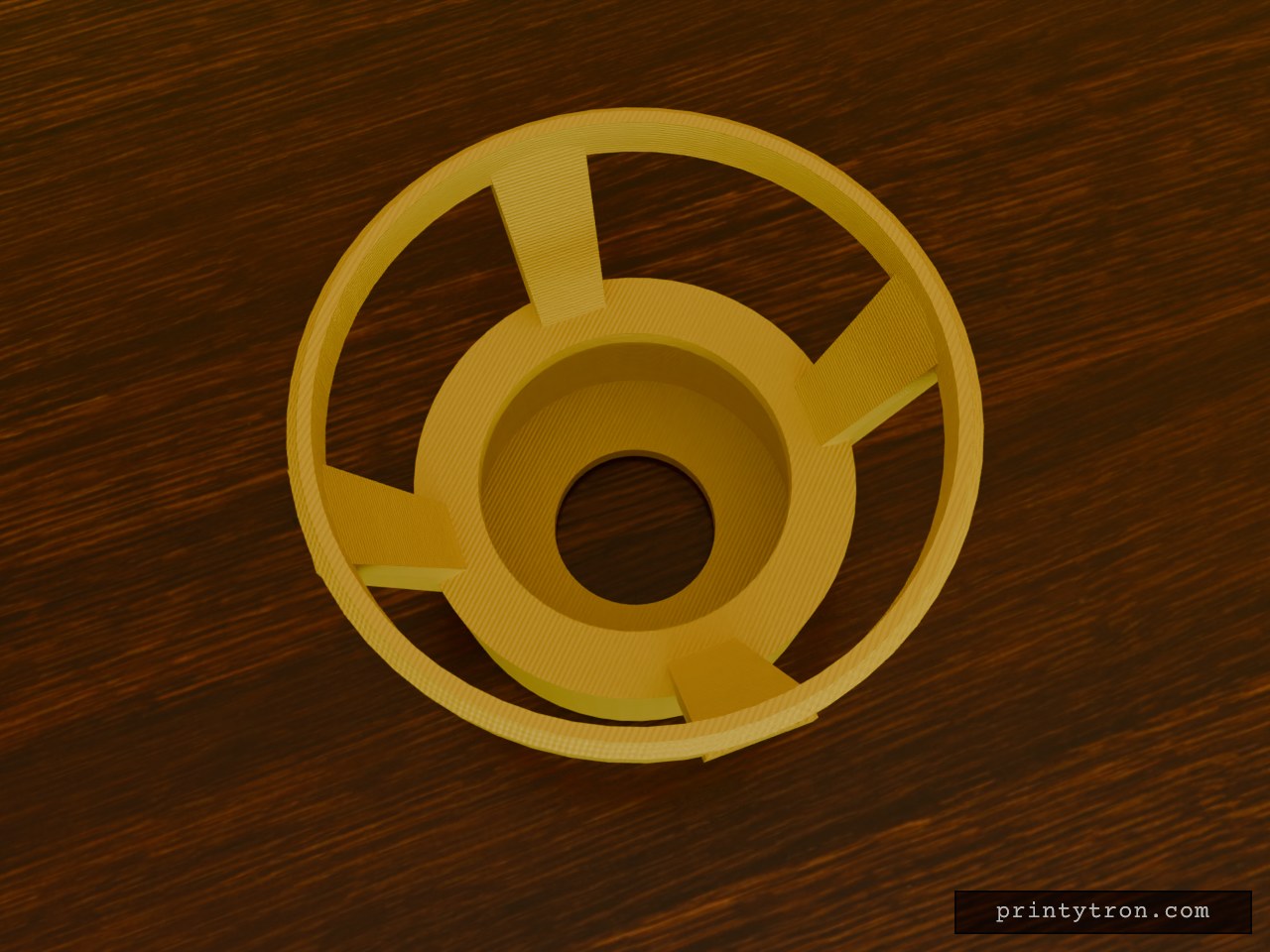
Vented 50mm Speaker Basket
A custom 3D-printable 50mm speaker basket designed for custom driver assemblies. It provides a rigid framework linking a standard 50mm top surround ring to a tailored bottom magnet housing. This version features a completely hollow core: Pass-Through Bottom: The central pole has been deleted and the floor bored out to 25mm, allowing full clearance for a voice coil and T-yoke assembly. Magnet Seat: Leaves a 3mm resting lip for a standard 31mm ring magnet. Acoustic Venting: Four structural struts anchor the assembly while maximizing rear airflow.
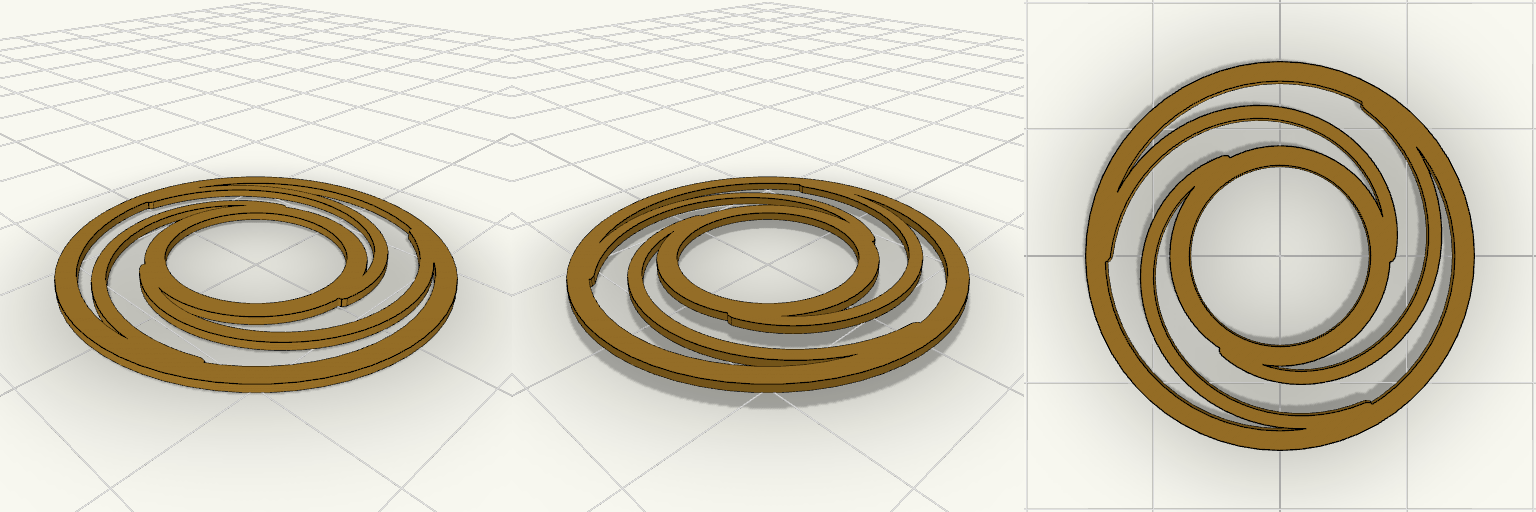
Vented Acoustic Basket
A skeletal mounting chassis designed to hold a custom 50mm driver assembly. The aggressive cutouts strip away unnecessary mass, leaving four sweeping struts that provide rigid support while entirely opening the rear wave to prevent acoustic reflections. The base houses a precision-cut cavity tailored to scavenged PC fan magnets, complete with a vented central pole piece. Acoustic Details Rear Ventilation: 50-degree windows cut low into the voice coil gap ensure maximum airflow and heat dissipation. Magnet Housing: A 28.5mm OD x 5mm bottom slot sized specifically for standard 120mm fan ring magnets. Mounting Interface: 50mm outer diameter upper ring with a 2mm wall thickness for standard cone attachment.