Hollow Two-Piece Egg with Retro Phone
Created today
Description
Hollow egg-shaped container that splits horizontally into two shells, with a flat base for standing and a 1970s–80s style telephone handset on top. An embossed apple-style logo sits on the front of the top shell.
- Wall thickness: 2.5 mm
- Split at 50 mm height, with a locating lip on the bottom shell
- Flat base for stable standing
- Handset: curved grip, two cups, two cradle posts
- Logo: about 2 cm tall, raised 0.8 mm from the front surface
- Use: hidden storage, gift box, desk decor
Photos
Technical views
More like this
Explore more in Decor & Display →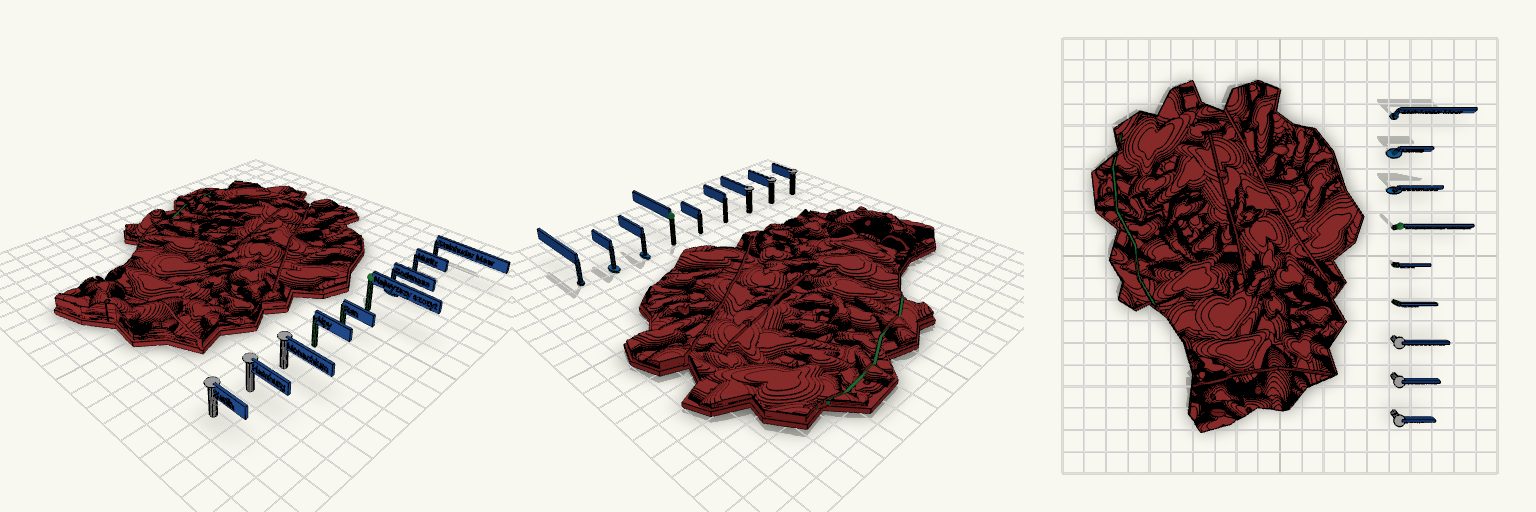
Germania Relief — Wypukła Mapa Niemiec
Germania Relief to wypukła mapa Niemiec z rzeźbą terenu: cała powierzchnia jest lekko falista, także na nizinach, a góry wybijają się ponad nią. Wzniesienia mają gładkie, wielowarstwowe zbocza i nieregularne, powyginane obrysy zamiast regularnych owali. Cztery wyżłobione rzeki przecinają teren, a Ren jest wyróżniony zielonym wypełnieniem koryta, przyciętym do zarysu mapy, oraz tabliczką „Ren”. Znaczniki — trzy miasta, szczyt, Alpy, Ren i jeziora — są osobnymi elementami: leżą płasko obok mapy, bez dodatkowej podstawy, i pasują do gniazd w mapie. Całość czyta się jak dekoracyjna mapa reliefowa, a nie płaski plan. Najważniejsze cechy Ukształtowanie terenu w gładkich, wielowarstwowych zboczach, z Alpami wybijającymi się ponad resztę mapy i zieloną tabliczką „Alpy” Cztery rzeki, w tym Ren z zielonym wypełnieniem koryta przyciętym do zarysu mapy i podpisem; wypełnienie leży w korycie na mapie Trzy największe miasta — Berlin, Hamburg i Monachium — oznaczone wyjmowanymi słupkami z pionową tabliczką z wypukłym napisem Najwyższy szczyt Alp oznaczony wyjmowanym znacznikiem z kulką, kołkiem i tabliczką „Najwyzszy szczyt” Jeziora: Muritz, Bodensee i Steinhuder Meer — niebieskie wkładki w wycięciach, podpisane małymi tabliczkami Wyjmowane znaczniki leżą luzem obok mapy, bez podstawy; po przełożeniu wciska się je w gniazda mapy W zestawie Mapa Niemiec ok. 124 × 160 mm z gniazdami na znaczniki Wyjmowane znaczniki miast, szczytu, Alp, Renu i jezior, leżące płasko obok mapy Znaczniki nie mają osobnej podstawy Druk i montaż Model składa się z mapy i osobnych znaczników. Znaczniki są wciskane w gniazda mapy; pasowanie jest ciasne, więc luzy warto sprawdzić na wydruku. Najdrobniejsze elementy, jak kołek szczytu, są delikatne.
Santa
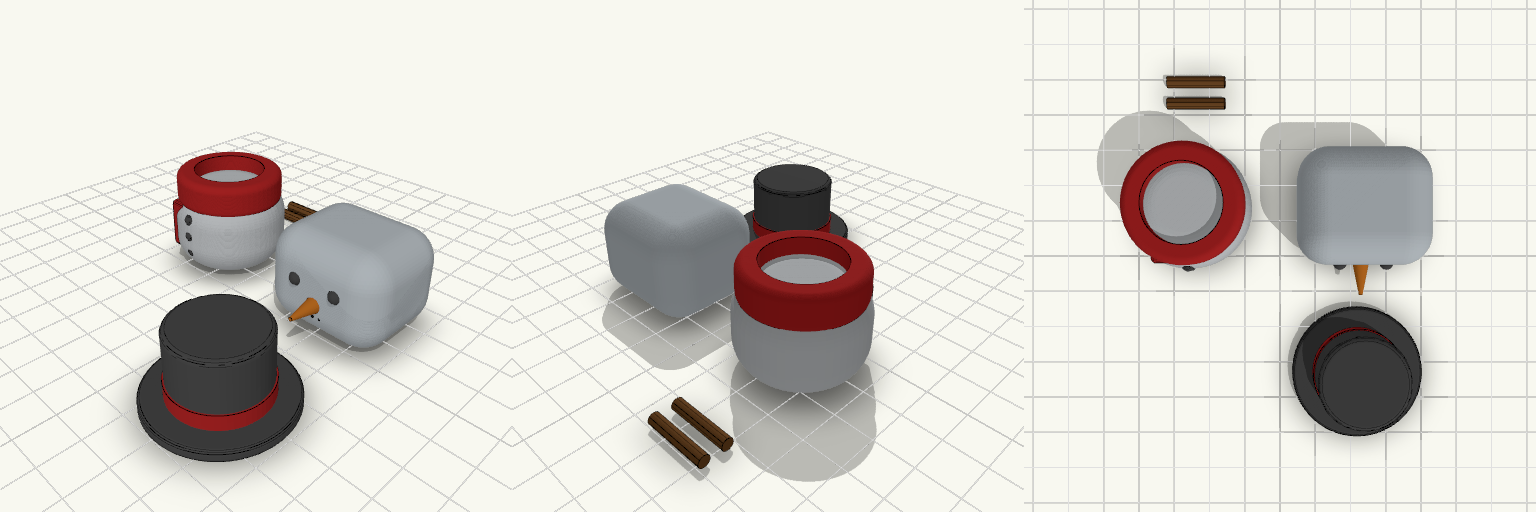
A Funko-style snowman built as separate pieces: body, square head, top hat and two stick arms. The head has a 17.49 × 17.49 mm square pocket, 9.92 mm deep, in its flat underside. Fit notes Pocket: 17.49 × 17.49 × 9.92 mm in the head underside. Measure your mating part before printing. Head top: flat. The threaded post has been removed. Hat: still carries its threaded socket, so it does not screw onto this head as built. Not fitted: the body has no matching peg for the pocket.
Red Fire Goat Ornament, 120 mm
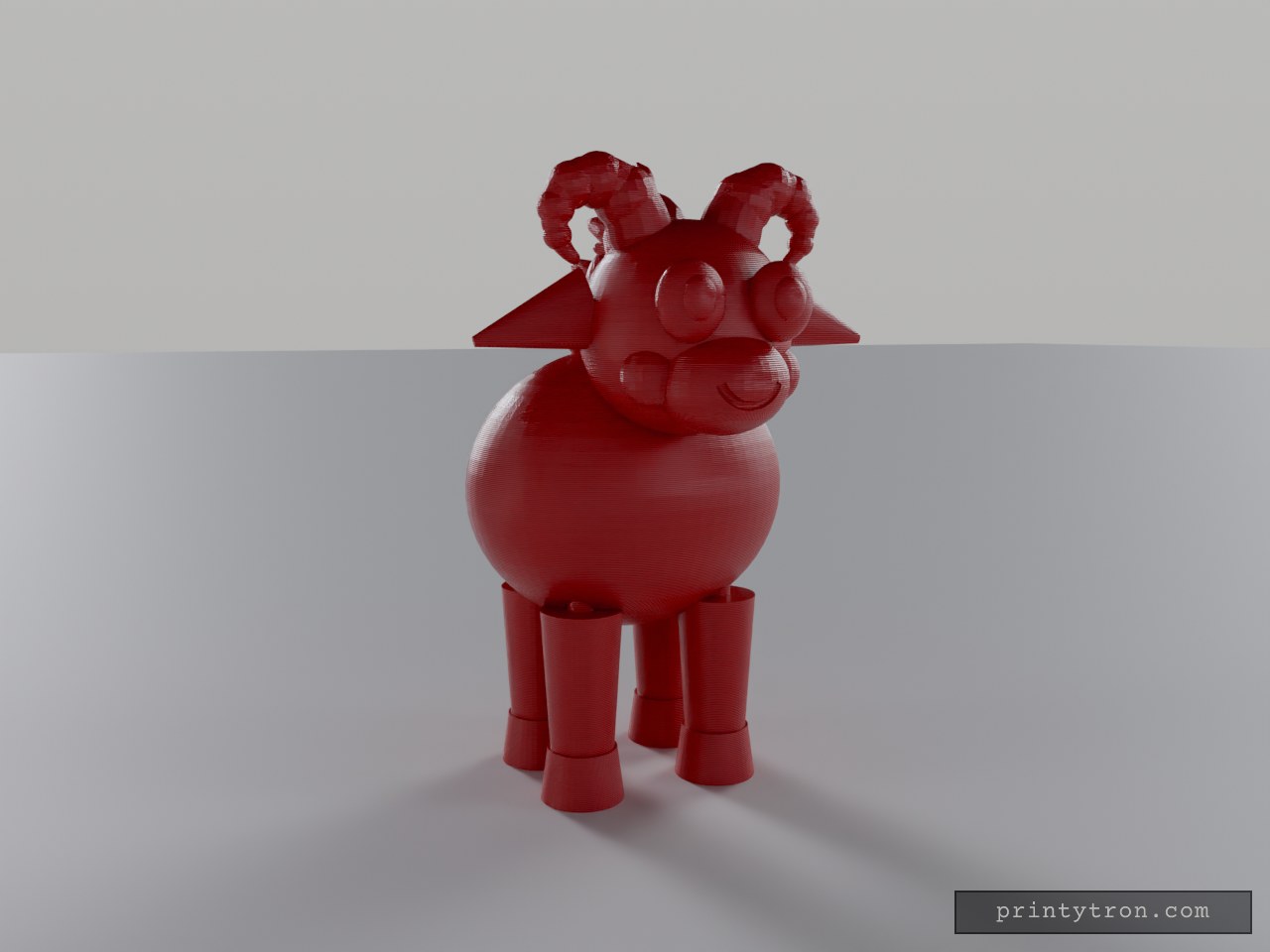
Multi-part Christmas tree ornament of a cartoon red goat with curled golden horns, amber eyes, a smiling muzzle, a flame-shaped mane and a curled tail. The body carries an integrated hanging loop on top. Head, horns, ears, eyes, pupils, legs, hooves, mane, mane flame tips and tail are separate pieces that join with round pegs and sockets. Height: about 120 mm assembled Joints: round pegs in sockets, 0.2 mm clearance per side Pieces: body, head, horns, ears, eyes, pupils, four legs, four hooves, mane, mane flame tips, tail Colours: red body, gold horns, amber eyes, orange and yellow mane, orange tail Printer: FDM, suited to a Bambu Lab P1S in PLA or PETG Export: a part selector at the top of the file switches between the assembly and each single piece for STL export Supports: horns, tail and mane may need light supports or a tilted orientation
kraancakehouder 35/25/15 totaal volledig af.
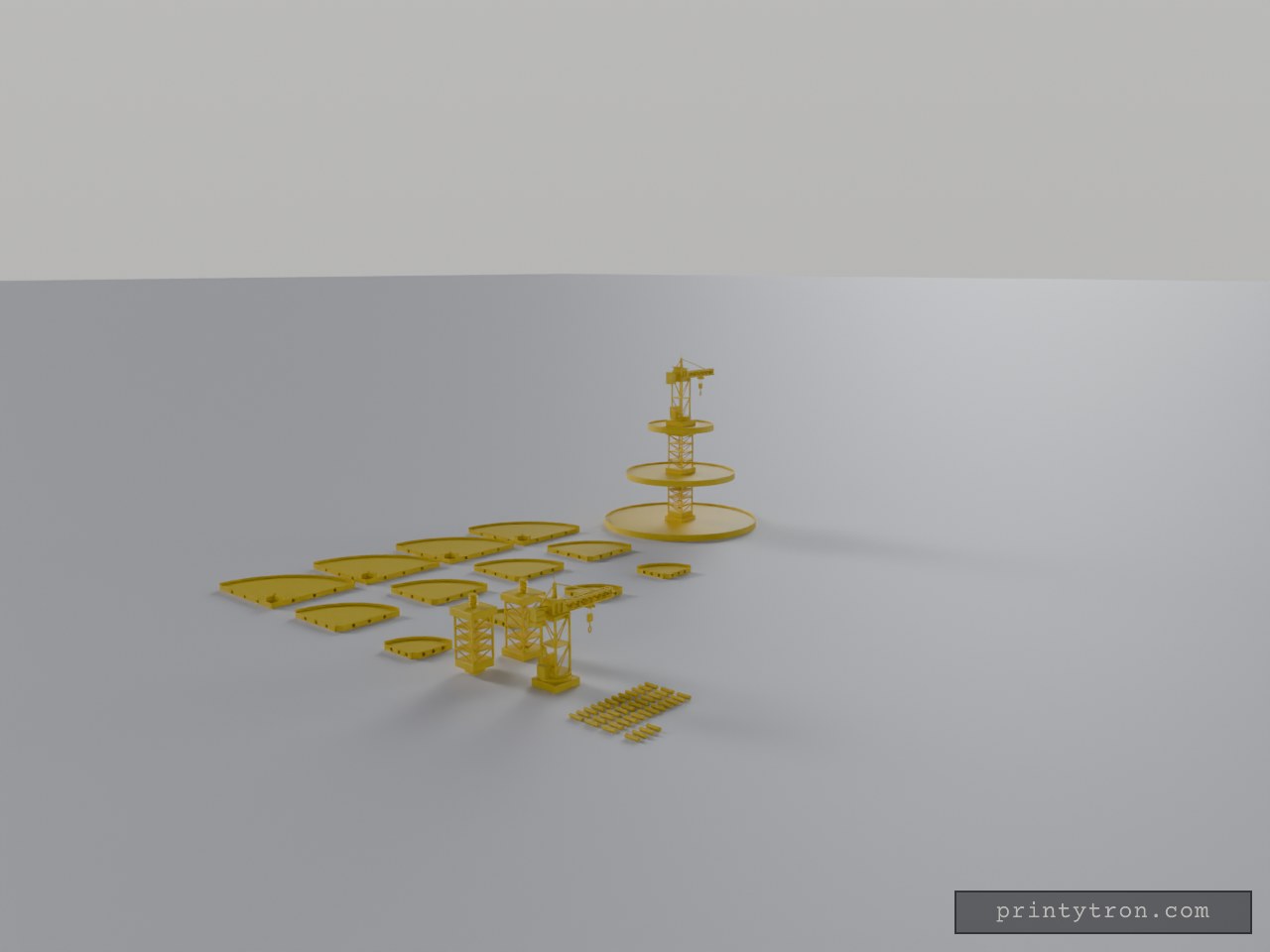
Caketoren met drie schijven en een vakwerkkraan met vierkante voet van 50 mm. Wat past waar Onderste plaat (Ø350 mm): vier kwarten met een opstaand vierkant middenblok. Samen vormen ze een zitting van 30,6 mm vierkant, 8,6 mm diep. Kraanmast 1: heeft een vierkante voet van 30 mm met vier klikbolletjes. Die klikt in de zitting. Middelste en bovenste plaat (Ø250 en Ø150 mm): een rond centrumgat van Ø16 mm voor de kraan. Platen: kwarten verbonden met losse pennen Ø6 mm. Controleer voor het printen Meet de voet van mast 1 na. Die moet 30 mm zijn, tegenover een zitting van 30,6 mm. Past niet op een bed kleiner dan 300×300 mm.
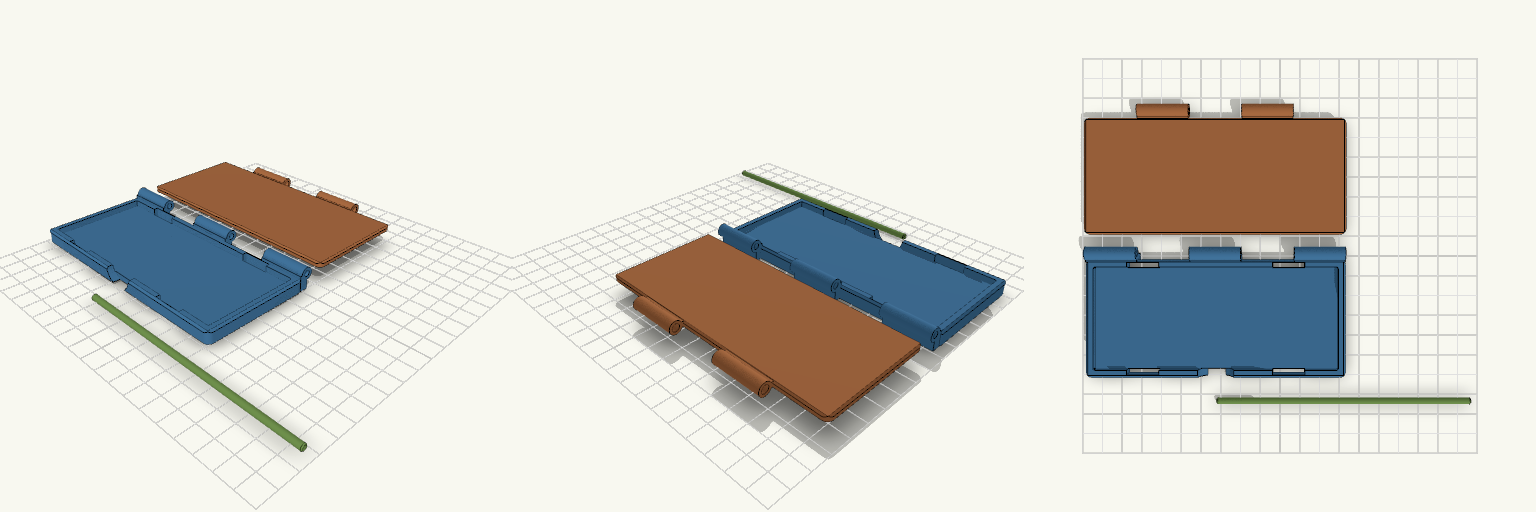
Visor Mirror Housing, Cover and Pin Set
What it's for A slim visor vanity mirror housing with a flip-up cover, split into three separate printed pieces: housing, cover and hinge pin. Glass is supplied by the user. Dimensions Housing: 128 × 58 × 6.5 mm, 1 mm chamfered top edges, 3 mm corners Glass pocket: 121 × 51 × 3.4 mm, for 120 × 50 mm glass Cover: 2.4 mm plate with a 0.4 mm locating lip Hinge pin: 3.2 mm diameter, 127.4 mm long, printed separately Print notes Print all three pieces as laid out on the plate, with no assembly needed before slicing. Slide the pin through the housing knuckles and the cover knuckles after printing. The cover plate sits about 2 mm above the bed at its hinge side, so use supports under it. PETG is recommended for the pin. Remix ideas Add a snap-shut detent. Change the pocket size for different glass. Add a thumb tab on the cover.
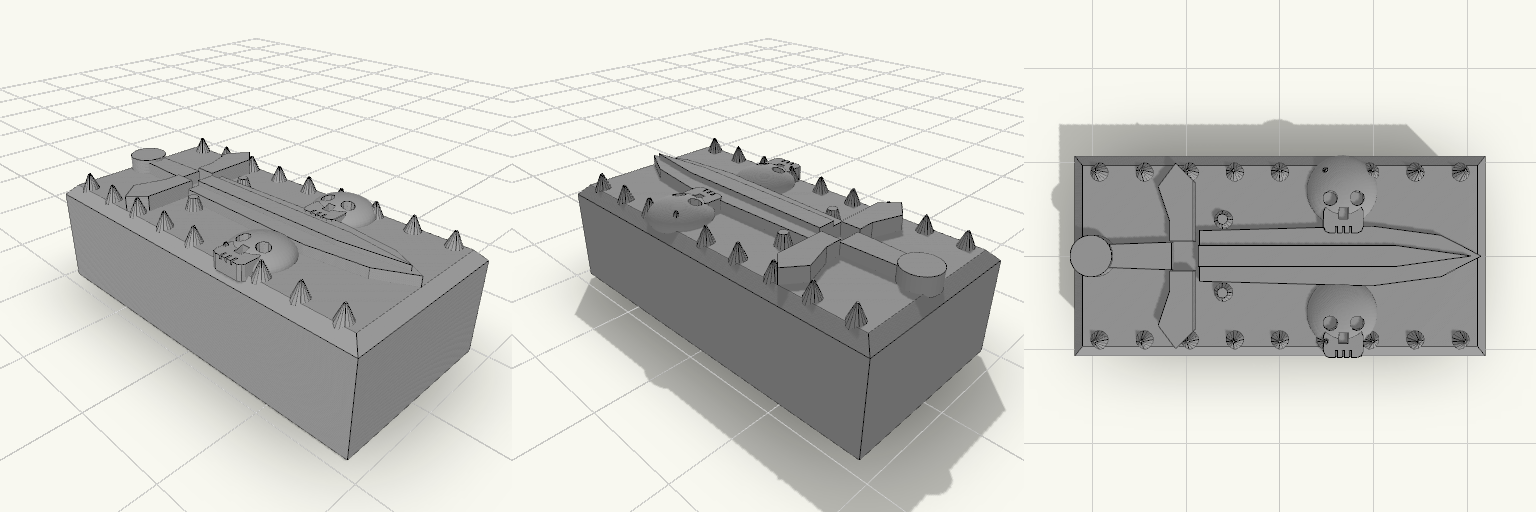
Frostmourne 2U Backspace Keycap
A 37 × 18 × 12 mm hollow 2U keycap with a raised Frostmourne sword running lengthwise across the top, flanked by two relief skulls and a row of small icy spikes along both long edges. It has a Cherry MX cross socket at center and two stabilizer sockets at ±11.9 mm. Remix hooks Wall and top thickness: walls are 1.8 mm and the top plate is 2 mm (cavity ends at z = 8.5). Thicken for strength or thin for less plastic. Relief height: all relief rises about 1.5 mm above the 10.5 mm top surface. Raise it only if the 12 mm height limit isn't a constraint. Skull placement: skulls sit at x = +5.5, y = ±5.4. Move or mirror them to the hilt side, or swap in other emblems. Socket fit: the cross slot is 4.2 × 1.35 mm. Adjust ±0.1 mm to tune for your printer's tolerance. Pairs with: Cherry MX switches and a standard 2U plate-mount or PCB-mount stabilizer. Print upside down, or with the top facing up using a fine layer height such as 0.12 mm. Variants: swap the sword for another motif, or recolor the spikes with a filament change.