Red Fire Goat Ornament, 120 mm
Created today
Description
Multi-part Christmas tree ornament of a cartoon red goat with curled golden horns, amber eyes, a smiling muzzle, a flame-shaped mane and a curled tail. The body carries an integrated hanging loop on top. Head, horns, ears, eyes, pupils, legs, hooves, mane, mane flame tips and tail are separate pieces that join with round pegs and sockets.
- Height: about 120 mm assembled
- Joints: round pegs in sockets, 0.2 mm clearance per side
- Pieces: body, head, horns, ears, eyes, pupils, four legs, four hooves, mane, mane flame tips, tail
- Colours: red body, gold horns, amber eyes, orange and yellow mane, orange tail
- Printer: FDM, suited to a Bambu Lab P1S in PLA or PETG
- Export: a part selector at the top of the file switches between the assembly and each single piece for STL export
- Supports: horns, tail and mane may need light supports or a tilted orientation
Photos
Technical views
More like this
Explore more in Decor & Display →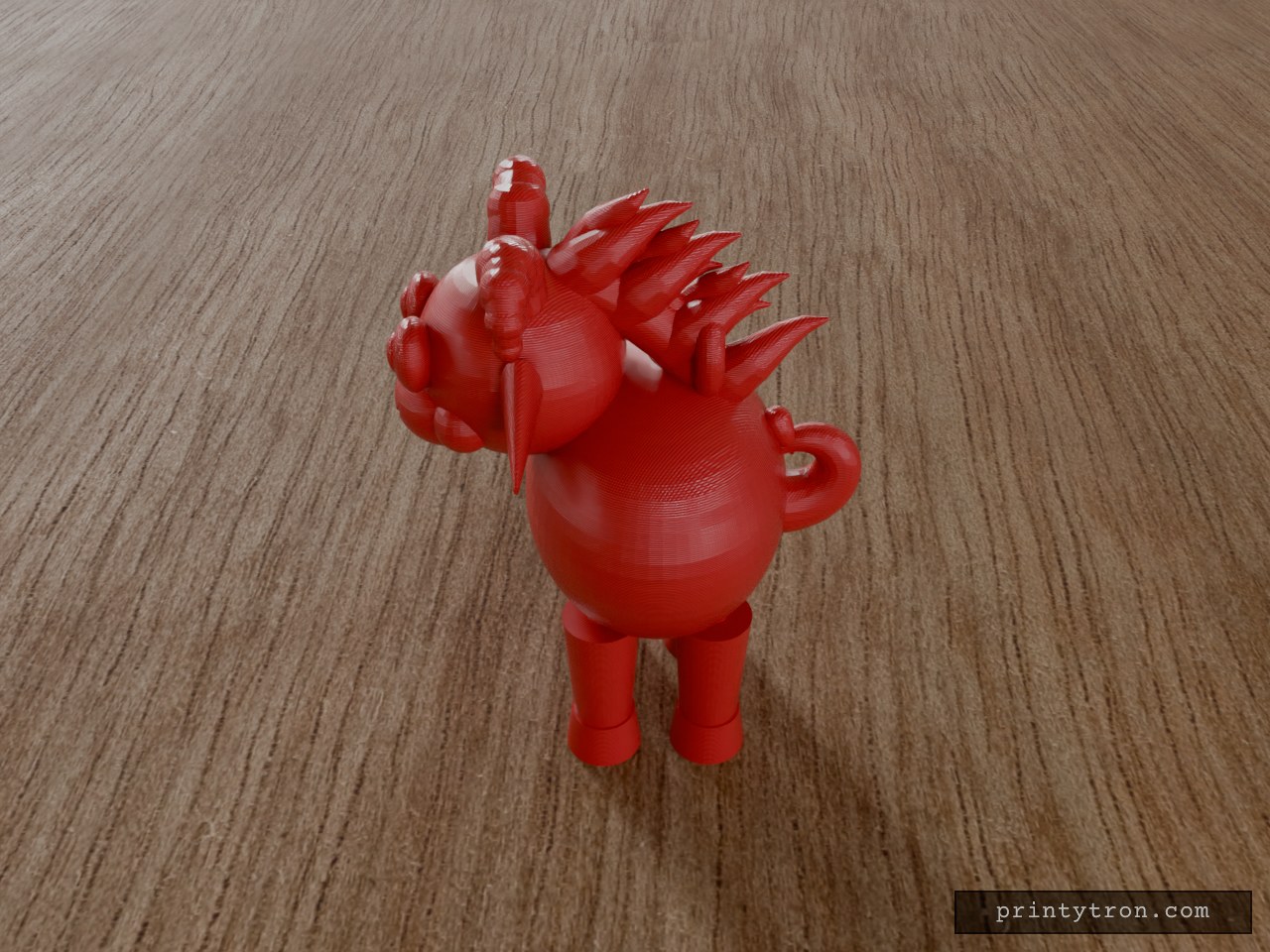
Red Fire Goat Ornament, 120 mm
Multi-part Christmas tree ornament of a cartoon red goat with curled golden horns, amber eyes, a smiling muzzle, a flame-shaped mane and a curled tail. The body carries an integrated hanging loop on top. Head, horns, ears, eyes, pupils, legs, hooves, mane, mane flame tips and tail are separate pieces that join with round pegs and sockets. Height: about 120 mm assembled Joints: round pegs in sockets, 0.2 mm clearance per side Pieces: body, head, horns, ears, eyes, pupils, four legs, four hooves, mane, mane flame tips, tail Colours: red body, gold horns, amber eyes, orange and yellow mane, orange tail Printer: FDM, suited to a Bambu Lab P1S in PLA or PETG Export: a part selector at the top of the file switches between the assembly and each single piece for STL export Supports: horns, tail and mane may need light supports or a tilted orientation
道路围栏和交通灯杆
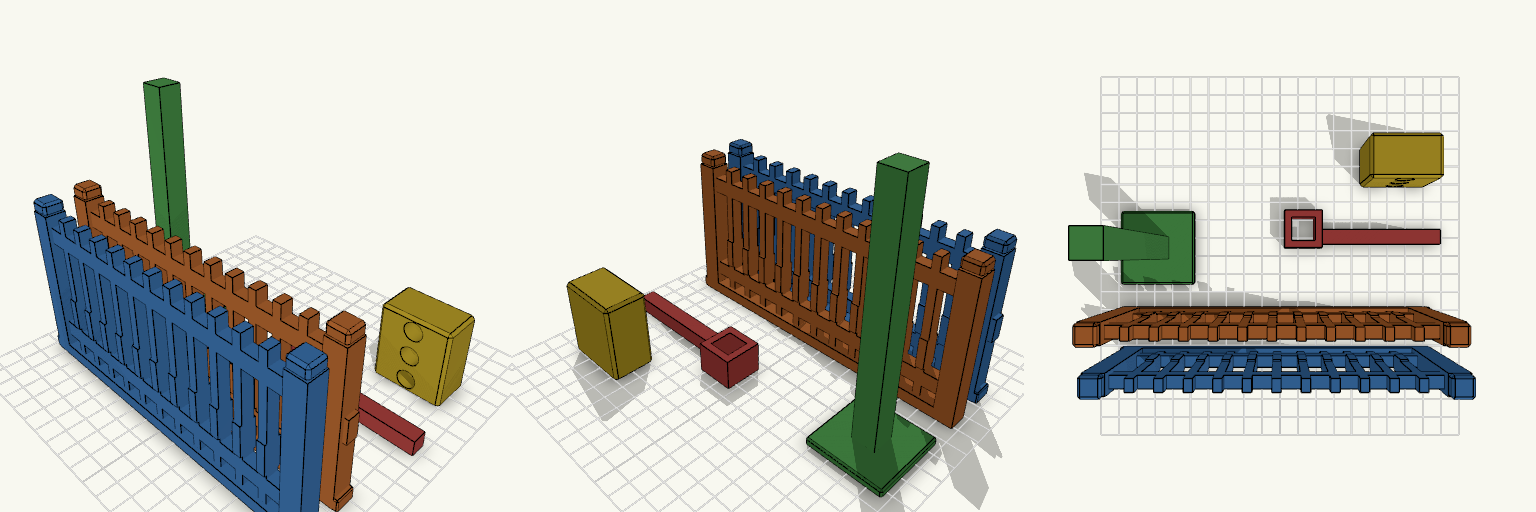
What it's for A miniature municipal road isolation set in the style of a city traffic median fence: a matched pair of guardrail sections plus a centre traffic-light assembly. All five pieces are independent parts with no merged or intersecting geometry, so each prints and finishes on its own and is glued together afterwards. The full set fits inside a 225 × 145 × 140 mm print envelope. LeftMunicipalFence and RightMunicipalFence — mirrored guardrail sections that flank the scene TrafficLightPoleMain — the centre pole the signal assembly stands on TrafficLightArm — the cantilever that carries the signal head out over the road TrafficLightHousing — the three-lamp signal head at the end of the arm Dimensions LeftMunicipalFence and RightMunicipalFence: 170 × 10 × 85 mm each. Two 10 × 10 mm end posts with chamfered caps, a top rail, a bottom rail and 11 vertical slats, each slat carrying a raised marking block on its lower half. A small reflector tab on the outer face of the end post is included in the 170 mm width. The right fence is a mirror of the left. TrafficLightPoleMain: a 12 × 12 mm square pole, 130 mm tall, on a 40 × 40 × 4 mm base plate. TrafficLightArm: an 8 × 8 × 75 mm arm with a 20 × 20 × 16 mm slip-on socket; the socket opening is 12.6 mm, leaving about 0.3 mm clearance per side on the pole. TrafficLightHousing: 36 × 22 × 42 mm, with three 10 mm lamp recesses and a closed back. Nothing is thinner than 2.4 mm, and the whole set is set up for a 0.4 mm nozzle. Assembly Print all five parts separately. Set the left fence on one side and the right fence on the other, with the pole standing in the gap between them. The arm slips over the pole, and the housing mounts at the end of the arm. Join the parts with glue after printing — no pre-joined geometry is included. Print notes Every piece is built from simple prismatic shapes with flat starting surfaces: the fence base feet and the pole base plate sit directly on the bed, and no part needs support. Orient the fences upright and stand the pole on its base plate. Colours Each part prints as a single colour, so the dark post bases, the marking blocks on the slats and the reflector tab are all part of the fence's own body. Paint them after printing, or change filament mid-print, to pick them out. Remix ideas Repeat or scale the fence sections to build a longer median run. Swap the three-lamp housing for a different signal head or a blank cap. Use the pole and arm as a mount for street signs, lamps or other scene accessories. Print the fences in a contrasting colour to the pole and housing for a clearer model-road look.
Santa
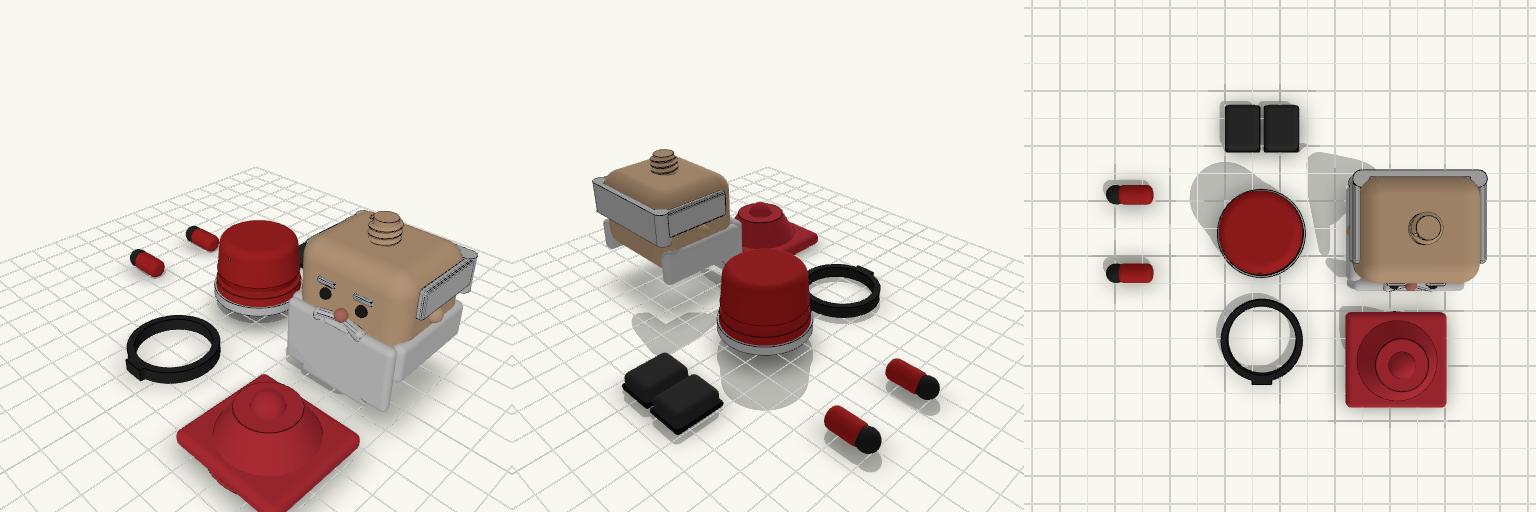
A Funko-style Santa head printed on its own, with the face, hair, ears, mustache and beard. It is the head piece only, so there is no body, belt, boots, arms or hat. What it mates with A 17.49 × 17.49 mm square pocket, 9.92 mm deep, in the underside. It was cut for a clicker insert. A 9 mm threaded post on top, 2 mm pitch. It was made for a screw-on hat, but the hat is not included. Check before printing The beard hangs below the flat underside, so the head needs supports under the face. This is not a fit for any body or hat in this file. The hat and body pieces were removed.
Chubby Baby Dragon Figurine
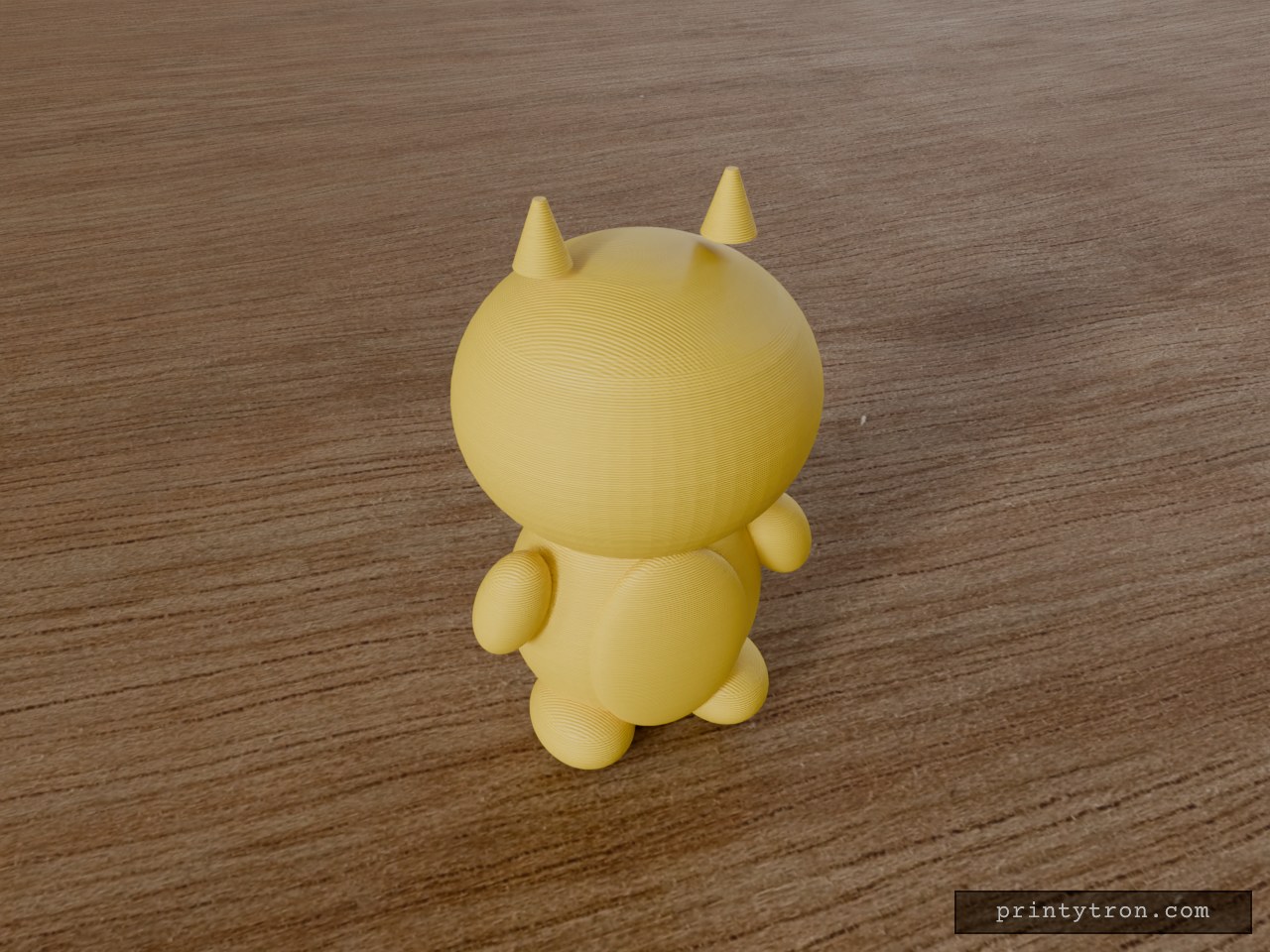
A cute chubby yellow baby dragon with a big round head, cream oval belly, green eyes, short limbs, a tiny tail and small horns. About 80 mm tall with a flat base, built as one welded body. Remix hooks Head size: the head is a 48 mm sphere; enlarge it for a more chibi look, but keep the body wide enough to support it. Eyes: 10 mm ovals; push them outward or scale them up for a different expression. Belly: a flattened ellipsoid at the front; swap its colour for multi-colour printing. Pairs with: a round display plinth, or a keychain loop on the horns. Limbs and tail: short ellipsoids, easy to lengthen if you want a more dynamic pose.
Newar Lantern — Pagoda Temple Lamp
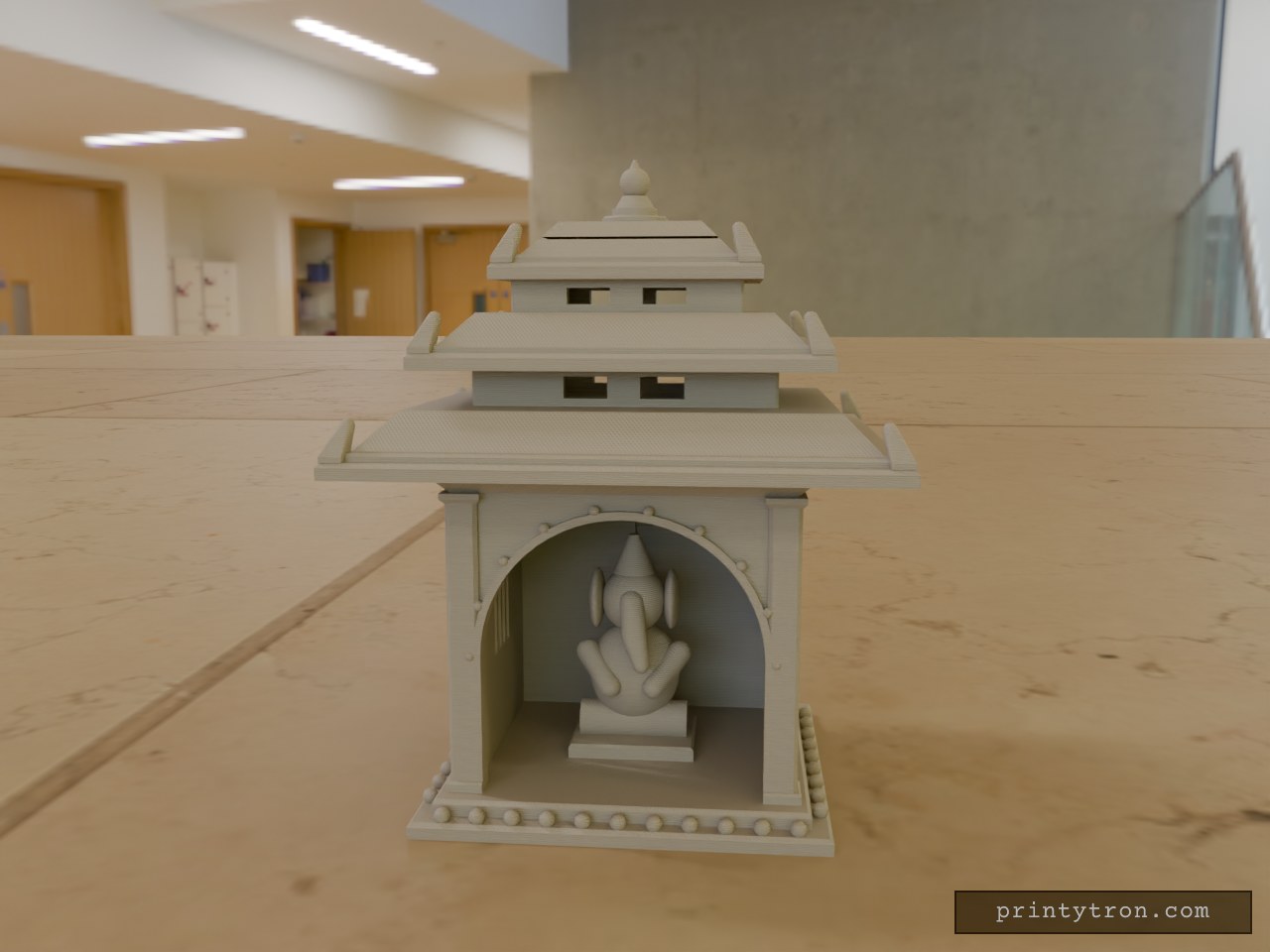
The Newar Lantern is a miniature Newari-style Hindu pagoda temple built as a display lamp, standing 250 mm tall with a roof that overhangs a narrower temple body. The chamber inside is hollow and open at the front, with a 60 mm opening in the ceiling that drops LED light onto a separate Ganesh statue, while the cable runs in a ceiling channel, down a rear groove and out an 8 mm exit at floor level so the wiring stays out of sight. The three roof tiers lift straight off for access to the light and statue, and every piece sits on a flat bottom for stable printing. Dimensions Assembled height: 250 mm Lower roof: 200 × 180 mm; base: 155 × 145 mm Internal chamber: 112 × 92 × 115 mm with a flat floor Arched front entrance: 105 × 105 mm, open at the front Ceiling light opening: 60 mm, with a recess for the LED holder Finial spigot: 12 mm Features Three progressively smaller roof tiers with uppturned corner horns, layered eaves and a small windowed storey beneath the lower two A pointed finial seated in the top roof on a 12 mm spigot Two-step platform base with a row of 6 mm spherical ornaments Arched entrance with a framed, studded border, corner pillars, lattice side windows and a cornice LED holder: a flat plate with a collar for the module and a cable slot Separate seated Ganesh statue on a flat pedestal, about 90 mm tall and sized for the chamber Print notes Seven pieces: temple body, three roof tiers, finial, LED holder and Ganesh statue Roof tiers join on 5 mm pins and 5.6 mm sockets, so they lift off without clips Roof undersides are set at a 45° slope so each tier prints without supports The sloped roof sections are solid rather than a thin shell — print them with 3 walls and about 8% infill, since the walls carry the load Flat bottoms keep every piece stable on the build plate Walls are kept to a minimum of 2 mm for durable printing
Germania Relief — Wypukła Mapa Niemiec
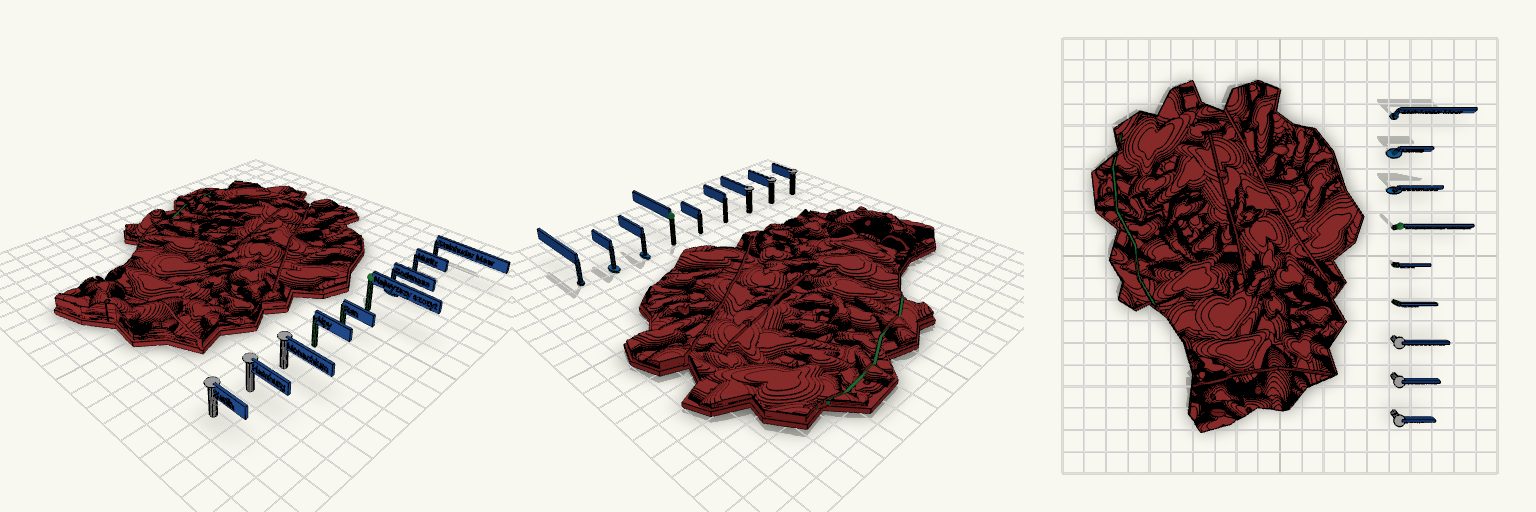
Germania Relief to wypukła mapa Niemiec z rzeźbą terenu: cała powierzchnia jest lekko falista, także na nizinach, a góry wybijają się ponad nią. Wzniesienia mają gładkie, wielowarstwowe zbocza i nieregularne, powyginane obrysy zamiast regularnych owali. Cztery wyżłobione rzeki przecinają teren, a Ren jest wyróżniony zielonym wypełnieniem koryta, przyciętym do zarysu mapy, oraz tabliczką „Ren”. Znaczniki — trzy miasta, szczyt, Alpy, Ren i jeziora — są osobnymi elementami: leżą płasko obok mapy, bez dodatkowej podstawy, i pasują do gniazd w mapie. Całość czyta się jak dekoracyjna mapa reliefowa, a nie płaski plan. Najważniejsze cechy Ukształtowanie terenu w gładkich, wielowarstwowych zboczach, z Alpami wybijającymi się ponad resztę mapy i zieloną tabliczką „Alpy” Cztery rzeki, w tym Ren z zielonym wypełnieniem koryta przyciętym do zarysu mapy i podpisem; wypełnienie leży w korycie na mapie Trzy największe miasta — Berlin, Hamburg i Monachium — oznaczone wyjmowanymi słupkami z pionową tabliczką z wypukłym napisem Najwyższy szczyt Alp oznaczony wyjmowanym znacznikiem z kulką, kołkiem i tabliczką „Najwyzszy szczyt” Jeziora: Muritz, Bodensee i Steinhuder Meer — niebieskie wkładki w wycięciach, podpisane małymi tabliczkami Wyjmowane znaczniki leżą luzem obok mapy, bez podstawy; po przełożeniu wciska się je w gniazda mapy W zestawie Mapa Niemiec ok. 124 × 160 mm z gniazdami na znaczniki Wyjmowane znaczniki miast, szczytu, Alp, Renu i jezior, leżące płasko obok mapy Znaczniki nie mają osobnej podstawy Druk i montaż Model składa się z mapy i osobnych znaczników. Znaczniki są wciskane w gniazda mapy; pasowanie jest ciasne, więc luzy warto sprawdzić na wydruku. Najdrobniejsze elementy, jak kołek szczytu, są delikatne.