iBasso DC04 Ultra Case
Created 1 months ago
Description
A durable, hard-shell slip case designed for the iBasso DC04 Ultra USB DAC.
What it's for
This sleeve protects the DAC while tossing it into a bag or carrying it on the go. It features a bottom cutout for the USB-C cable and a top thumb slot so the device can be easily pushed out when needed.
Dimensions
- Fits Device: 58.0mm × 23.5mm × 13.1mm (plus 0.8mm total clearance for an easy slip fit)
- Wall Thickness: 1.6mm
Print notes
Print vertically (standing on the closed USB-C end) for best results without supports. The 0.8mm clearance provides just enough wiggle room to slide the DAC in and out without it getting stuck.
Images
More like this
Explore more in Desk & Tech →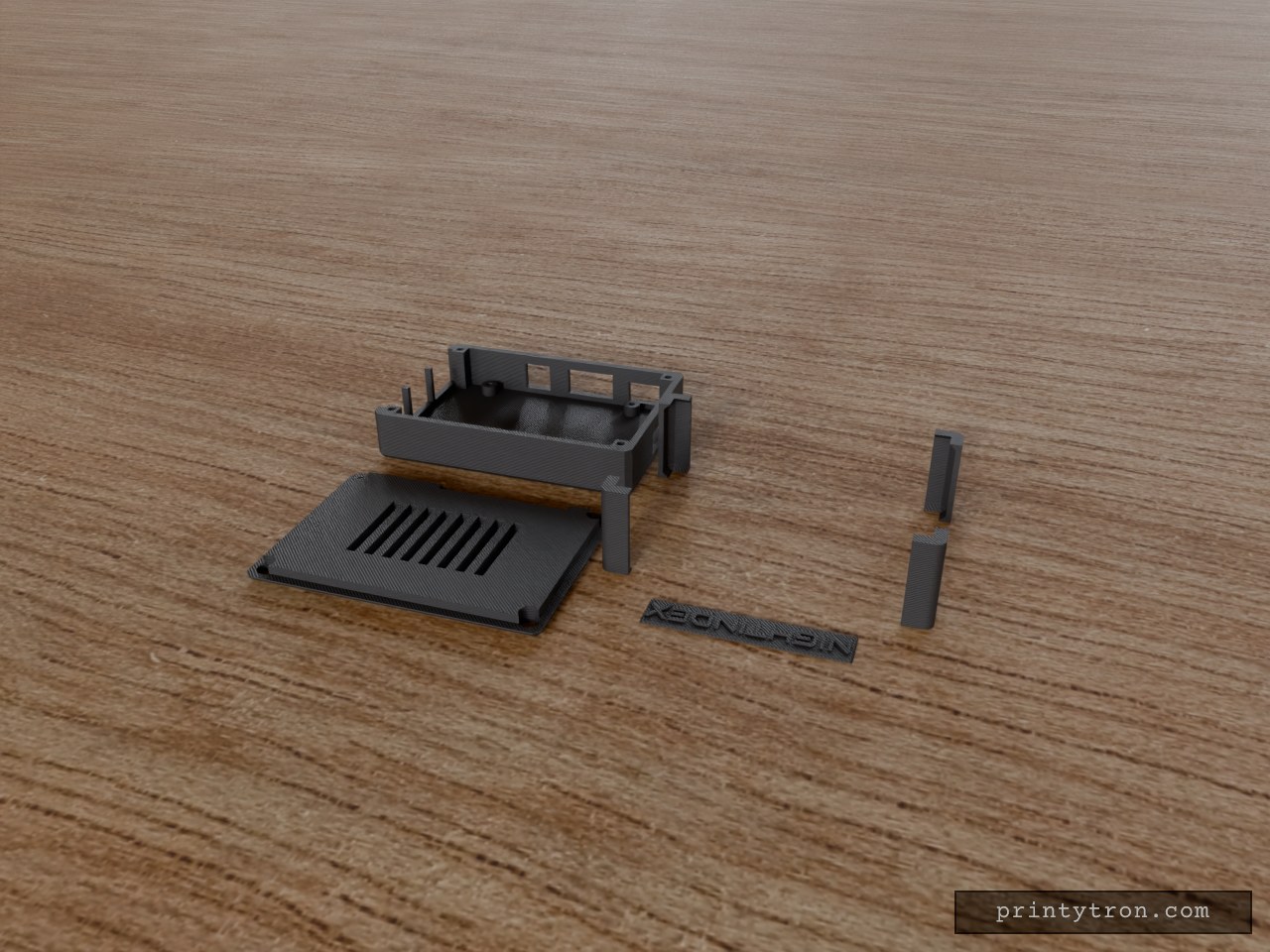
Pi 3 case
A bare Raspberry Pi 3 is so light that hooking up a standard HDMI cable instantly tips it off the desk. This case locks the board into a heavy enclosure and uses snap-on outer corner bumpers to give it some actual grip, so the board stays exactly where you put it. The port cutouts are oversized enough to accept real molded cables without them binding against the shell. Bed Fit: Everything is packed tightly to fit in a single run on a 180×180 mm print bed. Printing: All pieces sit flat on the plate. No supports required anywhere. Clearances: Built with a 0.4 mm gap around the board and lid joint so it slots together cleanly.
Dev Board Lockdown Case
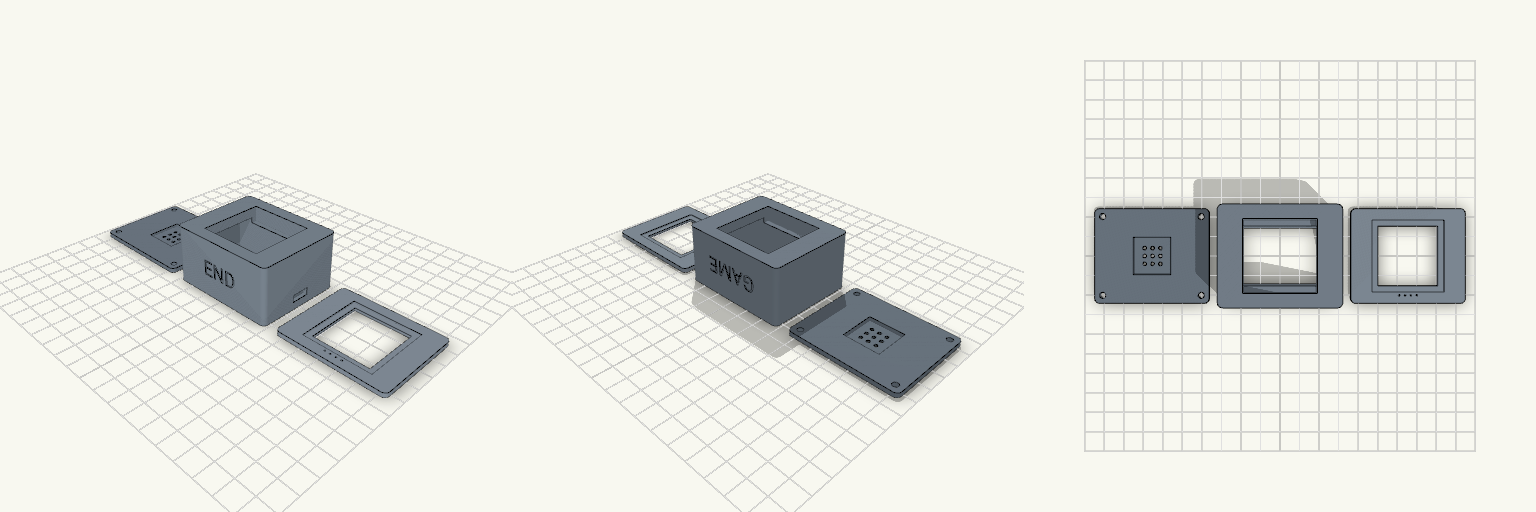
Raw development boards sliding across a desk are just waiting to short out on a stray screw or drop a jumper wire mid-compile. It’s annoying, it ruins components, and it makes moving a project impossible. This ends that. This is a clean, three-part enclosure built to lock down an ESP32 and an OLED display, keeping the wiring hidden and the desk clear. Footprint: 58.0 mm × 48.0 mm Total thickness: 34.5 mm (assembled) Display window: 30.5 mm square (designed for 1.3" OLEDs) Assembly: Uses four M3 screws driven from the back, leaving the front bezel perfectly clean. Print the three parts flat on their backs. Frosted PETG recommended if you want the board LEDs to diffuse through the case walls.
Endgame1
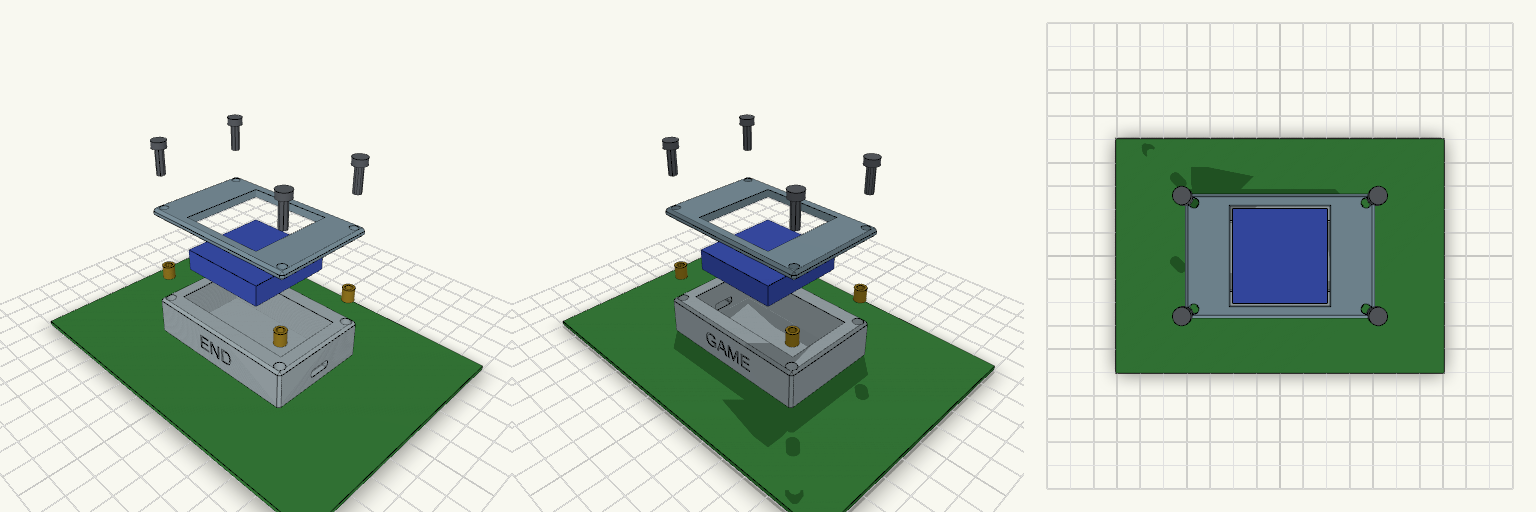
Exploded assembly of a two-piece enclosure for an ESP32-WROOM-32 board (52 x 28 x 14 mm) and a 1.3-inch square OLED module (34 x 34 x 8 mm). The lower chassis has a 52.4 x 28.4 mm pocket, a USB-C cutout on the +X end, and debossed text: "END" on the front wall and "GAME" on the back wall. The lid has a 34.2 mm square window for the OLED. Brass inserts, M3 screws and the OLED module float above the chassis on a flat mat base. Outer size: 64 x 42 mm; chassis height 16 mm, lid thickness 3 mm Board pocket: 52.4 x 28.4 mm, 14 mm deep, 2 mm floor OLED window: 34.2 x 34.2 mm Corner holes: 4 positions at ±29.1 x ±17.9 mm; 4.2 mm for heat-set inserts in the chassis, 3.5 mm clearance in the lid USB-C cutout: 9.2 x 3.4 mm with rounded ends, on the +X end Text: 1 mm deep debossed lettering, 6 mm tall Exploded layout shows inserts, OLED module and M3 screws in assembly order; the mat is a reference surface, not part of the enclosure Material: PETG or clear/natural filament suits the frosted look; print the chassis and lid separately
Endgame
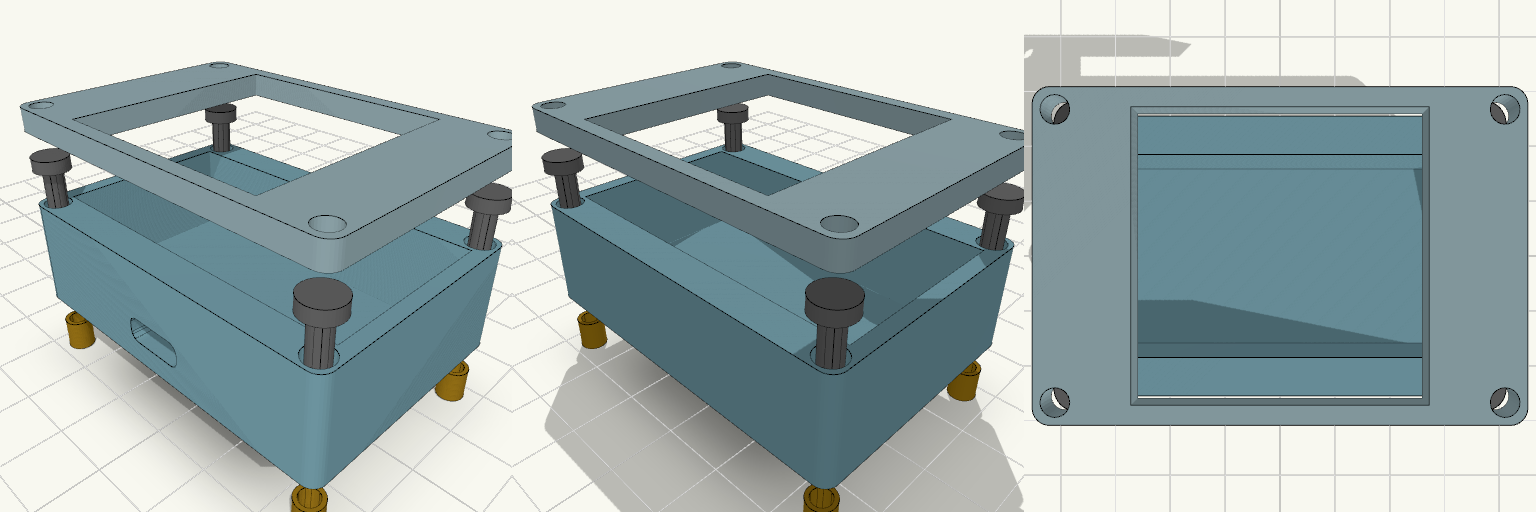
What it's for A two-piece enclosure for an ESP32-WROOM-32 dev board with a 1.3 inch square OLED display in the lid. Shown exploded with brass heat inserts and M3 screws aligned to the corner holes. Dimensions Board pocket: 52 x 28 mm, 14 mm deep (0.2 mm total clearance added so it actually fits) OLED window: 34 x 34 mm Outer size: about 56.8 x 40.4 mm, 2.4 mm walls Front USB-C slot, 10 x 4 mm Remix ideas Add vent slots for cooling. Make the lid thicker to recess the 8 mm display module. Add a cable pass-through at the rear. Print notes A true zero-clearance fit is impractical on FDM, so a small clearance is included. Dimension lines and the cutting mat from the reference image are not modelled.
Solid Back iPhone 13 Case
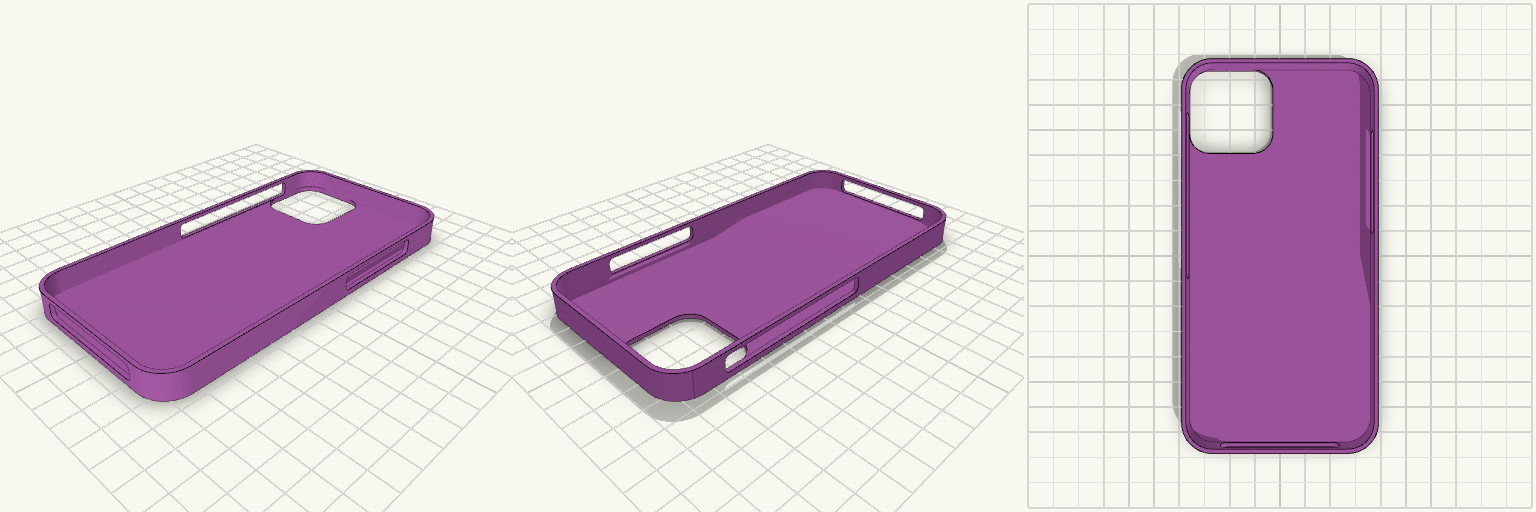
A custom-fit TPU or rigid shell for the iPhone 13 that prevents the phone from slipping or taking raw impacts on the edges. The back is a solid panel for maximum protection. The button zones feature wide windows rather than thin button-covers, exposing the actual hardware so you get the real tactile click of the buttons without fighting the case material. Print Notes Fit Tolerance: Exact to the iPhone 13 body (71.5 mm x 146.7 mm). Material: TPU is highly recommended to let the lip flex over the screen edge. Rigid filaments like PETG will be a very tight snap-fit.
Handheld-Gehäuse mit herausnehmbarer Anschlussblende
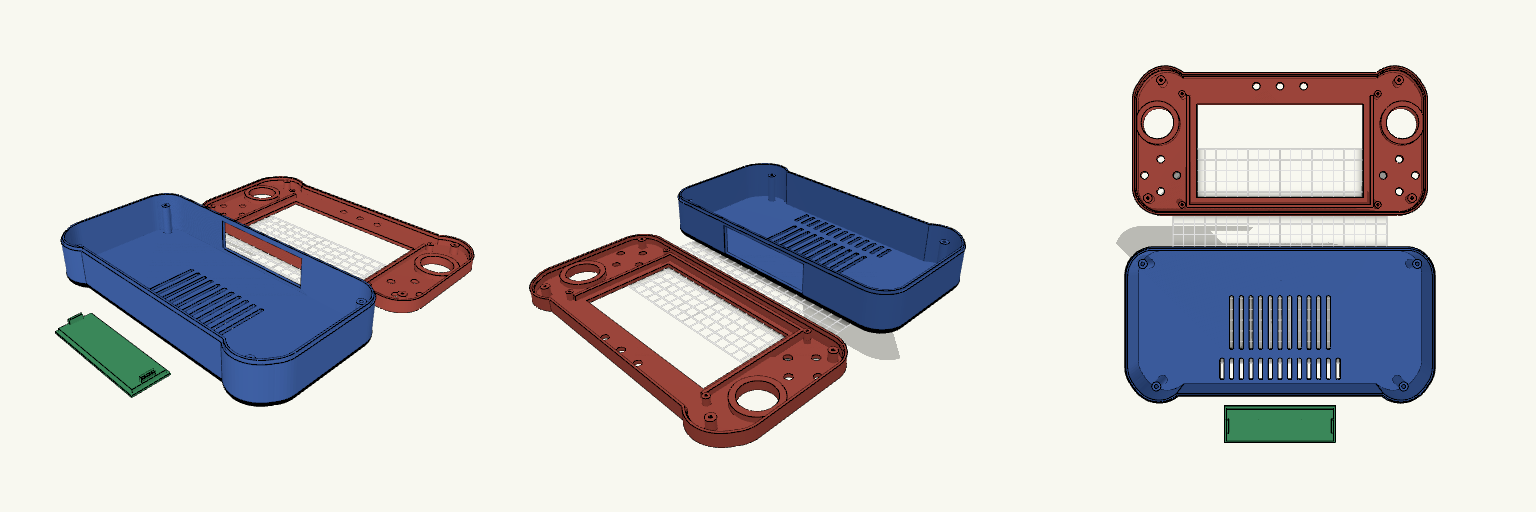
Handheld-Gehäuse für eine selbstgebaute Konsole, bei dem die Kabel- und USB-Öffnung hinten nicht dauerhaft offen bleibt: Eine Klipp-Platte schließt sie und lässt sich bei Bedarf herausnehmen. Aussparung in der Rückwand: 100 × 30 mm, mittig Klipp-Platte: Außenrand 104 × 34 mm, Einsatz 99,6 × 29,6 mm, zwei Federarme mit Rastnasen, Fingermulde Innentiefe: 48 mm, Wandstärke 3 mm Display-Fenster 155 × 87 mm, Tastenlöcher 7,2 mm Druck: Schalen offen nach oben, Platte flach, ohne Stützen möglich