Pepper Grinder Funnel
Made by a Guest
Created 3 months ago
Description
A custom-fit funnel designed specifically for filling pepper grinders without spilling. The spout is sized at 29mm to comfortably clear a 31mm fill hole, while the wide bowl catches everything you pour in.
Features:
- Steep Bowl Angle: Designed so whole peppercorns slide down easily without jamming.
- Wide Spout: The 25mm internal diameter allows large peppercorns to pass freely.
- Compact Height: Kept to 58mm overall, fitting easily into crowded kitchen drawers.
- Support-Free: The overhang angle allows it to print cleanly without supports in either orientation (though printing it upside-down on the wide bowl is recommended for bed adhesion).
Photos
Technical views
More like this
Explore more in Kitchen & Bathroom →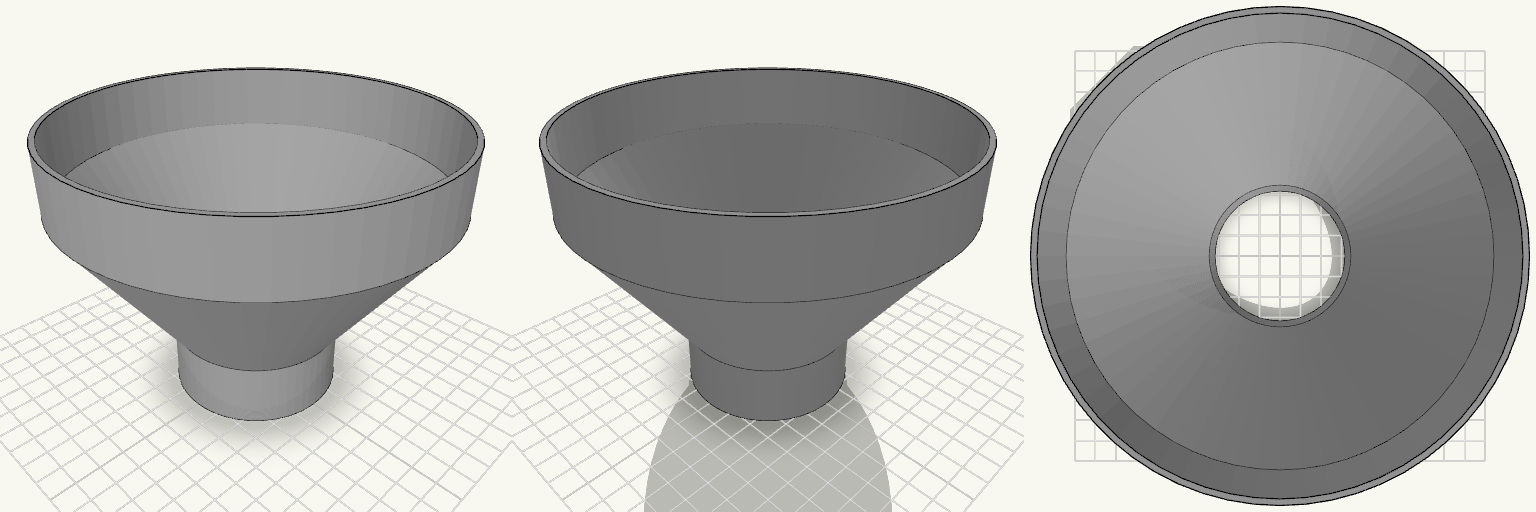
Funnel 6 to 2.5 Inch
A one-piece funnel with a 6 in (152.4 mm) inner diameter at the wide end, tapering to a 2.5 in (63.5 mm) inner diameter spout. Each end has a 1 in (25.4 mm) straight wall. Remix hooks Taper length: 60 mm cone section. Lengthen for a gentler slope, shorten for a squat funnel. Wall thickness: 2 mm. Raise to 3 mm for rigidity with heavy contents. Spout diameter: 63.5 mm inner. Change it to match a specific container neck. Pairs with: a mesh strainer disc sitting in the 1 in top collar, or a rubber gasket on the spout. Variants: add a rim lip or hanging tab.
Brutalist T-Post Cap with Square Platform
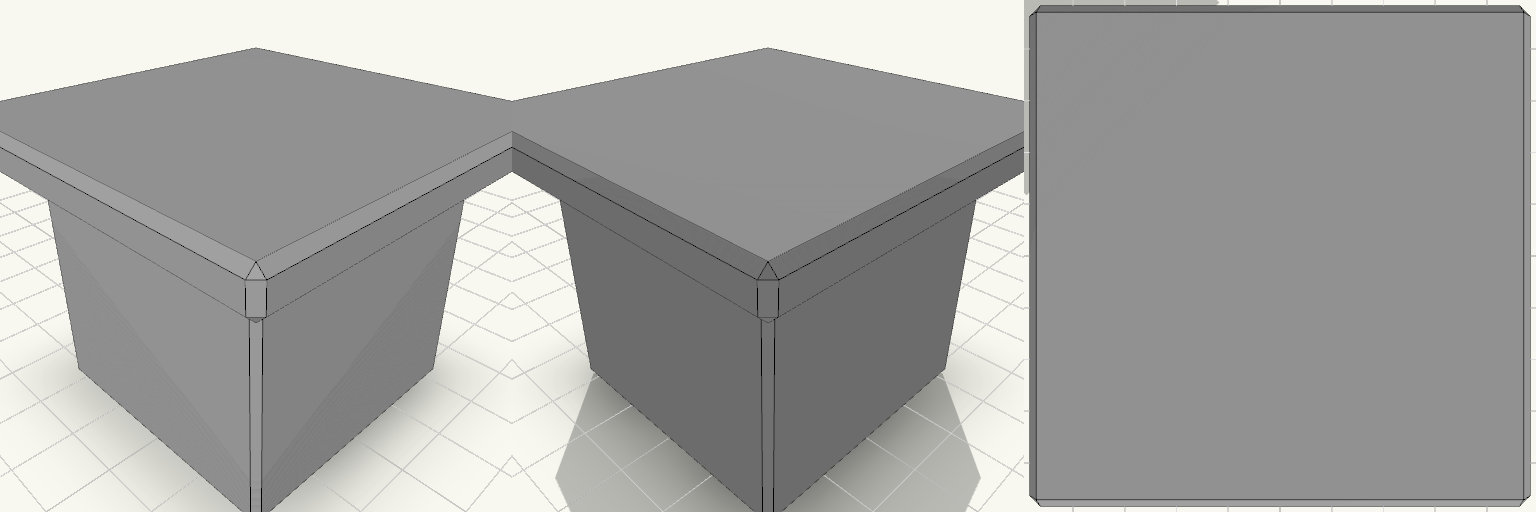
A blocky sleeve that drops over a T-post and carries a flat square platform on top — a brutalist plinth silhouette in cap form, all hard edges and stacked planes. The pocket inside is T-shaped, cut generously around a typical steel fence T-post: a 38 × 7 mm flange opening and a 7 × 38 mm stem slot, leaving roughly a millimetre of play per side so it drops on without a fight. The sleeve is 40 mm deep with 3 mm walls and a 4 mm roof, and the whole cap stands 46 mm tall over a 60 × 60 × 6 mm platform. Design notes T-shaped pocket for a T-post — flange opening 38 × 7 mm, stem slot 7 × 38 mm. Pocket sized with a little slack per side; the 7 mm slot width is the fit-critical dimension on real posts. 40 mm deep sleeve, 3 mm walls, 4 mm roof. 60 × 60 × 6 mm square platform sits on top as one solid piece with the sleeve. Overall footprint on the print plate: 60 × 60 mm, 46 mm tall. Prints as a single part; no assembly and no fasteners. Good to know The pocket is shaped from a typical steel fence T-post rather than a measured one — check your post's flange width, stem length and metal thickness before committing to a long print. Platform size is independent of the pocket, so it can grow or thicken without touching the post fit. Tightening or loosening the pocket is a small change if the cap ends up sloppy or stubborn on the post. The sleeve's outside was widened to 44 mm to keep the walls at a full 3 mm around the bigger pocket, so the cap stays chunky rather than thin-shouldered.
Tiered 12-Jar Spice Rack
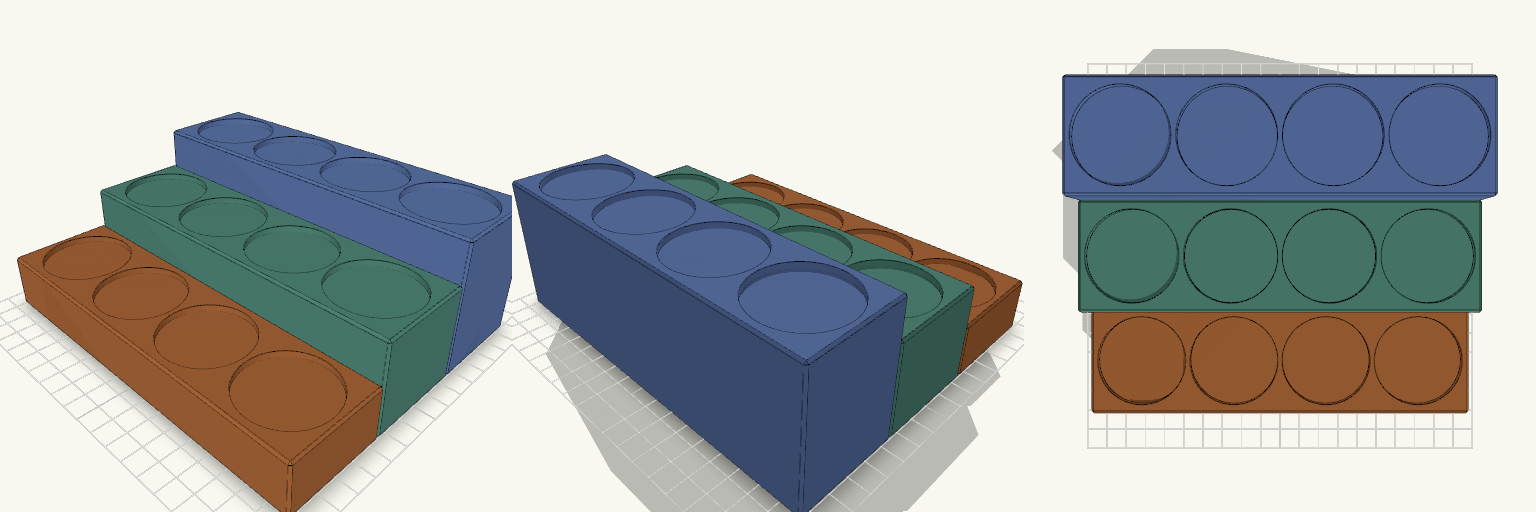
A three-tier spice rack that holds 12 jars, four per tier, with each tier stepping up so every label stays in view without lifting a jar out. Each pocket is sized for jars about 40 mm across, so the rack is easy to scan for cumin or anything else. The rack measures 180 mm wide, 150 mm deep and 66 mm tall at the back. Tier heights are 26 mm (front), 46 mm (middle) and 66 mm (back). Each tier is 50 mm deep and 20 mm taller than the one in front. Each jar sits in a 42 mm round pocket, 3 mm deep, which stops it sliding forward. The edges carry a 1 mm chamfer. It prints as one piece, and the three tiers are shown in separate colours so they are easy to tell apart. Remix hooks Step height (20 mm): raise it for taller jars behind, or lower it for a shorter rack. Labels stay readable as long as the step is at least as tall as the label band on the jar in front. Tier depth (50 mm): this is set equal to the back-step. Widening both leaves room for larger jars, and a wider step also gives a clearer view of the row behind. Pocket diameter (42 mm) and depth (3 mm): 2 mm of clearance suits 40 mm jars. Increase the diameter for jars that run a little wide. Deepen the pocket for a firmer hold, or set the depth to 0 for a flat shelf. Jars per tier (4, 44 mm pitch): change the count to alter the rack width. Drop to 3 per tier for a narrower footprint, or add a fourth tier for 16 jars. Pairs well with: a non-slip mat underneath, or a rear lip or wall panel to mount it in a cupboard.
Herb Stripper Paddle for Kale and Rosemary
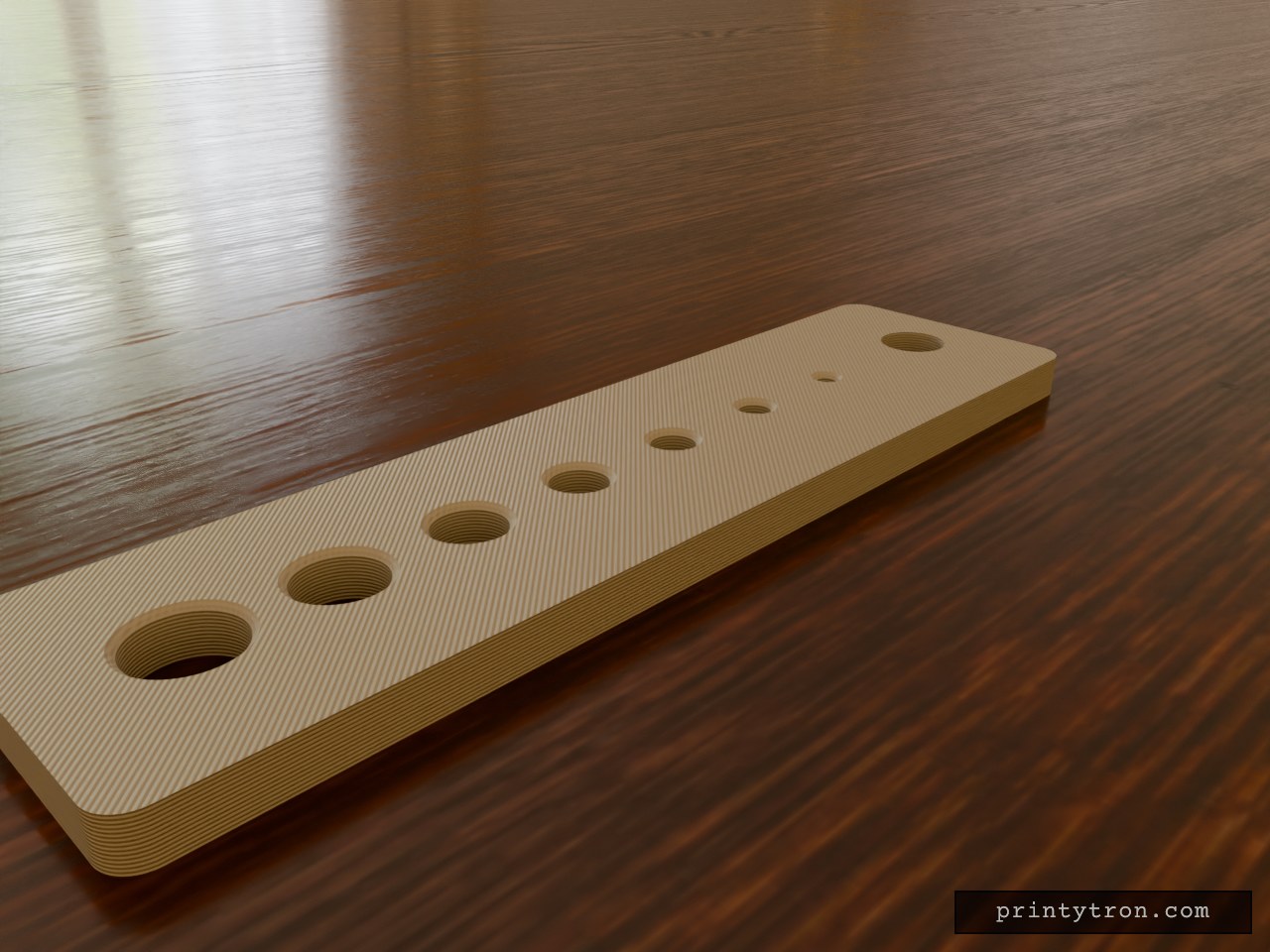
Picking kale, chard or rosemary leaves off the stem by hand is slow, and one hole size never fits both a fat kale rib and a thin rosemary sprig. This herb stripper paddle has seven holes graduated from 12 mm down to 3 mm, so you pick the hole that grips the stem and pull the stem through. The leaves catch on the edge and come off. Each hole has a small flare on the top face so the stem starts in without catching. A hang hole at the end lets the paddle sit on a hook next to the board. Key numbers Paddle: 150 mm long, 40 mm wide, 6 mm thick Stripping holes: 12, 10.5, 9, 7.5, 6, 4.5 and 3 mm, spaced 16.5 mm apart, big to small Hang hole: 10 mm, 12 mm in from the end Corners: 4 mm radius on the flat outline Printing Print flat, with the flared side facing up No supports needed Food-safe filament such as PETG is the usual pick, and a wash by hand is best Use 3 or more perimeters so the thin edges around the holes stay stiff
Steep-Shouldered Funnel for Clean, Targeted Pouring
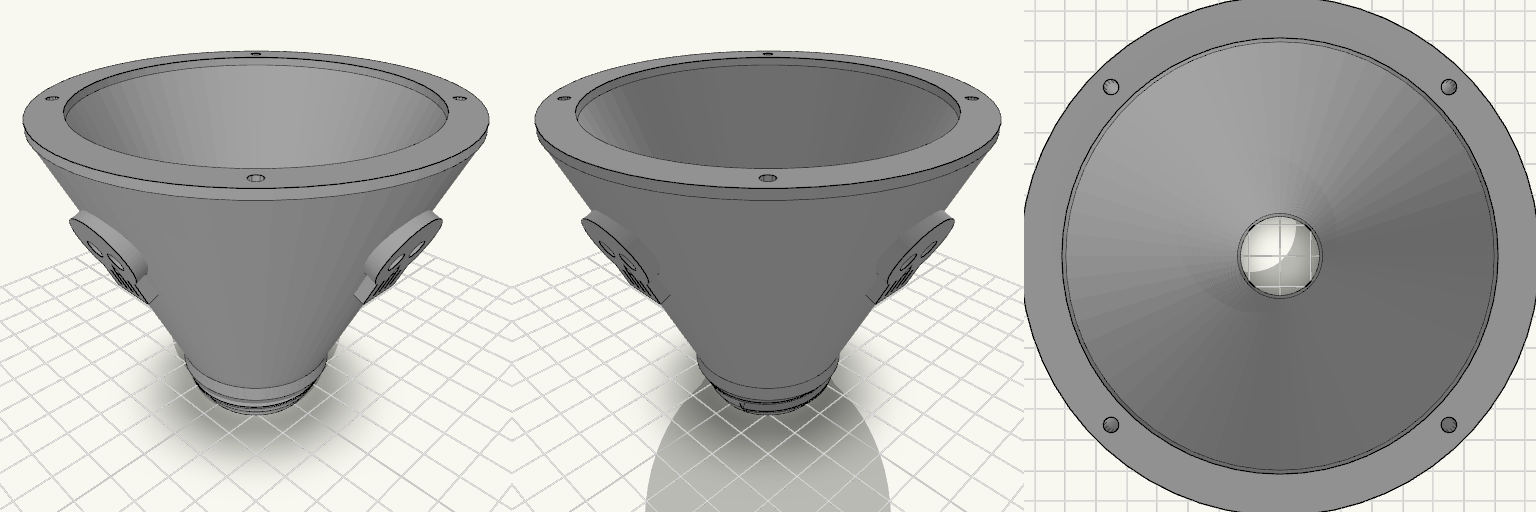
A broad-shouldered funnel with a gothic streak: a 100 mm outside rim (84 mm inside) gathers a jug or bottle mouth, the cone narrows into a 26 mm bore, and the stream drops toward the filler. At 82 mm tall it stays compact enough for a tight engine bay, and the inner cone has no side holes, so the pour runs down the middle. The spout is built around a 36.5 mm major-diameter, 3 mm pitch right-hand screw thread that runs the full 10 mm from the tip up to a 40 mm sealing shoulder. The 26 mm bore keeps the pour path open; the thread is the fit feature, so check the filler neck and gasket stack before printing, since the thread has to match the mating part. Four sealed air tunnels, 3 mm across and spaced 90° apart, run inside the wall from the top rim down through the cone. At the lower end each turns inward and opens through the bore wall about 3 mm above the spout tip, so the bottom face stays solid and air can climb while oil runs down the middle. No holes pierce the side of the cone, so it vents without weeping out. The threaded spout wall carries these passages; at the bore openings the material is thin, so inspect the slicer preview before printing. Four raised skulls ring the cone between the tunnels, one every 90°, angled to follow the slope. Each is about 19 mm wide and stands roughly 2.5 mm proud of the surface, with eye sockets, nose and teeth lines cut into the face; the fine teeth lines may print faintly on a 0.4 mm nozzle. They give the funnel a gothic edge without interrupting the flow path. Fit notes 36.5 mm major-diameter, 3 mm pitch right-hand screw thread on the spout Threaded section runs the full 10 mm from the spout tip to the sealing shoulder 40 mm sealing shoulder for a gasket 26 mm bore through the spout Verify thread fit and gasket compression on the filler neck before printing Check the thin tunnel openings near the bore in the slicer preview Design notes 100 mm outside opening, 84 mm inside — a wide catch area 82 mm overall height Four internal 3 mm air tunnels, evenly spaced, opening into the bore about 3 mm above the tip and exiting at the rim Four raised skulls about 19 mm wide and 2.5 mm proud, set between the tunnels Prints as one piece
5 Gallon Bucket Urine diverter Funnel With Glue-On Clip
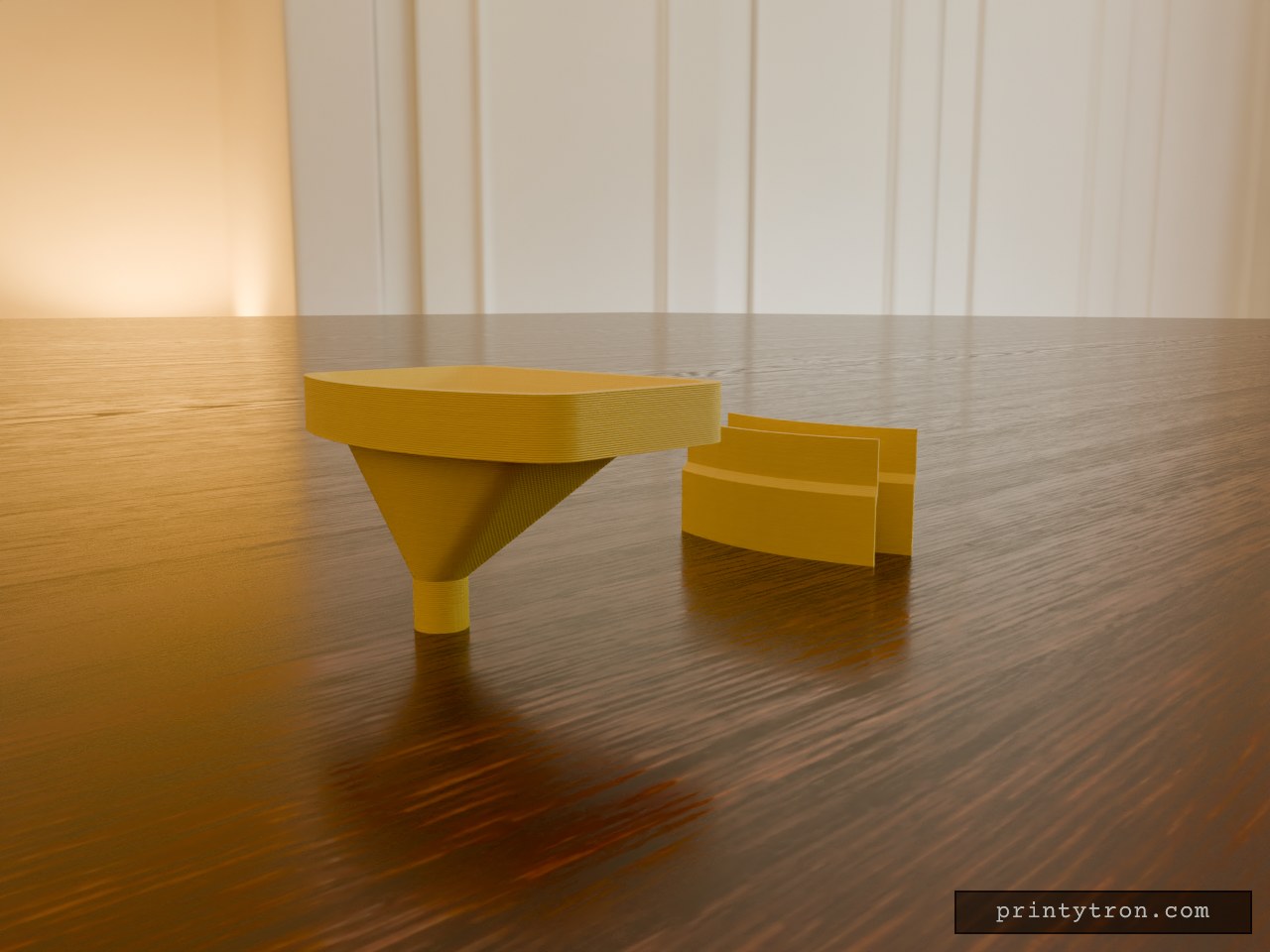
A urine diverter for a 5-gallon bucket. This funnel has a curved outer edge and a skirt, and it comes with a separate curved clip strip that glues to the bucket wall so the skirt hooks over it. I the clip is too near the edge because of taper at the bucket top, just print 2 and glue together (I only printed bottom half of second) Key numbers Bucket inside diameter: 296 mm (clip and funnel curve at 148 mm radius) Clip: about 44° of arc, around 114 mm long, 54 mm tall, 2.5 mm thick Profile: lower section glues flat to the bucket wall, then steps in 2.5 mm so the top stands off the wall by the skirt thickness Skirt: 20 mm tall, 2.5 mm thick, drops into the gap behind the clip's upper lip Spout: 19 mm outside, 15 mm bore Print: clip standing upright, brim needed for support; glue the lower face to the bucket wall