Robust 3-Way Irrigation Manifold
Created today
Description
A heavy-duty 1-to-3 splitter manifold designed for 5 mm ID irrigation hose. It prints completely flat on its base without supports, using teardrop-shaped mounting bosses to bridge the overhangs.
To meet the structural requirement of 4 solid perimeters on a 5.4 mm outer barb, the internal channel strictly inside the hose stems necks down to 2.6 mm. Inside the thick bosses and the main manifold body, the passages open up to 5 mm and 7 mm respectively to minimize flow restriction.
Remix Hooks
- Barb Spacing & Count: Adjust the
port_solid()module to add more barbs or change the spacing for stiffer tubing. - Port Layout: Expand the main body length and loop the
for(x = ...)call to add 4, 5, or 6 outlets. - Mounting: The flat rectangular body leaves plenty of room to cut countersunk screw holes if you need to hard-mount it to a rail or planter box.
Images
More like this
Explore more in Workshop & Tools →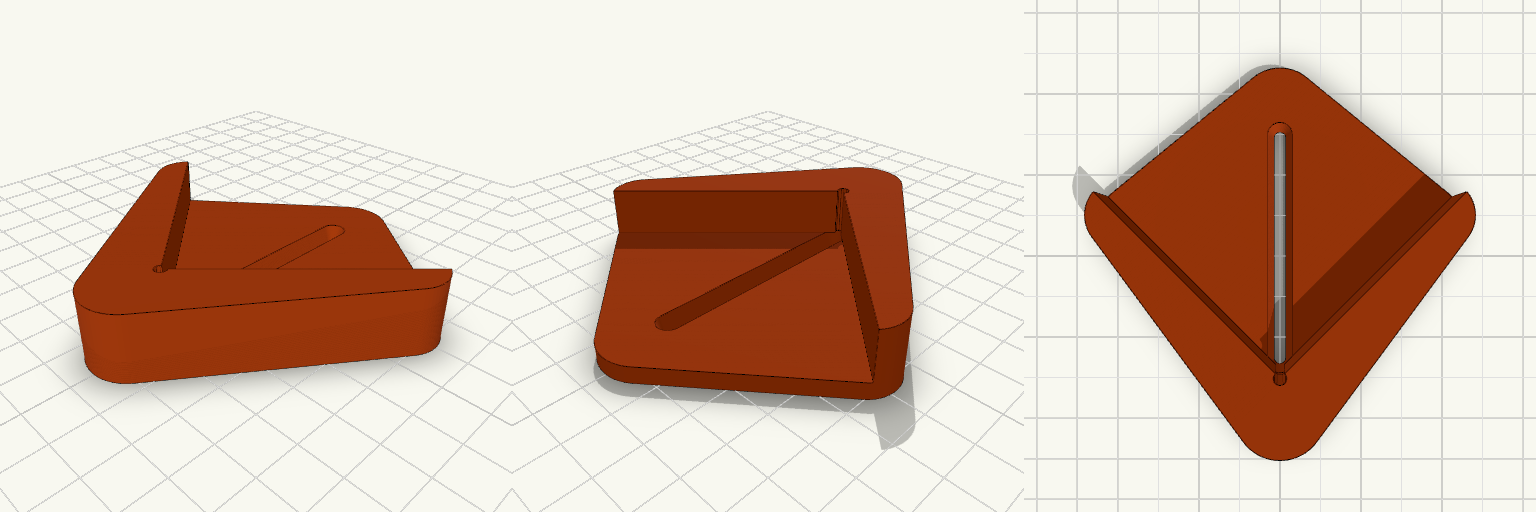
Self-Centering V-Block Finder
A precision marking tool designed to locate the exact center of round and square stock. Eliminates the need to eyeball center lines when preparing material for drilling, turning, or joining. What it's for Self-Centering Base: A 90-degree V-groove securely seats the tool on both round dowels and square cuts. Tapered Pencil Slot: The marking slot tapers from 6mm down to a 1.5mm slit, physically forcing the pencil lead onto the true center line. Corner Relief: The apex of the V-groove includes a circular relief, preventing the sharp corners of square stock from binding. Dimensions Stock Compatibility: Accommodates material widths from 10mm up to 60mm. Overall Size: Measures roughly 86mm wide and 90mm long. Base Plate Thickness: The main plate is 4mm thick, providing a rigid straight edge. Remix ideas Extend the length of the plate and slot for marking deeper along the stock. Widen the V-arms to accommodate larger stock sizes like fence posts. Modify the slot taper to perfectly capture a specific mechanical pencil or marking knife.
Console — Custom Electronics Enclosure
This is a comprehensive, dimensionally accurate parametric enclosure designed for DIY electronics. Laid out to securely house a 16×2 character LCD and four tactile push buttons, it uses standard M3 machine screws with captive nut traps for secure and repeatable assembly. The design separates the tactile switch bodies from the actual visible button caps, ensuring a clean and professional appearance. Features Locating Lip: Recessed rabbet ensures the top cover nests tightly and squarely onto the bottom shell. Component-Specific Pockets: 12×12 mm push-button switches are secured from the underside, operated by independent retained caps. Hidden Mounting: The 16×2 LCD is held flush against the top window from the inside via a custom bezel, keeping the surrounding PCB hidden. Directed Ventilation: Cooling slots are restricted to the lower front face, allowing flush wall mounting at the rear. Hardware Needed 4 × M3 × 12 mm machine screws 4 × M3 hex nuts (5.5 mm across flats) 4 × 12×12×7.3 mm tactile switches 1 × 16×2 Character LCD (JHD162A style)
Compact Hex Key Pouch
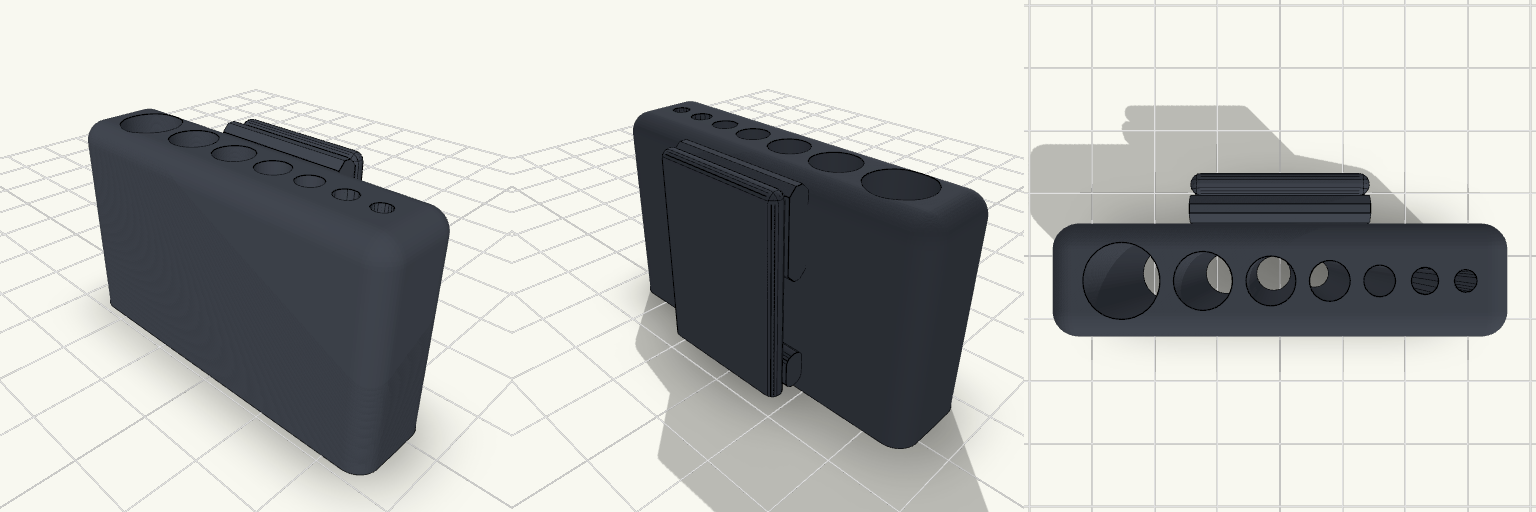
A compact, low-profile pouch for a standard set of seven metric Allen keys (2 mm through 8 mm). Designed for belt or pocket carry, the main body is slimmed down and heavily rounded to prevent it from catching on clothing or digging in while working. The holes run completely through the block so sawdust and metal shavings cannot collect inside. What it's for Keeps your hex keys organized and immediately accessible on a belt or work apron. The integrated spring clip features a tightly radiused catch designed to grip fabric securely without feeling bulky. Dimensions Overall footprint: 68 × 16 mm (body), plus 6.5 mm depth for the clip. Height: 50 mm. Hole diameters: 8.5, 6.5, 5.5, 4.5, 3.5, 3.0, and 2.5 mm, providing a comfortable 0.5 mm clearance for each key. Print notes Print upright as oriented (the flat base on the bed). The through-holes require no supports, and the integrated clip relies on the Z-axis layer strength — PETG or ABS is highly recommended for the flex and durability of the clip, though PLA works for lighter duty.
Acoustic Harmonica Silencer Enclosure
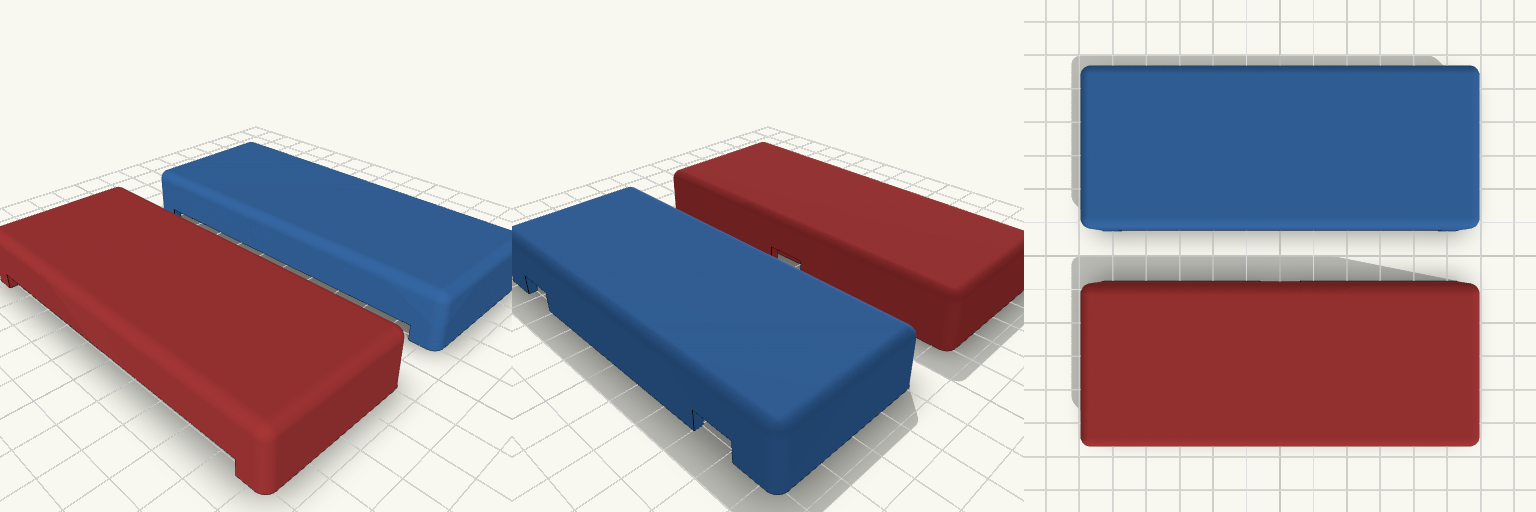
A custom-designed acoustic enclosure built to fit a standard 10-hole diatonic harmonica (specifically dimensioned for the Fender Blues Deluxe). This silencer is built to drop external volume during practice while preserving a totally natural playing feel. The enclosure features a wide front opening that allows direct lip contact with the harmonica body, avoiding any forced embouchure changes. The rear of the enclosure acts as a miniature acoustic labyrinth, forcing outgoing air through staggered baffles and multi-chamber pathways to break up sound waves before they exit the exhaust ports. Remixing and Assembly Clearances: The default harmonica cavity includes a 0.4mm clearance, with 4mm of allocated depth at the rear for installing your own acoustic foam. Two-Piece Shell: The model splits into a top and bottom shell, joined by integrated friction-fit alignment pins. Print Settings: Prints completely support-free when the large flat mating surfaces are placed face-down on the build plate. PLA or PETG recommended for rigidity and snap-fit durability.
Inline Screw Driver Retainers
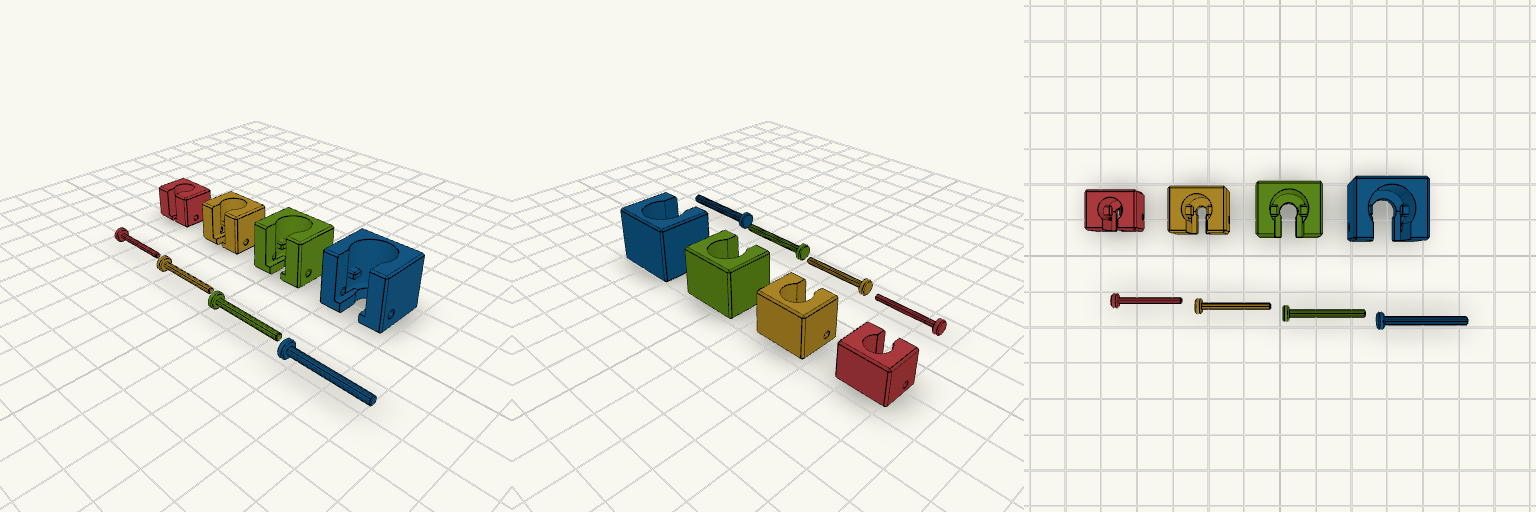
These four independent sleeves snap over the shaft of a screwdriver (or hex bit) and grip the screw from the sides, making overhead installation much safer. The driver bit drops straight through the open top to engage the screw head directly. As the screw bites into the material, the flexible jaws slide back up the driver shaft, releasing the screw automatically without jamming against the ceiling. What it's for Holding screws securely to a driver for overhead work Accommodates four size ranges (1–8 mm screw diameters) Slides freely on the driver shaft as the screw drives home Dimensions Tiny: Fits 1–2.5 mm screws (red) Small: Fits 2.5–4 mm screws (yellow) Standard: Fits 4–6 mm screws (green) Large: Fits 6–8 mm screws (blue) Wall thickness tapers down to ~1.5 mm at the jaws for optimal FDM flexibility. Print notes Print them standing vertically (as oriented) so the layer lines follow the curve of the C-clip. This ensures maximum lateral flexibility when snapping screws in from the side. No supports required.
SMARTBELT Line Monitor
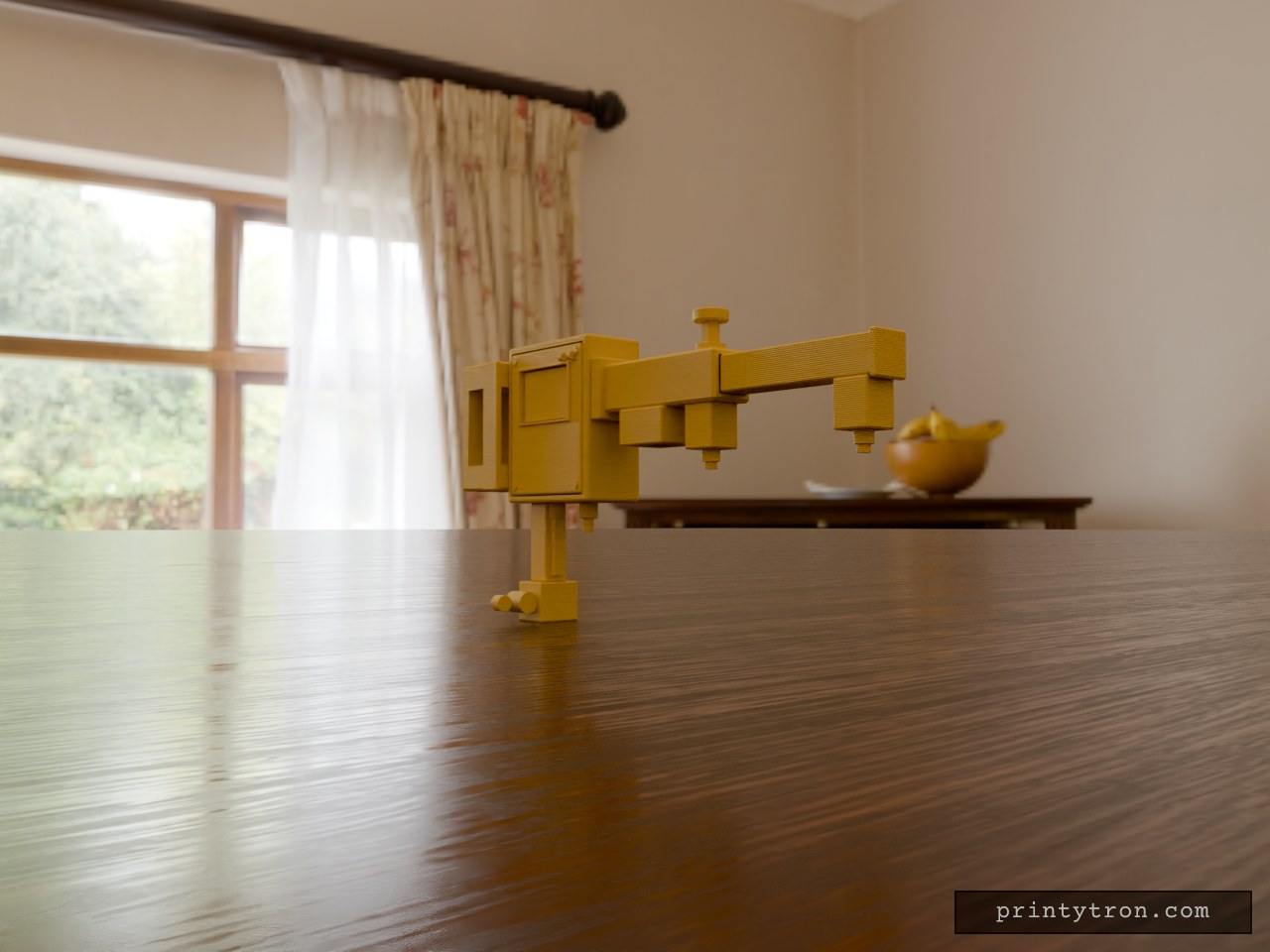
Conveyor belts don't ask before they drift, and a shredded belt stops the whole line. This is a watchdog that mounts rigidly to a steel frame and actually looks at the belt. It features an adjustable heavy-duty C-clamp, a rigid enclosure for an ESP32, a telescoping sensor boom that spans the belt width, and a drop-down arm for proximity speed sensing. The modular design lets you swap out the laser inspection head or IR edge sensors without unbolting the main unit. Assembly & Installation Clearances: Mating faces on the boom base and telescoping arm include a 0.4mm tolerance to ensure a sliding fit straight off the plate. Hardware: Designed for M4 socket head screws on the front cover and M8 bolts for the main structural clamp. Material: Print in PETG or ASA for impact resistance and thermal stability. Support Strategy: The C-clamp and enclosure bodies print upright without supports; the sensor arms require minimal bridging support under the drop-down elements.