Spot Light Trophy Sign Stand
Created today
Description
An upright "Spot Light" sign on a flat base plate that glues to the top of a trophy base. Two searchlight towers flank the sign, with flat beams fanning upward in the style of a classic studio logo.
- Flat 96 x 36 x 3 mm base plate with a flat underside for gluing
- Upright sign panel, 60 mm wide, with raised Alfa Slab One lettering facing front
- Two searchlight towers with angled lamp heads
- Thin crossing and outward beams, about 66 mm tall overall
- Printable without supports; beams are 2 mm thick, so handle with care
Trim the base plate or scale the model to match the trophy's top surface.
Images
More like this
Explore more in Decor & Display →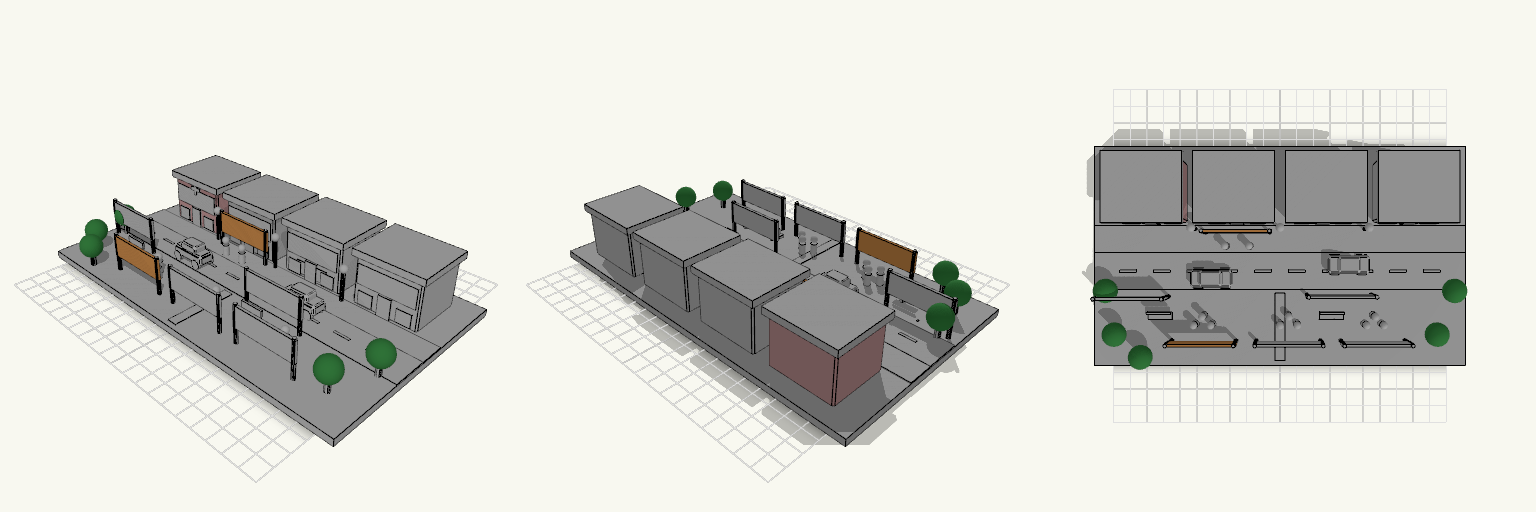
Blank-Sign Mandarin Storybook Town
A tabletop storybook town in the spirit of a classroom diorama: four pastel buildings along a back row, a road with parked cars, and a park with banners, people, trees and benches. Every sign and banner is left blank, ready for hand lettering with paint pens or stickers. Where each word goes 医院, 图书馆, 商店, 社区中心: white plaques on the four building fronts (hospital has a red cross) 工作: small plaque on the shop 服务: orange banner in front of the library, with people nearby 公园: green banner at the park 活动, 一起, 参加: banners above groups of people 社区: blue banner near the road Extra features Road, path, trees, people, benches, cars and streetlights
Lotus Stem Diya Stand
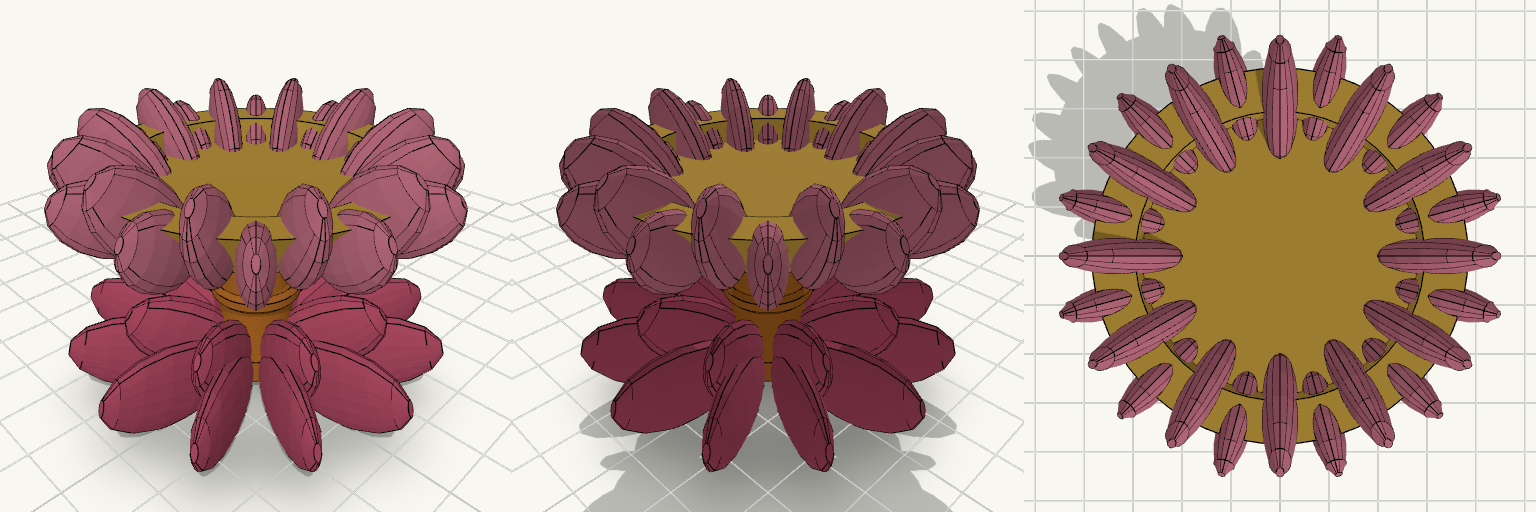
What it's for A diya stand shaped like a lotus on a stem. A low lotus bloom serves as the base, a slim stem rises from it, and an open lotus of petals cradles the diya cup at the top. There is no separate podium. Dimensions Base lotus spread: roughly 60 mm across Stem: about 25 mm of slender column with a decorative bead Diya seat: 40 mm diameter recess Overall height: about 48 mm Remix ideas Resize the seat for a larger or smaller diya. Add more petal layers for a fuller bloom. Lengthen the stem for a taller stand.
Funfair Swing Ride with Crank, 100 mm Base
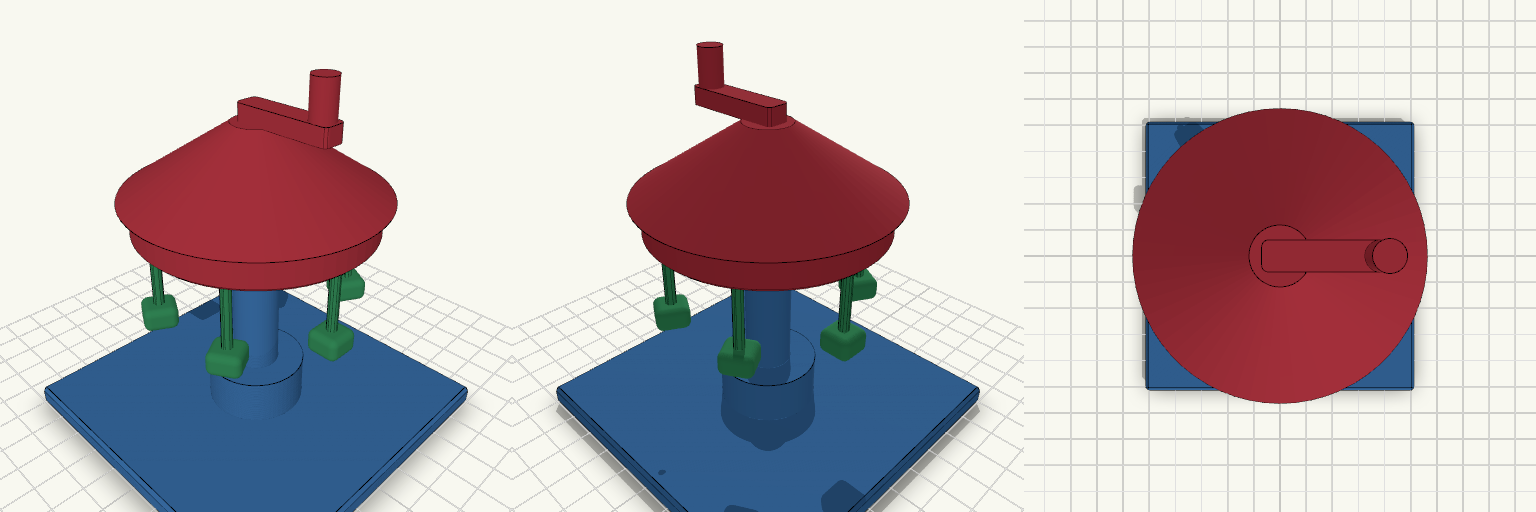
Funfair swing ride with a hand crank on top. Turning the crank spins the canopy and seat ring around a fixed central pin, and each of the six seats hangs from a captive ball joint so it swings outward as the ride turns. Base: 100 x 100 x 6 mm plate with a 30 mm column and 14 mm mast Spinning top: 70 mm seat ring and cone canopy on a 8 mm pin, 0.3 mm bearing clearance Seats: six, each on a 7 mm captive ball with a 3 mm rod, printed in place Crank: 30 mm arm with a 7 mm handle on top of the canopy Print in place, no supports needed for the base; the ring cavities bridge over the balls Overall height about 112 mm
OO Scale Arched Door Frame 13x26mm
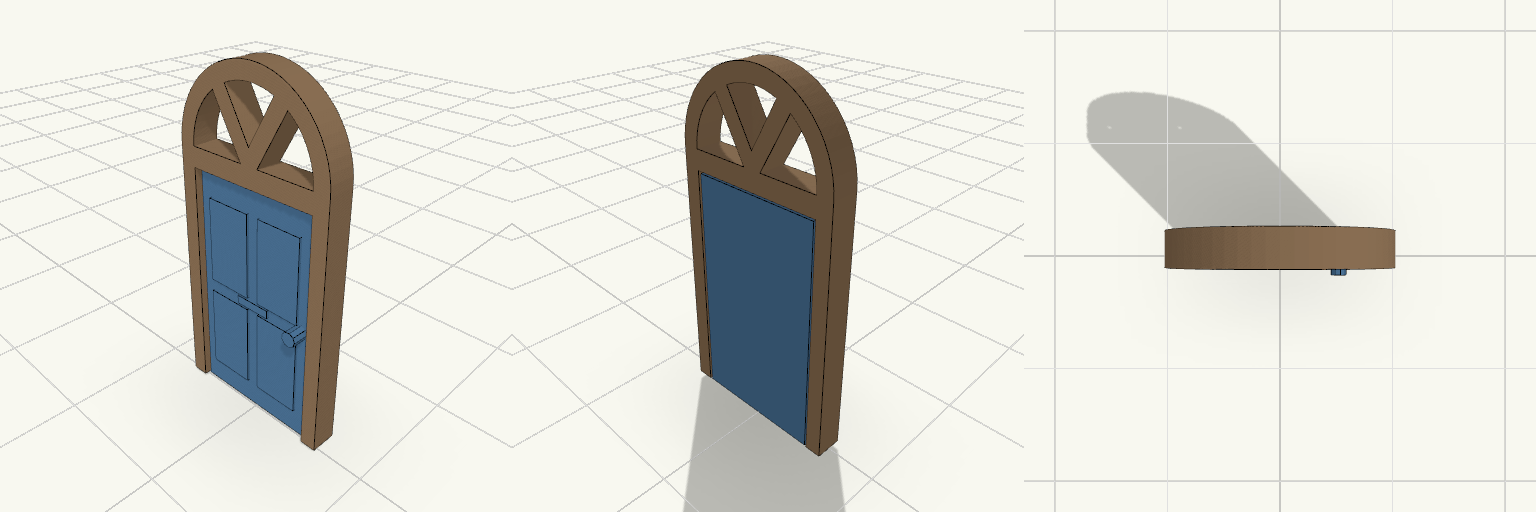
Arched door frame and separate door for an OO scale (1:76) house, sized for a 13 x 26 mm wall opening with a semicircular top. The frame is 2 mm deep and continues around the inside of the arch, leaving a semicircular glass gap above the door. Frame: 12.8 mm wide, 25.9 mm tall, 2 mm deep Glass gap: semicircle, 8.8 mm across Door: 8.4 x 17.8 mm, printed as a separate piece Door detail: four raised panels, round handle, letterbox plate Fit: 0.1 mm clearance per side in the wall opening Print with a fine layer height; panel relief is 0.4 mm
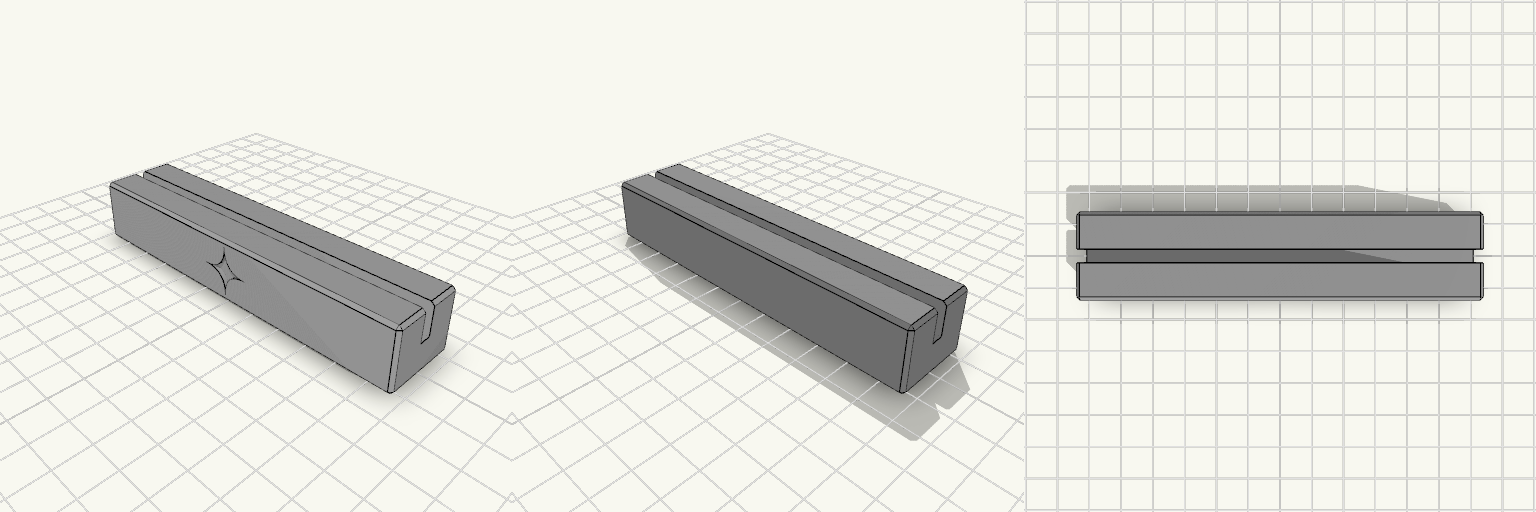
Soporte de tarjetas con estrella grabada
Bloque rectangular con una ranura central para tarjetas y una estrella de cuatro puntas con lados curvos, grabada hacia el interior de la cara frontal. Bloque de 115 x 25 x 20 mm con bordes achaflanados Ranura de 4 mm de ancho y 10 mm de profundidad, de extremo a extremo Estrella curva de 16 mm de punta a punta, hundida 1,5 mm y centrada en la cara frontal Se imprime sin soportes apoyada sobre su base
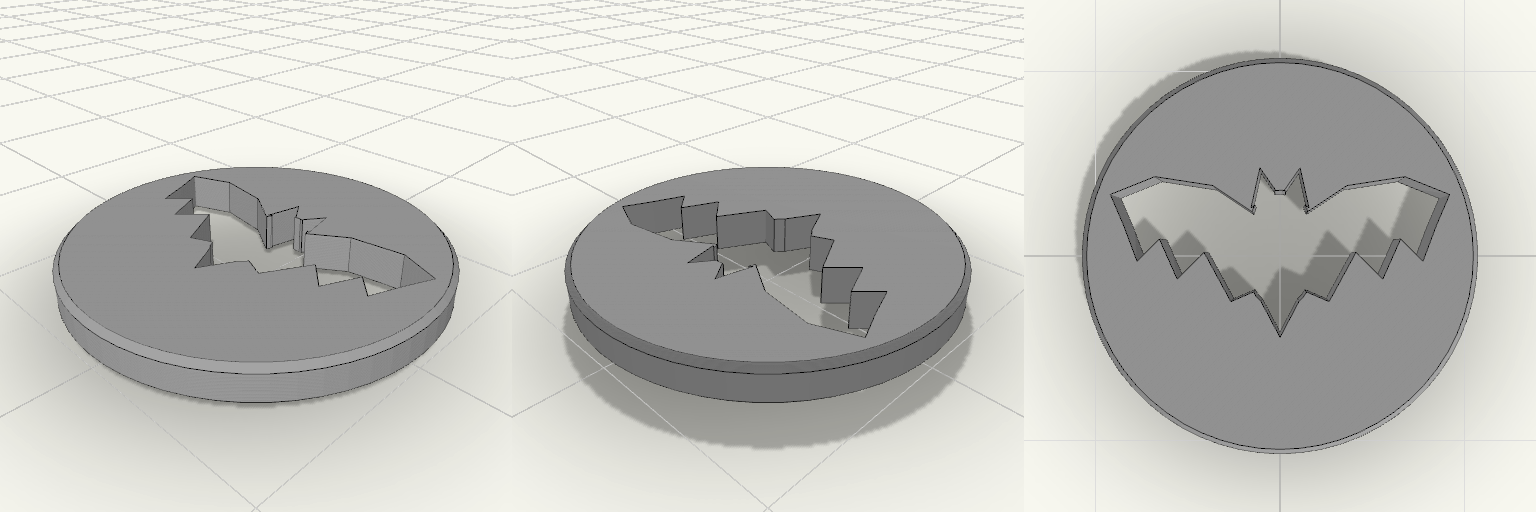
Bat Silhouette Disc, 20 mm
A 20 mm round disc, 2 mm thick, with a bat silhouette cut clean through it: spread wings, pointed ears and a small tail, the cutout now spanning roughly 17 mm of the disc's width. The outer rim is lightly chamfered, and the thin wing tips are the narrowest parts of the cut, so they are the first place to look when checking a print. Remix hooks Diameter — 20 mm. This is a choice, not a constraint. Take it up to coin or badge size and the bat gets more room to read; shrink it much below 20 mm and the wing tips start to crowd. Thickness — 2 mm. Thin enough to stay light, thick enough to hold together across the wing tips. Going thinner is where the tips become risky; going thicker makes it a chunkier pendant or token. Bat scale — about 17 mm across. This is the tight setting: the wing tips sit roughly 1 mm from the disc edge, so scaling the cutout up any further breaks through the rim. If you want a bigger bat, thin the rim first or narrow the wingspan slightly — scaling the cutout down instead gives a heavier border and a more solid-looking disc. Outline. The chamfer on the outer edge is cosmetic — swap it for a flat rim, a rounded edge, or a ring of small holes if you want a different border treatment. Pairs with A hole through the rim turns it into a hanging piece; a flat back makes it easy to stick onto a card, a lid or a magnet. Two mirrored copies back to back give a double-sided version, and the same cutout logic works on any flat blank — a square tag, a hex token, an oval. Treat it as a silhouette template rather than a finished object: any winged shape dropped into a disc of these proportions will read the same way, as long as you watch the rim margin.