Lotus Stem Diya Stand
Created 19 days ago
Description
What it's for
A diya stand shaped like a lotus on a stem. A low lotus bloom serves as the base, a slim stem rises from it, and an open lotus of petals cradles the diya cup at the top. There is no separate podium.
Dimensions
- Base lotus spread: roughly 60 mm across
- Stem: about 25 mm of slender column with a decorative bead
- Diya seat: 40 mm diameter recess
- Overall height: about 48 mm
Remix ideas
- Resize the seat for a larger or smaller diya.
- Add more petal layers for a fuller bloom.
- Lengthen the stem for a taller stand.
Images
More like this
Explore more in Decor & Display →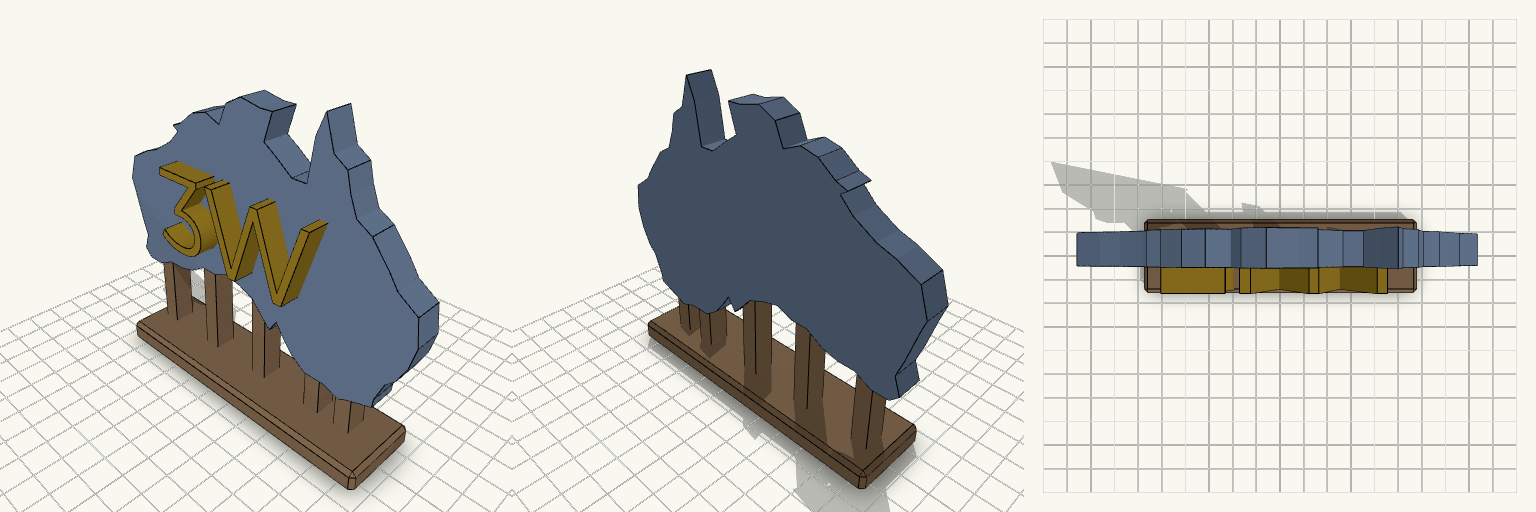
3W Letters on Australia Silhouette Stand
A raised "3W" monogram mounted upright on a stand cut to the silhouette of mainland Australia. Tasmania is gone: where the island used to sit, a short post now rises 18 mm from the base block and runs into the underside of the southeast corner. The map face is 10 mm thick and about 128 × 91 mm; the "3W" letters are roughly 68 × 29 mm and 8 mm deep, centred on the front face. Everything stands on a 112 × 30 mm base block, with five vertical posts — four 45 mm tall plus the 18 mm one at the southeast corner — bridging the gap from the base up into the underside of the map, so the silhouette rides above its foot instead of sitting flush on it. All five posts are now 6 mm wide and 8 mm deep, which is what stops the map feeling like it is floating on pins. Nothing is engraved — the coastline, the monogram and the open gap under the map carry the whole design. The coastline is drawn from about 60 points, so it is a simplified outline: the Gulf of Carpentaria and the southern gulfs are only roughly shaped. That is the first thing worth refining if a more faithful map is the goal. Remix hooks Coastline resolution is the main dial. The outline currently uses about 60 points. Doubling that sharpens the gulfs and the Cape York tip; halving it gives a chunkier, more graphic shape that prints faster and hides small printer artefacts. The support posts are the easiest structural change. Five posts, 6 × 8 mm in section, stand at x = -45, -20, 5 and 30 (45 mm tall) plus x = 43 (18 mm tall) across the 112 mm base. Add more for a wider map, slim them back toward 3 mm if you want a lighter frame, or angle them inward so they read as a bracket. Base size sets the stance. At 112 × 30 mm it is a plain rectangular foot; widen it for stability on a narrow shelf, narrow it for a lighter look, or reshape it into a second outline so the piece stands on a matching map fragment. Letter size is free. The "3W" group is about 68 × 29 × 8 mm, centred on the map face. Scale it up for a bolder centrepiece or down to let more of the coastline read around it. Thickness is a choice, not a constraint. 10 mm for the map and 8 mm for the letters gives a solid, weighty piece; dropping both to 4–5 mm flattens it, while going thicker turns it into a bookend-sized block. Bring the island back, or don't. A separate Tasmania is a small extra part that can be printed alongside or re-added as a second hanging element; leaving it off keeps the mainland edge clean and gives the southeast corner its post. Swap the monogram. The format is any short letter pair, initials or number-and-letter mark raised on a country or region outline, so the same layout works for other maps and other names. Starting values worth keeping in mind: 128 × 91 × 10 mm mainland map, 112 × 30 mm base block with four 45 mm posts and one 18 mm post, all 6 × 8 mm, and 68 × 29 × 8 mm letters.
55كعبة مجزءة
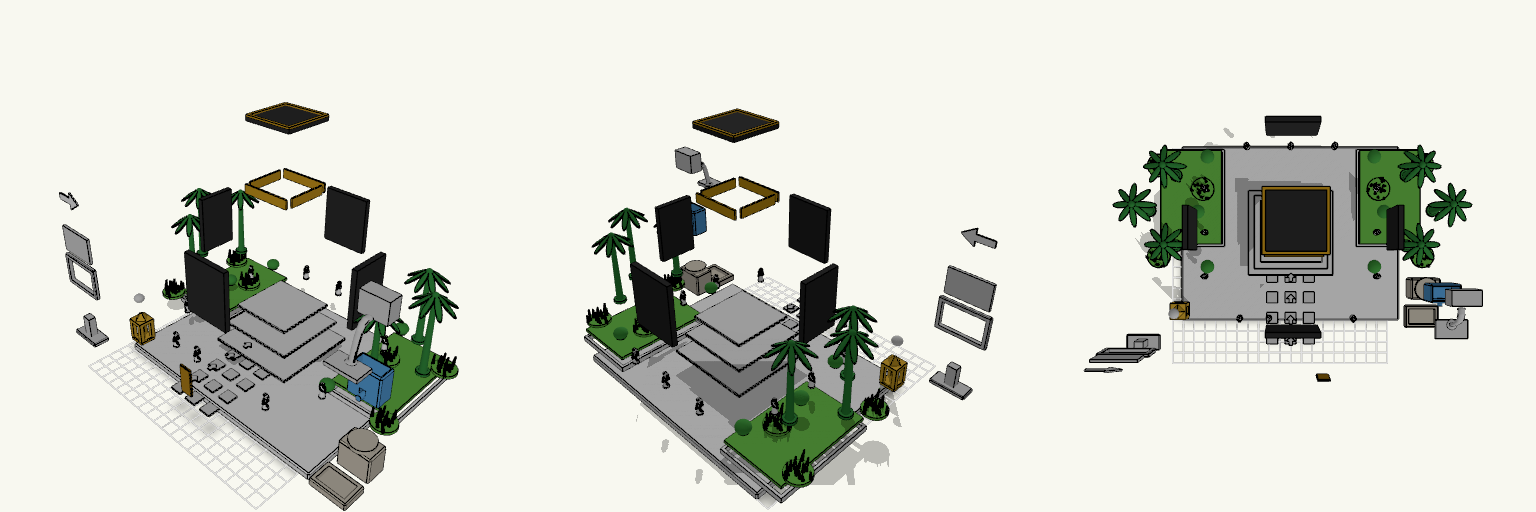
Exploded miniature of a masjid scene with every component spread apart with visible gaps. Parts: white base, platform tiers, four black Kaaba walls, roof, door, gold bands, walkway tiles, arrows, palms, bushes, grass, pilgrims, Zamzam station, Maqam Ibrahim and blue sign parts. Layout: exploded only, no assembled copy. Export: the download is one file; separating individual parts happens outside this model.
Miniature Suitcase with Handle, Wheels and Weight Display
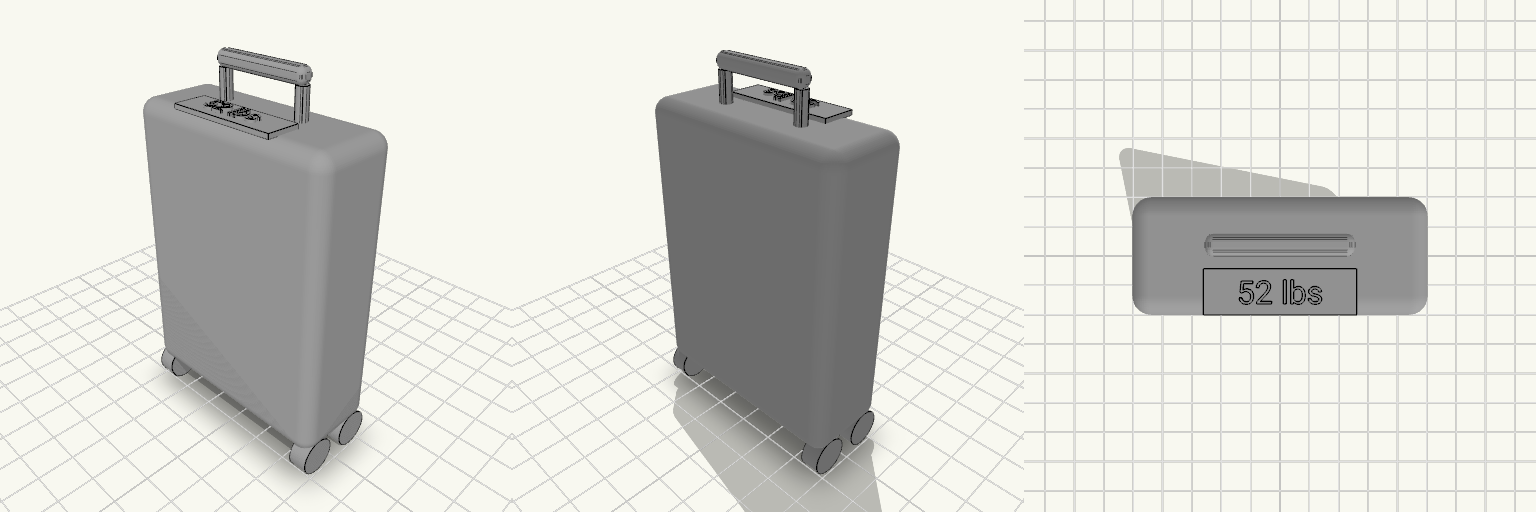
What it's for A miniature suitcase standing upright on four sideways-mounted wheels, with a pull handle on top and a small thin scale plate set into the top face just in front of the handle. The plate carries a raised readout of 52 lbs, so the piece reads as a luggage scale at a glance. It works as a small desk ornament, a travel-themed display piece, or a scale prop for a dollhouse or diorama. The whole thing is one plain neutral finish, with no colour coding or recessed front screen. Dimensions Overall footprint: 60 × 24 × 100 mm (width × depth × height, as it sits on the print plate) Wheels: mounted sideways, axles running across the width of the case, so the body rests on them Weight plate: a small thin panel on the top face, in front of the handle Readout: raised 52 lbs lettering, picked as a believable airline-limit weight — say if you want a different figure Print notes The model prints as a single piece lying on its wheels, so no supports are needed under the body. The raised readout is small — a 0.4 mm nozzle with fine layer heights keeps the digits and the "lbs" legible, and a 0.25 mm nozzle gives crisper text. The thin top plate is shallow, so check that your bridging over that area is clean. Remix ideas Change the readout to a different weight, or leave the plate blank for a custom label. Swap the handle for a telescoping version, or add corner guards to the body. Scale the case up to hold small items, or down to keyring size. Finish A single neutral colour suits the plain, serious look — the design relies on shape and the raised text rather than colour contrast, so any filament works.
Fara — Uproszczony Model Kościoła
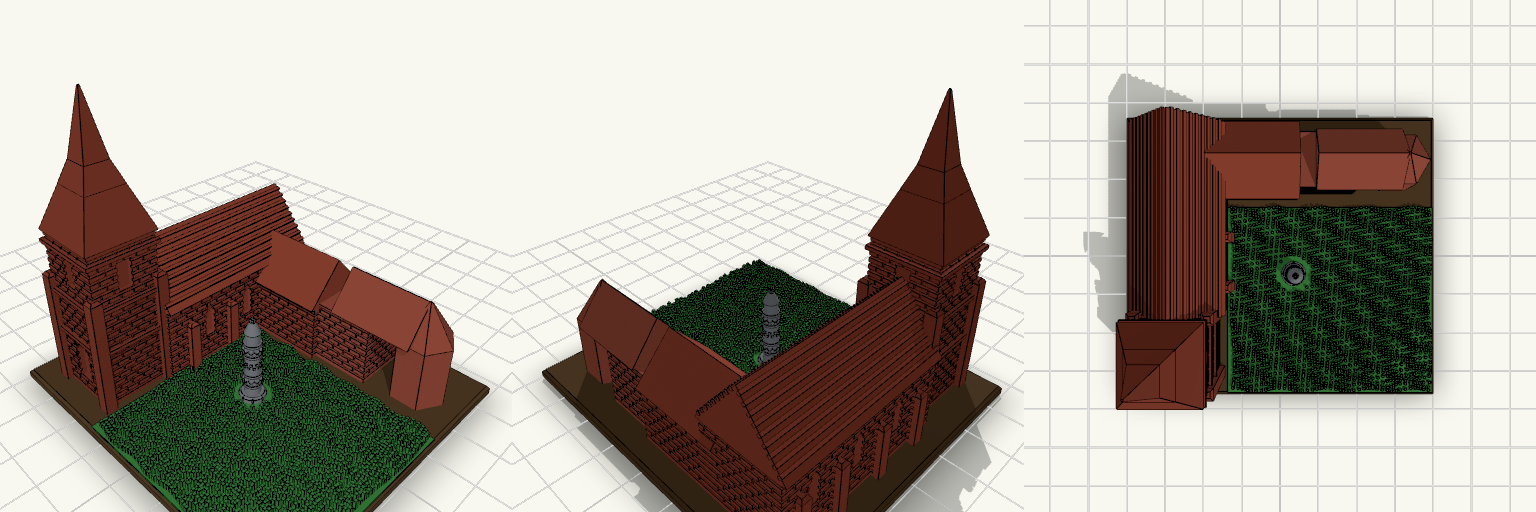
Fara to miniaturowa świątynia w duchu gotyku ceglanego, rozplanowana na literę L. Nawa biegnie wzdłuż jednej osi, a od jej tylnego końca odchodzi w bok skrzydło z dachem dwuspadowym; na jego końcu zamyka całość wieloboczne prezbiterium. Przy froncie wznosi się smukła wieża z ostrym hełmem. W środku wewnętrznego narożnika litery L, odsunięty od ściany nawy i od frontu skrzydła, stoi Słup Koniński — walcowaty trzon na szerszej podstawie ze stożkowym zwieńczeniem i kulką na szczycie. Ściany nawy, wieży i prezbiterium mają ceglaną czerwień oraz relief prawdziwego muru: poziome fugi i przesunięte w co drugiej warstwie pionowe spoiny. Słup zachowuje własny, kamienny charakter i odrębny zestaw ornamentów. Całość stoi na wspólnej, brązowej płycie o lekko ściętej krawędzi. Plac wokół słupa ma zieloną nawierzchnię i porasta go gęsta trawa — źdźbła o różnej wysokości, rozsiane w rozstawie około 1 mm, z wolnym miejscem tuż przy podstawie słupa. Model dobrze czyta się jako dekoracyjna miniatura na półkę, element makiety miasteczka albo pamiątka związana z Koninem. Proporcje są przybliżone — oparte na ogólnym układzie świątyni, a nie na planach budynku — więc detale wieży czy liczba okien mogą odbiegać od oryginału. Słup jest wyraźnie wyższy względem kościoła, niż byłby w skali: prawdziwy jest dużo niższy i przy tej skali wyszedłby zbyt cienki do druku. Wymiary Szerokość × głębokość × wysokość poszczególnych części: Płyta: 79 × 71 × 2 mm, z lekko ściętą krawędzią Trawa (zielony plac ze słupem): 52,6 × 47,8 × 2,3 mm Nawa (ze skrzydłem): 39,8 × 45,2 × 32 mm Wieża: 18,6 × 18,6 × 67 mm Prezbiterium: 30,9 × 14 × 24 mm Słup koniński: 6,1 × 6,1 × 21 mm Wieża jest najwyższym elementem całości — o tym warto pamiętać przy planowaniu wysokości druku. Cechy Plan litery L: nawa i odchodzące od jej tylnego końca skrzydło z dachem dwuspadowym, a na jego końcu wieloboczne prezbiterium Stromy dach nawy, przypory i ostrołukowe okna — czytelny gotycki charakter bryły Mur z cegieł na nawie, wieży i prezbiterium: poziome fugi co około 1,6 mm oraz pionowe spoiny co około 3 mm, przesunięte o pół cegły w co drugiej warstwie Żebra imitujące dachówki na obu połaciach dachu nawy Trzy poziome gzymsy i rząd drobnych rombów pod hełmem wieży Słup ustawiony w środku placu przy wewnętrznym narożniku litery L, odsunięty od kościoła, z podstawą i stożkowym zwieńczeniem z kulką, ozdobiony pierścieniami, dwoma rzędami rombów, zygzakiem i bruzdami na cokole Wspólna płyta pod całością, z zieloną nawierzchnią i trawą na placu wokół słupa — model stoi stabilnie i zaczyna się od płaskiego spodu Uwagi o druku Model nie ma delikatnych, ażurowych detali — okna i przypory są płaskorzeźbione w bryle — więc dobrze znosi typowe ustawienia druku. Fugi mają około 0,4 mm głębokości, a pionowe spoiny rozstawione co 3 mm mogą przy standardowej dyszy 0,4 mm wyjść ledwo widoczne; jeśli drukarka je zaleje, warto zmniejszyć warstwę lub nieco pogłębić rowki w slicerze. Źdźbła trawy mają 0,6 mm szerokości i rozstaw około 1 mm — gęściej nie ma sensu przy dyszy 0,4 mm, bo źdźbła zleją się w jedną plamę. Największą uwagę warto poświęcić wieży z hełmem, która sięga 67 mm, oraz cienkiemu trzonowi słupa o średnicy 6,1 mm. Cały model jest jednym elementem na wspólnej płycie — nie wymaga sklejania.
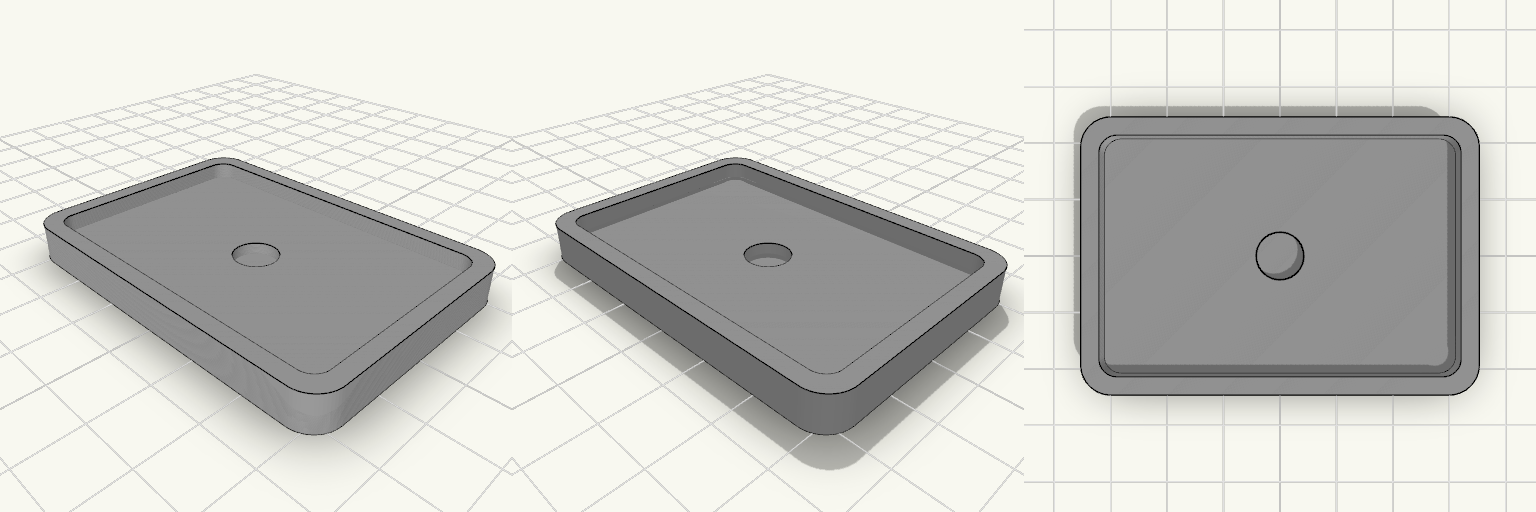
Moldura retangular para botão com ímã
Moldura retangular para um botão de 60 × 40 mm, com encaixe de 3 mm de profundidade e cantos arredondados. A parede ao redor do encaixe tem 3 mm, resultando em 66,1 × 46,1 mm por fora e 6,5 mm de altura. Um furo para ímã de 8×2 mm fica centralizado no fundo do encaixe; na face inferior há quatro furos para ímãs de 5×2 mm, próximos aos cantos. A peça imprime em uma única parte, apoiada na face inferior, com o encaixe voltado para cima. Encaixe: 60,1 × 40,1 mm (botão de 60 × 40 mm com folga de 0,1 mm), cantos arredondados, 3 mm de profundidade Dimensão externa: 66,1 × 46,1 mm; altura: 6,5 mm Parede ao redor do encaixe: 3 mm Ímã central: furo de 8,2 mm de diâmetro × 2,1 mm de profundidade no fundo do encaixe (ímã de 8×2 mm) Quatro furos na face inferior para ímãs de 5×2 mm: 5,2 mm de diâmetro × 2,1 mm de profundidade, em X ±25 mm e Y ±15 mm Folga dos furos: 0,2 mm no diâmetro e 0,1 mm na profundidade Impressão: uma peça única, deitada sobre a face inferior, sem suportes nos furos
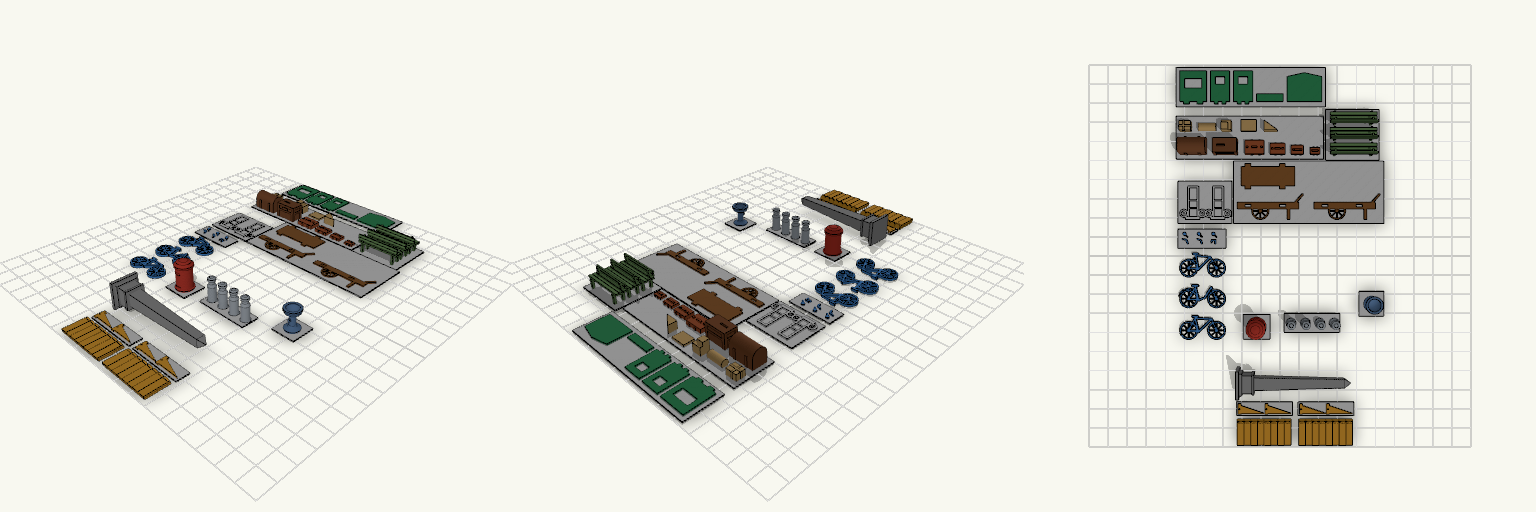
OO Scale Station Set with Sack Trucks
An OO-scale railway station accessory set printed on one plate, with webs joining the grouped items. The set includes bicycles, a postbox, an obelisk, shop canopies with brackets, a flat-pack barrow, milk churns, luggage, a newspaper kiosk, benches, a drinking fountain and two sack trucks. Sack trucks: two flat 1.2 mm silhouettes, each about 10 mm wide and 17 mm tall, with a toe plate, crossbars and two wheels. Web: 0.4 mm sheet shared by both trucks, left of the barrow. Printing: thin parts need a fine FDM or resin printer.