Square Bust Base Removable Lid
Created today
Description
What it's for
A removable square lid with a cornice top and a hollow locating lip. It was designed to cap a box-style bust base and lift off.
Dimensions
- Cornice: 62 × 62 mm
- Upper step: 57 × 57 mm
- Lip: 46.6 × 46.6 mm outer, 1.5 mm wall, 4 mm deep
- Printed upside down so it sits flat
Remix ideas
- Add a matching base sized to the lip.
- Engrave a name or date on the top face.
- Change the lip size for a looser or tighter fit.
Images
More like this
Explore more in Decor & Display →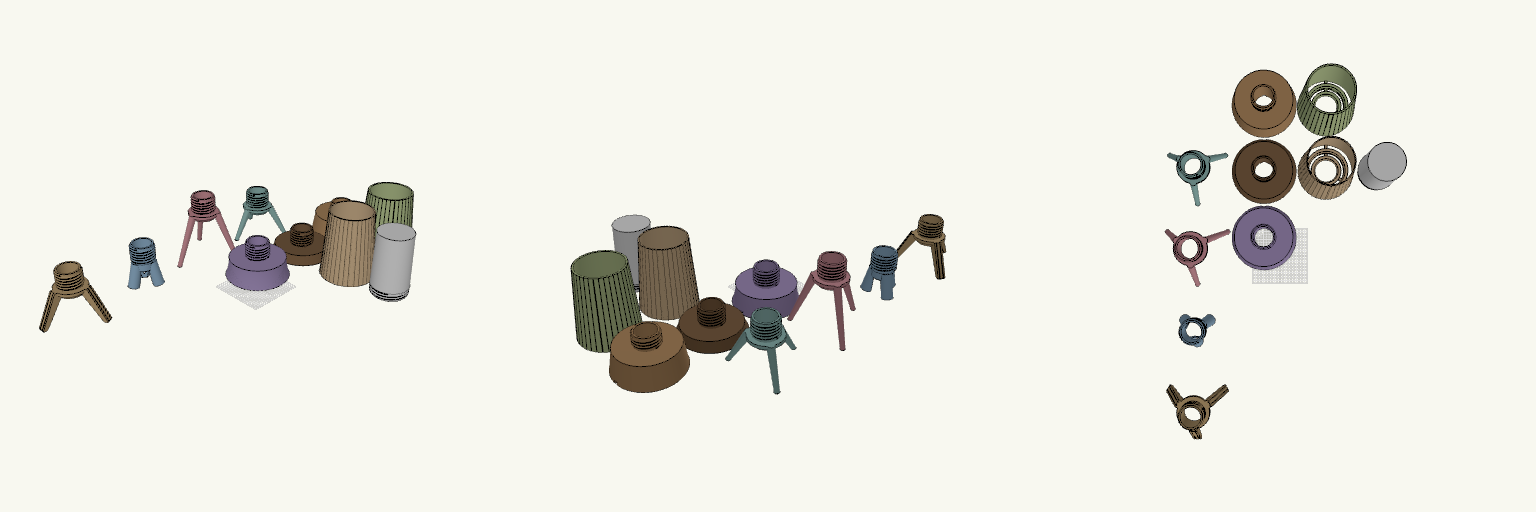
Lamp Bases, Shades and Diffuser Set
A set of mid-century lamp parts that all share one coarse 6 mm-pitch thread, so any shade fits any base. The set has two fluted shades (round and square ribs), a white adjustable diffuser and several bases: tall, short, grooved, two tripods, a flat-leg grooved tripod and a dowel-leg hub. Remix hooks Flat-leg tripod: legs are 16 mm wide slabs (before scaling) with two grooves, 3.2 mm wide, down each outer face. Change the groove count, offset (±4 mm) or width. Leg height and spread: hub height 70 mm and foot radius 70 mm set the splay. Raise both for a taller version. Thread spigot: 52 mm across, 38 mm long. Keep it to stay compatible with the shades. Pairs with: either fluted shade and the diffuser. The 42 mm bore runs straight through for the bulb and cord.
Electronics Box With Solar Panel
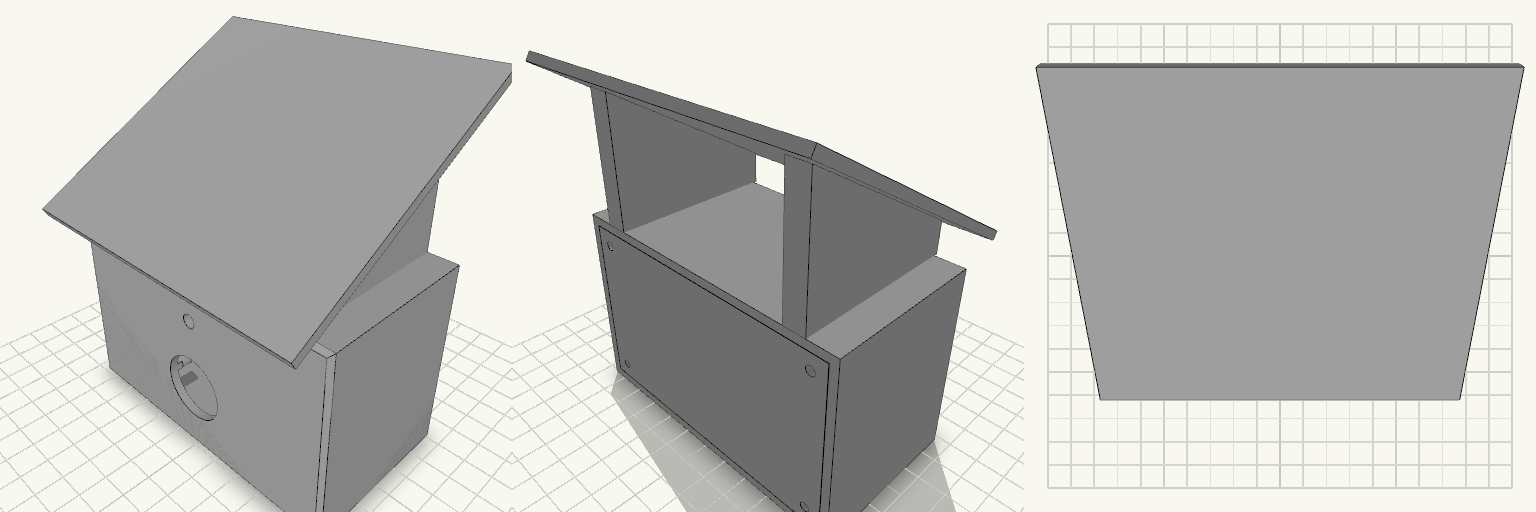
A wildlife alert electronics box with a tilted solar panel on top, and no post or base to tip over. The box sits flat on the table, and its two front holes stay stacked on one centre line. Box: 110 × 70 × 60 mm, 3 mm walls, lid held by four screws Front holes: 5.2 mm amber LED above a 24 mm PIR sensor opening Solar panel: 110 × 100 mm at 30°, on two printed brackets Printing: FDM, no supports needed for the lid; print the box with its open back facing up
Pad Plate — Offset Square Marker
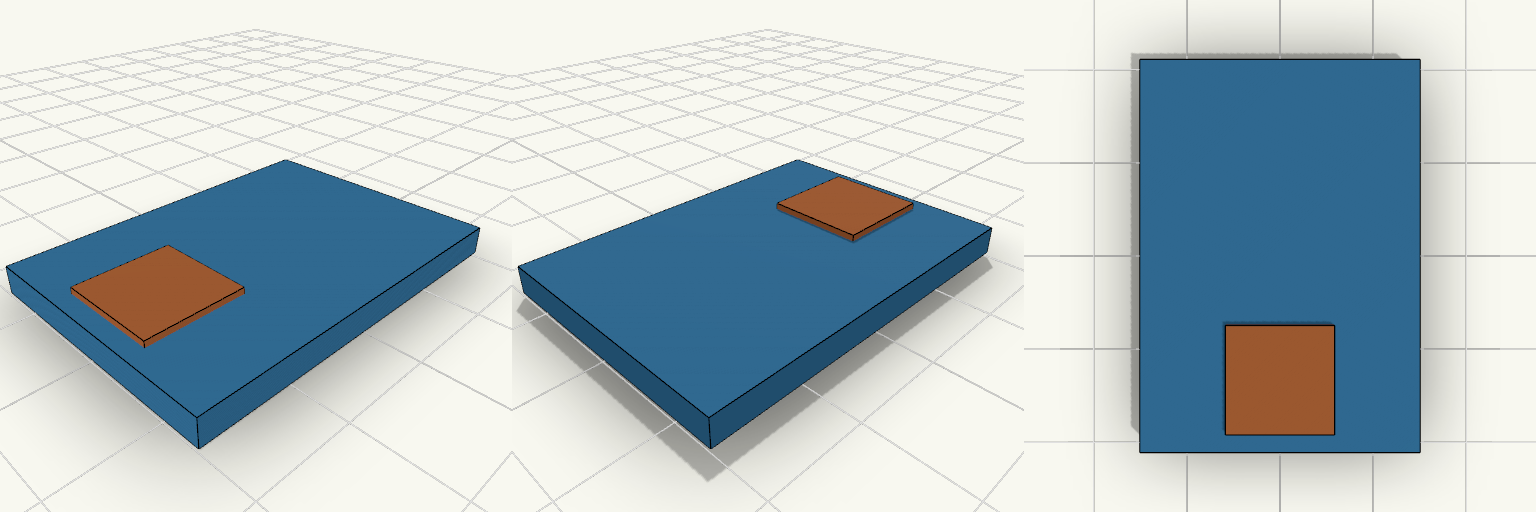
Pad Plate is a flat base plate with a small raised square pad near one end, built as a clean surface for labels, stickers, or a colour swap. The pad is sized to sit comfortably on the plate and stays low enough to print cleanly in a few layers. Dimensions Plate: 28.5 × 40 × 3 mm Pad: 11 × 11 mm, 0.7 mm thick Pad position: centred in X, 2 mm in from the Y- edge Print notes 0.7 mm pad suits a 0.2 mm layer height at roughly 3 to 4 layers. Print flat, no supports needed. Pad and plate are separate colour regions, so a filament swap at the pad layer works well.
Christmas Tree Lantern for LED Tealight
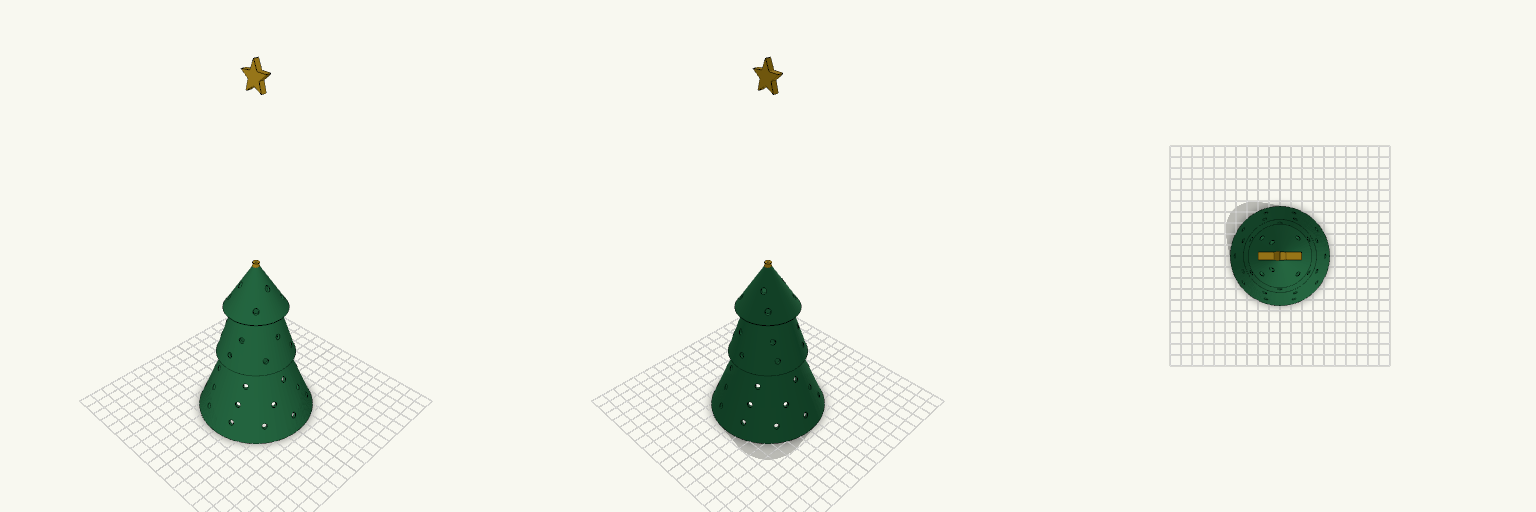
A Christmas tree lantern that sits over a battery LED tealight, so the light stays hidden inside instead of glaring from a bare tealight on the table. The walls are perforated with rings of small round holes that throw dots of light, and the bottom is open so the LED can be placed or swapped without taking anything apart. Key numbers Height: about 135 mm including star Base diameter: 90 mm, open underneath (inner opening about 87 mm) Wall: 1.6 mm, three stacked tiers Perforations: 4.2 mm holes, staggered rings Star: separate colour, peg-mounted into the top tier Printing Print upright, open end down, no supports needed for the cone walls Green for the tree, gold or yellow for the star Use a 0.4 mm nozzle; a lighter or translucent filament glows more
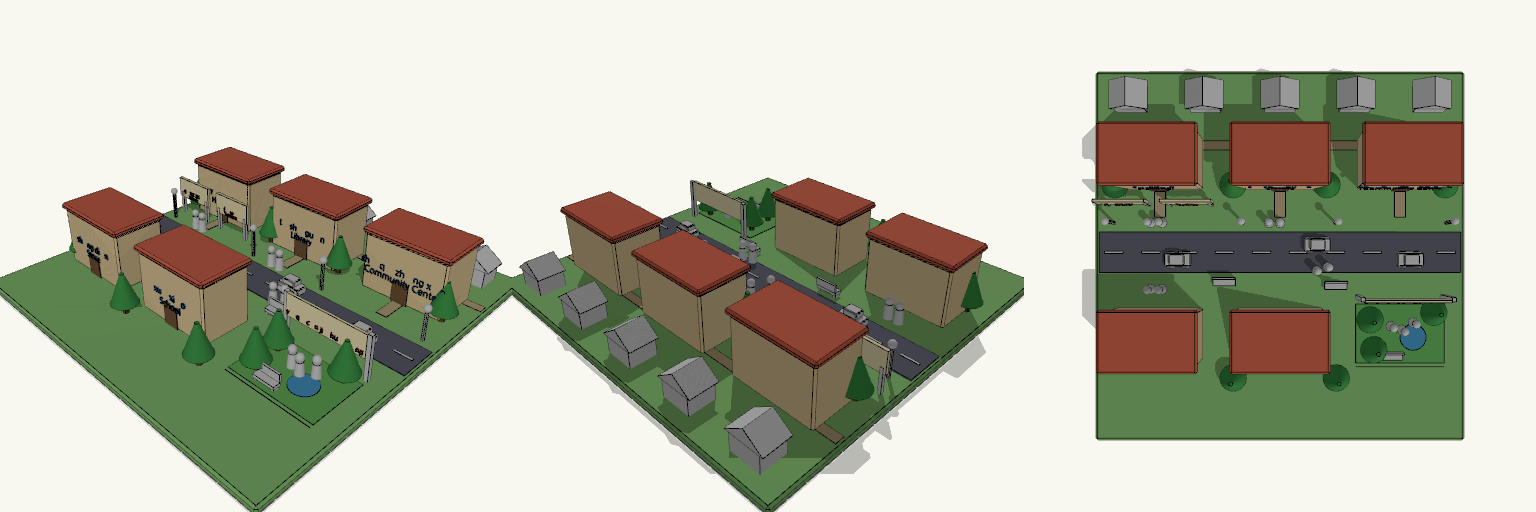
Mandarin Community Town Model
A tabletop town for practising Mandarin place words, where flat labels get lost. Each building, sign and park area carries its Chinese characters, pinyin and English on the front face, so the vocabulary sits right on the thing it names. Details that matter Base: 200 × 200 mm, 4 mm thick plate Buildings: hospital, library, community center, store and school, each 46 × 28 mm footprint Extras: park with pond, road, footpaths, houses, cars, trees, lamps and figures Colour regions: ground, road, walls, roofs, doors, lettering, signs, trees, lawn, pond, paths Print: large bed needed (or scale down); multicolour or paint by region; lettering is 0.8 mm raised, so use a 0.4 mm nozzle
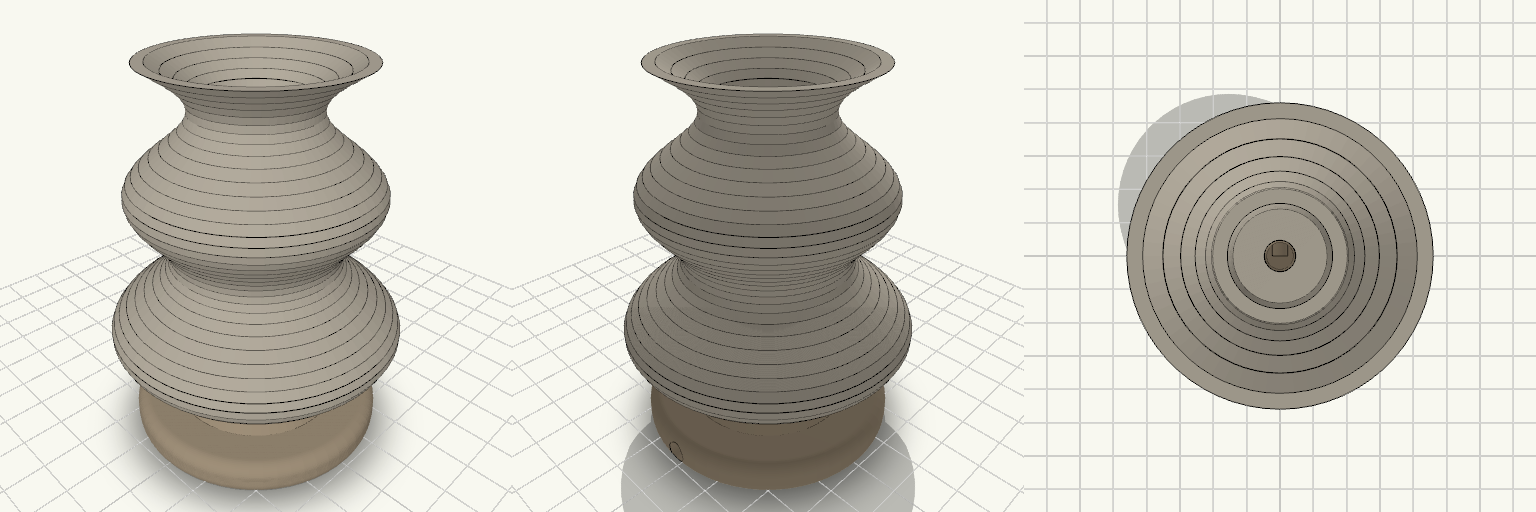
Ripple Dune Twist-Lock Lamp
A soft, dune-rippled shade sits on a rounded pedestal base, like a small sand-sculpture lamp. The two pieces lock together with a printed twist-lock joint, so no hardware is needed. A bulb holder pocket sits inside the shade, and the cable runs through the base. Design notes Three lugs on the base neck drop into slots in the shade, then a short twist locks them. The cable hole enters the rear of the base and rises through the neck into the bulb pocket. The 24 mm pocket suits a small E14-style lamp holder. Use a low-heat LED bulb. Prints as two parts, base flat on the bed and shade open end down.