Stylized Mid-Century Sedan
Created 1 months ago
Description
A blocky, stylized tribute to mid-century automotive design, featuring a prominent toothy grille, rear pontoon fender bulges, and a sweeping roofline. Designed as a chunky, solid desktop toy rather than a scale replica.
Assembly Notes
- Print-in-Place Capable: The wheels are currently modeled fused to the wheel wells for simplicity as a static model.
- Details: Includes raised headlights, bumpers, and the iconic vertical grille teeth.
- Scaling: Modeled at roughly 120mm long, making it a comfortable handful. Scale up for easier detail resolution on the grille.
Images
More like this
Explore more in Automotive, RC & Hobby →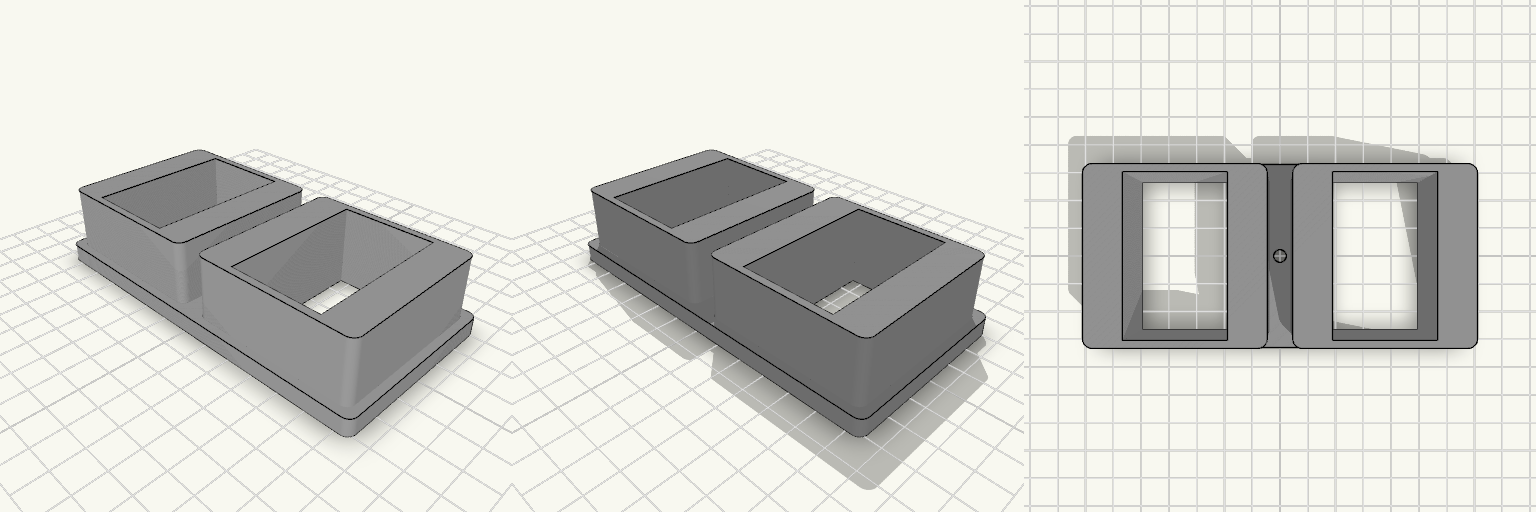
Double Seatbelt Buckle Holder, Backseat
Two seatbelt buckles flop around and fall into the seat gap, so this holder stands both upright side by side in the backseat of a Toyota Sienta. Each 33 x 53 mm pocket goes straight through the base, so the buckle and webbing pass through with nothing blocking the bottom. Pocket size: 33 x 53 mm each, sized for a 31 x 51 mm buckle Sleeve height: 28 mm above a 6 mm base Overall footprint: 130 x 64 mm Centre screw hole: 4.5 mm Print flat on the base, no supports needed
Line Follower Chassis (N20/Mega)
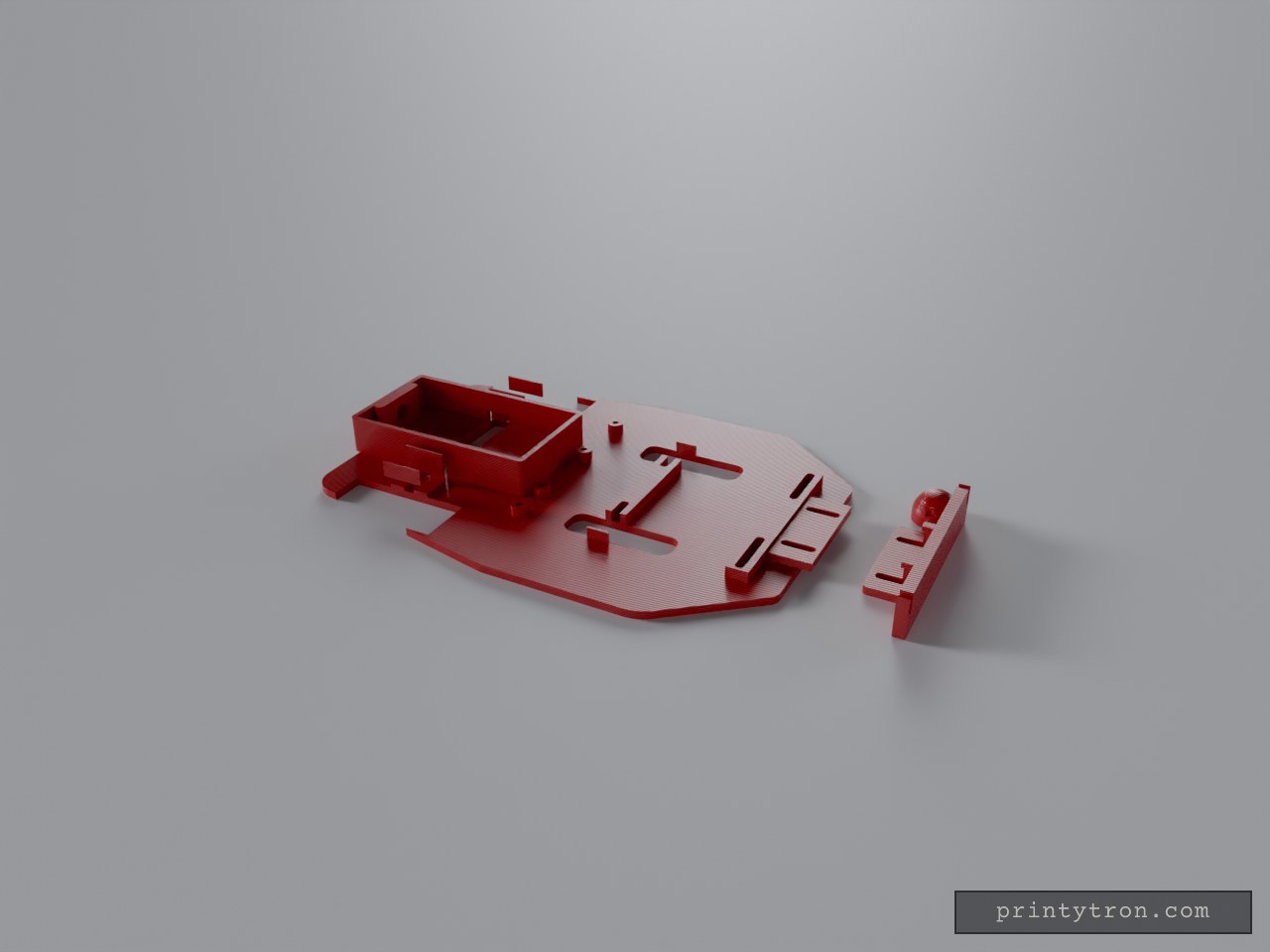
A flat-printing, modular chassis designed specifically for high-speed line following. Engineered to accommodate an Arduino Mega 2560, dual N20 motors, and a Pololu QTR-8RC reflectance sensor, with priority placed on a low center of gravity and straightforward field maintenance. What it's for This frame carries the electronics and drive system for a 2WD differential steering robot. Components drop into dedicated regions rather than requiring complex brackets, and all sensitive electronics are kept clear of the track surface. The front sensor mount separates from the main plate to allow independent height tuning of the IR array. Dimensions Overall envelope (assembled): 180 mm (L) × 130 mm (W) × 55 mm (H) Track width: ~90 mm, providing clearance for 35–38 mm diameter wheels. Electronics rails: Slotted cross-members accept an Arduino Mega or similarly sized microcontrollers. Drive mounts: Drop-in snap/strap cradles for standard 12×10 mm N20 motors. Power bay: Sized for two parallel 18650 lithium cells (44 mm inner width) with integrated Velcro pass-throughs. Assembly All major features anchor with standard M2 or M3 hardware. The front skid and sensor bracket print flat independently and bolt into designated sliding rails on the chassis nose. The motor mounts include under-plate zip-tie channels to secure the gearboxes rigidly against torque. Use standoffs for the motor driver and buck converter pads to ensure proper wiring clearance above the deck.
Captive Tire Deflator
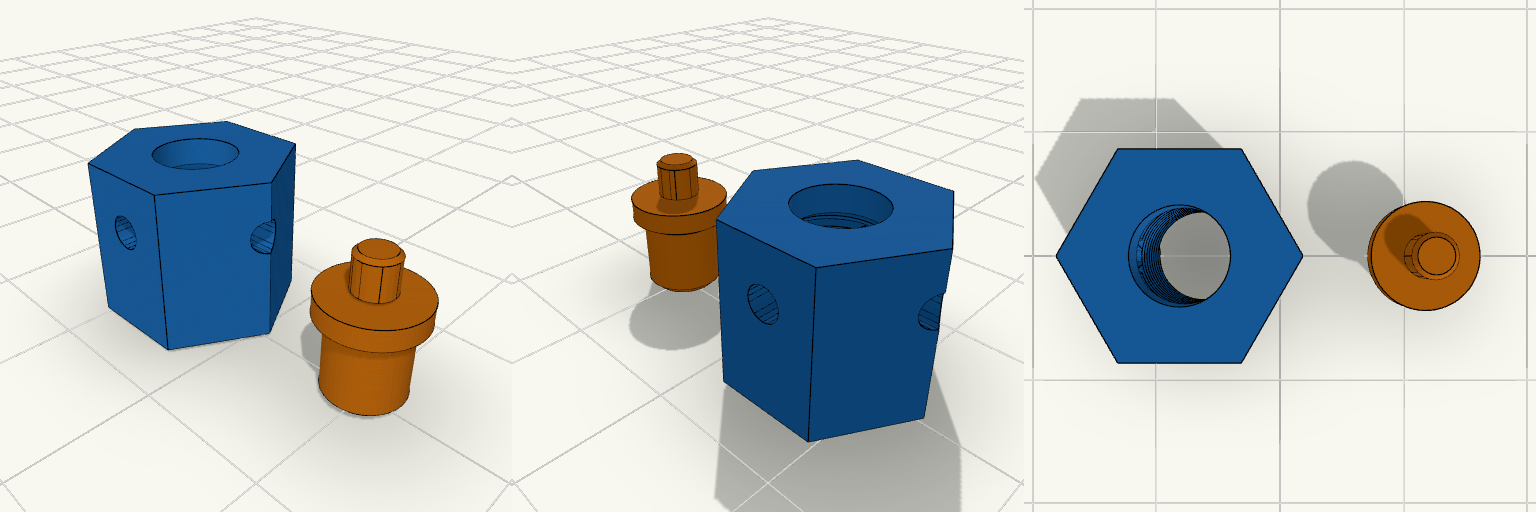
A two-piece threaded cap and deflator button for standard Schrader valves, designed to bleed tire pressure without needing a separate tool. The hex-bodied cap threads securely onto the valve stem while housing a captive push-button mechanism. Assembly Drop-in fit: The plunger is designed to be dropped into the open bottom of the cap before threading it onto the tire. Captive design: Once screwed onto the valve, the tire stem itself traps the flange of the plunger against the ceiling of the cap, keeping it permanently secured. Print orientation: Both pieces sit completely flat on the build plate, needing no supports or brim to print cleanly.
Aura — Automotive Ring Emblem
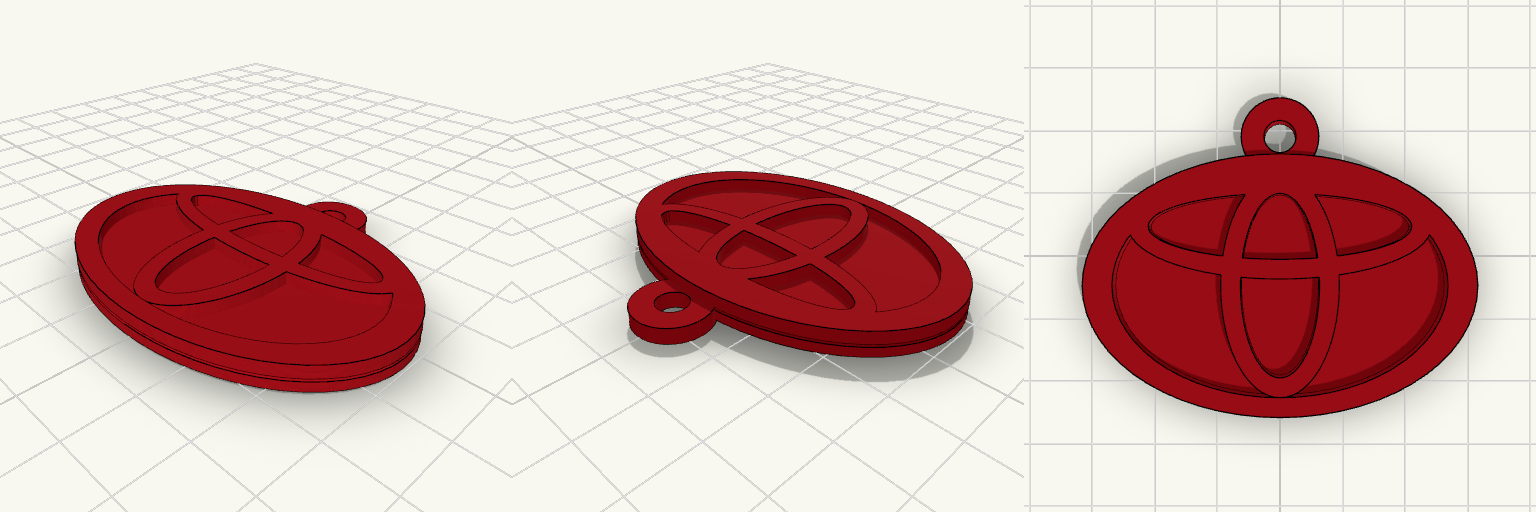
A flat-backed, print-ready representation of the classic four-ring automotive logo. Designed to sit flush on the build plate for an easy print. Dimensions Overall Width: 124 mm Ring Outer Diameter: 40 mm Thickness: 4 mm Print Notes Prints directly on the bed with no supports required. The intersection points are fully merged to ensure the entire emblem prints as a single solid, structurally sound piece.
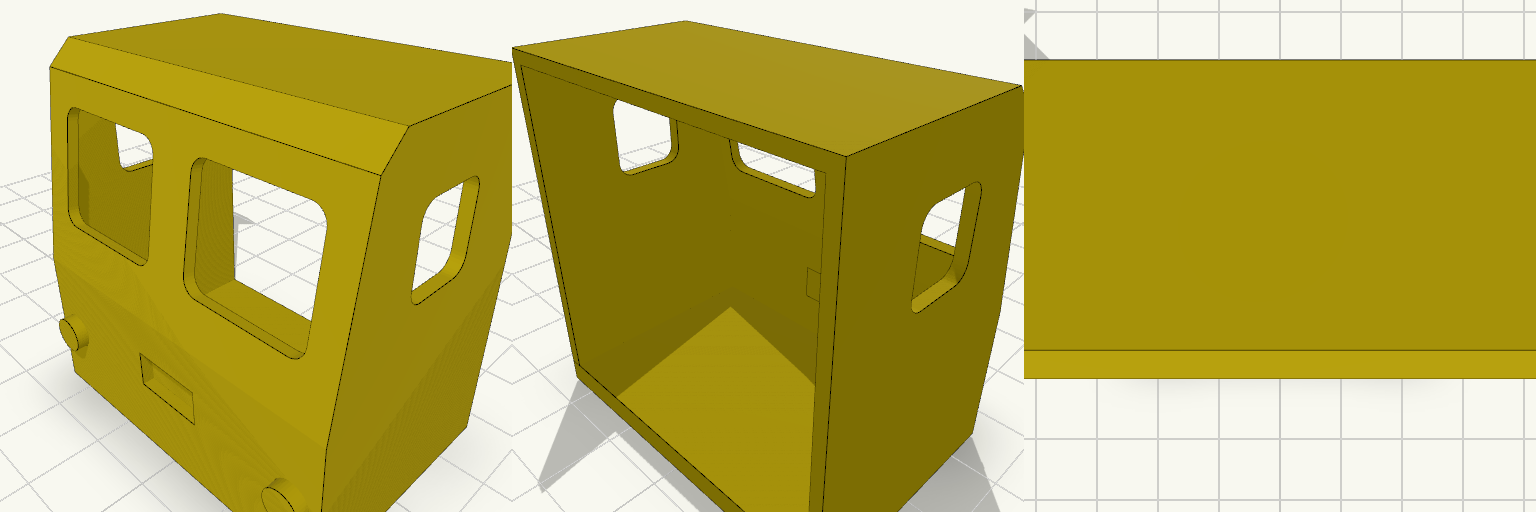
Freelance Lego fitting cab with Headlight Studs
Brute is a hollow, LEGO-compatible cab modelled loosely on the British Class 47 locomotive. It is six studs wide and four deep, with a closed floor that carries a grid of sockets so it presses onto a standard baseplate. Two studs on the nose give a place to clip on headlight pieces. Features Raked twin windscreens and side door windows Flat, smooth roof at five-brick height Two studs on the front face for headlights Lamp recess centred between the headlight studs 6×4 socket grid under the floor Dimensions Width: 47.8 mm Depth: 31.8 mm Height: 48 mm to the roof Headlight studs: 4.8 mm diameter, 8 mm either side of centre Print notes Print upright on the floor plate, or flipped onto the roof for a clean top surface. Hollow underneath and open at the rear.
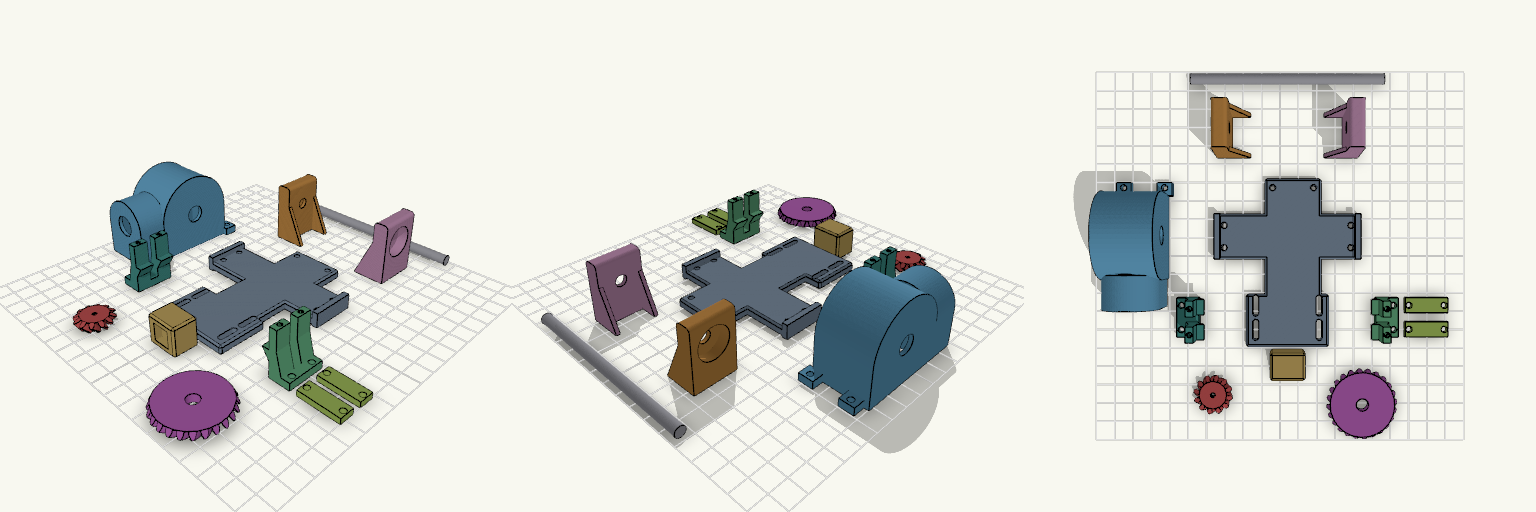
RC Car Bevel Gear Rear Drive
A rear-axle drive for an RC car where the motor shaft has to turn 90° into a cross-car axle without the gears skipping or the motor shifting. This set uses a 12-tooth pinion and 24-tooth crown gear (2:1) on a 103.9 mm × 6 mm axle, with an open motor cradle instead of a closed box. Key numbers Gears: module 1.5, 20° pressure angle, 4 mm face width, 90° shaft angle Pitch cone angles: 26.57° (pinion) and 63.43° (crown); cone distance about 20.1 mm Pinion bore 2.1 mm, crown bore 6.2 mm, both with M3 set-screw holes in the hubs Axle supports: 6.4 mm through-hole plus a 17.3 mm seat for 606 bearings (6×17×6) Base: 84 × 92 × 5 mm, M3 holes (3.4 mm clearance); cradle slots allow forward and back adjustment Motor cradle parameters at the top of the file: mw, mh, wall, saddlel, saddley. Measure the real motor and edit them Cover is open at the bottom, with two M3 ears at the rear Printing Print gears with the hub facing up or down on the bed; PETG or nylon preferred Cover prints open-side up without supports Axle is a separate 6 mm steel rod; M3 screws hold supports, cradle, straps and cover