TCC 3-Card Display Stand
Created 1 months ago
Description
A rigid, vertical display stand engineered specifically to hold three standard trading cards in penny sleeves. The stand features three independent, straight-drop slots and a commanding 170 mm rear backdrop to frame the collection.
What it's for
Built to display standard Pokémon or similar trading cards while kept safely inside their penny sleeves. The straight vertical drop ensures the cards sit completely upright without leaning, and the independent grooves keep them evenly spaced across the presentation wall.
Dimensions
- Overall size: 236 mm wide × 50 mm deep × 170 mm tall.
- Slot dimensions: 70 mm wide × 10 mm deep × 2.4 mm thick (generously sized to slide penny sleeves in and out without binding).
- Spacing: 8 mm solid dividers between each card slot.
Print notes
- Designed to print exactly as oriented without any supports.
- The rear braces add structural rigidity to the tall back wall without needing a massive block of filament.
- The front TCC lettering is modeled as a distinct region, allowing it to be printed easily as a flush colour change or an AMS/MMU paint region.
Images
More like this
Explore more in Decor & Display →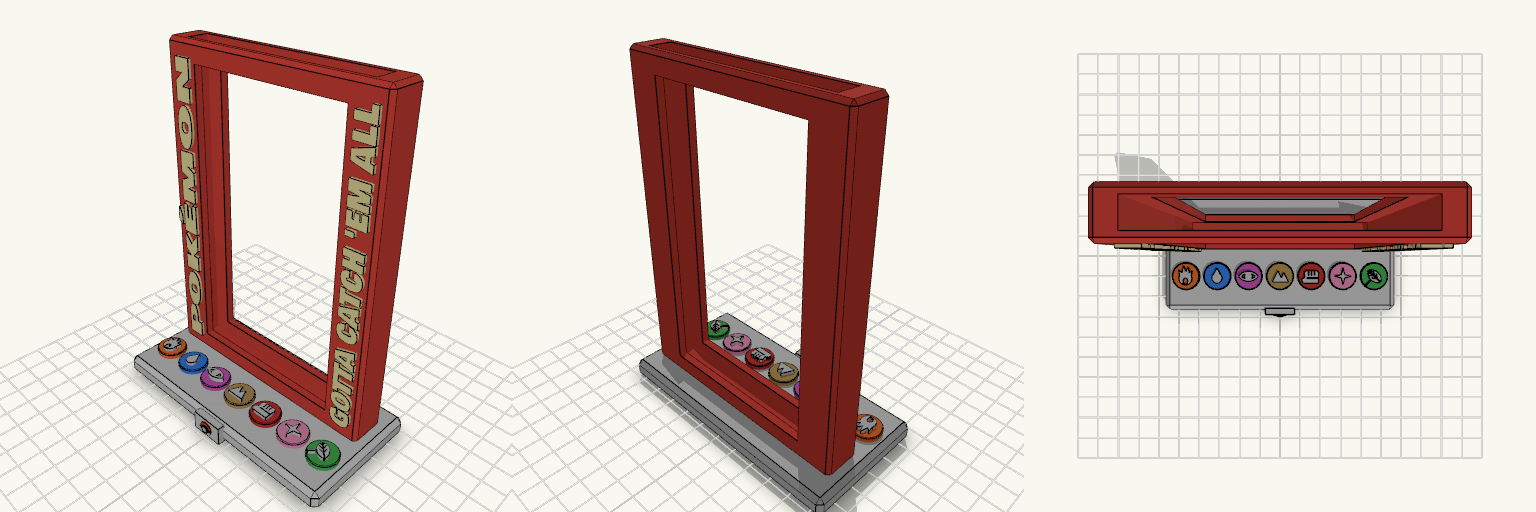
Pokéball Trainer Graded Card Stand 2 cgc
Freestanding display stand for a CGC graded card slab, with a Pokéball button on the base front and seven element badges. The slab drops into an open-top pocket in the frame, and the frame sides carry vertical POKÉMON and GOTTA CATCH 'EM ALL lettering. Base: 110 mm wide, 8 mm tall, with a raised plinth carrying the Pokéball button Pocket: 84 mm wide, 9.5 mm deep, open at the top Badges: fire, water, psychic, ground, fighting, fairy, grass on 13 mm discs, icons raised 1.5 mm Frame: 100 mm wide, 145.5 mm overall height Pokéball plinth overlaps the button back so the two print as one piece
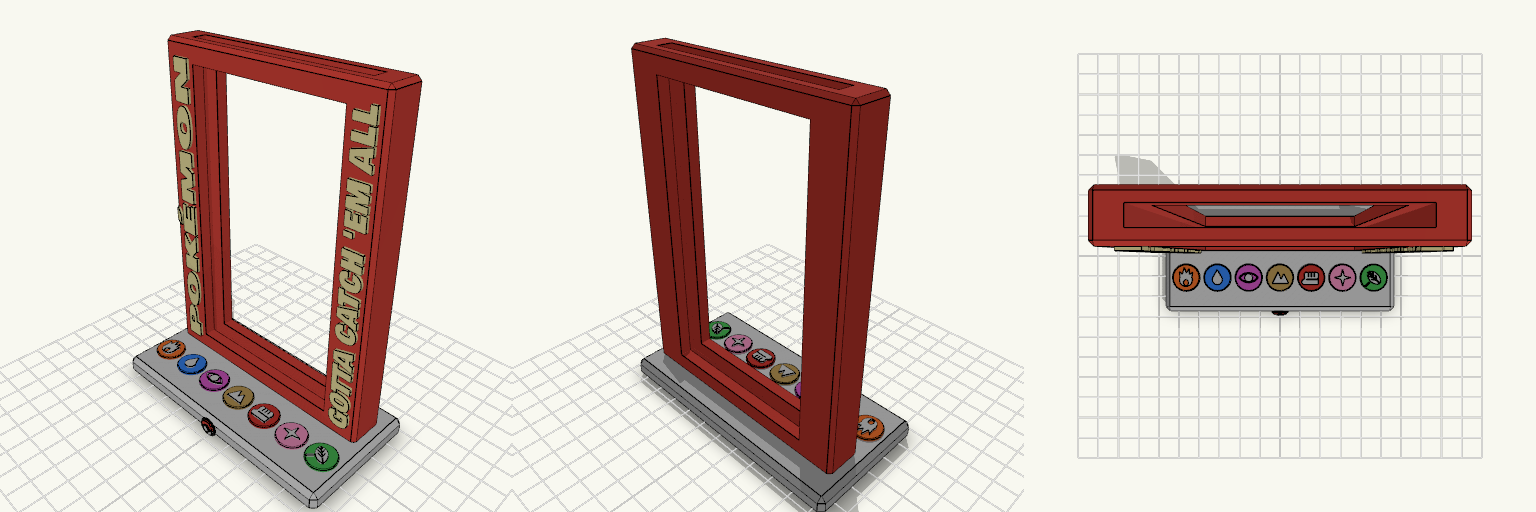
Pokéball Trainer Graded Card Stand 2
A Pokéball-themed display stand for a graded card slab, with a red frame, a white base and a row of seven raised elemental badges: fire, water, psychic, ground, fighting, fairy and grass. The slab drops in from the top and lifts out for easy swapping. A tall front window shows the card. "POKÉMON" and "GOTTA CATCH 'EM ALL" run up the two sides, and a small Pokéball button sits on the front of the base. Design notes Frame 100 mm wide on a 110 mm wide base Slot 135.5 mm tall, open at the top Window 70 mm wide, with equal margins at top and bottom Badges are 13 mm discs with fine raised icons
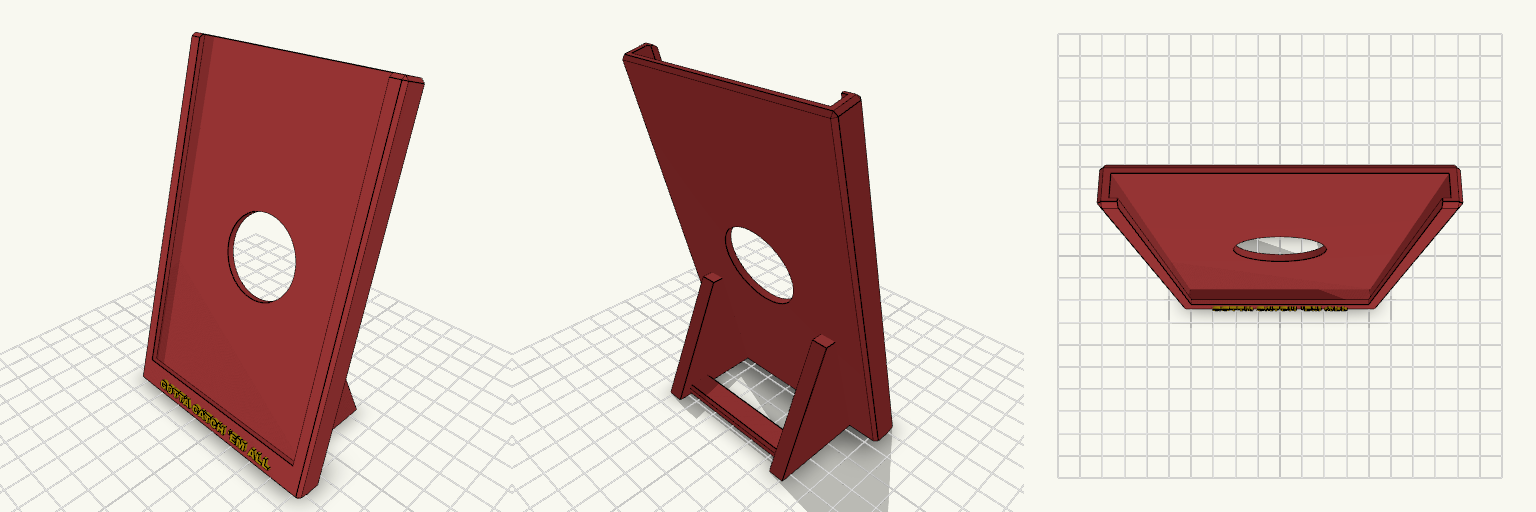
PSA Graded Card Holder with Stand 3
Pokemon-themed holder for a PSA graded card slab, with a built-in rear stand. The slab drops in and lifts out from the top, with no change to the slab. Pocket: 85.6 x 8.4 mm, about 0.3 mm clearance per side Front window with an 11 mm chin carrying the text and Pokeball 32 mm thumb push-out hole in the back, centred at Z 69.18 mm 15 degree recline on two rear gussets Small snap bumps on the side walls hold the slab
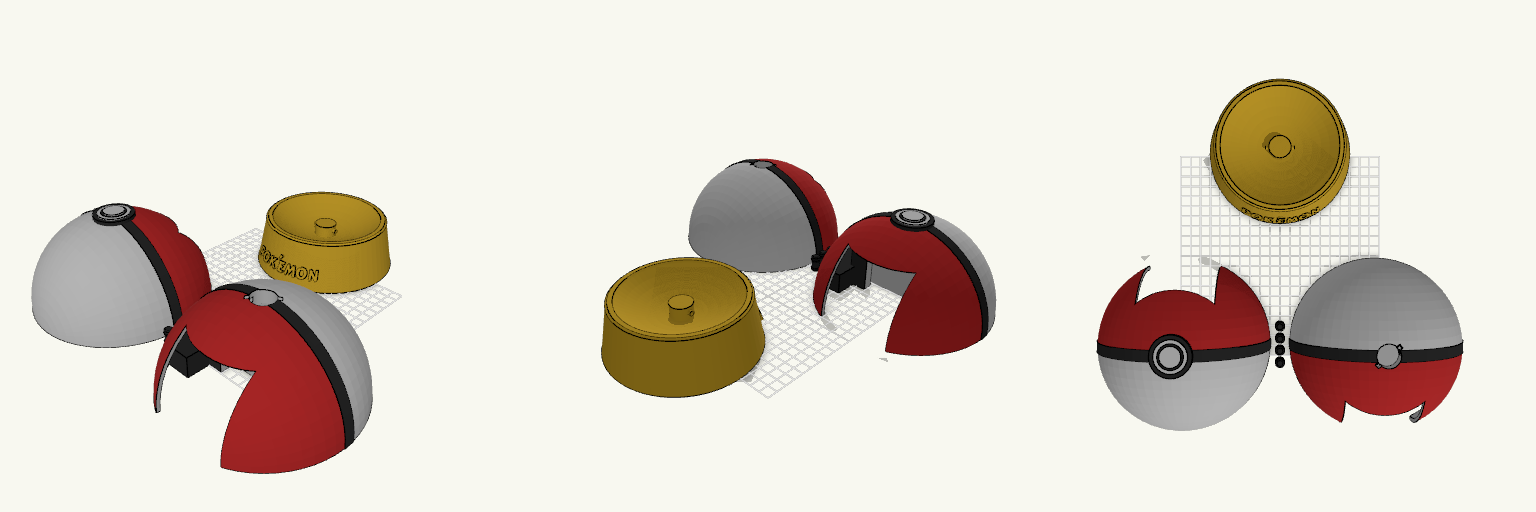
Apex Ball — Twist-Lock Card Case With Stand
Apex Ball is a Pokéball-style display case for a graded card slab, with a matching cradle stand that locks to the ball. Features Hollow two-half shell with a 80.45 × 135.8 × 6.52 mm slab pocket Tiny retaining ribs on the pocket side walls to grip the slab Viewing window on the red half; the white half is solid Snap-fit link pins join the halves Layered Pokéball button Twist-lock socket in the dome opposite the button Stand with a raised POKÉMON lettering and a locking post Print notes Use at least 3 perimeters for the shell. Check the post-and-peg fit and the pin snap first.
Marquee Block TROY Name Stand
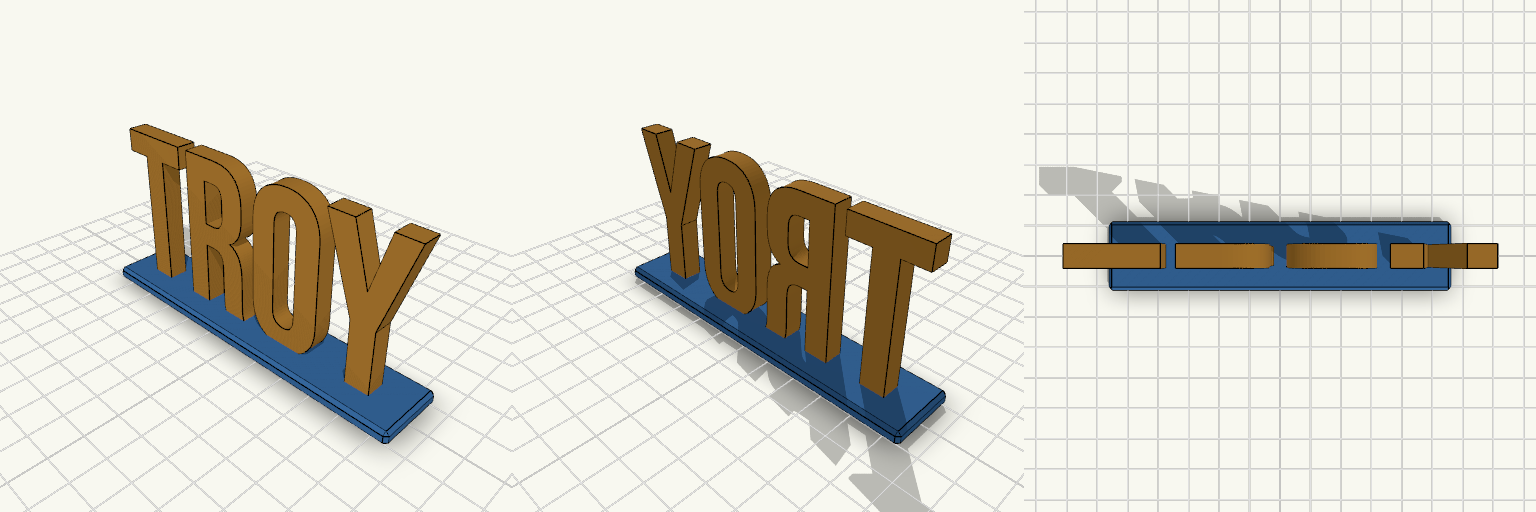
Tall condensed capitals in a movie-poster, marquee style, standing 50 mm high on a slim chamfered plinth. Letters are fused to the base so the whole thing prints as one sturdy piece. Letter height: 50 mm, Bebas Neue lettering Base: 60 x 22 x 4 mm with chamfered edges Prints flat on the base, no supports needed Pairs well with a desk, shelf or door-side display
Saurbase — Flat-Top Dinosaur Display Plinth
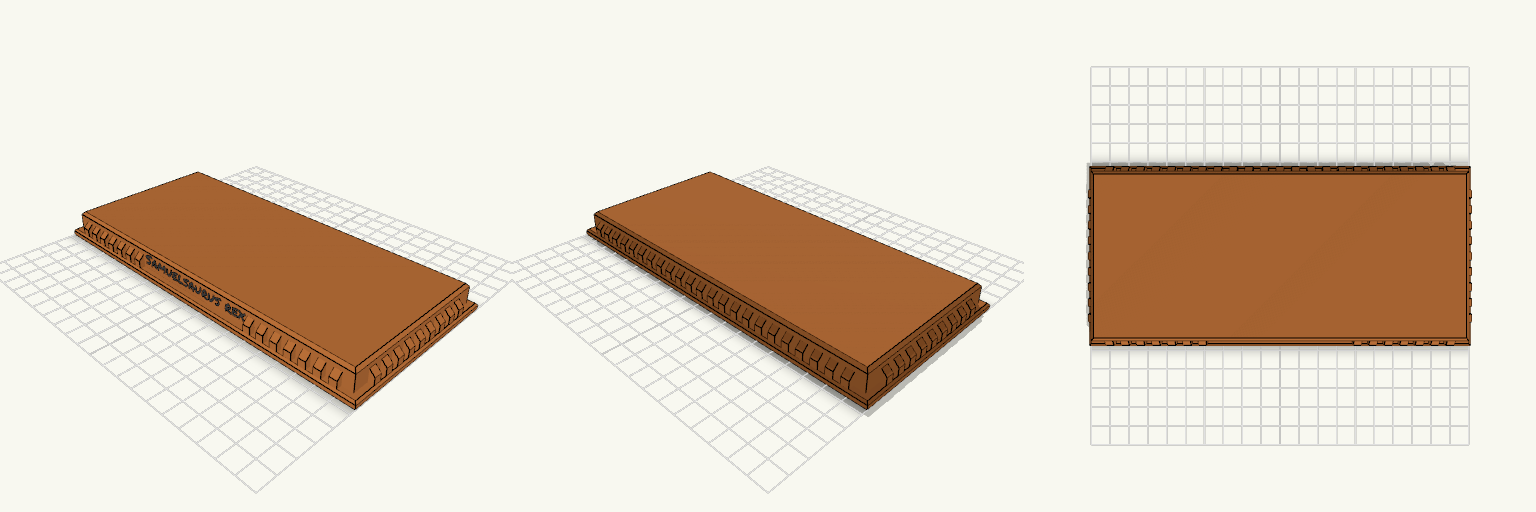
Saurbase is a display plinth built to give a model dinosaur — or any figure that deserves a proper stage — a base with real presence. The top is deliberately left flat and uninterrupted, so placement stays entirely up to you: set the figure where it balances best, or glue it down once you're happy with the stance. Around the sides, a cornice-inspired profile does the decorative work: a stepped base, a band of dentil blocks and a flush cap give the silhouette the look of a museum pedestal rather than a plain slab — and because the cap sits flush with the recessed core, the whole profile steps inward as it climbs, with nothing hanging over empty space. The front long side carries the name “Samuelsaurus rex”, engraved into a plain stretch of wall and filled with a dark grey inlay so the lettering reads in a second colour without taking any space from the top. Dimensions Footprint: 200 × 94 mm Height: 14 mm Base: 3 mm step with a small top chamfer Dentil band: 4 mm square blocks on 8 mm spacing, running around all four sides, with 45° cuts across the block tops; cleared along a 72 mm stretch on the front long side for the nameplate Cap: flush with the recessed core, with a 1.5 mm chamfer on its top edge Top face: flat, no recesses; flat glue area about 189 × 83 mm Nameplate: text 6 mm high in Permanent Marker style, engraved 0.6 mm deep on the front long side with a matching inlay filling the cut Name text inlay: about 73 × 0.6 × 6.4 mm, sitting flush with the front wall Features Cornice-style edge detail that reads as classical trim without any fussy undercuts Dentil blocks on all four sides slope from their outer faces up into the band above, ending smoothly instead of with a flat shelf Every block sits inside the lower bevel, its outer face stopping where the bevel starts, about 1 mm in from the plinth edge Inward-stepping profile throughout, so no part of the trim overhangs open space Broad 200 mm length leaves room for a tail and head to overhang the body Flat top accepts glue or double-sided tape for a semi-permanent mount “Samuelsaurus rex” nameplate on the front wall, outside the figure area The plinth and the name text are separate coloured pieces in one model, ready for a multi-colour print Nameplate The lettering sits on the front long side, centred on a 72 mm stretch where the dentils are left off. It is cut 0.6 mm deep and filled by a matching inlay that sits flush with the wall, so the text shows as a dark grey band against the plinth body. Because it lives on the vertical side wall, it takes nothing from the glue area on top. Print notes The geometry needs no supports: the cap sits back over the dentil band rather than out past it, every step moves inward as it rises, and the 45° dentil tops remove the flat ledges. The corners between the long and short sides are tight at this scale, so check them in your slicer preview. The dentils are sized to print cleanly — going smaller will lose definition. The nameplate is a vertical wall cut, so it needs no supports either; at 0.6 mm deep the text spans only a few layers, so assign a black or dark grey filament on those colour-change layers. Permanent Marker lettering is loose and uneven, so check the text length against the 72 mm cleared stretch; if thin strokes print rough, a slightly larger letter size or deeper engraving will help. A slightly denser infill keeps some weight in the base so the plinth doesn't tip when a figure is set on it.