Veloce — Differential Line Follower Chassis
Created today
Description
Veloce is a purpose-built 3D-printable platform engineered for high-speed differential line following. To hit the aggressive 160×130mm envelope without compromising on handling, the architecture mounts the Arduino Mega and battery in a transverse layout right over the drive axle. This keeps rotational inertia extremely low, allowing the twin N20 gearmotors to snap the chassis through sharp 90-degree turns without oscillating.
The front features a modular, underslung sensor bracket that drops the PCB down to track level while heavily protecting the leading edge. Wide slots allow you to mechanically dial in the RLS-08's asymmetry so the IR array sits dead-center on the robot's axis.
Features
- Transverse Core: Mounts the Mega 2560 and 2S battery pack sideways to pull the mass closer to the axle.
- Modular Drive Mounts: Mirrored left/right N20 brackets hold the gearboxes rigidly by the faceplate, completely decoupling chassis stress from the motor bodies.
- Underslung Sensor Tray: Drops the RLS-08 directly into the 3mm sensing zone without exposing the PCB to front-impact damage.
- Wire Routing: Integrated zip-tie holes and defined component zones (BMS, Buck, Driver) keep high-current lines separated from signal paths.
Compatibility
The hole pattern and cutouts are specifically tailored for:
- Arduino Mega 2560 (Transverse)
- 2× N20 Geared DC Motors & 42mm Drive Wheels
- SmartElex RLS-08 Line Sensor
- 2S 18650 Battery Holder, 2S BMS, LM2596 Buck Converter, and TB6612FNG Driver
- 35mm Flanged Ball Caster
Images
More like this
Explore more in Automotive, RC & Hobby →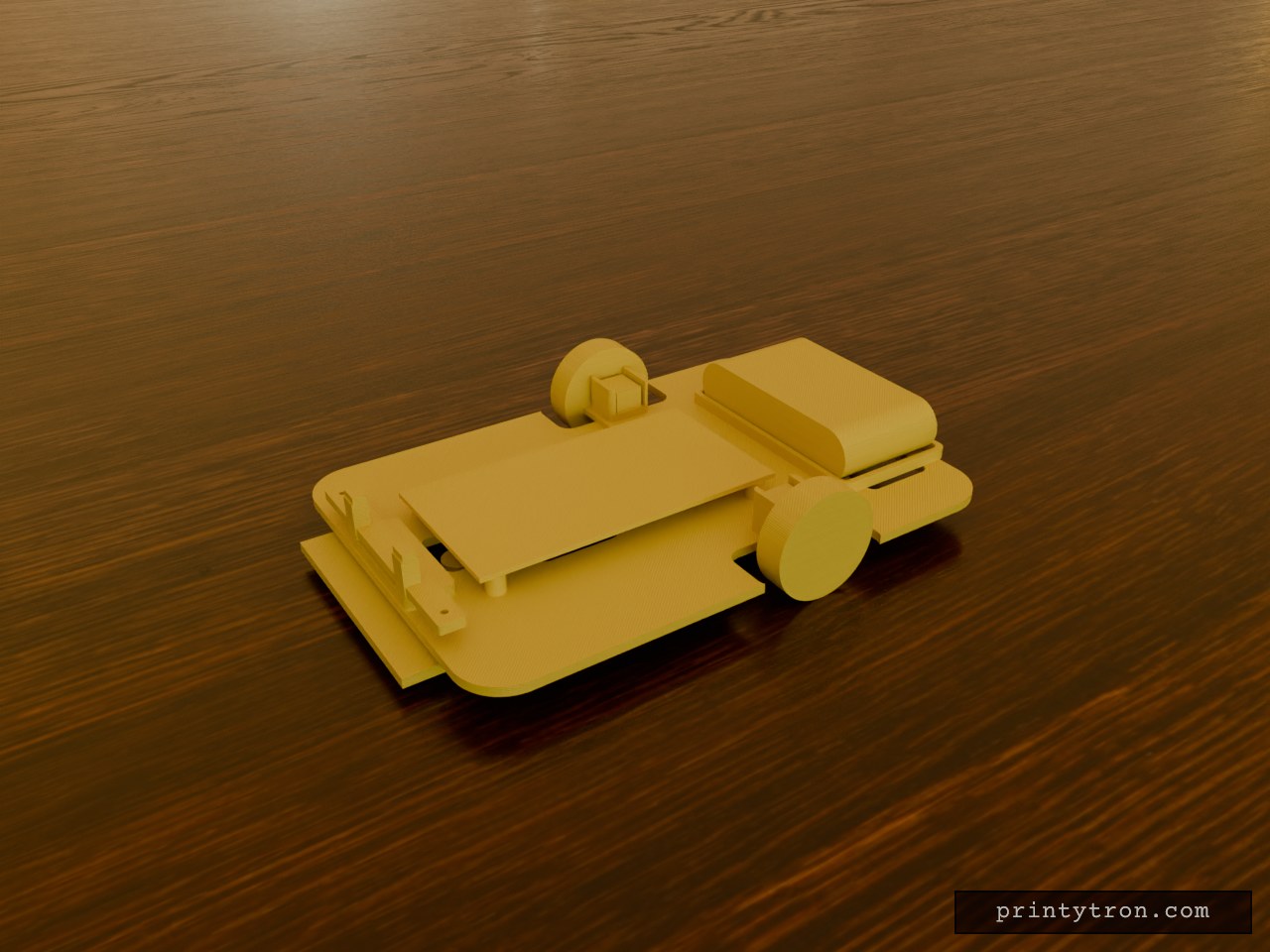
Apex — Comp Line-Follower Chassis
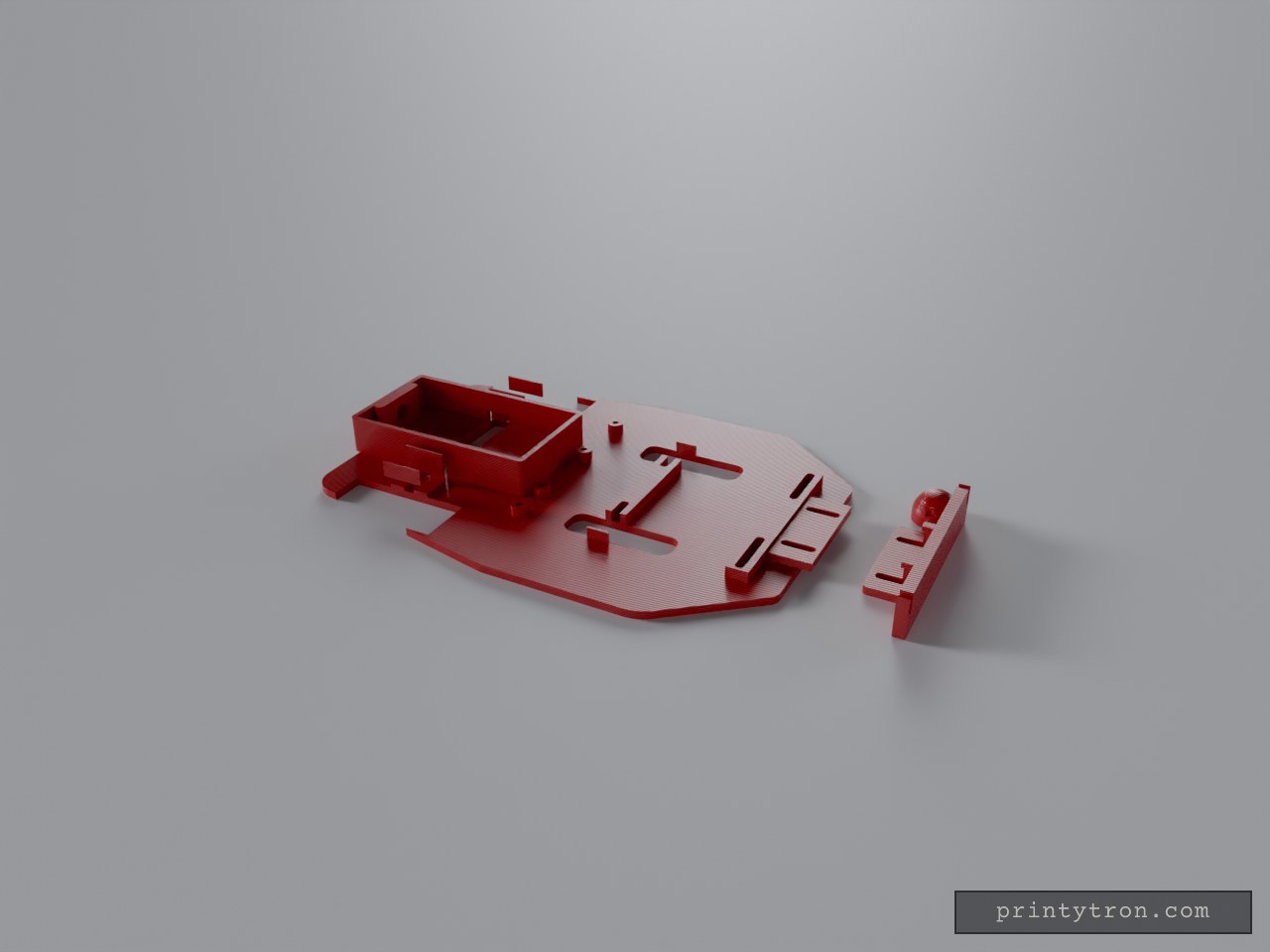
Apex — Comp Line-Follower Chassis is a high-speed, 3D-printable robotic platform designed around the Arduino Mega 2560 and Pololu QTR-8RC. Built for aggressive track layouts and rapid differential steering, this design drops the center of gravity to the floor while tightly packaging the critical electronics. The front sensor array dictates the pacing, and the custom split-bracket mounting system allows micro-adjustments in both height and lead distance to optimize line acquisition. Features Adjustable QTR Mount: Two-axis bracket for fine-tuning the 8-channel array height and lead distance. Low-CG Differential Drive: Transverse 2S battery pocket and dual N20 saddles centered on a 3mm rigid base plate. Component-Mapped: Exact clearances for the Arduino Mega 2560, TB6612FNG driver, buck converter, and 35mm racing wheels. Wire Routing: Integrated chassis cutouts and zip-tie points to keep logic and power rails out of the wheels. Print notes Print the main chassis and brackets in PETG or rigid PLA+ at a 3mm shell thickness. The chassis is natively support-free. Use M2 hardware for the sensor array and M3 for the logic boards and motor saddles.
Line Follower Chassis (N20/Mega)
A flat-printing, modular chassis designed specifically for high-speed line following. Engineered to accommodate an Arduino Mega 2560, dual N20 motors, and a Pololu QTR-8RC reflectance sensor, with priority placed on a low center of gravity and straightforward field maintenance. What it's for This frame carries the electronics and drive system for a 2WD differential steering robot. Components drop into dedicated regions rather than requiring complex brackets, and all sensitive electronics are kept clear of the track surface. The front sensor mount separates from the main plate to allow independent height tuning of the IR array. Dimensions Overall envelope (assembled): 180 mm (L) × 130 mm (W) × 55 mm (H) Track width: ~90 mm, providing clearance for 35–38 mm diameter wheels. Electronics rails: Slotted cross-members accept an Arduino Mega or similarly sized microcontrollers. Drive mounts: Drop-in snap/strap cradles for standard 12×10 mm N20 motors. Power bay: Sized for two parallel 18650 lithium cells (44 mm inner width) with integrated Velcro pass-throughs. Assembly All major features anchor with standard M2 or M3 hardware. The front skid and sensor bracket print flat independently and bolt into designated sliding rails on the chassis nose. The motor mounts include under-plate zip-tie channels to secure the gearboxes rigidly against torque. Use standoffs for the motor driver and buck converter pads to ensure proper wiring clearance above the deck.
Utilitarian Chassis Flight Skids
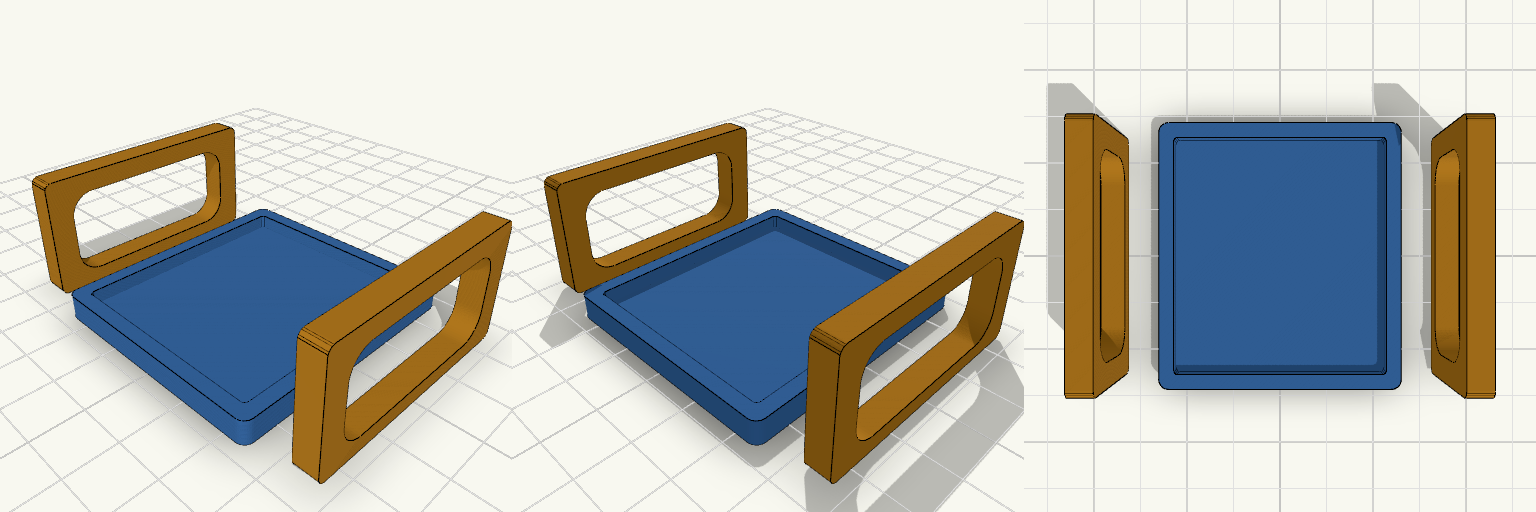
This lightweight hardware suite is designed for custom chassis builds, keeping the overall footprint low while providing a sturdy base. The components are arranged flat on the build plate for easy, support-free fabrication. Flight Hardware The Deck: A 50×55 mm central mounting plate. It features a solid 2 mm deck surrounded by a 3 mm retaining wall, ideal for corralling electronics or batteries. The Skids: Twin 50 mm long landing legs. They have been heavily cored out to reduce mass, leaving just a rugged 3 mm footprint and sturdy outer struts to handle hard landings.
160mm Wheelbase Truck Chassis
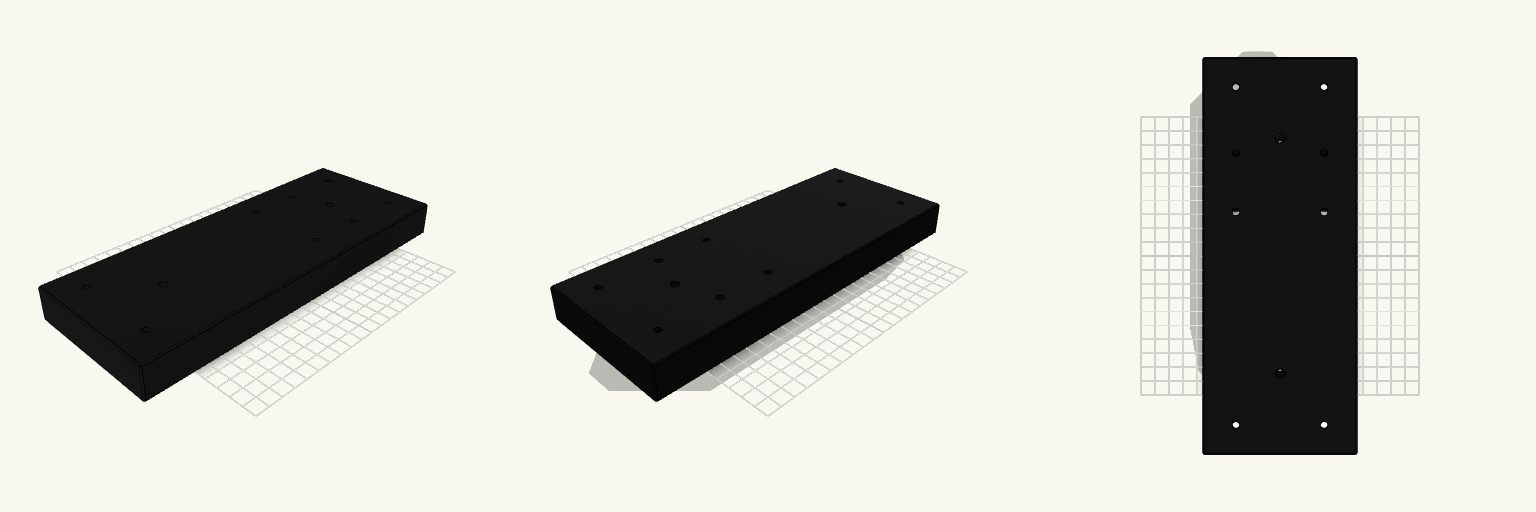
Base structure for the Moroccan Unity Day modular parade truck. Built to carry standard 6mm axle rods and accept top-deck cabin and cargo payloads. This is a specific-fit frame, not a universal runner. Check the axle bore and mounting distances before committing filament: Axle Bores: 6.3mm teardrop channels, printed horizontally. Fits 6mm rod axles with 0.3mm clearance. Wheelbase: 160mm exactly. Deck Mounts: Eight 5.3mm bores spaced for the matching Unity Day cabin and cargo blocks (5mm locating pegs). Overall Footprint: 270mm x 105mm x 25mm. Prints top-down or bottom-up depending on your preference for bridging, but the internal grid is fully pocketed to drop weight while keeping the deck rigid. Minimum wall thickness is locked at 2.5mm for an easy two-wall pass on a 0.4mm nozzle.
12
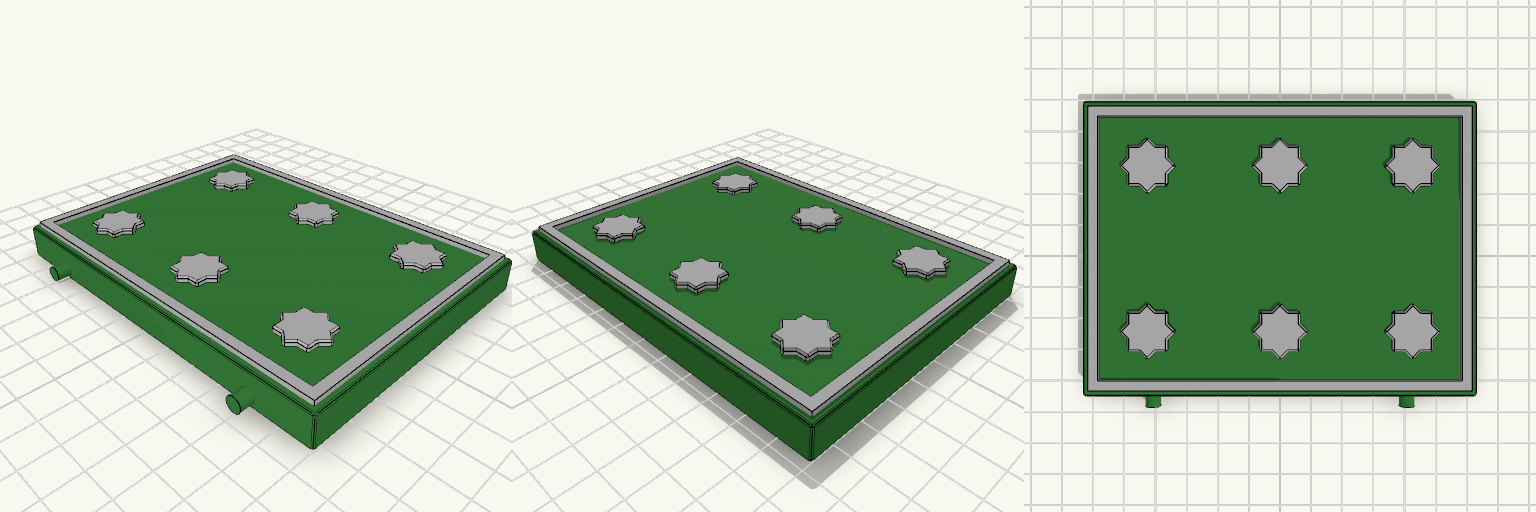
Large vehicle prints warp, lift off the bed, or take days to finish. Splitting the chassis into smaller, hollowed quadrants stops the curling and lets the pieces finish quickly. This is the left-side foundation. Fit Details Overall Dimensions: 140 mm × 70 mm × 12 mm Wall Thickness: 3 mm perimeters and floors for rigid bridging Mating Pins: 5 mm diameter pins into 5.3 mm receiver holes for a clean press-fit Panel Mounts: Four 6.3 mm top sockets align the upper body elements
Retro TV Enclosure for No-Solder RP2040 Builds
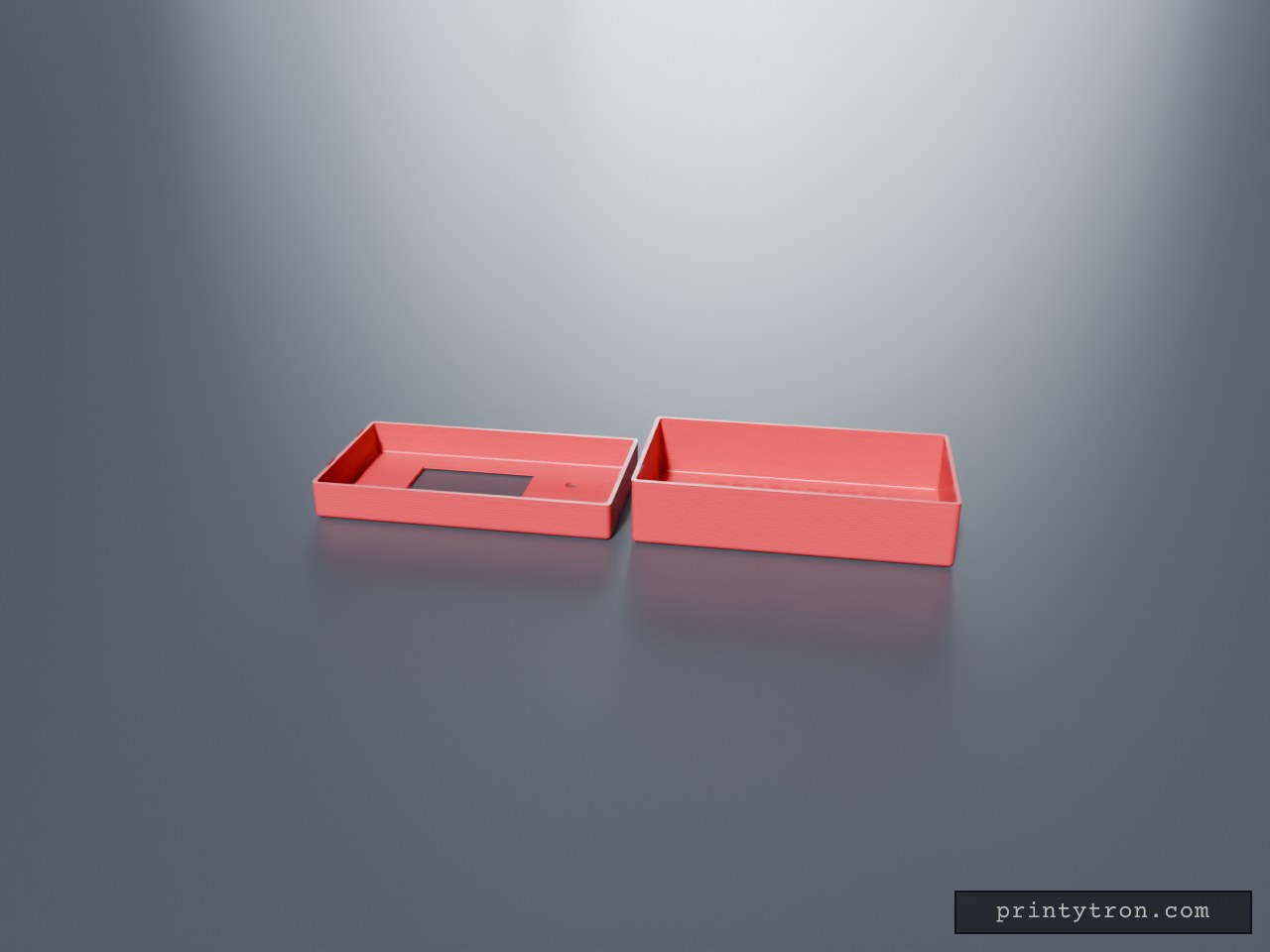
A two-piece retro TV shell designed to house a no-solder RP2040 video player. The clamshell locks together with a built-in snap fit, offering exactly 150×80×50mm of internal space. Both halves print flat on the bed without supports. Front Bezel: Features a sloped CRT-style screen cutout with an internal ledge for a 2.8" display, twin 7mm dial holes, and integrated speaker vents. Back Shell: Includes a bottom-edge USB-C cutout and classic rear cooling vents. Snap Fit: A 4mm friction lip with interlocking bumps holds the enclosure securely together.