Visitor Pass Base Frame
Created today
Description
A solid, minimal frame designed to house a standard 3D-printed visitor pass insert. The base acts as a rigid backing plate, featuring a recessed cavity with a slight continuous inner overhang. This tapered lip allows a flat insert to snap securely into place while printing entirely without supports.
- Overall Dimensions: 120 mm × 75 mm.
- Thickness: 2 mm solid floor with a 1.8 mm raised border (3.8 mm total height).
- Recess Size: 110 mm × 65 mm, providing roughly 0.2 mm clearance around a 109.6 mm × 64.6 mm insert.
- Retention: 0.2 mm continuous 45-degree internal chamfer at the top edge to lock the insert in place.
- Printability: Prints perfectly flat on the bed; no supports required.
Images
More like this
Explore more in Keychains & EDC →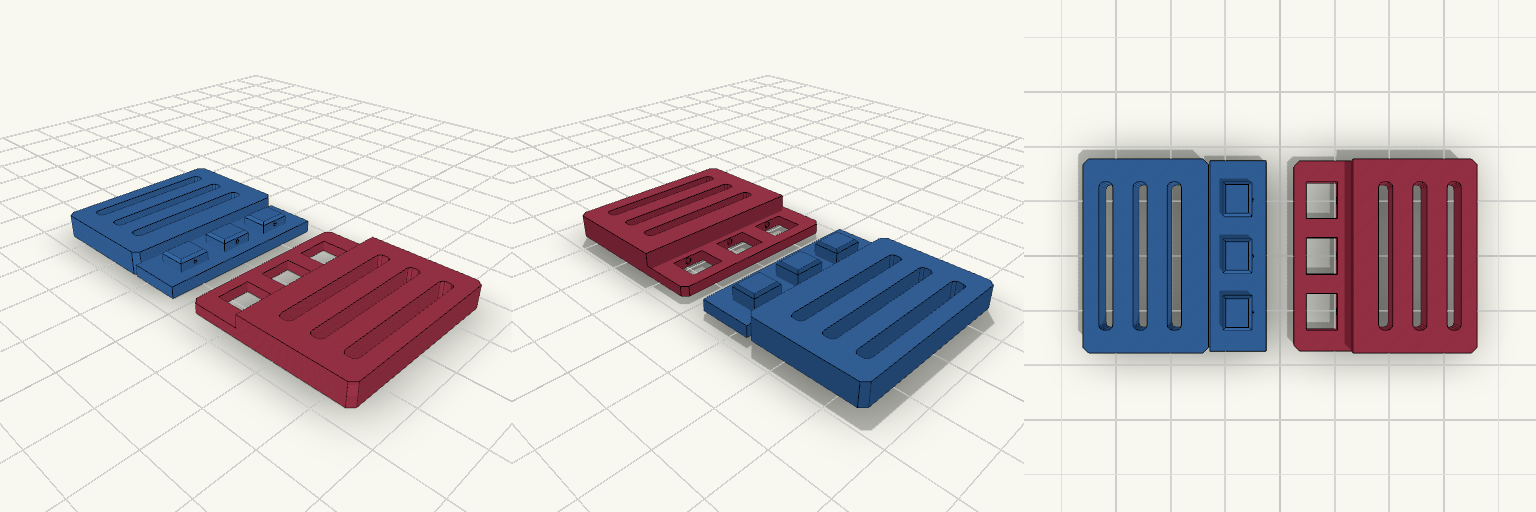
Cierre Escalonado para Cinta 25mm
Un cierre mecánico de dos piezas diseñado para pulseras o correas hechas con cinta plana de 25 mm de ancho. El diseño utiliza un sistema de solape escalonado con tres pestañas de retención. Configuración del pase: 3 ranuras paralelas de 2.5 x 26 mm por lado, pensadas para entrelazar la cinta con firmeza. Mecanismo: Unión tipo solape (lap joint) con retenes de fricción esféricos; encaja a presión y resiste tensión lateral. Tolerancias: El cierre incorpora 0.3 mm de holgura exacta en las cavidades hembra para un ajuste perfecto en máquinas FDM bien calibradas. Impresión: Ambas mitades descansan planas sobre la cama. No requiere soportes.
Support-Free Braided Crucifix Pendant
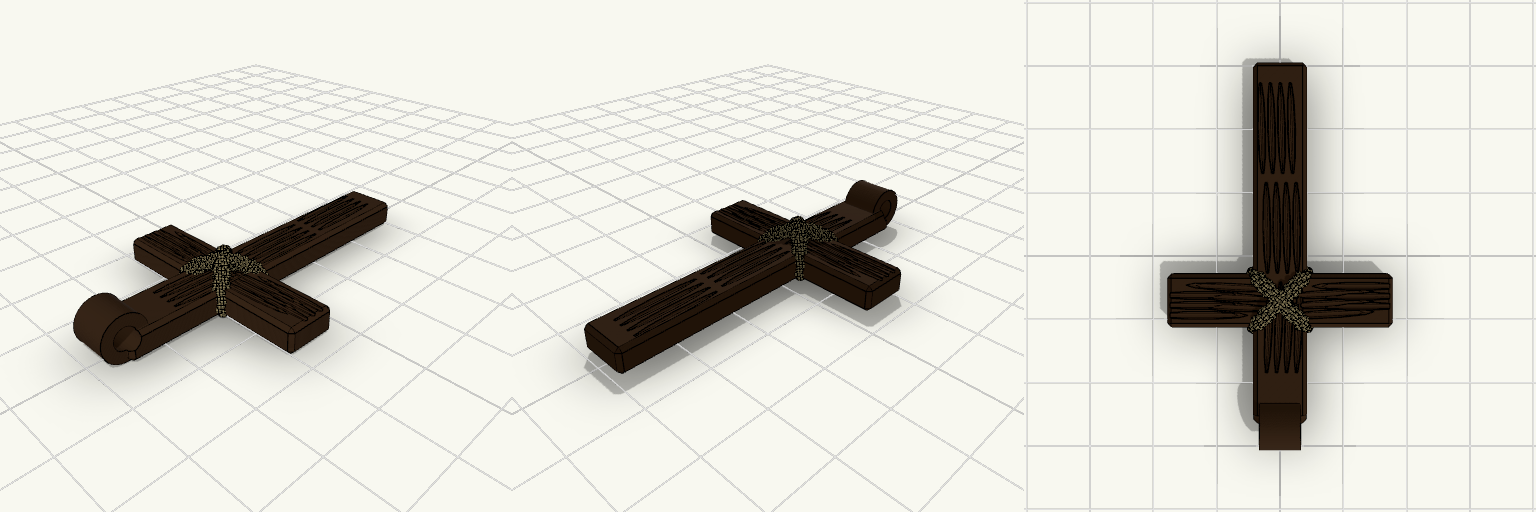
Pendants that look good from the front usually refuse to sit flat on a print bed, leaving you picking stringy supports out of fine details for half an hour. This cross solves that by keeping a meticulously carved face and an intertwined braided rope lashing, while silently shaving the entire rear face perfectly flush. It drops right onto the build plate and prints in one clean shot. Dimensions: 34 mm wide, 55 mm tall Mounting: Heavy-duty 3.5 mm integrated through-bore, practically un-snappable Printability: Zero supports needed. The back is sliced flat so it anchors perfectly to the bed.
FlexiLink — Llavero Articulado TAMARA
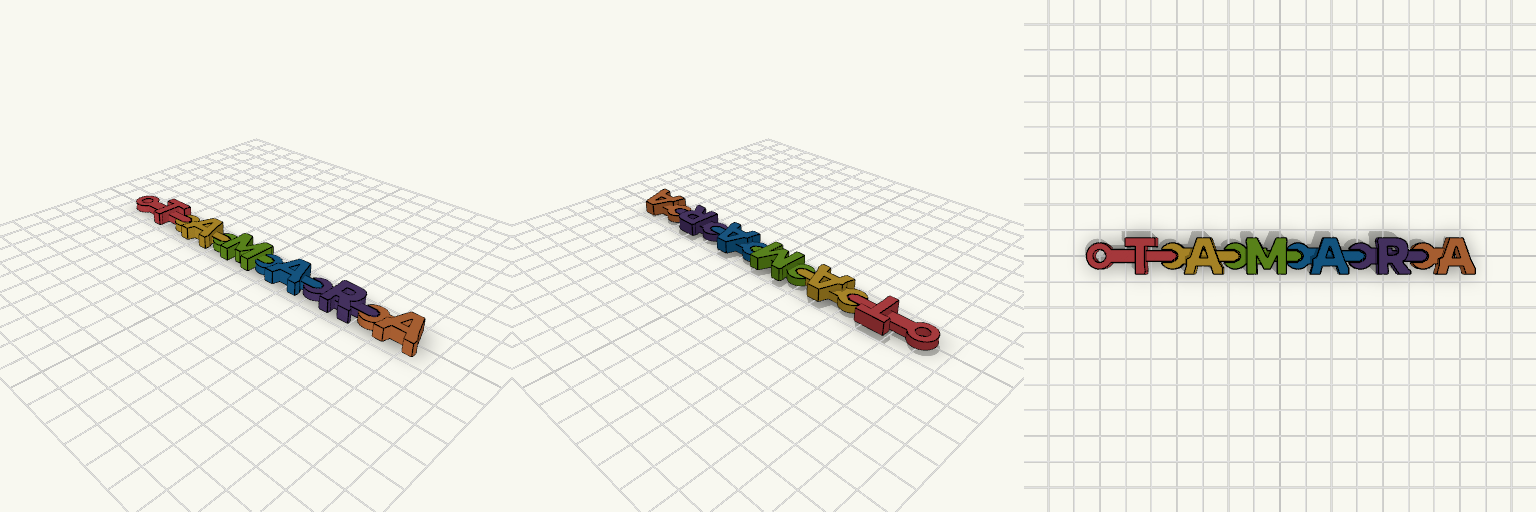
Este es un llavero articulado de impresión print-in-place que no requiere soportes ni montaje. Las letras conforman el cuerpo de los propios eslabones, y se unen mediante un sistema de pasador cautivo oculto con holguras diseñadas para liberar el movimiento tan pronto como la pieza termina de imprimirse. Características Legibilidad mejorada: Los pasadores se conectan directamente a los laterales de las letras, manteniendo el interior limpio. Articulaciones sueltas: Diseñadas con 0.4 mm de tolerancia, pensadas para la calibración habitual de PLA en impresoras modernas. Sin ensamblaje: Todo el llavero se imprime como un solo cuerpo que se pliega. Anilla integrada: El extremo cuenta con una gaza con espacio para una anilla estándar de llaves.
Chubby Sitting Hamster Keychain
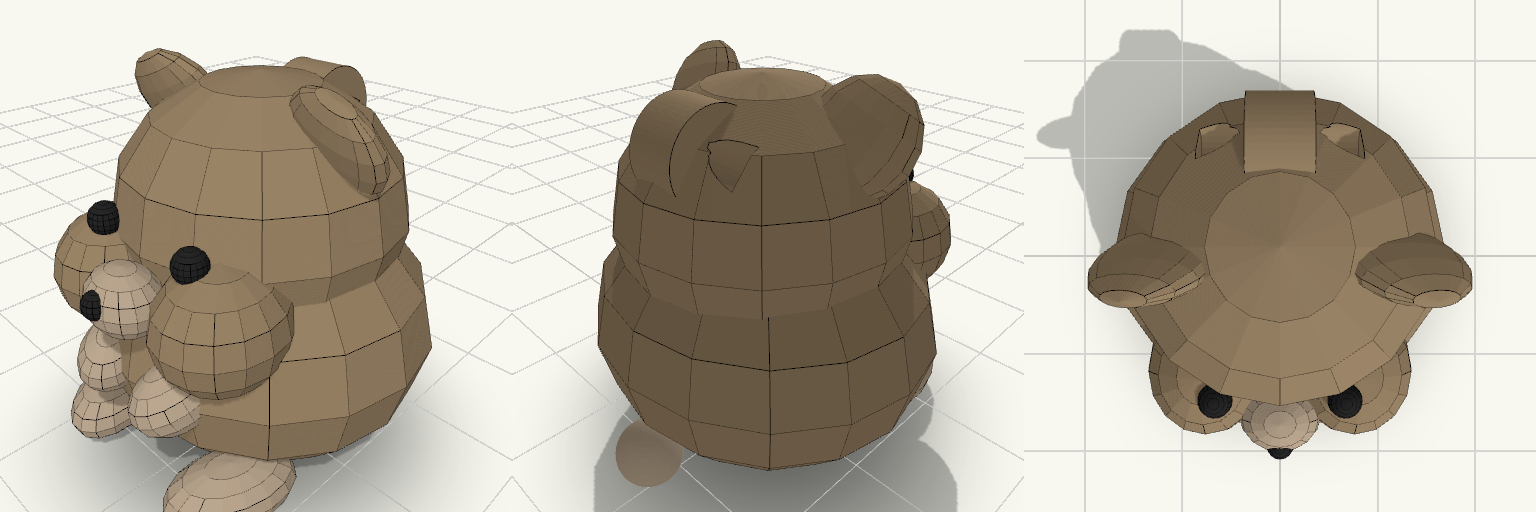
A compact, sitting hamster figure modelled with exaggerated, rounded proportions for a chunky silhouette. The base is sheared flat to allow support-free printing directly on the build plate, and a reinforced loop is integrated into the upper back of the head. Dimensions: ~28mm wide, 30mm tall. Keyring Loop: 3.2mm horizontal bore, heavily chamfered outer ring. Print Settings: Print upright. The limbs and facial features intersect closely with the main body to minimise overhangs; no supports are required.
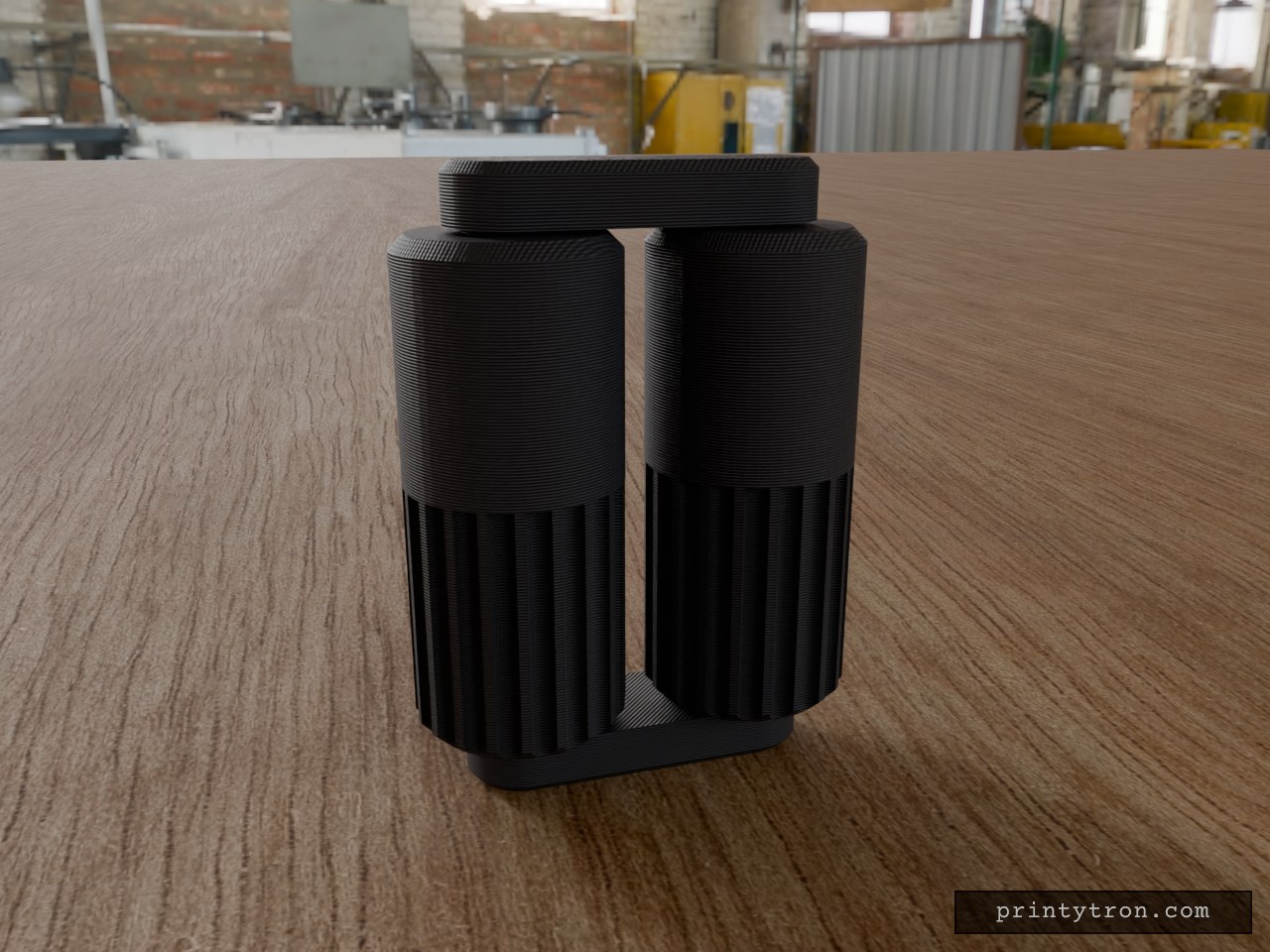
Fidget
What it's for A fully print-in-place fidget roller inspired by continuous-motion hand toys. It features two heavily grooved outer cylinders captured on a rigid internal frame. Built to be rolled continuously in one hand to keep fingers busy. Dimensions Overall size: 37 mm wide, 63 mm tall, 22 mm deep. Rollers: 22 mm diameter, 50 mm tall with 20 scalloped grip grooves. Clearance: Designed with a 0.5 mm gap top, bottom, and radially around the axles for a free spin immediately off the build plate. Print notes Prints completely vertically without supports. The top frame link is designed with a flat bottom to bridge cleanly across the two internal axles without adhering to the rollers beneath it. Once finished, a firm twist breaks any minor stringing and frees the rollers.
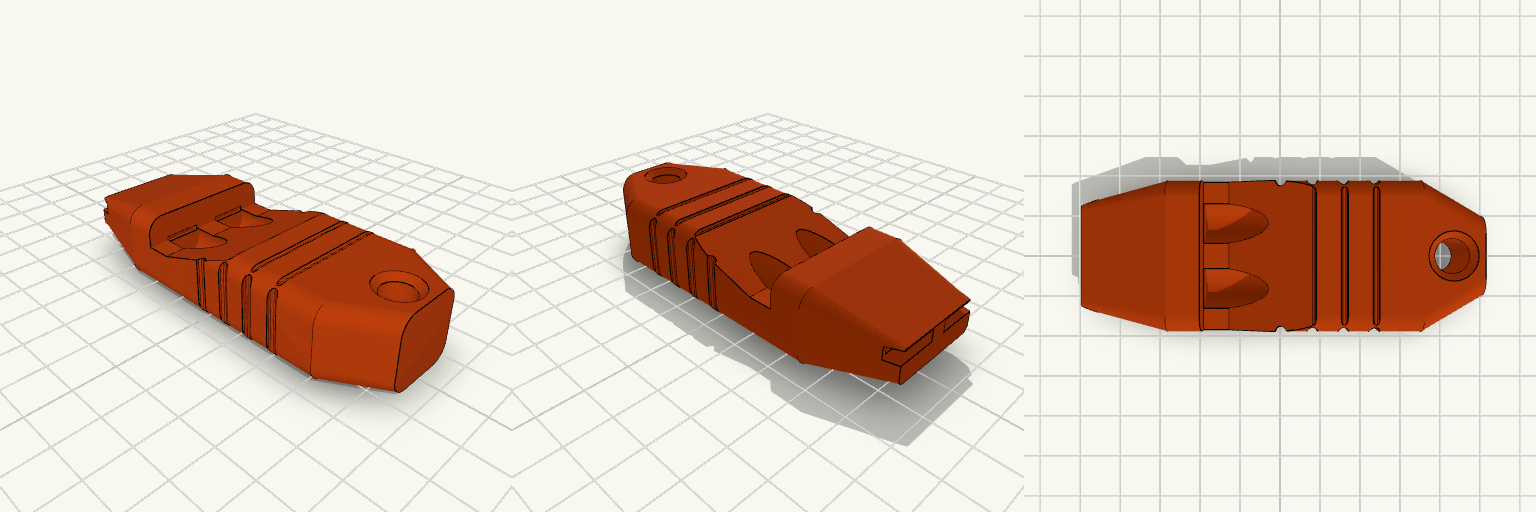
Sifflet Tactique Double Chambre
Un sifflet de survie compact et puissant, construit autour d’une architecture à double chambre. Imprimable sans aucun support, il utilise deux cavités de résonance de longueurs différentes pour générer une dissonance acoustique perçante. Pour les remixeurs Ce design est purement mathématique et conçu pour être ajusté : Pitch et Dissonance : La longueur des chambres (actuellement 41 mm et 47 mm) dicte la fréquence. Raccourcissez-les pour un son plus aigu. Coupe du sifflet (Fipple) : L'angle de la rampe est fixé à -18 degrés et le bord d'attaque divise le flux d'air à Z=11.0. Si votre imprimante a tendance à sur-extruder, ajustez la hauteur de la fenêtre de frappe pour garantir que l'air ne soit pas étouffé. Grips : Les rainures latérales et supérieures sont de simples soustractions itératives, faciles à remplacer par des logos ou du texte plat.