Description
Пластиковый патрубок с небольшим расширением на одном конце, под соединение с трубой того же диаметра.
What it's for
Соединительный патрубок для трубопровода или воздуховода. Основная часть имеет внутренний диаметр 45 мм, а на конце есть раструб 48 мм, в который вставляется другая труба.
Dimensions
- Общая длина: 140 мм
- Основная часть: длина 120 мм, внутренний Ø45 мм
- Раструб: длина 20 мм, внутренний Ø48 мм
- Толщина стенки: 3 мм (наружный Ø51 и Ø54 мм)
- Внутри есть плавный конический переход между диаметрами.
Remix ideas
- Изменить толщину стенки под нужное давление.
- Добавить ребра жёсткости или упорный бортик.
- Сделать раструб на обоих концах.
Images
More like this
Explore more in Home & Fixtures →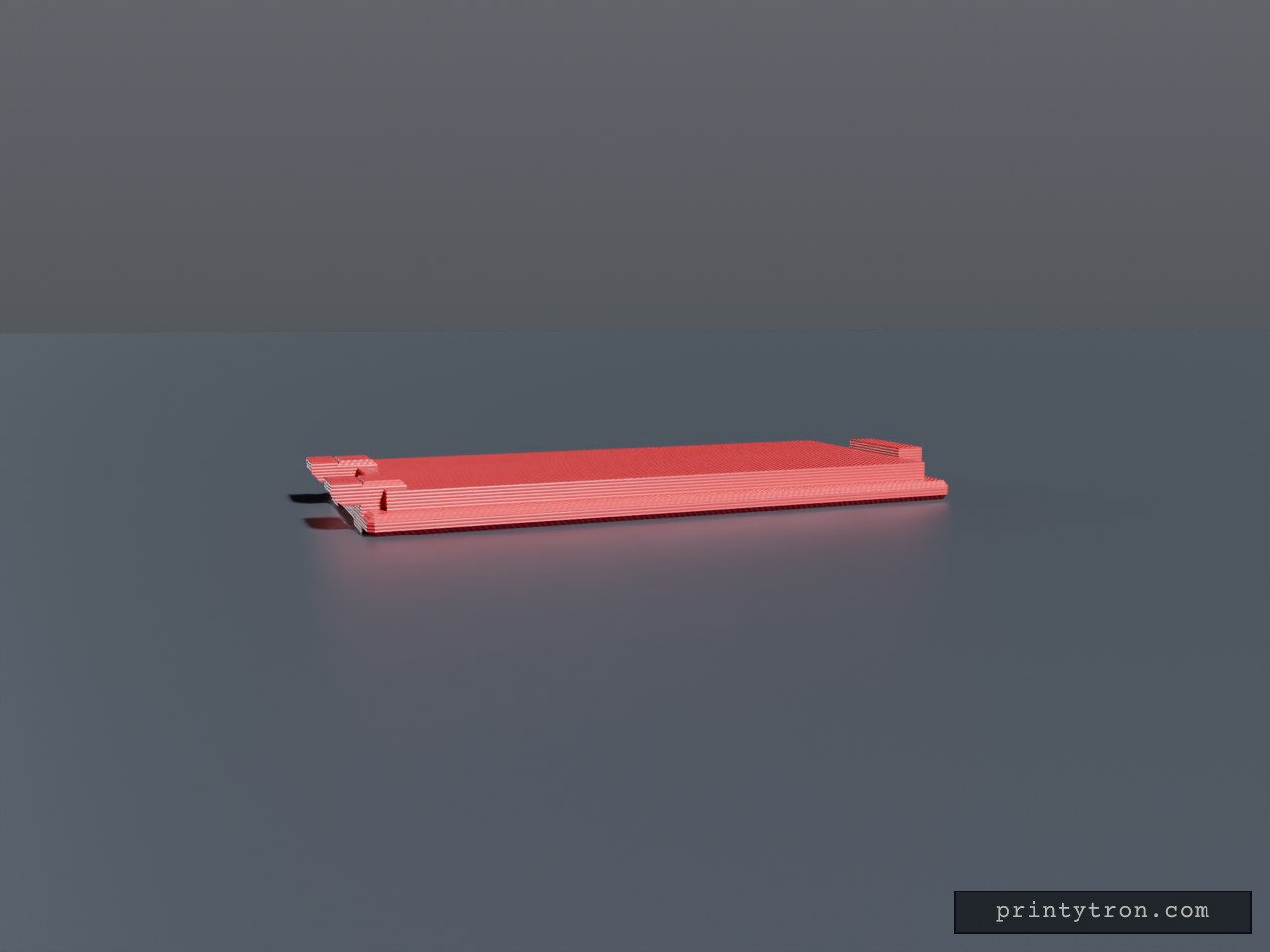
Bug Zapper Battery Cover 27.65 x 60 mm
Sliding battery compartment cover plate for a bug zapper, 27.65 x 60 mm. A locating lip sits in the compartment opening, a latch tab sits at one end, and two low retention tabs at the opposite end keep the cover from falling out. Plate: 27.65 x 60 x 2 mm, chamfered edges Lip: 23.65 x 56 mm, 3.8 mm total height Retention tabs: two, 5 mm wide, flush with lip height, at X = ±8 mm Latch tab: 10 mm wide at the +Y end Grip grooves on the outer face Dimensions are estimates; verify against the original opening
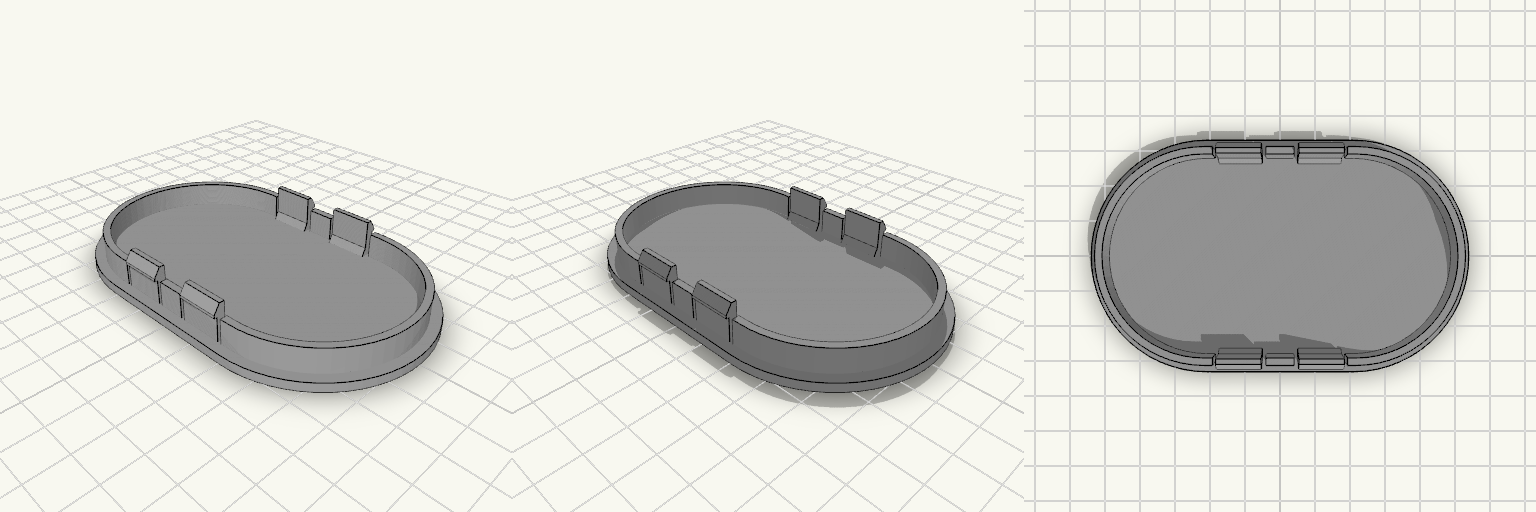
100x59 Oval Body Hole Cover with Snap Clips
Einsteckbare Abdeckung für eine ovale Öffnung von 100 × 59 mm in etwa 1 mm dickem Blech. Die Frontplatte ist vollständig geschlossen und liegt mit einem 3 mm breiten Auflageflansch rundum auf dem Blech auf; außen misst die Abdeckung 106 × 65 mm bei 2,5 mm Plattendicke. Auf der Rückseite zentriert ein Rahmen mit 2 mm Wandstärke und einer Innenöffnung von 96 × 55 mm als ovales Langloch mit Endradius 27,5 mm. Der Rahmen reicht 7 mm über den Flansch hinaus. Die vier flexiblen Clips – je zwei an den langen Kanten – haben 0,8 mm hohe Haken und angeschrägte Einführflächen; die Rastkante sitzt 7 mm über der Flanschfläche. Mit den verlängerten Federschlitzen baut die Abdeckung insgesamt 13 mm hoch. Bei 1 mm Blech bleibt zwischen Blech und Rastkante in Einsteckrichtung Luft; der Clip rastet erst nach 7 mm Einstecktiefe ein. Werkzeuglose Montage und Demontage Einteiliger Körper, keine Schrauben und kein Kleber Flansch nach unten drucken, in PETG oder ASA Clipsitz beim ersten Druck prüfen, da die Federwirkung des Materials schwankt
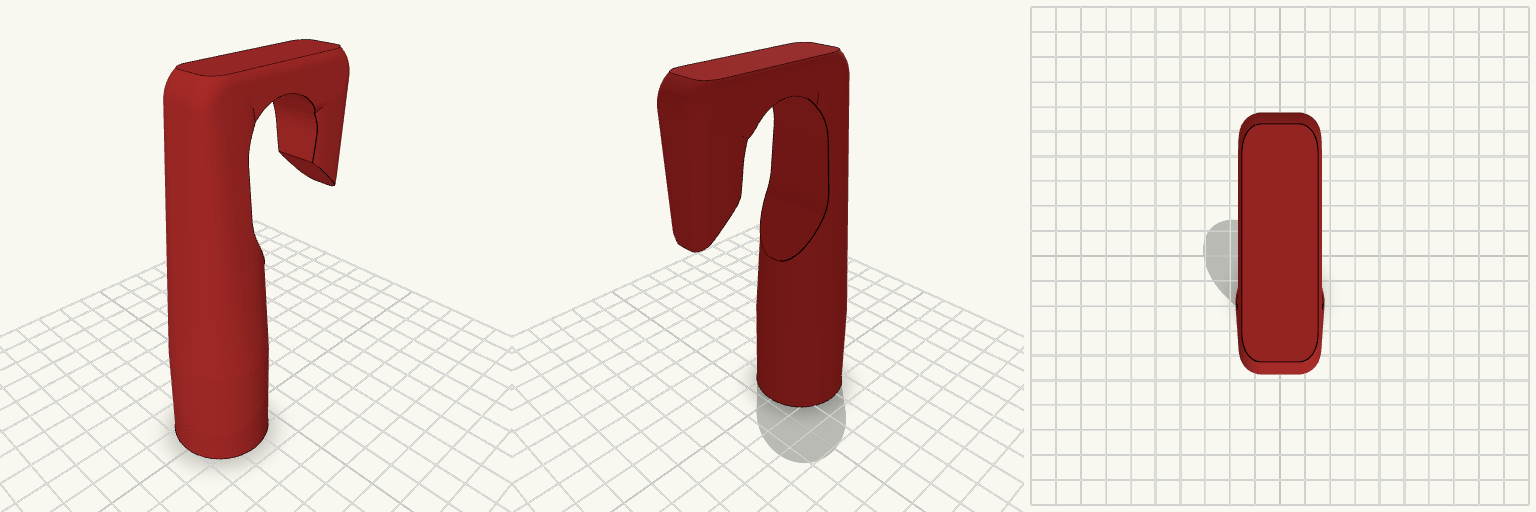
Vileda Broom Bar Hook
A bare metal broom top snags on everything, and the mushroom-shaped anchor on a Vileda stick gives a plain hook nothing secure to grab. This replacement end cap sleeves 20 mm down over the sharp top of the stick, then snaps over the anchor on four flexing collet fingers with locking pads. The open hook sits centered over the sleeve so the broom hangs straight on a 27 mm bar, and the flared mouth catches the bar without needing perfect alignment. Fit and print Broomstick: fits a 25.3 mm Vileda stick; the sleeve drops 20 mm over the sharp top edge. Anchor: clears the 13 mm mushroom cap and locks around the 10 mm shaft. The four fingers are 3 mm at their weakest point and taper to 4.5 mm at the base, with a 24 mm relief void and 2 mm slits so they splay outward without binding. Hook: open downward U-channel for a 27 mm bar, not a closed loop; the flared mouth funnels the bar in. Wall: solid plastic separates the flex mechanism from the hook cavity, and the hook sits raised clear of the flex chamber. Printing: lay the 2 mm flat plateau on top of the arch on the bed and print upside down — no supports, the internal ceiling bridges. Feel: the thicker fingers take a firmer push to seat, and hold once they do. Size: 31 mm wide, 63.5 mm deep, 118 mm tall as oriented for printing.
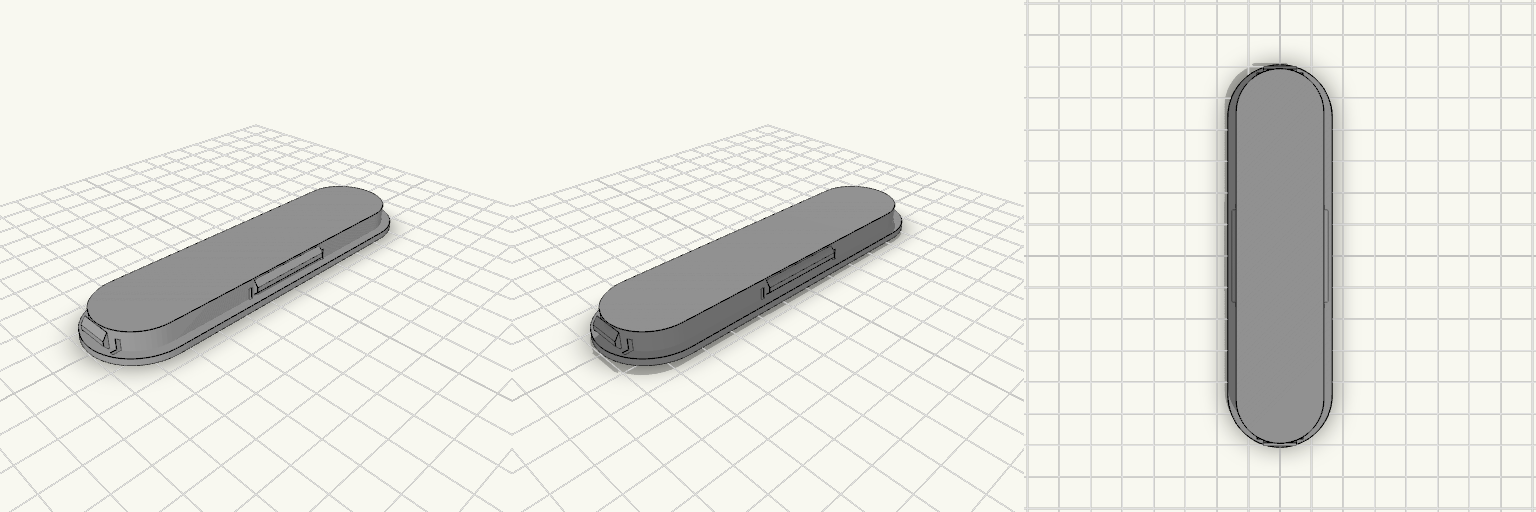
Tampão com travas para abertura de pontas semicirculares
Tampão para abertura de pontas semicirculares que não fica solto: cobre o vão e trava por pressão nas quatro laterais — sem parafuso, sem fita e sem cair quando alguém esbarra. As travas são flexíveis e ficam embutidas no corpo, com um ressalto de 1,4 mm que pula para dentro da abertura e segura o tampão no lugar. Medidas que decidem o encaixe Abertura coberta: 27 × 114 mm, com pontas em semicírculo de raio 13,3 mm; o corpo tem 26,6 × 113,6 mm, já com a folga de encaixe. Aba de 2 mm em volta: assenta na borda e impede o tampão de afundar. Quatro travas embutidas: 30 mm em cada lado comprido e 12 mm em cada ponta, com ressalto de 1,4 mm que termina em 7,5 mm. Espessura total: 8 mm, contando a aba — o perfil fica baixo, rente à superfície. Peça completa: 32,6 × 119,6 × 8 mm. As travas das pontas ficam sobre uma superfície curva; confira se a abertura real tem o mesmo perfil antes de imprimir. Para imprimir Sai em uma peça só, sem montagem; nada de parafusos ou cola. As travas são finas e precisam de um material que ceda um pouco — PETG funciona bem; PLA muito rígido pode rachar a trava no primeiro encaixe. Imprima com o lado da aba para baixo, apoiado na mesa, para as travas ficarem limpas. Se o encaixe sair apertado ou folgado demais, ajuste a folga antes de mexer nas travas.
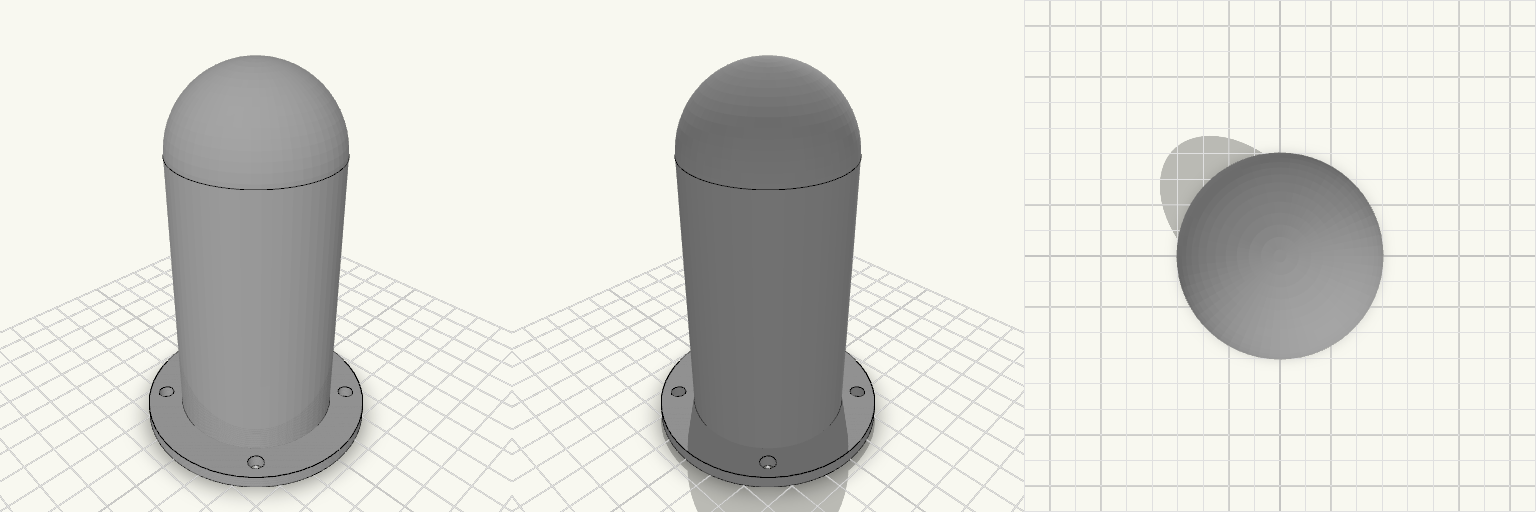
Antenna Cover With Mounting Flange
An antenna protective cover that keeps weather and knocks off the antenna: a hollow cylinder with a domed top, open at the bottom, on a flat bolt-down flange. Total height: 115 mm including the 4 mm flange Body: 50 mm outer, 46 mm inner diameter (2 mm wall), dome radius 25 mm blending tangentially into the cylinder Flange: 72 mm diameter, 4 mm thick Holes: four 5 mm through-holes in a square, 43.1 mm between adjacent centres Print: open end down on the flange, no supports needed, 3+ perimeters recommended
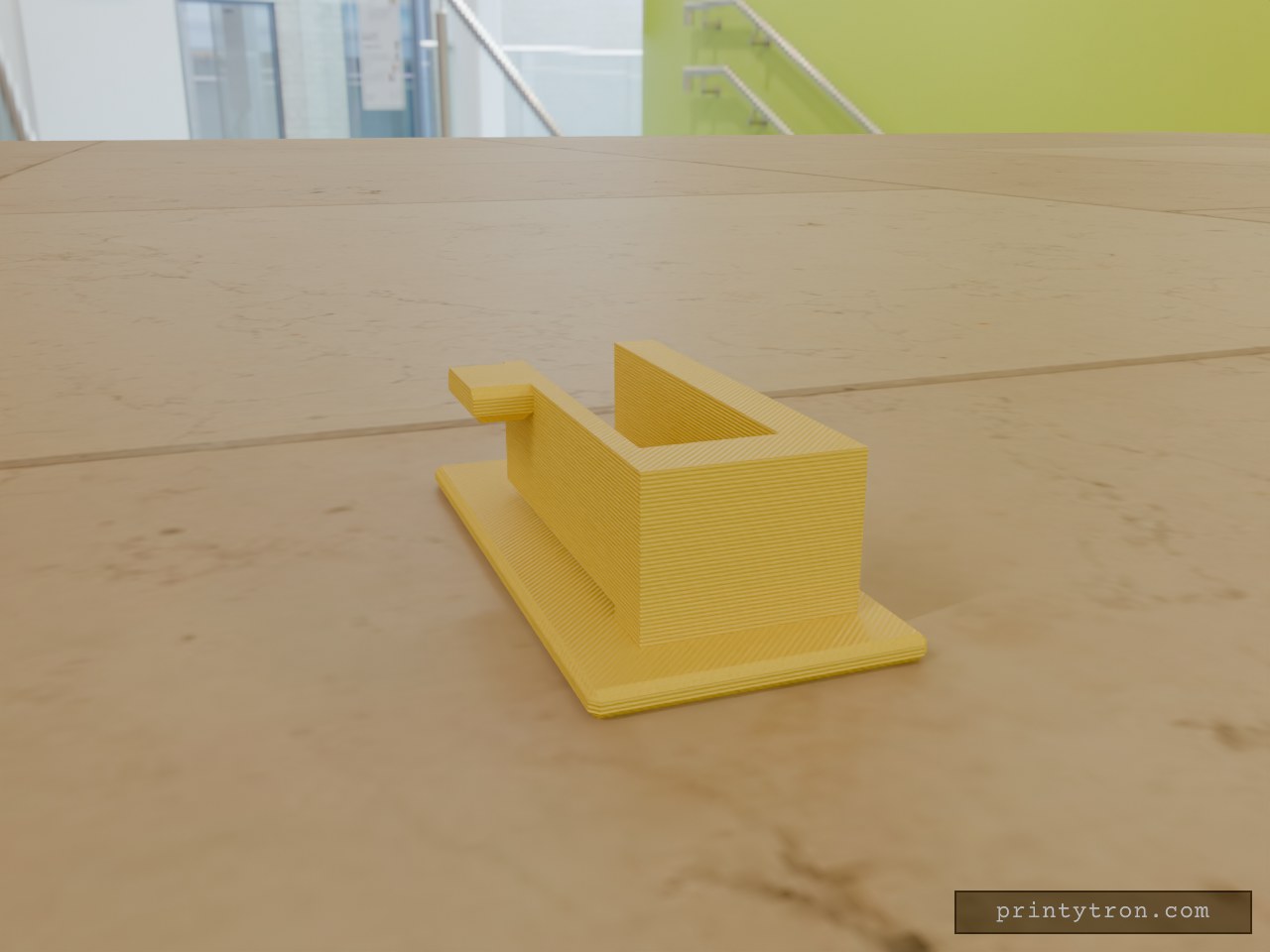
Glue-On Snap Latch for Fly Screen Frames
A fly screen frame that lifts out of its catch every time the door moves needs a latch that holds it and lets go on demand. This one glues to the wall, the frame presses into the slot and snaps past the hook, and a thumb tab on the outside of the arm pulls the hook clear. One hand does both jobs — no second hand holding the frame, no screwdriver. Fit Slot: 10.4 mm wide, sized for a 10 mm frame with 0.4 mm clearance. Base plate: 50 × 24 mm, 2 mm thick, with two shallow relief pockets underneath to hold the glue. Snap arm: 30 mm long, 1.8 mm thick. Printing One piece. No screws, no loose parts, nothing to assemble. Print standing as modelled, so the layers run across the arm's bend rather than along it. PETG suits the flex the snap arm needs. Measure the standoff between wall and frame before gluing: the base plate is 2 mm thick, so it sits in the gap rather than spanning it. Snap strength and tab size are the two things to adjust if the catch is too stiff or too easy for the frame you have.